Buyer Fit Snapshot
| Best fit | Custom Corrugated Boxes for Fragile Items That Ship Safely projects where brand print, material claims, artwork control, MOQ, and repeat-order consistency need to be specified before quoting. |
|---|---|
| Quote inputs | Share finished size, material target, print colors, finish, packing count, annual reorder estimate, ship-to region, and any compliance wording. |
| Proofing check | Approve dieline scale, logo placement, barcode or warning zones, color tolerance, closure strength, and carton packing before bulk production. |
| Main risk | Vague material claims, crowded artwork, missing packing details, or unclear freight terms can make a low unit price expensive after revisions. |
Fast answer: Custom Corrugated Boxes for Fragile Items That Ship Safely should be specified like a repeatable production item. The safest quote records material, print method, finish, artwork proof, packing count, and reorder notes in one written spec.
Production checks before approval
Compare the actual filled-product size with the drawing, then confirm tolerance on folds, seals, hang holes, label areas, and retail display edges. Reserve space for logos, QR codes, warning copy, and material claims before decorative graphics fill the panel.
Quote comparison points
Review material grade, print process, finish, sampling route, tooling charges, carton quantity, and freight assumptions side by side. A quote is only useful when the supplier can repeat the same color, closure quality, and packing count on the next order.
Custom Corrugated Boxes for Fragile Items That Ship Safely
Custom Corrugated Boxes for fragile items are not a decorative layer around a product. They are a control system. A carton can look immaculate on the shelf and still fail in transit if the item shifts, flexes, or takes one sharp hit at a corner. That is the quiet truth behind custom corrugated boxes for fragile items: fit, cushioning, and crush resistance have to work together, or the package gives up the moment the parcel network gets rough.
From a buyer's perspective, the useful question is rarely whether a stock carton has a lower quote. The better question is whether custom corrugated boxes for fragile items cut breakage, returns, reships, and support calls enough to justify the engineering effort. For glass, ceramics, electronics, candles, cosmetics, lab parts, and anything with a delicate finish, the math often favors the custom route. I have seen a run of hand-thrown ceramic mugs survive a drop test and still chip in production because the insert let them chatter by two millimeters. That tiny gap was all it took. In a packaging program that depends on presentation as much as survival, Custom Packaging Products tend to matter more than generic filler that only buys time.
Damage claims usually follow a familiar pattern. The product did not fail because the box looked cheap or the print was dull. It failed because the product moved. Custom corrugated boxes for fragile items solve that problem by controlling motion, spacing, and force transfer so the impact travels through the carton instead of the item. That is engineering, not hope, and it is kinda unforgiving when the spec is sloppy.
What custom corrugated boxes for fragile items actually do
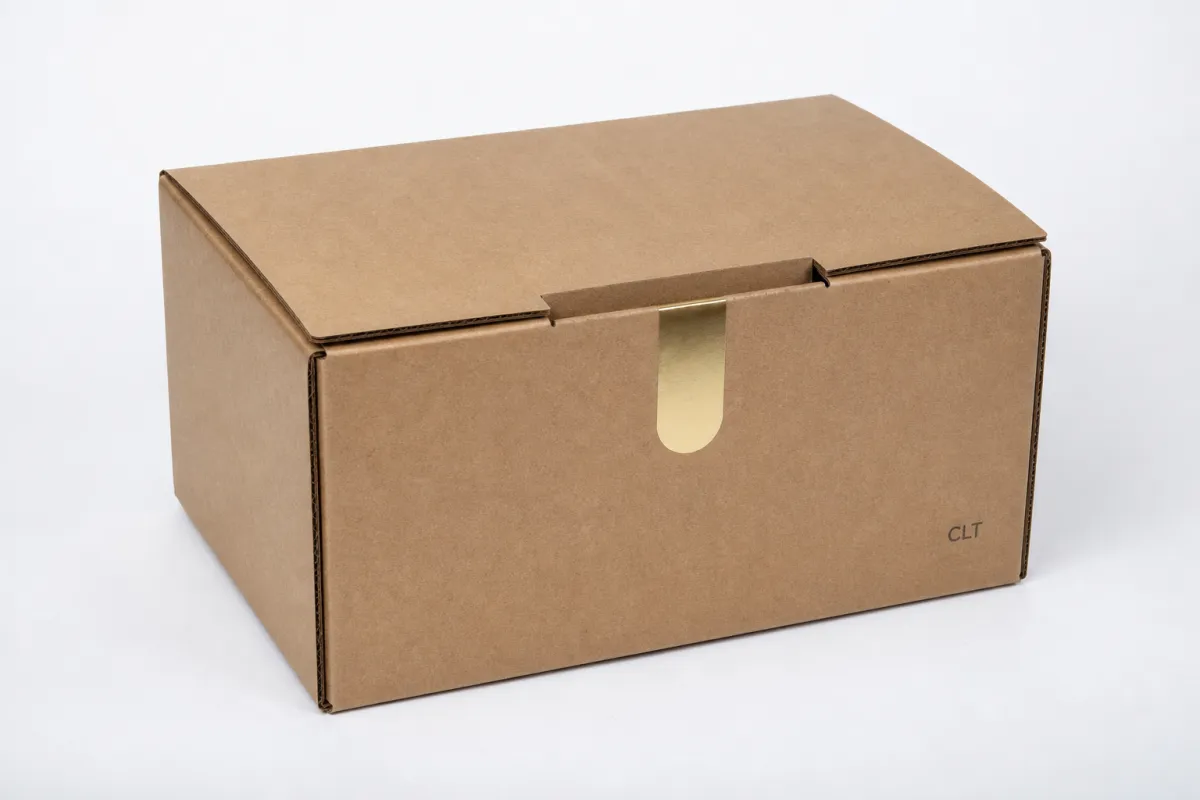
Most breakage is not dramatic. It is repetitive and ordinary. A carton drops a few inches onto a conveyor stop. A truck vibrates for an hour on a bad road. Another package gets stacked on top of it in a warehouse corner. Custom corrugated boxes for fragile items are built for those routine stresses, because routine stress is what destroys most shipments.
Corrugated packaging is easy to underestimate. A custom carton is designed around the item instead of forcing the item to adapt to a generic shell. That changes the structure in several ways. Box dimensions tighten, insert geometry can match the product’s weak points, and board grade can be chosen for the actual shipping lane. A thin-walled glass candle jar needs a different approach than a ceramic mug. A circuit assembly needs a different approach than a perfume bottle. Custom corrugated boxes for fragile items let each product carry its own protection profile, which is a much cleaner way to think about packaging than, “Will extra paper maybe fix it?”
Void fill alone often disappoints because it cushions without always controlling. Loose paper, foam peanuts, and air pillows can fill space, yet they still settle, shift, or leave a hard object free to strike another hard surface. Custom corrugated boxes for fragile items can use partitions, die-cut inserts, edge supports, and tighter tolerances to stop that movement before it becomes damage.
Think of the carton as a structural system. The outer box resists compression and puncture. The interior features manage where the item sits. The board layers absorb part of the shock energy. A weak link anywhere in the chain weakens the whole packout. That is why packaging engineers often begin with a movement problem rather than a box problem, and why custom corrugated boxes for fragile items usually outperform a generic stock carton paired with extra filler.
The best packaging disappears into the shipping experience. The customer sees a product that arrives clean, centered, and intact. They do not see the measurement work, the board selection, or the repeated decisions that made custom corrugated boxes for fragile items survive real transit abuse.
Cost tells the same story in a different language. A stock carton may save a few cents at purchase, then cost far more later through replacement items, freight, labor, and customer service time. A 2% or 3% damage rate on fragile goods can erase those small savings fast. Custom corrugated boxes for fragile items often win because they reduce the hidden cost of failure. That matters in retail packaging and product packaging programs where the condition of the product and the unboxing experience both reflect on the brand.
How custom corrugated boxes for fragile items work
Corrugated board looks simple. Its performance is not. Outer liners, an inner liner, and a fluted medium form a small engineered beam system. The liners provide stiffness, the flute adds thickness and crush resistance, and the adhesive bond keeps the structure intact under load. Custom corrugated boxes for fragile items treat those layers as design tools rather than as commodity stock.
Flute profile matters more than most sourcing conversations admit. Smaller flutes can improve print quality and support tighter insert tolerances, while larger flutes can improve cushioning and stack performance. Single-wall, double-wall, and triple-wall builds each serve a different purpose. Single-wall can work for lighter products with good internal support. Double-wall tends to fit heavier items, more fragile items, or longer distribution chains. Triple-wall is a different category entirely and usually belongs with severe compression, industrial freight, or very high puncture risk. Custom corrugated boxes for fragile items only work well when the board build matches the hazard.
Fit is the other half of the equation. A box that is slightly too large invites movement. A box that is too tight can crush fragile surfaces or make packing miserable. Custom corrugated boxes for fragile items should hold the product with just enough clearance for the protective features to do their job. That may mean a snug insert, a molded pulp cradle, a die-cut sleeve, or a partition set that keeps one item from touching another.
Fragile shipments face several forces at once. Drop impact is the obvious one, yet compression in a pallet stack can be just as damaging. Vibration in a parcel vehicle can wear through edges and create micro-shifts that lead to chips. Puncture from a neighboring box or rough handling can break a weak spot that looked fine in a sample. Custom corrugated boxes for fragile items are effective because they address all of those forces, not only the drop test.
If a benchmark helps, many shippers use ISTA test standards or similar ASTM methods to check vibration, shock, and compression under realistic conditions. The goal is not a logo on a spec sheet. The goal is to make sure custom corrugated boxes for fragile items behave the same way in a lab and in a truck. That kind of honesty is what keeps packaging teams out of trouble later.
Branding still has a place here. Custom corrugated boxes for fragile items can carry strong branded packaging and custom printed boxes graphics without giving up protection. Good package branding does not hide the structure; it works with it. The print can reinforce handling instructions, opening cues, and product identity while the board and insert system do the real damage control.
Key factors that shape cost and pricing
The price of custom corrugated boxes for fragile items is shaped by more than board thickness. Dimensions, print coverage, insert design, die-cut complexity, order quantity, and shipping assumptions all move the number. A larger carton consumes more board. A tighter tolerance may need more tooling. A more detailed print layout adds setup and production time. Custom corrugated boxes for fragile items are priced as a system, not as a flat commodity.
The comparison that matters is unit price versus total landed cost. A carton that costs 12 cents less is not cheaper if it creates one extra damage claim in every hundred shipments. Replacement items, labor, freight, and customer service can wipe out the savings immediately. Custom corrugated boxes for fragile items often look expensive only until the failure rate is included.
Order size changes the equation too. Short runs usually carry a higher unit cost because setup work, tooling, and material waste are spread across fewer pieces. Larger runs improve pricing, though they also require storage space and inventory planning. In many programs, the sweet spot sits between a pilot run and a full annual buy, especially while the design is still being refined. Buyers comparing custom corrugated boxes for fragile items with stock packaging should ask for multiple price tiers so the cost curve is visible instead of hidden.
The structure itself is a major price lever. A simple RSC with one-color print is one thing. A die-cut mailer with an interior lock and a two-piece partition set is another. Custom corrugated boxes for fragile items often need extra components because the board must protect the item from itself. A set of glass jars, a ceramic gift kit, or a mixed-SKU shipper can make the insert cost the difference between a clean delivery and an expensive return.
| Option | Typical Use | Relative Unit Cost | Protection Profile |
|---|---|---|---|
| Single-wall custom carton | Lightweight fragile items with good inserts | $0.35-$0.90 | Good for moderate compression, lighter parcel lanes |
| Double-wall custom carton | Heavier glass, ceramics, electronics, mixed-item kits | $0.70-$1.60 | Better stacking strength and puncture resistance |
| Triple-wall custom carton | High-risk freight, industrial parts, severe compression | $1.25-$2.75 | Strongest option for crush and rough handling |
| Custom carton with die-cut insert | Products that move, rub, or chip easily | + $0.10-$0.85 | Controls movement and separates touch points |
Those figures are directional, not universal. Size, board grade, print coverage, and geography all move the number around. Even so, the pattern is clear: custom corrugated boxes for fragile items rarely match stock packaging on unit price, but they often beat it on total cost once damage is counted. The lowest quote is not always the lowest spend, and that is the part that gets missed when a team is rushing.
If you are sourcing through a wider program, Custom Shipping Boxes can be compared against stock alternatives using the same freight method, the same packout, and the same annual volume. That comparison is cleaner than asking for a box price without the rest of the system attached.
Sustainability sits in the same conversation. If your brand tracks fiber sourcing, some corrugated options can be specified with FSC-certified paper inputs. That does not make a package better by itself, yet it can support procurement goals and customer reporting. For sourcing principles and certification context, see the FSC certification resources. In many cases, custom corrugated boxes for fragile items can support both protection and responsible sourcing without turning into unnecessary overbuild.
Production steps, process, and timeline for custom corrugated boxes for fragile items
The production process for custom corrugated boxes for fragile items usually starts with a brief, not a dieline. The first questions are practical: what is the product, how much does it weigh, where is it weak, and how will it ship? Once those answers are clear, the structure can be built around the actual hazard instead of around a guess. A good brief saves time later, because custom corrugated boxes for fragile items tend to expose weak assumptions quickly.
A typical workflow includes product measurement, fragility review, structure concept, prototype, packout test, artwork approval, and then production sign-off. Simple slotted cartons can move quickly if the material is available and the print is minimal. More engineered projects take longer, especially when inserts or multiple SKUs are involved. A realistic lead time is often 10-20 business days after proof approval for straightforward work, with added time for complex tooling or revisions. Custom corrugated boxes for fragile items that need new inserts or Custom Die Cuts may need another week or more, depending on the supplier schedule.
Revision is where projects slip. A dieline change may seem small until it triggers a new sample, a new proof, and a fresh approval loop. Artwork corrections can do the same thing, especially if the design is locked before the structure is locked. That is why custom corrugated boxes for fragile items should be prototyped before a full production run. Changing a sample is far cheaper than scrapping a pallet of finished cartons.
The safest workflow stays simple:
- Build a prototype using the actual product and the intended insert system.
- Pack and ship a small trial batch through the same handling conditions used in fulfillment.
- Check for movement, edge contact, crush, and scuffing after transit.
- Lock the structure, then approve artwork, then release the full order.
That sequence may feel cautious, yet it usually moves faster than fixing a bad design after it enters inventory. Custom corrugated boxes for fragile items reward teams that test early, because fragile products rarely give a second chance.
Seasonality changes timelines too. Holiday demand, peak shipping periods, and raw material shortages all affect lead time. If a launch date is fixed, the packaging schedule should move backward from that date, not forward from the day the project gets attention. A delay of five business days on the box can become a delay of two weeks on the launch. Custom corrugated boxes for fragile items are easier to manage when the packaging calendar is treated as part of the launch calendar.
Step-by-step guide to spec the right box
Step 1 is measurement, but not of the item alone. Measure the product, the protective wrap, the insert, and any accessory that ships in the same carton. Custom corrugated boxes for fragile items fail most often when someone measures the item and forgets the full packout thickness. A glass diffuser bottle with a cap, a sleeve, and a molded insert takes up more room than the bare bottle on a bench.
Step 2 is identifying the failure mode. Will the product break, scratch, leak, crush, or tip over? That answer drives the design. Custom corrugated boxes for fragile items that protect a ceramic bowl are not the same as custom corrugated boxes for fragile items that keep an electronics module from electrostatic damage or a candle from denting at the rim. If the wrong failure mode is targeted, the design can look smart and still miss the real risk.
Step 3 is choosing the interior protection. This is where many programs win or lose. Common options include:
- Partitions for separating multiple fragile units inside one shipper.
- Die-cut inserts for holding one product with repeatable positioning.
- Corner blocks for distributing impact away from a sensitive face.
- Suspension-style support for keeping the item off the outer walls.
- Molded pulp or fiber cradles for products that need shape-specific support.
Each choice changes how custom corrugated boxes for fragile items perform in real transit. A partition set can stop bottle-to-bottle contact. A die-cut insert can reduce movement by a few millimeters, which is often enough to prevent chipping. Suspension support can isolate shock better than filler alone. The right answer depends on what the product is, how it ships, and how much abuse the lane produces.
Step 4 is testing under conditions that resemble reality. Drop tests, compression checks, and a pack-and-ship trial should all be on the table. Even a simple shake test can reveal a loose fit before money is spent on a full run. If the carton passes a lab test but fails when the packing crew uses it, the design is still wrong. Custom corrugated boxes for fragile items are supposed to work for the people packing them, not just for the engineer drawing them.
Here is a practical filter I trust: if the box only works when every packer is unusually careful, the design is unfinished. Custom corrugated boxes for fragile items should tolerate normal behavior on a normal day. That means clear folding logic, obvious orientation, and enough structural forgiveness to survive small handling mistakes. Packaging that only works in a perfect world usually fails as soon as volume picks up.
The outside of the carton matters too. Handling instructions, orientation arrows, and opening cues are part of the system. They do not replace structure, yet they help reduce avoidable damage and improve the unboxing experience. In branded packaging programs, that surface communication can support both protection and retail presentation without turning the box into a billboard.
Common mistakes when packaging fragile products
The biggest mistake is overrelying on void fill. Paper, foam, and air pillows all have a place, but none of them is magic. They can settle under vibration, shift during handling, and fail to stop product-to-product contact. Custom corrugated boxes for fragile items should use void fill as support, not as the primary structure. If the carton still lets the item bounce around, the packout is not stable enough.
The second mistake is under-specifying board strength. A carton may survive hand carry in a warehouse and still collapse when stacked on a pallet or squeezed in a van. That is where compression strength matters. Custom corrugated boxes for fragile items often need a stronger board grade than a non-fragile item would, especially when the box is tall, heavy, or part of a multi-layer stack.
The third mistake is chasing the lowest quote without checking the damage math. A buyer may save 6 cents per unit and lose far more in re-ships and support. For fragile goods, the unit cost of the carton is only one variable. Custom corrugated boxes for fragile items should be judged on damage rate, material efficiency, labor fit, and freight density. That is a more honest view of cost.
The fourth mistake is skipping the prototype. This one is common and expensive. Teams approve artwork, lock the order, and discover later that the product sits too high, the insert tears, or the box is hard to close without force. Custom corrugated boxes for fragile items need a physical trial because paper specifications do not always expose real friction points. A good packout trial can save an entire production run.
Seasonal stress creates another problem. Summer heat can soften some adhesives; winter shipping can make certain plastics and coatings behave differently; peak season handling can get rougher because networks are busier. None of that is mysterious. It is just how the system behaves. Custom corrugated boxes for fragile items should be tested against the shipping season they will actually face, not against a quiet bench sample in a clean room.
The final mistake is confusing “good enough for now” with “good enough for scale.” A small pilot may ship safely because the team is careful and the volume is low. Then the order volume rises, the packing pace speeds up, and the weak points show up. Custom corrugated boxes for fragile items need to be designed for the process that will exist after launch, not only the process that exists during testing.
Next steps for custom corrugated boxes for fragile items
If you want a practical next move, start with a one-page packaging brief. Include item dimensions, weight, surface sensitivity, fragility points, shipping method, target order volume, and any branding needs. That short document gives a supplier enough context to recommend the right board and interior protection. Custom corrugated boxes for fragile items become much easier to spec once the brief is concrete.
Next, compare two packouts side by side. One should be the baseline design you are using now, and the other should be an improved option with better fit or better compression resistance. Look at movement, material use, pack time, and damage performance. In many cases, custom corrugated boxes for fragile items prove their value quickly because the better design reduces both filler and failure.
Request a sample or prototype, and test it with the same team that will use it in fulfillment. That detail matters. The best carton on paper can become awkward in a fast packing line if the fold sequence is clumsy or the insert is fiddly. Custom corrugated boxes for fragile items should fit the people as well as the product. If the packing crew likes the box, adoption is usually smoother.
Once the final spec is approved, document it. Save the board grade, insert drawings, artwork files, glue points, and approved dimensions in one place. Then monitor damage claims for the first production run and make small corrections early. That is how strong packaging programs get built: not by guessing once, but by improving with actual transit data. For teams expanding their custom printed boxes or broader product packaging program, that discipline pays off quickly.
Custom corrugated boxes for fragile items should earn their place by arriving safely, packing efficiently, and supporting the customer experience without wasting material. Spec them carefully, test them honestly, and refine them with real shipment data. If you need a single rule to keep in mind, use this one: measure the full packout, not just the product, then build the carton around the real hazard. That is how custom corrugated boxes for fragile items protect fragile goods without inflating the rest of the supply chain.
What corrugated board is best for custom corrugated boxes for fragile items?
Use the lightest board that still passes your handling and compression needs, not the heaviest board by default. Single-wall works for many light products with strong inserts, while double-wall is often better when weight, stacking, or puncture risk rises. Match the board to the product, the insert system, and the shipping lane so custom corrugated boxes for fragile items are not overbuilt or underbuilt.
Are custom corrugated boxes for fragile items more expensive than stock boxes?
Usually yes on a per-unit basis, but the real comparison is total cost after damage, returns, and extra filler are counted. Custom sizing can reduce void fill, improve pallet density, and lower replacement shipments, which can offset the higher unit price. The best way to compare cost is to quote both options using the same freight method, packout, and annual volume.
How do I know if I need inserts for fragile item packaging?
If the product can shift, rub, tip, or strike another surface inside the carton, it probably needs an insert or partition. Inserts are especially useful for glass, multiple SKUs in one box, irregular shapes, and items with delicate corners or necks. A simple shake test often reveals whether the current packout leaves too much movement before you spend money on a full run of custom corrugated boxes for fragile items.
What MOQ should I expect for custom corrugated boxes for fragile items?
MOQ depends on board type, print method, and whether a custom die is required, so there is no universal number. Smaller runs are often possible, but the price per unit usually drops once you move into larger production quantities. Ask for quotes at two or three volume tiers so you can see the break point where scaling becomes worthwhile.
How long does the process take for custom corrugated boxes for fragile items?
Simple structural jobs can move quickly, while custom inserts, artwork changes, and multiple approval rounds add time. Prototype, test, revise, and then approve the final packout before full production to avoid delays and rework. The safest planning move is to start early enough that lead time is not forced by a launch date or seasonal shipping spike.

