Buyer Fit Snapshot
| Best fit | Custom Sustainable Corrugated Cartons projects where brand print, material claims, artwork control, MOQ, and repeat-order consistency need to be specified before quoting. |
|---|---|
| Quote inputs | Share finished size, material target, print colors, finish, packing count, annual reorder estimate, ship-to region, and any compliance wording. |
| Proofing check | Approve dieline scale, logo placement, barcode or warning zones, color tolerance, closure strength, and carton packing before bulk production. |
| Main risk | Vague material claims, crowded artwork, missing packing details, or unclear freight terms can make a low unit price expensive after revisions. |
Fast answer: Custom Sustainable Corrugated Cartons: Board, Finish, Dieline, and Unit Cost should be specified like a repeatable production item. The safest quote records material, print method, finish, artwork proof, packing count, and reorder notes in one written spec.
Production checks before approval
Compare the actual filled-product size with the drawing, then confirm tolerance on folds, seals, hang holes, label areas, and retail display edges. Reserve space for logos, QR codes, warning copy, and material claims before decorative graphics fill the panel.
Quote comparison points
Review material grade, print process, finish, sampling route, tooling charges, carton quantity, and freight assumptions side by side. A quote is only useful when the supplier can repeat the same color, closure quality, and packing count on the next order.
Custom Sustainable Corrugated cartons are not magic. They are the product of a handful of practical decisions made with more discipline than most packaging briefs ever get. The real gains usually come from less air, fewer fillers, and fewer crushed shipments. That matters more than a recycled badge on a spec sheet. A box that is too large, too weak, or dressed up like a luxury gift with no structural purpose burns money twice.
Buyers usually want three things from custom sustainable corrugated cartons: a proper fit, real protection, and a lighter environmental footprint. The carton is built around the product, the board spec is chosen to match the job, and anything that adds weight without improving performance gets cut away. That is the useful version. The marketing version is often a lot noisier and much less helpful.
The business case is hard to ignore. Better packaging can trim freight costs, reduce breakage, and make handling faster in the warehouse. A box that is 15% smaller can affect cubic pricing, pallet layout, and storage efficiency. One small dimensional change can move a surprising amount of money.
A carton should earn its place in the supply chain. If it does not protect the product, fit the route, and avoid excess material, it is just cardboard with a bill attached.
Brands that care about packaging design face a familiar tension: the box has to look like the brand, survive the trip, and avoid turning into overbuilt theater. Custom sustainable corrugated cartons do that work when the spec is based on shipping reality, not optimism. They can carry Custom Printed Box graphics, hold up in transit, and still stay recyclable without making the package feel cheap or overworked.
What custom sustainable corrugated cartons actually are
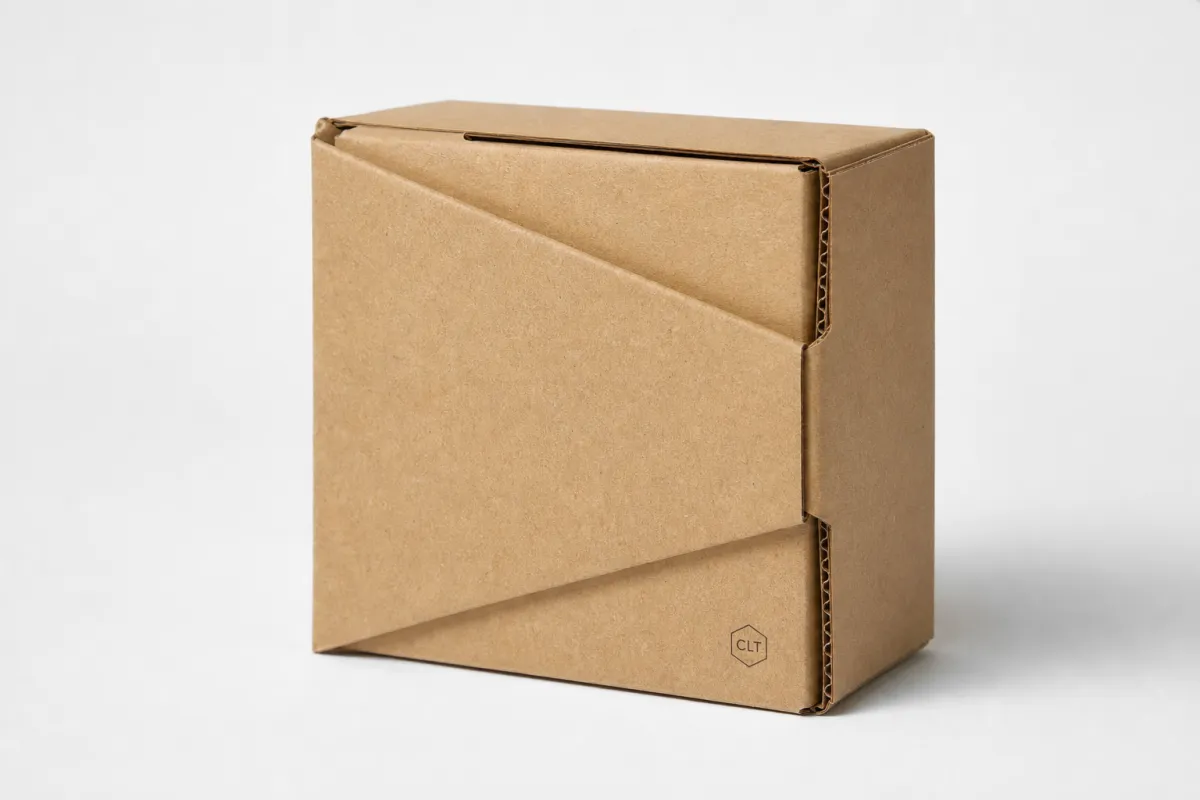
Plain version: custom sustainable corrugated cartons are boxes made to your product dimensions from corrugated board, then specified with choices that reduce waste and improve end-of-life recovery. That usually means recycled fiber where the application allows it, responsible sourcing, right-sized construction, and print or coating decisions that do not create avoidable burden. Not glamorous. Very effective. And usually far better than using a stock box and stuffing the void with crumpled paper because it feels easier.
The word “sustainable” gets stretched until it means almost nothing. A carton is not sustainable because it carries a leaf icon or a recycled-content claim in a corner. It earns that label by using less material, reducing damages, moving efficiently, and remaining easy to recycle after use. Board weight, flute choice, ink type, coating coverage, closure method, and stacking behavior all shape the outcome. The package is a system, not a slogan.
Most buyers start with recycled content, which makes sense. That is only one part of the picture. A lighter board that still performs can beat a heavier board that wastes fiber. A properly sized carton can eliminate the need for void fill, paper pads, or air pillows. A kraft exterior with restrained graphics is often easier to recycle than a heavily coated box. Those tradeoffs get missed when the only focus is a single sustainability claim.
I have sat in more than one packaging review where the team fixated on the recycled-content percentage and ignored the shipping damage rate. That is backwards. If a carton looks virtuous but fails in transit, the product usually gets repacked, reshipped, or replaced. Then the waste problem gets bigger, not smaller. Kind of defeats the point.
For brands balancing retail packaging and package branding, the real goal is control. The carton needs to protect the product, present the brand clearly, and avoid unnecessary structure. Custom sustainable corrugated cartons hit that balance when the spec is tied to actual shipping conditions instead of guesswork. The box should justify its footprint.
If you are comparing wider Custom Packaging Products, corrugated often wins because it is adaptable, scalable, and generally easier to recycle than mixed-material formats. Parcel-heavy brands also tend to favor Custom Shipping Boxes because size, strength, and print coverage can be tuned without turning the package into a science project.
How custom sustainable corrugated cartons are made
Corrugated board looks simple from the outside. The structure is doing more than most people realize. A standard board uses an outer liner, an inner liner, and a fluted medium in between. That flute gives the carton cushioning and crush resistance. The pairing of liner and flute profile is the reason custom sustainable corrugated cartons can stay light, printable, strong, and recyclable without needing foam or plastic to prop them up.
Flute selection matters because not every profile behaves the same. Smaller flutes usually give a smoother print surface and help with tighter dimensions. Larger flutes can cushion better and resist abuse in certain shipping conditions. A rigid consumer product and a fragile glass item do not need the same structure. A subscription box of soft goods does not behave like a hardware kit. One generic box size for every shipment rarely holds up under scrutiny.
The production process usually starts with a dieline or structural drawing. Once the measurements are fixed, the supplier chooses the board grade, checks the artwork, and prepares the cutting tools. Printing follows, then die cutting, folding, gluing, and quality checks. Buyers new to custom sustainable corrugated cartons often underestimate how much every early choice affects the next step. The chain is tighter than it looks.
The sustainability angle is practical, not decorative. Good design reduces trim waste. Recycled content lowers demand for virgin fiber where the application allows it. FSC or PEFC sourcing can support responsible forestry documentation when a retailer asks for proof. Water-based inks are often the cleaner choice for many carton applications. Minimal finishing keeps the carton easier to recycle later. None of that is exotic. It is just competent packaging work.
Custom sizing is the real advantage. A carton built to the product can outperform a stock box padded with loose fill because the item moves less, the shipment carries less air, and the warehouse team handles one consistent format instead of improvising around filler. For custom sustainable corrugated cartons, that is not a side benefit. That is the point.
Packaging references are useful when you want to sanity-check the design. The educational material at packaging.org covers fundamentals well, and transport guidance from ista.org helps when cartons face vibration, drops, and rough parcel handling. Packaging should be tested, not only described with confidence in a presentation.
Key factors that decide strength, footprint, and fit
Buyers often ask for “stronger” packaging without defining the problem. That usually goes nowhere. For custom sustainable corrugated cartons, strength depends on product weight, stacking pressure, shipping distance, humidity, and the way the carton is handled after it leaves the dock. A two-pound cosmetic kit and a 25-pound hardware set live in different worlds, even if the outside dimensions look similar.
Weight is only the starting point. Fragility matters just as much. A heavier but durable item may need less cushioning than a lighter item with delicate corners or a scratch-prone finish. Compression strength matters when cartons sit on pallets for days. Edge crush performance matters when boxes are stacked in warehouses or ride in trailers. These are not abstract concerns. They decide whether the shipment arrives intact or turns into a claim.
Flute choice is where the tradeoffs become visible. Smaller flutes can print better and save space, but they may cushion less in rough transit. Larger flutes can absorb more abuse, but they take up room and may soften the print edge. The strongest custom sustainable corrugated cartons usually use the lightest board that still performs under the actual shipping conditions. That decision saves more money than most packaging pitches.
Fit is not just a packaging issue. It is a sustainability issue too. Oversized cartons use extra board, demand more filler, increase freight volume, and let products move around inside the box. Movement leads to damage. Damage leads to replacements and more shipping. A loose carton can erase whatever environmental gain the packaging claimed to make. Right-sizing matters because waste has a way of showing up somewhere else in the chain.
Logistics can change the spec faster than a product manager expects. Parcel shipping is rougher than a gentle pallet move. Warehouse storage exposes cartons to humidity, dust, and dwell time. Summer heat can make a board choice look better on paper than it behaves in practice. Good custom sustainable corrugated cartons are specified for the lane, not only for the product photo.
Three questions usually narrow the spec quickly:
- How heavy is the product, and how is that weight distributed?
- What shipping path does it take: parcel, pallet, freight, or retail shelf movement?
- Does the carton need to survive stacking, humidity, or repeated handling?
Clear answers usually make the board conversation easier. Missing answers do the opposite. Ask for a sample and test it if the route is uncertain. Guessing is how people buy the wrong carton twice.
There is also a practical reason packaging engineers push for real-world data: a box does not fail in a vacuum. It fails when a driver stacks it under a heavier load, when a warehouse lane gets humid, or when a sharp product edge cuts into the liner from the inside. Those details sound minor until they are the whole story. I’m not gonna pretend a prettier box fixes that.
Custom sustainable corrugated cartons: cost, pricing, and MOQ
Money tends to get awkward here, so it helps to say it plainly. Custom sustainable corrugated cartons usually cost more on the first run than stock boxes. That is expected. Structural design, tooling, setup, and a smaller production batch all show up in the price. The upside appears as volume grows and as reorders reuse the tooling and locked spec.
The main cost drivers are not mysterious. Board grade, dimensions, print coverage, die complexity, inserts, and special finishes all influence the quote. A simple one-color kraft carton in a standard style is very different from a full-coverage custom printed box with a detailed insert tray and tight tolerances. If someone presents those as nearly equal, the comparison is off or the quote is incomplete.
MOQ, or minimum order quantity, shapes the first purchase more than many buyers expect. The setup costs in custom sustainable corrugated cartons get concentrated in smaller orders, which makes the first run feel expensive. Once the tooling exists and the spec is stable, reorders become much easier to price. It helps to ask for quantities at 500, 1,000, 2,500, 5,000, and 10,000 units. The slope tells you more than a single headline number.
Here is a practical comparison:
| Box Type | Typical Use | Relative Unit Cost | What Usually Drives It |
|---|---|---|---|
| Standard stock carton | Generic shipping, low branding needs | Lowest | No custom tooling, simple fulfillment |
| Simple custom corrugated carton | Branded shipping, right-sized product fit | Low to medium | Dieline, board spec, basic print |
| Custom sustainable corrugated cartons with premium print | Retail packaging, branded unboxing, higher visibility | Medium to high | More print coverage, finishes, tighter QC |
| Custom structure with inserts | Fragile goods, multi-item kits, gift sets | Highest | Extra material, labor, assembly complexity |
The cheapest quote is not always the smartest quote. Compare identical specs. Same board. Same flute. Same print coverage. Same insert requirements. Same shipping assumptions. A bare carton and a fully specified carton are not direct rivals. They are different products pretending to be similar.
A better carton can lower total landed cost, which sounds formal until you break it down. Fewer damages mean fewer replacements. Better fit means less filler and lower freight waste. Cleaner internal structure can speed packing. Add those pieces together and custom sustainable corrugated cartons often look cheaper than the first invoice suggested.
One more trap deserves mention: ask what the quote includes. Tooling, sample runs, artwork setup, and freight can shift the final figure more than the board choice itself. A quote that omits the real extras is not a bargain. It is unfinished.
Also ask whether the supplier is quoting from the same assumptions you are using. A carton priced for domestic parcel service is not automatically suitable for export freight or humid warehouse storage. That mismatch is where a lot of “cheap” packaging gets expensive fast, and the fix usually involves a second round of production. Nobody loves that.
Custom sustainable corrugated cartons: process, timeline, and lead time
The workflow is usually simple if the brief is complete. For custom sustainable corrugated cartons, the path is discovery, spec confirmation, structural design, sampling, approval, production, and shipping. Each step looks harmless until a missing dimension or a late artwork change pushes the schedule off course. Corrugated projects do not usually fail because the material is difficult. They fail because approvals drag.
Lead time disappears in familiar places. Vague dimensions trigger redesign. Missing artwork stalls print prep. Slow sample feedback adds days. Changing the carton after the prototype is built creates another revision cycle. If you want custom sustainable corrugated cartons on time, the fastest route is a complete brief and a quick signoff. That advice is not exciting. It works.
Timing depends on complexity. A repeat order can move quickly once tooling already exists and the spec is frozen. New structural designs, printed cartons, and projects with inserts take longer because they have more approval gates. A simple reorder may move on a shorter schedule, while a new custom run usually needs time for design, sampling, production, and freight planning. If a supplier promises instant turnaround, take a breath. Something is missing.
Before approving the order, ask:
- How long will the sample or prototype take?
- Is production capacity already reserved?
- What shipping method is built into the timeline?
- Are there rush fees, and do they actually save money?
Rush fees can make sense when a delay would stop shipments and cost more in lost sales. They do not make sense when the order just feels urgent. Custom sustainable corrugated cartons should fit the launch plan, not rearrange it.
The best packaging projects feel boring once they are underway. The brief is clear. The sample matches the product. The carton ships on schedule. Nobody is taping up a problem at 4 p.m. while hoping for the best. That is what good packaging operations look like.
Common mistakes buyers make with corrugated cartons
The biggest mistake is picking the box that sounds green instead of the box That Actually Works. Custom sustainable corrugated cartons only deserve the label if they reduce waste across the chain. If the carton fails in transit, it creates more waste, more customer frustration, and more cost. That is not sustainability. That is cardboard with a storyline.
Oversizing is another classic error. A larger box feels safer to many buyers, but it often behaves worse. More air means more movement. More movement means more filler. More filler means more material and more labor. Carriers also charge for space, which means an oversized carton can cost more to ship while performing worse. That is an expensive misunderstanding.
Ignoring the test conditions causes trouble too. A carton that behaves nicely in a dry office may act differently in a humid warehouse or on a long transport lane. Compression can change. Board stiffness can drop. Print can scuff. If your products travel through changing climates, ask how the carton spec responds to moisture and stacking pressure. That question is more useful than asking whether it looks premium.
Print and coating mistakes show up often. Heavy ink coverage, decorative laminations, and unnecessary finishes can increase cost and complicate recycling. That does not mean branding should disappear. It means the design should solve a problem, not collect decoration. Clean graphics, controlled ink use, and a well-placed logo usually do more for branded packaging than full-coverage visuals. Plenty of custom printed boxes try too hard and end up expensive for no payoff.
A short checklist helps avoid the worst failures:
- Match the box size to the actual product, not the product plus hope.
- Choose the lightest board that still passes transit requirements.
- Test the sample with the real item, not a dummy weight that behaves differently.
- Avoid coatings or finishes unless they solve a specific problem.
- Compare damage rate, not just unit price.
Retail packaging brings one more trap: forgetting how the carton looks after handling. Corners scuff. Ink rubs. Glue lines show. The sample sitting in a meeting room is not the same object as the carton after a week in a warehouse. That is why testing matters so much for custom sustainable corrugated cartons.
There is a quieter mistake too: assuming the carton only needs to survive the first trip. Plenty of brands ship returns, re-pack, or store inventory for months before it moves. A carton that looks fine on day one can sag or scuff long before the product reaches the customer. Durability across the full cycle is part of sustainability, whether the spec sheet says so or not.
Expert tips and next steps for custom sustainable corrugated cartons
Start with a precise packaging brief. Include product dimensions, weight, fragility, shipping method, stacking expectations, branding requirements, and any sustainability claims that need documentation. That last item matters more than most teams expect. If you need FSC chain-of-custody paperwork, say so. If recycled content matters for retailer scorecards, say that too. Custom sustainable corrugated cartons work best when the requirements are explicit.
Request two or three quotes using the same dieline, board spec, and print requirements. Otherwise you are comparing sales decks, not suppliers. Use the same unit count across quotes, and make sure setup, tooling, and freight appear as separate line items. That is the only way to see whether one offer is better or simply presented better.
Ask for a sample or prototype before full production, then test it with the real product in the real shipping condition. That means drop testing for parcel shipments, compression testing for stacked loads, and a close look at how the carton behaves after handling. ISTA protocols and ASTM-based compression methods help keep the review honest. The box should survive the lane it will actually travel, not the lane someone imagined during a meeting.
After that, review the full cost picture. Damage rate. Freight. Storage. Packing labor. Reorder speed. Those numbers matter more than whether the first quote is a few cents lower. Many buyers chase the cheapest custom sustainable corrugated cartons and end up paying more because the carton was wrong. The invoice looked smaller. The system cost grew. That pattern is common.
If package branding is part of the brief, keep the design purposeful. Use the carton surface carefully. Let the material do some of the work. A sharp logo, a clean color block, and a practical structure usually beat packaging that fights the box itself. Good packaging design should make the product feel considered, not overproduced.
Here is the action plan I would use:
- Define the product, shipping lane, and handling risks.
- Specify the carton size and target board performance.
- Request samples, then test them with the real item.
- Compare quotes on identical specs, not vague promises.
- Choose the option that protects the product and lowers waste across the chain.
One more detail from the field: teams that lock the spec early usually save the most time later. The endless back-and-forth around “just one more tweak” is where budgets and schedules quietly bleed out. If the structure works, the artwork fits, and the shipping test passes, stop fiddling. That restraint is part of the expertise, too.
That is the job of custom sustainable corrugated cartons: protect the product, reduce waste, support the brand, and avoid unnecessary cost. Get those four pieces right and the rest becomes much easier.
Frequently Asked Questions
Are custom sustainable corrugated cartons more expensive than stock boxes?
Usually yes on the first run, because tooling, setup, and custom design are spread across fewer units. The per-unit gap can shrink quickly on larger orders, and the right size often saves money on filler, freight, and damage. If your product is fragile or unusually shaped, custom sustainable corrugated cartons often pay for themselves through lower breakage and less waste.
What board grade should I choose for custom sustainable corrugated cartons?
Base the choice on product weight, stacking needs, and shipping method instead of guessing from pictures online. Lighter products may only need a smaller flute or lighter board, while heavier or fragile items usually need stronger construction. If the spec is unclear, request sample prototypes and test compression and transit performance before you place the full order.
How does print coverage affect sustainability and price?
More ink coverage and more complex graphics usually increase cost because they add setup time and can require extra finishing steps. Heavy print can also make recycling less straightforward if the design relies on coatings or finishes that are harder to process. A clean, efficient layout often looks better and uses fewer resources than full-coverage decoration on custom sustainable corrugated cartons.
What is a normal turnaround for custom sustainable corrugated cartons?
Simple repeat orders can move quickly once the spec is locked and the supplier already has the tooling. New designs take longer because sampling, approval, and production scheduling all add time. Ask for a clear timeline before you approve anything, because unclear lead times are where projects stall.
Do I need FSC, recycled content, or both?
That depends on retailer requirements, the sustainability claims you want to make, and the documentation you need for customers. Recycled content supports a strong environmental story, while FSC or similar chain-of-custody certifications support sourcing claims. Only use certifications you can verify and explain clearly, because vague claims draw attention for the wrong reasons. For many brands, custom sustainable corrugated cartons use both where it makes sense and where the paperwork actually matters.
Can custom sustainable corrugated cartons be reused?
Sometimes, yes. Reuse depends on the carton style, how it was handled, and whether the box still has enough structure after the first trip. A well-made carton can sometimes handle a return leg or internal transfer, but shipping wear adds up fast. If reuse is part of the plan, say so during the design stage so the board spec and closure method can be chosen with that in mind.
If you want packaging that does real work, keep the spec grounded: right-sized dimensions, a board grade matched to the route, restrained print coverage, and proof that the carton survives the trip. That is how custom sustainable corrugated cartons stop sounding like a slogan and start becoming a better buying decision. The next move is simple: define the route, test the sample, and only approve the spec once the carton has earned its place.

