A shirt on a crowded rack has only a few seconds to earn attention, and Custom T Shirt hang tags usually do some of the work before anyone touches the fabric. That tiny rectangle, circle, fold-over card, or die-cut shape is not just holding a price. It is signaling quality, brand voice, and whether the garment belongs in premium retail, boutique streetwear, or the basic essentials bin.
That is why hang tags deserve the same scrutiny buyers give to Custom Packaging Products or Custom Labels & Tags. Paper stock, finish, and attachment choice can shift the perception of a shirt as much as the cut or print color. A flimsy tag suggests “cheap.” A well-built tag suggests “considered.” Shoppers notice that faster than many brands expect.
There is also a practical reason they matter. A tag is one of the few pieces of physical branding that survives from warehouse to retail floor. It travels with the garment, gets handled by staff, and sits in front of the shopper at the exact moment value is being judged. In apparel, that moment is expensive. A poor tag can quietly drag down a product that is otherwise well made.
Why custom t shirt hang tags do more than display a price
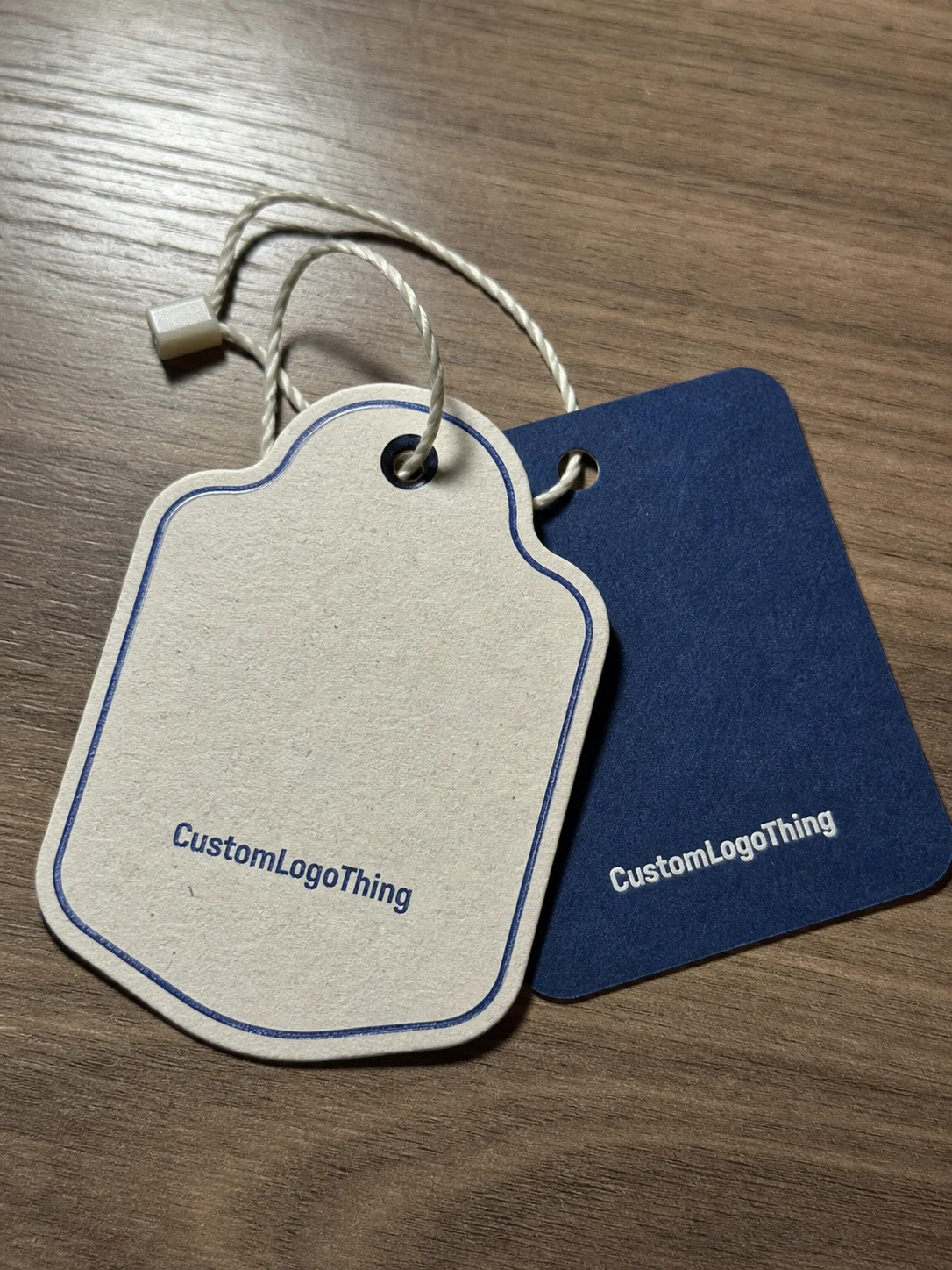
Hang tags are compact branding tools. They can carry the logo, product name, size, care details, fiber content, QR code, story copy, and compliance information in one place. For many apparel brands, they are the only physical branded element a shopper reads before deciding whether to pick up the garment.
The difference between a basic price tag and a strategic one is easy to miss from a distance, but obvious up close. A minimal black-and-white tag with restrained typography can reinforce a modern streetwear identity. A textured stock with foil accents can push a premium fashion read. A recycled kraft tag can support an eco-minded story. The tag is small, but the signal is loud.
From a packaging buyer’s perspective, Custom T Shirt hang tags sit at the intersection of packaging design and retail packaging. They influence perceived value, and perceived value influences willingness to pay. That is why a $38 tee and a $12 tee should not wear the same tag unless the brand wants them to feel equally ordinary.
Material choice matters too. A 300gsm uncoated card has a very different tactile read from a 400gsm C1S board with matte lamination. Rounded corners soften the look. Spot UV adds contrast. A die-cut shape can make the garment feel more curated. Even the hole punch and string choice affect how the tag hangs against the shirt in a crowded retail environment.
There is a limit, though. Overbuilding a tag can backfire. If the garment is a low-priced tee, a heavy embossed card with multiple finishes can feel mismatched rather than premium. Good hang tags do not scream for attention; they sit in the same language as the shirt, the price, and the customer expectation.
“The tag is part of the product experience, not a sticker you add at the last minute. If it feels generic, the shirt often does too.”
That mindset separates thoughtful package branding from afterthought branding. Once you look at Hang Tags That way, the ordering decisions become easier to justify.
How the hang tag production process works from proof to punch
Most Custom T Shirt hang tags follow a predictable workflow. It starts with a brief, then moves into artwork review, proofing, and, if the project is more complex, sampling. After approval, the printer handles printing, cutting, finishing, punching, stringing, and final packing. Simple on paper. In production, each step can add time or introduce errors if the file is not clean.
File quality is the first common bottleneck. Artwork should arrive with proper dielines, bleed, and safe zones. If the logo is too close to the trim edge, a small shift can create a clipped mark or uneven border. If the barcode sits in a noisy area, scan issues can follow. If the logo is built from low-resolution imagery, the final tag may look soft or muddy. A good proof catches those problems before they become waste.
Proof approval is where brands save money or lose it. Color mismatch, typo fixes, incorrect care copy, and barcode placement issues are much cheaper to correct on-screen than in a finished run. If the design includes foil, embossing, or a specialty finish, requesting a physical sample can be worth it. The cost is small compared with reprinting 5,000 tags that feel off-brand.
Common finishing options include matte lamination, gloss varnish, soft-touch coating, foil stamping, embossing, debossing, and spot UV. Matte reads understated. Gloss feels sharper and brighter. Soft-touch adds a velvet-like feel that many premium brands like because it changes the tactile experience instantly. None of these are automatically better. They serve different positioning goals.
Attachment choices that fit different apparel categories
- String or twine: common for lifestyle, boutique, and premium casual shirts.
- Elastic loop: useful when consistency and speed matter on the packing line.
- Safety pin: more traditional, but not always ideal for delicate fabrics.
- Custom fasteners: useful for brands seeking a specific presentation or operational preference.
Where do bottlenecks usually happen? Artwork approvals, specialty finishing, and manual stringing. The more unique the tag, the more a clear spec sheet matters. A buyer who defines size, stock, finish, and attachment method up front usually gets a faster quote and fewer revision cycles.
One more production reality: the closer the tag is to a specific retail workflow, the more the packaging details matter. If tags arrive unstrung when the packing line is built for pre-strung tags, labor costs rise. If tags are bundled too tightly, edge rub and curl can show up before the product even leaves the warehouse. Small decisions create big friction.
Key specs that shape look, durability, and shelf appeal
Material selection is not just about looks. It controls how the tag behaves in transit, how it survives retail handling, and how it feels in the hand. Coated stocks produce sharper images and cleaner color blocks. Uncoated stocks absorb more ink and often feel more natural. Recycled paper can support sustainability messaging, but the exact shade and fiber content should be checked against the brand’s visual standards.
Thickness matters more than many first-time buyers expect. A 250gsm tag is suitable for lighter-use applications, while 350gsm to 400gsm stocks are more common for a sturdier, premium feel. For tags that need extra rigidity, some brands move to board with lamination or a multi-layer construction. That is especially useful for premium apparel or giftable product packaging.
Shape changes the entire read. Standard rectangles are efficient and cost-friendly. Rounded corners feel softer and reduce edge wear. Die-cuts create memorability, but they also raise tooling costs and can extend lead time. Specialty silhouettes work best when the shape genuinely supports the brand story rather than acting as decoration for its own sake.
| Spec choice | Typical effect | Best fit |
|---|---|---|
| 300gsm uncoated stock | Natural feel, lower sheen, simple print behavior | Minimalist or eco-focused shirts |
| 350-400gsm coated board | Sharper graphics, stronger rigidity, premium appearance | Mid-range to premium apparel |
| Soft-touch laminated card | Velvety finish, tactile premium signal | Fashion, boutique, elevated basics |
| Die-cut specialty shape | Distinctive shelf appeal, higher tooling cost | Brand-led drops, limited collections |
Print method is another lever. Digital printing is flexible for short runs and detailed full-color graphics. Offset printing usually makes more sense at higher volumes when color consistency matters across a larger batch. Foil stamping, embossing, and spot UV can lift perceived value, but they should match the garment price point. A $20 tee with too many premium finishes can feel overdesigned rather than premium.
Branding details deserve just as much attention as the stock. The front should carry the strongest visual hierarchy: logo, product name, maybe a concise descriptor. The back can hold care instructions, size, story copy, a QR code, or FSC messaging if the paper is certified. If you use barcodes, keep them in a clean, quiet zone and confirm scanability before production. You can learn more about forest certification standards at FSC, and retail packaging durability testing through ISTA.
Durability sounds boring until a carton of tags arrives bent, scuffed, or curled. Then it becomes the whole conversation. Good tags should survive packing, shipping, and hanging without looking tired before they ever reach the floor. Buyers who have handled enough apparel runs know that a curled corner or crushed edge can make a premium piece look discounted in seconds.
Custom t shirt hang tags pricing: what drives cost and MOQ
Pricing for custom t shirt hang tags is mostly driven by quantity, stock, size, print coverage, finishing, and attachment complexity. That is the short answer. The longer answer is that the cheapest tag is not always the least expensive choice if it weakens the brand or causes rework.
Low quantities cost more per unit because setup costs are spread over fewer pieces. A 500-piece run may land in a much higher unit-cost bracket than a 5,000-piece order, even if the design is identical. That is why MOQ planning matters. If a first drop may expand into a reorder, it can make sense to order a practical buffer rather than trimming the run too tightly.
Here is a realistic pricing framework many buyers use as a starting point:
| Tag style | Typical cost tendency | Notes |
|---|---|---|
| Simple one-color tag | Lowest | Best for clean branding and controlled budgets |
| Full-color printed tag | Moderate | Good for graphics, story copy, and QR use |
| Foil or spot UV finish | Higher | Useful for premium positioning |
| Custom die-cut with specialty finish | Highest | Strong shelf appeal, more tooling and setup |
For buyers looking for rough budgeting context, basic printed Apparel Hang Tags often land in a low per-unit range at higher quantities, while premium stock, specialty finishing, or custom shapes can move the price up quickly. Small runs, especially under 1,000 pieces, tend to carry the highest unit cost because setup is spread over fewer tags. Shipping, stringing, and packing can matter just as much as the print itself if the order is labor-heavy.
There are ways to save without looking cheap. Stick to standard sizes when possible. Use one or two finishes instead of stacking three. Keep the shape simple unless the die-cut is doing real branding work. And if you need to reduce cost further, trimming the print coverage or choosing a slightly lighter stock usually makes more sense than cutting corners on clarity or sturdiness.
Hidden costs can sneak in through proof revisions, rush charges, custom inserts, and bundled packaging requirements. A quote that looks low on the first line can grow once the supplier adds setup, stringing, packing, or additional proof rounds. Ask for a clear breakdown. Buyers who do that usually get better apples-to-apples comparisons across suppliers and a more honest view of the total spend.
MOQ strategy can also affect inventory control. Ordering too few tags creates a second production run sooner than expected, and the reorder may not match the first if the paper batch or finish changes. Ordering too many ties up cash in a component that can go stale if the product line changes. The right number is usually the one that covers the launch plus a realistic replenishment window.
Step-by-step: ordering the right hang tags for your shirts
The best way to order custom t shirt hang tags is to treat the process like a mini packaging project, not a last-minute print task. The more precise the brief, the fewer surprises later.
- Define the garment and audience. Is this a basic tee, premium heavyweight shirt, limited drop, or retail staple? A $15 shirt and a $60 shirt should not be represented the same way.
- Choose the spec around the price point. Size, stock, finish, and attachment method should match the garment’s positioning. Premium shirts can support thicker board and more tactile finishes.
- Prepare artwork correctly. Use proper dielines, safe zones, and bleed. Place barcodes with enough quiet space around them. Keep tiny legal text legible.
- Request and review a proof. Check spelling, color, placement, and scanability. If the tag has care copy or fiber content, verify it against the garment spec sheet.
- Confirm quantity and delivery format. Will the tags arrive loose, strung, or packed in bundles? That detail affects workflow on the packing line.
- Inspect the first run. Look for trim consistency, color accuracy, edge wear, and attachment performance. Then record what you want to keep or change for reorders.
One smart habit: ask your supplier what they recommend for the specific shirt category, not just the overall brand. A premium heavyweight tee, a slim fashion fit, and a promotional giveaway shirt do not need the same tag structure. The right material choice usually comes from the product, not just the logo.
Another useful check is to think about how the tag will behave during packing and in-store handling. A tag that looks good in a flat proof can still swing awkwardly, hide important sizing details, or buckle under its own weight once attached. A practical buyer tests for legibility, stiffness, and usability, not only visual appeal.
Timeline and turnaround: how long production really takes
Lead time depends on proof approval, quantity, finishing, and shipping method, but there is a pattern. Simple tag runs often move faster than specialty projects. The fastest jobs are the ones with print-ready artwork, standard sizing, and no custom finishing beyond trimming and punching.
Complex finishes and die-cuts usually extend timing. If you want foil, embossing, or a custom shape, expect more time for setup and quality checks. Artwork readiness matters even more than many buyers think. A clean file can save days. A messy one can add several rounds of revision and stall production before the press ever starts.
In many apparel projects, standard turnaround often falls in the range of 12 to 15 business days after proof approval, though that depends on factory capacity and shipping distance. Expedited production may be possible, but rush service often narrows the finish choices and leaves less room for sampling. If a product launch or retail appointment is fixed, build a buffer anyway. A good rule is to work backward from the launch date and leave extra time for proofing and transit.
For brands managing seasonal drops or wholesale calendars, timing is not a minor issue. It affects inventory coordination, pack-out schedules, and whether the hang tag arrives in time to support retail packaging consistency across the line. The tag should not be the reason a shipment sits waiting.
Practical buyers also account for approval lag on the brand side. A supplier can only move as fast as the artwork review. Internal sign-off, legal copy checks, and barcode validation can easily add days. That is why a tight launch calendar should include two buffers: one for production, one for internal approvals.
“The fastest way to delay hang tags is to approve artwork before you’ve checked the barcode, legal copy, and dieline. That’s the part buyers regret later.”
Common mistakes brands make with apparel hang tags
One of the most common mistakes is overdesigning the tag. Big graphics, too much copy, and oversized logos can crowd the shirt and make the garment feel less wearable. The tag should support the product, not compete with it.
Another mistake is choosing premium finishes that do not match the audience. If the shirt is a simple promotional piece, a heavy foil-and-emboss stack may read as expensive in the wrong way. Conversely, a premium shirt with a thin, flimsy tag looks underthought. Alignment matters.
Brands also forget about practical requirements until the final proof. Care instructions, fiber content, pricing conventions, retailer needs, and barcode placement all need to be considered early. Waiting until the last stage often means redesigning the whole layout.
Flimsy stock is another issue. If the tag bends in the box, curls on the rack, or tears at the hole punch, the brand experience drops immediately. And attachment matters too: a loose string can twist; a poor fastener can fall off; the wrong pin can damage delicate fabric. These are small failures, but they are visible failures.
Finish mismatch is just as common. Gloss can look sharp on photography but overly reflective under retail lighting. Soft-touch can look elegant yet show scuffs sooner than expected. Recycled stock can support the story, but the natural fiber variation may change how colors print. None of these are deal-breakers; they just need to be chosen with eyes open.
Finally, some brands order without thinking about reprints. If the first batch is successful, the next run should match. That means saving the artwork properly, recording the stock spec, noting the finish, and keeping a clean record of the approved proof. A tiny file naming habit can save a lot of confusion later.
Expert ordering tips and next steps before you request a quote
If you want smarter pricing and fewer revisions, start with a tag brief. Include garment type, audience, retail price, target quantity, desired size, finish preferences, attachment method, and any compliance or barcode requirements. The more specific the brief, the more accurate the quote.
Gather your brand assets before you request pricing. That means logo files, color references, barcode data, care text, and any story copy that needs to sit on the back. If your packaging design language already exists across custom printed boxes or labels, share that too. It helps the supplier keep the hang tag aligned with the rest of the product packaging system.
Ask for material and finish suggestions based on the actual product line. A supplier should be able to tell you whether a 350gsm matte tag, a soft-touch card, or a recycled stock makes the most sense for your shirt category. Do not assume one style fits all. A stretch tee, a heavyweight blank, and a fashion cut can each call for a different tag structure.
Before you place the order, compare sample photos or physical references if possible. You are looking for a simple question: does the tag read premium, casual, or promotional? That one impression usually tells you whether the spec is right. Then confirm timing, request the proof, and schedule production around your drop date rather than hoping the calendar bends for you.
For brands serious about custom t shirt hang tags, the smartest move is usually the most practical one: finalize the spec, check the proof carefully, allow enough production time, and keep the approved details organized for the next run. That is how good tags stop being a one-off print job and become a repeatable part of branded packaging.
What are custom t shirt hang tags used for besides pricing?
They communicate brand identity, care details, product story, size information, and compliance data. They can also support premium positioning and raise the perceived value of the shirt.
How do I choose the best material for custom t shirt hang tags?
Match the stock to the garment’s price point and handling needs. Thicker, coated, or specialty stocks suit premium apparel, while simple uncoated or recycled stocks fit minimalist or eco-focused brands.
What affects the price of custom t shirt hang tags the most?
Quantity, size, print coverage, paper stock, finishing, and attachment method are the biggest cost drivers. Rush service, custom shapes, and revisions can also raise the total.
How long does it take to produce custom t shirt hang tags?
Timing depends on proof approval, quantity, finishing, and shipping method. Simple designs move faster; specialty finishes or custom die-cuts typically extend lead time.
What information should I include on apparel hang tags?
Include logo, product name, size, care or fiber details, barcode if needed, and any brand story or retail messaging. Keep the layout clean so the most important information is easy to scan quickly.


