Buyer Fit Snapshot
| Best fit | Custom Telescoping Rigid Boxes Bulk for Premium Brands projects where brand print, material claims, artwork control, MOQ, and repeat-order consistency need to be specified before quoting. |
|---|---|
| Quote inputs | Share finished size, material target, print colors, finish, packing count, annual reorder estimate, ship-to region, and any compliance wording. |
| Proofing check | Approve dieline scale, logo placement, barcode or warning zones, color tolerance, closure strength, and carton packing before bulk production. |
| Main risk | Vague material claims, crowded artwork, missing packing details, or unclear freight terms can make a low unit price expensive after revisions. |
Fast answer: Custom Telescoping Rigid Boxes Bulk for Premium Brands should be specified like a repeatable production item. The safest quote records material, print method, finish, artwork proof, packing count, and reorder notes in one written spec.
Production checks before approval
Compare the actual filled-product size with the drawing, then confirm tolerance on folds, seals, hang holes, label areas, and retail display edges. Reserve space for logos, QR codes, warning copy, and material claims before decorative graphics fill the panel.
Quote comparison points
Review material grade, print process, finish, sampling route, tooling charges, carton quantity, and freight assumptions side by side. A quote is only useful when the supplier can repeat the same color, closure quality, and packing count on the next order.
Custom telescoping rigid boxes bulk orders can look simple from a procurement sheet and still go wrong in ways that are obvious the moment a customer lifts the lid. A gap that is too wide creates a hollow, loose feel. A gap that is too tight makes the slide feel sticky, and sticky feels cheap no matter how good the print is. I have seen buyers approve a beautiful render, then discover that the finished box needed a 1 mm adjustment to stop lid drag from showing up across an entire run. That tiny number matters because rigid packaging is a precision object disguised as a marketing surface.
For repeat programs, the bulk side is not a footnote. It is the part that determines whether a launch scales cleanly or turns into a sequence of revisions. Once the dimensions, board thickness, wrap, and insert are settled, repeating the same custom telescoping rigid boxes bulk build helps stabilize unit cost, reduce rework, and keep every SKU in the line feeling like it belongs to the same family. Buyers usually want three things at once: a premium first impression, dependable product protection, and a quote that is based on actual production conditions rather than a loose guess.
Why Custom Telescoping Rigid Boxes Bulk Are Worth Spec'ing Right
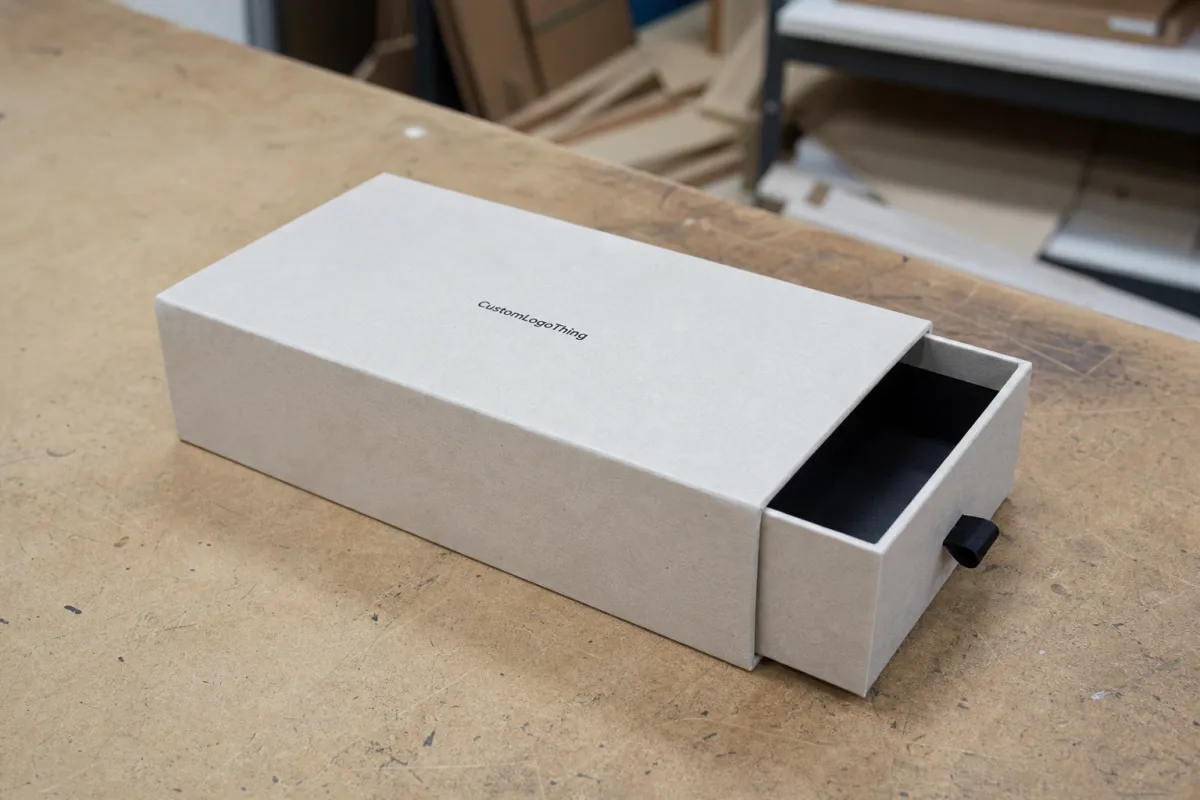
A telescoping rigid box uses a separate lid and base that overlap, and that overlap does more than close the package. It reinforces the structure, gives the customer a controlled opening motion, and creates a visual pause that folding cartons rarely match. In custom telescoping rigid boxes bulk programs, that pause becomes part of the product story. It is one reason these boxes show up in premium cosmetics, gift sets, candles, electronics accessories, apparel kits, and collector-style packaging where the package has to carry part of the brand’s perceived value.
Fit is where a lot of good packaging decisions quietly fail. Too much clearance, and the lid can shift during transit. Too little, and the friction leaves a poor impression before the product is even visible. The mistake is easy to make because digital mockups hide the physical realities of board thickness, wrap thickness, and adhesive build-up at the seams. A box that looks perfect on screen can behave very differently once the die-cut board is wrapped and folded. That is why custom telescoping rigid boxes bulk should always be spec’d against the product, the insert, and the shipping method together.
The appeal is practical as much as aesthetic. You get a stiff structure, a clean surface for Custom Printed Boxes, and a format that can stand up to shelf handling without relying on oversized graphics or decorative excess. A well-built telescoping box feels premium because it has weight and control. The board resists flex. The wrap carries print cleanly. The lid and base work together instead of fighting one another.
Bulk production matters because consistency matters. A line that ships 500 units in one month and 5,000 in the next should still feel like one product program, not three different packaging experiments. For custom telescoping rigid boxes bulk, that repeatability affects warehouse packing, retailer confidence, and even return analysis. If the fit changes from batch to batch, the customer notices. So does the operations team.
A premium rigid box should open with a smooth slide and a controlled stop. If the fit is wrong, the customer feels it before they read a single line of copy.
The most useful quote requests are the ones that leave fewer assumptions on the table. Supplier pricing becomes much sharper when the board, wrap, insert, quantity, and destination are all spelled out. That sounds obvious, but in practice many quote requests still arrive with a product sketch, a target price, and little else. For custom telescoping rigid boxes bulk, that is not enough information to produce a reliable number.
Custom Telescoping Rigid Boxes Bulk: Structure, Fit, and Finish
The core structure is straightforward: a rigid base with a separate lid that slides over it. The part that is not straightforward is the relationship between the parts. Lid overlap, board caliper, wrap thickness, and the density of the insert all influence the final hand feel. A deeper overlap tends to look more substantial and can improve closure confidence. A shallower overlap may make repeated opening easier for products that are handled often. Both can be correct, depending on the item.
Fit tolerances deserve real attention. A heavy bottle set, a tray with multiple components, and a lightweight textile bundle all demand different internal allowances. A watch kit with a cavity insert behaves very differently from a boxed candle or a skincare trio. That is why custom telescoping rigid boxes bulk projects usually start with the product dimensions, then add allowance for the insert, wrap, and desired lid friction. For some brands, a snug slide feels luxurious. For others, especially packages that move through distribution centers, a touch more clearance is safer.
Finish choices should support the product rather than compete with it. Common options include printed wrap, soft-touch lamination, matte or gloss coating, foil stamping, embossing, debossing, and edge treatments. Each of those changes the surface behavior in a real way. A soft-touch finish can look elegant, but it also marks differently under repeated handling than a harder matte laminate. Foil can elevate a logo, yet it adds setup complexity and may show wear if the box will be handled often. For custom telescoping rigid boxes bulk, the practical question is always the same: will the finish still look intentional after shipping, stocking, and customer handling?
Inserts matter just as much as the outer shell. Paperboard inserts are efficient for lighter products and simple shapes. EVA foam provides a tighter cradle for items that need stronger edge control. Molded pulp is worth considering for brands that want recyclable content and a more natural presentation. Custom card partitions work well for kits containing several small parts that would otherwise collide in transit. A good insert prevents movement, protects surface finishes, and gives the unboxing a sense of order. In that sense, it turns custom telescoping rigid boxes bulk from a container into a complete packaging system.
These boxes are especially effective for gift sets, luxury retail, seasonal promotions, premium accessories, corporate presentation kits, and launches where the outer package has to signal value before the product is touched. That is one reason many teams choose custom telescoping rigid boxes bulk over folding cartons when durability, presentation, and repeatable shelf presence all matter at once.
Comparing structures works best when you compare the use case, not only the appearance. A rigid telescoping box may cost more than a folding carton, but it can reduce the need for void fill, lower damage rates, and lift brand perception in ways that are difficult to recreate later through advertising alone. That is not a romantic argument. It is a unit-economics argument.
Materials, Inserts, and Print Specifications
The core structure is usually built from chipboard or grayboard and then wrapped with a printed or specialty exterior sheet. The board provides stiffness. The wrap provides the visual surface. For custom telescoping rigid boxes bulk, that balance matters because the packaging has to look clean, hold its shape, and survive handling without exposing weak seams or warped panels. A thinner board can trim cost, but it may soften the hand feel and make the lid fit less predictable. A thicker board improves presence, though it can increase shipping weight and demand more careful die-cutting and assembly.
Typical rigid board thickness often falls somewhere between 1.5 mm and 3 mm, depending on the product weight and the desired feel. Lighter retail packaging may sit at the lower end of that range, while heavier kits and premium presentation boxes often move toward 2.5 mm or 3 mm. In custom telescoping rigid boxes bulk, that choice should be made with the real product in hand. A bottle set loaded with glass places a different stress on the base than a fabric accessory kit does.
Artwork setup needs discipline. CMYK printing works for most full-color jobs, while Pantone matching is a better fit when brand color accuracy matters. Full-coverage graphics need bleeds, safe zones, and seam awareness so logos do not get cut by a lid edge or hidden in a wrap fold. Registration should be checked before approval, not after a large run is already underway. Packaging with crowded graphics often looks weaker once the board turns, because the eye catches every misalignment. Good packaging design respects where the board bends, where the wrap overlaps, and where the customer looks first.
For custom telescoping rigid boxes bulk, the insert should follow the product, not force the product to adapt to the insert. A single-item box may only need a cavity insert with a ribbon pull or a finger notch. A multi-piece kit may need layered supports, divider walls, or a custom tray to prevent items from rubbing against one another. If the product has a plated, painted, or polished surface, even minor movement can leave marks. That is why insert depth, cut tolerance, and material density matter as much as the printed exterior.
Sustainability and compliance belong in the specification too. Some buyers need recycled board content, FSC-certified paper, or sourcing documentation for retail programs that track material origin. Others need packaging claims that match local recycling guidance. The Forest Stewardship Council and ISTA both provide useful reference points for sourcing and transit testing, especially when the goal is to balance presentation with shipment durability. For custom telescoping rigid boxes bulk, those references help buyers ask sharper questions before a production release.
A practical spec sheet for this kind of project usually includes:
- Finished outer dimensions and internal product dimensions
- Board thickness and wrap material
- Print method, color targets, and any Pantone references
- Insert style, cavity layout, and retention requirements
- Finish details such as soft-touch, foil, embossing, or spot varnish
- Quantity, destination, and target launch date
The fewer assumptions left open, the more accurate the quote. That rule sounds plain because it is plain. It also saves money.
Pricing, MOQ, and Unit Cost for Bulk Orders
Pricing for custom telescoping rigid boxes bulk depends on the same cost drivers that shape most rigid packaging jobs: size, board thickness, wrap material, print coverage, insert complexity, foil or embossing, and hand assembly. A small, clean build with modest print coverage can land in a very different range than a heavily finished presentation box with a multi-part insert. That is normal. The mistake is comparing quotes without confirming that the boxes being priced are actually the same build.
MOQ is tied to production efficiency. Setup effort, cutting, wrapping, and assembly all have to be spread across enough units to make the run workable. A simple two-piece rigid box may support a lower minimum than a box with a complex insert, multiple foil areas, or specialty paper. In custom telescoping rigid boxes bulk, the minimum order is less about one magic number and more about whether the tooling and manual steps make sense for the quantity.
For planning purposes, the ranges below are a realistic starting point for a standard premium build. They are indicative, not guaranteed. Size, finish, and insert design can move them quickly, but they are useful when comparing suppliers or building a budget request.
| Quantity | Typical Unit Cost Range | Common Build Level | Best For |
|---|---|---|---|
| 500 | $2.40 - $4.80 | Smaller run, higher setup impact, simple print and insert | Launch tests, limited editions, fast-moving pilot programs |
| 1,000 | $1.80 - $3.60 | Balanced price point with standard rigid construction | Seasonal retail packaging, recurring SKUs, moderate volume |
| 3,000 | $1.20 - $2.80 | Better spread on setup, more efficient bulk production | Established product lines, wholesale packaging, multi-location rollout |
| 5,000+ | $0.95 - $2.20 | Stronger economies of scale with tighter planning | Ongoing programs, repeat replenishment, large retail chains |
Those numbers shift when the build changes. A plain wrapped base and lid will price differently than custom telescoping rigid boxes bulk with foil stamping, custom inserts, soft-touch lamination, or specialty paper. Hand labor is another factor. If the assembly requires additional wrapping, multiple glued components, or careful placement of loose parts, labor rises. The cheapest headline quote is not always the smartest purchase.
To compare quotes properly, ask for the same structure, the same insert type, the same material thickness, the same finish, and the same shipping terms. If one quote includes freight and another does not, the numbers are not directly comparable. The same applies if one supplier is quoting a premium soft-touch wrap and another is quoting standard art paper. For custom telescoping rigid boxes bulk, clarity beats guesswork every time.
Many buyers get the best result by requesting tiered pricing at 500, 1,000, 3,000, and 5,000 units. That makes it easier to see where the unit cost drops enough to justify a larger run. It also helps marketing, operations, and finance agree on the same packaging budget instead of reopening the same argument later. If you are comparing broader packaging options, the team at Custom Packaging Products and the wholesale support on Wholesale Programs can provide a useful starting point for evaluating build levels.
If you are evaluating custom telescoping rigid boxes bulk for a launch, the sharper question is not only “What is the lowest price?” It is “Which spec gives the best balance of protection, shelf presence, and repeatability across the full run?” That question usually saves more money than shaving a few cents off the board weight and discovering the box no longer feels right in hand.
Production Steps and Lead Time for Bulk Orders
A clean production path reduces surprises. The usual sequence for custom telescoping rigid boxes bulk starts with specification review, then structural confirmation, then a sample or prototype, then artwork finalization, bulk manufacturing, quality checks, packing, and freight coordination. Each stage matters because rigid packaging has more moving parts than a standard folding carton. The box has to fit. The surface has to look right. The insert has to hold the product without creating pressure points.
Lead time is driven by complexity. A plain rigid box with a simple wrap moves faster than a box with several foil areas, embossed logos, intricate inserts, or multiple proof rounds. Peak season demand can stretch schedules too. If a buyer needs custom telescoping rigid boxes bulk for a holiday retail window, a product launch, or a trade show shipment, the safest approach is to lock dimensions and artwork early and leave room for at least one structural check before the bulk run begins.
There are a few details worth preparing before the project enters production:
- Final product dimensions and weight
- Logo files in editable vector format
- Color references or Pantone targets
- Barcode placement and retail compliance needs
- Insert requirements and any fragile surfaces
- Shipping destination and delivery deadline
For fragile products, a structure sample is usually worth the time. It is much easier to test fit with a physical sample than to discover lid drag after 5,000 units have been wrapped. In custom telescoping rigid boxes bulk, that one step can prevent expensive rework. If the product is unusually shaped, has glass, plated metal, or painted surfaces, a sample is even more useful because the insert can be tuned to actual contact points rather than estimated clearance.
Transport testing deserves attention early too. Depending on the product and channel, a buyer may want the packaging aligned with ISTA-style distribution testing so the box performs under real shipment conditions. That matters especially for retail programs that pass through distribution centers before they reach the shelf. A rigid box that passes the visual review but fails in transit is not a win. With custom telescoping rigid boxes bulk, the real goal is a package that looks premium and survives handling with equal confidence.
Lead time ranges vary by spec, but many programs land in the 12 to 15 business day range after artwork approval for straightforward builds, then extend when the insert is complex, the finish is premium, or the quantity is large enough to require extra assembly time. That is a planning range, not a promise. It is still useful, especially for teams managing inventory, retail windows, and freight booking. The more complete the briefing, the smoother custom telescoping rigid boxes bulk tends to move through production.
Why Buyers Choose Our Bulk Packaging Approach
Rigid box production depends on consistency. Stable board conversion, careful wrapping, controlled gluing, and repeatable fit are what keep a premium box looking premium across an entire run. That is one reason buyers return to custom telescoping rigid boxes bulk programs managed with a practical eye rather than a sales-first pitch. The first carton and the last carton need to behave the same way, especially when shipments move to multiple regions or different retail partners.
Clear communication matters as much as machinery. Buyers need quoting that makes sense, file checks that catch problems early, and production updates that are specific enough to act on. When the spec is documented cleanly, the purchasing team, marketing team, and operations team can stay aligned. That matters because packaging is not only a shipping container; it is part of the product’s first conversation with the customer.
Material flexibility is another reason many teams choose custom telescoping rigid boxes bulk. Some projects need a heavier, more substantial feel. Others need a lighter build that still protects the contents and keeps freight manageable. A watch set may want a deeper lid and denser insert. A fragrance bundle may need a more elegant surface finish with a controlled opening. A corporate presentation kit may need a neutral exterior with precise internal partitioning. The right answer changes by product, but the questions stay grounded in the same practical facts.
That approach also helps internal alignment. When the box spec is built correctly, teams can approve one version and move on. No one has to revisit dimensions every time a reorder comes up. No one has to explain why the insert drifted after sample approval. A well-managed custom telescoping rigid boxes bulk program saves time downstream because the decisions are captured once and reused.
If the packaging strategy includes multiple formats, the catalog on Custom Packaging Products can help frame the options, while Wholesale Programs is useful for buyers managing recurring volume. Those pages are most helpful when a team needs to compare one structure against another without losing sight of the unit economics.
In practice, the best bulk buyers are not only comparing price. They are comparing repeatability, finish quality, fit tolerance, and the amount of risk they are willing to carry into a launch. That is exactly where custom telescoping rigid boxes bulk earns its place: it gives a premium look without sacrificing the structural discipline that packaged goods need.
Next Steps Before You Request a Quote
Start with a short checklist. Product dimensions, target quantity, insert needs, finish preference, shipping destination, and deadline are the core details that make a quote useful instead of generic. If you already have the product in hand, include a sample or at least a measurement sheet that identifies the critical points. For custom telescoping rigid boxes bulk, the quote becomes much stronger when the supplier knows whether the box is protecting glass, metal, paper, fabric, or a mixed kit of components.
It also helps to compare a few spec levels before approving the order. A standard print build and an upgraded finish build can reveal where presentation matters most and where cost can stay lean. Maybe the lid needs soft-touch lamination, but the base does not need foil. Maybe the insert needs to be rigid, but the outer wrap can stay simple. That kind of tradeoff is common in custom telescoping rigid boxes bulk, and it often leads to a smarter buy than approving the most expensive version by default.
For fragile, irregular, or high-value products, a structural sample is worth more than a polished rendering. A visual proof can show color and layout, but a physical sample shows drag, clearance, and lid feel. If the box will travel through distributors, retail back rooms, or fulfillment centers, test it against the actual handling path. A small adjustment now is easier than correcting a whole run later. That is the practical advantage of approaching custom telescoping rigid boxes bulk with discipline instead of assumptions.
If the packaging is part of a larger launch, think about how the box will live alongside labels, shipper cartons, and other Custom Printed Boxes in the line. The cleaner the system, the easier it is for operations to reorder and for marketing to keep the look consistent. Good product packaging does not just impress at opening; it supports the whole program, from warehouse to shelf to customer hands.
Once the measurements are solid and the finish priorities are clear, custom telescoping rigid boxes bulk quotes become much easier to compare, approve, and place with confidence. The practical goal is simple: a premium rigid box that protects the product, supports the brand, and fits the budget well enough to reorder without hesitation.
FAQ
What counts as custom telescoping rigid boxes bulk?
Bulk means the order is priced around production efficiency rather than one-off hand assembly, so the exact minimum depends on size, print coverage, and insert complexity. For simpler custom telescoping rigid boxes bulk builds, the MOQ may be lower than for premium finishes or intricate inserts because setup time is spread across more units.
Are custom telescoping rigid boxes bulk orders good for heavy products?
Yes, as long as the board thickness, wrap, and insert are matched to the product weight so the lid still slides cleanly and the base does not bow under load. Heavier items often need a tighter structural review before production, and that is especially true for custom telescoping rigid boxes bulk that will ship through multiple handling points.
Can I add foil, embossing, or a custom insert to telescoping rigid boxes?
Yes, those upgrades are common, but each one affects tooling, labor, and unit cost, so they should be quoted as part of the full spec rather than as an afterthought. A custom insert should be designed around the actual product dimensions, because even small shifts can cause movement or pressure points in custom telescoping rigid boxes bulk.
How do I compare quotes for custom telescoping rigid boxes bulk?
Compare the same structure, materials, print coverage, insert type, and shipping terms on every quote so you are not comparing different box builds as if they were equal. Look at unit cost across quantity tiers, sample charges, and any finishing or setup fees so the lowest headline price does not hide a higher landed cost for custom telescoping rigid boxes bulk.
What files do I need before requesting a bulk quote?
Have your final product dimensions, logo files, artwork notes, quantity, and finish preferences ready, plus any barcode or compliance requirements that must appear on the packaging. If the product fit is critical, include photos, a sample unit, or a detailed spec sheet so custom telescoping rigid boxes bulk can be quoted with fewer revisions and less risk.
What is the most practical takeaway before placing an order?
Lock the physical spec before you optimize the decoration. If the fit, board thickness, and insert are right, the package can still look refined with modest finishing. If those basics are wrong, even expensive print work will not fix the handling experience. That is the part worth protecting in custom telescoping rigid boxes bulk programs.

