Buyer Fit Snapshot
| Best fit | Custom Tissue Inserts for Luxury Boxes projects where brand print, material claims, artwork control, MOQ, and repeat-order consistency need to be specified before quoting. |
|---|---|
| Quote inputs | Share finished size, material target, print colors, finish, packing count, annual reorder estimate, ship-to region, and any compliance wording. |
| Proofing check | Approve dieline scale, logo placement, barcode or warning zones, color tolerance, closure strength, and carton packing before bulk production. |
| Main risk | Vague material claims, crowded artwork, missing packing details, or unclear freight terms can make a low unit price expensive after revisions. |
Fast answer: Custom Tissue Inserts for Luxury Boxes: Board, Finish, Dieline, and Unit Cost should be specified like a repeatable production item. The safest quote records material, print method, finish, artwork proof, packing count, and reorder notes in one written spec.
Production checks before approval
Compare the actual filled-product size with the drawing, then confirm tolerance on folds, seals, hang holes, label areas, and retail display edges. Reserve space for logos, QR codes, warning copy, and material claims before decorative graphics fill the panel.
Quote comparison points
Review material grade, print process, finish, sampling route, tooling charges, carton quantity, and freight assumptions side by side. A quote is only useful when the supplier can repeat the same color, closure quality, and packing count on the next order.
Custom Tissue Inserts for luxury boxes do more than sit inside a package. They control the first reveal, and that first reveal often decides whether the customer reads the brand as careful or careless. In premium product packaging, the exterior gets people to open the box. The interior decides whether the brand feels finished.
That matters because luxury buyers notice materials fast. They notice whether the tissue clings, tears, wrinkles, or frames the product with purpose. They notice whether the box opens into a tidy composition or a loose pile of paper. For brands building custom printed boxes, branded packaging, or polished retail packaging, the insert is not filler. It is part of package branding, and it needs to earn its place.
“A luxury box is judged twice: once from the shelf and once in the hands of the customer. The inside has to carry as much discipline as the outside.”
Why Custom Tissue Inserts for Luxury Boxes Change the First Reveal
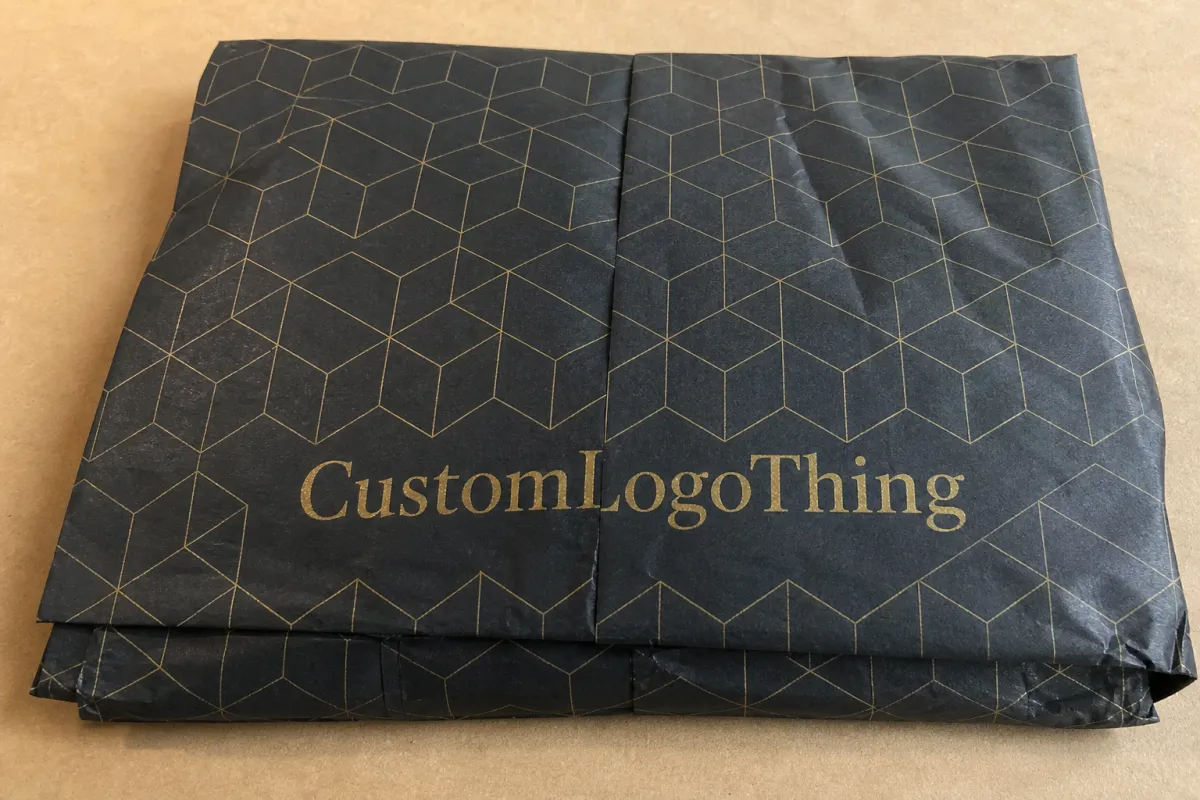
The inside of a box often creates a stronger premium impression than the exterior, especially when the product is small, fragile, giftable, or meant to feel personal. A watch, candle, leather accessory, skincare set, or jewelry item can look expensive on its own, but the reveal becomes memorable only when the packaging supports it. Custom tissue inserts for luxury boxes are one of the simplest ways to make that reveal feel intentional.
Think about the difference between a random sheet of tissue and one that is sized, folded, and placed to expose the product at the right moment. The first says, “We needed something soft.” The second says, “We planned this.” Luxury packaging lives on that distinction. Buyers are not asking for theatrics. They want restraint, consistency, and proof that the brand understands presentation.
There is a practical side too. Tissue can stop small scuffs, keep products from shifting, and reduce direct contact with rigid box walls. For coated surfaces, polished metal, glass, and delicate textiles, those layers matter. In shipping, tissue will not replace structural protection, but it can reduce cosmetic damage and keep the unboxing experience tidy after transit.
Basic tissue and custom tissue do not behave the same way. A random sheet may be the right color and still feel wrong because the fold is loose, the sheet size is off, or the print lands in an awkward visual spot. A custom insert, by contrast, can be tuned for paper weight, repeat pattern, edge treatment, fold direction, and box depth. The same box can read as standard or elevated depending on those choices.
From a packaging buyer’s point of view, the most useful question is not “Can we add tissue?” It is “What job should the tissue do?” If the answer is protecting the finish, framing the item, concealing the product until the reveal, or echoing a campaign theme, then custom tissue inserts for luxury boxes make sense. If the answer is just “make the box look fuller,” the design needs a better reason.
Once the function is clear, the rest of the decision tree falls into place. Fit, material, print, lead time, and cost all follow from that first choice. Get the function right and the insert feels premium. Get it wrong and even expensive paper can look decorative but not useful.
How Custom Tissue Inserts Work Inside Luxury Packaging
A tissue insert is not just a sheet of paper placed inside a box. It is a shaped part of the packing sequence. Its dimensions, fold style, and placement determine how the customer sees the product and how the product behaves during handling. That is why custom tissue inserts for luxury boxes need to be designed with the box itself, not separately from it.
Start with the basics: box depth, product footprint, and opening direction. A shallow box with a flat item may only need a single-sheet wrap or a tidy layer that covers the product before reveal. A deeper rigid box might need a pocket fold, a wrap around a tray, or a liner cut to the inside dimensions. The right answer depends on how much the customer should see at first glance and how much protection the item needs before it is lifted out.
Common formats include single-sheet wraps, layered tissue, corner folds, pocket-style wraps, and decorative liners cut closer to the box shape. Each one changes the experience. A single sheet can feel elegant and controlled. Layered tissue creates a richer visual moment but may add bulk. Pocket folds are useful when the item needs to stay centered. Cut liners work well when the brand wants the inside to look finished rather than loosely stuffed.
Fit is everything. A sheet that is too small looks accidental and often leaves product corners exposed in a way that feels unfinished. A sheet that is too large bunches, shifts, and can make the box feel wasteful. That excess also complicates packing lines because operators have to refold paper by hand. In volume production, a beautiful design that slows packing by a few seconds per unit can become a real labor cost.
Tissue also interacts with secondary packaging elements such as stickers, belly bands, ribbon, cards, or seals. Those components can look elegant when they support the fold sequence, but they can also create clutter if every surface is trying to speak at once. A neat closure seal is often enough. If the tissue already carries branding, the box does not need to shout too.
In practical use, tissue works best when it is matched to the weight and fragility of the item. Light cosmetics, folded apparel, and stationery may only need a presentation layer. Heavier or more delicate products often need a second structure beneath the tissue: a molded tray, chipboard insert, foam support, or paperboard cradle. The tissue then handles surface protection and visual framing, while the inner support handles movement.
If the packaging will travel through e-commerce, do not confuse presentation with transport protection. The same insert that looks beautiful on a showroom table may fail after a drop. For distribution testing logic, it helps to think in terms similar to ISTA transport test standards: vibration, compression, and drop behavior all affect what the customer sees at the end. Tissue is part of that system, not a substitute for it.
Common configurations that work well
- Single-sheet wrap: Good for light, premium items where the reveal should feel crisp and minimal.
- Layered tissue: Adds a richer opening moment, often used for gifts or limited editions.
- Pocket fold: Helps center the product and keep it from shifting inside a rigid box.
- Cut liner: Best when the inside of the box should look as finished as the exterior.
The strongest custom tissue inserts for luxury boxes usually do one thing well instead of trying to do four jobs at once. They protect a surface, frame a product, and create a clear opening sequence. That is enough. More structure can be added if the item demands it, but decorative complexity alone rarely improves the customer experience.
Design Factors That Shape the Look, Feel, and Brand Story
Paper weight is the first design variable to get right because it changes almost everything else. Light tissue can feel airy and refined, but it can also tear during folding, especially if the packing team handles hundreds of units. Heavier tissue feels more substantial and tolerates more movement, yet it may reduce the delicate impression some luxury brands want. The right choice depends on product size, fold complexity, and whether the tissue must survive shipping or only in-store presentation.
Opacity matters just as much. A more translucent sheet can create a soft, layered reveal, letting the customer sense the product underneath before fully opening it. A more opaque sheet hides the item longer and gives the packaging a cleaner, more private feel. That is useful for cosmetics, jewelry, and high-end gifts where a controlled reveal can increase perceived value. Neither option is better in the abstract. They serve different brand stories.
Finish and texture shape the emotional read. A soft matte tissue tends to feel quiet and modern. A smoother sheet may fit a cleaner, more engineered brand language. Papers with a slightly more tactile surface can suit heritage, wellness, or romance-driven packaging design. The point is not to chase novelty. It is to make sure the paper texture matches the rest of the product packaging system.
Print coverage is another major decision. Full-surface graphics can work, but they can also flatten the material and make it feel closer to promotional print than luxury wrapping. In many cases, a restrained logo repeat, a border treatment, or a subtle corner mark feels more premium than a loud all-over pattern. Luxury often reads as disciplined repetition, not volume.
Placement deserves more attention than many brands give it. A logo placed where it appears only when the tissue is lifted can create a better reveal than a logo centered in every sheet. The same applies to pattern repeat. Small repeats may feel refined. Large repeats can dominate the surface and distract from the product. The brand’s visual system should make that call, not the printer’s default template.
Color is where the stakes rise quickly. Tissue color should either echo the box exterior or create deliberate contrast. Matching the box can build a calm, unified look. Contrast can add drama, especially when the inside reveal is meant to surprise. A pale blush tissue in a deep charcoal rigid box, for example, can feel more memorable than a perfectly matched neutral stack. That said, contrast only works when it is controlled. Random color difference reads as mismatch.
Sustainability claims belong in the design discussion too. Recycled content, acid-free stock, and FSC certification can support a credible material story, but only if the actual spec matches the claim. If the product is sensitive to acid or expected to sit in storage, acid-free paper has a practical use beyond marketing. If the brand wants a chain-of-custody claim, the relevant paper source needs to support it. The FSC system is one of the better-known references here because it gives buyers a recognizable framework for responsibly sourced material.
One more packaging detail matters for trust: inks and coatings. Heavy coverage can interfere with the soft hand that luxury buyers expect. It can also complicate recycling pathways, depending on the substrate and local collection rules. That does not mean printed tissue should be avoided. It means the print spec should be designed with the end-of-life story in mind, not added as an afterthought.
If the project sits under a broader package branding program, the tissue should not feel like a separate product. It should echo the same tone as the carton, label, sleeve, and insert system. This is where branded packaging becomes more persuasive than isolated branding. A customer may not consciously notice that the inside and outside are coordinated, but they will feel the consistency.
Production Steps, Timeline, and Lead Time Planning
The production process for custom tissue inserts for luxury boxes usually follows a predictable path, but delays tend to cluster in the same places. The sequence starts with a brief, then dimensions, then artwork, then sampling, then production, then packing and shipping. Simple on paper. Less simple in practice, because a small change in any one step can ripple into the next.
First comes the brief. The supplier needs box dimensions, product dimensions, fold style, print coverage, material preferences, and the intended use case. A tissue wrap for a shelf display is not the same as one packed into an outbound mailer. If the insert has to support a seasonal launch, a gift set, or a retail packaging rollout, that should be stated early because it changes the tolerance for error and the acceptable lead time.
Simple unprinted tissue can move relatively fast. Printed tissue usually takes longer because artwork must be checked for scale, repeat, registration, and ink behavior on paper. A fully custom insert with specific fold geometry, cut dimensions, or specialty finishes adds another layer of approval. The more the insert depends on visual alignment, the more time the project needs for sampling.
Humidity and storage conditions matter more than many teams expect. Tissue can pick up moisture, curl at the edges, or hold a memory from tight bundling if it is stored badly before packing. That is not a dramatic defect, but it can turn a clean fold into a frustrating one. Warehouses with temperature swings or poor pallet wrapping often create problems that look like print issues when they are really handling issues.
For planning purposes, a straightforward run may take roughly 10 to 15 business days after proof approval, depending on quantity and supplier location. More complex orders often stretch to 15 to 25 business days or more, especially if color matching, overseas sourcing, or multiple revision cycles are involved. Rush timelines are possible in some cases, but they usually trade away flexibility and can raise cost quickly.
Lead time risks are easy to miss because they hide in small decisions. Late artwork edits can reset approval. Box measurements that are off by even a few millimeters can force a new fold spec. A color match request may require additional print calibration. If the insert must coordinate with a branded packaging launch, the schedule should include room for at least one sample round and a final sign-off window.
Careful product packaging planning pays off here. The clearer the team defines the function, the less time it spends reworking visual details later. A design team might see a logo placement as a minor tweak. A production team may see that same tweak as a new proof, a new press adjustment, and another approval cycle. The gap between those viewpoints is where delays happen.
Buyers ordering custom printed boxes or inserts together should sequence the projects in a way that avoids rework. Final box dimensions should be locked before the tissue spec is approved. If the insert depends on the box interior, the box cannot stay “close enough” and the paper be expected to fit perfectly later. In packaging, “close enough” often becomes expensive.
For brands managing more than one packaging component, a coordinated procurement plan helps. If the outer carton, tissue, and accessory cards all ship together, a delay in one item can create a bottleneck at packing. Aligning timelines across components may not sound glamorous, but it can save a launch. If the broader packaging build needs to be assembled from several parts, it may help to source the core items through Custom Packaging Products that can be spec’d as a family rather than as unrelated pieces.
A simple way to reduce risk is to treat sampling as mandatory, not optional. The mockup should be tested with a real product inside the actual box. Empty boxes hide problems. Real products reveal them immediately: paper can snag on rough edges, a fold can obscure a logo, and an insert can feel too loose once weight is added. That sample tells the truth faster than any PDF proof.
Cost, Pricing, MOQ, and Quote Drivers
Pricing for custom tissue inserts for luxury boxes is driven by more than paper cost. The quote usually reflects paper grade, sheet size, print coverage, number of colors, cutting or folding complexity, packing method, and freight. If the project needs special presentation packing or assembly, labor can matter as much as the substrate. That is why two inserts that look similar at a glance can land at very different price points.
MOQ, or minimum order quantity, matters because setup costs have to be spread across the run. Even a simple one-color tissue job carries proofing and production setup. Smaller runs therefore cost more per unit. That does not mean short runs are bad. It just means the unit economics change. For limited-edition launches, influencer kits, or boutique product packaging, a higher per-piece cost may be acceptable because the value of the presentation is also higher.
Restraint can lower cost without making the insert look cheap. In fact, some of the most elegant tissue designs are not the most expensive. A clean, well-placed logo on a good sheet often feels more premium than a dense print pattern on weak paper. Complexity is frequently what raises cost. Elegance is usually about discipline.
Below is a practical pricing comparison that packaging buyers can use as a rough benchmark. Actual quotes will vary by supplier, paper source, order size, and freight mode, but the structure of the cost usually follows the same logic.
| Option | Best For | Typical Cost Signal | Main Tradeoff |
|---|---|---|---|
| Plain unprinted tissue, cut to size | Simple luxury presentation, internal wrapping, light protection | Often the lowest unit cost; smaller runs may still carry setup fees | Less brand presence unless the box itself does more work |
| One-color branded tissue | Balanced branded packaging for gift sets and retail packaging | Moderate pricing; common for runs of 2,500 to 10,000+ | Requires proofing and careful ink coverage to avoid a flat look |
| Two-color or repeat-pattern tissue | Stronger package branding and seasonal product packaging | Higher than one-color because of registration and press setup | Can look busy if the repeat is too large or the color contrast is too strong |
| Fully custom fold format with print and specific cut | Luxury boxes with a defined reveal sequence and tighter fit | Usually the highest per-unit cost and more sampling time | Best presentation control, but less forgiving on timing and budget |
A useful quote should break out setup fees, unit price, sampling cost, freight, storage, and any assembly charge. If the supplier only gives one number, ask for the components separately. That makes it easier to compare quotes across vendors and easier to understand whether the first order is expensive because of setup or because the spec is genuinely premium.
For planning, many teams do better budgeting by cost per finished box rather than cost per sheet. A tissue sheet that costs only a few cents can still carry real business value if it raises perceived value, reduces return complaints about damaged finish, and supports a higher retail price point. That does not mean the tissue should be over-engineered. It means the purchasing decision should be tied to the box experience, not only the paper invoice.
One more comparison helps here: a $0.12 insert that makes a $60 gift box feel coherent is usually a better spend than a $0.04 insert that looks incidental and weakens the brand story. The point is not to inflate packaging costs. The point is to spend the dollars where the customer can feel them.
Common Mistakes That Make Tissue Inserts Look Cheap
The fastest way to downgrade a luxury box is to choose tissue that tears too easily, shines too much, or feels brittle in the hand. Thin paper can be beautiful, but if it splits while packing or arrives wrinkled, the presentation collapses. Luxury buyers are very sensitive to material honesty. They can feel the difference between delicate and disposable.
Overprinting is another common problem. A full-field pattern can be visually strong, but too much ink often flattens the paper and makes it feel less textile-like. The sheet can lose the soft, airy quality that helps it read as premium. The visual result may also drift toward promotional rather than elegant. A branded packaging element should support the product, not compete with it.
Ignoring box depth or product shape creates all kinds of small failures: puckering at the corners, loose wraps that slide out of place, folds that cover the wrong surface, or a repeated pattern that no longer lines up in a predictable way. These are the details that make a tissue insert look improvised. A good design anticipates the exact geometry of the box.
Skipping physical samples is a surprisingly expensive mistake. Print color can shift on tissue, folds can behave differently than expected, and the hand feel can change once the paper is cut. A mockup built from a PDF or flat proof is not enough. The product has to be packed, closed, opened, and viewed the way a customer will see it.
Sustainability claims are another trap. A brand may say the insert is eco-friendly, yet the paper spec, ink load, or coating tells a different story. Buyers notice inconsistency fast. If the material narrative says recycled and the sheet feels plasticky, the claim loses credibility. If the product is meant to align with responsible sourcing, the spec should support that story clearly.
There is also a quieter mistake: using the tissue to compensate for weak box design. Paper cannot fix a poor structure, flimsy construction, or awkward product fit. It can elevate a strong system, but it cannot rescue a broken one. If the box itself is not doing its job, the insert is being asked to work too hard.
For brands comparing options, it helps to remember that custom tissue inserts for luxury boxes are a finishing layer. They are not the whole packaging system. When the insert, box, and product tray work together, the result feels controlled. When each component is designed separately, the customer sees the disconnect immediately.
Expert Tips and Next Steps for Better Ordering
Start with function before artwork. Decide whether the tissue must protect, frame, conceal, or reveal the product. That answer shapes everything else: sheet size, opacity, color, print coverage, fold style, and whether the insert needs a second support component. Strong packaging design usually begins with a simple operational question, not a graphic one.
Pick one visual idea and execute it well. A precise logo placement, a disciplined repeat pattern, or a subtle edge treatment often works better than crowded decoration. Luxury brands tend to win by editing, not by adding more. The paper should feel designed, not busy.
Use the real product during sampling. A box mockup without the item can fool everyone into thinking the fold is fine. Once the product goes in, the truth appears. Weight changes the drape. Surface texture changes how the tissue slides. A rigid corner can tear the sheet. Sampling with the actual product saves time later.
If the insert will be handled at scale, ask about packing efficiency. A beautiful fold that takes too long to replicate on the line may raise labor cost more than the material itself. That is especially true for custom printed boxes and kits assembled in repeated runs. Good packaging is not only attractive. It is repeatable.
One practical detail gets overlooked all the time: talk to the people who will actually pack the box. If the fold sequence makes them slow down, improvise, or fight the paper, the final result will show it. A specification that looks clean in a mockup can fall apart on a busy packing table. Production reality is not glamorous, but it is where luxury packaging either holds up or gets messy.
Here is a practical ordering checklist that keeps the project grounded:
- Measure the box interior and the product footprint.
- Define the exact role of the insert.
- Choose paper weight, finish, and color family.
- Confirm logo placement, repeat pattern, or edge treatment.
- Request a sample with a real product inside the box.
- Review unit cost, setup charges, freight, and MOQ.
- Approve the final spec only after the sample behaves correctly.
When the order sits inside a broader packaging program, consistency across the box, insert, and accessory set matters more than any single flourish. A coordinated system feels intentional from the first touch to the last. That is the real value of custom tissue Inserts for Luxury Boxes: they make the experience feel deliberate, repeatable, and premium without trying too hard.
If you get the fit right, choose the right paper, and keep the print disciplined, the insert will do its job quietly. That is usually the best outcome. In luxury packaging, the strongest details are often the ones that do not need to announce themselves. They simply make the whole box feel finished, and custom tissue inserts for luxury boxes do exactly that when they are specified with care.
FAQ
How are custom tissue inserts for luxury boxes different from standard tissue paper?
Custom versions are sized to the box and product, so they fit cleanly instead of shifting or bunching. They can also include branding, color matching, or specific folds that support a premium reveal. Standard tissue may protect lightly, but custom tissue helps presentation look intentional and consistent.
What paper weight works best for custom tissue inserts for luxury boxes?
A lighter sheet can feel elegant, but it still has to hold up during folding and packing. Heavier tissue is better for larger products or inserts that need more structure and tear resistance. The right weight depends on the product surface, box depth, and whether the tissue is decorative or protective first.
What affects the cost of custom tissue inserts for luxury boxes?
Paper grade, sheet size, print coverage, and the number of colors usually drive pricing the most. Lower quantities raise the unit cost because setup and production are spread across fewer boxes. Complex folds, specialty inks, and rush timelines can add cost quickly.
What is the typical lead time for custom tissue inserts for luxury boxes?
Simple unprinted tissue can move faster than printed or color-matched inserts. Sampling, design revisions, and custom production steps usually add time before shipment. The safest approach is to finalize measurements and artwork early, then build in buffer time for approval.
Can custom tissue inserts for luxury boxes be sustainable?
Yes, if the paper has recycled content or FSC certification and uses inks that fit the recycling story. Acid-free options are useful for products that need extra care during storage or shipping. The key is matching the sustainability claim to the actual material spec and production method.

