Open-top totes do a decent job until the contents shift, spill, or get handled more roughly than expected. Add a zipper and the bag changes category. It holds items more securely, looks more finished, and behaves less like a loose giveaway and more like practical retail packaging.
That extra closure is not only about safety. It affects presentation, shipping performance, reuse, and the buyer’s perception of quality before the bag is even opened. For brands comparing packaging options, Custom Tote Bags with zipper sit in a useful middle ground: more functional than an open tote, usually less expensive than rigid packaging, and easier to reuse than many single-use promotional items.
Still, a zip tote is only as good as its materials, structure, and production control. A weak zipper on a thin body creates a bag that looks upgraded in theory and disappointing in hand. A properly specified tote, by contrast, can handle retail purchase carryout, event kits, sample sets, travel items, and branded gifting without feeling improvised.
What custom zipper tote bags actually solve
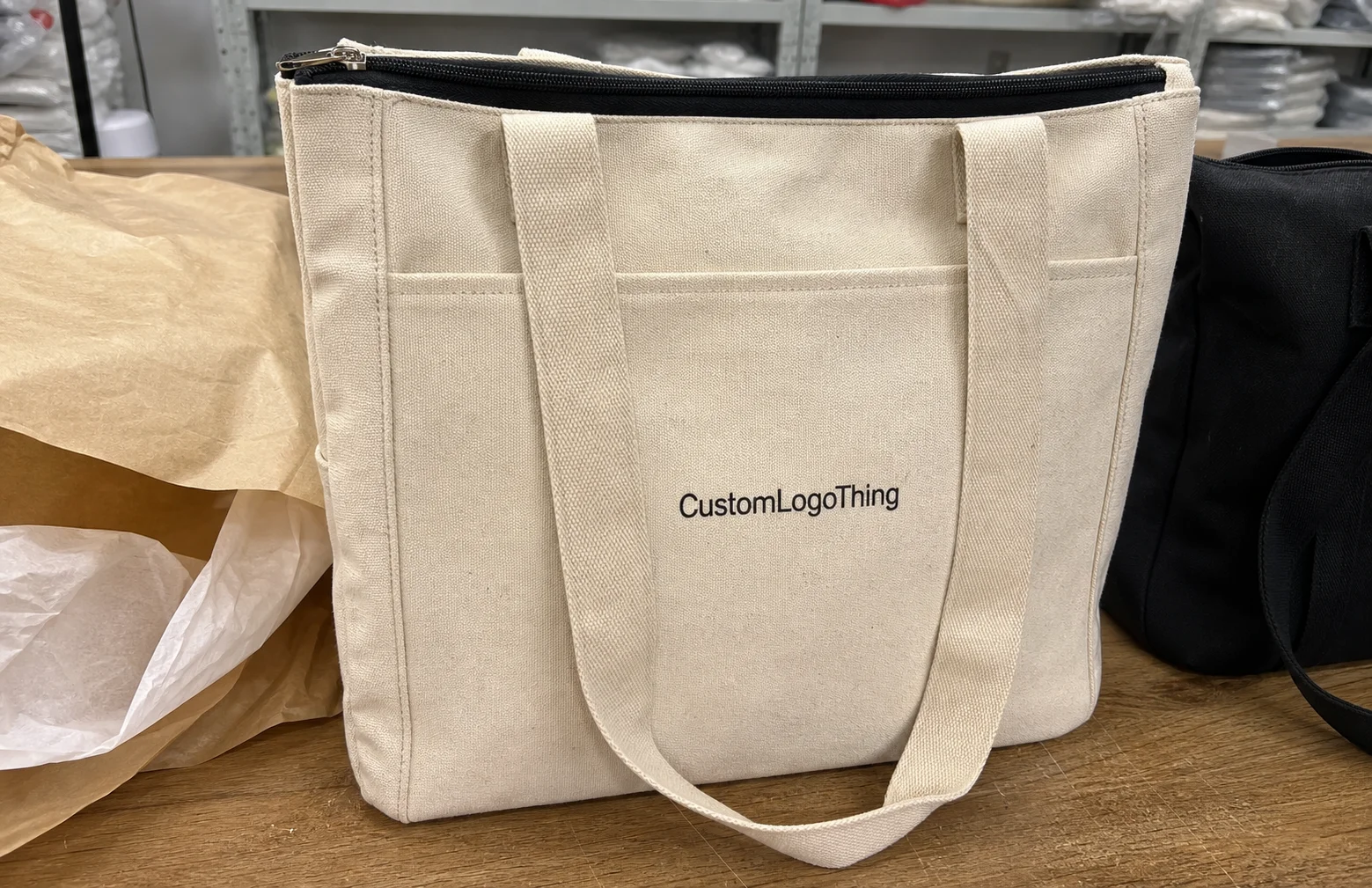
The most obvious problem they solve is containment. If the contents can slide, spill, wrinkle, or disappear into the bottom of the bag, a zipper helps. That sounds simple because it is. Yet in actual use, it prevents the kind of small failure that ruins the customer experience: a sample bottle leaking inside the bag, folded literature bending during transit, or lightweight items falling out of an open top in a car or on a desk.
They also solve a presentation problem. A tote with a clean closure looks more intentional than an open sack with a logo on it. That matters for retail purchases, employee onboarding kits, hotel welcome items, and promotional sets where the bag itself is part of the brand impression. Buyers often notice this before they notice print coverage or fabric weight. The bag feels closer to a product than a handout.
From a materials standpoint, the closure works best when the body supports it. Laminated PP woven tote bags hold their shape better and resist moisture more effectively than plain non-woven. Canvas and cotton blend bags offer a softer, more premium hand feel, though they typically cost more and show sewing details more clearly. Recycled PET is a practical choice for mid-range branded programs because it can offer decent durability without pushing the budget too hard, though texture and finish vary more from supplier to supplier than many buyers expect.
There is also a quality expectation shift once a zipper is added. Open totes can hide slightly uneven edges or lighter construction. A zip tote invites closer inspection. The stitching needs to be cleaner, the zipper needs to run without snagging, and the handles need to feel reinforced rather than decorative. That is not a marketing claim; it is a production reality.
Practical rule: if the bag needs to carry anything that can spill, scratch, bend, or fall out, a zipper is usually justified. If it only carries paper inserts, a pen, and a flyer, the added cost may not be worth it.
How the zipper tote bag structure works
The basic structure is straightforward, but small details decide whether the bag feels well made. A typical zip tote includes the bag body, zipper tape, slider, pull tab, seam allowances, handle attachment, and sometimes lining or internal reinforcement. If any of those elements is too light for the load, the bag starts to look cheap even if the artwork is excellent.
Top-zip construction is the most common because it is easy to open and close and does not interfere with everyday use. Full-zip bags can extend across the top and sometimes partway down the side, which improves access to larger contents. Partial-zip styles can reduce cost, but they also reduce closure performance. For buyers who want real containment, partial zip is usually a compromise rather than a feature.
The zipper type matters more than many first-time buyers realize. Nylon coil zippers are common because they are flexible, affordable, and easy to sew into lighter bags. Molded plastic zippers often feel sturdier and can be a better match for heavier tote bodies. Metal zippers give a more premium impression, but they add weight and cost, and they do not rescue poor construction elsewhere. A premium-looking zipper on weak fabric still leaves a weak bag.
Handle reinforcement is another point where good bags and average bags separate. If the handles are attached close to the zipper tape or across a stress-heavy seam, reinforcement is non-negotiable. Box stitching, bar tacks, and cross-stitching are common methods used to keep the handle area from tearing under load. They are not decorative details; they are the difference between a tote that survives repeated use and one that starts fraying after a few outings.
Print placement deserves the same attention. Artwork can be placed on the front panel, but logos that cross a seam, gusset fold, or zipper track often distort after sewing. Safe margins usually need to be planned in advance, especially near the top edge where the zipper and seam allowances compress the artwork. A layout that looks perfect on a flat mockup may look off once the bag is assembled.
For buyers building a broader packaging program, it often makes sense to think beyond one item at a time. Tote bags, inserts, tissue, and printed cartons work better when they share the same color logic and finish level. Many teams coordinate these with Custom Packaging Products so the entire kit feels deliberate rather than assembled from unrelated pieces.
Key material, size, and print factors to compare
Size is one of the first decisions to get right, because the wrong dimensions create visible problems immediately. A tote that is too small forces the zipper to strain against the contents. A tote that is too large can make the contents shift around and leave the bag looking underfilled. For small retail inserts or compact event kits, something around 10 x 12 inches may be enough. For larger conference materials, apparel, or product bundles, 14 x 16 inches or larger is often more practical. Gusset depth usually runs between 3 and 6 inches, depending on what the bag needs to hold.
Material choice shapes both the price and the way the bag is perceived. Non-woven polypropylene is typically the budget-friendly option, especially for short promotional runs or lightweight handouts. It can work well, but it will not disguise thin construction. Laminated PP woven material provides more structure and often better moisture resistance, which is useful for retail carry bags or repeat-use grocery-style packaging. Canvas and cotton blends feel more premium and tend to photograph well, although they require more careful sewing and usually carry a higher unit price. Recycled PET is increasingly common for brands that want a cleaner sustainability story without moving into luxury pricing.
Print method should match both the artwork and the fabric surface. Screen printing remains the most efficient option for simple logos and one- or two-color branding. Heat transfer is useful for smaller runs or more detailed graphics, though the printed area can feel like an applied patch if the material is rough or the artwork is oversized. Digital transfer and sublimation can handle fuller color ranges on compatible materials, but they are not magic. Photo-style artwork on a coarse woven texture still tends to lose detail, no matter how good the file looks on screen.
Hardware details are easy to overlook and expensive to change later. Zipper color can either blend with the body or stand out as a design feature. Pull tabs can be plain or branded, and the finish on the slider can make the bag feel more polished even when the rest of the construction is simple. These touches do not matter as much as fabric weight or seam strength, but they do influence the finished impression. A bag feels more intentional when the zipper tape, slider, and body color are not fighting each other visually.
| Option | Best for | Typical feel | Common tradeoff |
|---|---|---|---|
| Non-woven with zipper | Promo giveaways, event kits | Light, low-cost, basic | Less structure, lower perceived value |
| Laminated PP woven | Retail packaging, grocery-style use | Stiffer, more durable | Can feel less premium than canvas |
| Canvas or cotton blend | Premium gifting, lifestyle branding | Soft, upgraded, reusable | Higher cost, slower sewing and print handling |
| Recycled PET | Mid-range retail and brand programs | Balanced, practical | Texture and availability vary by supplier |
For teams comparing custom printed boxes with tote bags, the same rule applies: the packaging needs to fit the job. A visually appealing bag is fine, but a functional bag is the one that gets ordered again.
Custom tote bags with zipper: process, timeline, and lead time
The production flow is usually straightforward, but delays often appear at the handoff stages. The process generally starts with a specification sheet that defines material, dimensions, zipper style, print method, quantity, and delivery expectations. Artwork then gets reviewed for placement and file quality. If the order is more custom, a sample or pre-production proof follows. After that come bulk production, finishing, packing, and freight booking.
Lead time depends heavily on complexity. Simple orders using standard materials and one-color printing can often move in roughly 12 to 18 business days after proof approval. More customized builds, especially those with color-matched zippers, unusual sizes, multiple print areas, or heavier materials, usually need around 20 to 30 business days. That range can stretch further if the production schedule is crowded or if the order requires sampling, special hardware, or repeated approval rounds.
Sampling is valuable for more than one reason. It can catch zipper placement issues, handle length problems, print alignment errors, or unexpected changes in how the material folds once sewn. It also gives a more realistic picture of the finished feel than a flat mockup ever can. The downside is time. A sample may add several days, and sometimes more if the body material or zipper color needs to be sourced specifically for the order.
Most production delays come from predictable causes: artwork not supplied in vector format, missing dimensions, late color confirmation, or a zipper shade that looked acceptable in a file but not under actual light. That is why a complete spec sheet matters. It saves time, reduces clarification emails, and prevents preventable mistakes from becoming expensive ones.
For buyers who evaluate packaging from a transit and compliance angle, it helps to ask the supplier whether they follow relevant durability checks for the product type. Some teams also reference ISTA packaging test guidance when the bag will travel with heavier contents or bundled goods. If sustainability claims are part of the purchase criteria, documentation matters too. Recycled content, certification references, and material statements should be verifiable rather than vague, and any paper components can sometimes relate to FSC certification if that is truly part of the build.
Shipping adds its own layer of timing. Air freight can keep a tight launch schedule on track, but the cost is usually much higher. Sea freight protects the budget better, though it requires more planning and a wider buffer. The actual decision usually comes down to whether the tote is supporting a time-sensitive campaign or a replenishment order with a less urgent delivery window.
Cost, pricing, and MOQ: what drives the quote
Pricing for Custom Tote Bags with zipper is mainly driven by material, size, print coverage, zipper quality, hardware, finishing details, and quantity. That list is simple, but each item affects labor, setup, or sourcing. A slightly larger tote may require more fabric and longer sewing time. A custom puller adds a step. A matched zipper color can slow sourcing. Full-panel printing is more involved than a small front logo. Every upgrade has a cost somewhere in the process.
Minimum order quantity also changes the unit price in a noticeable way. Lower quantities are convenient for pilots, launches, or niche programs, but they usually carry a higher per-unit cost because setup expenses are spread across fewer bags. Larger runs tend to lower the unit price, although that does not automatically make them the best choice if the design is still being tested.
These ranges are only directional, but they help set expectations:
- Budget promo builds: roughly $0.80–$1.80 per unit at higher quantities for simple non-woven or light woven styles.
- Mid-range branded bags: about $1.80–$4.50 per unit for improved materials, better zippers, and more polished print coverage.
- Premium retail-ready bags: often $4.50 and up per unit when heavier fabric, refined hardware, lining, or more complex decoration is included.
Those numbers can move quickly with size changes, reinforcement, print method, or fabric availability. A larger gusset, a stronger zipper, or a more detailed graphic can push pricing up faster than buyers expect. Freight, duties, and local delivery can also change the real landed cost, which is why unit price alone is not enough for a fair comparison. A bag that looks cheap on paper can become expensive once shipping and handling are added.
Sampling may add cost as well. Some print methods involve setup or plate charges. Special packing, such as polybagging each unit or inserting cardboard supports, adds labor. If precise color matching matters, there may be extra time spent on approvals and, in some cases, additional sourcing cost. None of these are surprising once the order is fully specified, but they do need to be budgeted from the beginning.
If you are comparing these against other branded packaging items, do not assume the tote is automatically the lower-cost option. Sometimes a mixed package of custom printed boxes, inserts, and a smaller zip tote delivers a better result than one oversized bag with too much decoration. The right choice depends on the product and the occasion, not just the sticker price.
Step-by-step buying checklist before you place the order
Start by defining the real use case. A tote for retail checkout does not need the same structure as a tote for travel items, cosmetics, or electronic accessories. Once the use is clear, the right material and closure style usually become much easier to identify.
- Define the load. List what the bag must carry and whether it will be reused often.
- Choose the material. Match the bag body to the budget, the expected weight, and the brand impression you want.
- Select the zipper style. Full zip offers better containment, while simpler top-zip formats can keep costs lower.
- Approve artwork placement. Check margins near seams, gussets, and zipper tracks before production begins.
- Request a sample or proof. If the order matters, this step is usually worth the time.
- Confirm the delivery plan. Production time, freight method, and destination all affect the actual arrival date.
It also helps to request at least two quote options if you are unsure about the spec. A budget version and a more durable version can reveal whether the extra spend is giving you stronger stitching, better hardware, or just nicer wording in the quote. Seeing the difference side by side is often more useful than asking for one “best” price and guessing what got left out.
File quality matters more than many buyers expect. Vector artwork is usually the safest starting point because it prints cleanly and scales without losing detail. A screenshot or low-resolution logo can create fuzzy edges, awkward placement, or delays while the artwork is rebuilt. If the bag has multiple print areas, make sure every panel is named clearly so the production team can follow the intended layout without guessing.
Common mistakes that create expensive reorders
The most expensive mistakes are usually not dramatic. They are small mismatches between expectation and production reality. A bag that is slightly too small can make the zipper strain. A bag that is too large can look empty and lose the sense of polish the buyer wanted. Both problems are avoidable with a better spec sheet.
Artwork placement is another common source of trouble. Logos placed too close to seams, zipper ends, or gusset folds can distort once the bag is sewn. The flat mockup may look fine, but the finished tote has structure, and structure changes print geometry. If the artwork ignores that, the result can look awkward even when the printing itself is technically accurate.
Price-only buying creates a different kind of problem. The lowest quote often hides thinner fabric, weak stitching, or a zipper that feels fine in a photo and disappointing in hand. That may be acceptable for the lightest promotional items, but it becomes a liability when the bag needs to hold anything heavier than folded paper. A cheap bag that fails in use is rarely cheap after the reorder.
Skipping sample approval is another habit that leads to waste. A sample shows how the zipper moves, how the handles sit, how the print lands near seams, and how the material feels under real handling. If the sample is off and the bulk order goes ahead anyway, the mistake scales instantly. That is a difficult way to learn a packaging lesson.
Finally, buyers sometimes forget to align the bag with the use case. Retail display, gifting, shipping inserts, travel kits, and event giveaways all call for slightly different specifications. A bag meant for a hotel welcome set may need a more polished finish. A bag for a trade show kit may need stronger handles and more storage depth. Same product category, different job.
Good buyer habit: decide what the bag has to do first, then refine the branding around that requirement. Starting with the artwork usually costs more later.
Expert tips and next steps for a better order
In practice, the strongest orders begin with function and end with decoration, not the other way around. That sequence sounds obvious, yet many packaging problems begin when the logo drives the decision before the load, the closure, or the material have been defined.
If the order matters, ask for a few versions instead of one. A light-duty promo build, a mid-range branded option, and a more premium retail-ready spec can make the tradeoffs clear quickly. That comparison usually shows where the extra cost goes: stronger fabric, better stitching, improved zipper quality, or more careful finishing. It also makes it easier to decide whether the upgrade is worth it for the intended use.
For heavier items, ask for photos or samples of the zipper track, handle reinforcement, and seam finish. These details matter more than a polished mockup. A tote can look excellent in a render and still feel weak if the handles are not reinforced or the zipper does not glide smoothly. Functional details are what separate a durable bag from one that only photographs well.
Before approving the order, keep a simple internal checklist:
- Size and gusset depth
- Material type and thickness
- Zipper style and color
- Artwork placement and file format
- MOQ and unit price
- Sampling plan
- Production timeline
- Shipping method and destination
If you are building a broader branded packaging program, check how the tote sits beside the rest of the kit. Boxes, tissue, inserts, and carry bags should feel like part of the same system. A zipper tote that clashes with the rest of the packaging can make the whole set look less considered, even if the bag itself is well made.
For a clean buying process, gather the logo file, target quantity, intended use, and delivery window before requesting a quote. Then compare the specs carefully instead of only comparing the lowest number. That approach usually leads to better custom tote bags with zipper, fewer surprises during production, and fewer reasons to reorder later.
What are custom tote bags with zipper best used for?
They are best for situations where contents need more security, cleaner presentation, or better containment. Common uses include retail purchases, event kits, corporate gifting, travel packs, and product packaging inserts.
How do zipper tote bags compare to open tote bags?
Zipper tote bags offer better closure, better protection during transport, and a more finished look. Open totes are usually cheaper and quicker to produce, but they are less reliable for carrying mixed or loose contents.
What affects the price of custom zipper totes the most?
Material, size, print coverage, zipper quality, hardware, and quantity are the main price drivers. Lower order volumes usually raise the per-unit price because setup costs are divided across fewer bags.
How long does the process usually take?
Simple orders may finish in about 12 to 18 business days after proof approval, while more customized builds often need 20 to 30 business days or more. Shipping time depends on whether the order moves by air or sea.
What should I check before approving a sample?
Check zipper function, seam quality, handle reinforcement, print placement, and overall size. Make sure the sample matches the intended use and the written spec, not just the mockup.


