A flyer gets one glance, maybe two, and then it usually ends up folded in a pocket or dropped into the nearest bin. Custom Trucker Caps for outdoor brand promotions keep working long after the event ends, because every walk to the trailhead, every farmers market run, and every post-event coffee adds another impression. That difference matters more than many buyers expect.
From a packaging and promotional planning point of view, the cap behaves more like a durable brand asset than a disposable handout. It carries identity, earns repeated use, and either makes the brand feel intentional or makes it look rushed. Outdoor audiences notice comfort quickly. If the cap fits, breathes, and looks clean in photos, it gets worn. If it pinches, traps heat, or looks generic, it disappears into a drawer.
A promo cap is only cheap if people wear it. If it lives in a bag, the real cost is much higher.
Why trucker caps outperform flyers at outdoor events
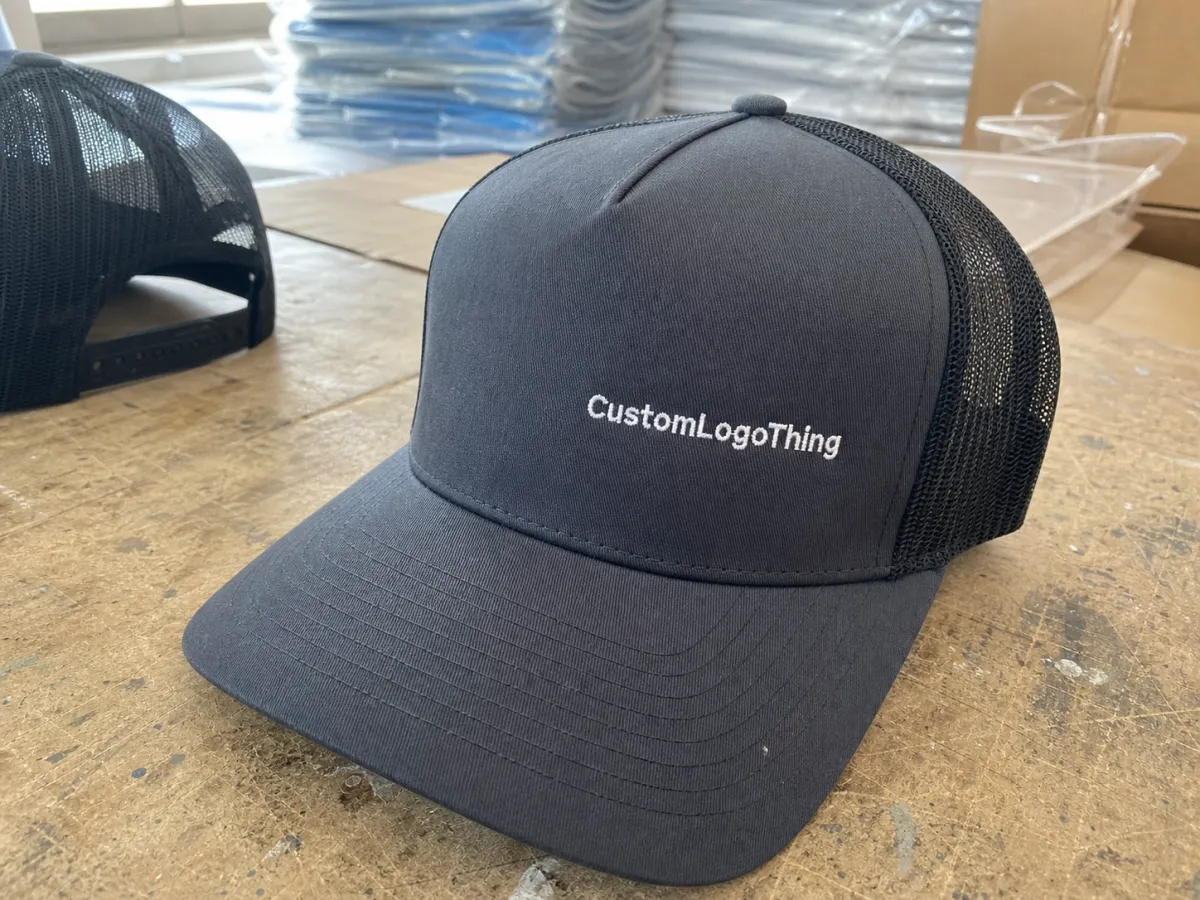
A trucker cap is easy to define, but the details matter. Most versions use a structured foam or cotton front, a mesh back for airflow, a curved or flat bill, and an adjustable closure such as a snapback. That combination makes sense outdoors because it solves a basic problem: people want shade without feeling overheated. A flyer cannot do that. A cap can.
That is why these caps show up everywhere from trail races and beach launches to festival booths, field activations, and weekend retail pop-ups. The format fits warm, active settings where people are on their feet for hours. Instead of handing out a paper item that competes with every other piece of event clutter, you give something functional. Utility changes the psychology of the giveaway.
The branding payoff is straightforward. The front panel becomes a moving sign, and the mesh back makes the item feel like gear instead of junk. A clean logo on the crown can travel far beyond the event itself. It appears in car selfies, hiking photos, team check-ins, and everyday errands. That is a stronger return on attention than a handout that vanishes after lunch.
For outdoor brands, that matters because the audience already values practicality. A sun-shielding accessory feels aligned with the category. A well-made cap can support brand identity the same way thoughtful product packaging supports a purchase: it gives the brand a physical shape, not just a logo. That is why cap programs often sit alongside retail packaging or custom printed boxes for kits and launches, especially when the goal is to create a strong unboxing experience or reinforce package branding at the first touch.
There is also a small but meaningful logistics advantage. Caps pack flatter than many apparel items, and they hold their perceived value better than paper collateral. A decent cap does not need to be explained. People understand how to use it the second they see it.
How custom trucker caps for outdoor brand promotions work
The buying logic is simple, but each decision changes the final result. First, choose the cap body: foam front, cotton front, or a blended build. Then upload the logo art, decide how it should be decorated, confirm quantity, and approve the proof before production starts. The process is familiar to anyone who has ordered product packaging or other branded merchandise, but caps have their own traps, especially around stitch size, panel shape, and logo legibility.
Placement changes the impression more than most people expect. A front patch can make a cap feel more stable and premium. Direct embroidery usually reads cleanly on simple logos and holds up well under frequent wear. A woven label gives fine detail without bulky stitching. Side hits and back tabs are subtler, which helps if the main logo already carries the visual weight. The wrong placement can make the cap look generic. The right one can make a standard silhouette feel custom-built.
In practice, these caps perform best in sun-heavy settings where wear time is long and comfort matters. That includes outdoor retail events, crew uniforms, sponsor activations, and gift-with-purchase campaigns. The most successful designs are easy to read from a few feet away. Not from a stage. Not from a close-up mockup. A few feet, in daylight, while someone is moving.
If the cap is meant to live beyond the event, readability and comfort have to work together. A logo that looks elegant in a proof but disappears in motion will not build recall. A cap that feels good but has no visual punch will not help brand memory. The sweet spot is a clean front mark, a wearable fit, and a decoration method that matches the audience's tolerance for polish versus utility.
One practical note: many buyers fixate on decoration first and treat crown shape as an afterthought. That usually leads to trouble. A shallow crown, stiff mesh, or awkward front panel can make even strong artwork feel less finished. The garment has to carry the design, not fight it.
Cost, MOQ, and pricing drivers to compare before quoting
Pricing is usually driven by five things: cap body quality, decoration method, logo complexity, packaging extras, and turnaround pressure. A basic foam-front snapback with a simple one-color mark can stay reasonably contained. Add woven patches, custom interior labeling, or premium stitching, and the price climbs quickly. Rush production adds another layer because it compresses both labor and scheduling flexibility.
MOQ is not just a factory rule. It is a cost-spread issue. A 100-piece run can be the right move for a local launch or a tight VIP program, especially if you want to test demand before a larger order. A 1,000-piece or 5,000-piece run usually lowers the per-cap price because setup costs and decoration prep are shared across more units. That is true for most branded items, including Case Studies programs where the scale changed how the order was structured.
Compare quotes by splitting out the line items. Setup fees, sample charges, freight, and add-ons like custom inside labels or hang tags should be visible. Otherwise, a quote that looks cheaper can end up more expensive once you account for shipping and finishing. If the caps are part of a broader launch kit, it helps to ask how the supplier handles Custom Packaging Products for the rest of the program, since cohesive presentation often matters more than the lowest unit price.
| Decoration option | Typical fit | Approx. cost impact at 500 pcs | Approx. cost impact at 5,000 pcs |
|---|---|---|---|
| Direct embroidery | Simple logos, durable wear, clean retail look | $1.25-$2.75 per cap | $0.70-$1.40 per cap |
| Woven patch | Sharper detail, slightly more premium feel | $1.80-$3.50 per cap | $0.95-$1.85 per cap |
| Silicone or TPU patch | Textured branding, strong shelf and photo impact | $2.25-$4.25 per cap | $1.20-$2.60 per cap |
| Heat transfer or print | Fine detail, gradients, lighter visual footprint | $1.10-$2.40 per cap | $0.60-$1.35 per cap |
For a standard promotional trucker cap, landed quotes often fall around $3.50-$6.50 per unit at 500 pieces and $2.10-$4.25 at 5,000 pieces before freight, depending on material and finish. Premium patch builds or custom color matching trend higher. That spread is normal. Buyers get into trouble when they compare a plain blank against a decorated, packed, and shipped unit as if they were the same thing.
If you are adding hang tags, paper inserts, or outer cartons, ask for responsibly sourced paper options. FSC-certified paper stock can make sense for collateral and secondary packaging, especially if the cap is part of a broader retail or event kit. For transit-packed orders, it is also reasonable to ask whether cartons are packed in a way that aligns with shipment testing logic used by organizations such as ISTA.
Another useful comparison is sample cost versus production savings. A small pre-production run or decorated sample can feel expensive at the quote stage, but it often prevents a mistake that would cost much more across a larger order. That is especially true when color accuracy or patch scale matters.
Process and turnaround: what happens after you approve art
Once the artwork is approved, the work shifts from design to production control. The normal sequence is artwork review, digital proof, material selection, sample or pre-production check, bulk run, finishing, packing, and shipment. Simple embroidery jobs usually move faster because the decoration path is straightforward. Patch-heavy orders, unusual colorways, and highly custom construction take longer because there are more points where a correction can slow things down.
Timelines vary, but a useful planning window is often 12-15 business days from proof approval for simple decorated stock caps, with 15-25 business days for more complex patch builds or special trims. Freight can add more time, especially if the order crosses busy shipping lanes or needs consolidation. That is why event buyers should treat the proof date as a gate, not a formality. If approvals sit for three days, the schedule usually shifts by three days or more.
Most delays come from a short list of preventable issues: missing vector files, unclear PMS references, logo revisions after the proof is already in motion, and late decisions about placement. A supplier can only move as fast as the information in hand. If the brand team has not settled on a front patch versus embroidery choice, the schedule will wobble. A clean spec sheet avoids that.
For programs tied to a festival, trail race, or seasonal launch, build buffer time before the visible deadline. The event window is not just the delivery date. It includes unpacking, sorting, and any internal distribution you plan to do. A cap arriving two days before the event is rarely as useful as one that arrives two weeks earlier.
Good production control also includes a basic quality check at packing. Buyers should ask whether loose threads are trimmed, whether patch edges are clean, whether closures are aligned, and whether mixed sizes or colors are packed separately. These are small things, but they are the small things that decide whether the order feels polished or hurried.
Materials, fit, and decoration choices that affect wearability
Front-panel material is the first comfort decision. Foam fronts are light and visually bold, which makes them strong for high-visibility promotions. Cotton fronts feel more natural and often look a bit more lifestyle-oriented. Poly blends sit between the two, giving structure with easier wear in heat. None of these is universally best. The right choice depends on how the cap will be used and how long it is expected to stay on a head.
Fit is just as important. Outdoor wear raises the stakes because sweat, wind, and sun expose weak construction quickly. Crown height affects how the cap sits in photos and on different head shapes. A curved bill feels classic and is often more practical for all-day use. A flat bill can look sharper in fashion-forward programs or youth-driven campaigns. Adjustable snapbacks are common because they reduce sizing friction, which matters when you are handing out a lot of units with little time for fitting.
Decoration method changes the final feel. Embroidery tends to be the most durable and usually signals quality fast. Patches add texture and can make a logo easier to see from a distance, especially when the cap body and logo colors are close. Heat transfer can support sharper detail or color gradients, which helps if the art is too complex for stitching. The tradeoff is simple: the more detail you chase, the more you need to think about long-term wear, edge lift, and color stability.
The best outdoor cap builds balance these factors. The logo should look good in photos, survive repeated use, and feel comfortable after several hours in the sun. That is the standard, not the exception. If the cap serves as part of a larger branded packaging system, the same logic applies to the rest of the kit: material choice, print clarity, and tactile quality should all point to the same brand identity. A strong package branding plan does not stop at the box. It carries through every touchpoint.
For buyers who care about sustainability messaging, this is also where material questions belong. Ask about recycled content where relevant, and ask whether the trim or insert components can be reduced. A cap program does not need to be overengineered to feel considered.
One point that gets missed often is stitching density. Too little stitch coverage can make a logo look sparse, while too much can stiffen the front panel and create an awkward curl near seams. The difference is subtle on a screen and obvious in hand.
Step-by-step ordering guide for a clean promo rollout
Start with the audience and the setting. Who gets the cap? Where will they wear it? How visible does the logo need to be from six feet away? Those answers narrow the field faster than any product catalog. A premium retail launch, a rugged crew uniform, and a high-volume giveaway all ask for different cap constructions. Treating them the same usually creates waste.
- Define the use case. Decide whether the cap is for staff, VIPs, customers, or event distribution. The answer shapes quality and price.
- Choose the silhouette. Foam front, cotton front, or blended build. Then confirm bill shape, crown height, and closure style.
- Prepare the artwork. Send vector files, PMS colors, and clear placement instructions. A flat JPG is rarely enough for clean production.
- Set the quantity tiers. Ask for a pilot order and a larger run quote so you can compare risk and unit economics.
- Review the proof carefully. Check contrast, logo size, stitch density, seam placement, and how the mark sits on the panel.
- Plan the handoff. If the caps are part of a larger product packaging system, align them with inserts, retail packaging, or custom printed boxes so the first impression feels deliberate.
A useful rule: if the cap is going into a bundled kit, the packaging should support the item instead of competing with it. A simple insert card can clarify the brand story more effectively than a crowded sleeve. A tidy unboxing experience also helps the cap feel like part of a branded system rather than a loose promotional object. That matters for brand memory.
Before approving, compare the proof against the event goal. A logo that is perfectly centered but too small will underperform. A bolder mark with slightly less ornament can often do more for recall. Most buyers discover this once they look at the cap at arm's length, not on a monitor.
If you need a benchmark, ask the supplier to show a standard build and a premium build side by side. The price delta is often easier to justify once you can see how texture, stitch count, and panel structure change the perceived value.
For internal approvals, keep the decision path short. One stakeholder for art, one for budget, one for timing. More voices can be helpful early, but too many late-stage comments usually create unnecessary revisions and increase the chance of missing the delivery window.
Common mistakes that weaken outdoor cap campaigns
The most common mistake is overcomplicated artwork. Thin serif text, tiny taglines, and multi-line logos often disappear once they are embroidered or reduced to patch size. A cap front panel is not a billboard. It is a limited canvas that needs a strong silhouette and high contrast. If the logo needs a careful explanation to work, it is probably too busy for the format.
The second mistake is choosing the lowest-cost cap without testing fit. If the crown is shallow, the closure feels flimsy, or the mesh scratches the forehead, people stop wearing it. A giveaway that sits in a glovebox is not a win. Buyers often save a few cents and lose the impression, which is a bad trade in any promotional budget.
Timing errors are equally costly. Ordering too close to an event can trigger rush charges, reduce proof flexibility, and leave no room for color corrections. Even a small change in placement can add a day or two, and that is enough to push an order outside the useful window. The cap may still arrive, but the campaign momentum is already gone.
Consistency also trips teams up. Mismatched colors, vague logo placement notes, and missing approval owners can lead to mixed batches. That kind of variability hurts confidence. It is the same problem buyers see in retail packaging: if every unit looks slightly different, the brand feels less controlled. Packaging design is supposed to remove doubt, not create it.
One more mistake deserves mention. People sometimes assume that a promotional cap can carry the same amount of detail as a print ad. It cannot. The best results come from restraint. Fewer colors. Clearer lines. Better contrast. More wearability.
There is a tradeoff between visibility and subtlety too. A loud cap might perform well at an activation, but if the audience is more design-aware or retail-focused, a cleaner front mark often gets more repeat wear. A good buyer reads the setting before choosing the decoration style.
Expert tips and next steps for a stronger campaign
Run two price scenarios before you commit. One should be a clean entry-level cap with a simple mark. The other should be a premium build with a patch, better trim, or a more refined fit. That comparison tells you whether the audience will notice the upgrade enough to justify it. If the cap is going to a high-visibility group, the premium option often pays for itself in wear rate alone.
Ask for a sample or swatch whenever texture, fit, or color matching could change the final impression. Screens do not show hand feel. They do not show mesh stiffness or how the front panel sits under daylight. A physical sample is slower, but it protects the budget from expensive surprises.
Plan distribution moments with intent. Check-in desks, VIP kits, sponsor activations, and staff-only handoffs all create different levels of visibility. The same cap can feel ordinary in one setting and premium in another. If you want stronger recall, place it where people are likely to wear it immediately, not after the event is over.
Here is the practical test: if someone sees the cap for five seconds, can they identify the brand from a few feet away? If not, simplify. If yes, you are probably close.
For brands that already think carefully about custom printed boxes, retail packaging, and brand identity, the cap should follow the same logic. Keep the system tight. Make every touchpoint feel related. That is how a promo item stops looking like a one-off and starts acting like part of the brand's physical language. For Custom Trucker Caps for outdoor brand promotions, that consistency is often the difference between a forgettable giveaway and a piece people keep wearing.
A final practical detail: plan for reorders if the campaign works. A successful outdoor run often creates a second need after the first event, and the only way to avoid a scramble is to keep the artwork files, color references, and decoration notes organized from the start.
What minimum order makes custom trucker caps practical for brand promotions?
Smaller runs can make sense for local launches, test campaigns, or VIP drops, especially if you want to keep risk low. Pricing usually improves as quantity rises because setup, decoration, and packing costs spread across more units. If the event is one-time and highly targeted, a lower MOQ may be the smarter move even if the per-cap price is not the absolute lowest.
How long do custom trucker caps for outdoor promotions usually take?
Simple embroidery orders often move faster than patch-heavy or fully custom builds. In many cases, 12-15 business days from proof approval is a realistic planning window for stock-based programs, while more complex orders can take 15-25 business days or longer. Artwork approval is usually the biggest variable, so quick proof sign-off helps protect the schedule.
Which decoration method works best on custom trucker caps?
Embroidery is a strong default because it is durable and reads as premium. Patches can add texture and improve visibility from a distance. Heat transfer or print methods are useful when your design includes fine detail, small type, or gradients that would get lost in stitching. The best method depends on the logo and the viewing distance.
How can I keep pricing under control without cheapening the cap?
Keep the artwork simpler, limit decoration complexity, and choose a cap body that balances comfort with structure. Compare quote line items separately so setup, freight, and add-ons do not get buried inside the unit price. A two-tier plan also helps: a standard cap for bulk distribution and a premium version for VIPs or staff.
What logo placement is most effective for outdoor brand promotions?
Front placement usually delivers the strongest visibility and the clearest brand recall. Side or back placement can work if you want a more subtle, lifestyle-driven look. The right answer depends on viewing distance, the event setting, and how often the cap will appear in photos or video.

