Custom trucker Caps for Retail displays have a short window to earn attention. A shopper usually gives a hat wall a few seconds before deciding whether it looks organized, readable, and worth touching. That means the cap itself is only half the product. The other half is how it is packed, labeled, shipped, and replenished once it reaches the floor.
For buyers, that shifts the conversation away from a simple unit quote and toward sell-through. A clean retail program usually combines clear SKU labeling, consistent colorways, and packaging that makes the fixture easier to maintain. If you are comparing cap programs with broader branded packaging or even Custom Packaging Products, the same rule applies: the presentation has to do real work, not just look good in a sample photo.
There is also a real difference between display-ready inventory and giveaway stock. Loose bulk cartons might be fine for an event handout. On a retail shelf, they often create extra labor because staff has to sort, re-fold, and relabel them before customers ever see them. Good package branding for caps reduces that friction. The easier the product is to set and keep tidy, the less likely the display is to stall.
What Custom Trucker Caps for Retail Displays Must Do
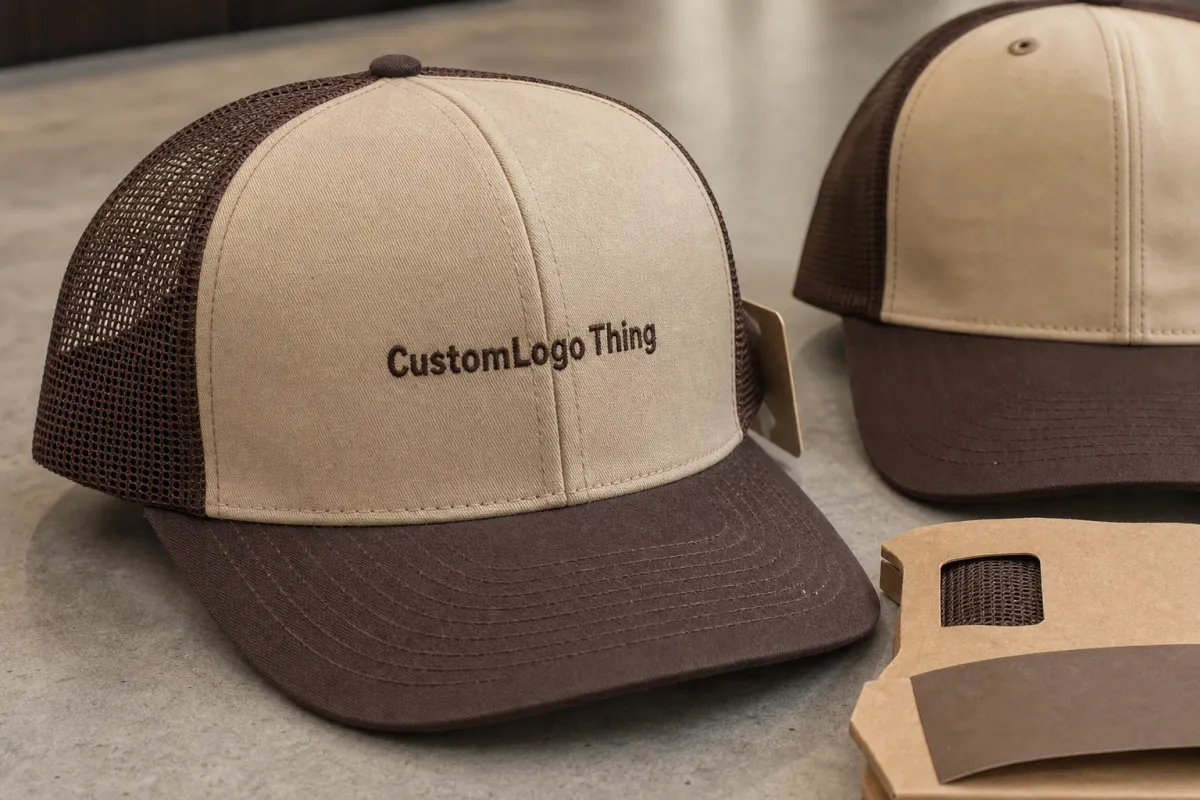
A cap display has to win fast. It needs to look orderly from three feet away, then feel easy to shop once someone is standing in front of it. That sounds basic, but plenty of programs miss the mark: mixed color runs, inconsistent front panels, unclear size logic, or cartons that force the store team to fix the product before stocking. For custom trucker Caps for Retail displays, the floor-ready version matters as much as the decoration itself.
Think of the product as a system. The cap needs a clear style code, a readable label, and a display method that makes the choice easy. In practical terms, that usually means a consistent silhouette, a controlled color set, and packaging that supports hanging, tray display, or shelf stacking without damage. Buyers who plan that way usually get a better result than buyers who treat packaging as an afterthought.
“If the shopper has to decode the wall, the wall is already losing.”
That is why display-first assortments usually outperform random bulk inventory. A loose case might contain good product, but if it arrives as a jumble of mixed SKUs, it creates work for the store team and weakens the customer experience. By contrast, a retail-ready cap program treats labeling, color hierarchy, and case packing as part of the sale. The goal is not just to ship hats. It is to ship a fixture that stays sellable.
Retail buyers also tend to look past decoration and ask harder questions: Can the merchandise survive transit without crushed crowns? Are the size stickers readable? Does the case pack match the planogram? That is the right instinct. A cap that looks strong in a mockup but arrives bent, mislabeled, or overpacked is already behind.
When comparing quotes, it helps to separate decoration-only pricing from a full retail packaging solution. The second one may include hang tags, barcode stickers, insert cards, carton labeling, and case pack logic. Those details do not sound exciting. They decide whether the display runs smoothly.
Process and Timeline: From Artwork to Store Delivery
The cleanest cap programs follow a predictable path: concept brief, artwork setup, sample approval, production, quality check, packing, and freight booking. If one step slips, the whole rollout can miss a reset window. That matters more for retail than for most one-off promotions, because a store launch is usually tied to a fixed date and a fixed display plan.
Most delays happen in the same places. Artwork revisions take longer than buyers expect, especially if the logo needs to wrap across a patch or if the brand wants several colorways approved at once. Closure changes can also add time, because a snapback, hook-and-loop closure, and adjustable fabric strap all affect the final fit and finish. Color matching is another common bottleneck; a foam-front cap can look right under office lighting and shift once sample production starts.
Production time depends on order size and decoration method. A straightforward embroidered run usually moves faster than a patch-heavy program or a cap line that requires retail tags, barcode stickers, or Custom Printed Boxes for presentation. For many retail-ready orders, buyers should plan for roughly 12-20 business days from proof approval to shipment, then add freight time and a buffer for receiving. That buffer is not optional. Store reset dates do not move because a carton is late.
Quality checks should happen before packing, not after arrival. The basics matter: embroidery registration, patch placement, seam symmetry, snap alignment, color consistency across the run, and carton condition. If the display depends on neat facings, a few crooked logos or flattened fronts can make the whole wall look cheap.
Industry references help here. Packaging teams often use ISTA test methods to think about transit risk, while sustainability-minded teams may ask whether secondary materials align with FSC expectations. Not every cap order needs formal testing, but the mindset is useful: protect the product, protect the display, and protect the calendar.
Cost, MOQ, and Unit Price Drivers
Price is not one number. It is a bundle of choices. Decoration method, panel count, fabric grade, closure type, and packaging extras all push the quote up or down. A simple two-color embroidered cap with standard mesh and basic tagging may sit in a very different range than a sewn-patch style with custom inserts and retail-ready packing.
For rough planning, blank or lightly decorated trucker caps often land around the low single digits per unit at higher volumes, while retail-ready custom runs commonly move into the mid-single digits and beyond once decoration, labeling, and packaging are included. Smaller orders can push that higher. If the order is complex or rushed, the landing cost climbs again. That is normal. What is not normal is pretending the base cap price tells the whole story.
MOQ is another point where buyers sometimes overcorrect. Smaller quantities reduce inventory risk, which is useful for test-and-learn retail runs. The tradeoff is unit cost. A 300-piece order usually costs more per cap than a 2,000-piece run because setup time, materials, and labor are spread across fewer units. That does not make the smaller order wrong. It just means the buyer should be honest about whether the run is a test, a regional launch, or a chain-wide program.
| Program Type | Typical Unit Price Pressure | Best Use | Risk Level |
|---|---|---|---|
| Small test run | Higher, due to setup spread | New style, new retailer, or limited seasonal drop | Lower inventory risk |
| Mid-size retail run | Balanced | Regional rollout with a proven style mix | Moderate |
| Large chain program | Lower per unit | Broad reset or repeated replenishment order | Higher inventory commitment |
Watch the hidden costs too. Individual bagging, retail tags, rush production, sample changes, and split shipments can quietly change the landed cost. If the display needs custom printed boxes or special case labels, that should be in the first quote, not discovered after approval. Buyers who only compare base cap pricing usually get surprised later by the rest of the system.
From a margin perspective, a tight assortment often performs better than a broad color run. Four strong colors with clear price architecture usually beat nine colors that compete with each other. That is where packaging design and merchandising meet. A clean story can move more units than a crowded palette, even if the crowded palette looks exciting on a line sheet.
Materials, Fit, and Decoration Choices That Sell
The core build choices shape how the cap reads in store. Foam-front truckers feel more promotional and can carry larger graphics. Structured cotton fronts read a bit more premium. Mesh quality changes the hand feel and the perceived value. Visor shape matters too; a flatter bill can feel current, while a slightly curved bill often feels more universal. None of these choices are minor once the product hits a busy wall.
Most retail buyers focus on four material questions: what the front panel is made from, how the mesh feels, how the brim holds shape, and whether the closure matches the target customer. Common builds include polyester mesh backs, cotton twill or foam fronts, and plastic snap closures. Hook-and-loop closures are easy to adjust, but they can feel less premium. Fabric straps look better on some fashion-led programs, but they can add cost and make packing less efficient.
Decoration is where the brand voice becomes visible. Embroidery gives a durable, premium look and usually works well for logos that need texture and depth. Patches create stronger blocking, which helps when the logo has to read from a distance. Print can deliver fast visual impact and may fit limited drops, but it does not always carry the same long-term feel as stitched decoration. The right choice depends on the shopper, the category, and the fixture.
Fit matters more than many buyers expect. A cap that sits comfortably on first try is more likely to leave the shelf with the customer. Adjustable closures help, but so do details like sweatband quality, stitch density, and how the internal construction feels against the forehead. In retail, comfort is not a bonus. It is part of conversion.
There is also a packaging side to all this. If the cap is folded badly, crushed in transit, or labeled in a way that hides the SKU, the display loses impact. Good branded packaging is not decoration for decoration’s sake. It protects the visual logic that makes the product easier to merchandise. For teams already working on broader retail packaging or package branding programs, caps should be treated with the same discipline as other shelf items.
Step-by-Step Retail Display Planning
Good display planning starts with the shopper, not the supplier. Who is buying the cap? Is this a lifestyle customer, a sports fan, an outdoor shopper, or a gift buyer looking for something quick at checkout? The answer should shape the SKU count, the color story, and the display hardware. A display that works in an impulse zone is not the same as one built for a branded wall.
A practical rollout sequence usually looks like this:
- Define the target shopper and price point.
- Choose a tight SKU count with one hero style.
- Decide whether the caps will hang, stack, or sit in trays.
- Match the fixture to traffic flow and sightlines.
- Test in a small store group before expanding.
That last step matters. A short store test tells you more than a long internal debate. If one color sells twice as fast as the others, you have a merchandising signal. If the wall gets messy after two replenishments, the packaging or case pack may need revision. Buyers who use sell-through data instead of instinct alone tend to make stronger second orders.
Visual hierarchy also matters. One hero color, one supporting neutral, and one seasonal accent often outperform a crowded rainbow. A clear price ladder helps too, especially if the display includes a premium stitched option alongside a simpler entry style. The eye should know where to land first, then where to move next.
For the store team, the display has to be easy to maintain. Barcode placement should be obvious. Replenishment counts should match the fixture. Case packs should be simple enough that associates can reset the wall quickly. If the display needs a manual just to restock, it is probably too complicated.
A few practical checks save time later: confirm that front-panel logos face the same direction, make sure hang tags do not block the main graphic, and verify that carton labels match the exact color names used on the order. Those details sound small. They are not. A mislabeled case or a reversed facing can throw off an entire wall reset.
Common Mistakes That Make Cap Displays Stall
Over-assorting is one of the fastest ways to slow a cap display. Too many colors, too many front-panel treatments, too many price points. The shopper pauses instead of choosing. That pause is expensive. A clean presentation usually wins because it helps people compare options without doing too much mental work.
Weak packaging is another common miss. Cartons that collapse in transit, polybags that wrinkle the front panel, and labels that fall off all create extra labor at the store level. For custom Trucker Caps for Retail displays, the packing method should support how the product will actually be sold. If it cannot hang ready or sit neatly in a tray, it is asking the merch team to fix it twice.
Pricing clarity matters as well. If the shelf talker is vague or the SKU labels do not match the product, the customer has to hunt for information. That friction lowers conversion. The same is true for missing size logic. Even though trucker caps are often adjustable, buyers still want to know whether the fit is adult unisex, youth, or a specialty shape.
Decoration mistakes can also hurt sell-through. Too much thread on a soft front can pucker the fabric. A patch that is oversized for the crown can look crowded. A print that cracks during handling can make the whole run feel cheap. These are production issues, not just design issues, which is why pre-production samples matter.
Finally, many programs fail because they ignore replenishment. A hot-seller can leave a display looking thin after a few days, and a half-empty wall feels neglected. Good planning includes backstock depth, case pack logic, and a reorder trigger. Otherwise the display starts strong and fades too quickly.
For teams that care about sustainability, the details should be practical rather than performative. If outer cartons or inserts matter, ask whether paper components align with current FSC expectations and whether the packaging can be right-sized to reduce waste. The EPA's sustainable materials guidance is useful background for buyers thinking about packaging weight, transit waste, and material selection.
Expert Tips for Better Sell-Through and Cleaner Merchandising
One of the easiest ways to improve sell-through is to reduce visual noise. A strong cap wall does not need every color under the sun. It needs a story. Team pride, outdoor lifestyle, local identity, or a retailer-exclusive drop can give the display context, which helps the shopper understand why the cap belongs in the basket.
Short-run testing can save money later. Order a smaller, controlled mix, then look at sell-through by color, decoration, and price point. The next order should be built from that evidence, not from guesswork. This is where packaging design and retail merchandising intersect: the best-performing product usually has the clearest presentation and the least confusion at the shelf.
Ask for photos of packed cases and shelf presentation before approving the full run. A sample cap on a desk tells you almost nothing about how the final program will behave in store. A photo of the packed case, the label placement, and the tray or hanger setup is much closer to the real result. That is how buyers catch issues before the freight leaves.
It also helps to standardize the boring parts. Keep carton sizes consistent if possible. Use the same style of barcode placement across the assortment. Avoid changing one packaging element just because it looks better in isolation. Consistency usually beats cleverness once product starts moving through a real store.
If you need a useful comparison point, look at how grocery and personal care teams handle package branding. They rarely rely on one item alone; they use color blocking, neat facings, and consistent labels to guide the eye. Caps are not identical to those categories, of course, but the merchandising principle is the same.
“The best cap program is the one the store team can keep tidy after the first week.”
That sounds modest, but it is exactly how strong programs protect sell-through. A display that stays clean keeps selling. A display that constantly needs rescue becomes invisible.
Next Steps: Build a Store-Ready Cap Rollout
If you are planning Custom Trucker Caps for retail displays, start with three moves: audit the fixture, define the style mix, and Request a Quote that includes MOQ, packaging, and delivery timing. Those three steps force the conversation out of guesswork and into execution.
Then lock the rollout calendar before approving artwork. The schedule should drive the production plan, not the other way around. If the reset date is fixed, every sample round, closure choice, and labeling decision needs to work backward from it. That is the difference between a program that lands on time and one that arrives with excuses.
Before release, run one final check on display readiness: label clarity, case pack counts, replenishment depth, and whether the store team can reset the wall without extra training. If any of those pieces is weak, fix it before the first shipment goes out. It is much cheaper to adjust the presentation on paper than on a busy sales floor.
For buyers who want caps to perform as retail product rather than random stock, the formula is consistent: clean merchandising, realistic pricing, and packaging that respects the shelf. Do that well, and Custom Trucker Caps for retail displays can move from a nice add-on to a dependable part of the store’s selling system.
How many custom trucker caps should I order for a retail display test?
Start with a narrow store test so you can measure sell-through before committing to a full chain order. Buy enough units to fill the display and cover replenishment, not just the first shelf set.
What decoration works best for custom trucker caps in retail displays?
Embroidery works well when the brand needs a durable, premium look. Patches or structured front panels can create stronger shelf impact if the logo has to read from a distance.
How long does the process usually take for custom trucker caps for retail displays?
The timeline depends on artwork approval, sample changes, production method, and shipping method. Build in extra time for packaging, labeling, and freight so the caps arrive before the retail reset.
What affects the unit cost of retail-ready trucker caps most?
Decoration complexity, order quantity, fabric quality, and packaging all move the unit price up or down. Rush jobs, special inserts, and split shipments can add costs that are easy to miss in the first quote.
How do I keep a trucker cap display from looking messy?
Limit the assortment to a clear color story and keep the pricing easy to scan. Use shelf-ready or hang-ready packaging, and plan replenishment so the wall does not thin out after launch.

