Buyer Fit Snapshot
| Best fit | Custom Tube Boxes for Posters projects where brand print, material claims, artwork control, MOQ, and repeat-order consistency need to be specified before quoting. |
|---|---|
| Quote inputs | Share finished size, material target, print colors, finish, packing count, annual reorder estimate, ship-to region, and any compliance wording. |
| Proofing check | Approve dieline scale, logo placement, barcode or warning zones, color tolerance, closure strength, and carton packing before bulk production. |
| Main risk | Vague material claims, crowded artwork, missing packing details, or unclear freight terms can make a low unit price expensive after revisions. |
Fast answer: Custom Tube Boxes for Posters: Cost, Fit, and Lead Time should be specified like a repeatable production item. The safest quote records material, print method, finish, artwork proof, packing count, and reorder notes in one written spec.
Production checks before approval
Compare the actual filled-product size with the drawing, then confirm tolerance on folds, seals, hang holes, label areas, and retail display edges. Reserve space for logos, QR codes, warning copy, and material claims before decorative graphics fill the panel.
Quote comparison points
Review material grade, print process, finish, sampling route, tooling charges, carton quantity, and freight assumptions side by side. A quote is only useful when the supplier can repeat the same color, closure quality, and packing count on the next order.
Custom Tube Boxes for Posters: Cost, Fit, and Lead Time
Most poster damage starts in ordinary places. A tube wall is too thin. A roll shifts inside the pack. A lid loosens halfway through transit and the print picks up a crease it never should have seen. I have watched a 2 mm sizing mistake turn a clean launch into a reprint bill. That is why custom tube boxes for posters matter more than the phrase sounds at first glance. They protect the print, and they shape the customer’s first impression the moment the parcel lands.
From a packaging buyer’s perspective, custom tube boxes for posters sit right between protection and presentation. Fit the roll correctly and you cut filler waste, lower returns, and keep the poster from wandering inside the pack. Miss the dimensions and the courier becomes the villain, even when the real problem was the spec sheet. Packaging has a way of making small errors expensive.
Poster packaging for e-commerce, gallery releases, event merch, subscription art, and retail kits is never just a tube purchase. It is branded packaging that has to survive a shipping network and still look deliberate at the end of the trip. That is the part many teams underestimate. A tube is not a side note. It is the first physical argument a brand makes.
Brands that also need sleeves, mailers, or retail sets can use our Custom Packaging Products page as a starting point. The same rule applies across product packaging: fit first, finish second, price third. Reverse that order and the budget tends to punish you later.
Custom Tube Boxes for Posters: What They Are and Why They Matter
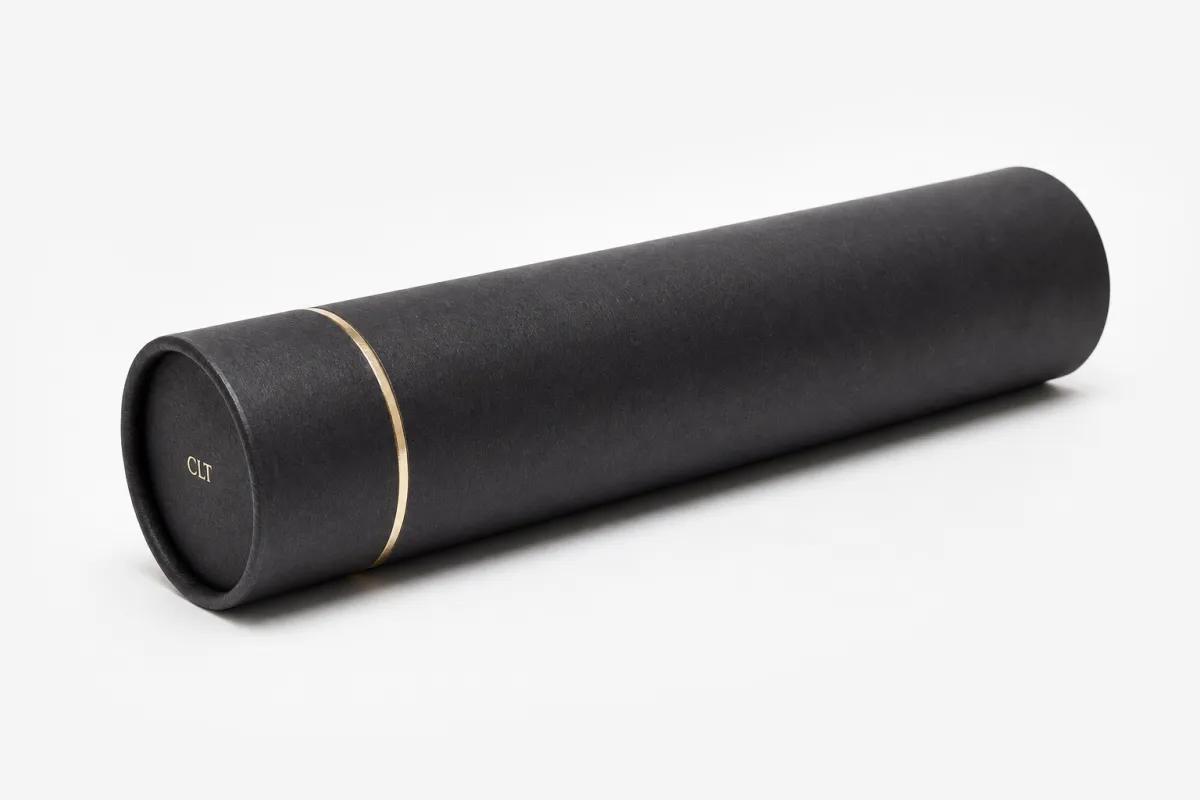
Custom tube boxes for posters are cylindrical or mailer-style packs made for rolled prints, art posters, promotional graphics, and retail display sheets. They are usually built from rigid paperboard, corrugated stock, or a hybrid structure with printed wraps, end caps, and closure systems. The goal is plain enough: hold the poster round, protect it in transit, and make the unboxing feel intentional instead of improvised.
In real use, custom tube boxes for posters solve three problems at once. They protect edges and corners from damage. They create a controlled presentation instead of a random shipping sleeve. They also carry package branding, which means the container itself does some of the sales work before the print is even unrolled. That matters more than most people admit, especially for limited editions, premium art, and signed runs where the packaging becomes part of the object’s value.
First-time buyers often focus only on the poster’s flat size. The rolled diameter usually matters more. A 24 x 36 inch print on heavy stock can roll much thicker than a lightweight promo sheet, and that difference decides whether custom tube boxes for posters cradle the artwork or crush it. Too tight and the edges scrape. Too loose and the roll bangs around like a loose bolt in a truck bed. Either way, the print pays for the guesswork.
Common use cases are easy to spot:
- E-commerce poster brands shipping direct to customers.
- Gallery and art publishers packaging signed or numbered prints.
- Event merch programs that need fast fulfillment and clean presentation.
- Subscription art boxes where the outer pack needs to feel curated.
- Retail packaging for display kits, seasonal graphics, or point-of-sale posters.
For these buyers, custom tube boxes for posters are not just protective shells. They are part of packaging design. A tube that feels flimsy makes the print feel cheap before the customer has even unrolled it. A tube with the right board weight, finish, and closure makes the same print feel considered. That difference shows up in review language, repeat orders, and the quieter metric teams track later: fewer support tickets.
If the poster can slide, the shipment can fail. The whole problem fits inside that one sentence.
There is also a supply chain angle that gets ignored too often. Better fit means less void fill, fewer dimensional weight surprises, and a lower replacement rate. The right question is not, "How much does the tube cost?" It is, "What does a delivered poster cost once freight, handling, and damage are counted?" That is the real test for custom tube boxes for posters.
How Custom Tube Boxes for Posters Work in Production
The build starts with four decisions: board material, tube diameter, length, and closure style. Decoration comes after that. Custom tube boxes for posters may use rigid paperboard, corrugated fiberboard, telescoping construction, or a mailer-style wrap with end caps. Each option changes the hand feel, the price, and the level of protection the customer actually receives.
Simpler versions use a kraft tube with printed labels. That keeps setup cost down and makes custom tube boxes for posters practical for moderate runs. More polished versions use offset or digital print across a full wrap, then add matte or gloss lamination for scuff resistance. If the box sits on a retail shelf or gets photographed for a storefront, that finish is not just visual polish. It is part of the product’s credibility.
Size decisions should begin with the rolled product, not the flat sheet. A buyer needs the finished rolled diameter, poster length, paper weight, and whether the pack includes tissue, inserts, or multiple sheets. Those are the details a converter needs to quote custom tube boxes for posters accurately. Flat size alone is a shortcut, and shortcuts in packaging usually become rework. I have seen teams spend more time fixing a bad estimate than they would have spent measuring properly in the first place.
Here is the production logic most factories follow:
- Measure the poster after it has been rolled to the way it will ship.
- Add clearance so the roll enters without scraping the print edges.
- Choose wall thickness based on route, handling, and risk.
- Decide whether the tube is plain kraft, labeled, or fully printed.
- Confirm closures, end caps, and any retail hang or display features.
The sequence looks basic, yet this is where a lot of orders go sideways. Teams skip the first measurement, jump straight to artwork, and then act surprised when custom tube boxes for posters need a second quote because the roll does not actually fit the spec. It is a small lapse with a very predictable ending.
Closure style matters too. Friction-fit lids are common and inexpensive. Twist caps feel more premium in the hand. Telescoping tubes usually offer better stiffness and a cleaner seam, though they cost more and take longer to produce. For a high-value poster, the stronger closure often earns its keep. For a low-cost promo print, the added spend may not make sense. Good custom tube boxes for posters should make that tradeoff visible instead of hiding it.
For brands expanding beyond tubes, our Custom Packaging Products page can help compare related formats side by side. A lot of teams end up ordering tubes, sleeves, and custom printed boxes together because the artwork system is already in motion.
Decoration choices also affect the quote. Digital print works well for smaller runs and fast changes. Offset print suits higher volumes and tighter color control. Kraft with a label costs less and tolerates simpler artwork. Full-wrap graphics strengthen branded packaging, but they raise setup and print costs. That is why good quotes for custom tube boxes for posters separate structure from decoration instead of bundling everything into one vague number.
Custom Tube Boxes for Posters Cost, Pricing, and MOQ
Cost is where packaging theory meets the bill. Custom tube boxes for posters can look inexpensive in one configuration and surprisingly expensive in another. Material grade, wall thickness, print coverage, closure style, size, and quantity drive most of the price. Add a finish, insert, or special label run and the quote can move faster than many buyers expect. The numbers are not mysterious, but they do punish vague requests.
At smaller volumes, setup and freight have an outsized effect. A tube that looks cheap per unit can turn expensive once tooling, proofing, packing, and dimensional weight are added. At higher volumes, unit cost drops because press setup, cutting, and assembly get spread across more pieces. That is why the economics of custom tube boxes for posters can shift sharply between a 300-piece run and a 5,000-piece run.
Here is a practical range, not a fantasy one:
- Stock tube with label: about $0.35-$0.85 per unit at moderate volume.
- Custom printed tube: about $0.70-$2.50 per unit depending on coverage and board.
- Premium telescoping or rigid build: about $1.50-$4.00 per unit for smaller runs.
Those numbers are not universal. Quantity, size, destination, and whether the order moves domestically or overseas all change the math. Even so, they give a useful starting point when comparing custom tube boxes for posters across suppliers.
Minimum order quantity, or MOQ, depends on structure. A simple label-based tube may begin around 250 to 500 units. Custom printed runs often start closer to 1,000 units. Fully structural or highly decorated builds can push that higher. Anyone ordering custom tube boxes for posters for a launch should ask for breakpoints at 250, 500, 1,000, and 5,000 pieces. Those prices reveal where value improves and where the supplier is pricing in small-run pain.
The cleanest comparison is not unit price alone. It is landed cost per shipped poster. That includes the tube, freight, pack-out, damage allowance, and any replacement rate the team expects to carry. A quote that is 12 cents lower per unit can still lose once freight and claims enter the picture. Packaging buyers usually learn that lesson after the campaign starts, which is the least convenient time to learn it.
| Option | Typical Unit Cost | Typical MOQ | Lead Time | Best Fit |
|---|---|---|---|---|
| Kraft tube with label | $0.35-$0.85 | 250-500 | 7-12 business days | Low-risk promotions and budget-conscious runs |
| Custom printed tube | $0.70-$2.50 | 1,000+ | 12-20 business days | Branded e-commerce and retail packaging |
| Premium telescoping build | $1.50-$4.00 | 1,000-3,000+ | 15-30 business days | Limited editions, gallery pieces, high-value prints |
Special finishes raise cost faster than many teams expect. Soft-touch lamination, spot UV, foil stamping, custom inserts, and split shipments all move the number. If the poster is valuable, those extras may be worth it. If the pack goes straight into a standard ecommerce flow, simpler custom tube boxes for posters often protect margin better than decorative upgrades do.
Thinking beyond tubes helps too. Some brands use flat mailers, but rolled prints often hold up better in tubes once handling damage is counted. That is why custom tube boxes for posters can win the cost discussion even when the unit price is a little higher. Damage is a cost line, not a footnote.
Production Process, Timeline, and Lead Time
Lead time is never one number. It is a chain of small steps, and each one can stall. A good project starts with a brief, then moves to dieline or spec approval, sampling, print setup, manufacturing, packing, and freight booking. Custom tube boxes for posters move quickly when those steps are clean. They move slowly when the artwork arrives half-finished and everyone pretends the missing details will sort themselves out.
Most delays come from the same dull places. Measurements are vague. The artwork is not print-ready. The buyer changes finish choices three times. The sample comes back and nobody wants to sign off because the color is slightly off. None of that is mysterious. It is just packaging work suffering from bad scheduling.
For straightforward orders, stock components with printed labels can often move in about 7 to 12 business days after approval. Fully custom printed custom tube boxes for posters usually take around 12 to 20 business days, sometimes longer if the quantity is high or the finish is more complex. Overseas sourcing can extend that into the 20 to 35 business day range, before transit time is even added.
Seasonality changes the picture. Launch windows, holiday traffic, and trade show periods can slow production if the factory is already committed. The fastest orders usually share one trait: a single decision-maker, complete specs, and no endless comment threads. If approvals drag by three days at every stage, the calendar will collect its debt without apology.
Quality checks matter here too. When the poster is premium or the route is rough, ask whether the supplier can reference ISTA-style transit testing or a similar drop test protocol. The International Safe Transit Association has practical guidance on test procedures, and it is worth understanding before signing off on a build that needs to survive parcel handling. For recycled or FSC-certified paperboard options, the Forest Stewardship Council is another useful reference point.
Custom tube boxes for posters are easiest to schedule when the project is treated like production, not moodboard assembly. Confirm the size, confirm the material, confirm the finish, and confirm the ship date you truly need. Then work backward from that date instead of hoping the supplier has spare days hiding in the margins.
How to Specify the Right Size, Strength, and Print Finish
Good fit begins with measurement. Roll the poster the way it will actually ship, then measure the finished diameter at the widest point. Add enough clearance for insertion, but not so much that the print shifts and bends during transit. With custom tube boxes for posters, a little slack helps. Too much slack becomes damage.
There is always a tradeoff between slimmer tubes and stronger protection. A slimmer tube can reduce dimensional weight and save on freight. A wider tube may protect heavier paper stock, multiple prints, or a wrapped set more effectively. A single lightweight poster can often travel in a tighter build. A heavy-stock piece, a signed edition, or a multi-sheet order deserves a wider margin. I would rather spend the extra cents than explain a bent edge after the fact.
Strength depends on the route. Local courier delivery can handle lighter construction than long-haul parcel networks or mixed freight. If the poster is headed into retail packaging or a shelf display kit, the tube also needs to keep its shape after store staff handle it, not just after the carrier scans it. Wall thickness, seam quality, and end protection matter more than decorative flourishes once that route gets rough.
Finish choices shape both appearance and durability. Matte lamination hides fingerprints and feels restrained. Gloss can make color pop, but it also shows scuffs faster. Soft-touch delivers a premium feel, though it usually costs more and can wear at the edges. Kraft with no coating is the budget-friendly route and works well for earthy or minimal branding. For custom tube boxes for posters, finish should support the product story, not compete with it.
A useful rule applies here: if the poster is expensive, protection deserves priority over print tricks. A clean insert, end protection, and moisture resistance usually matter more than a fancy outer wrap. That becomes even more obvious in wet climates or in routes that pass through multiple hubs. In those cases, simple and sturdy tends to beat glossy and fragile.
Specifications should be written clearly enough that a supplier can quote without guessing. Include poster size, paper weight, rolled diameter, quantity, destination, print coverage, finish preference, and whether you need retail-ready presentation. If the custom tube boxes for posters sit inside a larger custom printed boxes program, say that too. Shared print systems can save money, but only when the spec sheet is honest.
For brands building a broader lineup, our Custom Packaging Products page can help map tubes against other mailers and cartons. That is useful when one product needs a premium look and another just needs to make it through the mail without drama.
Common Mistakes When Sourcing Custom Tube Boxes for Posters
The classic mistake is simple: quoting flat poster size instead of the finished rolled diameter and tube length. That is how buyers end up with custom tube boxes for posters that look correct on paper and fail the moment the print is rolled. The poster does not care about the spreadsheet. It only cares whether it fits.
Another common error is choosing the cheapest board weight and then acting surprised when corners crush in transit. Packaging is not magic. If the route is rough, a thin wall is a risk. If the product is valuable, shaving a few cents can cost more in replacements than it saved in production. Custom tube boxes for posters should be judged on the whole shipment, not on the packaging quote sitting alone on a screen.
Artwork files create their own mess. Vague files cause reproof delays, color drift, and avoidable setup costs. If the art wraps the full cylinder, the dieline has to be respected. If the print is a simple label, the label spec still needs dimensions, bleed, and finish notes. People often blame the factory when the file was never ready in the first place.
Freight is another trap. A buyer may approve a low unit price and then get hit by oversized cartons, pallet fees, or a shipping method that eats the margin. With custom tube boxes for posters, tube length and diameter can affect freight almost as much as the material choice. The cheaper box can cost more after shipping. Packaging math has a dark sense of humor.
The final big mistake is timing. Launch dates and event dates do not move just because production is busy. If the poster has to arrive by a fixed day, order early and build a buffer. Do not wait for final art approval one business day before deadline. That is how teams end up paying for rush production and still watching the truck with their breath held.
If the campaign needs other package types, compare them early. Sometimes the right answer is a tube for the artwork and a flat carton for the merch. Sometimes the whole line should stay tube-based. Either way, the best custom tube boxes for posters projects are the ones where fit, freight, and deadline are reviewed together instead of one at a time.
Expert Tips and Next Steps for Ordering Custom Tube Boxes for Posters
If you want a cleaner buying process, ask suppliers for two quotes: one for the smallest acceptable build and one for the best-value upgraded build. That gives you a real comparison instead of a single number with hidden compromises. For custom tube boxes for posters, the lowest quote is rarely the smartest buy.
Request a sample or prototype if the print is premium, limited edition, or expensive to reprint. A sample shows the real rolled fit, the closure feel, and the finish quality. It also exposes color placement issues and diameter mistakes before full production starts. You are gonna want that sample if the poster run has any real financial risk.
Build a simple spec sheet before requesting pricing. Include poster size, roll diameter, print quantity, desired finish, shipping destination, and whether you need retail-ready presentation. If the box will pair with branded packaging or a broader package branding system, say so at the start. It saves time and usually improves quote quality.
Here is the short version of how to buy custom tube boxes for posters without making the process harder than it needs to be:
- Measure the largest poster or print that will ship.
- Confirm the rolled diameter after the paper is actually rolled.
- Decide whether the tube is meant for protection, retail display, or both.
- Ask for landed cost, not just factory price.
- Compare lead time against your launch or event date, then add buffer.
You should also ask about recycled content, FSC-certified board, and whether the design supports your sustainability story. Plenty of buyers talk about eco-friendly packaging, but the material choices have to match the claim. If waste reduction is the goal, simple structures and right-sized packaging usually do more good than decorative extras.
Another practical move: ask for price breaks at multiple quantities. A 500-unit quote can show one economics profile, while 1,000 or 5,000 units may unlock a much better rate. That is especially true for custom tube boxes for posters with print coverage, because press setup spreads out quickly as volume climbs. A slightly larger run can sometimes cost almost the same in setup but far less per unit.
For teams managing multiple SKUs, keep the tube spec separate from the poster spec. That sounds minor until the design team changes the artwork and the operations team changes the print size. Clear specs are the difference between a clean purchase order and a week of avoidable back-and-forth.
Compare suppliers on actual outcomes, too. Ask about damage rate, sample consistency, proofing speed, and whether they can support both product packaging and retail-ready presentation. A supplier that understands custom tube boxes for posters usually understands the practical side of production as well, which matters once the order is live.
If you are ready to quote, start with the largest poster, collect two or three bids, and compare custom tube boxes for posters on fit, cost, and turnaround before you place the order. That path is simple, and it saves more headaches than clever shopping ever will. The cleanest takeaway is this: measure the roll, specify the wall, verify the closure, and lock the lead time before artwork drifts into the schedule.
FAQ
What size should custom tube boxes for posters be?
Base the size on the rolled diameter, not just the flat poster size. Leave enough clearance for insertion, but not so much that the print shifts and bends. If you are shipping heavier paper or multiple sheets, ask for a sample before full production so the custom tube boxes for posters fit the real product, not a guess.
Are custom tube boxes for posters cheaper than flat mailers?
For rolled artwork, tubes are often cheaper than flat rigid mailers once damage risk is included. The better comparison is landed cost per delivered order, not just the packaging unit price. Flat mailers can make sense for smaller prints, but most posters need the roll format, which is why custom tube boxes for posters usually win on total cost.
What affects the pricing of custom tube boxes for posters most?
Material thickness, print coverage, closure style, and order volume usually move price the most. Shipping dimensions and freight method can matter almost as much as the unit quote. Custom finishes and inserts add cost quickly, so include them only when they solve a real problem. That is the blunt truth for custom tube boxes for posters.
How long does it take to produce custom tube boxes for posters?
Simple orders with stock components can move quickly if artwork and measurements are ready. Fully custom printed runs usually take longer because of proofing, setup, and manufacturing steps. The fastest way to lose time is giving the supplier incomplete specs and then revising them later. Clean approval cycles keep custom tube boxes for posters on schedule.
What MOQ is normal for custom tube boxes for posters?
MOQ depends on whether the tube is stock, decorated, or fully custom structural packaging. Smaller runs usually cost more per unit, but they are useful for launches and limited editions. Ask the supplier for price breaks at multiple quantities so you can see where value improves. That is the practical way to buy custom tube boxes for posters without guessing.
If you want the short version, here it is: measure the roll, Choose the Right strength, check the finish, and compare landed cost before you commit. That is how custom tube boxes for posters protect the print, support the brand, and keep the budget from getting strange. Do that, and the packaging becomes part of the product instead of a problem waiting to happen.

