Buyer Fit Snapshot
| Best fit | custom pallet boxes for freight for packaging buyers comparing material specs, print proof, MOQ, unit cost, freight, and repeat-order risk where brand print, material, artwork control, and repeat-order consistency matter. |
|---|---|
| Quote inputs | Share finished size, material target, print colors, finish, packing count, annual reorder estimate, and delivery region. |
| Proofing check | Approve dieline scale, logo placement, barcode or warning zones, color tolerance, and any recyclable or compostable wording before bulk production. |
| Main risk | Vague material claims, crowded artwork, or missing packing details can create delays even when the unit price looks attractive. |
Fast answer: Custom Pallet Boxes for Freight: Cost, Fit, and Lead Time should be specified like a repeatable production item. The safest quote includes material, print method, finish, artwork proof, carton packing, and reorder notes in one written spec.
What to confirm before approving the packaging proof
Check the product dimensions against the actual filled item, not only the sales mockup. Ask for tolerance on folds, seals, hang holes, label areas, and retail display edges. If the package carries a logo, QR code, warning copy, or legal claim, reserve that space before decorative graphics fill the panel.
How to compare quotes without losing quality
Compare board or film grade, print process, finish, sampling route, tooling charges, carton quantity, and freight assumptions side by side. A lower quote is only useful if the supplier can repeat the same color, closure quality, and packing count on the next order.
Custom Pallet Boxes for Freight: Cost, Fit, and Lead Time
Freight packaging usually breaks down in small, unglamorous ways. A load shifts half an inch inside the carton, a corner starts to crush under strap tension, a pallet overhang catches during transfer, and suddenly the damage report looks like a long list of little decisions that never quite added up. In my experience, the weak point is usually fit, not the board itself. Custom Pallet Boxes for freight solve that by matching the container to the product, the pallet footprint, and the path the shipment actually takes from packing table to receiving dock.
That fit matters because freight does not care about theory. A box built to size gives you fewer voids to manage, less movement to control, and fewer surprises once the shipment starts bouncing through the network. For packaging buyers, that can mean cleaner stack patterns, lower damage exposure, and freight numbers that stay more predictable because the container was specified instead of guessed. Custom pallet boxes for freight are less about appearance and more about making the shipment behave the way it should.
There is also a very practical side to all this. A well-matched box is easier to tape, easier to wrap, easier to strap, and easier for warehouse crews to read at a glance. If the load stacks cleanly and the edges line up, the process just runs better. I have seen plenty of jobs where a half-inch of extra headspace caused more trouble than anyone expected. That little gap can turn into movement, and movement tends to snowball. Custom packaging is not magic, but it does remove a lot of the guesswork.
Custom Pallet Boxes for Freight: What They Are and Why Fit Wins
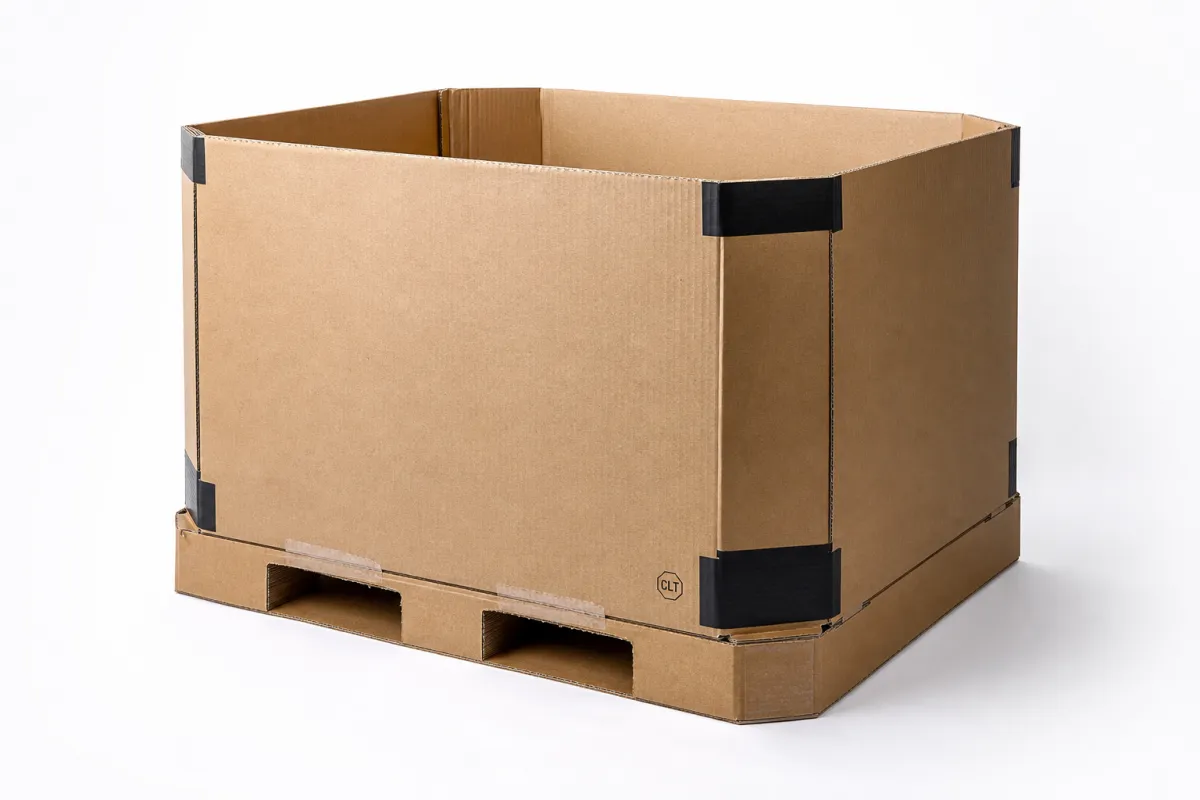
Custom pallet boxes for freight are made-to-order corrugated or wood-based shipping containers built around a pallet footprint, product height, and handling method. They may be simple corrugated sleeves, telescoping boxes, reinforced cartons with lids, or hybrid structures that combine board, wood, inserts, and straps. The goal is practical, not decorative. The box needs to hold the load steady from pickup through delivery without making the packing process harder than it needs to be.
Generic pallet boxes are built on broad assumptions. They cover more product sizes, but that flexibility comes with extra space, and extra space becomes movement. Movement chews corners, loosens closures, and turns a decent freight run into a claim. A purpose-built box reduces void fill, cuts down on unnecessary dunnage, and usually makes palletization easier because the product is not fighting the container. That is why custom pallet boxes for freight tend to outperform one-size-fits-all options when the shipment is dense, irregular, or expensive enough to justify tighter control.
Fit also changes the freight math. Better dimensions can improve cube utilization, which matters every time trailer space is tight or multiple SKUs need to ride together. A load that stacks cleanly with little or no overhang usually handles better, travels quieter, and uses fewer materials. If you have ever watched a box crush because it was just a little too tall for the next tier, you already understand why custom pallet boxes for freight are not a luxury for many programs. They are damage prevention with a tape gun and a measuring tape.
A freight box is only inexpensive if it survives the trip. If it saves thirty cents and creates a claim, it was expensive from the start.
Fit also makes the load easier to read. Forklift drivers, warehouse crews, and receiving teams already have enough moving parts in front of them. A predictable footprint, clean stack lines, and a box that closes where it should all reduce handling mistakes. That is a real packaging design benefit, not just a visual one. It also protects branded packaging when the shipper doubles as customer-facing presentation. Nobody wants a crushed logo panel on a retail rollout that was supposed to arrive looking composed and intact.
From a product packaging standpoint, the strongest build is the one that balances protection and efficiency without pushing either side too far. Too much box becomes wasted board, wasted cube, and wasted freight. Too little box becomes damage, rework, and embarrassment at the dock. Custom pallet boxes for freight live in that middle ground and try to stay there. That balance is the whole point.
How Custom Pallet Boxes for Freight Work in Transit
Freight does not usually fail in one dramatic moment. It gets worn down in stages. At the warehouse, the box might be handled by hand, then dropped onto a pallet, then wrapped, then nudged by a forklift, then stacked under other freight, then rattled for hours in a trailer. Custom pallet boxes for freight have to survive all of that. Compression, vibration, impact, and stacking pressure are the real enemies, not the marketing language printed on the carton.
Pallet compatibility matters more than many buyers expect. A box that matches the pallet footprint correctly is easier to wrap and strap, and it is less likely to overhang in a way that invites edge damage. Top-load strength matters too, especially if the shipment will be stacked in transit or sit in a cross-dock environment. The box should work with stretch wrap, bands, corner posts, or internal blocking instead of fighting them. Custom pallet boxes for freight perform better when the pallet and the carton were designed as one system rather than two separate purchases.
Panels, flaps, lids, and reinforced corners all do a job. A simple flap design can handle lighter loads, while heavier freight usually needs a telescoping top, double-wall construction, or more edge support. The aim is not to make the box indestructible. That is not realistic. The aim is to keep the product from shifting enough to damage itself or the container. With custom pallet boxes for freight, the strongest designs often look plain. That is a compliment.
Cube utilization is where the savings start to show in real freight budgets. Trim the box height by even half an inch across a full palletized shipment and the trailer math can change. The number of pallets per lane can change too. That is why experienced buyers look at board cost, pallet count, deck height, and final freight class together. custom pallet boxes for freight can improve density enough to reduce dead air in a trailer or container, and that is where a lot of waste hides.
If the load is entering a mixed distribution network, think about where the box gets touched. Not where it is supposed to end up. Where it actually gets touched. That is usually the better packaging design question. Freight lanes with long-haul vibration, cold storage, humid docks, or repeated transfers need more resistance to edge wear and panel collapse. For those shipments, custom pallet boxes for freight often make more sense than adding tape and hoping the trip stays kind.
One more thing people sometimes miss: the handling environment can change the material behavior enough to matter. Corrugated board that looks fine in a dry plant may soften after hours in a damp dock or a chilled trailer. Wood can help with stiffness, but it adds weight and cost. There is no single winner there, only the right construction for the lane, the weight, and the amount of abuse the shipment is likely to see.
Cost, Pricing, and MOQ: What Drives the Quote
Quote pricing for custom pallet boxes for freight usually comes down to a few variables: material grade, board thickness, print coverage, inserts, hardware, pallet type, and whether the design needs extra reinforcement. Once labor and setup time enter the picture, the range can move more than people expect. A plain corrugated build is one thing. A Custom Printed Box with die cuts, stitched corners, and a reinforced base is a very different build.
Unit price matters, though it is only one piece of the landed cost. A box with a lower per-unit price can still raise the total bill if it creates more labor time, more freight damage, or a higher shipment cube. That is why buyers should compare packaging cost against damage risk and shipping efficiency. Custom pallet boxes for freight are often chosen because they reduce total cost, not because they win the lowest line item on a quote sheet.
MOQ tradeoffs are real. Smaller runs usually cost more per unit because setup gets spread across fewer pieces. That does not mean a lower MOQ is a bad idea. If your product dimensions change often, if inventory is tight, or if you are testing a new shipping lane, a smaller run may be the smart move. With custom pallet boxes for freight, the cheapest route is not always the safest route.
For buyers comparing structures, here is a practical way to think about the cost and performance tradeoff.
| Option | Typical Use | Approx. Unit Cost at Mid-Size Runs | Strengths | Tradeoffs |
|---|---|---|---|---|
| Standard corrugated pallet box | Moderate-weight freight with stable dimensions | $3.50-$7.50 | Lower cost, lighter weight, easy to assemble | Less tolerance for long-haul abuse and heavy stack loads |
| Custom corrugated pallet box | Mixed freight, branded packaging, controlled cube | $5.50-$12.00 | Better fit, cleaner palletization, less void fill | Higher setup cost, more dependency on accurate specs |
| Wood or hybrid pallet crate | Heavy, fragile, or irregular freight | $14.00-$35.00+ | Strong protection, better for rough handling | Heavier, more expensive, sometimes slower to build |
Those numbers are not a promise. They are a working range for buyers trying to budget without pretending every job is identical. The actual quote still depends on dimensions, print, pallet count, testing, and regional material availability. If you need a side-by-side packaging comparison, start with Custom Packaging Products and ask for two or three constructions built from the same load data.
Smart quote requests include enough detail to stop guesswork. Share product dimensions, total weight, pallet footprint, shipping destination count, and handling method. Add whether the load is top-stacked, banded, wrapped, or palletized with corner posts. If the supplier has to guess, the quote will drift. That is exactly how custom pallet boxes for freight go from "pretty close" to surprisingly expensive.
For buyers who want a sanity check on structure and testing language, the ISTA test methods library is a useful reference point, and FSC-certified fiber can matter if the brand wants a fiber-based sustainability story that is documented rather than improvised.
One more practical point: print coverage can move cost more than people think. Full-bleed custom printed boxes cost more than a single-color logo or a simple shipping mark. If the box is only used for freight, keep the print lean unless the visual side is doing real work. That is how you keep custom pallet boxes for freight from becoming a branding exercise that the freight bill has to carry.
Process and Timeline: From Spec Sheet to Production Steps
The best process starts with measurements, not opinions. You need product dimensions, pallet footprint, total weight, handling method, and final shipping height before you can choose a structure. Miss one of those early and you may end up changing the design after a prototype, which is a slow way to spend money. Custom pallet boxes for freight work best when the basic data is set before anyone starts drawing lines.
After that comes the sample or prototype stage. This is where many avoidable mistakes get caught. A box can look fine in CAD and still fail because the closure is awkward, the internal clearance is too tight, or forklift access is a mess. A prototype gives you a chance to check fit, tape behavior, pallet wrap coverage, and stack alignment in the real world. For custom pallet boxes for freight, that sample step is often where the project stops being theoretical.
Approval should be simple, but not rushed. The buyer should confirm dimensions, print copy, material spec, and any special handling notes before production starts. If there is a revision, make it immediately. A one-day delay in approval can become a one-week delay in manufacturing if the plant has already scheduled the run. That is especially true with custom pallet boxes for freight that need reinforced construction or specialty inserts.
Here is the timeline I would expect on a normal job:
- Spec gathering: 1-3 business days if the product data is ready.
- Quotation and structure review: 2-5 business days depending on complexity.
- Prototype or sample: 5-10 business days for standard builds, longer for hybrid work.
- Revisions and approval: 1-4 business days if the decision maker is responsive.
- Production: often 10-20 business days once approved, depending on quantity and material supply.
- Inbound freight scheduling: allow extra buffer if the boxes are tied to a launch or a hard ship date.
That timeline can shrink or stretch based on the spec. Simple corrugated builds move faster than wood-heavy or highly printed jobs. If the box includes unusual hardware, custom inserts, or a lane-specific test requirement, build in more breathing room. Custom pallet boxes for freight are not difficult, but they do reward people who plan ahead instead of waiting until the shipment is already late.
The cleanest projects are the ones where the packaging buyer, operations team, and sales team agree on the load behavior early. Does the product rattle? Is it fragile on one side? Will the pallet ever be handled manually? Those answers matter more than artwork. Good packaging design is often just disciplined coordination with a deadline. That is also why custom pallet boxes for freight get approved faster when everyone is looking at the same spec sheet.
How to Specify Custom Pallet Boxes for Freight
Start with the product, then work outward. Measure the item at its widest, tallest, and most irregular points. Add clearance for inserts, wrap, and any load movement you expect during transit. Then confirm the pallet footprint and the maximum shipping height allowed by your carrier, warehouse, or distribution network. That sequence keeps custom pallet boxes for freight grounded in reality instead of wishful thinking.
A practical sizing method looks like this:
- Measure the product and any secondary packaging.
- Add clearance for blocking, cushioning, or protective wrap.
- Confirm pallet size and overhang limits.
- Set the maximum height based on stacking and freight restrictions.
- Check whether the top needs reinforcement for vertical load.
- Verify forklift access, hand-hold needs, and wrap coverage.
Material selection is the next decision. Single-wall board can work for lighter or more stable freight, especially when the shipment is not stacked hard and the lane is predictable. Double-wall makes sense when the load is heavier, the route is rougher, or the box needs more crush resistance. Wood or hybrid construction becomes worth the jump when the product is unusually heavy, irregular, or sensitive to impact. There is no universal winner. The right answer depends on the load profile, not a sales brochure. That is the honest truth behind custom pallet boxes for freight.
Shipping lane matters too. A short regional route with controlled handling is a different animal from a long-haul lane with multiple transfers. Cold storage, high humidity, and repeated dock moves can all change how the board performs. If the freight will sit for hours before unloading, you also need to think about compression and edge creep. Custom pallet boxes for freight should be specified for the lane they will actually travel, not the ideal lane on a spreadsheet.
Document load behavior, not just dimensions. A buyer who notes compression, fragility, center of gravity, and stack height gives the supplier a much better chance of getting the design right. If the product is top-heavy, say so. If it shifts during braking, say that too. If it has a side that should never take a load, call it out. Those details often separate a decent shipper from one that actually protects the freight. That is the practical side of custom pallet boxes for freight.
It also helps to include the business context. Is this a one-time shipment? A recurring replenishment? A seasonal launch with a fixed deadline? Is the box part of branded packaging that needs to arrive looking clean, or is it pure industrial product packaging? The answer changes the finish, print, and structure. A simple freight box can be stripped down. A customer-facing box may need a cleaner graphic panel or a more deliberate package branding approach. Either way, custom pallet boxes for freight should support the actual use case, not just the first sketch.
Common Mistakes That Make Freight Boxes More Expensive
The biggest mistake is ordering to product size only. That sounds efficient until the pallet footprint, clearance, and handling space get ignored. Then the box is too tight, the wrap tears, and the load starts moving. A buyer saves a little board and loses it back in damage or labor. That is a very normal way for custom pallet boxes for freight to become more expensive than they should be.
Another common problem is overspecifying the material. Some teams jump straight to the heaviest structure because they want to be safe. Safe is good. Overbuilt is not. If the real issue is load stabilization, better blocking or a smarter closure may solve it without doubling the material cost. More board does not automatically equal better performance. It just means more board. With custom pallet boxes for freight, the cheaper fix is often the one that addresses the actual failure point.
Underestimating freight class or pallet weight can also create a mess. A design that looks fine in the plant may push the shipment into a higher freight category or reduce stack efficiency enough to change the shipping bill. That is why packaging, operations, and logistics need to talk before approval. If they do not, the freight invoice ends up teaching everybody the lesson. Custom pallet boxes for freight should be checked against the shipping plan, not just the product spec.
Skipping a test run is another expensive habit. If the box works on paper but fails after real handling, the cheapest quote becomes the most expensive choice. For important loads, ask for a sample, then inspect the packout, closure, and palletization. Some shipments should be checked against ISTA protocols or an ASTM D4169-style sequence, depending on the lane and risk level. That is not overkill. That is competent freight packaging.
If the prototype gets ignored, the production run will eventually remind you why prototypes exist.
There is also the temptation to make every box a branding project. Good brand presentation matters, but freight packaging has a job to do first. A cleaner logo, a one-color mark, or a restrained graphic treatment can still support package branding without inflating print cost. The buyer should always ask whether the visual treatment helps the shipment or just adds expense. That question saves money fast. It also keeps custom pallet boxes for freight focused on performance.
A smaller but real mistake is forgetting the people who have to move the load. If warehouse staff cannot get a clean grip on the box, or if the lid fights the tape gun, those problems show up every day. A design that adds thirty seconds to each packout may not seem costly on paper, but over a month it absolutely is. Freight packaging lives in the field, not in a render, and the field has opinions.
Expert Tips and Next Steps for Better Freight Packaging
Build a spec sheet before you ask for a quote. That one habit saves time, clears up assumptions, and usually improves the first round of pricing. Include product dimensions, total weight, pallet footprint, max height, handling method, and destination count. If you can add a photo of the current packout, even better. The more complete the input, the less friction around custom pallet boxes for freight.
Ask for sample drawings or a prototype before you place a full order, especially if the product is expensive or the freight volume is high. A good drawing catches obvious issues. A physical sample catches the annoying ones: a lid that binds, a flap that interferes with tape, a corner that crushes under wrap tension. That is where custom pallet boxes for freight prove their value. Not in a polished spec sheet. In the actual packout.
Compare at least two constructions side by side. Maybe one uses lighter corrugated board and one uses a reinforced hybrid build. Maybe one has a simple lid and another has a telescoping top. The cheapest board spec is not always the cheapest landed cost. Labor, freight cube, and claim risk all belong in the comparison. If the difference in cost is small, pay for the version that protects the load better. That is how custom pallet boxes for freight should be judged.
Buyers who want a durable process usually get there by thinking in this order:
- Protection first.
- Fit second.
- Cube efficiency third.
- Print and branding after that.
- Freight cost and labor belong in the same decision, not separate ones.
That order sounds obvious, yet plenty of teams reverse it and then wonder why the quote is off. A neat-looking box that fails in transit is not a win. A plainer box that ships cleanly is. Custom pallet boxes for freight are one of those packaging decisions where the quieter option is often the smarter one.
If you are starting from scratch, a practical next step is to collect the dimensions of your product, confirm the pallet footprint, and map the lane. After that, ask for a quote with material options, estimated lead times, and a sample path. That gives you enough information to compare protection, cube, labor, and freight in one shot. Do that, and custom pallet boxes for freight stop being a guessing game.
The real takeaway is simple: specify the box around the shipment you are actually sending, not the one you hope will fit someday. Once the product dimensions, pallet footprint, handling method, and shipping lane are all in the same conversation, the right structure usually becomes obvious. That is the point where custom pallet boxes for freight stop feeling like an extra step and start acting like a control point.
Frequently Asked Questions
Are custom pallet boxes for freight cheaper than standard crates?
Not always on unit price, but they can be cheaper overall if they reduce damage, improve pallet density, or lower freight class risk. The better comparison is landed cost, not just packaging cost. If the load is awkward or high value, the custom route often pays back faster than people expect.
What measurements do I need to request custom pallet boxes for freight?
You need product dimensions, total weight, pallet footprint, max shipping height, and how the load will be handled. Add clearance for inserts, wrap, and forklift access where needed. If you skip stack height and lane details, the quote is basically a guess.
How long does the custom pallet box process usually take?
Simple jobs move faster; complex builds need time for design, sampling, approval, and production. Lead time depends on material availability, print, and whether revisions are needed after the first prototype. Build in buffer time if the shipment is tied to a launch or a hard delivery date.
What material is best for custom pallet boxes for freight?
There is no universal winner. Single-wall, double-wall, wood, and hybrid builds all have a place. Use the lightest structure that still passes the load, stack, and transit demands. The right choice depends on product weight, fragility, and shipping conditions.
How do I reduce the quote for custom pallet boxes for freight without weakening them?
Trim unnecessary print, hardware, or overbuilt material before cutting protection. Standardize dimensions where possible and avoid odd sizes that waste board and labor. Ask for a version comparison so you can see where the real cost jump comes from. That is usually the fastest way to keep custom pallet boxes for freight practical without making them flimsy.

