Buyer Fit Snapshot
| Best fit | Custom Tuck Boxes with Logo projects where brand print, material claims, artwork control, MOQ, and repeat-order consistency need to be specified before quoting. |
|---|---|
| Quote inputs | Share finished size, material target, print colors, finish, packing count, annual reorder estimate, ship-to region, and any compliance wording. |
| Proofing check | Approve dieline scale, logo placement, barcode or warning zones, color tolerance, closure strength, and carton packing before bulk production. |
| Main risk | Vague material claims, crowded artwork, missing packing details, or unclear freight terms can make a low unit price expensive after revisions. |
Fast answer: Custom Tuck Boxes with Logo: Board, Finish, Dieline, and Unit Cost should be specified like a repeatable production item. The safest quote records material, print method, finish, artwork proof, packing count, and reorder notes in one written spec.
Production checks before approval
Compare the actual filled-product size with the drawing, then confirm tolerance on folds, seals, hang holes, label areas, and retail display edges. Reserve space for logos, QR codes, warning copy, and material claims before decorative graphics fill the panel.
Quote comparison points
Review material grade, print process, finish, sampling route, tooling charges, carton quantity, and freight assumptions side by side. A quote is only useful when the supplier can repeat the same color, closure quality, and packing count on the next order.
Custom tuck boxes with logo often meet the buyer before the product does, which means the carton is already doing quiet work on pricing, shelf impression, and trust. That is why custom tuck boxes with logo are not just a tidy way to package an item; they are part of the sale itself. The box speaks while the product is still tucked inside, and that first read can either lift the brand or make it feel forgettable.
These boxes use a folding carton format with a tuck flap, and they stay popular because they are light, stack well, ship efficiently, and print cleanly without pushing you into the cost of a rigid structure. For brands that need branded packaging with a polished retail look, custom tuck boxes with logo deliver a lot of visual impact for a relatively modest materials budget. I have seen a plain carton with the right logo placement do more for perceived value than a much fancier package that was trying too hard.
A box does not need to shout to sell. It needs to look intentional, fit the product correctly, and make the buyer feel that the brand understands its own details.
The real decision map sits around fit, structure, cost, timing, and artwork choices. Treat custom tuck boxes with logo as a design-only project and you miss the part that protects margin. Treat them as a pure purchasing exercise and you miss the part that protects the brand. The stronger approach lives in the middle, where packaging design and production reality meet without fighting each other. That balance is the whole trick, and honestly, it is where a lot of teams get a little too optimistic about what packaging can do on its own.
What Custom Tuck Boxes with Logo Do for a Brand
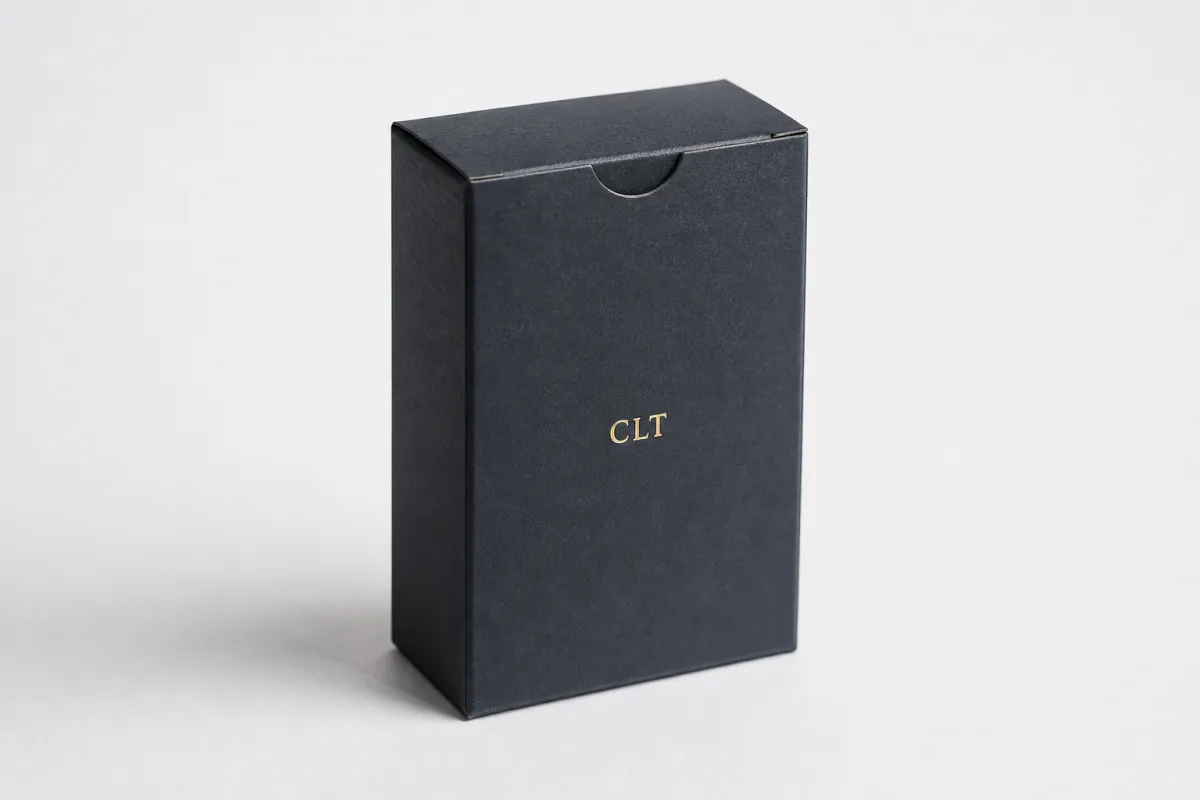
Custom tuck boxes with logo are one of the simplest ways to make product packaging look organized, retail-ready, and worth the asking price. The format is straightforward: paperboard or folding carton stock, scored panels, and a tuck flap that closes the package without extra hardware. That simplicity is exactly why it works. You get Custom Printed Boxes that feel polished, but you are not paying for structure your product does not need.
These boxes show up everywhere for a reason. Cosmetics use them for serums, balms, and kits. Supplements use them for bottles, blister packs, and sample sets. Candles use them because the carton protects the jar and gives the label room to breathe. Small electronics, gift sets, and promotional kits rely on the same format because custom tuck boxes with logo deliver shelf presence without turning the package into a freight problem.
Logo placement matters more than many buyers expect. Put the mark on the front panel and the brand reads instantly. Place it on the tuck flap and the opening moment feels more considered. Add a subtle foil hit or spot UV and the perceived value rises fast, even if the materials stayed fairly standard. That is the useful part of package branding: a small logo treatment can change the whole read of the box.
From a packaging buyer's point of view, the box has to do three jobs at once. It needs to fit the product, communicate the brand, and survive handling. If custom tuck boxes with logo only look good from six inches away, they are not doing the job. If they only survive shipping but look dull on shelf, same issue. Good retail packaging keeps both sides in view.
There is also a practical buying reason to choose this format. Compared with setup boxes or heavy rigid cartons, custom tuck boxes with logo usually bring lower material cost, lighter freight, and faster turnaround. That makes them a sensible choice for launches, subscription drops, seasonal products, and newer brands that need credibility without overbuilding the package from day one. You do not always need a big, dramatic structure; sometimes a well-made carton is enough, and that is not a compromise so much as smart restraint.
If you are comparing options, it helps to browse a broader range of formats first. You can review Custom Packaging Products to see where tuck boxes sit alongside other styles, then decide whether the product really needs more structure or just cleaner branding.
How Custom Tuck Boxes with Logo Actually Work
At the structural level, custom tuck boxes with logo are built from panels, flaps, and score lines. The main pieces are the front panel, back panel, side panels, dust flaps, and tuck flap. Those folds do more than hold the shape. They affect how the carton opens, how cleanly it closes, how it stacks, and how well it stands up after a few rounds of handling. A weak score line or a poor flap layout can make a nice package feel cheap very quickly.
Dielines are the reason printers keep asking for them. A dieline is the map of the box: cut lines, fold lines, bleed, safe zones, and panel dimensions. Without that map, the logo can land too close to the fold, a barcode can get clipped, or the artwork can wrap into the wrong panel. Custom tuck boxes with logo depend on accurate dielines because the print file is only as good as the structure it fits. If the file and the board do not agree, the final box will tell on you right away.
Artwork prep is where a lot of first-time buyers get tripped up. Logos should be vector files if possible, especially for crisp edges and clean scaling. Small type needs enough contrast and enough size to stay readable after folding. Bleed usually needs to extend beyond the cut edge, and important elements should stay inside the safe zone. If the box carries a lot of copy, ingredients, warnings, or legal text, the layout needs to be planned around the folds instead of squeezed in later.
Print method matters too. Digital printing is useful for faster jobs and lower quantities because it avoids some of the setup overhead. Offset printing becomes more attractive as volumes rise and color consistency matters more. PMS color matching helps when the brand cannot tolerate color drift, especially for signature reds, blues, blacks, or metallic-looking neutrals. Custom tuck boxes with logo are only as sharp as the color control behind them.
Board choice and coating change both appearance and performance. A 14pt or 16pt stock may be enough for lightweight items, while 18pt to 24pt can feel sturdier for products that need more hand feel. Coatings, like matte, gloss, or soft-touch, affect abrasion resistance and the way the logo reads under light. Custom tuck boxes with logo can look premium on modest material if the finish is chosen well. They can also look oddly cheap if the coating fights the artwork.
There is a functional side to all of this. A carton that crushes in transit does not help the brand, no matter how attractive the front panel is. If the box will ship through distribution channels, it may need stronger board, better glue structure, or testing against standards such as ISTA methods for distribution performance. That is not overkill. That is how you avoid paying for reprints because the first batch arrived dented.
| Structure | Typical Use | Practical Strength | Tradeoff |
|---|---|---|---|
| Reverse tuck | Cosmetics, supplements, small accessories | Good for lightweight items and shelf display | Simple and economical, but not ideal for heavier contents |
| Straight tuck | Retail items that need a cleaner front-facing opening | Good appearance and efficient folding | Can take a little more care during packing |
| Auto-lock bottom | Candles, bottles, items needing stronger base support | Better bottom strength and faster assembly | Usually costs more than a basic tuck box |
| Custom sleeve over tray | Gift sets, premium kits, bundle packaging | Strong presentation and decent structure | More material and usually a higher quote |
One more practical note: sustainable paper sourcing matters more now because buyers ask about it. FSC-certified paperboard can help support the claim that your custom tuck boxes with logo use responsibly sourced fiber. If that matters to your brand story, check FSC guidance instead of making vague claims you cannot back up. Packaging buyers hear a lot of green talk, and they can tell when the language is stronger than the paper trail.
Custom Tuck Boxes with Logo: Cost, MOQ, and Pricing Factors
Cost starts with material, and material usually matters more than buyers expect. A modest board stock with simple print can keep custom tuck boxes with logo within a tight budget, while a thicker premium sheet, specialty coating, or heavier ink coverage pushes the quote up quickly. If you are shopping for branded packaging, the board thickness and finish are often the first real budget levers, not the logo itself.
Quantity changes the math. Setup costs, cutting dies, color calibration, and labor are spread across the whole order. That means small runs carry a higher unit price, while larger runs usually drop the per-box cost sharply. A buyer comparing 500 units to 5,000 units often finds that the unit price at the higher quantity is not a little better; it can be dramatically better. Custom tuck boxes with logo follow that same pattern because setup work does not shrink just because the order is smaller.
Here is a rough cost frame, and yes, it depends on size, print coverage, and finish choices:
| Quantity / Print Method | Typical Unit Range | What Drives the Price | Best Fit |
|---|---|---|---|
| 250-1,000 digital | $0.65-$1.40 each | Short-run setup, size, ink coverage, basic coating | Prototypes, small launches, test runs |
| 1,000-5,000 digital or offset | $0.30-$0.75 each | Board stock, color count, die complexity, proofing | Growing SKUs and recurring product lines |
| 5,000+ offset | $0.18-$0.55 each | Volume, print coverage, finishing, freight | Retail programs and stable replenishment orders |
Finishing upgrades are where quotes start climbing. Foil stamping, embossing, debossing, spot UV, matte lamination, and soft-touch coating all add labor or special processing. None of those are bad choices. They are just not free, and sometimes they are not the right choice. Custom tuck boxes with logo can look smart with a single finish, while stacking three or four effects on the same panel often makes the design feel busy instead of premium.
MOQ is another point people dance around. Digital jobs often support lower quantities, sometimes a few hundred units, while custom dies or offset runs usually push the minimum higher. If a supplier gives you a quote without explaining MOQ, ask for the real threshold. It is better to Know Before You build a launch around a number the production floor will not support. That is a basic planning step, not a negotiation trick.
There are also the sneaky costs that show up late if nobody asks the boring questions. Samples cost money. Proof edits cost time. Freight can be a meaningful line item if the boxes are bulky. Rush fees appear when the launch date is fixed and the artwork is still open. Reprints happen when a dieline is wrong, a barcode is unreadable, or the logo ends up too close to the fold. Custom tuck boxes with logo are not expensive because one thing is wrong; they get expensive because six small things were ignored.
From a practical buying angle, ask for three tiers every time: a lower quantity, a middle quantity, and the quantity you think you want. That makes it easier to see where the unit cost bends. It also gives you a cleaner view of whether the higher run really saves enough money to justify storage and cash flow. That is the kind of decision that matters in retail packaging, not just aesthetics.
If you are comparing suppliers, ask them to break out the quote by board stock, print method, finishing, and freight. If they hide all of that in one number, you are not looking at a quote. You are looking at a mystery.
Custom Tuck Boxes with Logo Production Process and Timeline
The production flow for custom tuck boxes with logo is usually straightforward, but each stage has its own delay points. It often starts with a quote request, then a dieline, then artwork upload, proof review, sample approval, production, quality check, packing, and shipping. That sounds linear because it mostly is. It only turns messy when people try to skip the steps that prevent mistakes.
Timing varies by complexity, but a useful range helps. Proofing can happen the same day or next day for simple files. Samples often take 3 to 7 days depending on the structure and finish. Production commonly lands in the 7 to 15 business day range after approval. Add transit time on top of that, because the boxes do not help you much if they arrive after the product launch.
What slows a job down? Missing logo files, repeated artwork revisions, custom PMS matching, special finishes, structural changes, and holiday backlog. One of the most common slowdowns is not production at all; it is the back-and-forth over artwork that should have been resolved before the quote was approved. Custom tuck boxes with logo move faster when the files are clean and the dimensions are settled early.
Approvals matter more than people think. A missed typo, the wrong barcode, or a folded panel that cuts through copy can turn into a full reprint. That is the expensive version of being "close enough." In packaging, close enough is usually not enough, especially when the box is part of a retail packaging program or a regulated product line.
For brands selling food, supplements, cosmetics, or products with regulatory text, the proof stage needs extra attention. Ingredients, warnings, quantities, and claims should be checked line by line. If the product has to meet a specific distribution test or environmental claim, the production team should know that before printing starts. Good product packaging is not only about the look. It is about the information carrying through cleanly from file to carton.
A smart schedule is built backward from the launch date. Start with shipping, then production, then proof approval, then sampling, then artwork prep. That sounds obvious, but a lot of teams still plan forward from the quote date and wonder why the deadline feels tight. Custom tuck boxes with logo are easy to underestimate because the box itself seems simple. The schedule, however, is only simple once the decisions are already made.
For anyone who wants a cleaner ordering path, keep a folder with the finished logo, panel copy, dimensions, product photos, and finish notes. Then compare that against the options in our Custom Packaging Products range so the quote request matches the actual job, not a rough guess scribbled during a meeting.
Step-by-Step Guide to Ordering Custom Tuck Boxes with Logo
Start with the product, not the artwork. Measure the item carefully and allow for inserts, inner wraps, or small dimensional changes. A box that is too tight can crush the product or make packing awkward. A box that is too loose looks sloppy and can shift during shipping. Custom tuck boxes with logo need the right fit first, because a beautiful box that does not hold the item properly is just expensive paper with an identity problem.
- Measure the product. Record length, width, and depth, then add space for any insert or protective fill.
- Choose the tuck style. Reverse tuck, straight tuck, or auto-lock bottom each behave differently in use.
- Prepare the artwork. Include logo files, color references, copy, barcode, and legal text in one clean package.
- Request quantity tiers. Ask for several volume options so the unit price break is obvious.
- Review the proof carefully. Check folds, bleed, spelling, panel order, and barcode placement.
- Ask for a sample if needed. Do this for fragile, premium, or highly regulated items.
- Approve only when ready. Once production starts, corrections get expensive fast.
The tuck style should match the use case. A reverse tuck is common and economical for lightweight retail items. A straight tuck can feel cleaner on the shelf and work well when front-facing presentation matters. An auto-lock bottom adds base strength and makes sense for heavier contents or quicker assembly. There is no magic style that wins every time. Custom tuck boxes with logo should be chosen by product weight, handling needs, and the way the box opens in the customer's hand.
Artwork should not be treated as an afterthought. Put the logo in the right place, but also think about what else needs to live on the carton: barcode, ingredients, warnings, directions, recycling marks, and social handles if they matter. Keep the hierarchy simple. One strong logo placement usually works better than three competing headlines and a handful of badges fighting for attention. That is packaging design 101, and somehow it still gets ignored a lot.
Ask for a quote that shows multiple tiers, then compare the unit cost rather than the total alone. A larger run can lower the price enough to matter, but storage and cash flow still count. A quote should also clarify what is included: dieline, proofing, finishing, freight, and any sample cost. Custom tuck boxes with logo become much easier to buy once the quote is transparent instead of padded with assumptions.
If your product is premium, fragile, or going into a retail launch with strict timing, order a sample before full production. Yes, it adds time. It can also save you from a bad fit, dull color, or fold issue that would have become a painful reprint. That is usually a good trade. The cheapest box in the world is not cheap if the entire order has to be redone.
Finally, keep all approvals in one place. A single email thread with the latest dieline, the latest proof, and the final quantity makes life easier for everyone involved. Custom tuck boxes with logo move faster when nobody has to hunt for the final version of a file buried under twelve attachments and a vague subject line. That kind of file hunting burns time in a way that feels small right up until a deadline starts breathing down your neck.
Common Mistakes When Buying Custom Tuck Boxes with Logo
The most common mistake is the wrong internal size. Buyers often think in outside dimensions, then discover the product will not fit once the board thickness, insert, or fold allowance is factored in. Too large looks loose and low-value. Too small causes damage or makes the packing line miserable. Custom tuck boxes with logo only look premium when the fit is right.
Another mistake is overdesigning the front panel. A logo, a clear product name, and one strong support message are usually enough. Add too many claims, icons, or decorative elements and the box starts shouting at people. That is not clever branding. That is visual noise. In retail packaging, clarity usually wins over decoration.
Shipping is another blind spot. A box that looks fine on a table may still fail in a carton load, in a pallet stack, or after a few drops in transit. If the product is fragile or the route is rough, ask for a structure that can handle real-world abuse. Custom tuck boxes with logo are part of the shipping system, not separate from it. People forget that, then act surprised when the package dents.
Skipping the inside print opportunity is a quiet miss. The inside of the flap, a short message, a pattern, or a small brand line can make the unboxing feel more deliberate without adding much cost. This is one of the better uses of custom printed boxes because the customer sees the detail at the exact moment attention is highest. It is a small move, but it can make the package feel considered instead of merely assembled.
Approving without a sample is another classic. Sometimes it works. Sometimes it does not. If the item is simple and the schedule is generous, you can take that risk. If the product is premium, fragile, or tied to a launch date, do not gamble on assumptions. A one-day shortcut can cost a week later, which is not a bargain in any useful sense.
There is also the temptation to chase the lowest quote without comparing specs. One supplier might quote lighter board, another might include a better finish, and a third might leave freight out of the number entirely. If the comparison is not apples-to-apples, the cheapest quote is often just the least complete one. Custom tuck boxes with logo deserve a fair comparison, not a race to the bottom.
Expert Tips and Next Steps for Custom Tuck Boxes with Logo
Use restraint. One strong logo placement and a clean hierarchy usually beat a crowded carton with five competing sales messages. That does not mean the box should be plain. It means every element should have a job. If a line of copy does not help the customer understand the product or trust the brand, it is probably clutter.
Match the finish to the product price point. A luxury coating on a budget item can feel false. A plain, underfinished box on a premium item can feel undercooked. There is no award for spending the most. The right choice is the one that makes custom tuck boxes with logo feel consistent with the product inside and the price on the shelf.
Think about abuse, not just appearance. Transit scuffs, humidity, stacking pressure, and retail hooks all change how the carton behaves after it leaves the printer. If the product will sit in a warehouse for a while, use coatings and board weights that tolerate that reality. If the box will be handled by customers at point of sale, make sure the logo and key copy stay legible even after a little wear.
Request 2 to 3 quotes using the exact same specs. Same dimensions. Same board. Same finish. Same quantity tiers. That gives you a real comparison instead of a pile of creative assumptions. If you need a starting point, our Custom Packaging Products page can help narrow the structure before you request pricing for custom tuck boxes with logo.
For brands looking at sustainability claims, use specific language. FSC-certified board, recyclable stock, or water-based coating are clearer than vague eco talk. If a claim matters to the customer, it should be backed by the material choice and supported by the supplier. That is simply good business. Nobody needs another green-sounding label that falls apart under one question.
Final take: gather dimensions, quantity, logo files, finish notes, and a ship date before you request custom tuck boxes with logo, then compare samples and pricing before you place the order. The brands that get this right do not just buy a box. They buy a cleaner launch, fewer surprises, and packaging that makes the product look like it belongs at its price point.
FAQ
What products are best for custom tuck boxes with logo?
Custom tuck boxes with logo work best for small to medium lightweight items like cosmetics, supplements, candles, accessories, and sample kits. They are a strong fit when you want retail packaging with shelf presence but do not need the cost or weight of a rigid setup box. If the product is simple to hold and does not need heavy structural support, this format is usually a smart choice.
How much do custom tuck boxes with logo usually cost?
Price depends on size, board stock, print method, finishes, and quantity. Small runs usually cost more per unit because setup costs are spread across fewer boxes. Larger runs lower the unit cost, sometimes sharply. For a useful comparison, ask for quotes at multiple quantities so you can see where the break point is for custom tuck boxes with logo.
How long does it take to make custom tuck boxes with logo?
Simple proof-and-print jobs can move quickly, but artwork approval still controls the schedule. Samples and special finishes add time, and larger orders usually take longer in production. A realistic planning window often includes proofing, sample approval, 7 to 15 business days for production after approval, and then shipping time. That last part is the one people forget.
Do I need a dieline for custom tuck boxes with logo?
Yes. A dieline keeps folds, cuts, and logo placement accurate. Most suppliers can provide one, but the artwork still has to be placed correctly on it. If your box has inserts, unusual proportions, or detailed copy, the dieline is what prevents expensive mistakes. It is one of the least glamorous parts of the job and one of the most useful.
Can I order custom tuck boxes with logo in a small quantity?
Yes, but the unit price will usually be higher than a larger run. Digital printing is often the better route for lower quantities and faster turnaround. Ask about MOQ before you design the box so you do not build a concept around a quantity the supplier cannot support. That is a lot easier than redesigning the whole package after the fact.
Closing thought: if you want custom tuck boxes with logo to do real work for the brand, keep the spec simple, the logo clear, and the production plan realistic. That is how you get a box that looks good, ships well, and does not turn into a very expensive lesson.

