Buyer Fit Snapshot
| Best fit | Custom Uv Coated Packaging Boxes projects where brand print, material claims, artwork control, MOQ, and repeat-order consistency need to be specified before quoting. |
|---|---|
| Quote inputs | Share finished size, material target, print colors, finish, packing count, annual reorder estimate, ship-to region, and any compliance wording. |
| Proofing check | Approve dieline scale, logo placement, barcode or warning zones, color tolerance, closure strength, and carton packing before bulk production. |
| Main risk | Vague material claims, crowded artwork, missing packing details, or unclear freight terms can make a low unit price expensive after revisions. |
Fast answer: Custom Uv Coated Packaging Boxes: Board, Finish, Dieline, and Unit Cost should be specified like a repeatable production item. The safest quote records material, print method, finish, artwork proof, packing count, and reorder notes in one written spec.
Production checks before approval
Compare the actual filled-product size with the drawing, then confirm tolerance on folds, seals, hang holes, label areas, and retail display edges. Reserve space for logos, QR codes, warning copy, and material claims before decorative graphics fill the panel.
Quote comparison points
Review material grade, print process, finish, sampling route, tooling charges, carton quantity, and freight assumptions side by side. A quote is only useful when the supplier can repeat the same color, closure quality, and packing count on the next order.
Most shoppers decide how they feel about custom uv coated packaging boxes within a few seconds, often before they read a line of copy or pick up the carton. A glossy face can make a product feel sharper, more finished, and a little more expensive in a good way. That said, shine is not a repair kit. If the structure is weak or the artwork is rushed, UV coating will not hide it; it just makes the problems easier to spot.
From a packaging buyer's point of view, custom uv coated packaging boxes usually serve one job first: make the product look like it belongs at a higher level. They fit retail packaging, influencer mailers, gift kits, launch items, and any box that has to stand out in a crowded aisle or on camera. If you are comparing printed packaging options, a look through the Custom Packaging Products range can help you narrow the structure before you settle on the finish.
The process behind the shine is straightforward. UV coating is a liquid layer applied to the printed surface, then cured with ultraviolet light so it hardens quickly. That leaves a slick, reflective surface that throws more light than standard print alone. Color changes with it. Reds read deeper. Blues feel heavier. Black gets the kind of density people usually expect from premium packaging instead of a dull gray tone. For package branding, that shift can carry real value.
The point is not shine for its own sake. The real value of custom uv coated packaging boxes sits in perception. Good packaging design should make the buyer feel the box belongs at the right price point, in the right category, with the right amount of polish. If the coating supports that feeling, it earns space in the budget. If it throws glare over the logo or distracts from the structure, it becomes expensive decoration.
A glossy finish isn't gonna save a box with bad proportions. It only makes the flaws easier to see.
Custom UV Coated Packaging Boxes: Why They Stand Out
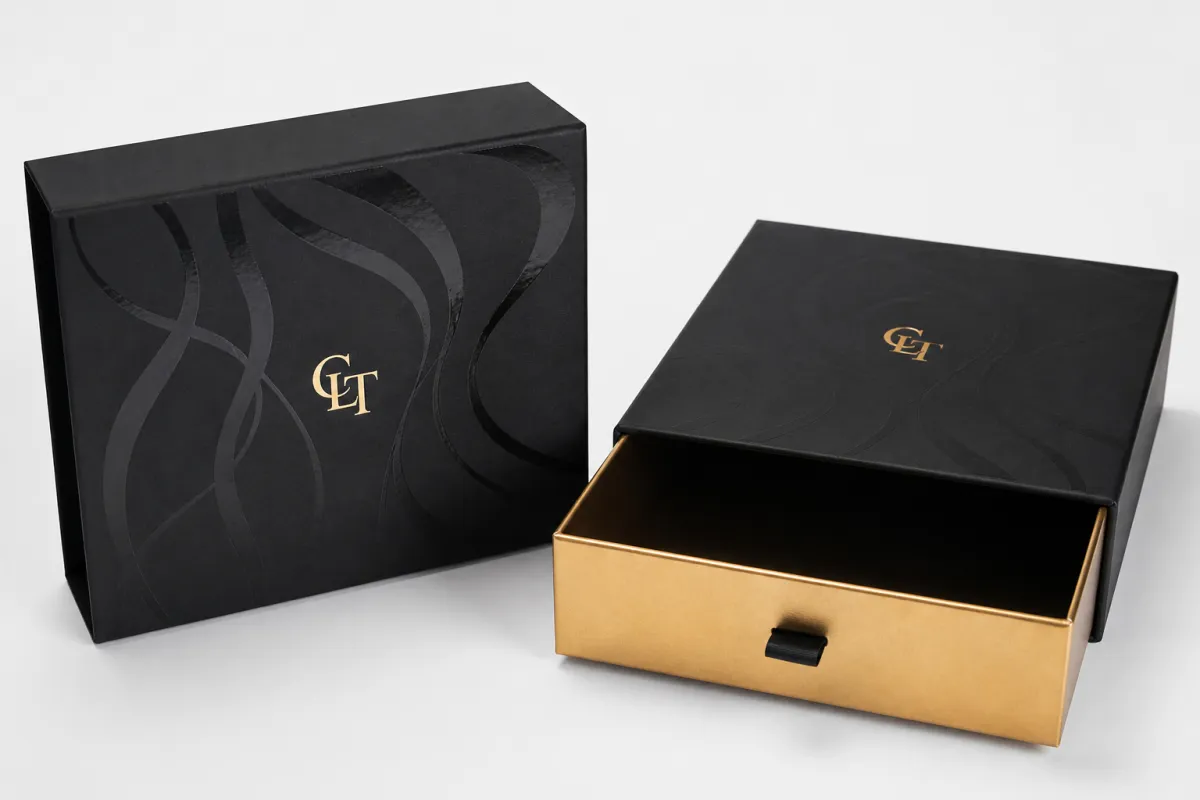
Shoppers usually do not inspect packaging with the patience of a prepress technician. They scan the shelf, compare options, and reach for the box that looks more complete. That is where custom uv coated packaging boxes start pulling attention. The coating catches light, helps logos read faster, and gives the front panel a cleaner presence from several feet away. That matters on a shelf. It matters in a subscription box stack. It even matters on a product listing photo, where the finish can help a product feel more intentional.
There is a subtle but real psychological effect at work. A glossy finish often lifts the perceived value of Custom Printed Boxes because people connect shine with care, expense, and attention to detail. That connection is not always logical, but packaging rarely behaves like a spreadsheet. In press checks and sample reviews, I have watched a clean spot UV element change how a plain carton reads almost instantly. When the box looks more refined, the product tends to get a better first look. That can help with seasonal launches, new lines, and items that need stronger retail packaging without jumping to rigid construction.
The practical use cases are easy to spot. Custom uv coated packaging boxes work well where visual impact needs to happen fast: shelf displays, unboxing moments, influencer mailers, cosmetics, supplements, electronics accessories, and premium gift sets. If the box only moves from a warehouse shelf into a shipping carton and no customer ever sees it, the finish is harder to justify. If the box is part of the buying experience, the gloss can support the sale in a very direct way.
There is a difference between a nice box and a selling box. Nice means the finish looks attractive on its own. Selling means the box helps conversion, supports brand recognition, and backs up the price. In practice, custom uv coated packaging boxes should improve color contrast, logo visibility, and the speed at which a shopper understands the product level. That is a more useful goal than simply making the surface shiny.
Not every brand benefits from maximum gloss. Some product lines call for restraint, softer texture, or a more understated surface. Matte stock and soft-touch film can suit certain categories better. Even so, if the product is premium, giftable, or competing in a crowded visual field, custom uv coated packaging boxes remain one of the quickest ways to strengthen the shelf story.
There is also a practical trust angle. If a product claims recyclable packaging, the board choice and coating system should be discussed honestly with the supplier, because local recycling rules vary and not every finish is treated the same way everywhere. UV coating itself is a thin cured layer, but the full package build matters more than the coating alone.
How Custom UV Coated Packaging Boxes Are Made
The production sequence is simple, which is part of the appeal. The artwork gets printed onto the board first. The UV coating is applied next, either across the full panel or in selected areas. Ultraviolet light cures the coating almost immediately, so the surface hardens and moves quickly into the next stage of finishing. That speed is one reason custom uv coated packaging boxes are so common in commercial packaging.
Full UV and spot UV are the two main versions. Full UV covers the entire visible panel and creates a consistent glossy finish across the box face. Spot UV is more selective and highlights only certain elements, such as a logo, border, pattern, or product name. For many brands, spot UV is the more disciplined option because it creates contrast without covering every inch in gloss. It gives the design a focal point instead of turning the whole surface into a mirror.
The order of operations matters. UV placement should be planned before production, not after the artwork is finished. A clean result depends on the coating areas being defined in the file from the start. If you are building custom uv coated packaging boxes, the dieline and artwork need to account for the finish as part of the design, not as a last-minute add-on. Trying to improvise spot UV at the end often produces awkward edges, misplaced highlights, or a logo that gets swallowed by the shine.
Material choice matters just as much. These boxes usually perform best on coated paperboard, art paper, and other print-friendly substrates. They are not right for every corrugated board or rough-textured stock. If the surface is too absorbent or too uneven, the coating can look patchy. A packaging supplier should be able to tell you whether the chosen construction suits the finish before you commit to production.
The visual effect is easy to describe in plain language. UV coating deepens color, sharpens contrast, and makes typography look cleaner under light. That is why custom uv coated packaging boxes often feel more premium even when the structure is simple. The finish does not change the size or strength of the carton. It changes how the box reads to the eye, and that shift can matter a great deal.
Brands that care about compliance and sustainability should treat the finish as only one piece of the job. Board sourcing, inks, and production standards matter as well. If responsibly sourced paperboard is part of the brief, look for FSC-certified options through the Forest Stewardship Council. If the box has to survive parcel handling, ask whether it has been tested for common transport stress, not only whether it looks good in a mockup.
That is the part many buyers miss. The coating is the part you can see. The production discipline underneath it is what keeps custom uv coated packaging boxes looking good after the first sample run and the tenth reorder.
Custom UV Coated Packaging Boxes Cost, MOQ, and Quote Factors
Pricing is where the nice ideas have to meet reality. Custom uv coated packaging boxes are not the cheapest finish available, though they are rarely the most expensive either. The unit price depends on size, board thickness, print coverage, coating type, finishing complexity, insert requirements, and order quantity. That is the plain answer, and it is still the right one.
For a rough buying range, simple folding cartons with UV coating might land around $0.18-$0.40 per unit at 5,000 pieces, depending on size and ink coverage. More complex mailer boxes, rigid boxes, or spot UV work can move into the $0.45-$1.20 range or higher. Small runs behave differently. At 500 to 1,000 units, setup costs can push the unit price up quickly. That is why MOQ matters. Larger quantities usually bring the per-box cost down because setup, plates, and finishing prep are spread across more units.
There is a practical way to compare finish options. Here is a clear view of how custom uv coated packaging boxes compare with other common choices:
| Finish option | Visual effect | Typical use | Cost tendency at scale | Best fit |
|---|---|---|---|---|
| Full UV coating | High gloss across the whole panel | Retail packaging, gift boxes, launch kits | Moderate | Strong shelf presence and color punch |
| Spot UV | Gloss only on selected areas | Logos, accents, premium branding | Moderate to higher | Controlled shine and a more designed look |
| No coating | Natural printed surface | Basic shipping or low-visual-use boxes | Lowest | Budget-first projects where appearance is secondary |
| Lamination | Glossy, matte, or soft-touch film | Premium cartons, abrasion-prone packaging | Moderate to higher | Durability or tactile feel |
Quotes can also vary because suppliers do not all price the same way. One may include proofing, coating, die-cutting, and basic shipping. Another may quote only print and finishing, then add charges later. That is how a cheap quote grows extra line items. If you are comparing custom uv coated packaging boxes, make sure the same details are listed on both sides: dimensions, board grade, finish coverage, inserts, proof type, and freight assumptions.
Here is the practical rule I give buyers: if the product is premium, visible, giftable, or competing on shelf with strong brands, custom uv coated packaging boxes can justify the cost quickly. If the product is low-ticket and mostly handled as shipping stock, spend the money where it changes outcomes. Structure, fit, and print accuracy often carry more weight than extra shine.
Coverage also changes the pricing picture. Full-panel UV uses more coating and may require more handling care. Spot UV can add setup steps because the coated zone has to align accurately with the print file. That does not automatically make spot UV cheaper. Sometimes it does, sometimes it does not. The final quote depends on layout and press workflow. Packaging tends to work that way: simple at a glance, fussy underneath.
If budget is tight, compare visual return instead of staring at unit cost alone. A box that is $0.12 cheaper but looks ordinary can weaken perceived value. A better-finished box may move faster at retail or support a higher shelf price. For many brands, custom uv coated packaging boxes are less about decoration and more about protecting margin through presentation.
Production Steps and Lead Time for Custom UV Coated Packaging Boxes
The timeline is usually not a mystery. It just has a few places where delays like to hide. For custom uv coated packaging boxes, the process normally starts with a quote request, then dimension confirmation, dieline approval, artwork review, proof production, print and coating, die cutting, folding or gluing, inspection, and shipping. Each stage is small. The total can still stretch if one approval gets stuck because someone wants to "check with marketing" for three days.
Simple jobs usually move faster. A standard run with clear specs and ready artwork might take 10-15 business days after proof approval. More complex jobs with spot UV, rigid structures, or several revision rounds often need 15-25 business days or more. Shipping time sits on top of that. If a supplier says "two weeks," ask whether they mean production only or production plus delivery. Those are very different numbers.
The biggest time drains are predictable. Artwork changes after proofing are one. Missing dieline details are another. Slow sign-off on the coating layer is a third. Material shortages can also push the schedule back, especially if you need a specific board weight or a specialty surface. Good planning keeps custom uv coated packaging boxes from turning into a calendar problem.
There is a smart way to protect lead time. Build buffer into launches. If the product release date is fixed, lock the packaging earlier than feels necessary. Premium packaging rarely rewards a last-minute scramble. It usually rewards patience, or at least a buyer who checks the proof before lunch instead of the night before freight moves out.
Ask these four questions Before You Order:
- How long does sampling take?
- How long after proof approval until production starts?
- Does the stated turnaround include shipping?
- What happens if the coating placement needs a revision?
That last one matters more than most people expect. A lot of delays in custom uv coated packaging boxes happen because the artwork file looks fine on screen but does not line up cleanly with the finish on press. A good supplier should catch that early, not after the box is already in finishing.
If transport performance matters, ask whether sample packs or test units can be checked against ISTA handling methods. The International Safe Transit Association publishes testing practices that help brands understand how packaging survives drop, vibration, and distribution stress. That is useful for mailers, subscription programs, and any box that has to travel before it gets opened.
For many projects, the timeline is not the hardest part. The harder part is deciding what the box really needs to do. Once that is clear, custom uv coated packaging boxes are much easier to spec, quote, and schedule properly.
Design Choices That Change the Final Look
Design changes the result more than most buyers expect. The same coating can look elegant on one box and overdone on another. With custom uv coated packaging boxes, color choice is one of the biggest variables. Dark backgrounds usually make gloss look richer and more dramatic. Pale backgrounds can feel cleaner and more modern, though they often reduce the visual punch of the coating. Neither choice is wrong. Each one just supports a different brand mood.
Spot UV works best when it has a clear reason to be there. Logos. Product names. Pattern accents. Border lines. Small visual anchors that need to catch light without turning the whole box into a reflective sheet. Coat too much and the box begins to fight the eye. That is not dramatic. It is just confusing.
Structure matters as much as artwork. A mailer box, folding carton, and rigid box all present gloss differently. On a mailer, the front panel often does most of the work. On a folding carton, the shelf face matters most. On a rigid box, the coating can support a gift-like feel and make opening feel more ceremonial. The same finish on different structures can produce different brand signals, which is why custom uv coated packaging boxes should be judged as a system, not as a surface treatment alone.
Print preparation also changes the final look. Clean line art, enough spacing around coated areas, and strong contrast between text and background all help the finish look deliberate. If the artwork is crowded, the gloss can make the clutter harder to read. That matters especially on product packaging with dense copy or a lot of regulatory text. Less noise usually means better results.
Brands should also think about package branding in relation to the product price point. A $12 item probably does not need the same coating treatment as a $120 item. A premium accessory that lives on a shelf, though, can absolutely justify a stronger finish if it helps the brand compete. Good custom uv coated packaging boxes do not shout. They support the price without overplaying their hand.
If you are building a new line, compare mockups with and without the finish before final sign-off. That is the fastest way to see whether the gloss improves the story or just adds glare. It also helps to review the structure and finish options in a Custom Packaging Products catalog before you finalize the dieline. That comparison tends to expose weak choices early, which costs less than finding them after the first production run.
There is also a sustainability angle worth handling honestly. If the product line uses paperboard, ask about FSC-certified material, recyclable board options, and whether the coating system fits the brand's environmental claims. UV coating does not automatically make a box unsustainable, but it should be discussed directly. Packaging buyers notice when claims feel vague.
Common Mistakes with Custom UV Coated Packaging Boxes
The first mistake is easy to spot once you have reviewed enough packaging samples: too much UV. Some buyers coat every surface because more shine sounds better. It usually does not. Overusing the finish can make the box harder to read, raise the budget, and flatten the design into one shiny block. A smarter move is to let the coating support the strongest elements and leave the rest alone. Custom uv coated packaging boxes should guide the eye, not overwhelm it.
The second mistake is weak file preparation. Fuzzy logos, low-resolution art, and poor contrast all look worse under gloss. Light reflects off the surface and exposes sloppy edges faster. If the design file is shaky, the finish will not hide it. It will showcase the problem. That is an expensive kind of honesty.
Third, some buyers get the box size wrong. The finish can be beautiful and the box can still fail if the product rattles inside, buckles at the corners, or looks undersized on shelf. A poor fit hurts more than a plain finish ever could. Good custom uv coated packaging boxes still need correct dimensions, proper board strength, and enough internal support for the product weight.
Fourth, quote comparison can get sloppy. People compare one number against another without checking whether the quote includes proofing, coating, inserts, assembly, or freight. That creates fake savings. A lower number on paper is not a lower landed cost if half the real expenses are hiding behind it. Ask for line-item clarity. It saves arguments later.
Fifth, people approve proofs too quickly. The coating layer deserves careful review, especially if the design uses fine text, thin lines, or tight registration around the glossy areas. Once custom uv coated packaging boxes go to press, fixing a missed detail costs real money. That is not a scare tactic. It is simply how production works.
If the proof is rushed, the reprint is expensive. Packaging does not forgive lazy approvals.
There is one more issue I see often: brands ask for a premium finish before the product story is ready. The box is not a replacement for positioning. If the offer is weak, the packaging will not carry it alone. It can help. It cannot invent a better market fit.
For durability-sensitive projects, ask for sample testing that checks scuff resistance, corner wear, and abrasion from stacking. ASTM-related material checks can help guide board expectations, while transport testing should match the route the box will actually travel. Custom uv coated packaging boxes are best treated like a working system, not a pretty rendering.
Expert Tips and Next Steps for Custom UV Coated Packaging Boxes
If you want a better result, start with a short checklist. Confirm the product size, box style, target shelf price, quantity range, finish style, and deadline before you ask for quotes. That keeps everyone from guessing. It also helps the supplier recommend the right board and coating method the first time. Custom uv coated packaging boxes get easier once the brief is actually a brief, not a vague mood board.
Request samples or finish swatches whenever possible. One physical sample tells you more than a stack of renderings. You can see glare, feel the surface, and judge whether the branding reads clearly under normal room light. That matters because packaging does not live on a screen. It lives under warehouse lights, retail lights, and phone cameras. Those are different conditions, and glossy mockups do not always survive contact with them.
Compare quotes on equal terms. Same size. Same board. Same coating area. Same insert needs. Same shipping assumptions. If one quote is lower but leaves out the coating coverage you asked for, it is not a better quote. It is just a prettier spreadsheet. For custom uv coated packaging boxes, equal comparison is the only fair comparison.
Test the box the way customers will handle it. Check fingerprint visibility. Check whether the gloss hides or improves readability. Check scuff behavior in a packed carton. Check how it looks in store lighting and under a phone flash. Those tests are not fancy. They are practical, and practical usually beats enthusiastic guessing.
Use the finish where it has a job. That job may be shelf pop, logo emphasis, or a stronger premium cue. If the box is for transit first and presentation second, another finish may be a better fit. If the box is meant to sell the product before the product is even touched, custom uv coated packaging boxes are worth serious consideration.
For brands that want a controlled next step, a good move is to ask for a production-ready brief and compare it against a few Custom Packaging Products options. That gives you a cleaner route from concept to quote to sample without wasting time on packaging that was never going to fit the product in the first place.
My practical advice is simple: do not buy shine. Buy the sales effect you actually need. If that effect is stronger shelf appeal, better color contrast, and a more polished first impression, custom uv coated packaging boxes are a strong option. If you want durability, tactile softness, or a different brand mood, choose the finish that matches that job instead.
One useful way to make the call is to print two sample versions on the same board, then review them under store lighting, office lighting, and a phone flash. Pick the version that helps the product read faster and cleaner without fighting the layout. That small comparison usually tells you more than a week of back-and-forth.
Frequently Asked Questions
Are custom UV coated packaging boxes better than lamination for premium products?
Not always. UV coating usually gives a sharper, glossier pop, while lamination can feel more durable and sometimes softer depending on the film. If the main goal is shelf impact and color punch, custom uv coated packaging boxes often win. If the box has to resist scuffs, handle heavier shipping, or support a specific tactile feel, lamination may be the better call. The right answer depends on the product, the handling route, and the brand story.
How much do custom UV coated packaging boxes usually cost?
Pricing depends on box size, board thickness, print coverage, UV type, quantity, and any extras like inserts or special die cuts. Small runs cost more per box because setup costs are spread across fewer units. Larger runs usually reduce the unit cost. For a realistic quote on custom uv coated packaging boxes, send your dimensions, artwork needs, coating preference, and quantity range in one request instead of trying to price it from a vague description.
What is the typical turnaround for custom UV coated packaging boxes?
Simple jobs with clear artwork often run about 10-15 business days after proof approval, plus shipping time. More complex custom uv coated packaging boxes with spot UV, structural changes, or extra revisions can need 15-25 business days or more. If the boxes are tied to a launch, build a buffer. Packaging deadlines have a habit of slipping right when the rest of the project gets excited.
Does spot UV work on every style of packaging box?
No. Spot UV works best on print-ready surfaces that can hold a precise coating layer without distortion. It is commonly used on folding cartons, mailer boxes, and rigid boxes, but the final result depends on the board, the artwork, and the finishing method. A supplier should confirm whether your chosen structure is suitable before you commit to the layout. That is especially true for custom uv coated packaging boxes with thin type or tight registration.
What should I check before ordering custom UV coated packaging boxes?
Confirm dimensions, quantity, print coverage, and whether you want full UV or spot UV before asking for a quote. Review a sample image or physical proof for glare, contrast, and logo clarity under real lighting. Ask about lead time, shipping costs, and whether the finish is included in the quoted price. If you check those basics first, custom uv coated packaging boxes are much less likely to surprise you later, which is honestly the whole point.

