Buyer Fit Snapshot
| Best fit | Custom Velvet Pouches with Logo projects where brand print, material claims, artwork control, MOQ, and repeat-order consistency need to be specified before quoting. |
|---|---|
| Quote inputs | Share finished size, material target, print colors, finish, packing count, annual reorder estimate, ship-to region, and any compliance wording. |
| Proofing check | Approve dieline scale, logo placement, barcode or warning zones, color tolerance, closure strength, and carton packing before bulk production. |
| Main risk | Vague material claims, crowded artwork, missing packing details, or unclear freight terms can make a low unit price expensive after revisions. |
Fast answer: Custom Velvet Pouches with Logo: Film, Print, MOQ, and Carton Packing should be specified like a repeatable production item. The safest quote records material, print method, finish, artwork proof, packing count, and reorder notes in one written spec.
Production checks before approval
Compare the actual filled-product size with the drawing, then confirm tolerance on folds, seals, hang holes, label areas, and retail display edges. Reserve space for logos, QR codes, warning copy, and material claims before decorative graphics fill the panel.
Quote comparison points
Review material grade, print process, finish, sampling route, tooling charges, carton quantity, and freight assumptions side by side. A quote is only useful when the supplier can repeat the same color, closure quality, and packing count on the next order.
Custom velvet Pouches with Logo can change the way a product feels before anyone reads the label. A small ring, a lip balm, a charm, or a token often seems more valuable inside custom velvet pouches with logo than inside a rigid carton, because softness, weight, and texture shape the first reaction. The package reaches the hand first. The mind follows. That is a useful advantage for jewelry, cosmetics, collectibles, and gift sets, where perceived value can shift the sale by more than the product spec sheet ever will. These pouches are not just decoration. They are branded packaging that also functions as storage, and that dual role is one reason buyers keep returning to them.
Practicality is part of the appeal, and it is easy to miss if the conversation stays focused on appearance. Velvet pouches are light, compact, simple to store, and friendlier to freight budgets than many rigid presentation boxes. A 1,000-piece carton run can eat shelf space and shipping dollars in a way that a pouch rarely does. For brands that need package branding without turning every unit into a mini shipping project, custom velvet pouches with logo sit in a useful middle band: richer than plain cotton, less structural than a custom printed box, and often more reusable than a disposable insert. That balance is exactly why they keep showing up in retail packaging and gift packaging plans.
There is a deeper signal at work too. The pouch does not merely hold the product; it frames the experience. Velvet says "protected," "giftable," and "tactile" in one motion. A small item can borrow a lot of authority from that cue. Put the same object in a flimsy wrapper and the price feels different. Put it inside custom velvet pouches with logo and the brand looks more deliberate, even before the customer touches the item inside. I have seen that shift happen in category after category: same product, same SKU, different package, different reaction.
Custom Velvet Pouches with Logo: Why They Feel More Premium
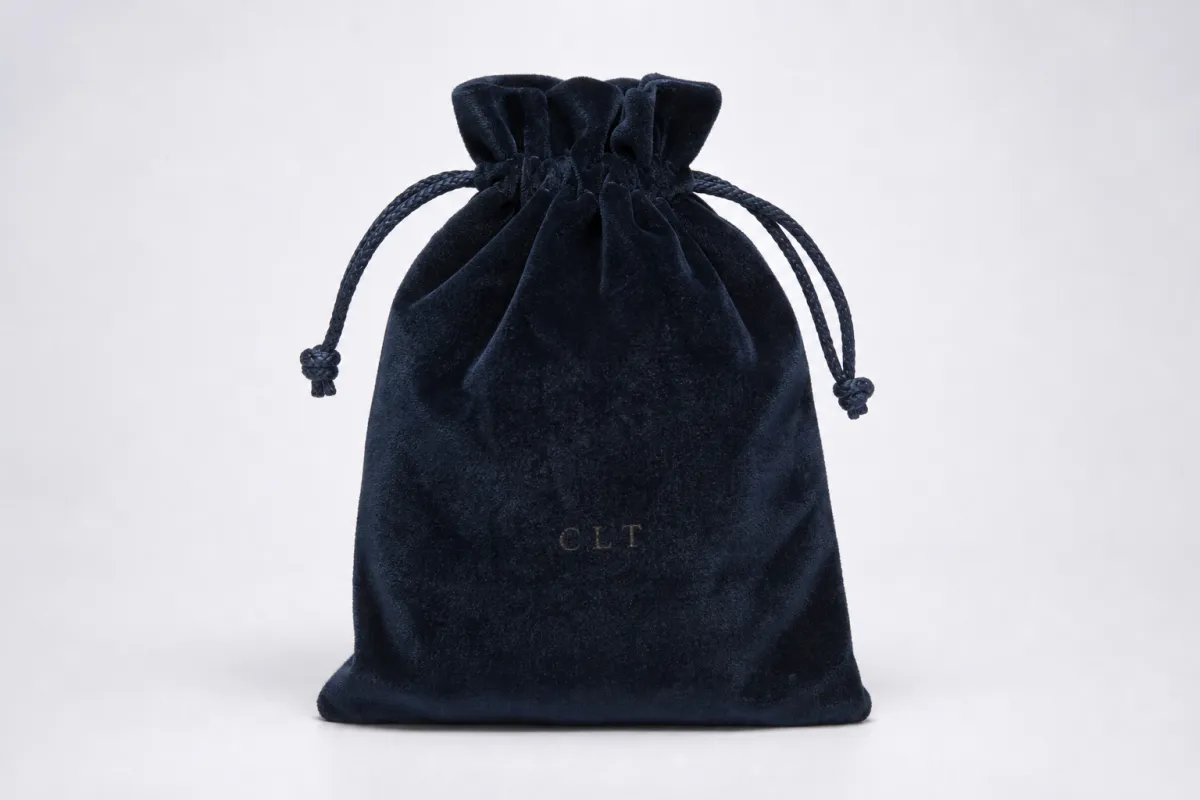
The fastest way to understand the appeal of custom velvet pouches with logo is to compare two products of equal value. One arrives in a plain mailer. The other arrives in a soft pouch with a clean logo, a neat drawstring, and enough structure to keep its shape. The second one usually feels more expensive within seconds. A packaging budget that differs by a few cents can still create a very different response in the hand. That is the strange arithmetic of packaging design: touch often matters as much as print coverage, color accuracy, or the number of inks on the spec sheet.
Velvet carries a dense cluster of cues. It feels soft. It reflects light in a richer way than a flat woven bag. It suggests protection without adding bulk. On custom velvet pouches with logo, that tactile signal is paired with a clear brand mark, which keeps the pouch from drifting into generic territory. The customer reads luxury before they read copy. For jewelry, watches, fragrance samples, premium cosmetics, and collectible items, that first reading can matter more than brands like to admit.
The design does not need much complexity to feel premium. A simple drawstring pouch with a well-placed logo can outperform a more expensive package that looks busy but feels ordinary. That is one reason custom velvet pouches with logo stay popular in branded packaging strategies. They create a strong first touch. First touch is a powerful retail signal, especially in categories where the product is small and the packaging has to do a lot of the selling.
A pouch does not need to shout. If the first touch feels expensive, the product inherits part of that value.
Seasonal sets and gift-with-purchase programs benefit from that effect. A compact pouch protects the item, organizes the unboxing moment, and gives the brand a reusable surface that the customer may keep. The pouch ends up in a drawer, on a dresser, or in a travel kit, and the logo keeps working long after the sale. That kind of afterlife is rare in disposable packaging.
Brands also like the format because it plays well with other packaging assets. A pouch can sit inside Custom Printed Boxes for a layered presentation, or it can work on its own for lower-friction distribution. If a broader sourcing pass is already underway, it helps to compare formats in one place through Custom Packaging Products. That makes it easier to align the pouch with inserts, labels, or secondary cartons without accidentally overspending on one part of the pack-out.
Another reason these pouches feel premium is that they are not visually noisy. Velvet has a deep surface and a soft sheen, so the logo often becomes the focal point. That matters for package branding because it gives the mark room to breathe. Instead of fighting glossy coatings, foil panels, or crowded artwork, custom velvet pouches with logo usually ask for restraint. Less clutter. More signal. Brands that understand that rule tend to get better results.
That restraint can be a relief for buyers. If the product already has a strong identity, the pouch should support it rather than compete with it. A simple logo on velvet often looks more upscale than a dense pattern with too many colors. Custom velvet pouches with logo are dependable for brands that want a premium feel without turning the packaging structure into a design puzzle.
How Custom Velvet Pouches with Logo Are Made
The production path for custom velvet pouches with logo is more methodical than many first-time buyers expect. It usually begins with fabric spec, then moves through cutting, branding, stitching, closure assembly, and final inspection. Each step shapes how the pouch looks in hand, and velvet introduces a few extra variables because the surface is textured, directional, and less forgiving than smooth woven cloth.
The first choice is fabric selection. Velvet pouches may use polyester velvet, cotton velvet, or a microfiber-style plush material that imitates velvet at a lower cost. Hand-feel, pile height, and color depth vary from option to option. For custom velvet pouches with logo, those details matter because a logo can look crisp on one velvet type and slightly softened on another. Dark shades usually deepen the luxury effect. Lighter shades show stitching and placement more clearly, which can help when the brand mark needs more definition.
Once the fabric is selected, the supplier cuts panels according to the pouch size. That is where seam allowance becomes important. A pouch that looks generous on paper can turn tight after stitching and closure channels are added. The logo area should be planned around that construction, not treated as an afterthought. Custom velvet pouches with logo should also be designed with pile direction in mind, because velvet can reflect light differently depending on how the nap lies.
Logo application is the next major decision. There is no single best method for every order. The right choice depends on artwork complexity, budget, run size, and how much handling the pouch will get. A fine-line logo might work on a woven label but lose detail in embroidery. A bold wordmark might print cleanly but feel flatter than a stitched application. On custom velvet pouches with logo, the branding method has to suit the fabric, not fight it.
Before bulk production, most suppliers will create a sample or pre-production proof. That stage is worth the time because velvet behaves differently from a flat digital mockup. The first sample may show a slight shift in shade, logo scale, or stitch tension. That is normal. What matters is whether the sample confirms the practical points: size, closure function, logo legibility, and overall finish. Custom velvet pouches with logo almost always benefit from one real-world check before the full run is approved.
Final inspection should cover seams, drawstring tension, logo placement, and color consistency across the batch. Pouches are small, but that does not mean defects should be waved through. On premium items, a crooked seam or blurred mark is visible quickly. Buyers should ask how the supplier checks for these issues, because custom velvet pouches with logo are only as good as the consistency of the run.
| Logo method | Best for | Typical strengths | Tradeoffs | Relative cost impact |
|---|---|---|---|---|
| Embroidery | Bold marks, premium gifting, repeated handling | Texture-rich, durable, strong tactile feel | Fine details can blur on dense pile | Medium to high |
| Screen print | Simple logos, larger text, cost-sensitive runs | Clean for basic artwork, efficient on volume | Less dimensional, can sit on top of pile | Low to medium |
| Heat transfer | Sharper graphics, smaller batches | Good detail, flexible for short runs | May feel less premium over time | Medium |
| Woven label | Luxury branding, small logos, clean finishes | Consistent look, clear edges, good on textured fabric | Needs enough space and a tidy placement | Medium |
| Embossed patch | Luxury presentation, fashion and gift items | Distinctive, tactile, strong shelf presence | More setup work, not ideal for tiny marks | Medium to high |
The table matters because logo method drives both appearance and unit cost. In a small run, embroidery may make custom velvet pouches with logo feel far more finished, but the setup can be harder to justify. In a larger order, a woven label can deliver a premium look while keeping the line moving efficiently. The right answer is not "best" in the abstract. It is "best for this product, this budget, and this order size."
If the pouch is part of a broader assortment, it can help to compare pouch branding with sleeves, inserts, and custom printed boxes. Velvet pouches are strong at tactile branding, while a box may offer better stackability or more print space. Brands often use both. A pouch handles the premium cue, and a box carries the structure.
Cost, Pricing, MOQ, and Quote Factors for Custom Velvet Pouches with Logo
Pricing for custom velvet pouches with logo is shaped by more variables than many buyers expect. Size matters. Fabric type matters. Logo method matters. Closure style matters. Quantity matters most of all. A small order carries more setup and handling cost per unit, while a larger order spreads those costs across the run. Two quotes for what sounds like the same pouch can differ by a wide margin once the real specs are on the table.
For a straightforward drawstring pouch in a common size, many buyers see a price band somewhere around $0.45-$1.20 per unit at higher volumes, with smaller runs often landing above that range once setup, labor, and sampling are included. Add embroidery, a premium woven label, or a thicker velvet, and the number can rise by another $0.15-$0.75 per unit or more. Those are not universal rates, but they are a realistic way to think about custom velvet pouches with logo before requesting quotes. A buyer can kinda get lulled into thinking the pouch is a tiny item, then the setup line appears and changes the arithmetic.
Minimum order quantity also changes the equation. A supplier may be comfortable at 500 pieces for one pouch spec, while a more detailed build might need 1,000 or more to make operational sense. If the run falls below the factory's preferred MOQ, the unit price usually jumps because pattern work, logo setup, and labor time are still there. That is why custom velvet pouches with logo tend to become more economical as order volume rises.
Comparing quotes fairly means looking beyond the headline unit price. Some suppliers include sampling, while others itemize it. Some quote the pouch only, and some include inner packing, carton labeling, or freight. One quote may look lower until shipping, taxes, and logo setup show up on the final invoice. If you are comparing vendors, ask for line-by-line clarity on the full landed cost of custom velvet pouches with logo.
Here is a simple quote checklist that helps prevent surprises:
- Size: confirm finished dimensions, not just the flat cut size.
- Fabric: ask for the exact velvet type and pile feel.
- Logo method: confirm embroidery, print, woven label, or patch.
- Closure: verify drawstring, zipper, flap, ribbon, or snap.
- MOQ: check the minimum for both the base pouch and the logo version.
- Sampling: ask whether the sample fee is credited later.
- Packing: clarify bulk packed, polybagged, or carton-packed.
- Freight and taxes: confirm what is included and what is not.
The list is basic, which is exactly why it matters. Buyers often spend hours on the mockup and five minutes on the operational details that determine the actual invoice. For custom velvet pouches with logo, the simplest version is usually the most cost-efficient: one color, one logo location, a standard drawstring, and a familiar size. The more the spec changes, the more the quote climbs.
There is also a useful comparison between pouch styles and use cases. A small drawstring pouch is often the best value for jewelry and accessories. A zipper pouch may cost more, but it offers better closure security for travel kits or higher-value items. An embroidered pouch can justify a higher price if the customer keeps and reuses it. So the question is not only "what does it cost?" It is also "what does the customer do with it after purchase?"
If the pouch is part of a broader launch, keep the rest of the packaging line in view. Custom velvet pouches with logo can be paired with inserts, outer cartons, and branded tissue to create a cleaner presentation without overspending on one element. That is where Custom Packaging Products becomes useful as a sourcing reference rather than a single-item decision.
One final pricing point: small details can trigger larger labor costs than buyers expect. Metallic thread, center-aligned logo placement, specialty lining, or an unusual size can add machine changes and manual finishing time. If the budget is tight, simplify the spec before asking for a discount. That usually works better than trying to negotiate after the sample stage. Custom velvet pouches with logo reward clarity more than wishful thinking.
Process, Timeline, and Lead Time for Custom Velvet Pouches with Logo
Lead time is one of the first things buyers underestimate. A pouch may look simple, but custom velvet pouches with logo still pass through several checkpoints before bulk production starts. The normal flow is brief, artwork review, sampling, approval, mass production, inspection, packing, and shipping. If any step slows down, the calendar moves with it.
A practical timeline often looks like this: brief and sizing discussion in 1-3 business days, artwork or dieline adjustments in 1-4 days, sampling in roughly 5-10 business days depending on complexity, and bulk production in about 10-20 business days after approval. Shipping is a separate variable. Air freight is fast but expensive; ocean freight is cheaper but longer. For many buyers, custom velvet pouches with logo land in the two to five week range after sample approval, though complexity and supplier location can shift that quite a bit.
Where do delays usually happen? Three places stand out. First, artwork revisions. A logo that is too detailed for the pile may need simplification. Second, material sourcing. The exact velvet shade or closure hardware might not be in stock. Third, sample approval. Buyers often need to see the pouch in hand before signing off, and that is smart, but it adds time. If the order supports a launch, those three points deserve buffer time from the start.
There is also a difference between "fast" and "rushed." A rush order can shorten the calendar, but it often reduces options. The supplier may limit logo methods, narrow color choices, or compress the sample step. That is not automatically a bad decision, but it should be deliberate. If the pouch is tied to a trade show, seasonal gift set, or retail promotion, it is usually smarter to plan early than to force a spec that feels compromised.
For buyers managing replenishment, a simple rule helps: keep one buffer cycle ahead of actual demand. If the packaging run usually takes three weeks from approval to delivery, reorder before stock reaches the danger zone. Custom velvet pouches with logo are small, but the consequences of running out are not. A missing pouch can stall product assembly, delay a shipment, or reduce the perceived quality of a premium order.
Sampling deserves attention too. A sample is not a formality. It is the point where logo scale, stitch quality, and fabric color become tangible. If you are ordering a new size, a new closure, or a more detailed brand mark, do not skip the sample. That one step often prevents a bulk run that would have needed rework. For custom velvet pouches with logo, a day or two spent reviewing a sample can save a much longer production headache.
Buyers who need to validate transport durability should ask whether the packed-out product has been tested against realistic handling conditions. The ISTA distribution testing standards are a useful reference point for shock, vibration, and drop performance. Not every pouch needs formal lab testing, but if the item is expensive or fragile, the shipping path deserves more than a guess. Custom velvet pouches with logo can look beautiful and still fail in transit if the pack-out is not thought through.
Key Factors That Decide Quality, Branding, and Durability
Quality in custom velvet pouches with logo is often visible in small places. A straight seam. A consistent pile. A logo that sits level and legible. A drawstring that closes without snagging. Those details sound minor until the pouch is in the customer’s hand. Premium look is usually a collection of ordinary things done well.
The first quality check is seam density and straightness. Velvet can shift during sewing, so ask how the factory controls alignment. A clean side seam should not twist the pouch body or distort the logo panel. If the stitches wander, the pouch can look inexpensive even if the fabric itself is good. On custom velvet pouches with logo, straight construction matters because the fabric already carries visual texture; the build has to stay disciplined.
The second check is pouch size. That sounds obvious, and it is exactly where many buyers go wrong. The pouch should match the product footprint closely enough that the item does not rattle, float, or slump. Too large, and the pouch looks underfilled. Too small, and the closure strains or the logo sits awkwardly across a bulge. Custom velvet pouches with logo work best when the fit is intentional, not approximate.
Closure choice affects both presentation and durability. Drawstrings are the most common because they are simple and cost-effective. Zippers add security and are better for travel items or sets that may be reused often. Flap and ribbon closures create a softer gift feel, but they can be less secure for shipping. The best closure for custom velvet pouches with logo depends on whether the pouch is meant for retail display, storage, or transport.
There is a durability tradeoff as well. Velvet feels premium, but the pile can attract lint and show wear faster than a plain woven cotton bag. That is not a dealbreaker. It simply means the pouch should be chosen for the right purpose. For occasional gifting, velvet is ideal. For everyday rough handling, a heavier woven fabric or lined pouch may hold up better. Brands need to balance the luxury cue against the expected use pattern.
If the pouch will move through shipping cartons and mailers, ask whether the full pack-out can survive compression and drop conditions. For paper components like inserts or hang tags, ask about recycled content or FSC-certified paper where appropriate, because sustainability claims should map to the actual materials, not just the main pouch. And for the pouch itself, request practical transport checks. A velvet pouch may be reusable, but the outer components and inserts still need to support the total package design. This is part of good product packaging, not an afterthought.
Color consistency is another quality marker. Velvet can look slightly different depending on light angle and pile direction, so ask for shade tolerance expectations before production starts. A dyed batch that looks close on a monitor may not match a physical fabric swatch exactly. That is normal. What matters is whether the supplier can keep variation within a sensible range across the run of custom velvet pouches with logo.
Brands that care about sustainability should ask for the environmental profile of every component, not just the pouch fabric. Recycled paper inserts, reduced secondary packaging, and cleaner printing choices can all support a better package story. The velvet itself may not always be the most eco-lean option, so transparency matters. Honest sourcing is better than vague claims, and customers can usually tell the difference.
For that reason, custom velvet pouches with logo should be judged as a full system: materials, construction, branding method, and final use. That broader view is what separates a pretty sample from a dependable packaging asset.
Common Mistakes Buyers Make With Custom Velvet Pouches with Logo
The biggest mistake is over-detailing the logo. Velvet is textured. Fine strokes can disappear into the pile or soften at the edges. A small wordmark with hairline lettering may look sharp on a screen and still fail in production. On custom velvet pouches with logo, the brand mark should be readable at the actual size, not just attractive in a digital mockup.
A second mistake is approving size from a flat template without testing the product inside the pouch. That sounds harmless until the real item arrives and the pouch bulges, sags, or hides part of the logo. A bracelet is not the same as a ring. A vial is not the same as a lip gloss tube. If the product has irregular geometry, ask for a sample. Custom velvet pouches with logo are too small a format to guess on dimensions.
Color mismatch causes a lot of frustration too. Buyers often expect the monitor color, the Pantone reference, and the fabric shade to match exactly. In reality, screen settings, dye lots, and pile direction can all change the look. That does not mean the supplier is wrong. It means the buyer needs a physical swatch, a tolerance discussion, or a sample approval step before the run starts. Custom velvet pouches with logo demand real material checking, not only digital approval.
MOQ mistakes are common as well. Some teams assume a custom pouch can be ordered in the same tiny volumes as a generic stock bag, then discover that the price rises sharply or the supplier cannot support the spec. That is avoidable. Ask for MOQ, setup fees, and sample costs in writing before moving forward. Custom velvet pouches with logo are easier to budget once the operational constraints are visible.
Another problem is skipping the pre-production sample. It feels like a time saver. It is not. The sample is the moment to catch issues in logo scale, closure function, stitch quality, and fabric tone. If the pouch is part of a launch or gift campaign, a single failed bulk run can cost more than the sample process ever would. That is especially true for custom velvet pouches with logo that must look premium from the first shipment.
Then there is the hidden logistics mistake: forgetting how the pouch fits into the rest of the pack-out. A pouch that is perfect on its own may be awkward inside a mailer or box. If the broader packaging system includes inserts, wraps, or custom printed boxes, check how the pouch sits within the full structure. Good packaging design is never only one component.
For buyers who want stronger package branding, the simplest fix is often to slow down and ask a few practical questions before placing the order. Does the logo fit the fabric? Does the product fit the pouch? Does the timeline fit the launch? Custom velvet pouches with logo become far easier to manage once those three questions are answered honestly.
Expert Tips and Next Steps for Ordering Custom Velvet Pouches with Logo
If you are preparing an order, start with the product in hand, not the artwork file. Measure the widest point, the tallest point, and any hardware that changes the footprint. Then decide what the pouch is supposed to do: gift presentation, storage, retail display, travel protection, or all of the above. Custom velvet pouches with logo perform best when the use case is clear before the design is fixed.
Then choose the closure. Drawstring is the easiest default. Zipper works better for more secure storage. Ribbon and flap styles feel softer and more decorative. The best one depends on how much movement, handling, and reuse you expect. If the pouch is part of a higher-end gift set, embroidery or a woven label may make sense. If the order is more price-sensitive, a clean print or simple label can still look strong. Custom velvet pouches with logo do not need excessive embellishment to feel finished.
I also recommend asking for three things before you approve production: a sample kit, a spec sheet or dieline, and a side-by-side quote comparison. The sample shows you what the material actually feels like. The spec sheet clarifies dimensions, logo placement, and closure details. The quote comparison helps you spot whether setup, freight, or sampling is hidden in one bid and included in another. That triad saves a lot of confusion.
Here is a simple sourcing checklist you can reuse:
- Product size: confirm the exact item dimensions and clearance needed.
- Logo placement: choose the front, center, corner, or label position.
- Fabric color: approve from a physical swatch if possible.
- Logo method: match the method to the artwork complexity.
- MOQ and price: confirm the full cost structure in writing.
- Lead time: build in buffer for sampling and freight.
- Secondary packaging: check how the pouch fits with inserts or boxes.
That checklist also helps if you are building a larger branded packaging system. Some brands need pouches only. Others need a mix of pouches, tissue, labels, and custom printed boxes to support the launch. If your program is broader than one item, review the rest of the line through Custom Packaging Products so the pouch does not get designed in isolation. Packaging performs better as a set than as disconnected pieces.
One more practical tip: if you expect the pouch to live beyond the first purchase, design for reuse. A slightly stronger closure, a more durable logo method, or a size that fits an accessory after the initial gift can extend the pouch's life. That matters because reused packaging acts like quiet advertising. The customer sees the logo again and again. Custom velvet pouches with logo can keep earning attention long after the original product is gone.
My honest view? The best results come from treating the pouch like a real packaging component, not a decorative afterthought. When branding, budget, and timeline are planned together, custom velvet pouches with logo deliver more value than their small size suggests. They improve first impression, support product protection, and give a brand a tactile signature that plain packaging rarely matches.
For most brands, that is the sweet spot: a premium feel, a sensible unit cost, and a delivery schedule that fits the launch calendar. Get those three pieces aligned, and custom velvet pouches with logo become one of the most efficient tools in the packaging mix. If you're making one decision next, make it the sample approval based on real product fit, not just the mockup. That one step saves the most trouble.
Frequently Asked Questions
What size should custom velvet pouches with logo be for jewelry?
Measure the largest piece first, then add enough room for seams and a comfortable fit. For sets, account for cards, inserts, or small boxes so the pouch does not bulge or distort the logo. If the product has irregular shapes like bracelets, pendants, or earrings, ask for a physical sample before bulk approval. Custom velvet pouches with logo are small enough that a few millimeters can change the whole feel.
Are custom velvet pouches with logo more expensive than cotton pouches?
Usually yes, because velvet fabric, finishing, and logo application can require more labor or handling. The gap narrows on higher volumes, or if the cotton pouch needs premium printing, lining, or extra finishing. The better comparison is total brand impact versus total landed cost, not fabric price alone. Custom velvet pouches with logo often justify the premium when the product is giftable or high-value.
How long does production usually take for custom velvet pouches with logo?
Sampling often takes longer than buyers expect because artwork, sizing, and closure details may need revision. Once the sample is approved, bulk production can move faster, but material sourcing and queue time still matter. A practical planning window is often two to five weeks after approval, depending on complexity and freight. Build in buffer time if the order supports a launch or seasonal promotion.
Which logo method looks best on velvet pouches with logo?
Embroidery and woven labels usually stay the clearest on textured fabric because they sit well on the pile. Print can work for simpler graphics, but very fine details may lose definition. The right choice depends on logo complexity, brand style, and how much handling the pouch will get. For custom velvet pouches with logo, the cleanest result is usually the one that respects the texture instead of fighting it.
What should I ask before ordering custom velvet pouches with logo in bulk?
Ask for MOQ, unit price, setup fees, sample cost, production lead time, and shipping terms in writing. Confirm the exact fabric color, logo placement, closure style, and final dimensions before approval. Request photos or a pre-production sample so the bulk run matches expectations. Those questions make custom velvet pouches with logo easier to price, easier to approve, and far less likely to cause surprises later.

