Buyer Fit Snapshot
| Best fit | Printed Pouches with Logo Wholesale for Custom Brands projects where brand print, material claims, artwork control, MOQ, and repeat-order consistency need to be specified before quoting. |
|---|---|
| Quote inputs | Share finished size, material target, print colors, finish, packing count, annual reorder estimate, ship-to region, and any compliance wording. |
| Proofing check | Approve dieline scale, logo placement, barcode or warning zones, color tolerance, closure strength, and carton packing before bulk production. |
| Main risk | Vague material claims, crowded artwork, missing packing details, or unclear freight terms can make a low unit price expensive after revisions. |
Fast answer: Printed Pouches with Logo Wholesale for Custom Brands should be specified like a repeatable production item. The safest quote records material, print method, finish, artwork proof, packing count, and reorder notes in one written spec.
Production checks before approval
Compare the actual filled-product size with the drawing, then confirm tolerance on folds, seals, hang holes, label areas, and retail display edges. Reserve space for logos, QR codes, warning copy, and material claims before decorative graphics fill the panel.
Quote comparison points
Review material grade, print process, finish, sampling route, tooling charges, carton quantity, and freight assumptions side by side. A quote is only useful when the supplier can repeat the same color, closure quality, and packing count on the next order.
Printed pouches with logo wholesale do more than hold a product. They shape the first impression before a shopper ever reaches for the zipper, studies the label, or decides whether the brand feels worth a second look. On a crowded shelf, or in a tiny product thumbnail where every bit of contrast matters, printed pouches with logo wholesale help a brand look settled, deliberate, and ready for real competition. The logo, the film, the closure, and the finish all need to pull in the same direction.
That first impression carries real weight. Packaging is often seen before the product is touched, especially in retail aisles and e-commerce images, so the pouch has to do some of the selling on its own. If you are comparing wholesale runs, our Wholesale Programs page is a practical place to begin, because the best order is usually the one that fits the product, protects what is inside, and keeps the next reorder from turning into a redesign.
From a buyer's point of view, the job is pretty straightforward: protect the contents, present them cleanly, and make sure the package can be repeated without chaos. Printed pouches with logo wholesale are a strong option when the structure, artwork, and production details are aligned before the order moves forward.
Why printed pouches with logo wholesale can outperform plain stock
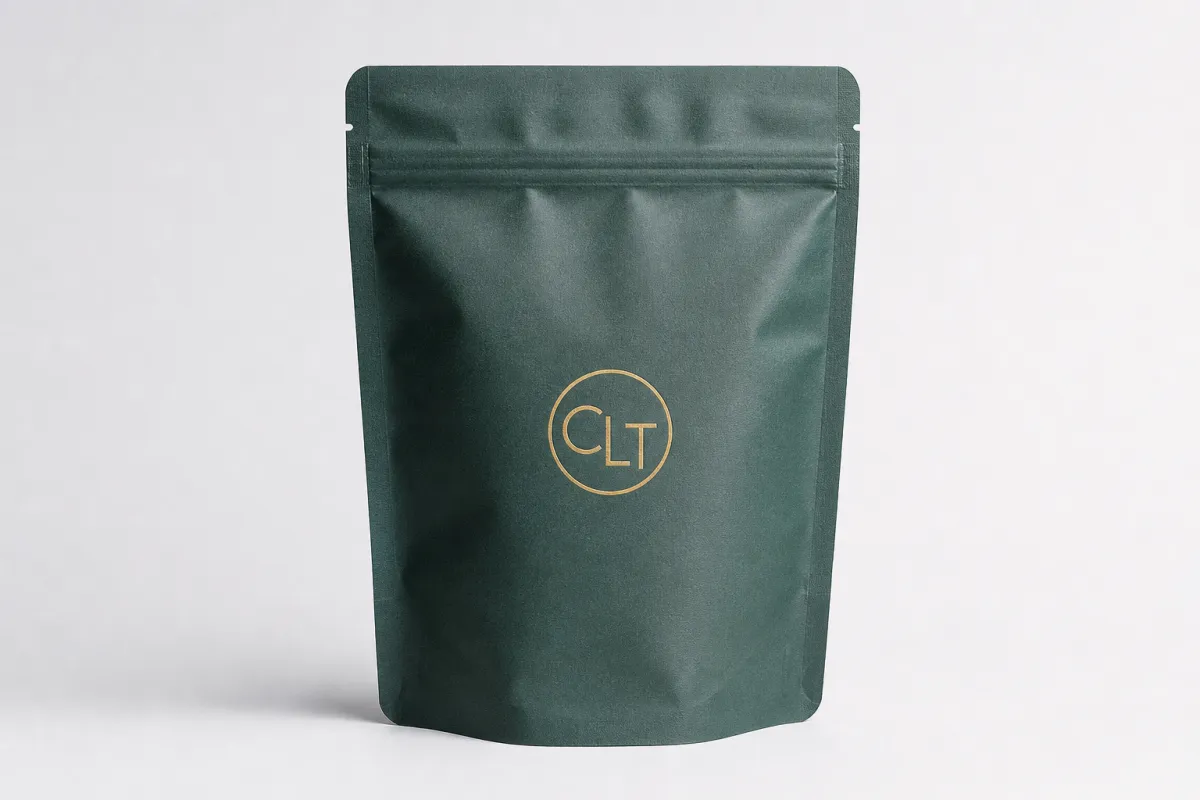
Plain stock packaging has a place, especially for a test run or a short promotional burst, but it often leans too heavily on labels, stickers, and whatever branding can be applied by hand. Printed pouches with logo wholesale solve that at the package level, which creates a cleaner shelf presentation and a more repeatable result. If one SKU turns into three flavors by the next order, a printed system keeps the logo placement, color field, and product copy consistent across the line instead of drifting from batch to batch.
That consistency matters in the real world. A shopper standing in front of a display, or scrolling through product cards on a phone, is not analyzing ink density or checking alignment with a ruler. They are deciding whether the brand feels organized, trustworthy, and worth a second look. Printed pouches with logo wholesale help build that impression quickly, particularly when the artwork has enough room to breathe and the finish supports the brand's tone.
Wholesale ordering also changes the economics in a useful way. Larger runs often spread setup, prepress, and finishing work across more pieces, which is why printed pouches with logo wholesale can feel expensive at a tiny quantity yet far more reasonable once the product has stable demand. The goal is not to chase the lowest number on a quote sheet. The goal is to buy a package that performs through a full sales cycle without forcing a midstream reset.
I have seen buyers start with artwork and only later realize the structure was wrong for the product. That sequence usually causes avoidable rework, and it is one of the fastest ways to burn time and budget. Choose the pouch style first, verify the barrier, confirm the closure, and then build the graphic system around that package. Printed pouches with logo wholesale hold up best when the design respects the package instead of fighting its shape.
A pouch that looks polished but leaks, scuffs badly, or prints off-register is not really polished. In practice, the best wholesale packaging is the one that stays clean from fill line to shelf and from first order to reorder.
There is also a real advantage in repeat ordering. Once the specification is locked, printed pouches with logo wholesale can be reproduced with far less friction than many buyers expect. That becomes useful when ingredient changes, barcode updates, flavor names, QR codes, or compliance text need to be added without rebuilding the whole package. Good wholesale packaging should make the second order easier than the first one.
Printed pouches with logo wholesale: formats, materials, and finishes
The first choice most buyers face is pouch format. Stand-up pouches are popular for a reason: they give the product shelf presence, a generous front panel for branding, and enough structure to sit neatly in a display. Flat pouches make sense for samples, single-serve fills, lightweight products, and shipments where compact storage matters more than display height. Specialty formats, including spouted pouches and side-gusset styles, enter the conversation when pouring, dosing, or packing flow calls for a different shape.
Material selection is where printed pouches with logo wholesale become more technical. A coffee pouch, for example, carries a very different barrier requirement than a dried fruit blend or a supplement powder. Common structures may include laminated films such as PET/PE, BOPP-based builds, metallized layers for added oxygen or moisture resistance, or foil-based barriers for products that need stronger protection from air and light. The right choice depends on the product's sensitivity, the shelf life target, and the way the pouch will be filled and sealed.
Finish changes the way a logo reads under light, which is why the same artwork can feel soft and elegant on matte film, crisp on gloss, or more earthy on a kraft-look laminate. Clear windows can work beautifully when the product deserves to be seen, though they need careful planning because any fill inconsistency becomes visible too. Printed pouches with logo wholesale should reflect the brand promise, not just the color palette sitting inside the design file.
Logo placement deserves the same attention as finish. A wide front panel gives the brand room to speak clearly, while a tighter print area may be the better answer when ingredient copy, icons, barcodes, and legal text all need their own space. Zippers, hang holes, and tear notches are not decorative details; they take up layout room and should be counted before artwork is finalized. I have watched clean-looking concepts fail for nothing more than a print area that was smaller than the designer assumed, which is the kind of mistake that feels small until the proof comes back.
- Stand-up pouches help when shelf presence and front-panel branding matter most.
- Flat pouches suit sample packs, light fills, and compact shipping.
- Matte finishes soften glare and can make artwork feel more refined.
- Gloss finishes usually sharpen contrast and make saturated colors stand out.
- Window panels show the product, but they also expose fill consistency.
For brands that need confidence their package can survive transit, the testing mindset is worth taking seriously. The ISTA testing standards are a useful reference point when a pouch has to pass through shipping, handling, and pallet movement without failure. Formal lab work is not necessary for every order, yet the structure should still be judged against how the package will actually be used. Printed pouches with logo wholesale only work as well as the film, seal, and fill process working together.
Specifications that affect shelf life, seals, and print quality
The best way to spec printed pouches with logo wholesale is to start with the physical requirements, not the artwork. A buyer should confirm pouch dimensions, fill weight or volume, film thickness, seal width, closure type, and whether the package needs a hang hole, zipper, tear notch, valve, or spout. Those details sound routine, yet they shape the economics, the print layout, and the production method more than the logo does.
The product itself should guide the build. Powders can bridge or dust during filling, which means seal quality and closure design matter a great deal. Snacks may need moisture control and puncture resistance. Coffee often needs a barrier that helps preserve aroma. Supplements may require tight panel sizing so labeling and regulatory copy stay readable. Printed pouches with logo wholesale should match the product's behavior on the line, not just the look the brand prefers in a mockup.
Print quality depends on artwork setup, ink coverage, and color control. Thin lines can vanish if the artwork is too delicate. Gradients can band if the file is built poorly. Brand colors can drift when proofing is rushed or when the printing method is not suited to the design. A logo that looks perfect on a monitor may need simplification on a pouch face, especially when the package has folds, curves, or a narrow print zone. Printed pouches with logo wholesale reward clean artwork and careful prepress, not last-minute heroics.
Here are the checks I would insist on before approving a run:
- Measure the actual product fill, then confirm the pouch size with room for settling and headspace.
- Review the dieline carefully so the logo, barcode, and legal copy stay inside the safe area.
- Check seal width and closure placement against the fill process, not just the drawing.
- Confirm color references early, especially if the brand has a strict Pantone target.
- Test the pouch with the actual product before committing to the full wholesale quantity.
That last point prevents a surprising number of problems. A pouch that looks fine when empty can behave very differently after it has been filled, sealed, and stacked. Corners may lift, seams may wrinkle, or a heavier product may stress the bottom gusset more than expected. Printed pouches with logo wholesale are a packaging choice, but they are also a production choice, and production reality always finds a way to show up.
If the package needs to support claims like freshness, barrier protection, or tamper resistance, the buyer should ask for material details and performance expectations in plain language. ASTM methods, seal strength checks, and package integrity reviews are not glamorous, but they protect the order. The best suppliers do not dodge those questions; they welcome them because a clear spec cuts down on trouble later.
Cost, pricing, and MOQ for printed pouches with logo wholesale
Pricing for printed pouches with logo wholesale usually comes down to a handful of variables that show up again and again: pouch size, material complexity, print coverage, finish, closure type, and order quantity. The logo itself rarely Drives the Price as much as buyers expect. A simple one-color mark on a small pouch is easier to produce than a full-coverage design, yet the larger cost changes usually come from film structure and setup rather than the artwork alone.
MOQ is part of the picture because wholesale runs are built around production efficiency. Smaller quantities tend to carry a higher unit cost because setup, press time, and finishing steps are spread across fewer pieces. Larger quantities often improve unit economics, but only if the brand can move the inventory within a realistic sales window. Printed pouches with logo wholesale work best when the order size matches true demand instead of a hopeful forecast written in a spreadsheet.
It helps to compare quotes the same way a packaging buyer would compare material on the floor: by the full landed cost, not just the base price. That means asking about setup charges, proof charges, sample fees, freight, and any adders for special finishes or closures. A quote that looks lower at first glance can turn into the more expensive option once every moving part is counted.
| Format | Best for | Common cost drivers | Typical wholesale range at 5,000 units |
|---|---|---|---|
| Stand-up pouch | Shelf visibility, retail display, reclosable products | Barrier film, zipper, matte or gloss finish, larger print area | $0.18-$0.42 per unit |
| Flat pouch | Samples, single-serve items, compact fills | Smaller material footprint, simpler construction, fewer add-ons | $0.10-$0.28 per unit |
| Specialty pouch | Liquids, pourable products, custom dispensing needs | Extra components, sealing complexity, higher testing demand | $0.30-$0.75 per unit |
Those numbers are only a working reference, not a formal quote. A heavy barrier laminate, a spout, or full-coverage print can shift the cost quickly. So can a very small pouch with tight tolerances or a design that needs exact color matching. Printed pouches with logo wholesale should always be priced against the actual spec, not an imagined standard pouch that never matched the product in the first place.
Budgeting has to follow sales velocity too. If a product sells 800 units a month, a 10,000-piece order may look efficient while quietly sitting too long in inventory. If the same product has repeat demand and stable forecasts, a larger order can make perfect sense. The right wholesale decision balances price, storage, and reorder timing without tying up cash in cartons that move too slowly.
The cheapest quote is not always the cleanest route to market. If the film is too weak, the colors are off, or the seal fails under ordinary handling, the hidden cost shows up in replacements, complaints, or rework. Printed pouches with logo wholesale should be judged by the finished package, not just by the invoice total.
Process and timeline: artwork, proofing, production, delivery
The cleanest packaging projects follow a sensible order. First comes the product brief, then the dimensions and structure, then the artwork, then the proof, then production, then delivery. Printed pouches with logo wholesale usually move more smoothly when that sequence is respected instead of compressed. If a buyer starts with artwork before the pouch spec is settled, the proof cycle often stalls because the design has to be reshaped around the actual packaging geometry.
Delays tend to appear in the same places. The artwork may not be print-ready, the dieline may not match the intended fill volume, brand colors may need correction, or the compliance text may not fit where the designer expected. A careful proof stage catches those problems while they are still manageable. A rushed proof stage pushes them downstream, where changes cost more and take longer. Printed pouches with logo wholesale do not forgive last-minute guessing.
A realistic timeline often includes sample review or spec confirmation, artwork correction, proof approval, production, finishing, and freight. For many wholesale pouch runs, production often takes about 12-15 business days after proof approval, though that depends on materials, order size, and the amount of customization involved. Multiple flavors, special finishes, and strict compliance review all deserve extra time. That is not caution for its own sake; it is how a launch stays believable.
Here is the timeline flow I recommend:
- Confirm the product, fill weight, and packaging goals.
- Choose the format, material, and closure before finalizing artwork.
- Review the proof carefully for color, copy, and safe-area placement.
- Approve only after the actual layout matches the actual pouch.
- Build freight time into the launch calendar instead of treating it as an afterthought.
For brands that care about sustainability messaging, the package story should stay honest. If a paper component or outer carton is part of the order, materials may be sourced with certification in mind, and groups such as FSC offer a useful reference for responsible fiber sourcing. I would still keep the conversation grounded in what the package actually is and what it needs to do, because glossy claims without material substance do not hold up well in the market.
Printed pouches with logo wholesale move quickly when the brief is clean. They slow down when buyers expect the artwork to solve problems that really belong in the spec. The safest schedule is the one that gives the packaging enough room to be checked properly before a production slot is reserved.
Why choose Custom Logo Things for wholesale pouch runs
Custom Logo Things is a strong fit for buyers who want practical support instead of packaging jargon. The real value is not only printing a logo on a pouch; it is helping the buyer choose a structure that fits the product, the budget, and the way the package will be handled after it leaves the plant. Printed pouches with logo wholesale become much easier to buy when the process is organized around the actual use case.
Clear communication matters here. Wholesale packaging works best when specifications are confirmed early, proofs are reviewed with care, and the buyer knows exactly what is being ordered. That sounds simple, yet it is one of the biggest differences between a package that repeats cleanly and a package that creates repeated corrections. Printed pouches with logo wholesale should not require a brand to babysit every reorder; they should make repeat business easier.
Consistency is another major advantage. When a brand comes back for replenishment, the colors, logo placement, panel proportions, and overall feel need to stay aligned with the previous run. That matters even more when a product has multiple flavors or variants, because one drifting color or one off-center logo can make the whole line look less disciplined. Printed pouches with logo wholesale are strongest when the supplier understands repeatability as well as first-run execution.
From a buyer's standpoint, the best packaging partner is the one who catches issues before they become expensive. That means spotting size mismatches, checking whether the fill weight actually suits the pouch dimensions, and asking whether the product needs more barrier than the design team first assumed. It is a far better conversation to have before the proof is approved than after a warehouse is already stacked with cartons.
Working through Wholesale Programs also gives buyers a cleaner path if they want to scale from a test run to a repeat order. That is where printed pouches with logo wholesale show their value most clearly: one specification, one artwork system, and one repeatable route from production to reorder. If the package protects the contents, presents the brand well, and holds up across reprints, the packaging has done its job.
The company page should not need to promise magic. Good wholesale packaging is mostly discipline, accurate specs, and careful follow-through. Printed pouches with logo wholesale reward that kind of work every time.
Next steps to order printed pouches with logo wholesale
The fastest way to get a useful quote is to send a short, specific product brief. Start with what the product is, how it is filled, the target size or weight, where it will be sold, and what problem the pouch needs to solve. If the product is shelf-driven, say that. If it needs resealability, say that. If freshness is the main concern, say that plainly so the right barrier can be discussed.
It also helps to gather the practical inputs before asking for pricing: dimensions, estimated quantity, artwork files, closure preference, and any special requirements for barrier, finish, or label copy. Printed pouches with logo wholesale move faster when the buyer supplies information that can be checked against the actual product instead of a vague idea of the package.
I would always compare at least one sample or spec sheet against the real fill before giving final approval. If the pouch is supposed to hold 8 ounces, put 8 ounces in it. If the product needs room for a zipper and a tear notch, confirm that the artwork still fits inside the printable area. Small errors in spec review become obvious later, and they are much easier to catch while the order is still on paper.
Before you approve, confirm three things: the quote, the proof, and the timeline. If those three line up, the order is usually in good shape. If one of them feels uncertain, pause and fix it. Printed pouches with logo wholesale are a long-term packaging decision, and the cleanest order is the one that works for the current launch and the next reorder.
The most useful takeaway is pretty simple: lock the pouch structure before you polish the artwork, then test the filled sample before you commit to volume. That order keeps the spec honest, keeps the quote realistic, and keeps the final package from surprising you later. For brands that are ready to move, the next step is to build the order around the product first and the design second, because that is what turns printed pouches with logo wholesale into Packaging That Actually supports the business over time.
What is the minimum order for printed pouches with logo wholesale?
The MOQ usually depends on pouch size, material, and print setup, so smaller or more complex jobs often have a higher minimum. Larger quantities typically lower the per-unit price, which is why printed pouches with logo wholesale work best when a product has repeat demand or multiple flavors. If you are testing a new SKU, ask for a quote that shows both a starter run and a scale-up quantity so you can compare real costs.
Which pouch style is best for printed pouches with a logo wholesale order?
Stand-up pouches are a common choice when shelf visibility matters, while flat pouches work well for smaller fills, samples, and lightweight products. Zippers help with resealability, and tear notches improve opening, so the best style depends on how the customer will use the package. The right answer usually comes from the product itself: weight, texture, shelf life, and display needs should drive the format choice.
How do I keep my product fresh in printed pouches with logo wholesale?
Freshness depends on the barrier structure, so the film has to match the product's sensitivity to oxygen, moisture, and light. A strong seal matters just as much as the film itself, which is why pouch design and fill process should be checked together. For best results, test the pouch with the actual product and storage conditions before committing to a full wholesale run.
How long does production take for printed pouches with logo wholesale?
Lead time depends on proof approval, order size, material availability, and whether the artwork is ready for print without revisions. Orders with special finishes, multiple SKUs, or detailed compliance text may need more review time before production begins. The safest approach is to plan the timeline backward from the launch date and leave room for proof corrections and freight.
What artwork do you need for printed pouches with logo wholesale?
A vector logo file is usually the best starting point because it keeps edges sharp and scales cleanly across the pouch face. The printer also needs dieline information, copy placement, and color guidance so the final layout matches the packaging structure. If your brand relies on exact color matching, provide clear color references early so the proof stage can catch issues before production.


