Buyer Fit Snapshot
| Best fit | Custom Warning Labels Bulk Order projects where brand print, material claims, artwork control, MOQ, and repeat-order consistency need to be specified before quoting. |
|---|---|
| Quote inputs | Share finished size, material target, print colors, finish, packing count, annual reorder estimate, ship-to region, and any compliance wording. |
| Proofing check | Approve dieline scale, logo placement, barcode or warning zones, color tolerance, closure strength, and carton packing before bulk production. |
| Main risk | Vague material claims, crowded artwork, missing packing details, or unclear freight terms can make a low unit price expensive after revisions. |
Fast answer: Custom Warning Labels Bulk Order: Pricing and Lead Time should be specified like a repeatable production item. The safest quote records material, print method, finish, artwork proof, packing count, and reorder notes in one written spec.
Production checks before approval
Compare the actual filled-product size with the drawing, then confirm tolerance on folds, seals, hang holes, label areas, and retail display edges. Reserve space for logos, QR codes, warning copy, and material claims before decorative graphics fill the panel.
Quote comparison points
Review material grade, print process, finish, sampling route, tooling charges, carton quantity, and freight assumptions side by side. A quote is only useful when the supplier can repeat the same color, closure quality, and packing count on the next order.
Custom Warning Labels Bulk Order: Pricing, Specs, and Lead Time
A custom warning labels bulk order is usually the cleanest way to keep safety messaging consistent across cartons, drums, pallets, totes, and shrink-wrapped goods. One weak label can create a mess fast. It peels, smears, lands on the wrong panel, or shows up in the wrong size. Then someone on the floor has to stop, sort, and fix it. That is expensive in a way spreadsheet people always underestimate.
Warning labels are not decoration. They are part of the packaging system around product packaging, branded packaging, and package branding. They tell people how to handle, store, and move a product before the first box is opened. The buying decision has to balance cost, durability, and application speed. Picking the cheapest sticker and hoping for the best is how teams buy the same labels twice.
Larger orders usually improve the economics. Setup cost gets spread across more labels, artwork stays locked, and the line sees the same adhesive, the same ink density, and the same finish on every run. That kind of repeatability matters whether the labels go on corrugate, poly bags, drums, equipment, or retail packaging that needs a clear warning without looking cluttered.
If a warning label cannot be read in a few seconds and stay attached through transport, it is not doing its job. It is creating another exception for the warehouse to solve.
Why Bulk Warning Labels Pay Off on the Line
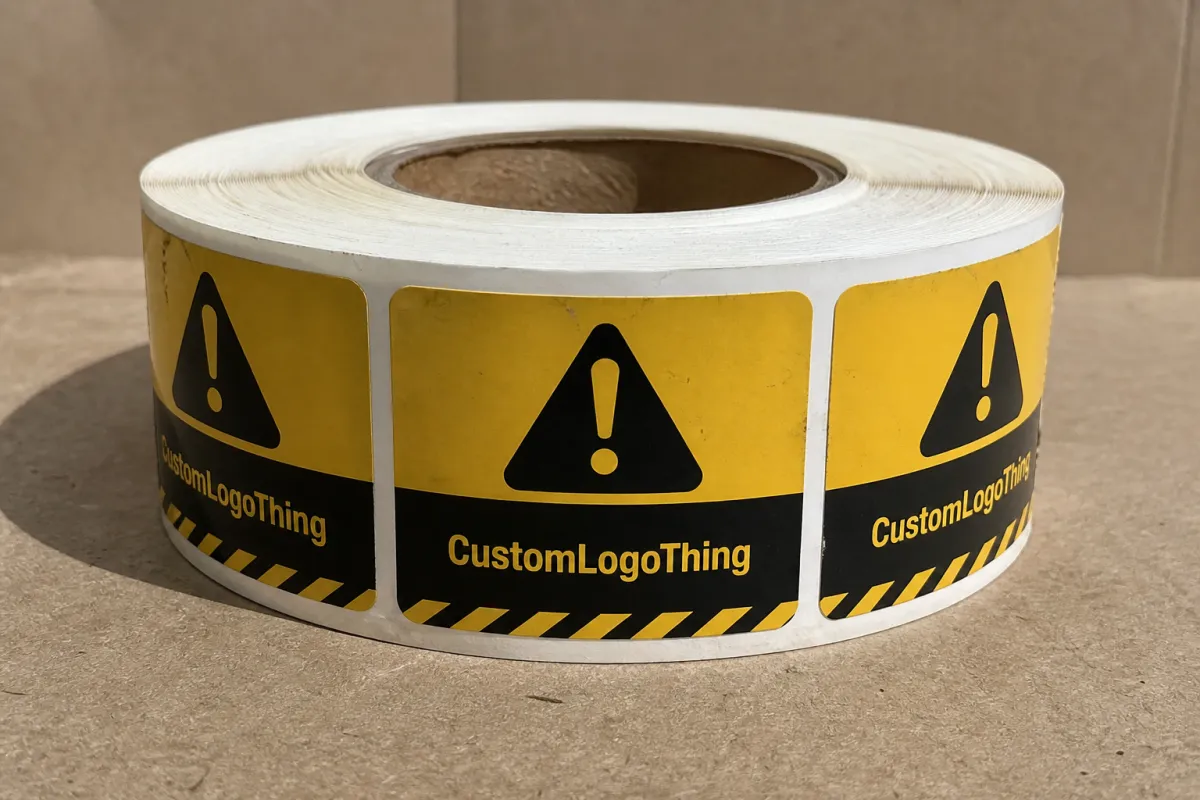
Small label problems love becoming big delays. A corner curls and the line stops for rework. A color block lands wrong and release gets held. A label is hard to read and receiving slows down because nobody wants to guess what is on the pallet or drum. A custom warning labels bulk order reduces that kind of drift because the specs stay fixed and the process stops improvising.
The pricing side is easy to understand. Bigger runs lower the per-label cost because press setup, proofing, and die or plate cost get spread over more units. The operational side matters even more. Once the artwork, adhesive, and format are approved, every carton, case, or drum gets the same result. Less sorting. Less second-guessing. Fewer random roll sizes taking up cabinet space like they pay rent.
Ad hoc orders usually cost more than the invoice suggests. A team pays a higher unit price, then loses time waiting on revised proofs, checking copy against compliance text, and breaking mixed shipments into the right bins on the floor. Controlled runs cut those hidden labor costs. They also make planning less painful, which matters if the labels sit beside Custom Labels & Tags or a wider set of Custom Packaging Products that need to hit the same dock on schedule.
Bulk ordering also keeps the visual story steady. A label printed this month should match the one printed next month if it belongs on the same product line. That consistency supports safety communication and quality control at the same time. It also helps when buyers are managing custom printed boxes and other branded packaging parts, where the look has to hold from reorder to reorder.
Packaging buyers usually want the same three things every time: clear hazard communication, fast application, and durable adhesion through storage and transit. Line supervisors want something simpler: no interruptions because the labels are readable, on the right roll, and ready for the dispenser.
What Custom Warning Labels Need to Do
The job of a warning label is not subtle. It has to communicate risk fast. The copy needs to be direct, the pictogram needs to be obvious, and the color blocks need enough contrast to get attention without turning the panel into a crowded mess. If the label carries batch codes, multilingual instructions, or internal handling notes, those elements should support the warning, not fight it.
Different applications call for different constructions. Cartons often do fine with paper or lighter film stocks. Drums and plastic totes usually need stronger adhesive and tougher face stock. Pallets and stretch wrap can be tricky because the surface may flex, shift, or collect dust. Equipment labels may need a more durable material if the warning stays in place for years instead of days. Shelf markers and location labels may need a flatter finish so they stay readable under warehouse lighting.
Material choice matters. Paper labels can work well for dry, short-life applications and lower-cost runs. BOPP is a practical choice when moisture resistance and tear resistance matter. Polyester is the tougher option when abrasion, chemicals, or longer service life are part of the environment. Tamper-evident stock helps when the label needs to show interference. Removable adhesive only makes sense when clean removal is actually required; otherwise, permanent adhesive usually wins.
Many buyers are not deciding between custom artwork and stock graphics. They are deciding whether the warning has to match a house style, a compliance standard, or a product-specific instruction set. Custom artwork makes more sense when the hazard is unique, the message has to fit a precise container size, or the label needs to coordinate with other packaging design elements across the line. A warning label that matches the rest of the package branding can feel more orderly, but the safety message still has to own the layout.
Readable labels usually share a few traits:
- Strong contrast between text and background.
- Bold type that stays legible from the expected viewing distance.
- Simple wording that avoids crowding the panel.
- Enough whitespace so the warning does not disappear into decoration.
- Appropriate symbols or pictograms when visual speed matters.
For regulated or higher-risk products, buyers often need to check internal quality rules, hazard communication standards, and customer-specific packaging requirements before approval. That can mean looking at OSHA or ANSI-style warning conventions, GHS labeling rules for chemical products, or a retailer's own placement and legibility requirements. Transport performance is a separate question. ISTA test methods help frame packaging durability, but they do not replace material testing on the actual label and surface. For broader packaging guidance, the International Safe Transit Association is a useful reference point, while the Forest Stewardship Council matters when paper sourcing and sustainability claims are part of the spec.
That last part matters because a warning label can be technically correct and still fail in practice. If the face stock is wrong for the surface, the message is only as good as the first hour of handling. Nobody wants a "compliant" label that falls off before the pallet leaves the dock.
Specifications That Affect Print Quality and Durability
Size is one of the first decisions, and it should follow the application, not the artwork file. A label on a hand-applied carton can be smaller than one that needs to be read from a forklift path across the warehouse. If the warning has to be noticed from a distance, type size, symbol size, and panel shape should all support that viewing distance. A well-sized label looks obvious once it is on the package. A poor one looks cramped or oversized and usually gets blamed for the wrong reasons.
Adhesive choice deserves just as much attention as the print. Corrugate behaves differently from slick plastic. Cold storage can stiffen adhesive and reduce initial tack. Oily surfaces may need special preparation or a stronger adhesive family. Rough cartons can create tiny air gaps that weaken grip. If the application is unusual, ask for a material recommendation and, if possible, a sample before the full run.
Finish and print method affect appearance and function. Matte surfaces reduce glare and can improve readability under bright warehouse lights. Gloss finishes can hold color well but may reflect more. Digital printing works well for shorter runs, variable data, and faster setup. Flexographic printing often becomes more cost-effective as quantities rise, especially if the design stays stable and the same spec will be reordered again and again. A buyer comparing a pilot run to a long-term program should ask how the print method changes unit cost, not just the first invoice.
Roll configuration matters more than many first-time buyers expect. The core size must fit the dispenser or applicator. The unwind direction must match the equipment. Spacing between labels must support clean dispense. Perforation can help on hand-apply jobs. Sheet format may be better for short-run manual operations, while rolls are often the better fit for speed on production lines. If the labels will be used with a semi-automatic applicator, confirm the exact roll outer diameter and core diameter before production starts.
Durability testing should reflect the real environment. Ask how the label behaves with:
- Moisture from condensation, chilled storage, or humidity.
- Temperature swings between storage, loading, and transit.
- Scuffing from pallet contact, carton rub, or conveyor handling.
- Chemical exposure from cleaners, oils, or process residues.
- Dispenser compatibility if the labels are machine applied.
That is the practical side of specification work. It is not about making the label fancy. It is about making the label survive the exact place it will live. If the spec does not reflect the surface, the storage conditions, and the application method, the label is underbuilt from day one.
Custom Warning Labels Bulk Order: Pricing and Lead Time
Pricing for a custom warning labels bulk order comes down to a handful of variables, and buyers who understand them usually get cleaner quotes faster. Quantity is the first one. Size is next, because larger labels use more material and sometimes reduce the number of labels that fit on a roll. Color count matters too, especially if the design uses multiple inks, layered warning bars, or special regulatory icons. Substrate choice, finish, and adhesive type all move the number up or down. Variable data, barcodes, or lot coding can add cost if the labels need to change within the run.
Minimum order quantity, or MOQ, exists for a reason. Custom dies, plate setup, press calibration, and proofing time all cost money. If a job is so small that setup dominates the run, the unit price rises. That does not mean a smaller run is impossible. It means the buyer should understand why the quote is structured the way it is and where the next volume break sits. If a job is close to a tier break, ask for two quantities side by side so the team can compare total spend against inventory needs.
Typical pricing ranges can look very different by material and quantity, but a useful buying pattern is easy to see. At lower volumes, the unit price is usually higher because setup is spread across fewer labels. At mid-range and higher volumes, the per-label price drops, especially if the artwork and construction stay fixed. The table below gives a practical starting point for planning, not a final quote.
| Material / Format | Best Fit | Typical Unit Range | Lead Time Impact |
|---|---|---|---|
| Paper stock, digital print | Dry cartons, short-run internal warnings | $0.08-$0.18 at 1,000-2,500 labels | Usually fastest for proof-approved jobs |
| BOPP film, digital print | Moisture resistance, general warehouse use | $0.10-$0.22 at 2,500-5,000 labels | Moderate; depends on finishing and roll format |
| Polyester, industrial adhesive | Rough handling, longer service life | $0.14-$0.30 at 5,000+ labels | Can add time if testing is required |
| Flexo printed roll labels | Higher-volume standard runs | $0.05-$0.14 at 20,000+ labels | Setup takes longer, but unit cost improves |
| Tamper-evident stock | Security or interference indication | $0.12-$0.28 depending on construction | May need extra proofing and handling care |
Those numbers move with artwork complexity, print coverage, and shipping format. A simple one-color warning on paper will not price the same way as a multi-color label with a custom die-cut shape and serialized data. Packaging buyers planning a broader program should also ask whether the labels need to coordinate with Wholesale Programs for replenishment or with a larger branded packaging rollout tied to custom printed boxes and other product packaging items.
Hidden costs can sit outside the print line. Rush proofs, extra revision rounds, special packing, split shipments, or last-minute copy changes can all add time and expense. The cleanest quote request is the one that arrives complete the first time. If the supplier has to chase the surface type, the application method, and the final warning text, the order usually slows down before it reaches press.
For teams budgeting ahead, it helps to think in total landed cost rather than label price alone. A slightly higher unit cost can still be the better deal if it cuts manual application time, reduces reject risk, or prevents a line stop caused by peeling corners or unreadable copy. Cheap labels that fail in the plant are not cheap.
Production Process, Timeline, and Lead Time
A clean production process starts with the use case. What is the label warning? Where does it go? What surface will it touch? How long must it last? Does the message need to survive cold storage, abrasion, moisture, or chemical contact? Once those answers are clear, the rest of the job gets easier to manage.
Proofing is not window dressing. A good proof checks the size against the package, confirms the copy, and makes sure the warning panel will read cleanly once it is printed. It is also the right time to verify color expectations and dieline placement. If a label has to fit a drum panel, a tote face, or a carton corner, a small shift in layout can create a bigger problem later. Buyers should insist on a careful review before anything goes to press.
For higher-risk applications, a sample or test run can save far more time than it costs. A pilot roll helps confirm whether the adhesive grabs the real surface, whether the ink smears under handling, and whether the labels dispense cleanly on the intended equipment. That is especially useful for cold chain packaging, textured corrugate, or surfaces that carry residue from manufacturing or packing. In many cases, a one-roll test removes the guesswork that would otherwise force a larger reprint later.
After approval, the job moves through setup, press run, inspection, slitting or sheeting, and packing. If the labels are roll-fed, the unwind direction and core size should be checked before final packaging. If they are sheeted, the carton count and palletization method should match the receiving plan. Shipping matters too. A label order that arrives on time but in the wrong form factor can still slow down the line.
Lead time usually depends on four things:
- Proof approval speed - the faster the buyer signs off, the sooner production starts.
- Tooling or die needs - custom shapes take more preparation than standard rectangles.
- Print method - digital jobs may move faster for short runs; flexo may need more setup.
- Volume and finishing - more labels, special coatings, and custom packaging add processing time.
For planning purposes, many proof-approved label jobs land in the 7-15 business day range, though simple repeats can be faster and specialized builds can take longer. Reorders are usually quicker when the artwork, material, and format stay unchanged. If the buyer keeps the spec stable, the production team can focus on repeatability instead of re-engineering the job. That is one reason many teams keep an approved spec file tied to the label, just as they would for other packaging design assets.
Good lead-time management is not about rushing every order. It is about setting the order up so the printer is not waiting on missing details and the warehouse is not waiting on the wrong configuration. The cleanest schedule is usually the one that removes surprises before the press ever starts.
Why Choose Custom Logo Things for Bulk Label Orders
Custom Logo Things is built for buyers who need packaging decisions to hold up on the floor, not just on paper. That matters because warning labels are judged in real conditions: a cold dock, a dusty carton, a pallet that moves through several hands, or a dispenser that needs the roll to unwind in the right direction the first time. A supplier that understands those conditions can guide the order toward a better material, adhesive, and format combination.
Clear communication helps the whole job move faster. Bulk label work gets messy when the specs change every time someone forwards an email. Buyers should not have to re-explain the same warning text or the same roll requirements on every reorder. A disciplined ordering process keeps file history organized so the team can move from request to approval with fewer back-and-forth steps.
Consistency matters just as much. When a label is reordered, the color should match the approved version closely enough that the line does not have to sort out which roll is which. The adhesive should behave the same way. The layout should hold. The trim should not wander. That kind of repeatability is what makes a bulk program useful, especially when labels need to coordinate with related product packaging or a broader branded packaging system.
For buyers managing more than one SKU, version control matters a lot. One line may need a high-contrast warning for internal handling, while another needs a multilingual notice for export. A third may need a tamper-evident construction. A disciplined label partner can help keep those versions straight without mixing them up. That is worth more than shaving a few cents off the first run.
Inventory planning matters too. A good bulk order does not mean overbuying. It means ordering enough to cover the known run, the forecasted reorder window, and a small buffer for line waste or late-stage revision. If a buyer has a multi-program packaging calendar, that approach keeps the label supply aligned with other packaging schedules instead of triggering emergency reprints.
For teams that want a broader sourcing relationship, it helps to think beyond a single label SKU. A supplier that also supports Custom Packaging Products can often help keep warning labels, cartons, inserts, and other presentation pieces aligned. That does not replace a formal packaging spec, but it does make the ordering process cleaner for operations and purchasing.
The real value is not just printing a label. It is delivering the right label, in the right form, with fewer surprises and less rework. That is what keeps a packaging program from turning into a stack of excuses.
What to Send Next: A Fast Ordering Checklist
The fastest quote requests give the supplier enough information to recommend the right build without guessing. Start with the basics: size, quantity, substrate, adhesive requirements, and the artwork file or copy. If the label has to fit a specific dispenser or container, include that information right away. A photo of the surface helps more than many buyers expect because it shows texture, curvature, sheen, and available placement space.
Send the warning language exactly as it needs to appear. If the label needs multiple languages, a batch code, or a specific internal approval note, gather those items before requesting pricing. Revisions are where lead time slips away. A complete brief lets the production team move faster and cuts the chance of a second proof cycle.
For a high-risk environment, ask for a sample or a recommendation based on actual use. The extra step is worth it if the label will face cold storage, friction, cleaning chemicals, or an irregular surface. A short test on the real package is better than discovering on the line that the adhesive does not grab or the film stock is too stiff for the roll path.
Send this information if you want an efficient quote:
- Dimensions of the label and any required bleed.
- Quantity needed for the initial run and expected reorder volume.
- Substrate preference, if any, such as paper, BOPP, or polyester.
- Adhesive conditions including surface type, temperature, and storage environment.
- Artwork files or exact copy, plus any mandatory symbols or languages.
- Application method whether hand-applied, semi-automatic, or fully automated.
- Deadline including internal approval time and shipping destination.
Once those details are in hand, the quote process gets much smoother. The supplier can advise on Cost, Lead Time, and any testing that should happen before release. If the order is part of a larger sourcing plan, the buyer can also tie it back to other packaging programs and keep inventory balanced across the operation.
If you are comparing options, ask for a spec recommendation alongside the quote instead of only a price. That is especially true if the label needs to coordinate with custom printed boxes, a retail packaging rollout, or house standards already established in the plant. Small choices in print finish and adhesive selection can affect the workflow later.
For a custom warning labels bulk order, the best next move is straightforward: send the specs, confirm the run size, and approve the proof without delay so production can stay on schedule.
FAQ
What is the typical MOQ for a custom warning labels bulk order?
MOQ depends on size, material, and print method. Simple digital or stock-based runs can be relatively low, while custom dies or flexographic setups usually need higher volume to make the setup cost workable. If you are near a quantity break, ask for two quote tiers so you can compare unit cost against inventory needs. A clear supplier should explain the minimum openly instead of burying it inside the quote.
How do I choose the right adhesive for custom warning labels bulk orders?
Match the adhesive to the real surface. Corrugate, plastic, cold storage, rough cartons, and oily packages all behave differently. Permanent adhesive is usually the safest choice when the label must stay in place through handling and storage. Removable adhesive only makes sense when clean removal is part of the requirement. If the surface is unusual, test a sample before the full run.
Can bulk warning labels be made for outdoor or chemical exposure?
Yes, but the stock, ink system, and finish need to be chosen for moisture, UV, abrasion, and temperature exposure. Film materials often outperform paper in harsher environments, especially when the label must stay readable for a long time. Share the actual exposure conditions upfront so the recommendation is based on use instead of guesswork.
What should I send for an accurate quote on warning labels in bulk?
Send dimensions, quantity, substrate, adhesive requirements, artwork, color count, and the way the label will be applied. Include compliance text, languages, and photos of the package or surface if the label must fit a specific container or dispenser. If there is a deadline, include it early so the quote reflects the real production window.
How long does a custom warning labels bulk order usually take?
Lead time depends on proof approval, tooling, quantity, and print method, so the timeline can change from one job to the next. Reorders are usually faster when the specs stay the same and the artwork is already approved. Build in time for shipping and internal sign-off so the labels arrive before the line needs them.
Done well, a custom warning labels bulk order gives you more than a lower unit cost. It gives you cleaner application, steadier reorders, fewer line interruptions, and warning communication that holds up from receiving to final shipment. That is the kind of result purchasing teams can defend because it is built on practical specs, tested materials, and a process that respects how packaging actually moves through the plant.

