Buyer Fit Snapshot
| Best fit | Custom Window Boxes Wholesale Pricing projects where brand print, material claims, artwork control, MOQ, and repeat-order consistency need to be specified before quoting. |
|---|---|
| Quote inputs | Share finished size, material target, print colors, finish, packing count, annual reorder estimate, ship-to region, and any compliance wording. |
| Proofing check | Approve dieline scale, logo placement, barcode or warning zones, color tolerance, closure strength, and carton packing before bulk production. |
| Main risk | Vague material claims, crowded artwork, missing packing details, or unclear freight terms can make a low unit price expensive after revisions. |
Fast answer: Custom Window Boxes Wholesale Pricing: Board, Finish, Dieline, and Unit Cost should be specified like a repeatable production item. The safest quote records material, print method, finish, artwork proof, packing count, and reorder notes in one written spec.
Production checks before approval
Compare the actual filled-product size with the drawing, then confirm tolerance on folds, seals, hang holes, label areas, and retail display edges. Reserve space for logos, QR codes, warning copy, and material claims before decorative graphics fill the panel.
Quote comparison points
Review material grade, print process, finish, sampling route, tooling charges, carton quantity, and freight assumptions side by side. A quote is only useful when the supplier can repeat the same color, closure quality, and packing count on the next order.
custom window boxes wholesale pricing is not a fixed number. Anyone who says otherwise is usually skipping the part where the quote changes once the real spec shows up. Two cartons can look nearly identical on a product page and still end up in very different price bands after board thickness, window film, print coverage, and finishing are added to the mix. For a retail launch, a subscription kit, or a seasonal promotion, that gap can eat margin before the first carton ships.
The smart buyer is not chasing the lowest headline unit price. The smart buyer wants a quote that matches production reality, lands on time, and holds up in actual use. A box that looks cheap but arrives scuffed, bows under product weight, or slows packing is not cheap. It is a cost leak with a nice render.
“Cheap on paper, expensive in production” is the mistake that shows up week after week in packaging. It is better to price the spec correctly than explain damage rates later.
Why custom window boxes wholesale pricing changes so fast
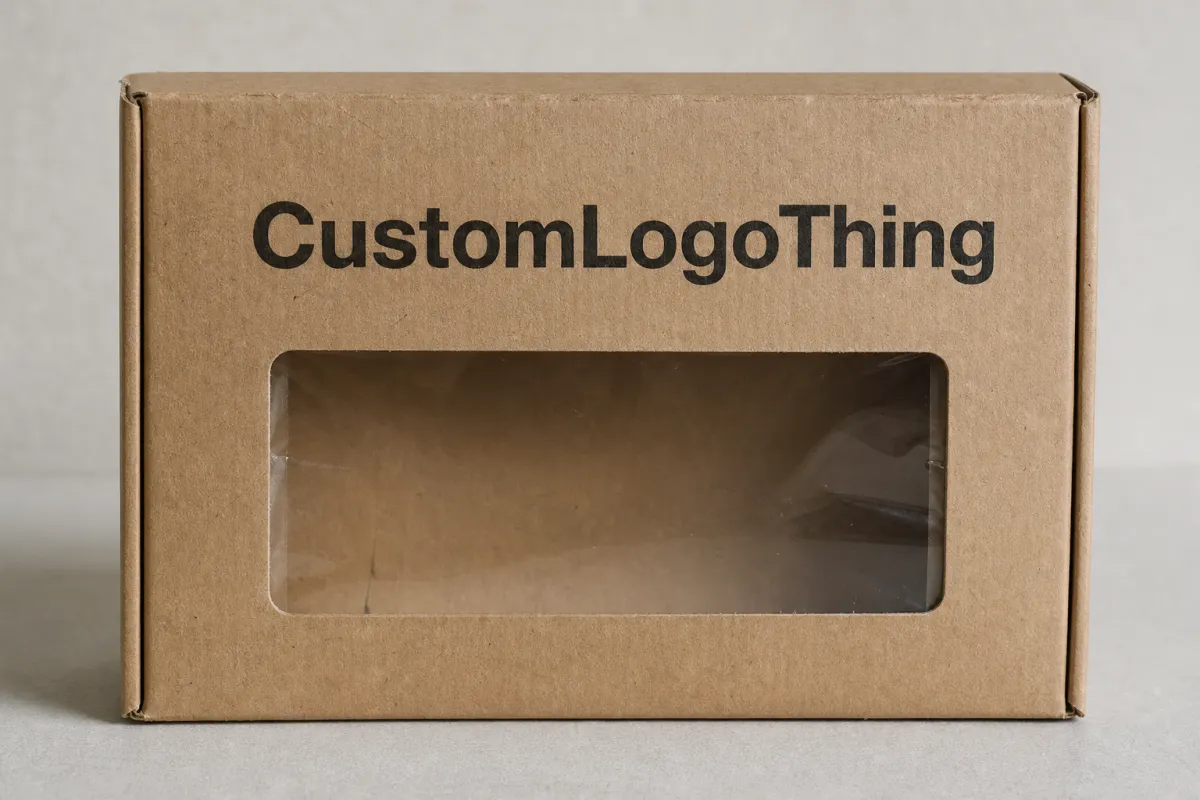
Stop thinking about a window box as “just a printed carton.” It is a stack of decisions. Board grade. Box style. Window size. Film type. Print method. Coating. Glue pattern. Die-cut complexity. Each one adds cost, and some add cost in ways buyers do not expect.
The biggest jump is often not print. It is structure. A wider die-cut window can increase scrap. An insert can turn a basic carton into a more labor-heavy build. A tuck end is simpler than an auto-lock bottom. A sleeve-style window box looks polished on a shelf, but it may use more material and more time to assemble. The quote moves because the production steps move.
That is why comparing only unit price is sloppy buying. A low number can hide weak board, flimsy window film, or glue lines that barely do their job. Freight, damage claims, and packing labor show up later and wreck the budget anyway. Buyers should compare landed value: box cost, freight, storage, assembly time, and damage risk together. That is the number that matters.
This comes up a lot in branded packaging for launches. A candle brand may want premium shelf presence. A cosmetics buyer may need strong visibility through the window and a carton that stacks well in transit. A bakery or confectionery line may care more about food-safe presentation and fast pack-out than a luxury finish. Same family of box. Different cost structure.
In practice, Custom Printed Boxes with windows sit in the middle. They need to sell the product visually, protect it, and hold up during shipping. That balance is why the quote can swing from modest to expensive with a few spec changes. If a supplier gives you a flat “starting at” number without asking about size, weight, or finish, they are not quoting yet. They are guessing.
If you need a broader packaging line, browse our Custom Packaging Products or compare volume terms through our Wholesale Programs. A proper quote starts with the right product family, not a random template.
What custom window boxes actually include
A window box has more parts than most buyers realize. At minimum, you are paying for the carton structure, the die-cut opening, the clear film over that opening, the printed exterior, and the finishing needed to make the box hold up in use. Add inserts, tabs, hang holes, or display features, and the job gets more specific. The pricing follows.
The standard anatomy is straightforward. The board forms the shell. The die-cut opening shows the product. The film keeps dust out while preserving visibility. The print surface carries branding, product information, and retail messaging. Optional inserts secure the product so it does not rattle around like an afterthought. That last part matters more than people like to admit.
Common uses include bakery items, candles, cosmetics, apparel accessories, gift sets, and small electronics. Any product that benefits from shelf visibility is a candidate for retail packaging with a window. If the item has shape, color, texture, or a premium finish, the window can do half the selling for you. That is where package branding often starts.
There is also a real difference between stock-style window boxes and fully custom packaging. A stock-style option may use a standard structure with your artwork applied. A fully custom box lets you adjust dimensions, window placement, insert design, tuck style, and outer presentation. More freedom is useful, but it usually increases tooling, setup, or production complexity. That is the tradeoff.
Here are the main formats buyers ask for:
- Tuck top window boxes for light to medium products and simple retail packing.
- Auto-lock bottom boxes for better base strength and faster assembly.
- Sleeve-style window boxes for a more premium reveal and layered unboxing.
- Rigid-looking folding cartons for luxury presentation without the cost of true rigid boxes.
- Display-oriented cartons designed to stand out on shelf or near point of sale.
Window size and placement are not decoration. A larger reveal can improve sell-through because it shows more of the product. It can also weaken board strength or raise scrap if the cutout takes too much of the panel. That is why the dieline matters. Good packaging design is not decoration. It is structure plus presentation, working together.
Clear film selection matters too. PET is common for clarity and appearance, while some buyers ask about recycled content or alternate film choices depending on sustainability targets. If environmental sourcing is part of your spec, ask for paper stock with FSC certification and confirm the claim through FSC. Claims should be backed by documentation, not a cheerful sales line.
Specifications that affect cost, quality, and shelf appeal
If you want a quote that survives production, lock down the specs first. The most useful starting point is board caliper and material grade. For many folding cartons, 16pt or 18pt SBS is common. Heavier products may need thicker board, a stronger liner, or a structure with more support. If the box feels thin, the product will expose that weakness fast.
Print coverage matters more than casual buyers think. A simple one-color or two-color layout costs less than full-bleed artwork with dense solids, gradients, or multiple PMS matches. Metallic ink, foil, and specialty effects raise both material and setup complexity. More ink coverage also raises the risk of scuffing if the finish is not matched correctly.
Coating choices are a major price lever. Gloss coating can sharpen color and give a brighter retail look. Matte coating usually feels softer and more restrained. Soft-touch lamination sits in premium territory, but it increases cost and may not be worth it on a low-margin product. Spot UV, embossing, and foil stamping can earn their keep if they support the shelf story. If they are only there to say “premium,” the math gets weak fast.
Functional specs deserve equal attention. Buyers often forget about internal supports, tamper evidence, stackability in transit, and how the box behaves when packed by hand. A display carton that looks elegant but collapses during packing is bad design. No drama. Just bad design.
Here is a practical spec checklist before you request pricing:
- Final product dimensions and weight.
- Exact box style and dieline preference.
- Board grade and thickness target.
- Window size, shape, and placement.
- Print colors, artwork coverage, and PMS requirements.
- Coating or lamination choice.
- Any insert, divider, or support structure.
- Shipping destination and whether freight is included.
For transit-sensitive projects, ask about testing against industry expectations such as ISTA procedures or ASTM distribution testing methods. If your product will be packed, palletized, and shipped through multiple legs, test data is cheaper than a wave of damage claims. Fancy talk does not protect a carton. Testing does.
Material selection also affects branded packaging performance at shelf. A satin or matte finish can make custom printed boxes feel more controlled and less flashy. Gloss can make colors pop harder under retail lighting. Soft-touch makes a box feel more expensive in hand, though it is not always the smartest choice for high-touch or high-abrasion applications. You are not buying “best.” You are buying the right mix of appearance, durability, and unit cost.
Custom window boxes wholesale pricing, MOQ, and quote math
custom window boxes wholesale pricing depends on a few predictable variables: setup, tooling, print complexity, material choice, box size, and order volume. That sounds simple because it is simple. The hard part is that each supplier may bundle or separate those costs differently, which is why two quotes can look far apart even when the factory assumptions are close.
MOQ matters because the setup cost has to be spread across the run. A lower MOQ almost always means a higher unit price. That is not a scam. It is arithmetic. If a supplier is willing to run 500 units, you are paying more per box because prepress, plates, die-cut tooling, and machine setup are divided across fewer cartons. If you can move to 1,000, 5,000, or 10,000 units, the unit cost usually drops in clear steps.
Here is a practical comparison for planning. These are example ranges in USD for standard folding cartons with a window, before freight, duties, and taxes. Final price depends on size, artwork, finish stack, and supplier location.
| Build level | Typical features | Approx. MOQ | Planning range per unit | Best fit |
|---|---|---|---|---|
| Basic window carton | 16pt-18pt board, simple print, clear film, no special finish | 500-1,000 | $0.75-$1.40 at 1,000 | Entry retail, internal product packaging, test launches |
| Mid-tier retail box | Full-color print, matte or gloss coating, standard insert option | 1,000-2,500 | $0.40-$0.82 at 5,000 | Branded packaging with stronger shelf appeal |
| Premium presentation box | Soft-touch, foil, embossing, custom window shape, higher spec board | 2,500-5,000 | $0.65-$1.20 at 5,000 | Gift sets, cosmetics, premium retail packaging |
| High-volume repeat run | Streamlined artwork, stable dieline, repeat production | 5,000-10,000+ | $0.18-$0.55 at 10,000 | Established lines and reorder-friendly packaging design |
Those ranges are not a promise. They are a planning tool. A smaller box with simple art can land below those numbers. A larger box with dense coverage and specialty finishes can land above them. That is exactly why you should ask for pricing at two or three volume levels. You want to see the break point where the quote improves enough to justify the order.
Ask what is included. Is the quote FOB or delivered? Are plates included? Is the die charge separate? Is sampling included or billed back? Are storage, split shipments, or rush production charged later? A quote that hides half the math is not a quote. It is a surprise invoice waiting to happen.
Typical extra charges to watch:
- Sampling fees for prototype or proof cartons.
- Tooling or die-cut charges for custom shapes and windows.
- Plate charges if the print process requires them.
- Freight and fuel surcharges for long-distance shipping.
- Rush premiums when the schedule is tight.
- Storage fees if the boxes are staged before release.
That is the quote math buyers need to manage. Not flashy. Just complete. If you are buying custom printed boxes for a launch, ask the supplier to show pricing at the same spec across multiple quantities. If the unit cost drops sharply after 5,000 pieces, that may be the smarter move. If your cash flow cannot support that, the lower MOQ version may still be the right call. Good purchasing is about tradeoffs, not slogans.
Process and timeline: from dieline to delivery
A clean production run follows a predictable sequence. First comes the brief: product dimensions, weight, target quantity, box style, and any shelf or shipping requirements. Then comes dieline confirmation. If the size is custom, the dieline needs to be checked before artwork is dropped into place. Skip that step and you will pay for it later in delayed proofs or a bad fit.
After the dieline, the artwork gets set up for print. That means bleed, safe area, image resolution, and color separation. Then a proof goes out for approval. This is where small mistakes become expensive if they are not caught. A typo on a carton is still a typo after 5,000 units. The box does not care how busy the launch calendar is.
Once approval is signed off, production starts. For a straightforward run with standard coating and no custom insert, a production window of about 10 to 18 business days is common after proof approval. Add special finishes, a more complex window cut, or an insert, and the timeline often stretches to 15 to 25 business days. Larger orders may need more time simply because machine scheduling is not magic.
Then there is freight. Production time and transit time are different things, and buyers who confuse them end up with angry launch calendars. Domestic shipping can take a few business days. Longer routes, split shipments, or time-sensitive deliveries take more planning. If the product launch is fixed, build in room for delays. Packaging is not the place to gamble on perfect logistics.
Here is where buyers save time:
- Approve a standard size if the product already fits a known format.
- Reuse an existing dieline when the structure is similar.
- Send print files complete the first time.
- Confirm color expectations before proof approval.
- Decide early whether a sample or prototype is required.
A sample is worth the cost when the product is fragile, premium, or visible through a large window. It lets you check the fit, window placement, board strength, and the feel of the finish. If the item will sit in a retail display, a sample is even more useful because shelf presence is hard to judge from a flat PDF.
Good packaging design improves the timeline too. A stable structure, fewer special steps, and clean artwork mean fewer corrections. That is one reason experienced buyers often keep a core box format and only adjust graphics across product lines. The box becomes a repeatable tool, not a new headache every time.
Why choose us for wholesale window box runs
Buyers do not need poetry here. They need a supplier who gives clear specs, consistent quotes, and a production process that does not collapse under basic questions. That is the standard. Anything less is just noise dressed up as service.
We focus on the practical side of branded packaging: Choosing the Right box structure for the product, confirming the materials before quoting, and keeping the print and finishing plan aligned with the budget. That matters because a beautiful box that cannot be packed efficiently is not a win. A pretty failure is still a failure.
Quality control should be visible in the workflow, not buried behind marketing language. The checkpoints that matter are simple: dimensional checks, print verification, window alignment, glue integrity, board flatness, and carton consistency across the run. If those are off, shelf appeal and packing performance both suffer. There is no shortcut around that.
Repeat buyers care about speed and consistency. They want saved specs, fewer re-briefs, and a faster re-quote when the same box is reordered. First-time buyers care about guidance that prevents mistakes, especially on board thickness, coating choice, and window size. Both groups want honest MOQ guidance instead of a fake low number that grows teeth later.
We also take a practical view on value. A premium finish belongs on a premium product. A simple carton belongs on a simple product. There is no reason to pay for heavy embellishment if the margin does not support it. The same goes for overbuilding. Thicker board and more decoration are not automatically better. They are only better when the product and the channel justify them.
That approach helps with package branding too. A box should make the product easier to sell, not harder to move. It should support retail packaging goals, protect the item in transit, and keep assembly simple enough that the operations team does not hate it. Small miracle? No. Just competent packaging.
If you need to compare options across a full product line, start with our Custom Packaging Products and use Wholesale Programs to match quantities to repeat demand. A good supplier does not push a generic answer. They help you choose a box that fits the actual job.
Next steps to lock in the right box spec
Before you ask for pricing, gather three things: product dimensions, target quantity, and the visual result you want the box to deliver. That is the minimum useful brief. Without it, the quote will be loose and the revisions will waste time. With it, you can compare actual options instead of vague guesses.
Next, request pricing with the exact board, window size, finishing, and shipping destination. That is the only way custom window boxes wholesale pricing becomes useful. A number without freight is incomplete. A number without the board spec is incomplete. A number without the window detail is incomplete. Sellers love a shortcut. Buyers should not.
If the product is fragile, premium, or highly visible through the window, ask for a sample or prototype. A sample can confirm display quality, board feel, and whether the window framing does what you expected. It also catches the annoying stuff: slight size errors, too much movement inside the box, or a finish that looks better on a screen than in hand.
Then compare at least two or three volume levels. A good buyer knows where the break point is. Sometimes 1,000 pieces is the sensible start. Sometimes 5,000 pieces lowers the unit cost enough to justify the cash outlay. Sometimes a repeat-order plan makes the larger run the smarter move because it protects your margin for the next cycle.
Use this ordering checklist before you sign off:
- Confirm final product size and weight.
- Choose the box style and window layout.
- Lock board grade, print coverage, and finish.
- Check whether inserts or supports are needed.
- Verify MOQ, unit cost, and all extra charges.
- Review sample, proof, and freight timing.
- Approve only after the details match the launch plan.
That process keeps your order grounded in reality. It also makes the supplier’s job easier, which usually improves the quote and the timeline. For any buyer comparing custom window boxes wholesale pricing, the winning move is simple: define the spec, ask for a full landed quote, and choose the version that protects margin without weakening the product. That is the decision that holds up after launch, not just on the spreadsheet.
Frequently asked questions
What affects custom window boxes wholesale pricing the most?
Board grade and box size usually move cost first. After that, window film size, print coverage, and special finishes add up quickly. Higher quantity lowers unit cost, but setup and tooling still matter, so the full quote needs to be checked line by line.
What is a typical MOQ for custom window boxes wholesale orders?
MOQ depends on structure, print method, and finishing choices. Simple styles often allow lower minimums than specialty builds. A lower MOQ usually means a higher per-box price, so compare breakpoints instead of judging by the smallest number on the page.
Can I get a sample before placing a wholesale order?
Yes, and you should if the product needs a tight fit or premium presentation. Samples help confirm size, window placement, print clarity, and board strength. Expect sample charges or proof fees to be separate from production pricing.
How long does production usually take for custom window boxes?
Timing depends on artwork approval, finishing complexity, and order volume. Straightforward runs move faster than boxes with foil, embossing, or custom inserts. Shipping time is separate from production time, so both need to be planned before you commit.
Are custom window boxes cheaper in larger quantities?
Yes, unit cost usually drops as quantity rises. The biggest savings come after setup costs are spread across more boxes. Ask for pricing at two or three volume levels so you can see the real break point, not just the first quote number.

