Buyer Fit Snapshot
| Best fit | Custom Window Carton Packaging projects where brand print, material claims, artwork control, MOQ, and repeat-order consistency need to be specified before quoting. |
|---|---|
| Quote inputs | Share finished size, material target, print colors, finish, packing count, annual reorder estimate, ship-to region, and any compliance wording. |
| Proofing check | Approve dieline scale, logo placement, barcode or warning zones, color tolerance, closure strength, and carton packing before bulk production. |
| Main risk | Vague material claims, crowded artwork, missing packing details, or unclear freight terms can make a low unit price expensive after revisions. |
Fast answer: Custom Window Carton Packaging: Design, Cost, Timeline should be specified like a repeatable production item. The safest quote records material, print method, finish, artwork proof, packing count, and reorder notes in one written spec.
Production checks before approval
Compare the actual filled-product size with the drawing, then confirm tolerance on folds, seals, hang holes, label areas, and retail display edges. Reserve space for logos, QR codes, warning copy, and material claims before decorative graphics fill the panel.
Quote comparison points
Review material grade, print process, finish, sampling route, tooling charges, carton quantity, and freight assumptions side by side. A quote is only useful when the supplier can repeat the same color, closure quality, and packing count on the next order.
Custom Window Carton Packaging: Design, Cost, Timeline Custom window carton packaging has a way of doing the selling before the shopper even touches the box. That sounds simple, but the effect is bigger than it looks on paper. The moment you introduce a window, you change the structure, the material choice, the print layout, the assembly flow, and the final unit cost. So, yeah, it is not just a little design flourish. It is a packaging decision with real production consequences.
From a buyer's perspective, the appeal is pretty easy to see. The carton protects the product, but the window gives a direct preview of what is inside, which does more for trust than a polished hero image ever could. That is why custom window carton packaging shows up so often in retail packaging, gift sets, cosmetics, candles, bakery items, and smaller electronics. It usually feels more convincing on shelf than a plain folding carton, and it often costs less to justify than a rigid presentation box when the product itself already has visual value.
If you are building a new line, the cleanest place to start is with the packaging structure itself. A supplier page for Custom Packaging Products can help you compare options, but the real decision starts with the product and how it needs to be displayed. Not every SKU benefits from a window. Some do. Some really do not. Custom window carton packaging works best when the box supports the product instead of dressing it up with extra noise.
What custom window carton packaging actually is
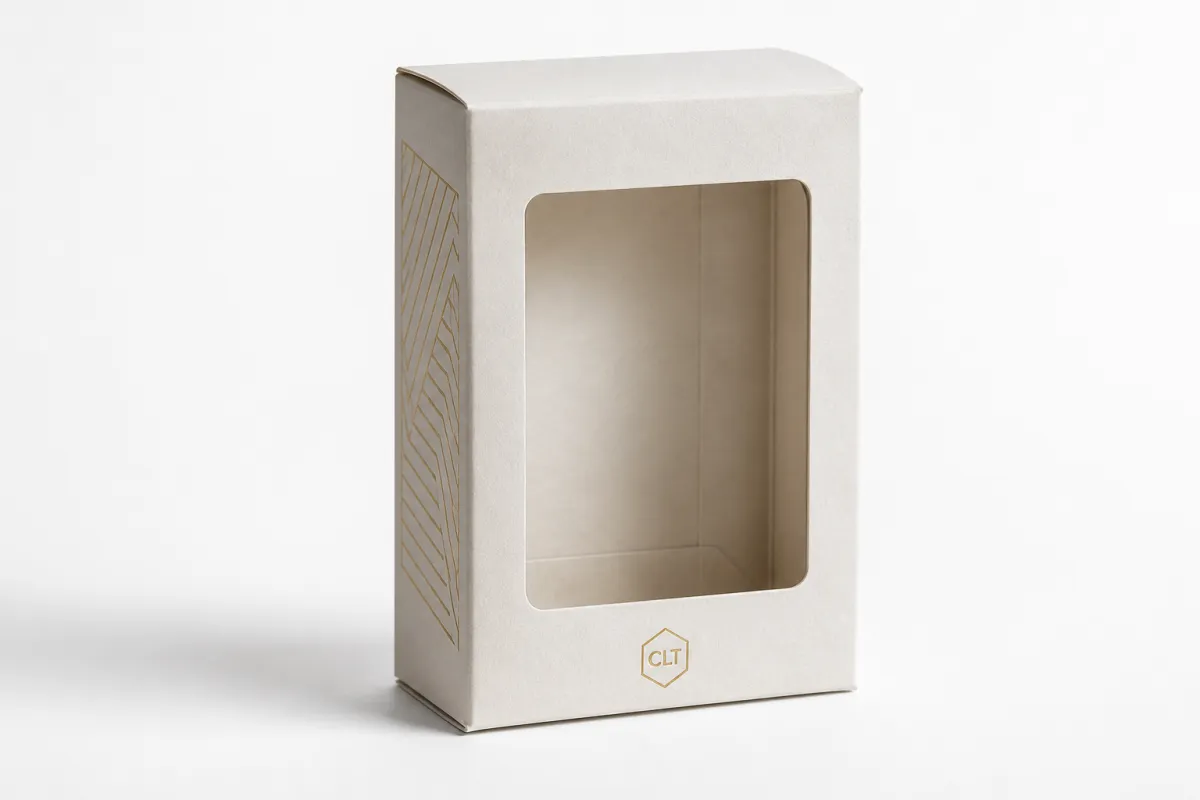
Custom window carton packaging is a folding carton or rigid-style carton that includes a cut-out opening, usually backed by clear film or left open depending on the product and the brand's goals. The purpose is straightforward: let the shopper see something real. Shape, color, texture, fill level, and product quality can often do more work than a full front panel of copy, icons, and claims. That is why custom window carton packaging tends to punch above its weight on crowded shelves.
The construction can range from simple to fairly refined. On the simpler end, you might have a standard SBS folding carton with a die-cut window and a PET patch. On the premium end, the board is thicker, the coating is chosen more carefully, the interior may include a tray or cradle, and the window is placed like a frame around the product rather than a hole punched into the front. Either way, custom window carton packaging starts with structure. Artwork cannot rescue a weak carton. If the board flexes, the opening lands badly, or the closure feels flimsy, the package reads as cheap no matter how polished the print is.
The format tends to perform best when the product has immediate visual payoff. Cosmetics with vivid color, candles with distinctive vessels, bakery items with freshness cues, gift sets that look richer in person, and small electronics with a shape worth showing are all strong candidates. In those categories, custom window carton packaging reduces hesitation because the shopper does not need to imagine what is inside.
Some products need a different path. Items that require total light blocking, strict tamper resistance, or privacy are poor candidates for an exposed front panel. A window makes a promise, and if the product inside looks damaged, incomplete, or sloppy, that promise can backfire fast.
"A window should frame the product, not apologize for it." That is the standard I use when I review custom window carton packaging. If the opening is too large, badly placed, or poorly supported, the box starts working against the item instead of for it.
There is another practical reason brands choose this format: speed of understanding. A visible product is processed faster than a fully illustrated front panel. On a busy shelf, that matters. Shoppers are not studying the box; they are making a split-second judgment. The window gives them a shortcut, and that shortcut can make the package feel more premium than the print budget might suggest.
The production side matters just as much. Custom window carton packaging can run efficiently when the dieline, cut-out, and retention method are planned with care. Force a large opening into a weak panel, add a complicated insert, and the line slows down while labor costs creep up. The box has to be buildable, not just attractive. That's the part people sometimes gloss over until the first sample shows up and the whole team goes quiet.
How custom window carton packaging works
Custom window carton packaging is really a combination of five pieces: board selection, a die-cut opening, optional film, a retention method, and a closing style. Those parts need to fit together. If one of them is off, the result is usually a carton that feels flimsy, a product that shifts, or a unit that takes too long to pack.
Board choice matters more than many buyers expect. A 14pt to 18pt SBS or CCNB board is common for light retail items. Heavier premium builds may move into 24pt and beyond, especially when the carton needs a firmer feel in hand. For cosmetic and gift packaging, finish matters too. Gloss creates a different shelf presence than matte, and soft-touch can feel refined if the price point supports it. Custom window carton packaging is never only about visibility. It is about how the carton behaves once someone picks it up, turns it over, and decides whether it feels worth the price.
The window itself can be square, circular, arched, or fully custom. Shape should support the product, not compete with it. A centered opening works well for symmetry. An offset window can make room for claims, ingredients, or graphics when the front panel needs more breathing room. In most cases, the edge of the window should stay far enough from folds and scores to avoid cracking or weak corners. I usually like a little breathing room there, and more when the board has a heavier coating. That small margin saves headaches later.
Film changes the use case. A clear PET window keeps dust out and helps protect the product while still showing it. It also matters when the carton travels through shipping before it reaches the shelf. A plain cut-out costs less, but it gives up protection. For edible products, cosmetics, and items handled in secondary distribution, that tradeoff needs an honest conversation before anyone signs off on the art. Custom window carton packaging may look simple from the outside. Inside, it is a stack of decisions that add up quickly.
The shopper experience is where the format earns its keep. The window gives instant visual confirmation. The buyer sees the item, checks the color or fill, and mentally closes the distance between packaging and product. That reduces hesitation. It also lets the brand keep the front panel cleaner, which can strengthen retail packaging when the shelf is crowded and every square inch is fighting for attention.
Production behavior depends on the style. Some custom window carton packaging runs cleanly on standard folding-carton equipment with minimal hand work. Other builds need manual film application, separate inserts, or extra attention during folding because the window interrupts the panel structure. If a supplier cannot explain the build sequence in plain language, that is not a small issue. It usually means the quote is optimistic in ways that will show up later, and nobody wants to find that out after ordering cartons by the thousands.
For brands that want a practical comparison, it helps to look at the carton beside other packaging options in the same project. Here is a simple buying view of custom window carton packaging versus two common alternatives.
| Build type | Typical MOQ | Approx. unit cost | Best use case | Notes |
|---|---|---|---|---|
| Simple folding carton with small window | 500-1,000 | $0.28-$0.65 | Light retail items, cosmetics, samples | Fast to pack, lower tooling burden, practical entry point for custom window carton packaging |
| Folding carton with PET film window and insert | 1,000-3,000 | $0.55-$1.25 | Gifts, candles, small electronics | Better protection and shelf presentation, though setup takes more care and hand assembly may be involved |
| Rigid or premium carton with custom window | 1,000+ | $1.40-$3.80 | Luxury sets, high-margin retail packaging | Stronger unboxing feel, heavier board, and higher freight plus finishing costs |
Buying decisions usually get muddy when the conversation gets reduced to "cheap versus expensive." That misses the actual question. The real question is what the shelf needs and what the product can afford. A clean custom window carton packaging spec can carry a product beautifully. A loose or overbuilt spec can waste money before the box ever reaches retail.
Custom window carton packaging cost, pricing, and MOQ
Cost in custom window carton packaging comes from a handful of predictable places: board grade, print complexity, window shape, film or no film, finishing, and whether an insert is needed. Change one of those variables and the quote shifts. Change three of them and the price can move a lot. Buyers often assume the window itself is the costly part. Sometimes it is. More often, the cost comes from all the setup, cutting, finishing, and assembly decisions sitting around the window.
For straightforward runs, a small die-cut window on a standard folding carton may stay in a modest range, especially at higher volumes. Once metallic foil, embossing, a specialty coating, or a custom cradle enters the spec, the unit price climbs quickly. That is normal. Custom window carton packaging is not expensive because the opening exists. It gets expensive when the rest of the build has to align cleanly around that opening and still pack well at speed.
MOQ ties directly to how factories absorb setup costs. Die-cutting, make-ready waste, plate prep, and line calibration all take time. That is why many suppliers start at 500 to 1,000 units, and some are more comfortable above that when the structure gets unusual. Lower MOQs do exist, but the per-unit price usually climbs hard. If you only need a few hundred cartons, ask for tiered pricing before you assume a tiny run is the bargain. Most of the time, it isn't.
The simple version is this: custom window carton packaging gets cheaper per unit as quantity rises, but only until freight, storage, or obsolescence starts swallowing the savings. A buyer who orders 20,000 cartons for a product that is still being tested is not saving money. That buyer is betting a lot of cardboard on demand that has not been proven yet.
Ask for pricing across multiple quantities on the exact same spec. A request for 1,000, 3,000, and 5,000 units shows the real curve much better than a single quote ever will. If a supplier cannot quote cleanly across those bands, the issue is usually either an overly custom structure or an estimate padded with uncertainty.
For paper sourcing, FSC certification can matter if you need chain-of-custody claims or recycled-content positioning. If that is part of your packaging strategy, check the standards directly at FSC. If the carton has to survive distribution abuse, ask whether the supplier tests to a relevant transit method. The ISTA framework is a useful reference point when you are talking through drop and vibration expectations.
Good pricing conversations also include the cost of a poor fit. A loose product can shift, scratch, tilt, or rub against the window. That turns custom window carton packaging into a repair project, and repair projects rarely cost less than getting the structure right the first time.
Ask for pricing with the exact board, window style, insert plan, and finish. If you ask for "a nice box with a window," you will get a vague number. Vague numbers are a hobby, not a procurement strategy.
For brands that want a more direct purchasing route, a supplier page for Custom Packaging Products only helps if it lets you compare structure, finish, and quantity bands side by side. That is where the real buying decision lives. The wrong spec can make even affordable custom window carton packaging cost more than it should.
Step-by-step custom window carton packaging setup
The cleanest way to set up custom window carton packaging is to start with the product, not the art. Give the supplier the exact dimensions, weight, fragility level, and any storage issue that matters. Is the product oily? Fragile? Heat sensitive? Does it shift in transit? Those details shape the carton more than a mood board ever will.
After that, choose the carton style. Tuck-end cartons are common because they are simple and fast. Auto-bottom styles help when packout speed matters. Sleeve formats can feel especially clean for premium retail packaging when the inner tray does the structural work. Display-style cartons can help on shelf, though they need more thought if the product is heavy. The structure should match how the item will actually be packed, shipped, and opened.
Then map the window. Centering the opening gives a balanced look. Offsetting it can make room for claims, logos, or ingredients. Smaller windows preserve strength and can feel more restrained. Larger windows show more product, yet they can weaken the panel if the board and fold design are not adjusted to compensate. In custom window carton packaging, more exposure is not automatically better. More exposure is simply more exposure.
If the product can move inside the carton, plan retention early. That might be a paperboard insert, a tray, a molded pulp cradle, a simple lock-in fold, or no insert at all if the item is stable. The retention method should keep the product aligned with the window. Otherwise the shopper sees a crooked item and assumes the brand is careless. That is a fast way to lose trust.
Approve the dieline and artwork together. Too many teams treat them as separate tasks, then act surprised when a line of copy lands on a fold or the window cuts into a key claim. A solid dieline review checks bleeds, score lines, glue flaps, hang tabs if needed, and the relationship between the opening and the product silhouette. Custom window carton packaging lives or dies on that geometry.
Before mass production, request a sample or proof with the actual product inside. Flat proofs help with color and copy. They do not tell you enough about fit. A sample shows whether the window lands in the right place, whether the product sits square, and whether the closure still feels secure after the opening is added. For custom printed boxes, that is the point where weak assumptions get exposed. Better there than after 10,000 units are already on a truck.
If sustainability is part of the brief, choose the material claim carefully. A paper-based carton with minimal plastic may support a cleaner story than a heavily laminated build. Still, not every finish is wasteful, and not every plastic-free claim is practical. There is no medal for making a box difficult to use. Custom window carton packaging should be sensible first and fashionable second.
Custom window carton packaging process and timeline
The process for custom window carton packaging is straightforward on paper and a little less charming in real life. It usually moves through brief, dieline, design, sample, approval, production, finishing, packing, and shipping. If one step is unclear, the rest drifts. That is why launch timelines fall apart so often. People underestimate how much time gets spent getting the structure right before anyone even hits print.
Early in the project, the supplier should confirm the spec, board, finish, and window method. From there, the designer can build around a proper dieline. After that comes the sample or proof. Once the sample is signed off, production can begin. The print-and-finish run is only part of the schedule; the review cycle before it often takes just as long.
Simple custom window carton packaging can move fairly quickly once art and structure are locked. More complex projects take longer because every extra variable adds a waiting point. Custom dies, specialty coatings, foil, embossing, film windows, and hand assembly all stretch the clock. If the project needs an insert that must be cut separately and packed by hand, expect more time. Production does not care about launch dates. It cares about sequence.
Lead times also depend on how disciplined the buyer is. The fastest way to delay a project is to change product dimensions after artwork is already close to approval. The second fastest way is to keep tweaking copy, claims, or barcode placement after the sample has already been reviewed. A clear brief saves more time than a rush fee, and that holds true more often than not.
For a standard custom window carton packaging run, a sensible planning window is often around 10-15 business days after final approval for production, plus extra time for sampling and transit. If the build includes more complex finishing or a new tooling setup, add a few more weeks. Not because factories are slow for sport. Physical packaging needs actual steps, and those steps take time.
One practical way to reduce delay is to lock the product dimensions early and leave the artwork flexible until the structure is proven. That order of operations is boring, and boring is underrated. It is also one of the few ways to keep custom window carton packaging from turning into a launch-day headache.
For larger jobs, test how the carton behaves under distribution stress. Ask for a transit review using a method matched to your shipping profile, and make sure the finish still looks good after handling. Custom window carton packaging can look beautiful on a table and fail in a shipping lane. Those are different environments, and packaging buyers usually learn that lesson once before they stop ignoring it.
Common mistakes when designing window cartons
The first mistake is making the window too large. Bigger openings can look dramatic in a mockup, but they often weaken the panel and make the carton feel cheap. If the front loses too much structure, the box bows, crushes, or splits near the cut-out. A good custom window carton packaging design shows enough product to matter without sacrificing the carton’s backbone.
The second mistake is ignoring shelf abuse. A box can pass a table test and still fail in transit, on a retail peg, or inside a bin where customers keep handling it. If the product shifts, the window no longer frames anything useful. It just exposes a messy interior. That is a bad trade, and yes, it happens more often than people admit.
The third mistake is letting graphics fight the window. When every panel is packed with color, badges, claims, icons, and decorative patterns, the product gets visually buried. The whole point of custom window carton packaging is controlled visibility. The product should feel like the main character, not a background element trapped inside a print storm.
The fourth mistake is poor fit. A loose item slides, tilts, or rotates during packing and shipping. That makes the presentation look sloppy even when the print quality is excellent. In custom window carton packaging, bad fit is a design flaw, not a warehouse problem. Movement has to be planned before the first run, not after complaints begin.
The fifth mistake is forgetting retail requirements. Some products need room for ingredients, warnings, barcodes, tamper evidence, or regulatory copy. If the window steals all the front-panel space, the design loses the room it needs to stay compliant and readable. That is frustrating because it is also avoidable. Packaging design should help the box earn shelf space, not create a compliance puzzle.
A few buyers also overthink sustainability while underthinking function. A paper-based approach can be smart, but only if the product stays secure and visually aligned. A greener carton that breaks open in transit is not a win. It is waste with better talking points.
Custom window carton packaging works best when the structure, artwork, and fill method are treated as one system. Separate those pieces and the box starts pulling in different directions. Keep them aligned and the format does what it is supposed to do: show the product, protect the product, and support the brand.
Expert tips for better window carton packaging
First tip: use the window to frame one strong feature, not every feature. Selective visibility feels more premium than a giant opening that exposes everything. A clean view of a candle jar, a lipstick shade, a pastry finish, or a product texture usually beats a full blast of exposure. Good custom window carton packaging edits as much as it reveals.
Second tip: match the build to the margin. If the product is low margin, do not bury it in heavy board, foil, embossing, and a complicated insert unless the shelf price can carry that cost. I see this mistake all the time. The packaging looks great, the margin looks terrible, and everybody acts surprised. Custom window carton packaging should make the product easier to sell, not harder to profit from.
Third tip: ask for a structural sample before artwork lock if the item is oddly shaped, top-heavy, or breakable. That one step can save a lot of rework. It also keeps the packaging design honest. A pretty mockup is useful. A working sample is better.
Fourth tip: balance sustainability with finish. Recyclable board, a smaller window, and a simpler coating can still look polished. You do not need to overcomplicate custom window carton packaging to make it credible. If the brand can support it, minimal plastic and FSC-certified paper can be a solid combination. If the claim matters to your line, verify it instead of assuming the printer's marketing sheet tells the whole story.
Fifth tip: think through packout speed. A retail-ready box that takes 12 seconds to assemble may sound acceptable until you multiply that by 8,000 units. That is where a clever structure turns into labor cost. Auto-bottoms, better lock tabs, and simpler inserts can save real money. From a buyer's point of view, custom window carton packaging should fit the line speed as well as the shelf.
Sixth tip: request quotes in quantity bands and ask for the same finish across all of them. That lets you see where the price curve actually bends. A 1,000-piece quote and a 5,000-piece quote can tell you more than three sales calls ever will. If you need a starting point, a supplier that handles Custom Packaging Products should be able to quote custom window carton packaging with clear board, window, and insert options without making you decode the estimate like a puzzle.
Here is the part people usually skip: define the next step on one page. List the product dimensions, target quantity, target unit cost, preferred finish, window size, and whether you need an insert. That brief is small, but it keeps the project moving. It also makes custom window carton packaging easier to compare across vendors, which is how you avoid paying for confusion.
Custom window carton packaging works best when it looks simple and behaves predictably. That is the real trick. The cleaner the structure, the less time you spend fighting it later.
In practice, the strongest projects are usually the ones where the buyer slows down long enough to get the structure right, then moves quickly once the details are locked. That is how custom window carton packaging stays sharp, stays on budget, and actually helps the product sell.
What products work best for custom window carton packaging?
Products where color, texture, shape, or fill level helps the sale are the strongest fit: cosmetics, candles, bakery items, gifts, and small electronics. It works best when the item looks better in person than it does in a flat image. It is less ideal for products that need total light blocking, heavy tamper protection, or full privacy.
How much does custom window carton packaging usually cost per unit?
Simple cartons with a small die-cut window cost much less than rigid boxes, foil-heavy builds, or cartons with custom inserts. Per-unit cost drops as quantity rises because die setup and production waste get spread across more boxes. The quickest way to get a real number is to quote multiple quantities with the same spec.
What is the typical MOQ for custom window carton packaging?
Many suppliers start around 500 to 1,000 units, though the exact minimum depends on size, construction, and finishing. Lower MOQs are possible, but the unit price usually climbs hard because setup costs do not shrink much. If you are testing demand, ask for tiered pricing before you commit to one run size.
How long does custom window carton packaging take to produce?
A simple project can move in a few weeks once artwork and dielines are approved. Sampling, custom tooling, special finishes, and hand assembly add lead time fast. If you want a realistic turnaround date, lock the product dimensions early and avoid late copy changes.
Should the window use PET, PVC, or no plastic at all?
PET is usually the cleaner choice for clarity and recycling-friendly positioning. PVC still works in some packaging lines, but it is less popular because of sustainability concerns. No plastic windows, or paper-based cutouts where appropriate, can be a smart choice when the brand wants a simpler build.
What should a buyer confirm before approving custom window carton packaging?
Confirm the product dimensions, insert style, board grade, window size, finish, and target quantity before signing off. Then sample the carton with the actual product inside, not just a flat proof. That one step catches fit problems, window placement issues, and packout headaches before they turn into a costly reprint.
The clearest takeaway is this: lock the product dimensions, window size, board grade, and retention method on one spec sheet, then approve a sample with the real product inside Before You Print the run. That is the fastest way to keep custom window carton packaging practical, good-looking, and worth the money.

