Buyer Fit Snapshot
| Best fit | Custom Window Packaging Wholesale Supplier for Retail projects where brand print, material claims, artwork control, MOQ, and repeat-order consistency need to be specified before quoting. |
|---|---|
| Quote inputs | Share finished size, material target, print colors, finish, packing count, annual reorder estimate, ship-to region, and any compliance wording. |
| Proofing check | Approve dieline scale, logo placement, barcode or warning zones, color tolerance, closure strength, and carton packing before bulk production. |
| Main risk | Vague material claims, crowded artwork, missing packing details, or unclear freight terms can make a low unit price expensive after revisions. |
Fast answer: Custom Window Packaging Wholesale Supplier for Retail should be specified like a repeatable production item. The safest quote records material, print method, finish, artwork proof, packing count, and reorder notes in one written spec.
Production checks before approval
Compare the actual filled-product size with the drawing, then confirm tolerance on folds, seals, hang holes, label areas, and retail display edges. Reserve space for logos, QR codes, warning copy, and material claims before decorative graphics fill the panel.
Quote comparison points
Review material grade, print process, finish, sampling route, tooling charges, carton quantity, and freight assumptions side by side. A quote is only useful when the supplier can repeat the same color, closure quality, and packing count on the next order.
A Custom Window Packaging Wholesale supplier can change how a product sells before anyone even touches the lid, and I have seen that play out on crowded factory floors in Dongguan, Foshan, and Suzhou more times than I can count. I still remember a candle carton in a plant outside Dongguan where a 38 mm shift in the window brought the wick into perfect shelf view; the buyer stared at it, nodded once, and said the box felt more premium even though the board grade stayed exactly the same. Packaging can do that. Annoying, really, how one small adjustment can outperform three rounds of marketing copy, especially when the carton is built from 350gsm C1S artboard instead of a generic 300gsm sheet.
That detail matters because many teams obsess over print quality and ignore the mechanics underneath. The right custom window packaging wholesale supplier does more than print Custom Printed Boxes. It matches board caliper, window film thickness, folding behavior, and adhesive strategy so product packaging can survive assembly, pallet pressure, and retail handling without fighting the design. For brands comparing options for branded packaging, the difference shows up in the shelf, the carton count, and the number of damaged units that have to be pulled back out of circulation. I have watched a beautiful carton turn into a very expensive apology because someone assumed the structure would probably be fine, and probably is a terrible production plan when the run is 8,000 units and the cartons are moving through a 12-line packout in Guangdong.
If you are comparing vendors, the real question is whether the custom window packaging wholesale supplier can hold fit, price, and timeline together from dieline to dock. You can review our Custom Packaging Products and our Wholesale Programs if you want to see how a wholesale run is usually structured before you send a brief. I always recommend that buyers do that first, because it trims the quote cycle by a day or two and avoids the long exchange where everyone is trying to guess whether the insert should be 1.5 mm or 2 mm thick.
"The buyer never sees the die line; they see the shelf. If the window is off by 2 mm, the product looks crowded, and if the glue line fails, the entire run feels cheap even when the print is beautiful. On a 5,000-piece order, that 2 mm mistake is the difference between a box that looks deliberate and one that looks rushed."
Why a Custom Window Packaging Wholesale Supplier Matters
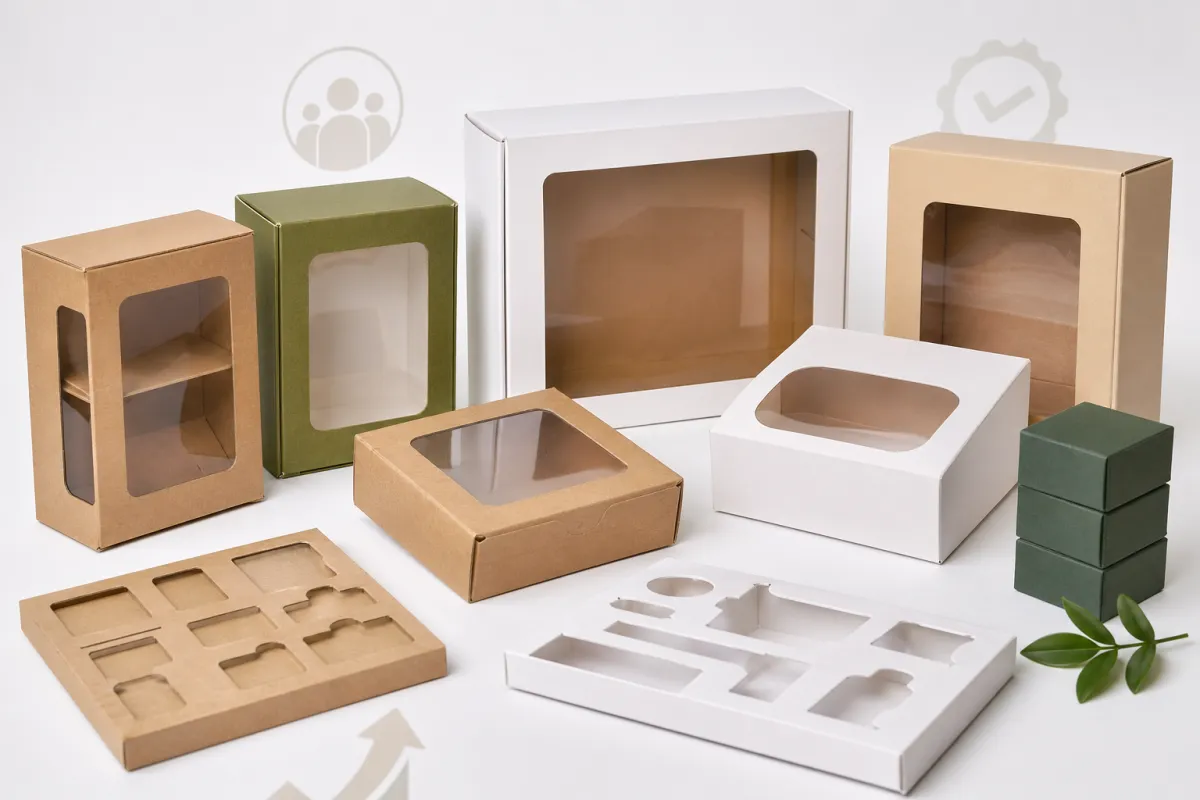
A good window box gives shoppers something immediate to trust. I have stood beside a retail buyer at a trade counter while they compared two soap cartons, and the one with the clean die-cut window won in under ten seconds because the bar shape, color, and finish were visible before the copy had a chance to speak. That is why a custom window packaging wholesale supplier matters so much for food, cosmetics, candles, apparel accessories, and gift items: visibility cuts hesitation, and hesitation is where sales stall. I know that sounds obvious, but obvious things are often where budgets quietly go to die, especially when a 120 mm by 80 mm window could have done the selling job that a 40-word claim could not.
General printers can produce a box that looks fine in a mockup, but they do not always understand how window placement changes real carton behavior. A seasoned custom window packaging wholesale supplier knows that a 350gsm C1S artboard face behaves differently from 18pt SBS, that a 0.25 mm PET patch needs the right adhesive coverage, and that fold direction can alter how the window sits after loading. Those are factory-floor details, not brochure details, and they decide whether the product looks aligned or off-center once the box is stacked in a display tray. I have seen a 1 mm drift turn a polished presentation into something that looked rushed, and retail buyers notice that faster than most brands expect.
Window packaging also reduces returns caused by mismatch or mislabeling. If a customer can see the candle color, lip balm shade, cookie count, or accessory size through the opening, they are less likely to discover a mismatch after purchase. I have seen one cosmetics client cut their return complaints noticeably simply by moving from opaque cartons to a more transparent retail packaging format, because the buyer could verify the color family before the sale closed. A reliable custom window packaging wholesale supplier treats that as a product integrity issue, not just a design choice, and the effect is measurable: fewer complaints, fewer replacements, and fewer refunds tied to "not as expected" claims.
Many teams still underprice the value of product verification. On a line in Suzhou, I once watched a packer reject nearly a full tray because the printed SKU said one scent while the inner label said another. A well-placed window would not fix every mistake, but it gives warehouse teams, store associates, and end customers one more way to catch the issue before it becomes a complaint. That is not hype; that is operational control. And yes, it is also one less fire drill for everyone involved, which makes it a small miracle in practical clothing.
For brands that care about package branding, the window can become a sharp visual anchor. A strong brand panel around the cutout can frame the product instead of hiding it, which is exactly why a custom window packaging wholesale supplier should understand both packaging design and the way shoppers scan a shelf from 3 to 5 feet away. The box should help the product sell, not argue with it. I have a bias here: if the structure makes the product look better without screaming for attention, that is usually the right move, whether the carton is printed in Dongguan or assembled in a smaller plant in Foshan.
Custom Window Packaging Wholesale Supplier Product Options
The best window packages start with the structure, not the decoration. A capable custom window packaging wholesale supplier can build Tuck End Boxes, reverse tuck end boxes, sleeve boxes, mailer boxes, folding cartons, and display-ready retail cartons, then pair those structures with the right opening size and patch style. For a candle set, I usually prefer a panel that stays flat under a little pressure; for a lightweight accessory, a simpler fold can keep costs in check without sacrificing shelf appeal. The trick is knowing where simple is smart and where it is just lazy, especially when the carton has to survive a 1.2-meter drop test and still look crisp in a retailer's display tray.
Common window shapes include rectangles, ovals, arches, circles, and custom contour cuts that follow the product silhouette or brand artwork. A rectangle is efficient and prints cleanly. An arch can soften the look for gift items. A contour window that echoes the outline of a perfume bottle or tea tin can be memorable, but it also asks more from the die maker and the folding line. A thoughtful custom window packaging wholesale supplier will tell you when the shape earns its keep and when it is only adding setup cost. I appreciate that kind of honesty more than a polished pitch deck, because nothing ruins a budget faster than decorative enthusiasm and a die fee that jumps from $180 to $450.
Material choice matters just as much as the window. I break it down this way: SBS for sharp print quality and premium retail presentation, kraft for natural branding and an earthy shelf presence, CCNB for cost-conscious runs, and E-flute or B-flute when extra rigidity is needed. If the product has weight, odd corners, or a long transit lane, the flute-based option often protects the package better than a thinner folding board. Not every run needs corrugate, but a smart custom window packaging wholesale supplier should know when the extra strength will save money downstream. I have watched a slightly thicker board save a client from crushed corners on a 3,000-piece order, and that one choice made the finance team suddenly very interested in packaging engineering.
Window film choices are usually clear PET or PVC, and each has a place depending on the use case, budget, and shelf life. PET tends to be the better fit for brands that want clarity and a more current material profile, while PVC can still appear in some legacy programs where cost drives the decision. For products that do not need dust protection, a no-film die-cut opening is sometimes acceptable, especially for accessories, soft goods, or display items that live inside an outer sleeve. That said, a responsible custom window packaging wholesale supplier should review the handling environment before recommending a bare cutout. I have seen a no-film window make sense, and I have also seen it turn into a dust magnet that made a clean product look tired before it even hit the shelf in a humid warehouse in Ningbo.
Finishing is the final layer, and it should support the product instead of drowning it out. Matte coating keeps the front calm and premium. Gloss coating adds punch to saturated colors. Soft-touch creates a tactile, satin feel that works well on fragrance and beauty packaging. Spot UV can highlight the logo edge or the window frame. Foil stamping and embossing are useful when the brand wants the box to feel more like a keepsake than a shipping carton. I usually tell clients that a window box wins when the finish frames the product, not when the finish tries to outshine it. There is a point where premium starts looking like it got dressed in the dark, and that point usually shows up right after someone approves too many effects on one 90 mm front panel.
- Tuck end boxes for lightweight retail packs and efficient folding.
- Reverse tuck end boxes for quick assembly and clean shelf presentation.
- Sleeve boxes for layered branding and a slower, more intentional reveal.
- Mailer boxes for e-commerce crossover programs that still need a display window.
- Folding cartons for high-volume retail items with consistent shelf dimensions.
- Corrugated mailer boxes for products that need extra transit protection without losing display value.
One more practical point: if the product is food, check whether the film, inks, and coatings meet the compliance requirements for your market. A window carton for chocolates has different risks than one for candles. A supplier worth listening to will ask about migration, odor, grease resistance, and storage temperature instead of pretending every carton lives the same life. That kind of question separates a printer from a packaging partner pretty quickly.
Specifications That Affect Fit, Durability, and Display
A custom window packaging wholesale supplier should talk about more than art files and logo placement. The useful conversation starts with dimensions, tolerances, and what the carton needs to do after it leaves the press. A 2 mm error on the window edge can look like a 10 mm problem once the human eye catches asymmetry, and a window that is technically centered can still feel wrong if the product sits high in the cavity. That is why dielines matter so much. They are the quiet blueprint behind every nice-looking carton, and they tell the manufacturer where the product will sit, how the fold will land, and whether the adhesive will interfere with the viewing area.
Board thickness is another place where good plans quietly become better results. A 350gsm art paper carton and a 400gsm carton may not seem dramatically different on a spreadsheet, but they behave differently during cutting, folding, and glue application. Add a PET window patch and the surface tension changes again. A careful custom window packaging wholesale supplier will test the creasing lines so the fold does not crack the printed surface, especially on dark or heavily coated designs. I have seen a rich black carton split at the fold because the score was too aggressive, and the defect was small enough to miss in a mockup but loud enough to ruin a shelf run.
Adhesive selection deserves the same attention. Hot-melt, cold glue, and double-sided patch applications each have their own rhythm on the line. If the plant is running fast, an adhesive with a narrow open time can create a hidden bottleneck. If the climate is humid, the bond can behave differently than it did in the sample room. A competent custom window packaging wholesale supplier treats bonding as part chemistry and part traffic control. That sounds dramatic, but it is basically true. If the glue line pulls loose, the window becomes a liability. If the adhesive blooms around the patch, the box looks cloudy. Neither outcome helps a premium brand.
Window size should reflect both visibility and structural strength. Larger windows show more of the product, but they also remove board area that supports the carton face. Smaller windows protect the structure, but they can hide the very feature the buyer needs to see. This is where a custom window packaging wholesale supplier earns its keep: not by pushing the largest possible cutout, but by finding the point where product visibility and carton integrity meet. A tea box might need a modest rectangle near the center. A beauty kit might benefit from an offset shape that reveals the hero item and preserves enough board for print storytelling around it.
Display environment also matters. Shelf packs in a dry retail store behave differently from cartons stored in a humid fulfillment center. If the packaging will move through wholesale distribution, be stacked on pallets, or sit in a warehouse for weeks, the window design has to account for that reality. A good custom window packaging wholesale supplier asks about transit lanes, climate, and packing method because those details predict failure better than any mockup can. I have seen a box that looked perfect under studio lights become slightly bowed after storage, and that bend changed the whole visual impression by the time it reached the store.
Tolerances deserve a mention too. Packaging teams sometimes talk as if a millimeter is trivial, but in a window carton, a millimeter is the difference between deliberate framing and a lopsided reveal. Add print shift, die drift, and board expansion, and you can see why experienced suppliers do not build on wishful thinking. They build on allowances. That is the unglamorous side of good packaging, and it is also the part that keeps a box from looking kinda off on the shelf.
Custom Window Packaging Wholesale Supplier Pricing and MOQ
Pricing is never just a price. A custom window packaging wholesale supplier should break the quote into the costs that actually drive it: material grade, board thickness, print count, window shape, film type, finishing, and the labor required for die cutting and assembly. That is why two cartons that look similar on a mood board can land in very different cost bands. One may use simple one-color kraft printing and a standard rectangular opening. The other may need four-color offset print, a contour die, PET patching, matte lamination, and spot UV on the logo. The second carton is not "too expensive." It is just doing more work.
MOQ, or minimum order quantity, depends on the plant setup and the complexity of the build. A straightforward custom window packaging wholesale supplier may quote lower MOQs for a simple folding carton and higher MOQs for a complex rigid or multi-process program. If the run is for a seasonal launch, it is usually better to compare the MOQ against sell-through rather than against the dream number on the buying sheet. I have seen brands insist on an unrealistically tiny order, then pay more per unit in reorders than they would have paid for a cleaner wholesale batch up front. That is not thrift. That is expensive caution dressed up as discipline.
Lead times follow the same logic. A simple structure can move faster, while a custom-shaped window box with specialty finishing needs more proofing and more line checks. A practical custom window packaging wholesale supplier should tell you where the time is going: sample approval, material sourcing, die preparation, print, lamination, cutting, gluing, and final packing. If someone promises a complicated build in a suspiciously short window, I would ask exactly which step they are compressing and what risk they are passing on to the buyer. Usually, the answer is not flattering.
Cost control is often a design problem in disguise. If the budget is tight, the smartest move might be to simplify the window shape, reduce the finish count, or choose a standard board rather than chase a fancy surface that adds no sales value. A strong custom window packaging wholesale supplier can recommend where to spend and where to save. That distinction matters because packaging spend should behave like an investment, not a ritual. If the extra dollar does not improve perceived value, reduce damage, or speed up the line, it is probably just decoration with a receipt attached.
There is also a difference between unit cost and true landed cost. A cheap carton that arrives damaged, prints out of register, or slows packout is not actually cheap. It is just hiding the bill somewhere else. That is one reason experienced buyers keep asking about scrap rates, rework rates, and freight density. Those numbers matter. Sometimes more than the unit price, honestly.
Process and Timeline From Dieline to Delivery
The process starts with a brief that is useful, not vague. A reliable custom window packaging wholesale supplier wants product dimensions, carton goals, print expectations, target quantity, shipping destination, and any compliance requirements before the first quote lands. The more precise the brief, the less the project turns into a guessing game. I have watched projects burn a week because nobody confirmed whether the product would ship in an insert or sit loose in the cavity, and that one missing detail changed the whole dieline.
After the brief comes the dieline, and this is where the box stops being an idea and starts becoming a physical object. The dieline tells the plant how the carton folds, where the cutout lands, and how the window interacts with the artwork. A careful custom window packaging wholesale supplier will usually produce a digital proof first, then a white sample, then a printed sample if the project needs extra reassurance. That sequence is not bureaucracy; it is cost control. A wrong crease in sample stage is a nuisance. A wrong crease in production is a pallet full of expensive regret.
Once the sample is approved, the production line moves in a fairly predictable rhythm: print, lamination or coating, die cutting, window patching, folding and gluing, inspection, then carton packing. A dependable custom window packaging wholesale supplier should share checkpoints so you know where the project is, not just where it started. If the supplier also handles export packing, they should specify outer carton configuration, palletization, and moisture control. That matters more than many teams think. Packaging does not simply survive the press; it has to survive the trip.
Delivery is the final test. A good wholesale partner confirms the dock date, not just the production finish date, because those are not always the same thing. A smart custom window packaging wholesale supplier builds enough buffer for inspection, rework, and freight booking. That buffer is not waste. It is the difference between a launch that arrives calmly and a launch that arrives with a phone call every twenty minutes. I prefer the first version. So do the people who have to put the cartons on shelves.
Most delays are boring, not dramatic. A late artwork approval, a missing insert spec, a board substitution, a humid storage issue. That is the real timeline risk. Anyone can promise speed. Fewer suppliers can explain what will slow the job down and why.
How Do You Choose a Custom Window Packaging Wholesale Supplier?
Start with proof, not promises. A credible custom window packaging wholesale supplier should be able to show sample photos, structural examples, finishing options, and previous production outcomes that look consistent from unit to unit. If the samples only look good in a single hero shot, that is a warning sign. Packaging lives in repetition. A real supplier can make one box look nice; a strong supplier can make 20,000 look like they came from the same disciplined line.
Then test the supplier's questions. Good vendors ask about product weight, shelf environment, shipping method, insert needs, and retail display behavior. Those questions tell you whether they understand the job or just the order form. A serious custom window packaging wholesale supplier also explains tradeoffs clearly. If the supplier can say, "This window shape looks great, but it adds die cost and slows assembly," that is useful. If every idea is "no problem," that is not confidence. That is somebody hoping the problem appears after the invoice clears.
Finally, check whether the supplier can think like a buyer and a factory at the same time. The best custom window packaging wholesale supplier knows that packaging is part presentation, part logistics, and part risk management. That combination is rare. It is also the reason some cartons sell quietly and others make a product look like it belongs on a higher shelf. I trust the supplier who can explain that difference in plain language, because plain language usually means the process is understood, not performed.
A useful litmus test is how the supplier handles an imperfect request. If your brief is missing something, do they flag the gap or just push forward? A trustworthy partner will slow the project down for a minute if it keeps the production line from paying for the mistake later. That kind of discipline is boring, which is exactly why it works.
Why Choose Us as Your Custom Window Packaging Wholesale Supplier
We build window packaging with the same question in mind every time: will this carton help the product sell, and will it still look right after manufacturing, packing, and transit? As a custom window packaging wholesale supplier, we focus on structure first, then print, then finishing, because that order saves more projects than it complicates. It is easier to add elegance to a sound box than to rescue a pretty box that collapses under pressure.
Our team works across custom printed boxes, retail packaging, folding cartons, and corrugated mailer boxes, so we can match the format to the product instead of forcing the product into a default shape. A beauty item may need a crisp SBS carton with a PET window. A heavier gift set may need a flute-based build. A clean, natural brand may do better in kraft with minimal finishing. A thoughtful custom window packaging wholesale supplier should be able to move across those options without making every project look the same.
We also pay attention to the unglamorous parts: tolerances, glue coverage, folding direction, carton stacking, and line speed. Those details are where a custom window packaging wholesale supplier earns long-term trust. I would rather make a quiet improvement in the score line than a loud promise in the mockup. Quiet improvements do not win awards, but they do reduce waste, protect margins, and keep the launch moving.
That approach is grounded in factory reality, not presentation language. A packaging file can look polished on a screen and still fail once it hits a real production line. So we check for the things that actually cause trouble: cracking on dark board, window patch haze, adhesive squeeze-out, and inconsistent folding memory. It is not glamorous work, but it is the work that keeps a client from having to reprint 10,000 cartons because one small assumption got away from them.
Next Steps to Get a Quote and Move Into Production
If you are ready to work with a custom window packaging wholesale supplier, send the basics first: product dimensions, preferred carton style, target quantity, artwork status, and whether you need a film patch or a bare window. If you already have a dieline, include it. If you do not, send a sample unit and we can map the structure from there. The clearer the input, the faster the quote comes back with something useful instead of something decorative.
From there, confirm the material, finish, and production timeline. A good custom window packaging wholesale supplier will help you decide whether you need SBS, kraft, CCNB, or a flute-based structure, and whether the finish should be matte, gloss, soft-touch, or a targeted effect like spot UV. That is the point where many teams discover they do not need more embellishment; they need a better fit. Fit first. Everything else follows.
Before approval, ask for a sample or proof that reflects the final build as closely as possible. A custom window packaging wholesale supplier that takes sampling seriously is usually the one you want at production scale, because the sample is where small problems become visible while they are still inexpensive. A good sample can save a launch. A bad one can save you from a larger mistake. Either way, the sample is doing its job.
When the sample arrives, look at it the way a warehouse picker, a buyer, and a shopper would. Check the window alignment, the glue line, the folding memory, and the way the product sits in the cavity. That three-angle review catches more problems than a single design signoff ever will.
Custom Window Packaging Wholesale Supplier for Retail: decision table
| Decision area | Best fit | What to verify | Risk if skipped |
|---|---|---|---|
| Quote scope | Comparing suppliers and order quantities | Tooling, sample, unit cost, packing, and freight assumptions | Lowest quote wins until missing line items appear |
| MOQ and repeat order | Launch orders, seasonal runs, and scaled reorder plans | MOQ breaks, lead time, storage, and SKU grouping | First order works but reorder cost jumps |
| Approval process | Avoiding rework before bulk production | Dieline, proof, sample, tolerance, and sign-off owner | Bulk production starts before the spec is truly locked |
FAQ
What is the typical MOQ for a Custom Window Box?
MOQ depends on board type, print method, and finishing. A simpler custom window packaging wholesale supplier may support lower quantities for standard folding cartons, while specialty window shapes or multi-step finishes usually require a higher run to stay cost-efficient.
Which material works best for window packaging?
For sharp graphics and a premium retail look, SBS is a common choice. Kraft works well for natural branding, CCNB supports cost-sensitive programs, and E-flute or B-flute can add strength. The right custom window packaging wholesale supplier will match the board to the product weight and shipping route.
Is PET better than PVC for the window film?
PET is often preferred for clarity and a more current material profile. PVC can still appear in some legacy programs, but many brands now ask a custom window packaging wholesale supplier for PET because it tends to present the product more cleanly.
How long does production usually take?
Lead time depends on sampling, tooling, finishing, and order size. A straightforward run can move quickly, while a detailed build may need more proofing. A dependable custom window packaging wholesale supplier should give you a timeline with checkpoints, not just a final ship date.
Can window packaging be used for e-commerce too?
Yes. Many brands use window formats for retail and online sales, especially when the same packaging must support unboxing and shelf display. A skilled custom window packaging wholesale supplier can adapt the structure so it works as both branded packaging and shipping-ready packaging.
Do all products benefit from a window?
No. If the product needs privacy, light protection, or a very high barrier against dust and moisture, an open window may be the wrong call. A practical custom window packaging wholesale supplier will say so instead of forcing the feature into every design.
Practical Takeaway
If you are narrowing down a custom window packaging wholesale supplier this week, build a one-page brief before you request quotes: product dimensions, weight, window size target, board preference, film preference, finish, MOQ, and shipping route. That single sheet does more to separate a real production partner from a glossy sales response than any polished mockup ever will. It also gives you the fastest read on who understands packaging as a manufacturing system, not just a pretty box.