Buyer Fit Snapshot
| Best fit | Barrier Packaging for Food projects where brand print, material claims, artwork control, MOQ, and repeat-order consistency need to be specified before quoting. |
|---|---|
| Quote inputs | Share finished size, material target, print colors, finish, packing count, annual reorder estimate, ship-to region, and any compliance wording. |
| Proofing check | Approve dieline scale, logo placement, barcode or warning zones, color tolerance, closure strength, and carton packing before bulk production. |
| Main risk | Vague material claims, crowded artwork, missing packing details, or unclear freight terms can make a low unit price expensive after revisions. |
Fast answer: Barrier Packaging for Food: Quote Scope, Sample Proof, MOQ, and Lead Time should be specified like a repeatable production item. The safest quote records material, print method, finish, artwork proof, packing count, and reorder notes in one written spec.
Production checks before approval
Compare the actual filled-product size with the drawing, then confirm tolerance on folds, seals, hang holes, label areas, and retail display edges. Reserve space for logos, QR codes, warning copy, and material claims before decorative graphics fill the panel.
Quote comparison points
Review material grade, print process, finish, sampling route, tooling charges, carton quantity, and freight assumptions side by side. A quote is only useful when the supplier can repeat the same color, closure quality, and packing count on the next order.
What Is Barrier Packaging for Food? A Practical Guide
I still remember opening a coffee pouch that looked like it belonged on a premium shelf in Melbourne, only to find the roast had gone flat in 42 days. The package was tidy, the print was beautiful, and the coffee still lost the fight. That was my first reminder that what is barrier Packaging for Food is not a branding question. It is a shelf-life question with real financial consequences. Barrier packaging is built to keep oxygen, moisture, light, aroma, and grease from quietly degrading a product before the customer ever gets the first bite or sip. A $6.99 bag of coffee can lose its edge in six weeks; a 12-cent material shortcut can cost the brand the whole margin stack. Annoying, yes. Repeatedly true, also yes.
The same pattern shows up across categories, and it never gets less frustrating. On a snack line in Shenzhen, I watched a jerky pouch sail through visual inspection while a fine powder on the seal jaws cut seal strength by nearly 30% at 45 C. In another review with a frozen entree brand in Chicago, the team blamed freezer burn on the sauce formula, then found the culprit was a low-barrier tray film paired with lid stock that struggled through five freeze-thaw cycles. What is barrier Packaging for Food, in practical terms? It is protection against the specific forces that make food stale, soggy, brittle, dull, or flat, often over 14 to 180 days. Sometimes the failure is obvious. More often, it is sneaky as hell.
Barrier performance matters because the damage is usually slow. A bag can look perfect on the shelf while oxygen oxidizes fats in almonds and coffee, moisture softens crackers, and aroma compounds drift away from spice blends and tea. That is why what is barrier Packaging for Food cannot be reduced to one material name or a glossy claims sheet. It sits at the intersection of shelf life, taste retention, food safety, distribution conditions, and waste reduction. For a brand shipping 8-ounce coffee, 12-ounce jerky, or a 2-pound ready-to-eat meal, those details decide whether the product earns a repeat purchase or a credit memo.
Products that lean on barrier performance include coffee, jerky, cheese, sauces, powdered mixes, dried fruit, pet treats, and ready-to-eat meals. Bakery items can become barrier-sensitive too, especially when they carry a 21-day target shelf life and travel through 85% humidity in July freight lanes from Houston to Atlanta. I have seen a perfectly nice cookie turn into a cardboard-adjacent disappointment simply because the pack gave humidity a free pass. The goal is not to overbuild every package. The goal is to answer what is barrier Packaging for Food with the product's real failure mode in mind, whether that failure shows up on day 9 or day 90.
That is where the trade-off gets real. More protection usually brings higher cost, more testing, and sometimes more complexity in recycling or material recovery. Lower cost usually means less room for error, which sounds fine until you are staring at a return pile and wondering why nobody asked harder questions sooner. If you understand what is barrier Packaging for Food, you can choose a structure that protects the product without paying for performance you do not need. That is the real work: balancing protection, cost, convenience, and sustainability without guessing, especially when a 5,000-piece launch order is on the table.
What Is Barrier Packaging for Food?
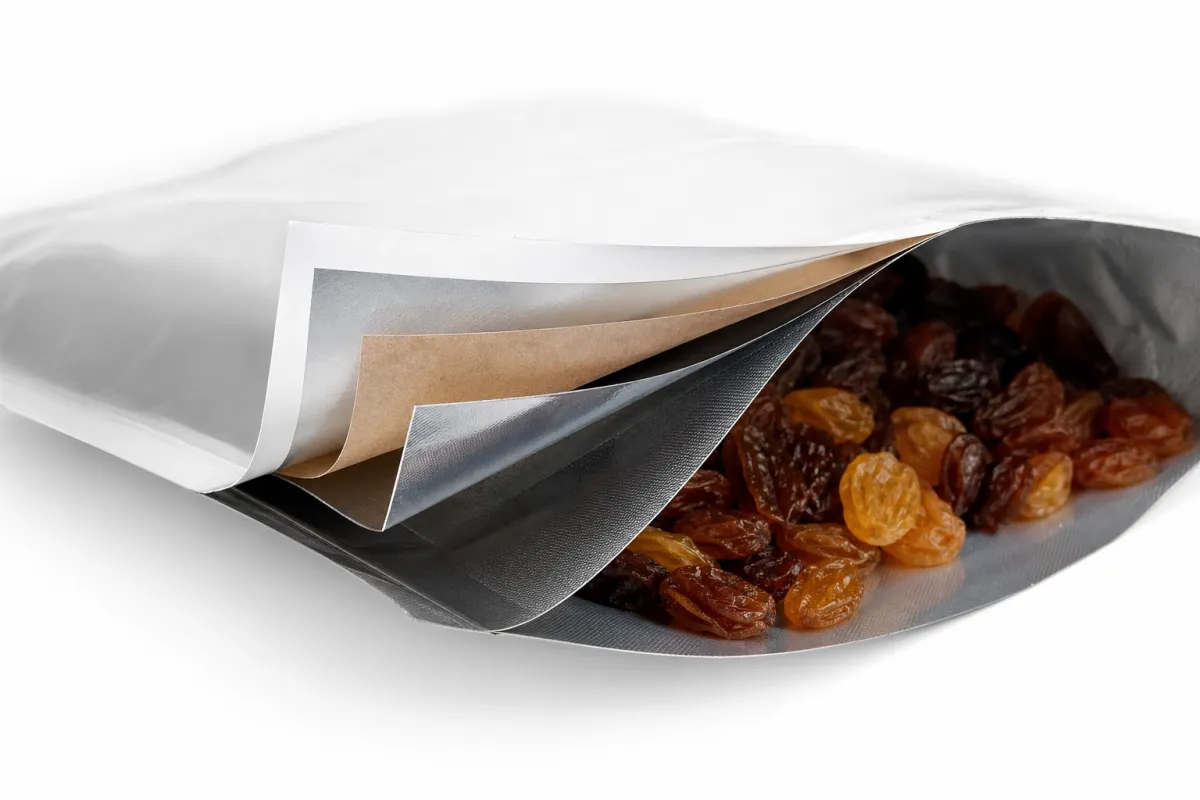
What is barrier packaging for food? In plain language, it is packaging built to slow the movement of gases, vapor, light, aroma, grease, and contaminants between the food and the outside environment. A standard polyethylene bag can hold a product physically, yet still fail to protect a fat-rich snack from oxygen or a dry powder from moisture pickup. A barrier structure uses specific materials or layers to resist those pathways, which is why it matters so much once a product is on a truck, in a warehouse, or sitting under LED retail lighting for 28 days longer than planned.
A plant manager in Monterrey once explained it to me with a line I still use: "A good pouch is a gatekeeper, not a suitcase." He was right. Food changes because molecules move. Oxygen causes oxidation. Water vapor changes crispness and clumping. Light fades color and damages flavor compounds. Odor moves both ways, which is why onions, garlic, and coffee are so unforgiving in a shared cooler at 4 C. What is barrier packaging for food if not a controlled way to slow that movement and buy the product more time on shelf, in transit, and after opening?
Some of the foods most dependent on barrier performance are the ones people assume are simple. Coffee needs oxygen control to keep roast notes alive. Jerky needs moisture control to preserve chew. Cheese often needs oxygen and moisture management, plus odor control. Sauces, especially acid and oil-based formulas, may need protection from oxygen and flavor migration. Powdered mixes need moisture resistance or they cake up the moment humid air gets involved. What is barrier packaging for food in those cases? It is product insurance, and the cheap kind never pays out when the warehouse hits 35 C and 70% RH.
Barrier packaging appears in many forms: flexible pouches, lidded trays, cartons with liners, vacuum packs, thermoformed cups, laminated sleeves, and premium folding cartons with inner barriers. The outer layer may be branded packaging, retail packaging, or custom printed boxes, but the internal structure is what protects shelf life. I have seen a $0.40 carton outperform a cheaper pouch only because the carton held a foil-lined inner bag that did the actual work. The outside got the applause; the inside did the heavy lifting, usually with a 12-micron PET layer, a 9-micron aluminum foil, and a 60-micron sealant film doing the real math.
The catch is simple: barrier is never free. Better protection can raise unit cost, complicate converting, or create end-of-life questions. That is why what is barrier packaging for food is really a design exercise, not just a material selection exercise. You are deciding how much protection the food needs, how much risk the market can tolerate, and what the brand can afford to spend on each pack. The material catalog helps, but it does not think for you, which is inconvenient but true, especially when the order is only 3,000 units and the tooling fee is still $850.
What Is Barrier Packaging for Food Used For?
What is barrier packaging for food used for? It is used to slow spoilage, preserve texture, protect flavor, and extend shelf life across storage, shipping, retail display, and home use. The practical goal is not just to keep food physically contained. It is to keep the food as close as possible to the condition the brand intended, whether that means crisp chips, aromatic coffee, stable powdered mixes, or a refrigerated sauce that still tastes the way it should after a long supply chain.
That matters because food changes for reasons most customers never see. Oxygen turns fats rancid. Moisture softens crunch. Light bleaches color and degrades flavor compounds. Aroma escapes from spices and tea. If a package is not built for those forces, the product can look fine and still underperform. What is barrier packaging for food doing in those situations? It is buying time, and time is usually the most valuable ingredient in the package.
Barrier packaging also supports commercial goals. It can reduce spoilage returns, protect premium positioning, and help a product survive distribution in hot, humid, or rough-handling channels. I have seen brands treat packaging as a finishing touch, then discover it was the difference between a successful launch and a stack of markdowns. That is why the answer to what is barrier packaging for food is never only technical. It is also operational, financial, and reputational.
How Barrier Packaging for Food Works
The science behind what is barrier packaging for food begins with transmission rates. Two numbers show up constantly: OTR, or oxygen transmission rate, and WVTR, or water vapor transmission rate. OTR measures how much oxygen passes through a material over time, while WVTR measures how much water vapor does. A high-barrier coffee film can post an OTR under 0.1 cc/m2/day at 23 C, while a basic PE film may sit above 1,000 cc/m2/day. A film can feel thick and sturdy and still let enough oxygen through to age a product before its sell-by date. I have had more than one sample look reassuring in my hand and behave like a sieve in the lab, which is humbling in the best and worst ways.
Small leaks matter too. A weak seal line, a pinhole near a gusset, or a closure that loses tension after three openings can erase the benefit of a high-barrier film. I once watched a converter spend three weeks tuning a 7-layer laminate in Suzhou, only to lose the performance at the zipper because the reclose feature warped during heat-seal calibration at 165 C. Everybody in the room looked at the zipper like it had personally offended us. That is why what is barrier packaging for food always includes seals, closures, liners, and package geometry. The material alone does not tell the whole story, particularly in a 500-pack pilot.
Several technologies create barrier performance. Multilayer films combine different polymers so one layer offers strength, another seals well, and another blocks gases. Coatings can add resistance to moisture or oxygen without adding much thickness. Metallization uses a very thin metal layer, often aluminum, to reflect light and improve barrier. Foils provide very high protection, especially against oxygen and light, while high-performance resins can improve one barrier dimension without using foil at all. The best choice depends on the food, the shelf-life target, and whether the package has to survive a real distribution route from Dongguan to Dallas instead of a perfect lab fantasy.
Each food stresses packaging differently. Fat oxidation is a big issue for coffee, nuts, and chips. Moisture gain ruins crackers, cereals, and powdered drink mixes. Aroma escape matters for spices, tea, and cheese. Color fade affects dried fruit and smoked products. Microbial risk becomes more serious in refrigerated and ready-to-eat foods. What is barrier packaging for food depends on which of those threats is actually doing the damage. Choose for the wrong problem, and you can overpay while still failing. That is the part that keeps people in packaging jobs employed, frankly, because the difference between 0.3 and 3.0 grams of moisture loss can change the product story completely.
Another detail gets overlooked: barrier performance changes with conditions. A film that behaves well in a dry lab at 23 C may perform differently in a 38 C warehouse in Phoenix or a humid port in Ho Chi Minh City. Storage time, altitude, handling, and the food's own chemistry all matter. A sauce with high oil content behaves differently than a dry spice blend. That is why what is barrier packaging for food should be judged in context, not in isolation. A result from 50% relative humidity is not a promise for 85% relative humidity, and the food will not politely pretend otherwise.
If you want the technical language used in testing, the packaging industry often relies on standards and methods from groups such as ISTA for distribution testing. Those numbers turn a vague claim like "good protection" into measurable performance. In practice, that means asking for OTR, WVTR, seal strength, puncture resistance, and real shelf-life evidence, not just a glossy spec sheet that looks pretty and tells you almost nothing useful. A lab report with seven concrete values is usually worth more than a 24-page brochure.
Key Factors in Barrier Packaging for Food
The first question I ask in a spec meeting is blunt: what is the product trying to survive? That answer defines what is barrier packaging for food in practical terms. If oxygen is the main threat, the structure should focus on oxygen barrier. If the food is brittle or dry, moisture barrier may matter more. If it is aromatic, odor control moves to the top. Grease, light, and contamination each pull the design in a different direction, and pretending otherwise usually leads to expensive mistakes on a $40,000 launch program.
Shelf life comes next. A chilled hummus with a 14-day life does not need the same structure as a pantry sauce aiming for 9 months. A 30-day refrigerated entree may tolerate a moderate barrier, while a 6-month ambient snack often needs a much tighter one. I have seen teams choose a premium laminate because the marketing mockup looked better in a Toronto conference room, then discover that a simpler structure would have met the target at lower cost. What is barrier packaging for food if not a match between technical risk and market timing? If the product only sits in inventory for 18 days, the pack should reflect that reality.
Distribution reality matters as much as the lab. A package may sit 18 days in warehouse storage, bounce through pallet stacking, then spend 3 days in a hot delivery truck before the customer opens it. Add shelf display, e-commerce handling, and the occasional rough corner drop, and the spec has to survive more than a clean laboratory test. Barrier packaging for food is never only about the pouch or carton; it is about the full route from filling line to kitchen counter, which is why I get suspicious whenever someone says, "It held up fine in the sample room." The sample room does not have a 1.2-meter drop test or a 26-hour freight delay.
Convenience features can help or hurt. Resealability improves freshness after opening, but a zipper adds cost and a possible leakage point. Tamper evidence builds trust, but shrink bands and seals add handling steps. Easy-open notches are useful, yet if the tear path runs through a barrier layer, it can create a failure point. What is barrier packaging for food in this context? A trade-off among user experience, compliance, and product protection. There is no magical version where every feature is free and nothing compromises anything else. I wish. So do most operations teams, especially the ones trying to keep a line moving at 55 packs per minute.
Sustainability adds another layer of complexity. A recyclable mono-material pouch may be attractive, but it may not provide the same oxygen or moisture resistance as a foil laminate. A paper-based format can support strong branding and better shelf presence, yet often needs a liner or coating to handle greasy or moist foods. I tell clients the same thing every time: the most recyclable option is not automatically the right technical fit. If the shelf life collapses after 19 days, the environmental win disappears into waste, and nobody gets to brag about that at the next meeting.
For paper-forward projects, I often compare fiber sourcing and end-of-life claims with FSC guidance and certification language. That does not solve the barrier question by itself, but it helps keep sustainability claims honest. If a brand is moving from generic packaging design to a more specific food-grade structure, the right question is not whether it looks greener on the mockup board. The question is whether a 350gsm C1S artboard carton with a 25-micron liner can hold up against grease migration, scuffing, and humidity in July.
When I visited a salsa co-packer in Texas, the team thought the issue was fill weight variation. The real culprit was a mismatch between the headspace oxygen level and the closure system on a 16-ounce tub. Once they adjusted the liner and lid design, the product held up better in distribution. That kind of discovery is why I trust product behavior more than assumptions. What is barrier packaging for food has to start with the product, not the material catalog, and certainly not the slide deck that says "premium" 11 times.
Barrier Packaging for Food: Cost and Pricing Drivers
Pricing is the point where the conversation stops being abstract. For what is barrier packaging for food, cost depends on material type, layer count, coating complexity, printing, finishing, and converting method. A simple printed pouch has a different cost structure than a metallized laminate, and a foil structure behaves differently again. Add zippers, spouts, windows, embossing, or matte finishes, and the price rises fast. Packaging people talk about "features" as though they were little accessories; procurement knows they are line items with opinions and a quote attached.
Low-volume custom runs usually cost more per unit than high-volume production. That stays true even when the structure is simple. A 5,000-piece job can carry setup costs that make each pack look expensive, while a 100,000-piece run spreads those costs out. For one recent 5,000-piece coffee pouch order in Dongguan, a 12-micron PET / 9-micron AL / 80-micron PE structure quoted at $0.15 per unit for the printed outer shell only; add a zipper and the same format climbed to $0.23. A foil-heavy structure with matte finish can easily reach $0.41 to $0.58 per unit. What is barrier packaging for food from a purchasing standpoint? It is a volume problem as much as a materials problem.
Development and testing also cost money. Shelf-life trials can take 4 to 12 weeks, depending on the food and the target life. Migration checks, seal validation, and prototype revisions add more time. If the package is going into a regulated category or a demanding export market, the bill can climb because the team needs lab verification, sensory review, and repeat samples. A cheap quote that skips validation is not cheap if the product fails after launch. I have seen a short-term savings decision turn into a long-term cleanup project, and nobody writes a cheerful case study about that, especially after a failed 20-day refrigerated test.
Here is the part most buyers underestimate: the hidden cost of a weaker package. If a 2% spoilage rate turns into 8% in transit or on shelf, the savings on the pouch disappear quickly. Returns, chargebacks, markdowns, and damaged brand perception can cost much more than the difference between two film structures. I have watched a snack brand save $0.04 per pack, then lose that gain five times over because stale inventory had to be pulled from 27 stores. The math was not subtle. It was just ignored until it got loud.
| Structure | Typical Use | Example Unit Cost at 5,000 Pieces | Barrier Strength | Notes |
|---|---|---|---|---|
| Mono-material PE pouch | Dry snacks, short-life chilled items | $0.15 | Moderate | Often easier to recycle, but not always enough for oxygen-sensitive foods. |
| Metallized laminate pouch | Coffee, jerky, powdered mixes | $0.27 | High | Good balance of cost and performance for many shelf-stable products. |
| Foil laminate pouch | Premium coffee, spice blends, long-life products | $0.43 | Very high | Strong oxygen and light protection, but recycling can be more complicated. |
| Paperboard carton with barrier liner | Retail packaging, multipacks, premium presentation | $0.33 | Varies by liner | Good for branding and shelf presence; the liner does the barrier work. |
If you are comparing options for a launch, it helps to start with Custom Packaging Products and sort by product risk instead of by appearance. I have seen teams fall in love with a matte carton and forget that the inner pack needs to do the heavy lifting. That is how a package can look premium and still underperform. What is barrier packaging for food worth? Usually less than the product loss it prevents, which is a good thing to remember when the quote sheet starts making everyone nervous in a conference room in Hamburg or Auckland.
One supplier negotiation still sticks with me. We were discussing a 9-layer film for a nut product, and the converter wanted a premium on the basis of "better protection." I asked for OTR, WVTR, seal curve data, and proof from a 60-day shelf test. Once those numbers were on the table, the conversation shifted from marketing language to measurable value. That is usually where good purchasing decisions begin. Before that, it is just people saying words at each other, usually with one person pointing at a render and another pointing at a spreadsheet.
Step-by-Step Process and Timeline for Specifying Barrier Packaging for Food
The best specs start with intake, not materials. Define the food, the main failure mode, the shelf-life target, storage conditions, and any regulatory limits. If you cannot say whether the product is failing from oxygen, moisture, grease, light, or microbes, then what is barrier packaging for food becomes a guessing game. A 90-day ambient noodle cup needs a different answer than a 10-day chilled sauce, and I have seen teams waste two weeks because nobody pinned down that first question in writing.
Next, map that risk to a packaging structure. This is the point where teams often jump too quickly to "We want foil" or "We want paper." I would rather see a short list of candidate structures based on performance targets: maybe a metallized film, a foil laminate, and a mono-material option with a higher-performance coating. That gives you a fair comparison. It also keeps packaging design tied to the product instead of the trend of the month, which is useful because trends do not stop oxidation, moisture pickup, or flavor loss.
Then comes prototyping and testing. Request samples, run them through your fill line if possible, and measure the actual seal strength and barrier data. Compare the lab claims to real storage results. I have seen a film that passed a spec sheet but failed at the corners because the pouch geometry created stress at the fold. What is barrier packaging for food if not a structure that survives the way the product is actually handled? A nice-looking prototype that collapses in the real world is just expensive optimism, especially if it was approved off a single 8-inch sample.
Artwork and converting are usually the next schedule risks. Print approvals can add 3 to 7 business days if the team is decisive, or 2 weeks if legal wants copy changes. Tooling for zippers, spouts, or custom die cuts can add time too. If you need a custom printed boxes program with an inner barrier liner, the outer box and inner pack should be coordinated early so the carton dimensions do not fight the fill weight or closure height. I have watched a gorgeous carton design arrive three millimeters too tight for the lined pouch. Three millimeters. The tiny details are always the loudest ones, especially after the first trial run in Indianapolis fails at case pack.
For a simple reprint on an existing structure, I have seen timelines of 12 to 15 business days from proof approval to shipment. For a fully new barrier system, 4 to 6 weeks is more realistic because the work includes sampling, review, and validation. For a sensitive food with a long shelf-life claim, add another testing window. That is not delay for its own sake; it is what protects the launch. What is barrier packaging for food worth if the package has not been proven in use? A lot less than the cost of a recall, which can consume a quarter's profit faster than most teams expect.
One useful way to think about timeline risk is to separate "design time" from "proof time." Design can move in a week. Proof can take longer, especially if you need two filling trials, one storage check, and a final signoff from operations. If you want less friction, ask suppliers for OTR, WVTR, seal strength, and any migration testing up front. That cuts down on surprises and gives the team facts to work with. Facts, refreshingly, are less dramatic than assumptions and far more useful when the line is scheduled to start in 19 days.
There is also a reason I recommend pilot runs before full launch. A 500- to 2,000-unit pilot reveals line speed issues, seal contamination, and handling problems that sample packs cannot show. If a package passes the lab but fails during pallet wrap or case packing, you only catch that on the line. That is the difference between a neat concept and a workable food packaging system. I would rather find the problem in a pilot than in a customer complaint, which is not exactly a fun trade and can easily wipe out the savings from a $0.02 material reduction.
Common Mistakes That Undercut Barrier Packaging Results
The first mistake is obvious once you have seen it enough times: people choose a high-barrier material and ignore seal failure, puncture risk, or closure quality. A great laminate with a weak seal is like a warehouse with the loading dock left open. I have seen seal contamination from flour dust reduce performance more than a cheaper film ever would. What is barrier packaging for food if the leak path is still open? Not much, which is the uncomfortable answer nobody enjoys hearing in a meeting at 8:00 a.m. on launch week.
The second mistake is over-specifying. I have watched brands buy expensive foil structures for products that only needed moderate moisture resistance. That inflates cost without improving shelf life enough to matter. If the food is moving in a 2-week window and is not oxygen-sensitive, a simpler structure may be smarter. Overbuilding looks safe, but it can crowd out margin and make a product feel overpriced on shelf. The irony is that "safer" choices can actually make the business less safe by making the economics shaky, especially on a 50,000-unit run.
The third mistake is under-specifying. This one hurts more because the failure arrives after launch. A dry seasoning mix may clump after three humid weeks. A cracker may soften in transit. A coffee product may lose aroma before the second reorder. That is why what is barrier packaging for food should be matched to the actual transit and storage path, not just the filling line spec. I have a lot of sympathy for teams that miss this once; I have less for teams that miss it twice and call it "unexpected" after the product spends 11 days in a 32 C dock.
The fourth mistake is treating sustainability as a substitute for performance. A recyclable claim or paper-first design does not automatically make the package suitable for the food. If the product needs oxygen protection and the selected structure cannot provide it, the greener label becomes a short-term marketing win and a long-term waste problem. Honest packaging strategy means accepting that some products need a more complex structure. I know that answer is less cheerful than a slogan, but it is a better answer, and it usually saves everyone from a bad quarter.
The fifth mistake is skipping validation. Too many teams trust supplier claims without testing under the conditions their food will face. If the pack will spend 20 days in a humid distribution center, test it that way. If it needs to survive e-commerce shipping, run a distribution protocol instead of assuming shelf tests are enough. For that kind of work, I like to compare shipment assumptions against published test practices from groups like ISTA and tie the packaging results to the actual route. That is also where internal conversations about Custom Packaging Products become more productive, because everyone is looking at the same risk profile instead of guessing from their own department's perspective.
One of my most useful client meetings happened because a brand admitted a simple truth: they did not know whether the product needed oxygen control or moisture control more urgently. That honesty saved them two rounds of rework. Once they understood the failure mode, the packaging decision became much easier. What is barrier packaging for food if not a set of decisions grounded in the product's reality? Pretending otherwise usually ends in a reprint, a relaunch, or both, and both are expensive in ways a spreadsheet does not capture well.
Expert Tips and Next Steps for Choosing the Right Structure
My first tip stays the same every time: start with the failure mode, not the film. If the product loses crispness, chase moisture barrier. If it stales, chase oxygen barrier. If it fades or smells wrong, look at light and aroma transfer. That keeps what is barrier packaging for food tied to the food's actual behavior, which is the only thing that matters when the customer opens the pack in a kitchen 600 miles from the factory. Everything else is decoration, or at best a secondary benefit.
Second, ask for the right data. I want OTR, WVTR, seal strength, puncture resistance, and real shelf-life evidence. I also want the test conditions, because 23 C and 50% relative humidity is not the same as a hot warehouse in Las Vegas or a refrigerated chain in Copenhagen. If a supplier only gives marketing language, I treat that as a warning sign. Specific numbers create accountability, and accountability has saved more launches than any slogan ever did.
Third, compare at least two viable structures side by side. One can be optimized for cost, the other for performance. That comparison often reveals a middle path that is better than either extreme. For example, a metallized laminate may beat a foil laminate on price while still meeting a 90-day target, or a paperboard carton with a barrier liner may deliver the brand experience without sacrificing the inner pack's function. What is barrier packaging for food if not a series of informed trade-offs? I have seen a 60-micron liner save a project that a 100-micron overbuild would have made too expensive.
Fourth, use a pilot before you scale. A 1,000-unit pilot may feel small, but it can save a launch. Check seal integrity, drop performance, case pack behavior, and customer handling. If the product is going into retail packaging, watch how it sits on shelf beside competing products. If it is going into e-commerce, pay attention to abrasion, compression, and puncture. The package has to work in the channel, not just on a render. Render files never have to survive forklift vibrations, which is probably why they always look so confident, even after a 700-mile truck route.
Finally, involve operations early. A structure that looks excellent on paper can be a headache if the fill line runs at 40 packs per minute and the new film needs a slower dwell time. A pack with a beautiful finish can scuff in the last 10 feet before case packing. I have seen brands spend more on package branding than on line testing, then wonder why the launch got delayed by 2 weeks. That never feels good, and it is almost always avoidable when the plant in Ohio gets looped in before artwork is final.
If you are planning a new launch, the most practical next step is to define the hazard, request test data, prototype two structures, and run a small pilot before full production. If the project also needs custom printed boxes or a branded outer pack, align the outer and inner components early so the shelf presentation matches the barrier need. What is barrier packaging for food in one sentence? It is the set of materials and design choices that keep food safe, fresh, and sellable for the life you promised. After that, the decision gets simpler: choose the structure that protects the product without paying for performance you do not need, whether the line is in Dongguan, Guadalajara, or Raleigh.
How do I know if my product needs barrier packaging for food?
Look for one of four failure signs: oxidation, moisture gain or loss, aroma escape, or texture changes during storage and shipping. Products with strong fats, oils, crisp textures, or long shelf-life targets are the usual candidates for what is barrier packaging for food decisions. If the item must survive ambient distribution, retail display, or e-commerce shipping, the need becomes much more obvious. I usually tell teams to start with the product's worst day, not its best one, and to test that day at 30 C and 75% RH if they can.
What is the difference between barrier packaging and regular packaging for food?
Regular packaging may protect the product physically, but what is barrier packaging for food designed to do is slow gas, vapor, light, and odor transfer. The two can look similar on the shelf, yet the internal structure, seal performance, and shelf-life outcome can be completely different. Barrier packaging is chosen to preserve quality over time, not just to hold the product during handling. That distinction sounds small until the product starts aging twice as fast as expected, which can happen in as little as 21 days for certain dry foods.
Does barrier packaging for food always cost more?
Usually yes at the unit level, because higher-performance materials and testing add cost. But the real comparison is total cost of ownership. If a cheaper pack increases spoilage, returns, markdowns, or brand damage, it can end up costing more than a better structure. That is why what is barrier packaging for food should be judged against the risk it removes, not just the quoted unit price. I have seen a four-cent difference turn into a $1,200 markdown problem before lunch, which makes the quote sheet look a lot less heroic.
How long does it take to develop barrier packaging for food?
Simple projects can move in 12 to 15 business days from proof approval if the structure already exists and only minor changes are needed. Custom barrier solutions take longer because they may require samples, testing, shelf-life checks, and print approvals. Timeline risk usually comes from validation, not the design concept itself, which is why what is barrier packaging for food projects often spend the most time proving the package. Design is the easy part; reality is the part with a calendar and a freight booking.
Can sustainable materials work in barrier packaging for food?
Yes, but the material has to match the food's actual barrier needs and storage conditions. Some recyclable or mono-material options work well, while others need coatings or structural changes to perform properly. Before launch, verify both technical performance and the end-of-life claim, because what is barrier packaging for food means nothing if the package fails to protect the product. Sustainability only counts if the product still makes it to market in good condition after 60 days on shelf or 8 days in transit.
If you are still deciding on a structure, start with the product hazard, then move to a short list of candidate materials, then request samples and test data. That sequence keeps the project grounded. And if you need a broader packaging starting point, our Custom Packaging Products page is a practical place to compare formats before you lock in the final spec, especially if your run size is 5,000 pieces or less.

