Buyer Fit Snapshot
| Best fit | Custom Wine Bottle Boxes with Logo projects where brand print, material claims, artwork control, MOQ, and repeat-order consistency need to be specified before quoting. |
|---|---|
| Quote inputs | Share finished size, material target, print colors, finish, packing count, annual reorder estimate, ship-to region, and any compliance wording. |
| Proofing check | Approve dieline scale, logo placement, barcode or warning zones, color tolerance, closure strength, and carton packing before bulk production. |
| Main risk | Vague material claims, crowded artwork, missing packing details, or unclear freight terms can make a low unit price expensive after revisions. |
Fast answer: Custom Wine Bottle Boxes with Logo: Board, Finish, Dieline, and Unit Cost should be specified like a repeatable production item. The safest quote records material, print method, finish, artwork proof, packing count, and reorder notes in one written spec.
Production checks before approval
Compare the actual filled-product size with the drawing, then confirm tolerance on folds, seals, hang holes, label areas, and retail display edges. Reserve space for logos, QR codes, warning copy, and material claims before decorative graphics fill the panel.
Quote comparison points
Review material grade, print process, finish, sampling route, tooling charges, carton quantity, and freight assumptions side by side. A quote is only useful when the supplier can repeat the same color, closure quality, and packing count on the next order.
Custom Wine Bottle Boxes with Logo: A Practical Sustainable Guide
Why Custom Wine Bottle Boxes With Logo Matter
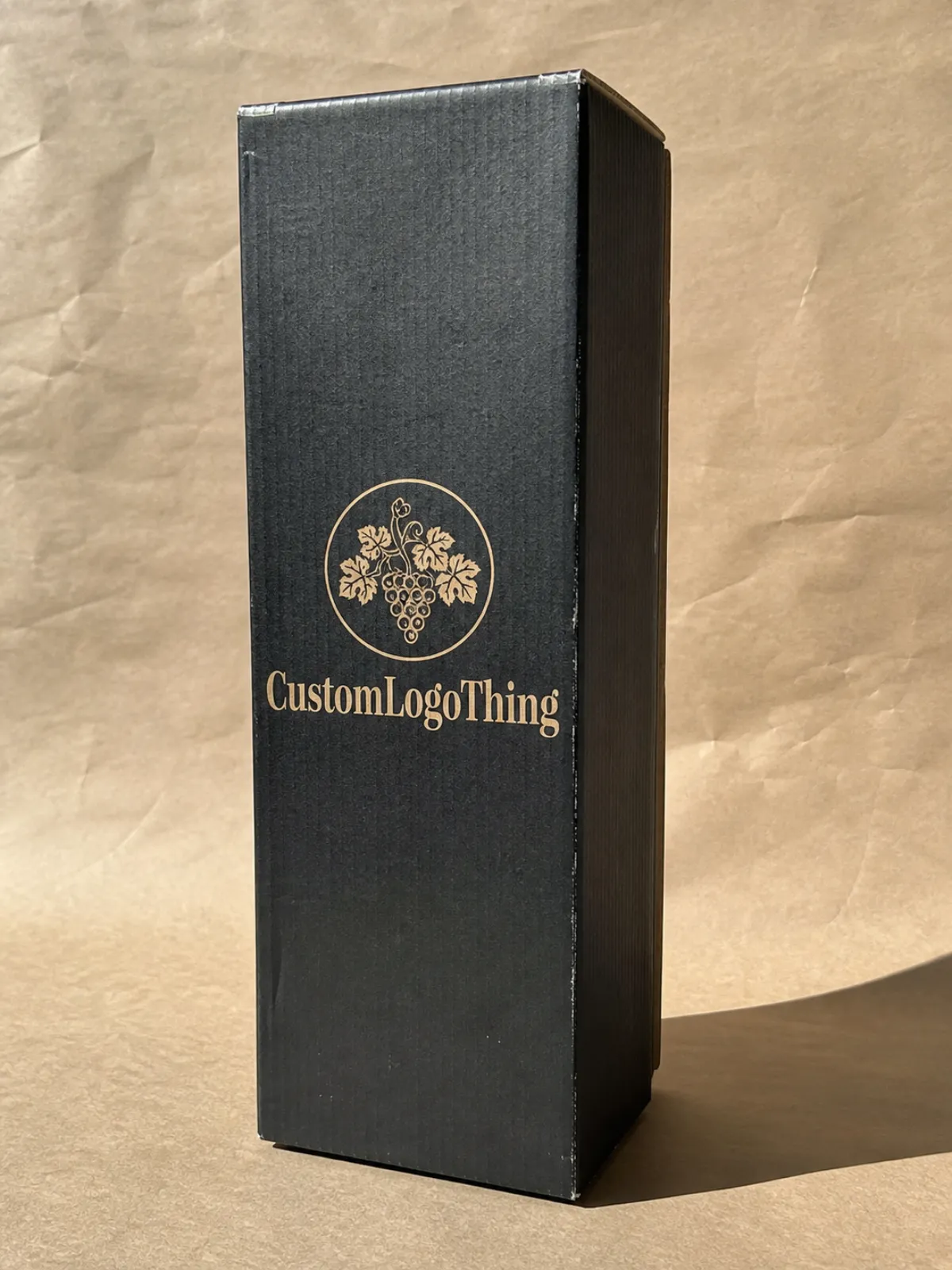
One cracked bottle can wipe out the margin on an otherwise clean shipment. That is the part people skip when they talk about custom wine bottle boxes with logo. The box is not just decoration with a label on it. It is part of the product, part of the fulfillment process, and part of the brand story the customer sees before they ever touch the bottle.
Wine is a difficult package to handle. A filled bottle is heavy, fragile, and awkward enough to punish bad design. The weak points are familiar: the shoulder, the heel, and the neck. Add label scuffing, temperature swings, pallet compression, and carrier handling, and the packaging has to do more than look polished. It has to hold the bottle steady, protect the finish, and survive real shipping conditions.
Custom branded secondary packaging also plays a different role depending on the channel. A club shipment, a holiday gift box, and a retail display pack all need slightly different behavior, but the brand still has to feel consistent. A clean logo helps, sure. The bigger value usually comes from the structure, the insert, the board grade, and the way the box opens, closes, and stacks without drama.
Sustainability is often treated like a finish choice. It is not. Oversized cartons pull in extra void fill, raise freight weight, and let the bottle move around during transit. Right-sized packaging reduces board usage, improves pallet density, and cuts down on replacement shipments. Less material is good. Fewer breakages are better. The combo is what matters.
A wine box should earn its footprint. Too light, and the bottle breaks. Too heavy, and the shipper pays for empty space and unnecessary board. Good packaging sits in the narrow gap between those mistakes.
That balance is the point. Not the logo alone. Not the unboxing moment alone. The box has to perform from warehouse pick to customer opening, and every decision in between affects cost, damage rate, and environmental impact.
How Custom Wine Bottle Boxes With Logo Work
At a practical level, a wine box has four jobs: hold the bottle, protect it from shock, show the brand, and move through the chosen channel without getting damaged or annoying the fulfillment team. Most structures start with an outer carton or rigid shell, then add an insert or cradle that keeps the bottle from shifting around. Common closures include tuck lids, sleeves, magnetic flaps, folding cartons, and shipper-style mailers. For many buyers, the best answer is not a dramatic shape. It is a box that keeps the bottle centered and still.
The insert is as important as the outer board. A paperboard insert, molded pulp tray, or engineered fold-in can hold the bottle at the shoulder and base so it does not slam into the walls of the carton. Some designs add neck support or top locks, especially for taller Bordeaux-style bottles. Burgundy, Champagne, and magnum formats change the geometry quickly. Measure the bottle with the closure, label, and any embossing before the dieline is approved. Guessing here is how teams end up paying for a second round of samples.
Branding can be applied in a few different ways. Direct print works well for custom printed boxes, especially when the artwork is simple and the run is large enough to justify press setup. Labels and sleeves are easier for smaller quantities. Embossing adds tactile depth. Foil alternatives can give the logo more presence without relying on heavy ink coverage, although every decoration method should still be weighed against recyclability goals. A logo that covers half the box may feel premium, but it also adds cost, complexity, and finish risk. Pretty box, messy quote.
How the same branding idea scales
A single-bottle box is usually the easiest version to engineer. The bottle can be centered and stabilized without much internal structure. Two-bottle boxes need a divider wall or paired insert pockets, which increases material and introduces more ways for the product to move. Multi-bottle cartons need stronger compression performance, smarter pallet patterns, and a clear decision about whether the box is shipping packaging or shelf display. The branding can stay consistent across all three. The internal architecture should not be copied and pasted like nobody will notice. It will.
Shipping flow matters too. A box that behaves well in a controlled warehouse can fail in direct-to-consumer fulfillment, where it is handled more often and may drop from conveyor height. A presentation box for retail packaging may not need the same edge crush strength as an ecommerce carton, but it probably needs a cleaner closure and a better finish. That is why packaging suppliers ask so many questions before quoting. They are not being difficult. They are trying to avoid a box that looks right and performs badly.
The most sustainable result usually comes from a structure that uses less material while still passing real transit stress. That is not always the thinnest board or the smallest footprint. It is the box that matches the bottle, the route, and the customer expectation with the fewest unnecessary layers.
Cost, Pricing, MOQ, and Quote Factors
Pricing for custom wine bottle boxes with logo comes down to a few core variables. Once buyers understand them, quotes are easier to compare and a lot harder to game. The main cost drivers are board type, box style, insert material, print complexity, the number of decoration passes, and whether the order needs specialty finishing such as embossing or hot-stamp alternatives. A one-color kraft folding carton is one kind of job. A rigid box with a molded insert, wrapped exterior, and multi-step decoration is a completely different animal.
MOQ, or minimum order quantity, exists because setup costs have to be spread across the run. Press setup, dieline prep, sample approval, and tooling can cost almost as much for 500 units as for 5,000. That is why unit pricing usually falls as quantity rises. Small runs are possible with some methods, especially digital short-run work, but the per-piece cost tends to climb. Buyers who only ask for a unit price are asking the wrong question. Total landed cost at the quantity you actually need tells the real story.
| Option | Typical Use | Relative Cost | Sustainability Notes |
|---|---|---|---|
| Folding carton with paperboard insert | Retail packaging, gifting, light shipping | About $0.45-$1.10 per unit at mid-range quantities | Often a good fit with recycled board and water-based inks |
| Corrugated mailer with molded pulp insert | DTC shipping, club fulfillment, e-commerce | About $0.60-$1.40 per unit depending on print and insert | Strong choice for waste reduction and transport efficiency |
| Rigid presentation box | Premium gifting, limited releases, shelf display | About $1.50-$4.00+ per unit | Can be durable, but usually uses more material per package |
| Short-run digital custom box | Seasonal drops, test markets, low-volume SKUs | Higher per unit, lower setup burden | Useful for avoiding overproduction |
Those ranges are directional, not a promise. Actual pricing depends on bottle size, box dimensions, print coverage, insert geometry, and freight. A standard 750 ml bottle with a simple label is not the same project as a magnum bottle or a box with a specialty neck lock. If a supplier is quoting blind, the number is not very useful. You want the quote to reflect the real structure and the real shipping method.
To get an accurate quote, send the following details:
- Bottle dimensions, bottle weight, and closure height
- Quantity needed and whether the order is repeatable
- Print method, number of colors, and logo placement
- Finish preference, such as matte varnish, aqueous coating, or uncoated kraft
- Insert type, including molded pulp, paperboard divider, or custom fold-in
- Shipping channel: ecommerce, retail, club fulfillment, or gift packaging
- Sustainability targets such as recycled content, FSC sourcing, or plastic reduction
Hidden costs deserve attention too. Sampling, dieline revisions, freight, storage, and rush fees can shift the economics enough to make two quotes look similar when they are not. One supplier may include tooling and prototype work; another may break it out. Compare line by line. If you are sourcing across a broader assortment, the Custom Packaging Products catalog can help you benchmark styles before you request a fully custom structure.
MOQ is not only a budget issue. It is also an inventory risk issue. If the label is likely to change in the next quarter, ordering a large stack of dated or too-specific packaging can turn into dead stock fast. A smaller first run may look expensive per unit, yet still cost less than scrapping old packaging later.
Production Steps, Process, and Lead Time
Production usually follows a familiar path: brief, dieline, proof, sample, approval, production, quality check, shipment. The order sounds obvious, and that is exactly why people rush it. Delays usually show up because one of those steps was compressed or skipped. A buyer who wants a realistic lead time should ask where the process is most likely to slow down. Artwork revisions? Sample approval? Insert tooling? Specialty coating? Those answers move a schedule from hopeful to real.
Lead time stretches fastest when artwork is not final. If the logo keeps changing size, if the legal copy is still under review, or if the box structure is not locked, the production file cannot be finalized. The same thing happens when a custom insert gets added late. Even a simple paperboard insert may need a new dieline or revised cut path, and that can add days or weeks depending on the factory workflow. Packaging punishes indecision. It keeps the receipts.
There are also different production methods. Standard offset or flexographic work usually makes sense for larger runs where unit economics matter most. Digital short-run workflows can fit launches, pilot markets, and seasonal test packaging. They usually move faster and reduce setup burden, but the cost per unit can be higher and some decorative effects are limited. A rush order can solve a deadline problem, but it also leaves less room for testing. That tradeoff only makes sense when missing the launch would cost more than the extra packaging spend.
Plan backward from the deadline
The safest approach is to work backward from the product launch or delivery date. Start with the shipping date, subtract transit time, subtract production time, subtract approval time, then add a buffer for rework. That buffer matters more than teams like to admit. Packaging gets squeezed at the end of a launch plan, right after the bottle, label, and fulfillment system are already locked. That is exactly when a small delay turns into a mess.
For wine packaging, transit testing should be part of the schedule if the box will ship rather than sit on a retail shelf. ISTA test methods are commonly used to evaluate package performance, and ASTM compression or material tests can help confirm that the board and structure are actually doing the job. The point is not to turn packaging into a science fair. It is to avoid the classic mistake of approving a beautiful sample that falls apart after two hundred miles in a carrier truck. For broader environmental packaging references, the EPA's packaging and sustainable materials guidance is a useful benchmark: EPA Sustainable Materials Management. For transit testing standards, see ISTA.
A good lead-time plan also respects seasonality. Holiday wine gifting, club renewals, and end-of-quarter promotions all crowd production capacity. If the order is tied to a seasonal release, build in extra time for print congestion and freight delays. A packaging schedule should be built from the delivery deadline backward, not from the order date forward. That sounds boring because it works.
Choosing Materials, Inserts, and Finishes
Material choice is where sustainability and performance either line up or fight each other. Recycled paperboard is often a strong option for folding cartons, especially when the package is meant for retail display or gifting rather than long-haul shipping. Corrugated board usually performs better for ecommerce and club fulfillment because it handles compression and rougher handling more reliably. Rigid stock creates a premium feel, but it can also use more material than necessary unless the product genuinely needs that presentation value.
For inserts, molded pulp is one of the better ways to reduce plastic use while keeping the bottle secure. Paperboard dividers are another common choice, especially for multi-bottle sets. Engineered fold-ins can eliminate separate components altogether, which simplifies assembly and can reduce scrap. The real question is not whether the insert looks natural. The real question is whether it controls movement under drop and vibration conditions without adding needless weight. A nice-looking insert that lets the bottle wander is just theater.
Finishes should be chosen with the same discipline. Aqueous coating is often a practical balance because it improves scuff resistance and can still work with recyclable structures. Matte varnish gives the box a softer visual tone, while water-based inks support lower-solvent printing. Some decorative effects look premium without adding much environmental burden, but heavy lamination and mixed-material embellishment can complicate recycling. FSC-certified paper and board can also support responsible sourcing claims when the paper chain is documented properly. If that matters to your buyers, ask for clear chain-of-custody information from the supplier: FSC.
| Material / Finish | Best For | Strength | Environmental Profile |
|---|---|---|---|
| Recycled paperboard | Retail cartons, gift boxes, light protection | Good for printed presentation | Strong choice when paired with responsible inks and a simple structure |
| Corrugated board | DTC shipping, club packaging, transit protection | Higher compression and puncture resistance | Often efficient because it reduces breakage and replacement shipments |
| Rigid stock | Premium sets, limited releases, luxury gifting | Excellent presentation value | Usually heavier; best when brand value justifies the material load |
| Molded pulp insert | Bottle stabilization, reduced plastic use | Strong shock control when designed well | Often a good fit for recyclable, fiber-based packaging systems |
| Aqueous coating | Scuff resistance with limited finish impact | Moderate protection | Commonly preferred over high-plastic coatings for easier recovery |
Logo placement deserves more attention than it usually gets. A small mark near the top flap can feel restrained and elegant. A large repeated pattern can create strong retail presence, but it can also increase ink coverage and get muddy on a dark or textured substrate. Good package branding is not always loud. Sometimes it is just placed well. The box should make the brand obvious without turning into a billboard that wastes ink.
Right-sizing matters just as much as the finish. If the box fits the bottle and insert properly, void fill drops or disappears. Pallet efficiency improves. Freight damage risk declines because the product cannot build momentum inside the shipper. That is the unglamorous side of sustainability, and it usually produces the clearest savings. Material reduction sounds nice in a meeting. Material reduction plus fewer breakages is what actually changes the P&L.
Common Mistakes When Ordering Custom Packaging
The most common mistake is designing from a mockup alone. A rendering can hide plenty: label thickness, closure height, shoulder slope, and tiny differences in bottle diameter that matter once the insert is cut. Measure the actual bottle with the full label and any decorative elements before approving a dieline. One millimeter matters more than people think, especially around the neck and heel where the bottle usually shifts first.
Another mistake is overbuilding the box. Heavier board and thicker walls feel safer, but they also raise freight costs and can increase material usage without fixing movement inside the carton. If the insert does not control the bottle, extra board around the outside is just expensive dressing. Strong packaging is not the same thing as thick packaging. It is the right stack of materials, matched to the route.
Skipping testing is risky. Drop and compression tests should be standard for anything that moves through carriers, mixed pallets, or fulfillment centers. A package can look beautiful and still fail from a corner drop or side compression load. That is especially true for bottles with a high center of gravity or unusual glass profiles. If the box is meant for repeat ecommerce use, the testing question matters even more because every extra handling point adds risk.
There is also a common mismatch between premium graphics and weak construction. Customers remember the broken bottle, not the foil accent. That sounds harsh because it is how return claims work. A visually strong box that splits at the seam or crushes at the edge is a liability, not an asset. Buyers should expect packaging design to serve both marketing and logistics. If it serves only one, the total cost is usually higher.
Inventory mistakes show up all the time. Order too much, and the boxes sit in storage while label specs change. Order too little, and the next rush production run gets expensive. Seasonal demand is especially tricky because wine gift packaging often spikes around holidays and special releases. A phased ordering strategy is usually safer than one oversized commitment if the program is still evolving.
The cheapest quote is not always the cheapest package. If the box breaks one bottle in a dozen, the damage, replacement freight, and customer service time can wipe out the savings fast.
Expert Tips and Next Steps for Better Orders
The best orders start with a clean brief. Include bottle dimensions, bottle weight, shipping channel, sustainability goals, target quantity, and the role the box is supposed to play. Is it meant to ship safely through carriers? Sit neatly on a shelf? Feel premium in a gift opening? Those goals are not interchangeable, and a supplier can only optimize for what gets written down at the start.
Ask for a sample or prototype before volume production. Then test it with the real bottle, the real insert, and the real shipping path. A sample that passes a desk test is not enough. Put the pack through the handling it will actually see. If it is a direct-to-consumer carton, simulate that route. If it is a retail gift box, check stacking and display conditions. Testing with the actual bottle matters more than almost anything else.
Compare at least two structural options. A lighter corrugated design may perform better for shipping. A rigid presentation box may support higher perceived value. The right answer depends on channel, margin, and customer expectation. Packaging buying stops being about aesthetics and starts being about evidence. A package that saves 20 grams of board but increases breakage is a bad trade. A package that cuts freight damage while using a simpler insert is the kind of improvement that shows up in both sustainability and operations.
Request a quote that separates these elements:
- Unit cost
- Tooling or setup
- Sampling and prototype charges
- Freight and storage
- Rush or revision fees
- Insert and finishing upgrades
That line-by-line view makes comparison much easier. It also keeps everyone honest about what is actually included. If one quote looks much lower, the missing pieces usually explain why.
One packaging habit saves more money than people expect: review the proof with the bottle in hand. Check neck clearance, closure fit, logo scale, and internal lock points. Ask whether the bottle can move. Ask whether the customer can open it without trashing the finish. Ask whether the structure still looks good after shipping wear. Those small checks prevent expensive mistakes.
If you are building a new wine line or revising a seasonal set, the path is simple. Measure the bottle, confirm the insert, review the proof, approve the sample, and then place the production order for custom wine bottle boxes with logo. That sequence keeps the brand visible, the product protected, and the material use much closer to what the job actually needs.
FAQ
What makes custom wine bottle boxes with logo more sustainable than standard packaging?
They can be sized to the exact bottle dimensions, which reduces filler, shipping weight, and wasted board. They can also use recycled paperboard, Molded Pulp Inserts, and water-based inks instead of mixed materials that are harder to recover. A well-fitted box lowers breakage, and fewer replacements mean fewer extra shipments.
How do I get an accurate quote for custom wine bottle boxes with logo?
Share the bottle dimensions, bottle weight, quantity, and shipping method first, because those determine the structure and material choices. Add the print method, finish preference, insert type, and whether samples or tooling are needed so the quote reflects the full job. Ask the supplier to separate unit cost from setup, freight, and revision charges so comparisons are fair.
What MOQ is typical for custom wine bottle boxes with logo?
MOQ depends on the production method, with custom structural work and specialty printing usually requiring larger runs than simple digital jobs. Small orders can be possible, but the unit cost is usually higher because setup time is spread across fewer boxes. If volume is uncertain, ask for a sample run or phased order so you can test demand before committing to a larger batch.
How long does production usually take for custom wine bottle boxes with logo?
Lead time depends on artwork approval, sampling, structural complexity, and the print method chosen. Simple runs can move faster, while custom inserts, specialty finishes, or last-minute design changes add time. Build in a buffer for testing and shipping so the packaging arrives before the product launch or reorder deadline.
Which box style works best for fragile bottles?
A rigid or corrugated structure with a snug insert usually performs best because it prevents bottle movement during transit. For premium gifting, a presentation-style box can work well if it still includes strong internal support and compression resistance. The best style is the one that matches the shipping channel, not just the shelf display, so always test with the actual bottle.

