Plan Your Custom Wine Paper Bags Production Timeline
Custom Wine Paper Bags production timeline explained: specs, artwork, pricing, proofs, lead times, and practical ways to avoid launch delays.
Custom Wine Paper Bags Production Timeline: What Buyers Usually Underestimate
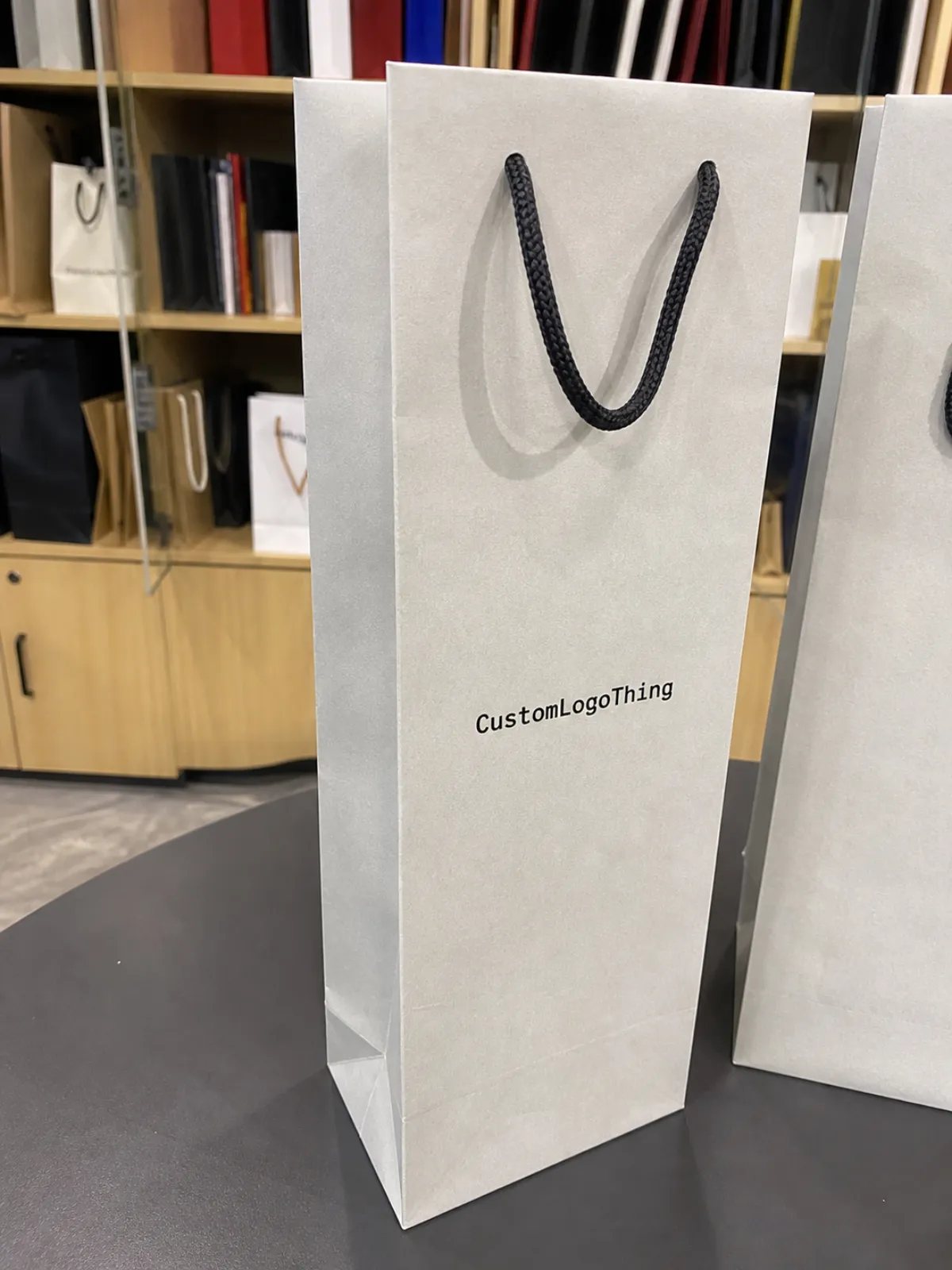
The labels are approved. Bottles are filled. The tasting-room launch is on the calendar. Then one small item stalls the plan: the gift bags are still waiting on proof approval because the Custom Wine Paper Bags production timeline was treated like a basic print order.
That assumption causes real delays. The factory press schedule is only one slice of the work. A proper timeline includes specification decisions, artwork checks, material sourcing, proof approval, ink drying, lamination curing, handle attachment, carton packing, freight, and inspection after delivery.
Here is the part buyers often miss: printing may be faster than decision-making. A one-color kraft bag can move quickly once the file is clean. Three rounds of logo placement changes, a late switch from twisted paper handles to cotton rope, or uncertainty over 190gsm versus 250gsm stock can quietly consume a week.
A wine paper bag can mean several formats. Single-bottle bags. Two-bottle carriers. Natural kraft. White coated art paper. Matte Laminated Bags. Rope-handle bags. Die-cut handle bags. Windowed bags. Foil-stamped, spot-UV, embossed, debossed, and reinforced-bottom versions. They are all paper wine bags, but they do not behave the same in production.
Wine bags are also less forgiving than ordinary retail packaging. A filled 750ml bottle often weighs about 1.2kg to 1.5kg, and champagne bottles can be heavier. Add condensation, a customer walking across a parking lot, and the expectation of a premium gift. A weak handle is not a cosmetic defect. It is a product-loss risk.
The smart move is to plan the bag with the same discipline used for bottle labels, outer cartons, and other Custom Packaging Products. Specs, lead times, pricing, and proof approvals all need a place on the calendar.
How the Wine Bag Production Process Works From Brief to Shipment
Most delays are easier to manage once the process is visible. A typical order moves through these stages: buyer brief, specification confirmation, artwork setup, digital or physical proof, material preparation, printing, surface finishing, die cutting, folding, handle attachment, quality inspection, packing, and dispatch.
That sounds like a lot for a bag. It is. Wine paper bags are engineered packaging, not decorated sacks. The manufacturer has to match paper strength, gusset depth, base reinforcement, and handle type to the bottle count and filled weight. A two-bottle carrier with a narrow gusset and thin stock may look acceptable in a flat mockup, then fail under real load.
Printing method also shapes the schedule. Offset printing is common for larger, color-critical runs because it supports sharp graphics and consistent brand color, especially on coated art paper. Flexographic printing suits simpler kraft designs and larger runs with fewer colors. Digital printing can work for small test batches or urgent samples, although unit cost is usually higher and color consistency may not match offset on repeat orders.
Proofing has two jobs. A digital proof checks layout, spelling, logo placement, dielines, barcode position, and color references such as Pantone or CMYK values. A physical sample checks paper feel, finish, handle strength, structure, and whether the loaded bag stands upright. Those approvals are not interchangeable.
Finishing adds both appeal and time. Matte or gloss lamination may require curing. Foil stamping needs die setup and registration. Embossing and debossing require pressure tooling. Spot UV needs alignment and drying. Ribbon handles, cotton rope handles, window patching, and reinforced bases each create another queue and another inspection point.
Buyer alert: many quoted lead times start after final proof approval and deposit, not after the first email. Ask which event officially starts the production clock.
Standards can help frame the conversation. For transit testing, the International Safe Transit Association publishes widely used package testing protocols. For responsible paper sourcing, the Forest Stewardship Council is a common reference point. Not every wine bag needs certification or formal transit testing, but this language helps suppliers understand your risk tolerance.
Key Lead Time Factors That Can Speed Up or Stall Your Order
The biggest factor is specification clarity. A quote request that includes dimensions, paper weight, handle type, print colors, quantity, finish, delivery location, and deadline will move faster than “I need nice wine bags with our logo.” Vague briefs create detective work. Detective work burns days.
Quantity changes the schedule. A 500-piece test run may fit into a digital or short-run slot, but the unit cost will be higher. A 10,000-piece or 50,000-piece order can lower unit cost, yet it may require paper procurement, longer printing slots, more cartons, and more QC time. Larger is not always slower. It does need firmer planning.
Material availability is another quiet variable. Standard natural kraft and white coated art paper are usually easier to source than textured paper, dyed-through stock, metallic board, FSC-certified paper, or unusual thicknesses. Common wine bag stock often sits around 180gsm to 250gsm. Premium laminated bags may use 250gsm or heavier paper with reinforcement.
Artwork can accelerate the schedule or drag it down. Vector logos, outlined fonts, bleed, dielines, CMYK artwork, Pantone references, and high-resolution images reduce back-and-forth. Low-resolution screenshots, flattened Canva exports, or files without bleed often trigger redesign work before proofing even begins.
Complexity stacks up fast. A one-color kraft bag with twisted paper handles may move quickly. A full-color laminated white bag with gold foil, embossing, spot UV, custom rope handles, and a reinforced base has more production steps. Each step can add 1 to 3 business days, depending on capacity and drying or curing requirements.
Seasonality deserves more respect than it gets. Wineries, liquor brands, gift retailers, corporate gifting buyers, and distributors tend to order retail packaging before holiday peaks, harvest events, tasting campaigns, and promotion windows. Supplier capacity can tighten fast. A schedule that looks comfortable in March may look reckless in October.
Freight can rescue a late order, but it changes the math. Air shipping may save calendar days, yet it can add hundreds or thousands of dollars on bulky cartons. Ocean or ground freight usually costs less per unit, but it requires earlier planning. For paper bags, freight cost is driven more by carton volume than by weight.
Cost, Pricing, MOQ, and Unit Cost Signals to Watch
The cheapest wine bag quote can become expensive if it creates broken bottles, late delivery, weak handles, or poor shelf presentation. Pricing has to be measured against function. A bag is product packaging, branded packaging, and a carrying device at the same time.
Main cost drivers include bag size, paper GSM, base reinforcement, print coverage, number of colors, surface finish, handle material, order quantity, sampling, tooling, packing method, and freight. A simple one-color kraft bag at 5,000 pieces might land around $0.18 to $0.35 per unit before freight in many sourcing scenarios. A laminated, foil-stamped, reinforced bag may sit closer to $0.55 to $1.20+ per unit, depending on size and finish. Those are planning ranges, not guaranteed quotes.
MOQ exists for a reason. Custom Printed Paper wine bags usually need setup labor, plate or die preparation, material cutting, machine calibration, and finishing setup. Those costs do not shrink neatly for 200 pieces. Ask whether the MOQ changes by print method, because digital, flexographic, and offset production can have different minimums.
Unit cost usually drops as quantity rises, but not in a straight line. The difference between 1,000 and 3,000 units may be larger than the difference between 10,000 and 12,000 units because setup costs have already been spread out. Watch for price breaks at 3,000, 5,000, 10,000, and 25,000 units.
| Bag Option | Typical Use | Common Cost Signal | Timeline Impact |
|---|---|---|---|
| One-color kraft, twisted paper handle | Farm shop, tasting room, casual retail | Lower setup and material cost | Often fastest if artwork is clean |
| White art paper with matte lamination | Premium gifting and boutique retail | Higher paper and finishing cost | Adds curing and inspection time |
| Foil stamped reinforced bag | Limited release, corporate gift, luxury wine | Tooling, foil, registration, stronger handle | Adds setup, alignment, and QC steps |
| Two-bottle carrier | Gift sets and retail bundles | More paper, stronger base, stronger handle | May require sampling and load testing |
Hidden costs are where budgets leak. Rush fees, revised proofs, extra sampling, color matching, cartons, palletization, duties, warehousing, and split shipments can move the total landed cost. If one supplier quotes 190gsm paper and another quotes 250gsm reinforced paper, the lower price is not an apples-to-apples win.
For quote comparison, use one spec sheet. Ask what is included, what starts production, what can change price after approval, and whether freight is estimated or fixed. That discipline also helps if you are coordinating wine bags with custom printed boxes and related packaging.
Step-by-Step Ordering Guide for a Cleaner Timeline
A clean order starts before the supplier quotes. The goal is not to decide every decorative detail in advance. The goal is to remove the slowest unknowns from the production timeline.
- Confirm the bottle format. Note whether the bag must fit a standard 750ml bottle, champagne bottle, magnum, two-bottle set, or mixed retail bundle. Share bottle height, diameter, and filled weight if available.
- Choose the structural spec. Decide dimensions, gusset, base reinforcement, paper weight, handle type, and whether the loaded bag needs to stand upright. For heavy bottles, ask about handle pull strength and reinforced base options.
- Define the brand finish. Pick kraft, white, matte laminated, gloss laminated, soft-touch, foil, embossing, debossing, spot UV, or minimalist one-color printing. Packaging design choices should match the selling environment, not just the mood board.
- Prepare print-ready files. Include vector logos, dieline placement, bleed, color codes, outlined fonts, barcode placement if needed, and any compliance text. If the file is not final, send it anyway and label it clearly as draft artwork.
- Request a structured quote. Provide quantity, delivery address, required in-hand date, sampling method, packaging requirements, and whether the order is for launch, retail, gifting, event use, or distributor kits.
- Review proof details slowly. Check spelling, logo size, color, dieline safety zones, handle placement, base orientation, and bottle-specific messaging. A logo centered on a flat file may look different after folding and gusseting.
- Approve production only when risk is acceptable. Once printing begins, corrections may mean reprinting, not simple editing. Proof approval is a production milestone, not a casual email.
- Plan receiving and inspection. Assign someone to check carton counts, sample bags from multiple cartons, load-test handles, and photograph any transit damage immediately.
Disciplined buyers build two calendars: one for the supplier and one for internal approval. If sales, marketing, compliance, and ownership all need sign-off, assign dates to each reviewer. Otherwise, the approval loop can become longer than production. Yes, really.
Common Mistakes That Add Days Without Adding Quality
The first mistake is treating the bag as an afterthought. Wine brands often finalize bottle labels, cartons, campaign assets, and tasting-room displays first, then rush the bag. In many gift and retail settings, though, the bag is the consumer’s first physical touchpoint.
The second mistake is requesting a quote before knowing the bottle size. Champagne bottles, Burgundy bottles, Bordeaux bottles, and magnums can require different widths, gussets, and reinforcement. A standard bag may fit one bottle style well and pinch another at the shoulder.
The third mistake is approving artwork on screen without checking dielines. Flat artwork lies. Folds, gussets, rope holes, base creases, and safety zones all change what the shopper sees. A front-panel logo placed 8mm too low may look clumsy once the bag is loaded.
The fourth mistake is choosing weak handles to save a few cents. Rope, ribbon, twisted paper, and die-cut handles carry different weight limits and different visual signals. A ribbon handle may look refined, but it still has to survive real carrying. Handle strength is one of the most under-briefed parts of wine bag buying.
The fifth mistake is ignoring finish trade-offs. Soft-touch lamination can feel premium, but it adds production steps and may scuff if poorly handled. Foil stamping looks gift-ready, but it needs precise setup. Heavy ink coverage can affect drying, rub resistance, and proofing time.
The sixth mistake is comparing quotes without freight and timing. A low unit price paired with a long transit route may miss the selling window. That is not savings. It is postponed cost with better lighting.
The seventh mistake is allowing unlimited stakeholders into proof approval. If sales, marketing, compliance, and the winery owner all review separately, comments may arrive in waves. Three small revision rounds can easily add 3 to 6 business days to the custom wine paper bags production timeline.
Expert Tips for Reliable Turnaround and Better Supplier Communication
Create a one-page packaging brief before contacting suppliers. Keep it plain. Include bottle dimensions, filled weight, quantity, target in-hand date, print style, finish preferences, budget range, and delivery destination. A good brief reduces assumptions, and assumptions are where delays hide.
Ask for two schedule options: standard production and rush production. The answer tells you where the bottleneck sits. If rush production is possible but rush freight is costly, shipping is the constraint. If rush production is not available, the issue may be material, print capacity, finishing, or staffing.
Build a decision deadline into your internal calendar. If the supplier needs proof approval by Tuesday to ship by a specific date, Tuesday is not a soft admin target. It is a production gate. Miss it, and the press slot may move.
Use reference samples carefully. Photos help, but they can mislead. Tell the supplier what you like and what you reject: glossy finish, flimsy handles, narrow gussets, overly thin paper, mismatched gold foil, or a bag that collapses after loading. Negative preferences are useful data.
Request load testing for multi-bottle or premium bags. A bag that looks elegant empty can fail after five minutes of real use. For two-bottle carriers, ask whether the base is reinforced and whether handle attachment has been tested with the intended load. ASTM packaging-related test methods may also be relevant for teams with formal QA programs.
Choose finishes based on the selling environment. Kraft works well for organic, vineyard, and farm-shop cues. Matte laminated white bags fit premium gifting. Foil and embossing can lift limited-release bottles. For high-volume retail packaging, a simpler finish may outperform a delicate premium treatment because it survives handling better.
If the design is evergreen, hold a small buffer stock. Reordering under pressure costs more than planning a practical reserve. Even 5% to 10% extra inventory can prevent panic during a tasting campaign, distributor push, or corporate gift order.
Next Steps: Build a Spec Sheet Before You Ask for a Quote
The next move is simple: translate the desired look into production-ready details. A supplier cannot quote accurately from mood alone. They need the facts that affect paper, print, finishing, packing, and freight.
Your minimum spec sheet should include bag dimensions, bottle type, bottle weight, quantity, paper material, paper weight, handle type, print colors, finish, artwork status, delivery address, and required arrival date. If dimensions are uncertain, send bottle measurements and ask the supplier to recommend a structure.
Create three decision tiers. Must-have items include strength, dimensions, bottle fit, and arrival date. Flexible items might include handle color, exact paper shade, or carton pack count. Premium upgrades include foil, embossing, spot UV, soft-touch lamination, and custom rope handles.
Mark the true deadline. The event date is not the packaging deadline. Bags may need to arrive earlier for kitting, retail distribution, photography, tasting-room setup, or quality checks. If bags arrive the morning of an event, there is no time to fix shortages, transit damage, or handle defects.
Ask suppliers for a timeline broken into proofing, sampling, production, finishing, QC, packing, and shipping. One vague delivery estimate is not enough. The more detailed schedule will show which choices protect the launch and which choices create risk.
Send existing artwork early, even if imperfect. A manufacturer can flag low resolution, missing bleed, dieline conflicts, color issues, or foil registration problems before the clock gets tight. That early review is especially useful if your wine bags must coordinate with Custom Packaging Products used across retail displays, gift sets, or ecommerce shipments.
A realistic custom wine paper bags production timeline starts with clear specs, fast proof decisions, and honest trade-offs between cost, finish, and delivery date. The bag may look small beside the bottle, but it can decide whether the launch feels polished or improvised.
FAQ
How long does a custom wine paper bag order usually take?
A typical order can take several weeks from brief to delivery, depending on artwork readiness, proof approval, material availability, finishing complexity, quantity, and shipping method. Standard structures with clean artwork move faster. Premium finishes, physical sampling, special paper, and international freight add time.
Always ask whether the quoted lead time starts from inquiry, deposit, artwork approval, sample approval, or final proof approval. That single detail can change the calendar by a week or more.
What can shorten the wine paper bag production timeline?
Fast timelines usually require print-ready artwork, standard paper stock, common handle options, fewer finishes, quick proof approval, and a realistic freight method. Using an existing bag structure instead of a fully custom size can also reduce setup and sampling time.
Do foil stamping or embossing increase custom wine bag lead time?
Yes. Foil stamping, embossing, debossing, spot UV, window patching, and specialty lamination add setup, tooling, curing, alignment, and inspection steps. These finishes can be worth it for premium gifting, but they should be planned earlier than simple one-color kraft printing.
What information should I provide for a custom wine paper bags quote?
Provide bag dimensions, bottle type, bottle weight, order quantity, paper material, paper weight, handle style, print colors, finishing preferences, artwork files, delivery address, and required arrival date. If dimensions are uncertain, share the bottle height, diameter, and whether the bag must hold one bottle or multiple bottles.
Why does MOQ affect the production timeline for custom wine paper bags?
MOQ affects scheduling because printing setup, material cutting, machine calibration, and finishing processes require fixed labor and machine time regardless of order size. Higher quantities may lower unit cost, but very large orders can require longer material sourcing, production, quality control, and packing time.


