Custom Word Stickers: Design, Price, and Order Tips
What Custom Word Stickers Are and Where They Work Best
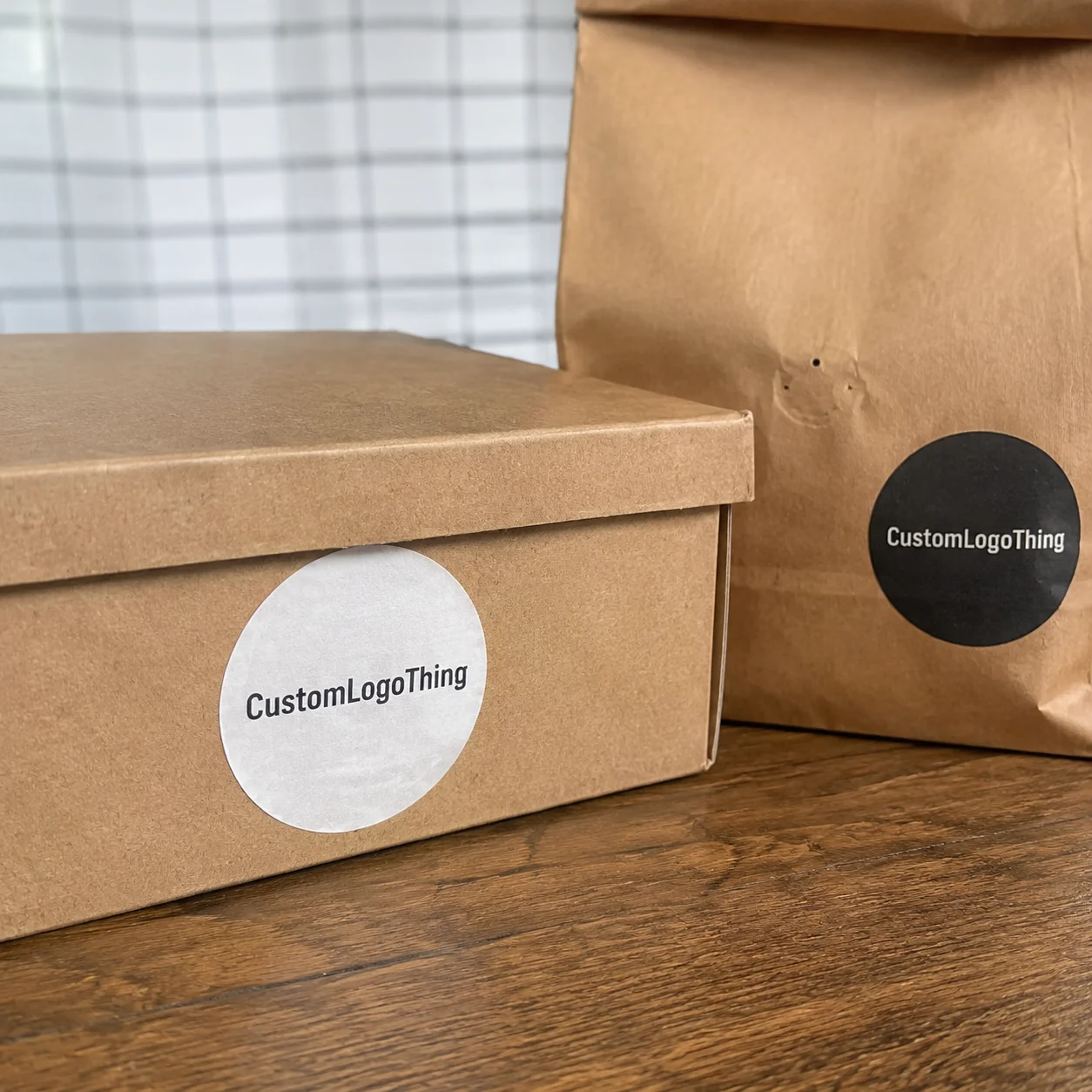
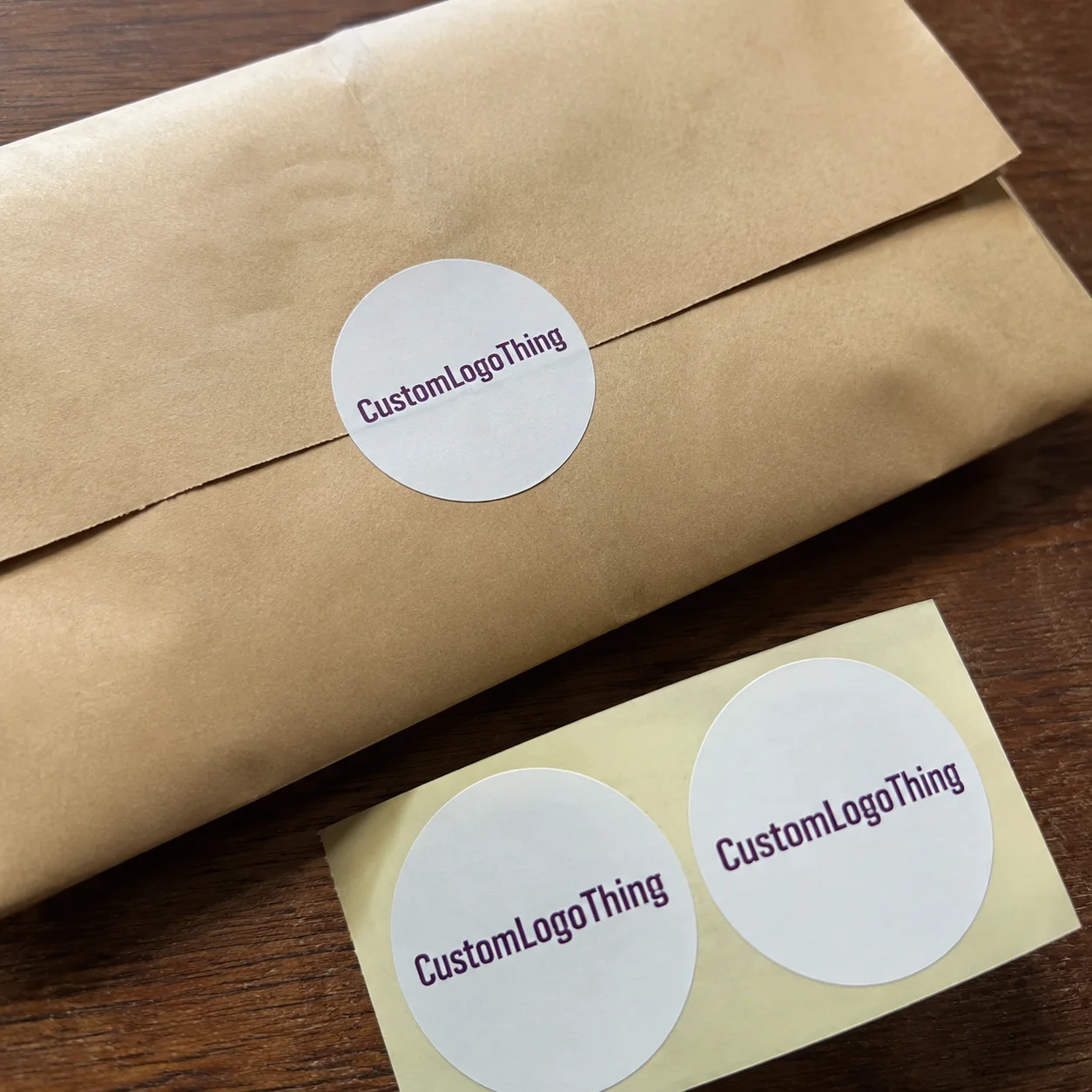
A single word can do plenty of work on packaging. More than most crowded labels, honestly. Put the right word on a mailer flap, candle jar lid, boutique bag, or small box panel, and it gives the customer a clear cue without asking them to read a paragraph.
Custom word stickers are adhesive graphics built mainly around lettering. The artwork might be a brand name, slogan, customer name, product phrase, seasonal message, social handle, or short line such as “fresh,” “sealed,” “limited,” “handmade,” or “thank you.” They are not the same as full product labels, which usually carry ingredients, barcodes, batch codes, compliance text, warnings, or a complete packaging layout.
They are also different from logo stickers. A logo sticker centers the brand mark. A word sticker centers the text. A die-cut decal follows the outside shape of the artwork, a transfer sticker uses carrier film to move separate vinyl letters onto a surface, and a roll label is usually built for repeated application on jars, bottles, cartons, or pouches. Buyers mix these terms all the time, so define the format early. It saves quote revisions later.
Common uses include packaging seals, laptop decals, event giveaways, boutique bags, product callouts, thank-you inserts, retail packaging accents, limited-drop packaging, and seasonal brand updates. Word stickers are also useful when a brand wants to refresh packaging without reprinting cartons, sleeves, or printed mailers. If you already buy Custom Labels & Tags, text-based stickers can work beside them as flexible accent pieces, not replacements for required product information.
The catch: short text designs are unforgiving. Thin strokes, tight letter spacing, tiny punctuation, and delicate script fonts expose every printing and cutting limitation. A 1.5-inch sticker with bold sans-serif lettering may print and cut cleanly. The same size in a hairline script can be hard to read, annoying to weed, and easy to damage during application. Pretty on screen does not always mean production-friendly. Screens lie for a living.
How Text-First Sticker Production Steps Actually Work
The production path looks simple: artwork review, proofing, material selection, printing, cutting, finishing, quality checks, packing, and shipping. The smooth orders are the ones where size, material, quantity, application surface, and deadline are confirmed before the file enters production.
Artwork is the first gate. Clean vector files such as AI, EPS, or print-ready PDF are preferred because letter edges stay crisp and cut paths can be built accurately around the text. High-resolution raster files can work for printed stickers, usually at 300 dpi at final size, but they are less flexible if the design needs resizing, contour cutting, or spot-color adjustment.
For short runs, digital printing is common. It handles full color, multiple designs, and lower quantities without plate costs. For larger runs, flexographic printing may reduce unit cost on roll labels, especially for simple spot-color artwork. Screen printing can make sense for certain vinyl decals, dense white ink, specialty inks, or bold outdoor designs. The best method depends on quantity, color target, material, durability needs, and whether the stickers are rolled, sheeted, or individually cut.
Cutting is where text-first designs need a hard look. Contour cutting follows the shape around the artwork. Kiss cutting cuts through the sticker layer but leaves the backing liner intact, which works well for sticker sheets. Die cutting uses a shaped tool or digital cutting path to create the final outline. Small interior spaces inside letters such as “a,” “e,” “o,” and “R” need enough clearance. On vinyl transfer designs, tiny islands can lift, tear, or stay behind on the liner.
During proofing, check spelling first. Then check capitalization, font substitution, cut line placement, final size, background color, bleed, material, finish, adhesive, and packing format. The proof should show whether the stickers arrive on rolls, sheets, or as individual pieces. That detail affects application speed, storage, and cost more than many buyers expect.
Quality control should not be mysterious. For text stickers, typical checks include spelling, registration, color consistency, cut alignment, adhesive bond, liner release, edge lifting, scuffing, and pack count. If the sticker uses white ink under color on clear film, registration between the white layer and color layer matters. A slight shift can leave a white halo around the lettering. Sometimes that is intentional. Usually it is not.
Production callout: Lead time and cost usually improve when the supplier receives outlined vector artwork, a clear target size, and a real description of the surface, such as “matte laminated paperboard box” or “curved amber glass jar,” not just “packaging.”
Materials, Adhesives, and Finishes That Change Performance
Material choice decides how the sticker looks on day one and how it behaves after handling, refrigeration, sunlight, moisture, or shipping abrasion. Paper is economical and works well for indoor packaging, bakery boxes, tissue seals, stationery, and short-term promotions. It can look excellent. It is not the first choice for wet hands, oily surfaces, or outdoor use.
BOPP, a polypropylene film, is a strong option for moisture-resistant product packaging. White BOPP is common for jars, bottles, pouches, and personal care packaging. Clear BOPP gives a printed-on look when the surface underneath is smooth and the design has enough contrast. Vinyl is more flexible and durable, so it fits longer-life decals, equipment labels, laptops, helmets, windows, and outdoor exposure better than basic paper.
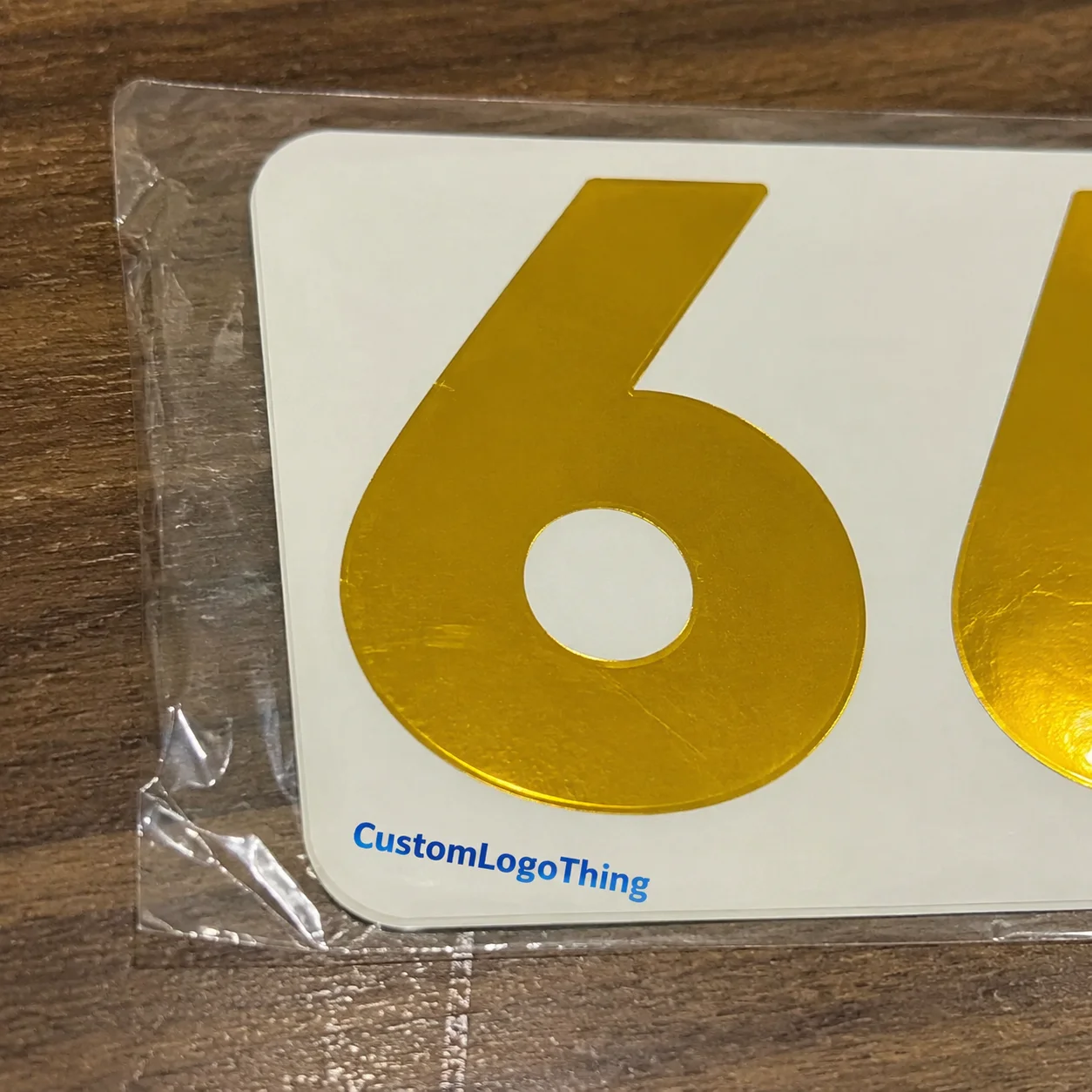
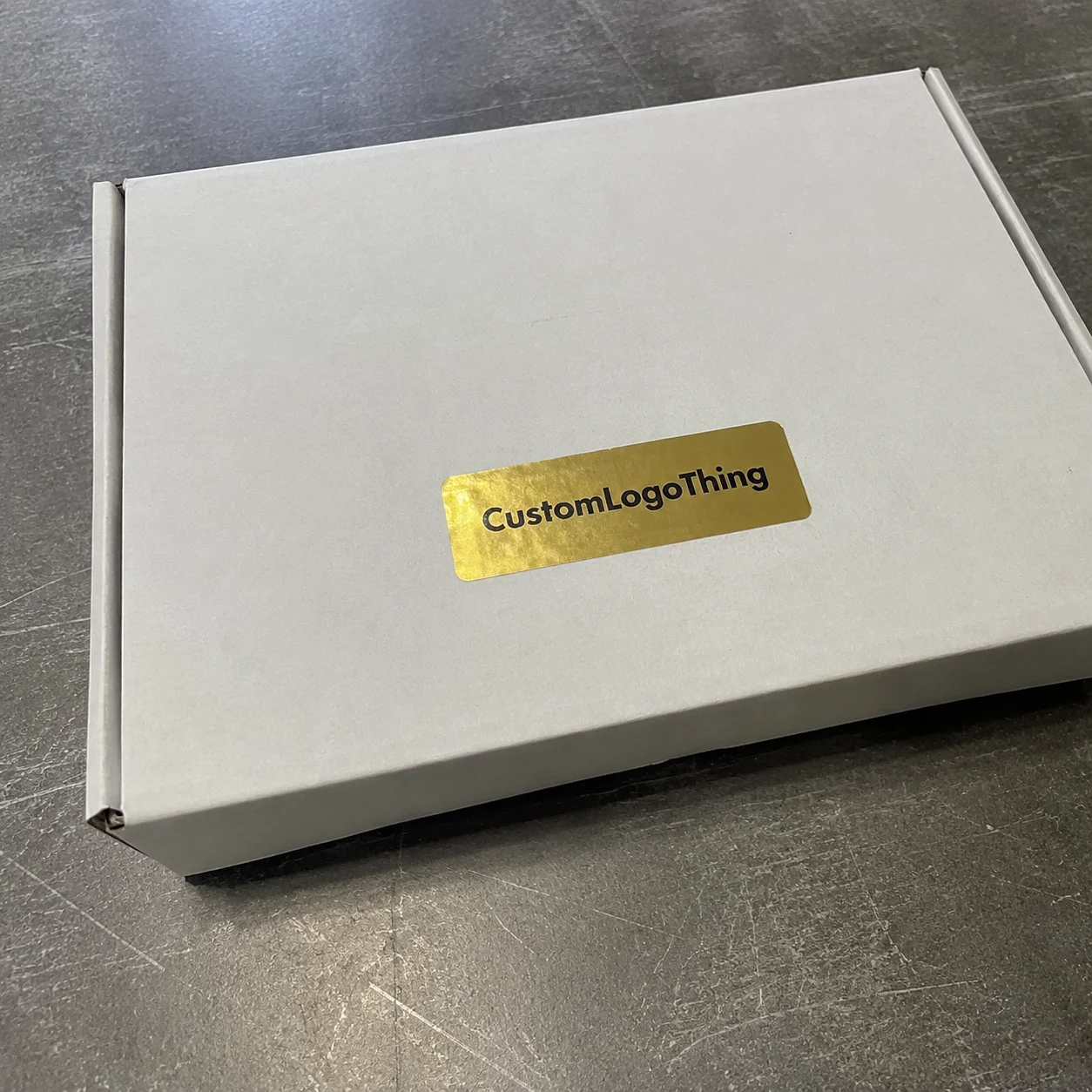
Kraft stock gives a natural, uncoated look, but fine text can soften because the surface is less bright and often more absorbent than white film. Foil and metallic stocks create shelf impact, though they can reduce readability if thin lettering sits over a reflective background. Holographic films and textured papers should be tested with the actual word design. Swatch cards are useful, but they do not show how your 10-letter script logo behaves at final size.
Adhesive matters as much as face stock. Permanent adhesive is designed to stay put on cardboard, coated paperboard, glass, plastic, or metal. Removable adhesive is useful for temporary promotions, but “removable” does not guarantee clean removal from every surface. Porous paper, weak coatings, and rough kraft can grab adhesive fibers. Freezer-grade adhesive is built for cold application or cold storage. Repositionable adhesive gives the user a short window to adjust placement before final bond strength develops.
| Material | Best Use | Typical Strength | Watch-Out |
|---|---|---|---|
| Paper | Indoor boxes, bags, tissue, inserts | Low cost and easy printing | Limited water and scuff resistance |
| White BOPP | Jars, bottles, pouches, retail packaging | Moisture resistance and crisp color | Needs correct adhesive for curved plastics |
| Clear Film | Glass, clear boxes, premium package branding | Printed-on appearance | May need white ink under color |
| Vinyl | Decals, laptops, windows, outdoor use | Durability and flexibility | Higher cost than basic paper |
| Foil or Metallic | Gift packaging, limited drops, luxury accents | High visual impact | Fine text can lose contrast |
Finish controls touch and protection. Matte reduces glare and tends to feel more understated. Gloss increases color pop. Soft-touch lamination feels premium but can show oils from fingers. UV coating and lamination can improve scuff resistance, while holographic or metallic effects create strong movement under light. For heavier handling, ask whether the printed layer is protected by coating or laminate instead of leaving exposed ink to take the abuse.
Readability gets under-discussed. Dark inks on clear stock may disappear on amber jars or black mailers unless white ink is printed underneath. Thin gold foil on kraft can look elegant up close and weak from three feet away. Match the construction to the job: paper for economical indoor use, BOPP for moisture resistance, vinyl for longer-life decals, and clear film for that direct-print look on smooth product surfaces.
Pricing, MOQ, and Unit Cost Drivers to Know
Sticker pricing is shaped by size, quantity, material, ink coverage, finish, cut complexity, setup work, proofing needs, and packing format. A simple 2-inch round paper sticker on sheets costs less than an intricate vinyl word decal with tiny separated letters, metallic foil, and individual trimming. Obvious, yes, but the reason is mostly setup and handling, not only raw material.
Unit cost drops as quantity rises because artwork review, proofing, press calibration, material setup, cutting setup, and packing are spread over more pieces. As a working range, a basic 2-inch paper or BOPP sticker might land around $0.18-$0.35 per piece at 1,000 units, then drop closer to $0.06-$0.14 at 10,000 units, depending on finish, print coverage, and format. Intricate vinyl decals, foil work, or individually cut pieces can run higher, often $0.40-$1.50+ each at lower quantities.
Those ranges are not universal price promises. Freight, rush timing, proof changes, specialty adhesives, color matching, and manual packing can all move the number. A roll of 5,000 simple labels is not priced like 5,000 loose decals counted into bags. Same quantity. Different labor.
Minimum order quantity, or MOQ, should be viewed through testing risk. A low minimum is useful for checking size, adhesive, and placement. A larger production run makes sense after the design has been applied to the real package and reviewed under real lighting. The wrong 10,000-piece order is far more expensive than a small pilot run that reveals a weak font or poor adhesive match.
Ask for two or three quantity tiers. A quote at 500, 2,000, and 5,000 pieces often shows the price break clearly. If the design is stable and usage is predictable, a higher run may be the better value. If the wording changes often, stay flexible and avoid buying more than you can use before the campaign, season, or product variant changes.
For an accurate quote, provide dimensions, quantity, material preference, artwork file, intended surface, finish, packing format, and deadline. If you are building a full branded packaging program with stickers, inserts, mailers, or custom printed boxes, it also helps to review related Custom Packaging Products together so sizing and visual hierarchy stay consistent.
Timeline and Lead Time from Artwork to Delivery
Lead time usually starts after proof approval, not after the first quote request. That distinction saves headaches. Production cannot begin until artwork is approved, size is locked, material is selected, quantity is confirmed, and the proof is signed off.
A straightforward digitally printed sticker order may take about 2-4 business days for file review and proofing, then 5-10 business days for production after approval, plus transit. More complex work can take longer. Foil stamping, specialty stocks, custom dies, heavy lamination, large quantities, or exact spot-color matching can push production into a 12-20 business day range, depending on capacity and material availability.
Several things slow orders down: missing fonts, low-resolution screenshots, absent cut lines, unclear dimensions, multiple proof revisions, specialty adhesives, and freight constraints. If the sticker must hit a launch date, event, subscription box drop, farmers market season, retail reset, or holiday packaging change, build the calendar backward from the delivery date, not the artwork handoff date.
Rush production may be possible for simple shapes on stocked materials. It gets risky with exact color matching, complex die-cut lettering, freezer adhesive, clear film with white ink, or metallic effects. The more variables involved, the more valuable a small sample or press proof becomes. Standards from groups such as ISTA are useful reminders that packaging performance includes transit conditions, not just how a sticker looks on a desk.
For launch planning, use a practical buffer: one week for internal design review, several days for proofing, production time after approval, transit, and at least a few days for application testing. If the sticker is going on cold jars, flexible pouches, textured mailers, or coated cartons, apply a sample and let it sit for 24-72 hours before judging bond strength. Adhesive can look fine after five minutes and fail after a day of real handling. Annoying, but true.
Common Design and Ordering Mistakes That Hurt Results
The most common mistake is making the word design too small or too thin. A design that looks clean at 600% zoom may fail at final size. Very thin scripts, tight counters, tiny dots over lowercase letters, and narrow punctuation can be difficult to print, cut, weed, or read. For small stickers, bolder fonts usually survive production better.
Low-resolution files create another problem. Screenshots, compressed JPEGs, and exports without proper bleed can produce soft edges and slow proofing. Canva files can work if exported correctly, but flattened artwork with no outlined fonts and no cut line may require cleanup. If a font is missing, software may substitute a similar-looking font. “Similar” is not good enough for brand lettering.
Material selection based only on appearance is risky. A beautiful uncoated paper sticker may not hold up on a refrigerated glass bottle. A removable adhesive may not behave cleanly on a porous kraft box. A glossy film may look too reflective on premium matte retail packaging. Surface, temperature, handling, and expected life should drive the choice.
Spacing mistakes are easy to miss before production. Tiny gaps between letters can close up with ink spread or become weak points during cutting. Connected script can tear if the stroke is too narrow. Small interior pieces may lift during weeding or stay stuck on the liner during application. For transfer-style vinyl word decals, minimum stroke width and spacing should be confirmed before approval.
Color mistakes are just as common. Screen color does not match print exactly because monitors emit light and printed materials reflect it. Clear stickers on dark surfaces need white ink planning if the color must stay bright. Low-contrast combinations, such as tan ink on kraft or pale gray on clear film over a silver pouch, can disappear in real retail lighting.
Application format can cause trouble too. Rolls are efficient for repeated hand or machine application, but core size, unwind direction, and label spacing matter. Sheets are convenient for small teams and mixed designs. Individually cut stickers feel finished for giveaways and inserts, but they usually cost more because of cutting, sorting, and packing. Choose the format based on how people Will Actually Use the sticker, not just how it looks in a product photo.
Testing solves many of these problems. Apply the sticker to the real package or product surface, rub the edge with a thumb, bend the package if it is flexible, chill it if it will be refrigerated, and check readability from normal viewing distance. ASTM test methods and material data sheets can help for technical validation, but a simple application test often catches the obvious problems before money is tied up in a full run. For sustainability claims or paper sourcing questions, references such as FSC can also help buyers ask better questions about certified materials.
Next Steps Before You Request a Sticker Quote
Before requesting a quote, gather the details that affect production. You do not need every technical answer, but you should know what the sticker must do. A clear brief keeps the conversation practical and prevents a supplier from quoting the wrong construction.
- Final wording: Confirm spelling, capitalization, punctuation, and whether the text is locked.
- Preferred size: Measure the actual package with a ruler instead of guessing from a screen mockup.
- Quantity range: Ask for two or three tiers, such as 500, 2,000, and 5,000 pieces.
- Application surface: Describe glass, plastic, coated paperboard, kraft, metal, pouch film, or corrugated board.
- Use condition: Note indoor use, outdoor exposure, refrigeration, water contact, oil contact, or heavy handling.
- Finish and format: Specify matte, gloss, clear, foil, lamination, sheets, rolls, or individual pieces.
- Deadline and delivery location: Include the date stickers must arrive, not just the event date.
Measure carefully. A half-inch difference can change readability, price, and how the sticker feels on the package. A 1-inch word sticker may be fine for sealing tissue paper, while a 3-inch version may be better for a mailer flap or retail bag. If the same design will be used across boxes, bags, jars, and mailers, create two or three size options for proof review.
Send brand colors, font files, outlined vector artwork, and reference photos showing where the sticker will be applied. Photos are especially useful for curved jars, textured boxes, coated mailers, and flexible pouches. They help the production team spot issues with contrast, bending, adhesive selection, or cut shape before the proof is approved.
Review the proof like a production document, not a casual mockup. Check spelling, scale, cut line, material, color notes, quantity, sheet or roll format, and shipping details. If the proof says matte white BOPP on rolls and you expected individual glossy vinyl decals, stop and correct it before approval.
Custom word stickers are small pieces of packaging, but they carry real brand responsibility. Prepare the final text, target size, artwork file, application surface, quantity range, finish preference, and delivery deadline before contacting a manufacturer. You will get a cleaner quote, a more useful proof, and a sticker that behaves the way the package needs it to behave.
FAQ
What file type is best for custom word stickers?
Vector files such as AI, EPS, or PDF are best because they keep letter edges sharp and allow clean cut lines. If vector artwork is not available, use a high-resolution PNG or PSD at the final print size, usually 300 dpi or higher, but expect extra file review. Outline fonts before sending artwork or include the font files so the lettering does not change during proofing.
How small can custom text stickers be and still look clean?
The safe size depends on font style, stroke thickness, material, and cut shape, not only the overall sticker dimensions. Very thin scripts, tiny punctuation, and tight letter spacing can become difficult to cut or read below small sizes. A printed proof or sample is useful when the design has fine lines, small caps, or delicate connected letters.
Are vinyl word stickers better than paper word stickers?
Vinyl is better for durability, moisture resistance, outdoor use, and surfaces that receive frequent handling. Paper is often more cost-effective for indoor packaging, bakery boxes, tissue seals, thank-you stickers, and short-term promotions. The best choice depends on surface, environment, budget, and how long the sticker needs to stay attractive.
How much do custom word decals usually cost?
Cost depends on size, quantity, material, finish, color coverage, cut complexity, and whether pieces are sheeted, rolled, or individually cut. Simple paper or BOPP stickers in higher quantities usually have a lower unit cost than specialty vinyl, foil, or intricate die-cut designs. Requesting quotes at multiple quantities helps reveal the best price break before committing to a larger run.
How long does it take to make personalized word stickers?
Turnaround depends on artwork readiness, proof approval speed, material availability, order size, finishing needs, and shipping method. Lead time usually begins after the buyer approves the proof, not at the first quote request. For launches or events, allow extra time for sampling, internal review, production, quality checks, and transit.