Search demand around Custom Woven Labels etsy points to a very specific buying behavior: small brands want a label that feels finished, lasts through wear, and does not require industrial-scale ordering. That makes sense. A woven label is tiny, but it can change how a product is perceived the moment a buyer picks it up, turns it over, and inspects the seams.
This is one of those packaging decisions that gets underestimated because the unit cost looks small. Yet a label can influence the entire brand impression in the same way a carefully chosen box, insert, or mailer can. A garment may be excellent, but if the label frays, curls, or looks crowded, the product feels less complete. Small details do a disproportionate amount of work.
For apparel, bags, baby products, and home textiles, woven labels also serve a practical purpose. They identify the brand, carry size or care information, and stay in place longer than a removable hang tag. That combination is why buyers keep returning to Custom Woven Labels instead of treating them as an afterthought.
What custom woven labels on Etsy actually are
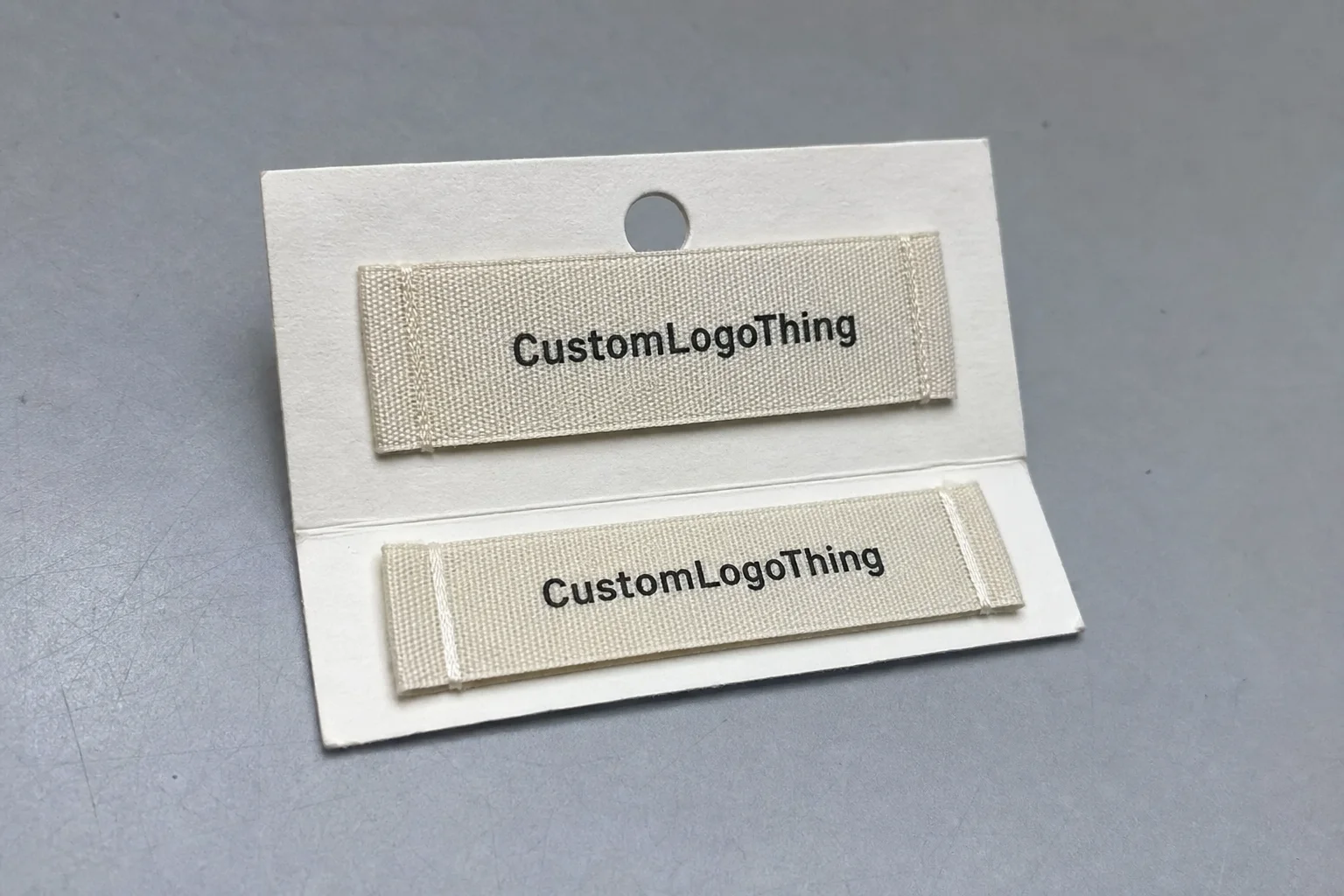
A woven label is made by interlacing threads so the artwork becomes part of the fabric structure. It is not printed on top of the surface. That difference matters, because it gives woven labels a different feel, better edge integrity, and generally stronger wash performance than many printed alternatives.
People searching for Custom Woven Labels etsy listings are usually looking for two things at once: low minimums and flexible customization. Etsy sellers often cater to small makers, which means the ordering process can be more forgiving than a traditional industrial program. You may see options for small batch orders, proof assistance, and multiple fold styles without needing to commit to a huge run.
That does not make woven labels the only option worth considering. Printed labels can work better for intricate art, gradients, or tiny text. Satin labels feel softer against skin and are common in neck labels. Cotton labels create a more natural look. Heat-transfer labels remove the sewn-in tag altogether, which can be useful for athletic wear or children’s items. The right format depends on the product, the artwork, and how much information the label needs to carry.
From a branding standpoint, the advantage of woven labels is consistency. A label that matches the rest of the product presentation helps the item feel deliberate instead of assembled. That matters in retail packaging, but it also matters on a shelf, in a marketplace booth, or in a customer’s hands after several washes.
A well-made woven label usually does three jobs at once: it identifies the brand, improves the finish, and makes the item feel more established.
That is why labels get discussed alongside packaging even though they live inside the product. They are part of the overall presentation system. If the outer packaging says “careful brand,” the label has to say the same thing.
How the ordering and production process works
Most custom woven labels etsy orders follow a fairly standard workflow. You choose a listing, submit artwork or a simple description, review a proof, approve production, and then wait for weaving, finishing, and shipping. The exact tools vary by seller, but the sequence is usually the same.
The steps are usually straightforward:
- Choose a listing based on label type, minimum order, and fold style.
- Send a logo file, brand name, or artwork direction.
- Select size, color count, quantity, and finishing style.
- Review the digital proof for spelling, proportions, and placement.
- Approve production after confirming the final spec.
- Receive the labels and test them on the actual product.
Most delays happen before production starts. Unclear artwork, missing dimensions, and late changes slow down approvals faster than the actual weaving does. If the seller is overseas, shipping time becomes the second major variable. A seller may respond quickly, but if the proof goes through three revisions, the calendar still stretches.
Typical timing breaks into three parts: proofing in 1 to 3 business days, production in roughly 7 to 15 business days, and shipping that can range from a few days domestically to much longer across borders. Simple reorders are usually faster. Specialty folds, intricate artwork, or thicker label constructions tend to land at the slower end of the range.
The best way to manage this is to treat the label order like any other packaging spec. Confirm the actual size, fold type, thread colors, and orientation before you approve anything. A mockup that looks fine at screen size can become unreadable once reduced to a real woven tag.
For buyers building a broader packaging system, it helps to verify related material standards too. If your outer packaging uses certified paper, confirm whether your supplier can provide relevant documentation such as FSC references at fsc.org. If you are testing shipping performance as part of a larger fulfillment setup, ista.org offers useful packaging and transit testing context. Those references do not apply to every label order, but they matter when the label is one part of a larger supply chain.
Cost, pricing, and MOQ factors to compare before you buy
Price is where many buyers make their first mistake. A listing can look inexpensive until the hidden costs appear: setup fees, artwork conversion, proof revisions, shipping, customs, or rush charges. The headline price rarely reflects the real landed cost.
For custom woven labels etsy orders, minimum order quantity is usually the biggest pricing lever. Smaller MOQs often cost more per label because setup and coordination are spread across fewer pieces. Larger orders lower the unit price, but they also tie up more cash and create more inventory risk if the design changes later.
As a rough benchmark, buyers often see ranges like these. Actual pricing varies by seller, region, weave complexity, and finishing style, but the pattern is consistent across the category.
| Order size | Typical unit range | Common notes |
|---|---|---|
| 100-200 pieces | $0.35-$0.80 per label | Small-run handling usually pushes the unit price up |
| 300-500 pieces | $0.18-$0.40 per label | Often the practical range for small brands balancing cost and flexibility |
| 1,000+ pieces | $0.08-$0.22 per label | Lower unit cost, but more inventory on hand |
There are other cost variables that deserve attention. Digitizing or artwork conversion may be billed separately. Some sellers charge for sample development or extra proof rounds. Shipping can be deceptively cheap if the listing price excludes it, and international transit can add customs charges that do not show up until the parcel arrives. None of these are unusual, but they can turn a good-looking listing into a mediocre deal.
The cleanest comparison is total landed cost per usable label. A label listed at $0.14 each with proofing included and reasonable shipping can outperform one listed at $0.11 with add-ons that show up later. That logic applies across product packaging generally: compare the whole order, not the sticker price.
One more practical point. If the design is still untested, a small order can be smart even if the unit price is higher. Paying a little more for 200 labels is often cheaper than discovering, after a 1,000-piece run, that the brand name is too small or the fold does not suit the garment.
Design and spec choices that affect quality
Label size is the first quality decision, not the last. If the artwork is forced into a space that is too small, the weave cannot hold every detail cleanly. Thin strokes blur, tiny letters close up, and the final label may look busy even if the digital art was polished.
Thread count and weave density matter because they determine how much detail the label can actually reproduce. Higher detail generally needs finer weaving, and that can raise cost. Buyers often expect a complex logo to translate perfectly at 1 inch wide, but woven fabric has limits. Once the artwork gets too intricate, simplification usually produces a better result than trying to preserve every line.
Color contrast is the next big quality factor. Dark-on-light or light-on-dark combinations are the easiest to read at small sizes. Soft contrast may look elegant on a screen, but on a woven tag it can disappear, especially after sewing and washing. If the logo depends on subtle tonal shifts, a woven label may not be the best format.
Fold style changes how the label behaves on the product. End fold is common on side seams and hems. Center fold works well for neck labels because it can wrap over an edge. Loop fold can be useful where a hanging or sewn-in loop effect is desired. Straight cut labels are flexible, but they demand cleaner finishing and more careful attachment.
Placement deserves more attention than it usually gets. A neck label has to sit comfortably against skin. A side seam label should not distort drape or create a hard edge that rubs. On accessories, label placement may be partly decorative, which changes how large and visible the label should be. The same brand can need different specs for different product categories.
What usually reproduces best
Simple usually wins. Clear wordmarks, bold type, and one or two colors tend to survive the reduction from artwork to thread better than ornate symbols or tiny decorative details. Script fonts can work, but only when the strokes are thick enough to remain legible at actual size.
If a label has to stay readable at 1 to 1.5 inches wide, the logo often needs to be simplified before production. The easiest way to improve quality is not to add more detail; it is to remove everything that does not help the brand name read clearly. On a woven label, restraint usually looks more premium than crowding.
Step-by-step: how to order the right label the first time
Start with the product, not the label. Measure the available sewing space on the garment or accessory before deciding on dimensions. A seam that can handle a 1-inch tag may not comfortably fit a 1.5-inch one, and a fold that works on a sweatshirt may feel awkward on a lightweight blouse.
Next, decide exactly what the label must communicate. Brand name only? Brand name plus size? Care instructions? Country-of-origin information? The more information you ask a small woven label to hold, the more likely the layout becomes crowded. For many buyers, fewer words produce a better result and a cleaner sewing experience.
Prepare the artwork in the cleanest format available. Vector files are ideal because they scale better and preserve edges. If you only have a raster file, make sure it is high resolution and not overly compressed. Ask the seller for a proof showing true dimensions, thread colors, and the actual fold configuration. A proof viewed at screen size is useful, but it does not tell the whole story.
Before approving production, check the following:
- Spelling is correct.
- Brand name is centered and readable.
- Dimensions fit the sewn location.
- Fold style matches the intended use.
- Colors provide enough contrast.
- Shipping method and arrival date are clear.
If the labels are for a premium launch or a product line that will be restocked, a sample or small test run can be money well spent. It costs more up front, but it reduces the risk of discovering a problem after a full production cycle. That is especially true when labels are part of a coordinated system with Custom Labels & Tags or other branded package elements.
There is also a packaging coordination issue that gets overlooked. A black woven label may look excellent against recycled mailers and matte inserts, while a glossy satin tag can feel disconnected from a kraft-based line. The best results usually come from matching the label finish to the rest of the product presentation rather than treating it as a separate purchase.
Common mistakes buyers make with custom woven labels Etsy listings
The most common mistake is judging the label by listing photos alone. A polished mockup can hide the actual size, fabric hand, and finishing style. Two labels can look almost identical in an image and behave very differently once sewn into a garment.
Another frequent error is sending artwork that is too detailed for the available width. Fine gradients, thin script, micro-icons, and compressed typography are easy ways to lose clarity. If the logo relies on tiny detail to stay recognizable, it may work better as a printed tag, hang tag, or insert rather than as a woven label.
Buyers also confuse the proof with the finished product. A proof is a planning document, not a finished sample. Thread sheen, tension, edge finish, and weave tightness all affect how the final label looks and feels. Asking how the label is finished is not a formality; it is part of quality control.
Wash durability is another area where assumptions create problems. Woven labels generally hold up well, but the attachment method matters, and so does the garment itself. A label sewn into a delicate item has different performance expectations than one attached to workwear or children’s clothing. If the product will be washed often, the sewing method and thread quality need to be appropriate for that use.
Timing mistakes are just as common. Buyers often order labels after production has already begun, then discover they cannot sew or photograph the item on schedule. Labels should be in hand before final assembly starts. That sounds basic, but it is one of the easiest ways to avoid unnecessary delay.
The last problem is overbuying before the spec is proven. A large order can look efficient on paper, but if the color balance or fold style is wrong, the savings disappear quickly. With custom woven labels etsy orders, the safest path is often a smaller first run, followed by a larger reorder once the spec has been tested on real product.
Expert tips for better results, faster approvals, and lower waste
Use one strong brand element. That may be the wordmark, a short logo, or a simple icon. Trying to force every brand message onto a label the size of a postage stamp usually hurts legibility more than it helps recognition. Cleaner labels are easier to approve and easier to sew.
Order slightly more than the immediate need if the line is in active production. The jump from 200 to 300 pieces is often modest enough to absorb, while the extra quantity gives room for test seams, handling loss, and unexpected reorder demand. That is not waste; it is inventory planning.
Ask for a true-size proof, not just a pretty mockup. A digital image can hide a lot. At real size, text spacing, margin balance, and fold orientation become much easier to judge. Many label issues are obvious only when the art is shown at the exact dimensions it will be woven.
Keep the color palette consistent with the rest of the line. If the apparel range uses soft neutrals, a high-contrast label may feel out of place. If the brand is bold and graphic, a pale label can disappear. The label should feel like part of the same design system, not a separate experiment.
Save the approved spec in a format that can be reused. Record size, fold, thread colors, artwork version, quantity, and attachment method. That reduces reorder errors and speeds up future production. It also helps when the same brand is managing multiple SKUs across boxes, inserts, and sewn-in branding.
For sustainability claims, stay precise. A woven label is durable, but durability alone does not make it environmentally preferable. If you are making claims about eco-friendliness, tie them to documented materials or supplier disclosures rather than vague assumptions. EPA resources at epa.gov are useful for framing packaging and waste conversations without overstating what a label can claim.
Finally, do not let the lowest unit price set the buying decision by itself. A slightly more expensive label with clearer proofing, better communication, and a cleaner finish can save money by reducing reorders and rejected stock. That is the kind of cost difference that rarely shows up in a product listing, but it shows up quickly in production.
Next steps: compare specs, request proofs, and place the order
Build a short buying brief before contacting sellers. Include label size, fold, colors, quantity, attachment method, intended product, and any required information such as size or care details. A clear brief shortens the proof cycle and reduces back-and-forth.
Then compare at least two options using the same criteria: price, minimum order, lead time, proof process, shipping method, and what is actually included in the quote. If one listing looks cheaper but excludes artwork prep or charges separately for revisions, the comparison is not equal.
If the labels are going on a launch product, premium item, or wholesale order, ask for a proof or sample before committing to the full run. The cost of confirming a design is small compared with the cost of correcting hundreds of unreadable labels. If the label is part of a broader packaging program, align the order with your Custom Labels & Tags plan and the rest of your Custom Packaging Products so the visual system stays consistent.
Keep the production calendar visible. Labels should arrive before sewing begins, not after. Build backward from the ship date, then leave room for proof changes and transit delays. That timeline discipline is often the difference between a smooth launch and a week of avoidable scrambling.
Once the proof is approved, lock the spec and keep it unchanged for reorders unless you have a clear reason to revise it. Consistency is cheaper than improvisation. It also makes the product line feel more established from one release to the next. Buyers notice when the details stay steady.
If you want a product to feel finished, start with the parts that remain visible long after the sale. A well-chosen woven label is one of the smallest branding decisions a maker can make, and one of the easiest to get wrong if the spec is rushed.
How do custom woven labels Etsy sellers differ from printed labels?
Woven labels are made by weaving threads into the design, which usually gives them better durability and a more premium appearance. Printed labels use ink on fabric and can handle more detail, but they may wear differently depending on the material and wash cycle. For brand names, logos, and apparel labels that need to last, woven labels usually make more sense.
What is the usual MOQ for custom woven labels on Etsy?
MOQ varies by seller, but many listings are set up for small businesses and handmade brands rather than large factories. Lower minimums often come with a higher unit price, while larger quantities lower the cost per label. Check whether setup, artwork conversion, or proofing is included before comparing offers.
How long does turnaround usually take for custom woven labels Etsy orders?
Turnaround depends on proof approval speed, design complexity, production queue, and shipping distance. A simple reorder is usually faster than a first-time custom job because the artwork and specs are already approved. Add extra time if the labels are needed for a launch, market date, or seasonal release.
Can I use custom woven labels Etsy for small clothing brands?
Yes. They are a common choice for small clothing brands because they provide professional branding without requiring huge order volumes. They work well for neck labels, side seam labels, hem tags, and accessory branding. The main limitation is design complexity, so simple artwork usually performs best.
What should I check before approving a proof for custom woven labels Etsy?
Check spelling, logo placement, dimensions, fold style, and color contrast carefully. Make sure the proof matches the actual woven size rather than just a scaled image. Confirm the production timeline, shipping method, and final quantity before giving approval.


