Custom zip lock plastic bags printed: what buyers should compare before they place an order
Custom Zip Lock Plastic Bags printed can change how a product is judged before the customer has touched the contents. The zipper is one of the first physical interactions in the package, which means the bag is doing brand work, not just holding inventory. That distinction matters more than many buyers expect.
In retail packaging, sample kits, refill programs, and bundled accessories, the bag often becomes the first proof that the product was packed with care. A well-made printed resealable bag can look more deliberate than a plain pouch with a sticker, especially when the contents need to stay visible. It can also reduce secondary labeling, which matters when a team is packing many SKUs and cannot afford extra steps that slow fulfillment.
If the package is handled several times before the product is seen, the closure, the film, and the print have already started selling it.
Custom zip lock plastic bags printed: why buyers notice the difference fast
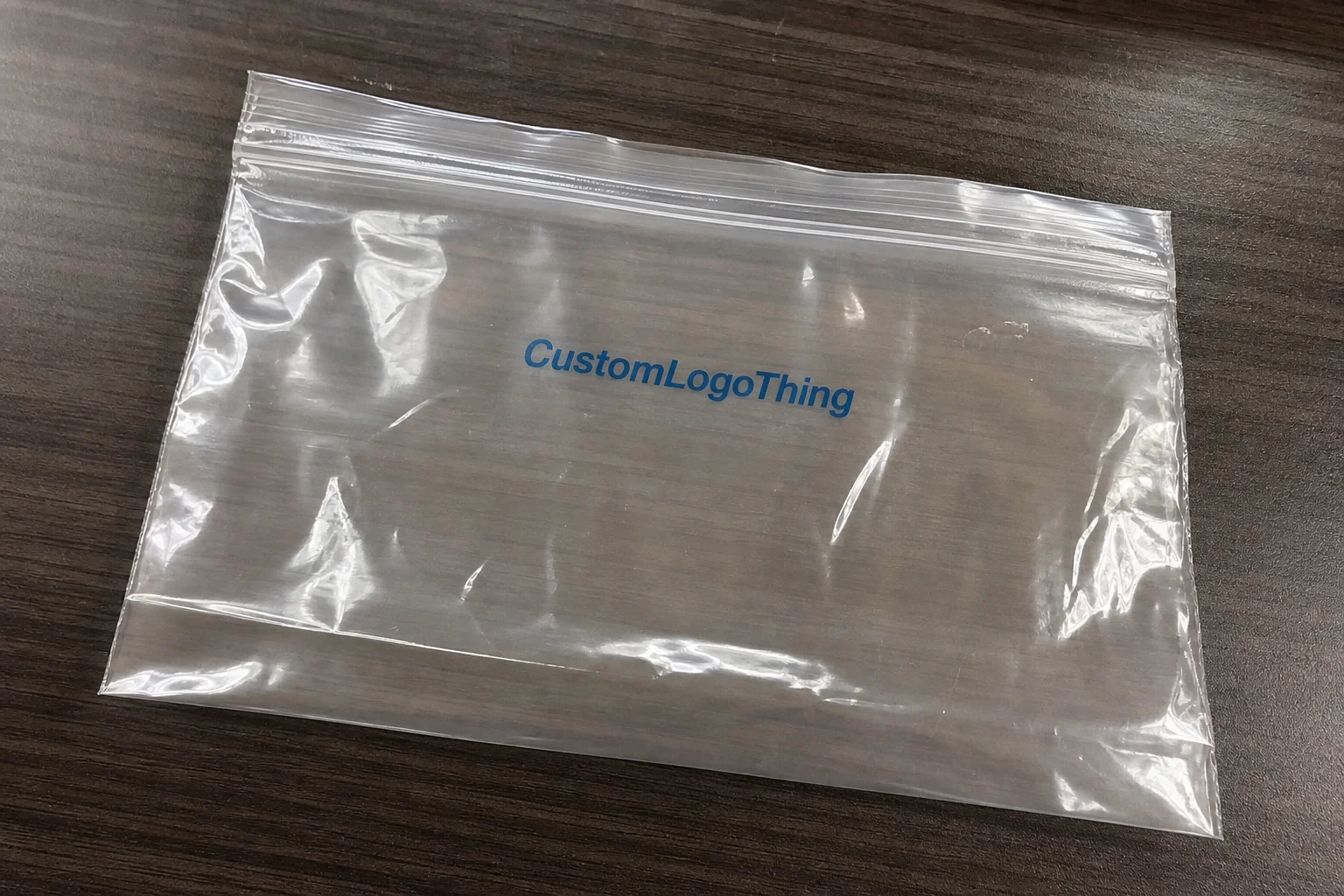
The practical appeal is straightforward: the package carries more information without turning into a billboard. A printed zipper bag can show a logo, product name, barcode space, instructions, and compliance copy while still leaving the contents visible. That combination is especially useful when shoppers want to confirm color, quantity, texture, or variant before opening the pack.
Buyers usually notice three things first. They notice how the closure feels. They notice whether the print looks intentional or rushed. They notice whether the product is easy to inspect through the film. Those details are why custom Zip Lock Plastic Bags printed often outperform plain bags with a label stuck on afterward. The label may be cheaper at first glance, but it adds handling, alignment risk, and another point of failure.
Clear film is a strong choice when visibility drives sales or when the contents need to be checked during receiving. Opaque or partially printed bags are stronger when shelf presence matters more than visibility, or when the brand needs a cleaner front panel for graphics. Neither option is universally better. The right answer depends on what the bag has to prove in the first few seconds.
That is where a lot of packaging decisions become clearer. If the product needs to look premium, a printed zipper bag can support that with very little visual noise. If the contents are colorful or fragile, the pack may need more transparency and less ink coverage. If the bag is going through warehouse handling, it may need thicker film before it needs extra decoration. Function leads; appearance follows.
How the zipper, film, and print layers work together
A zipper bag is a stack of choices, not a single spec. Closure style, film gauge, seal strength, gusset shape, and print method all influence the final result. If one layer is off, the bag can feel cheap even when the artwork looks polished on screen. Buyers usually discover that only after the first fill or the first shipment.
The film is the foundation. Polyethylene blends are common because they balance flexibility and clarity, but thickness changes the performance profile quickly. A 1.5 mil film may be enough for light accessories, samples, or soft items. A 2.0 to 3.0 mil film is more typical for heavier contents, repeated opening, or products that need better puncture resistance. Thicker film usually improves hand feel and seal confidence, but it can also make the bag stiffer. That stiffness is welcome for some retail packs and a nuisance for others.
Printing interacts with the film in ways that are easy to underestimate. Flexible material moves slightly during production, so small text, thin lines, and tight borders need a generous safe area. Most suppliers will ask that artwork stay away from zipper tracks, bottom seals, and side seams. That is not red tape; it prevents distortion where the bag folds or heat-seals. Barcode, batch, and warning text should be placed early in the design process, not after the creative is already approved.
Print method matters too. Flexographic printing is often better for larger runs and consistent spot colors. Digital printing can be more practical for shorter runs, artwork revisions, or designs with more variation. The tradeoff is not only price. It also affects edge sharpness, color consistency, and how readable small type remains on a moving substrate. A logo that looks crisp in a PDF may lose clarity if the line weight is too thin for the film and ink system being used.
For buyers comparing packaging formats, this is a useful boundary to keep in mind. A bag is not a carton. If the product needs strict panel alignment for a detailed brand story, printed boxes may do that better. If visibility, resealability, and compact storage matter more, a zipper bag usually wins. The strongest packaging choice is the one that matches the product’s behavior instead of forcing one format to solve everything.
Material sourcing can also affect the brief. If sustainability claims are part of the sales story, ask what recycled content is actually available, what can be verified, and which parts of the pack are eligible for certified input. For transit durability, many teams look at guidance from the International Safe Transit Association before finalizing pack-out assumptions. If paper inserts or outer cartons are part of the system, the Forest Stewardship Council is relevant for the paper side of the equation.
Cost, pricing, and MOQ drivers buyers should compare
The Price of Custom zip lock plastic bags printed comes down to a few variables that add up fast. Size, film thickness, print coverage, closure type, and quantity are the obvious ones. Less obvious drivers include whether the job needs multiple plates, special color matching, a custom zipper profile, or extra proofing. Buyers who look only at unit cost often miss the real number, because setup charges can dominate smaller runs.
The right comparison starts with identical specs. Then compare the total landed cost after sampling, freight, and any plate or setup fees are included. A supplier can quote a low unit price and still be expensive once the hidden pieces appear. Another quote may look higher but end up more efficient if the supplier bundles setup cleanly or has better fill rates on the production line.
| Spec tier | Best for | Typical unit price | Setup / plate cost | Lead time |
|---|---|---|---|---|
| Small clear bag, 1-color print, 1.5 mil | Samples, lightweight accessories, short retail runs | $0.09-$0.16 at 5,000 pieces | $120-$250 | 10-15 business days after proof approval |
| Mid-size bag, 2-color print, 2.0 mil | Refills, bundled kits, mixed SKU fulfillment | $0.13-$0.24 at 10,000 pieces | $180-$350 | 12-18 business days |
| Large gusseted bag, heavier coverage, 2.5 mil | Retail packaging, premium presentation, heavier contents | $0.18-$0.32 at 10,000 pieces | $250-$500 | 14-21 business days |
Those ranges are directional, not universal. Resin costs move. Freight moves. Capacity moves. Print coverage changes the equation. Still, the table gives buyers a useful frame. A cheap-looking quote can become expensive once the fixed costs are spread across a small order. The reverse happens too: a slightly larger run can cut the per-piece cost sharply when the setup is already fixed and the line is running cleanly.
MOQ is where many packaging projects go sideways. Some buyers order too few units because the budget is tight, then pay more per piece and lose flexibility. Others order too many and sit on inventory that no longer matches a label change or seasonal refresh. The better question is not what the minimum is. It is what quantity gives a stable unit price without tying up cash you need elsewhere. That logic applies to printed zipper bags, mailers, and companion items alike.
One more comparison helps here. A bag with more print coverage does not always cost much more than a lightly printed one, but the setup can be the same. That means a design decision can shift value more than buyers expect. If the brand can get better shelf presence without changing the structure, the packaging budget often goes further than it would with a more expensive format.
Production steps, timeline, and turnaround expectations
The production flow is usually simple on paper: quote request, dieline review, artwork submission, proofing, sample approval if needed, production, inspection, and shipment. The delays usually come from unclear artwork, last-minute size changes, or a brand team that keeps revising copy after the proof is already circulating.
For custom zip lock plastic bags printed, the first bottleneck is often file prep. A print-ready vector file is the safest starting point because it preserves edge quality and keeps small text readable. If the supplier asks for bleed, safe zones, or panel dimensions, follow those requirements exactly. Flexible packaging is less forgiving than a rigid carton. A few millimeters can shift zipper placement, seal alignment, and logo position enough to matter.
Typical timing depends on complexity. A simple one-color run can move through proofing and production faster than a heavily printed order with color matching, special film, or multiple proof rounds. If a sample run is required, add that time. If the order ships internationally, transit may take as long as production. Buyers often say “lead time” as if it were one number. It is really two: factory time and shipping time. Keeping them separate prevents false expectations.
If faster turnaround matters, clarity helps more than pressure. Send one clean artwork version. Confirm dimensions before proofing starts. Answer questions quickly. Jobs with the fewest interruptions are usually the ones that move the fastest. The teams that stay on schedule tend to do three things well: they lock the size early, they approve one version of the artwork, and they avoid splitting decisions across too many people after production begins.
Quality control is the part many buyers skip until a problem shows up. A useful supplier should be able to explain how they check print consistency, zipper alignment, seal integrity, and panel distortion. For larger shipments, some teams also ask about transit tests or handling checks aligned with ISTA methods. That is reasonable if the bag is part of a broader fulfillment process. A good-looking bag that arrives crushed or unsealed is still a failure.
Step-by-step: choosing the right specs for the product
Start with the product, not the bag. Measure the item in its final packed state, including inserts, scoops, desiccants, cards, or accessories. Then decide whether the package needs room for repeat opening, retail hanging, or return use. A zipper bag that is too tight may protect the product but frustrate the end user. One that is too large looks loose and wastes material. Fit is not cosmetic; it is part of the brand signal.
Next, choose closure performance based on handling frequency. A retail pack that opens once and stays closed needs a different zipper feel than a refill bag that gets opened several times a week. If the bag is meant for fulfillment and reclosure, test the zipper with gloved hands, cold hands, or fast repetitive use. Closure quality on a spec sheet is one thing. Closure quality in actual use is another.
Transparency and opacity should follow the sales job. Clear film is useful when visibility matters or when contents need to be checked quickly in logistics. Tinted or opaque film works better when the brand needs stronger front-panel graphics or when light sensitivity matters. A mixed approach can work well too. Partial print coverage on a clear panel preserves visibility while creating a more deliberate branded surface. That middle ground often performs better than an all-clear or all-opaque choice.
Artwork should support function as much as appearance. Keep the layout readable from arm’s length. Leave space for SKU codes, legal copy, or QR elements if the bag will be scanned or sorted. If the design is crowded, the pack can look lower-end even when the printing itself is excellent. Flexible packaging has less visual room than a carton. Every element has to earn its place.
- Confirm the final dimensions, including gussets and headspace.
- Choose film thickness based on weight, puncture risk, and handling frequency.
- Place logos and copy inside the supplier’s safe area.
- Reserve space for barcode, batch code, or compliance text if needed.
- Request a proof on the actual material, not only a screen mockup.
If the product line is still changing, keep the packaging system flexible. Some buyers pair printed zipper bags with labels or other packaging components for variant control, then reserve custom printed bags for the SKUs that are stable enough to justify tooling. That hybrid approach is often more efficient than forcing every item into the same spec.
Common mistakes that make printed zip bags underperform
The first mistake is visual overload. A front panel packed with copy, logos, icons, and claims can make a good bag look cheap. Flexible packaging has less room than a carton, so every line needs a reason to exist. If the pack is meant for retail, leave enough space for the eye to rest. A bag that is too busy becomes harder to scan and often feels less premium than intended.
The second mistake is choosing film that is too light for the contents. That shows up as punctures, weak sealing, poor handling feel, or zipper failure during fulfillment. A savings of a few cents per unit disappears quickly if customer complaints, spoilage, or rework increase. Film thickness should reflect the product, not just the budget. For many custom zip lock plastic bags printed, a slightly heavier gauge is the safer choice if the package will move through warehouses or be reopened repeatedly.
Color mismatch is another common problem. Screens are not film, and ink behaves differently on flexible substrate than it does on a monitor. A brand that approves artwork only in a PDF can be surprised when the printed result looks darker, flatter, or less saturated. The practical fix is simple: ask for a physical proof or at least a material sample under the lighting the package will actually see. That extra step saves more trouble than most buyers realize.
Another mistake is ordering too few units to cover testing, spoilage, or future demand spikes. If the first run needs tweaks, a tiny order becomes expensive because the fixed setup cost is spread across fewer pieces. It also leaves no buffer if sales come in stronger than expected. In packaging terms, a too-small order is often the most expensive way to learn what works.
A useful habit is to compare two or three variants before committing. One version can prioritize visibility, another can prioritize shelf presence, and a third can balance cost with print area. That comparison usually exposes the real tradeoff quickly. The bag that looks best on a screen proof is not always the one that performs best on a packing line or in the customer’s hands.
Next steps before you request a quote
Before requesting pricing for custom zip lock plastic bags printed, gather the basics in one place. You need bag dimensions, product weight, closure style, print area, expected quantity, and the actual use case. Is the bag for retail shelves, warehouse fulfillment, samples, or bundles? That answer changes the spec more than many buyers expect. A clear brief shortens quoting time and reduces the back-and-forth that usually slows packaging projects.
Prepare one clean artwork file and a short instruction sheet. The file should include the logo, copy, barcode if needed, and any must-have compliance text. The brief should say what must be printed and what can stay blank. If the supplier can choose between a proof path and a sample path, ask for both options and decide based on risk. For a new launch, the extra step is usually worth it. For a repeat order, a clean proof may be enough.
It also helps to ask direct questions about the limits of the bag. Where is the safe zone near the zipper? How close can print get to the seals? What happens if the film needs a thicker gauge? Those are not picky questions. They are the details that decide whether the finished pack looks professional or merely adequate. If you are comparing vendors, ask each one to quote the same spec sheet, the same freight assumption, and the same proofing method.
My practical checklist is short. Does the bag fit the product without fighting it? Does the print support the sale, or just decorate the surface? Does the closure perform as often as the customer will use it? If the answer is yes on all three, the packaging is doing real work. That is the real test, not whether the bag looks busy or whether the wording sounds promotional.
For buyers building a broader packaging program, this is usually the point where the zipper bag gets compared against labels, mailers, and box formats. The best choices are not dramatic. They fit well, open well, print clearly, and arrive consistently. When those parts line up, custom zip lock plastic bags printed stop being a cosmetic extra and start acting like a functional brand asset.
FAQ
What affects the price of printed zip lock plastic bags the most?
Bag size, film thickness, and print complexity usually have the biggest impact on cost. MOQ and setup charges matter a lot on smaller orders because the fixed costs are spread across fewer units. Special colors, custom closures, and freight can change the final quote more than buyers expect, so compare the full landed cost rather than the unit price alone.
How long do custom printed zip lock bags usually take to produce?
Timelines depend on artwork approval, sample requests, and the factory's current queue. Simple runs move faster than jobs that need color matching, special film, or multiple proof rounds. Shipping method can add meaningful time, so separate production lead time from transit time when you plan the launch.
What file should I send for printed zip lock bag artwork?
A print-ready vector file is usually best because it preserves sharp edges and readable small text. The artwork should follow the supplier's dieline, safe area, and bleed requirements. It helps to include logo files, exact copy, and any barcode or compliance text in one organized brief so the proofing process stays focused.
Can printed zip bags be used for food or retail products?
Yes, if the material and closure are suitable for the product and the supplier confirms the intended use. Food or retail applications often need clearer specs around thickness, barrier needs, and print placement. Always confirm whether the bag must meet any product-specific regulatory or storage requirements before committing to production.
How do I choose between clear and opaque printed zip bags?
Choose clear when product visibility is part of the sales strategy or when contents need to be checked quickly. Choose opaque when the brand needs stronger shelf presence, light protection, or a cleaner visual field for graphics. If both matter, ask about tinted or partially printed options that balance visibility with branding, because that middle ground often works better than an all-or-nothing choice.


