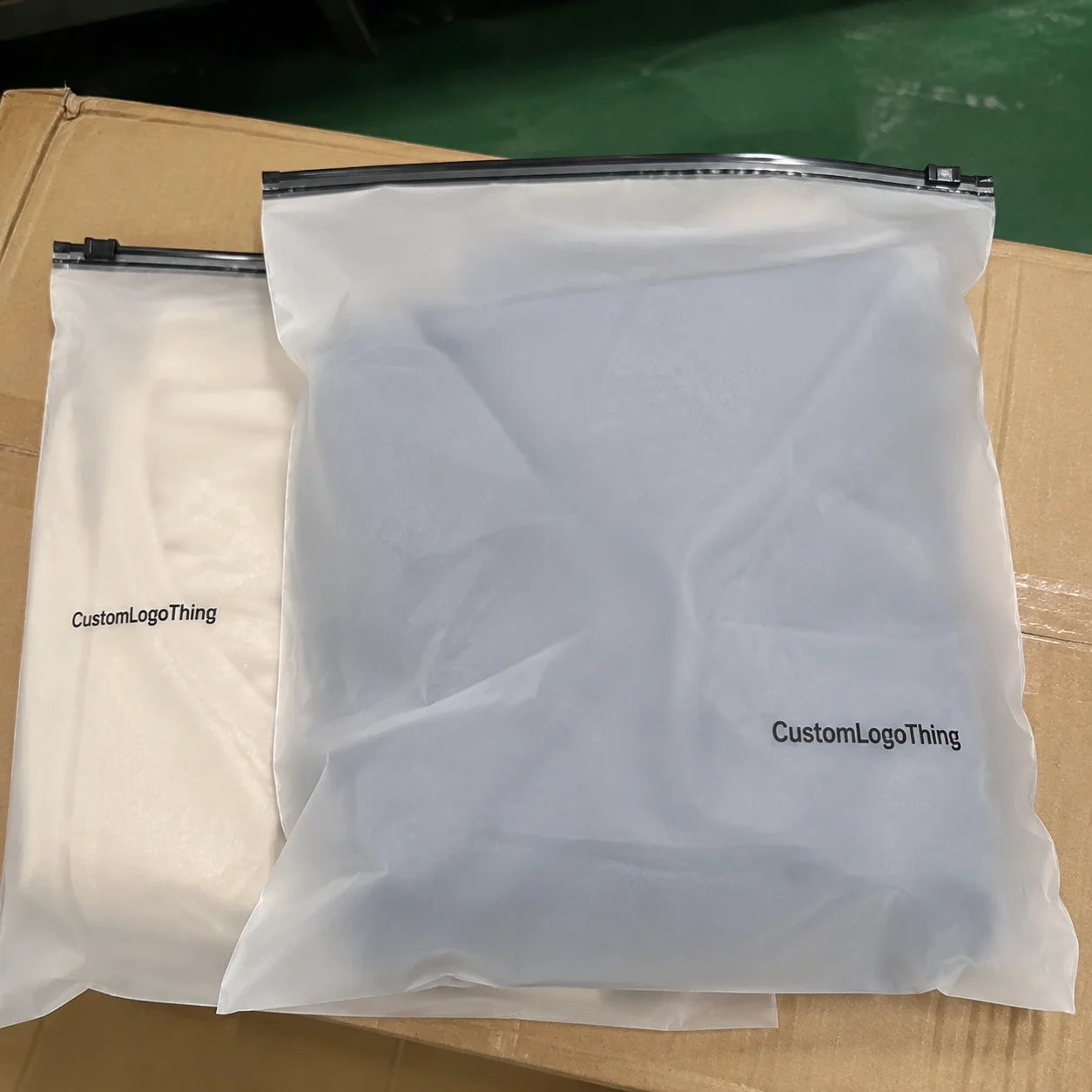
If you’re sorting through Zip Lock Plastic Bags moq guide options for a first run or a replenishment order, the trap is easy to spot and hard to avoid: the lowest unit price looks like the safest decision until you’re stuck with the wrong size, a zipper that feels flimsy, or artwork that misses the shelf brief. Packaging only gets cheaper in practice when the bag fits the product, the packout, and the reorder pattern.
MOQ is not just a factory number. It affects cash flow, storage, revision risk, and how much room you have to test before committing to a larger run. A useful guide should help buyers make fewer expensive mistakes, not just negotiate a smaller quantity.
Why low MOQ zip lock bags can save money fast
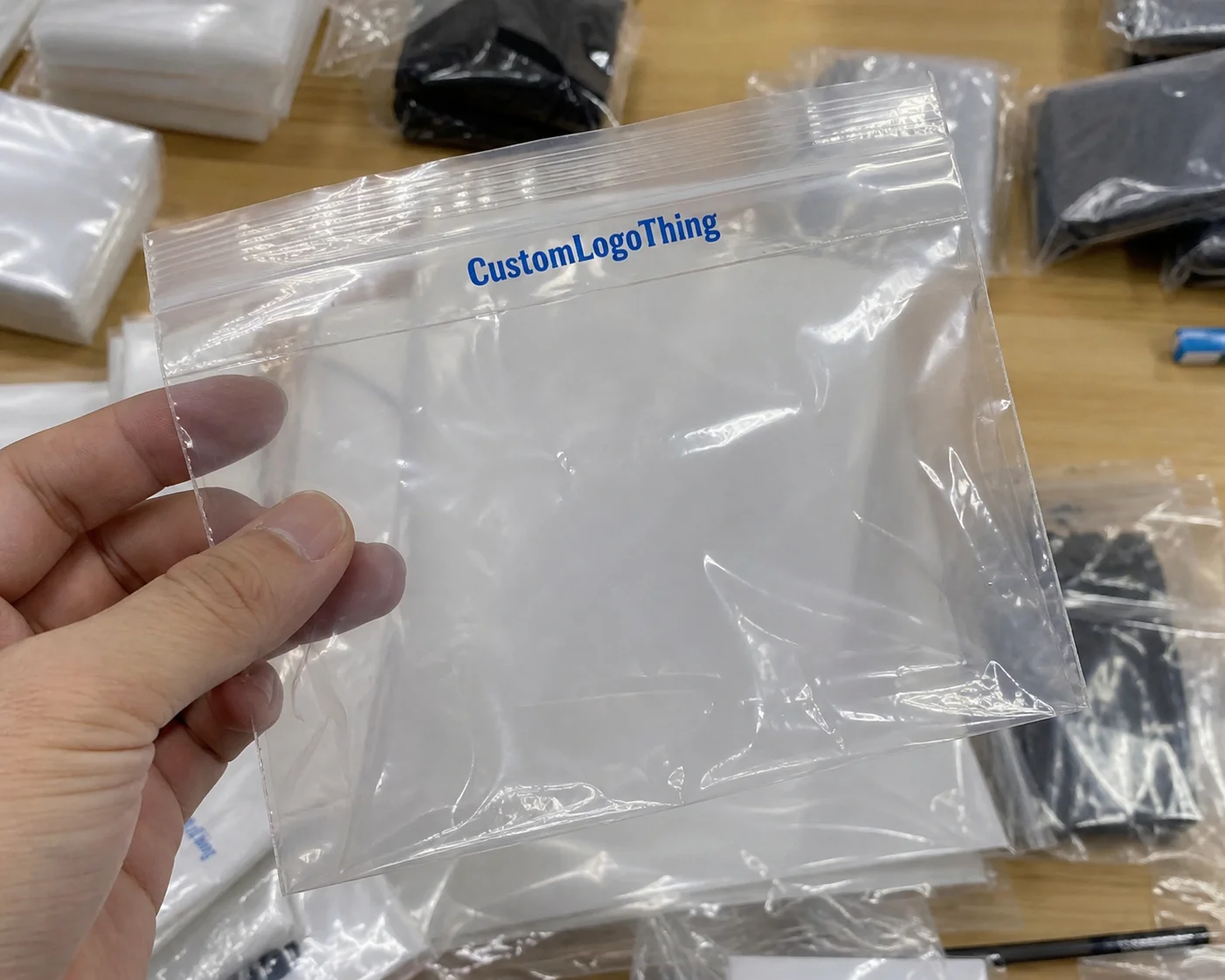
Many buyers still treat MOQ as a price hurdle. In reality, it’s a planning tool. If a supplier offers a better per-piece rate at 50,000 bags but your next sales cycle only needs 8,000, the “discount” becomes an inventory problem with rent attached.
Low MOQ has real value during product testing. You can see whether the bag fits the fill volume without wrinkling or overstretching, whether the zipper closes cleanly after packing, and whether the print looks crisp under store lighting. That matters for food pouches, cosmetic samples, hardware kits, promotional packs, and seasonal SKUs where the artwork may change after the first sell-through.
There’s another reason smaller runs matter: packaging changes are common. Ingredient panels shift. Barcodes move. Regulatory text gets updated. Seasonal designs come and go. If you’ve bought too deeply, every change leaves more obsolete stock behind.
“The cheapest quote is not always the cheapest order. Leftover stock, rework, and slow-moving cartons can erase the savings quickly.”
Small orders do cost more per piece. Setup charges, print prep, and sometimes tooling are spread across fewer bags, so the unit price rises as the order shrinks. That doesn’t make low MOQ a bad deal. It means the buyer has to weigh unit cost against the cost of being wrong.
The practical question is not whether the MOQ is low. It’s whether the quantity lets you test, sell, and reorder without freezing cash in packaging you haven’t proved yet.
Zip lock bag styles, materials, and closure options
Zip Lock Bags are not all built the same, and the differences affect both MOQ and pricing. The simplest option is clear PE film, which is flexible, economical, and usually the easiest route for plain or lightly printed bags. Once buyers move into laminated structures, matte finishes, premium graphics, or extra barrier performance, the minimum order tends to rise.
Clear PE works well when product visibility matters more than shelf drama. It’s common for accessories, samples, and utility packaging because it gives a clean view of the contents. Laminated barrier films are better when the bag needs a more finished face, stronger print performance, or more protection from moisture and odor transfer. For premium consumer packaging, they usually feel more substantial in hand.
Thickness changes the math too. Buyers often compare 2 mil, 3 mil, and 4 mil as rough reference points. Thinner film is lighter and cheaper, but it can feel less durable during filling or shipping. Thicker film improves puncture resistance and may improve perceived quality, though it increases material cost and can alter zipper feel. For hardware, spare parts, and heavier sample packs, thicker film is usually the safer choice. For lightweight items, it may be unnecessary.
Closure style deserves more attention than it usually gets. A standard press-to-close zipper keeps pricing down and works for most everyday uses. Double-track zippers improve reseal performance and are worth considering for frequent open-and-close use. Tamper-evident features add security and buyer confidence, but they complicate production and usually increase MOQ or cost.
Print method affects both lead time and minimum quantity. Flexographic printing is often better for larger runs and simpler graphics. Digital printing can support lower MOQ and easier artwork changes, though the unit cost is often higher. Buyers who need consistent brand colors should ask about print tolerance before approving a run, especially if the packaging uses a specific red, black, or metallic tone.
Some styles are simply more production-friendly than others. Stock-size plain bags can often start at lower quantities. Fully custom dimensions, multi-layer structures, or specialty finishes usually need more volume because the factory has to recover setup time and material waste.
Common options buyers compare:
- Clear PE zip bags — practical for visibility, low-cost sampling, and simple retail packaging.
- Laminated barrier bags — better for premium branding and moisture-sensitive products.
- Matte finishes — give a softer look, but usually increase print and material cost.
- Gusseted or stand-up styles — useful for bulkier products or display packaging.
- Tamper-evident closures — useful for regulated goods or products that need added security.
For shipment performance, ISTA transport testing standards are a useful benchmark. If your bags contact food or food-adjacent products, EPA guidance on food packaging materials is a practical reference point for material questions and compliance discussions.
Specifications buyers should lock down before requesting a quote
Fuzzy specifications create fuzzy quotes. That’s where delays begin, and they often multiply fast. One missing measurement or unclear artwork note can lead to a round of revisions, a resubmitted proof, or a very predictable “we interpreted it differently” conversation.
Start with the basics:
- Size — exact width, height, and gusset depth if applicable.
- Thickness — usually specified in mil or microns.
- Material — PE, laminated film, or another structure.
- Zipper style — standard, double-track, tamper-evident, or custom.
- Print coverage — one side, both sides, or partial print.
- Finish — gloss, matte, soft-touch, or clear.
- Quantity — actual MOQ target and likely reorder volume.
Dimensions need to be exact, not approximate. A bag that measures 100 x 150 mm is not interchangeable with one that measures 105 x 155 mm once fill volume, zipper headroom, and shelf presentation are added. On automated packing lines, even a small variance can slow the line or create sealing issues.
Artwork is another common source of avoidable waste. Send editable files when possible, along with outlined fonts, correct bleed, and clear safe zones. If the bag includes a barcode, QR code, ingredient panel, batch code area, or legal copy, flag that up front. Production teams can place it correctly only if they know where it belongs.
Compliance questions should be addressed early, not after the proof comes back. If the bag will touch food, cosmetics, supplements, or other regulated goods, ask whether the supplier can provide material declarations, food-contact suitability information, or traceability paperwork. The exact documentation varies by market and product type. If a supplier avoids the question, that is a warning sign, not a minor inconvenience.
The fastest quoting process usually comes from a complete brief. The cleaner the input, the fewer revisions, surprises, and lead-time slips later.
Cost, pricing, and MOQ ranges that make sense
Zip lock bag pricing is driven by five main factors: material, size, print colors, structure complexity, and quantity. Bigger bags use more film. More colors add print steps. Special finishes and custom shapes bring more setup work. The final number usually reflects some combination of all five.
Plain stock-style zip bags typically sit at the lowest MOQ levels. Fully custom printed bags usually need more volume because print prep and setup have to be recovered across the run. A simple custom PE bag may start in the low thousands of pieces, while a laminated bag with multiple colors or special features may need a higher minimum before the unit price makes sense.
That is the basic tradeoff: smaller orders mean higher unit cost. Sometimes that’s the right choice. If you’re testing a new product or an uncertain design, paying a little more per bag can be far cheaper than ordering too much of the wrong packaging. If the SKU is proven and the reorder pattern is stable, the larger run usually delivers better economics.
| Order type | Typical MOQ behavior | Cost per piece trend | Best use case |
|---|---|---|---|
| Plain stock zip bags | Lowest minimums | Lowest or near lowest | Sampling, internal use, fast replenishment |
| Custom printed PE bags | Moderate minimums | Medium | Retail launches, branded kits, recurring SKUs |
| Laminated or matte custom bags | Higher minimums | Higher | Premium packaging, shelf display, specialty products |
| Fully custom shape or structure | Highest minimums | Highest at low volume | Established products with stable demand |
When comparing supplier quotes, compare the full landed cost, not just the headline unit price. The quote may look attractive until setup and freight are added.
- Setup charges — screen prep, plate work, or print setup.
- Tooling fees — if a custom die, zipper, or structure is involved.
- Sample cost — paid sample or pre-production proof.
- Freight — air, sea, or courier can change the landed cost quickly.
- Packaging method — inner packs, cartons, and palletization all matter.
A quote that appears 10% or 12% cheaper can become more expensive after freight, packing, and revision costs are included. That happens often enough to be a habit, not an exception.
A practical buying method is to request two pricing points: the lowest workable MOQ and a larger break point. Then compare the difference in total spend, storage exposure, and reorder flexibility. That approach is more useful than chasing a low sticker price that only looks good on paper.
Process, lead time, and production steps from proof to shipment
The usual order flow is straightforward: inquiry, spec confirmation, quote, artwork review, sample approval, production, quality check, and dispatch. The process is only smooth when the inputs are complete. Missing details turn a short timeline into a long one.
Most delays happen in three places. Artwork arrives incomplete. The buyer takes too long to approve the proof. Or the material choice is still undecided when production should already be moving. If the supplier doesn’t know whether the bag needs a matte finish, a food-contact structure, or a barcode-safe zone, the job stalls.
Lead times vary with complexity and season, but a realistic expectation for a straightforward custom order is often 12-15 business days from proof approval. Larger volumes, multi-color printing, specialty structures, or busy production periods can extend that. Freight is separate and can add several days to several weeks depending on the shipping method.
Shipping choices matter more than some buyers expect. Air freight is faster, but the cost adds up quickly. Ocean freight is more economical for larger volumes, but the timeline is longer. Courier is often used for samples, proofs, or urgent small shipments. If the packaging is tied to a launch date, work backward from the shelf date rather than from the order date. That simple shift prevents a lot of expensive rush shipping.
Quality control should be part of the order, not an afterthought. A good run should be checked for zipper function, seal quality, print alignment, color consistency, and carton packing. If the supplier cannot explain how defects are handled, the buyer is carrying more risk than necessary.
“The checklist matters more than the promise. Good packaging suppliers know how they inspect zipper function, sealing, and print registration before a shipment leaves the floor.”
For broader packaging reference points, the Packaging Machinery Manufacturers Institute and FSC are useful when your project involves paper inserts, sustainability claims, or packaging program standards.
How to compare suppliers without getting burned
Start by comparing like for like. That sounds obvious, but it is one of the most common mistakes in packaging buying. One supplier quotes plain stock bags, another quotes printed bags, and suddenly the lower number looks like a bargain. It isn’t a bargain if the products are not equivalent.
Ask exactly what the MOQ covers. Does it include printed bags, plain inventory bags, or a mixed run? A supplier can advertise a low minimum while still requiring a much larger quantity for custom branding. For buyers, that distinction changes the real cost structure.
Ask for sample photos, material details, and previous production examples that are close to your spec. You do not need a grand factory story. You need proof that the supplier has produced similar bags and can repeat the spec consistently. A close-up image of the zipper, seal edge, and print registration often says more than a polished brochure.
Communication speed is not cosmetic. Fast, direct answers usually indicate fewer problems later. Slow replies, vague specifications, and evasive wording usually predict delays. If a supplier cannot explain tolerances, carton packing, or defect handling clearly, the relationship will be frustrating at best.
A dependable manufacturer should be able to answer these points without hesitation:
- Tolerances for size and print placement.
- Packaging method for inner packs and cartons.
- Defect handling if a zipper fails or the print falls outside spec.
- Lead time from proof approval to shipment.
- Reorder options if you need the same spec again.
For buyers who still have questions about common packaging terms or order flow, the FAQ page is a quicker reference than guessing through the quote process.
Best next steps for ordering zip lock bags at MOQ
Before asking for a quote, gather the essentials: exact size, target quantity, intended product, artwork files, finish preference, and any compliance requirements. Better inputs create better answers. Packaging sourcing is detail-driven whether anyone likes that or not.
Ask for two price points: the lowest workable MOQ and a second quote at a higher break point. That comparison shows the tradeoff between flexibility and bulk pricing. For a new product, the smaller order may be the safer move. For a stable SKU with predictable demand, the larger run often produces better unit economics.
Request a sample or digital proof before production, especially for branded retail packaging. A proof can catch barcode problems, print clutter, zipper overlap, and size mistakes before they become paid inventory. That kind of check usually saves more money than a small discount ever will.
Then confirm freight terms, review the timeline, approve the proof, and plan the next reorder while the first run is still moving. Good buying decisions are usually tidy. They reduce surprises, protect margin, and keep inventory from drifting out of sync with sales.
If you need a practical Zip Lock Plastic Bags moq guide for bulk ordering, use one rule: choose the MOQ that fits the sales reality, not the one that makes the quote look best. That is how buyers control unit cost, avoid waste, and order with more confidence.
FAQ
What is a typical zip lock plastic bags MOQ for custom orders?
MOQ varies by material, print method, and bag structure. Stock-style bags usually have lower minimums than fully custom printed runs. Ask for the lowest workable quantity and the price at a higher break point so you can compare the options properly.
How does bag size affect MOQ and unit cost?
Larger bags use more material, so unit cost rises. Non-standard sizes can also increase setup work. Standard dimensions usually get better pricing and more flexible minimums.
Can I order printed zip lock bags in a small quantity first?
Yes, if the supplier offers a low-MOQ or sample production option. The unit price is usually higher than a larger run, but that can be a smart tradeoff for testing artwork, fit, and customer response.
What files do I need before asking for a quote on zip lock bags?
Provide the bag dimensions, quantity, material preference, and print details. Send editable artwork if possible, plus logo files and barcode placement. Clear specs reduce revisions and speed up the quote.
How long does custom zip lock bag production usually take?
After proof approval, straightforward custom orders often take about 12-15 business days. Complex structures, larger volumes, and busy seasons can extend that timeline. Freight adds extra time, so confirm shipping expectations early.