Buyer Fit Snapshot
| Best fit | Custom Zip Lock Pouches projects where brand print, material claims, artwork control, MOQ, and repeat-order consistency need to be specified before quoting. |
|---|---|
| Quote inputs | Share finished size, material target, print colors, finish, packing count, annual reorder estimate, ship-to region, and any compliance wording. |
| Proofing check | Approve dieline scale, logo placement, barcode or warning zones, color tolerance, closure strength, and carton packing before bulk production. |
| Main risk | Vague material claims, crowded artwork, missing packing details, or unclear freight terms can make a low unit price expensive after revisions. |
Fast answer: Custom Zip Lock Pouches: What They Are and How They Work should be specified like a repeatable production item. The safest quote records material, print method, finish, artwork proof, packing count, and reorder notes in one written spec.
Production checks before approval
Compare the actual filled-product size with the drawing, then confirm tolerance on folds, seals, hang holes, label areas, and retail display edges. Reserve space for logos, QR codes, warning copy, and material claims before decorative graphics fill the panel.
Quote comparison points
Review material grade, print process, finish, sampling route, tooling charges, carton quantity, and freight assumptions side by side. A quote is only useful when the supplier can repeat the same color, closure quality, and packing count on the next order.
Custom zip lock pouches look simple from a distance, which is exactly why they are so easy to underestimate. The zipper is only one part of the system. The film structure, the seal design, the barrier layer, and the way the pouch is filled all do more to determine whether the package performs well on shelf and in the customer’s hand. Choose the wrong combination and the failure usually appears later, after inventory has shipped and the cost is already real.
That matters across categories. Snacks, coffee, supplements, pet treats, powders, hardware, and sample kits all rely on different versions of the same basic format. A pouch that keeps roasted coffee aromatic is not automatically the right pouch for gummy vitamins. A bag that protects screws from puncture is not necessarily a good choice for a light-sensitive ingredient. The shape may be familiar. The job is not.
A good pouch is not judged by the zipper alone. It is judged by how well the structure protects the product after the customer opens it the first, fifth, and tenth time.
If you are comparing packaging formats, the Custom Packaging Products page is a useful place to look at related options before finalizing a structure. Here the focus stays on what custom zip lock pouches actually are, how the closure works, what changes performance, what drives cost, and how to order them without getting trapped by vague specs and polished but empty sales language.
What Custom Zip Lock Pouches Really Are
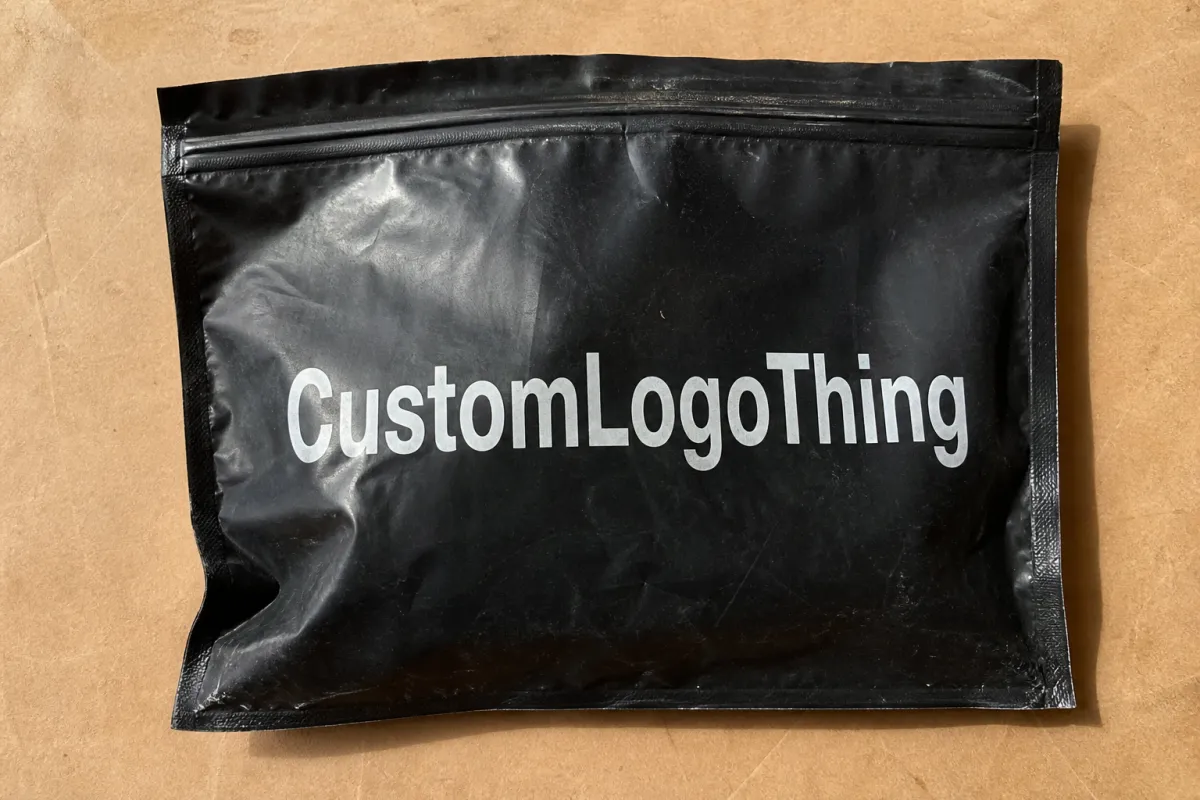
Custom zip lock pouches are flexible packages built with a reclosable zipper, custom dimensions, and a printed exterior tailored to the product. They are designed to be opened and closed more than once without turning into disposable clutter after the first use. The zipper serves the consumer. The film structure serves the product. Those are related, but they are not the same thing.
That distinction is more than technical hair-splitting. A pouch for roasted coffee needs aroma retention and light resistance. A pouch for gummy vitamins needs moisture protection and a zipper that still closes cleanly after repeated handling. A pouch for bolts or small hardware may care more about puncture resistance and easy pouring than oxygen barrier. Same format. Different physics.
Most custom zip lock pouches are used in retail packaging because they solve three problems at once: convenience, shelf appeal, and protection. They also work well for shipping sample kits, subscription packs, and unit-dose product packaging where buyers want repeated access without giving up product quality. The format can be made as a stand-up pouch, flat pouch, or gusseted bag, and each shape changes how the pouch fills, sits on shelf, and reseals in the hand.
From a packaging buyer’s point of view, the real question is not whether to add a zipper. The real question is what the product needs to survive distribution, display, opening, and storage. That answer drives the rest of the spec. If the product is oily, sticky, fragile, or sensitive to air and humidity, the pouch structure matters more than the artwork. If the product is dry and short-life, the build can often be simplified without hurting performance.
That is also why Custom Printed Pouches are not interchangeable with Custom Printed Boxes. Boxes carry branding well, but they do not offer the same resealability or barrier performance. Pouches are better for products that need repeated access and flexible fill volumes. Boxes are better for rigidity, stacking, and a different kind of premium presentation. The right answer depends on the product, not on which format photographs better in a mockup.
How the Zip Lock Mechanism Works
The zipper itself is a pair of interlocking profiles. Press them together and they engage. Pull them apart and the pouch opens. That sounds almost too simple, and that simplicity is part of the reason people miss the engineering behind it. The closure only works well if the film around it stays flat, the seal lines are clean, and the zipper remains aligned during filling and final packing.
On most pouches, the zipper is not the primary seal. It is the reclosure layer. The top heat seal is what usually gives the pouch tamper evidence and shelf stability before opening. In a typical run, the pouch is filled, heat-sealed above the zipper, and then reopened by the consumer after purchase. Once opened, the zipper becomes the daily-use feature. If it is weak, crooked, or contaminated with product dust, the package feels compromised immediately.
Several common zipper styles are used in custom zip lock pouches, and they are functional choices, not decorative ones:
- Standard press-to-close zipper: The most common choice for snacks, powders, and supplements. Lower cost, easy to use, and suitable when the customer only needs a basic reclosure.
- Slider zipper: Better for larger bags, heavier products, or users with limited hand strength. It usually adds cost and a little bulk, but it can improve repeat use.
- Child-resistant zipper: Used where access control matters more than convenience. Common in regulated or sensitive categories that require more intentional opening.
- Easier-open designs: Helpful for older users or products that would otherwise require too much finger strength to open cleanly.
The pouch format changes how those closures behave. A stand-up pouch gives shelf presence and more room for branding. A flat pouch is compact and usually cheaper. A gusseted bag holds more volume and can suit bulk ingredients or pet treats. The sealing area and zipper placement need to match the shape, or users end up fighting the package every time they open it.
Common failure points are ordinary, which is why they are expensive. Product trapped in the zipper track prevents a full close. Overfilling distorts the top section and makes resealing awkward. A weak film around the zipper can tear during repeated use. Misaligned seals can create tiny leaks that are hard to spot until the product starts aging badly in storage. None of this looks dramatic on day one. It just erodes the experience later.
For distribution and pack-out testing, many teams borrow methods from the broader packaging industry. ASTM seal-strength checks and distribution simulation are standard tools, and the ISTA testing standards are widely used to see whether a package survives shipping abuse before a launch order goes live. That is a lot more useful than assuming a pouch will behave because the render looked clean.
Material, Barrier, and Print Factors That Change Performance
The material structure matters more than the artwork. That sounds obvious until a buyer approves a beautiful pouch that cannot protect the product for more than a few weeks. A custom zip lock pouch is usually built from layered films such as PET, PE, CPP, foil laminates, or specialty barrier structures. Each one solves a different problem, and each one changes cost, appearance, hand feel, and performance.
PET is often used for print clarity, surface stiffness, and visual presentation. PE helps with heat sealing and flexibility. CPP can contribute toughness and sealing performance. Foil layers provide strong barrier against oxygen, light, and aroma, which is why they show up in coffee, spices, supplements, and other sensitive products. Clear barrier films and specialty coatings can also be used when the brand wants a window or a lighter look without giving up too much protection.
Barrier is the part buyers should define before getting distracted by finish choices. Four factors usually matter:
- Oxygen barrier: Important for foods, coffee, nuts, and anything that oxidizes or goes stale quickly.
- Moisture barrier: Critical for powders, dried foods, supplements, and hygroscopic products that pull water from the air.
- Aroma barrier: Useful when odor loss or odor transfer is a problem.
- Light barrier: Needed when light degrades flavor, color, or active ingredients.
Thickness is another real-world choice, not a vanity spec. Thinner films reduce material cost and shipping weight, but they can feel flimsy and puncture more easily. Heavier films improve puncture resistance and usually create a more premium hand feel. A 3.5 mil or 4.0 mil structure may be enough for many retail food items. A sharper, denser product, or a pouch that gets tossed into backpacks and toolboxes, may need something thicker or a stronger laminate. There is no universal number that works for every application.
Print coverage and finish change perception, which matters in branded packaging. Matte finishes usually feel more restrained and modern. Gloss can make color pop and help graphics read from a distance. Soft-touch film can increase perceived value, though it adds cost and can show scuffing in rough handling. Metallic effects, spot varnish, and clear windows all change the story the pouch tells on shelf. A clear window is useful when the product sells itself visually. It is less useful when light exposure is a problem.
Color decisions also affect how the artwork lands on the substrate. A rich black on a matte film looks different from the same black on a gloss laminate. Tiny legal copy can disappear if the file is underresolved or the press gain shifts. That is why proofing on the actual substrate matters more than approving a PDF on a laptop screen. I have seen buyers spend more time choosing a brand color than checking whether the shelf-life barrier makes sense. That order of priorities is backwards.
The tradeoff is simple. The best-looking pouch is useless if the seal fails. The most durable pouch can still be a bad buy if the barrier is overbuilt for a product that does not need it. Good package design keeps the spec tied to real use, not to the loudest opinion in the room.
Brands that want a better read on sustainability claims should also look beyond marketing copy and check the actual structure. If paper-based components or certified fiber are part of the build, FSC certification guidance helps sort out what is genuinely certified versus what is just vaguely eco-sounding. That distinction matters more than people usually admit.
Custom Zip Lock Pouch Process and Timeline
The production path is straightforward, but only if the buyer brings useful information. The usual process starts with a product brief, moves into size and material recommendations, then artwork prep, proofing, sample approval, production, and shipping. Simple enough. The friction appears when the brief is vague, the artwork is a mess, or the product changes after sampling has already started.
Before asking for a quote, prepare these basics:
- Dimensions: Width, height, and gusset depth if needed.
- Fill weight or volume: A pouch for 50 grams behaves differently than one for 500 grams.
- Product type: Powder, powder blend, snack, coffee, liquid, hardware, or sample kit.
- Barrier need: Low, medium, or high oxygen and moisture protection.
- Zipper style: Standard, slider, child-resistant, or easier-open.
- Finish: Matte, gloss, soft-touch, metallic, clear window, or no special finish.
- Quantity: Enough for pricing and setup to make sense.
That spec sheet does two things. It cuts down back-and-forth, and it tells the supplier you are not guessing. Suppliers can move faster when they know the product behavior and the shelf-life target. A quote for a roasted coffee pouch with foil and a valve is not the same as a quote for a dry snack pouch with a standard zipper. Treat them as different jobs, because they are.
Time gets lost in predictable places. Incomplete artwork causes rework. Missing bleed or tiny type leads to proof corrections. Slow approvals stretch the schedule. Sample revisions are where many launches quietly slip by two or three weeks. If a client changes the pouch size after the prototype is made, the clock starts again. Packaging production does not guess. It needs decisions.
Typical lead times vary by order type, but these ranges are common enough to be useful. Sample development can take 3 to 7 business days once artwork and specs are stable. Production for a standard custom run often lands around 12 to 20 business days after proof approval. More complex structures, heavy print coverage, or larger orders may take 3 to 5 weeks before freight is added. Rush jobs exist, but they usually cost more and create more room for mistakes if the artwork or spec is still moving.
The fastest way to compress the timeline without damaging quality is to lock the product requirements early. Finalize size, zipper type, barrier level, and finish before asking for samples. Then test the sample with the real product, not a random substitute. Sticky fillings, oily ingredients, and odd-shaped hardware expose problems that a blank sample never will. If the pouch needs a specific retail look, align the visual direction before print is approved. That is basic discipline, not overengineering.
Custom Zip Lock Pouch Cost, Pricing, and MOQ Basics
Cost is driven by the spec, not by wishful thinking. Material choice, barrier level, zipper type, pouch size, print coverage, finish, and quantity all move the number. A simple pouch with a standard zipper and modest print can price very differently from a foil-laminate pouch with a slider zipper, soft-touch finish, and full-coverage graphics. The quote is not random. It reflects how much film, labor, setup, and converting the job requires.
MOQ means minimum order quantity. Suppliers use it because setup costs do not disappear just because the customer wants a smaller run. Printing plates, press setup, material sourcing, slitting, laminating, and pouch converting all have fixed costs. If the order is too small, those fixed costs get spread over too few units and the unit price jumps. That is why a small trial order can feel annoyingly expensive. The factory is not being mysterious. It is doing math.
In practice, a lot of custom pouch programs sit in the 3,000 to 10,000 piece range for a standard custom print run, though some digital short-run programs can start around 500 to 1,000 pieces. The catch is unit cost. A 1,000-piece order often carries a much higher per-unit price than a 5,000-piece run. If the launch is uncertain, a shorter run can make sense. If the product already has traction, the larger run usually improves price quickly.
Here is a practical comparison of common options:
| Option | Typical Use | Strengths | Tradeoffs | Typical Unit Cost at 5,000 pcs |
|---|---|---|---|---|
| Standard press-to-close stand-up pouch | Snacks, supplements, dry mixes | Good shelf presence, easy reseal, broad compatibility | Not ideal for safety-critical or ultra-high-barrier use | $0.18-$0.32 |
| Foil laminate pouch with zipper | Coffee, spices, odor-sensitive goods | Strong barrier, premium feel, good aroma retention | Higher cost, less flexible recycling story | $0.24-$0.45 |
| Slider zipper pouch | Bulk snacks, pet treats, larger consumer goods | Easy to open and close, user-friendly for repeated use | More parts, more cost, slightly bulkier profile | $0.28-$0.55 |
| Child-resistant zipper pouch | Regulated products, controlled-access goods | Better access control, compliance-focused design | Harder to open, usually slower to fill and pack | $0.35-$0.75 |
| Clear-window pouch | Retail snacks, sample kits, display-focused items | Shows product, strong merchandising value | Less light protection where the window is large | $0.20-$0.40 |
Those numbers are planning ranges, not guarantees. They move with order size, print coverage, resin pricing, bag dimensions, and whether the job is domestic or offshore. Still, they are useful. A buyer who expects a foil pouch with a slider zipper and full-color print to cost the same as a plain clear pouch is going to waste time arguing with reality. Reality wins. It tends to.
There is a difference between cheap pricing and smart pricing. A low quote can hide thin film, poor print registration, weak zipper stock, or a structure that looks good in a mockup and fails in use. Comparing quotes apples-to-apples means matching the exact size, same barrier structure, same zipper style, same finish, same print coverage, and same delivery terms. If one quote includes freight and the other does not, the comparison is fake before it starts.
If you are comparing broader branded packaging programs, it helps to keep the pouch spec aligned with the rest of the line. A brand that uses sturdy custom printed boxes for one product and a flimsy pouch for another can confuse customers quickly. Consistency in package branding does not mean every format is identical. It means the materials and print choices feel deliberate.
Common Mistakes That Waste Money and Cause Failures
The biggest mistake is choosing the pouch shape before defining the product need. That usually leads to overpaying or underperforming packaging. A buyer sees a stand-up pouch on a competitor’s shelf, decides to copy it, and only later discovers the product actually needs a stronger barrier or a different seal location. Copying the look without copying the function is how budgets get burned.
Undersizing is another classic error. If the pouch is packed too tightly, the zipper area takes too much stress. The top film can distort, the seal line can wrinkle, and closure gets annoying for the user. Too much free space is not ideal either, because the pouch may look underfilled and unstable on shelf. The fill volume has to match the size, not sit awkwardly inside it like an afterthought.
Ignoring barrier requirements costs more than most people expect. A product can look fine on day one and still miss shelf-life targets later. Moisture-sensitive powders clump. Coffee loses aroma. Snacks go stale. Supplements can lose performance or become unacceptable for the brand’s quality standard. If the package does not protect the product over the required distribution and storage window, the graphics are just expensive decoration.
Artwork mistakes are just as painful. Low-resolution files print fuzzy. Missing bleed creates trimming issues. Tiny regulatory or ingredient text becomes unreadable. Colors chosen on screen can look different on the actual film, especially with matte and metallic structures. That is why proof approval should include printability checks, not just a glance at the layout. Packaging design is part art, part manufacturing. Pretending otherwise gets costly.
Testing mistakes are where many launches go sideways. A pouch approved from visuals alone may fail as soon as it is filled. Real product testing should include fill behavior, repeated zipper use, drop checks, and storage under expected conditions. For some products, a simple closure test is enough. For others, especially those with oils, powders, or fragile contents, the team should look at seal strength, leak behavior, and transport abuse. ASTM methods such as seal-strength evaluation are useful for that work.
Here is the blunt version: do not approve a pouch because the sample “looks okay.” That is not a standard. That is a feeling. Use the real product, the real fill weight, the real closure motion, and the real storage conditions. If the pouch survives that, you have something worth ordering.
Expert Tips and Next Steps for Ordering Better Pouches
Start with the product, not the package. Define the shelf-life target, the handling conditions, and the retail display needs before choosing the zipper, film, or finish. A snack that turns over in three weeks has a different spec than a coffee blend that sits in distribution for months. A sample kit that ships direct to consumer does not need the same abuse resistance as a pouch that gets stacked on wholesale pallets and touched by dozens of hands.
Request a sample or prototype before placing the full order, especially if the product is sticky, oily, fragile, or repeatedly reopened. That is where most issues show up. A nice-looking pouch can still be hard to open with cold hands, difficult to reseal with product dust in the zipper track, or too stiff to pack efficiently. The sample is not a formality. It is a low-cost way to avoid expensive regret.
A simple spec sheet helps compare vendors without turning the process into a mess:
- Exact dimensions
- Fill weight or volume
- Film structure and barrier target
- Zipper style
- Finish and print coverage
- Quantity and target delivery date
- Any required certifications or compliance notes
Then run the pouch the way the customer will. Fill it. Close it. Reopen it a few times. Store it under realistic conditions. Ship a few units through a rougher path if the product will travel that way in real life. A pouch that passes on a desk can still fail in a warehouse, and a pouch that performs beautifully in sample form can behave differently once product weight and temperature enter the picture. That is not a defect in the sample. It is the difference between mockup and production.
Buyers should also think about the rest of the line. If the brand already uses retail packaging with a strong visual identity, the pouch should match the tone without forcing the exact same layout across every format. That is how brands stay consistent without looking copy-pasted. If the portfolio includes cartons, mailers, and pouches, then the same standards should carry across the system. A clean spec and a clear style guide do more for package branding than a hundred mood board revisions.
If you are building a new product line, the next steps are usually simple: finalize the product dimensions, confirm the barrier and zipper needs, request a matched quote, review the artwork on the actual dieline, test the sample, and then place the order. If you also need related formats, the Custom Packaging Products catalog can help you compare pouches, cartons, and other structures side by side before you commit to one path.
One final practical point: do not let the cheapest quote decide the spec. Decide the spec first, then ask vendors to price the same build. That is how you get meaningful comparisons and fewer surprises later. For brands that want reliable custom zip lock pouches, the winning move is usually the boring one: clear product requirements, honest testing, and a pouch structure that matches the job instead of the fantasy.
Frequently Asked Questions
What are custom zip lock pouches used for?
They are used for products that need repeated access and reliable resealing, such as snacks, coffee, supplements, pet treats, powders, hardware, and sample kits. They work best when freshness, convenience, and shelf presentation all matter at the same time. Depending on the film and zipper choice, they can be built for light retail use or heavier-duty storage.
Are custom zip lock pouches better than heat-sealed bags?
They are better when the customer needs to open and reseal the package multiple times. Heat seals are stronger for tamper evidence and long-term sealing, but they are not convenient for repeated use. Many brands use both: a top heat seal for shipping and shelf protection, plus a zipper for consumer resealability.
How long does the custom zip lock pouch process usually take?
The timeline depends on artwork readiness, sample approval, quantity, and printing complexity. Simple orders move faster when the specs are final and proofs are approved quickly. Delays usually come from redesigns, unclear sizing, or changes after sampling has already started.
What affects custom zip lock pouch pricing the most?
Material structure, barrier level, zipper type, pouch size, print coverage, and quantity are the main pricing drivers. Low quantities usually carry a higher unit cost because setup costs are spread across fewer pouches. Special finishes and complex structures can push price up fast, so keep the spec tied to the real product need.
Do custom zip lock pouches have a minimum order quantity?
Usually yes, because printing and converting have setup costs that need to be spread across the run. The MOQ varies by supplier, print method, and pouch structure, so it is worth asking for a quantity that matches your sales plan. If you are testing a new product, ask about sample runs or lower-volume options before committing to a larger order of custom zip lock pouches.
The practical takeaway is straightforward: define the product requirements first, then build the pouch around them. If you know the shelf-life target, the fill weight, the zipper behavior, and the barrier level you actually need, custom zip lock pouches become a precise packaging tool instead of an expensive guess.

