dad Hats for Retail drops work because they do not ask much from the shopper. The silhouette is familiar, the fit is forgiving, and the product reads in a second whether it is hanging on a peg, sitting in a stack, or photographed on a clean white page. That speed matters. Retail drops live or die on first glance, and hats that need a long explanation usually lose to the ones that already look like something people would wear.
The style also gives buyers a useful amount of room between cost and perceived value. A low crown, curved brim, and soft unstructured fit can look premium without requiring heavy construction. A simple front embroidery, a woven patch, or a careful label package is often enough if the fabric and proportions are right. The cap does some of the selling before the artwork even enters the conversation, which is why the real work is not choosing a blank hat. It is building a product that holds up in photos, survives freight, and still makes sense if the first run disappears faster than planned.
That is the commercial advantage and the risk. Dad hats are easy to place into a collection, but they are also easy to make ordinary. The difference usually comes down to material choice, decoration discipline, and the buyer’s willingness to treat a hat like a retail item rather than a logo container.
dad hats for retail drops: why they sell so well
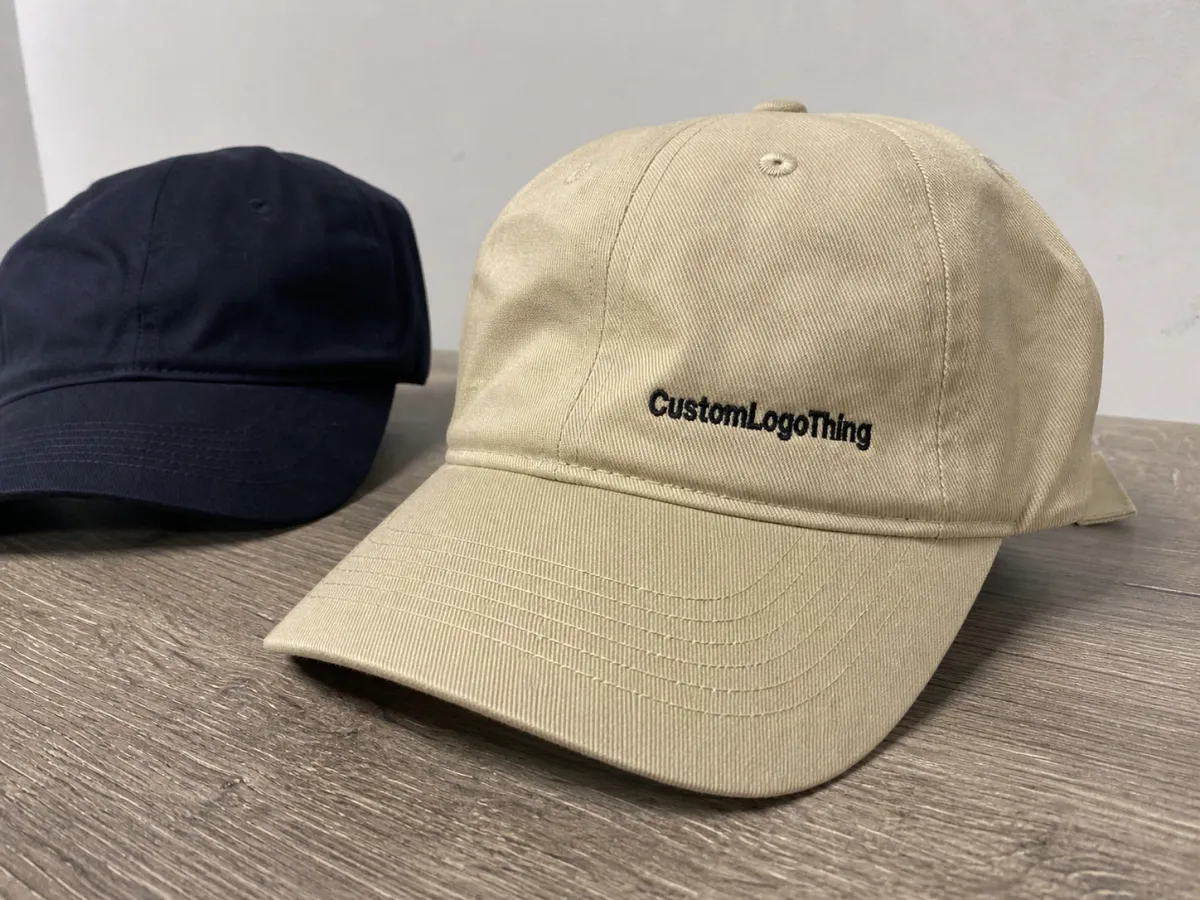
The best retail cap is the one that does not need a pitch. Dad hats have that advantage because they look approachable. They work for streetwear, boutique merch, tourist collections, artist programs, and smaller branded assortments where the logo supports the story instead of overpowering it. That flexibility is rare. A structured snapback can feel too sharp, and a five-panel can feel too specific. Dad hats sit in a wider middle ground, which is exactly where many retail drops need to live.
There is also a display advantage. The low profile, often around 3.5 to 4.25 inches in crown height depending on pattern and size, keeps the hat visually calm. A pre-curved brim gives the product a worn-in look that photographs well and reduces the “new, stiff, promotional” feeling some caps carry on shelves. In a store, that matters because shoppers tend to handle comfortable-looking items first. In ecommerce, it matters because a cap that already looks wearable usually needs fewer hero images to explain itself.
The silhouette is quiet. The branding has to earn its place.
That quietness can be an asset for margin too. A stock body, a clean decoration, and standard packing usually keep production costs more predictable than a fully custom cap program. That does not make the product cheap, and it should not. Better twill, cleaner stitching, a stronger closure, or a more refined patch all add cost. The point is that the shape gives the buyer a little breathing room. In a retail drop, breathing room is often the difference between a style that feels collectible and one that feels like excess inventory waiting for a markdown.
Another reason these caps perform well is fit forgiveness. Adjustable closures mean fewer size complaints and fewer returns than a fitted cap program. That does not eliminate fit issues, because some heads are sensitive to crown depth, brim curve, or strap placement, but it does reduce the friction that stops a shopper from buying on impulse. For a drop that needs to move quickly, fewer objections usually mean better sell-through.
How a retail drop cap program moves from idea to shelf
Good programs usually start with the same three decisions: target price, target customer, and decoration method. Once those are set, the rest of the spec becomes easier to control. A cap intended to retail around $24 to $34 can support a better fabric, cleaner finishing, and a more deliberate label package than a cap that has to land under $20. If the price needs to stay lower, the structure usually has to stay simpler.
The path from concept to shelf is familiar but easy to underestimate. It moves through artwork, proofing, sample production, pre-production approval, bulk decoration, packing, and shipping. Every step costs time, even when no one is behind schedule. A buyer who treats those handoffs as administrative detail tends to lose launch windows. A buyer who treats them as production decisions usually keeps control of the calendar.
That control shows up in the details. Artwork should be locked early enough that stitch counts, patch size, and placement can be checked before bulk begins. Closure type should be confirmed before the sample is approved, not after. Packaging should match the way the cap is sold: one-per-polybag for clean retail handling, barcode placement for ecommerce, carton marks for wholesale, or inner counts for distribution center receiving. If those choices are still open when bulk starts, the run becomes vulnerable to delays and avoidable rework.
Practical approval discipline is what keeps the project from drifting. The standard sequence is simple: artwork proof, physical sample, pre-production check, and final packing review. The sample should reflect the actual decoration method, not a close substitute. If the retail drop will use embroidery, approve embroidery. If it will use a woven patch, approve the woven patch. A near match is not enough when the difference between success and rejection can be thread density, edge finish, or how the front panel sits once the cap is worn low.
For teams coordinating packaging details, sources such as packaging.org can help frame material and labeling language, while ista.org is useful when you need to think about how the packed product holds up during transit. Those references do not replace a production spec, but they do reinforce the basic rule: a cap that looks right in sample form still has to survive shipping, receiving, and shelf handling.
Materials, fit, and decoration choices that drive sell-through
Material choice affects more than hand feel. It changes perceived value, image quality, and how forgiving the cap is during production. Cotton twill remains the most reliable body fabric for many retail programs because it takes embroidery cleanly, holds structure without feeling rigid, and usually lands in a workable cost band. Garment-washed cotton creates a softer, broken-in appearance that suits the dad-hat category well, though wash variation can make color matching more complicated. Brushed cotton blends can feel smooth and comfortable, but they should be tested carefully if the goal is a natural matte look rather than something that reads polished or slightly synthetic.
Construction matters just as much. A six-panel unstructured cap with a low crown is the closest thing to the classic dad-hat shape most buyers expect. Crown height, panel shape, and brim curve all affect whether the product feels easygoing or awkward. A brim that is too flat can look unfinished. A brim that is too aggressively curved can make the hat feel dated or overly casual. Those differences seem small on paper and obvious on a person’s head.
Closure choice is one of the few details shoppers may not talk about directly but still notice immediately. A self-fabric strap with a brass buckle usually feels the most refined. A metal slider is clean and practical, especially for volume retail. Hook-and-loop can work in broader distribution, but it often lowers the perceived value of the cap. If the hat is meant for boutiques or curated assortments, the closure should match that setting. A premium cap with a weak closure reads as unfinished.
Decoration is where many buyers either add value or waste it. Flat embroidery is still the baseline for a reason: it is legible, durable, and easy to photograph. A 5,000 to 7,000 stitch front logo often gives enough presence without overpowering the cap. Woven patches carry finer details and can make the product feel more collectible. Rubber or PVC patches create a bolder, more modern look. Three-dimensional embroidery can work too, but only if the rest of the cap supports a louder read. A soft, relaxed hat with an oversized patch can feel off-balance.
| Decoration option | Typical add-on cost at 1,000-5,000 units | Visual read | Best use |
|---|---|---|---|
| Flat embroidery | $0.60-$1.25 per unit | Clean, classic, easy to wear | Most retail drops, logo-first programs |
| Woven patch | $0.85-$1.60 per unit | Sharper detail, slightly more premium | Artwork with fine lines or a collectible feel |
| 3D embroidery | $1.10-$2.00 per unit | Bolder, more dimensional | Simple marks that need extra shelf presence |
| Rubber or PVC patch | $1.25-$2.50 per unit | Modern, tactile, visually louder | Streetwear-leaning drops and stronger branding |
What tends to get missed is that expensive decoration is not always the most effective decoration. On a good cotton twill body, a restrained front mark can outperform a more complex patch if the color contrast is right and the price point stays honest. Buyers often assume the most detailed option will sell best. In practice, the cap that looks like something someone would actually wear after the event usually has the best repeat value.
Sample review is where those assumptions get corrected. Check the logo from normal viewing distance. Check the hat under daylight and under retail lighting. Put it on more than one head if possible, because a crown that looks relaxed in a photo can sit oddly in person. The sample is not just a sign-off step. It is the first proof of whether the product belongs in the intended channel.
Cost, pricing, MOQ, and quote factors to model first
Cap pricing gets messy when teams think only about the decoration line. The real number is the landed number, and that includes the body, construction, decoration, labels, packaging, spoilage, and freight. A basic stock-body dad hat with simple embroidery can land around $4.10 to $6.50 per unit at modest volume. Once custom labeling, upgraded hardware, and more complex decoration enter the picture, the number can move into the $6.75 to $9.50 range or higher before freight, depending on volume and source market.
MOQ changes the calculation in a very concrete way. Smaller runs lower inventory risk, which is useful for testing a new graphic or checking whether a colorway actually deserves a second life. They also raise the per-unit cost because setup time gets spread across fewer pieces. Larger runs improve pricing and can support stronger wholesale margins, but they tie up cash and force a more confident demand forecast. A 500-piece test is often smarter than a 3,000-piece guess, especially if the brand has not yet proven which images, materials, or colors convert.
When requesting a quote, the best practice is to provide a full spec sheet rather than a short description. Include crown style, brim type, body fabric, color reference, artwork placement, stitch count or patch dimensions, label details, packaging requirements, carton count, and destination. Missing information is one of the fastest ways to create budget drift after sample approval. If the supplier has to assume the packaging or the shipping method, that assumption usually shows up later in the invoice.
That is why packout choices matter from the start. One-per-polybag sounds trivial until you factor in bag cost, labor, carton density, and presentation. A hangtag can improve retail readiness, but it may add handling time. A branded insert can make sense for a collectible release, but it can also push the project beyond its intended margin. The right choice depends on channel, price point, and how much the cap needs to do on its own.
A useful way to frame the cost structure is this:
- Lower cost: stock cap, flat embroidery, standard polybag, carton label only.
- Mid-range: garment-washed body, woven patch or tidy embroidery, hangtag, size sticker.
- Higher value: custom label package, premium closure, upgraded patch, branded insert, tighter retail presentation.
The most expensive line item is not always the biggest risk. Freight surprises, rework, and under-modeled packaging can erase margin faster than an upgraded closure ever will. A hat that looks inexpensive on a quote sheet can become expensive once the full receiving and distribution path is included.
Production timeline and lead time planning for launch
Lead time on a hat program is usually a chain of smaller waits rather than one dramatic delay. The sequence is usually quote, artwork approval, sample, production, packing, and transit. Even when the factory is efficient, a missing approval can stop the schedule cold. That matters more for retail drops than for evergreen inventory because the launch date is tied to marketing, ecommerce setup, and sometimes in-store events. The inventory has to arrive in time to matter.
For a simple embroidered dad hat built on a stock body, the production window after sample approval often sits around 12 to 18 business days. If the job uses a custom fabric, a more intricate patch, or a more detailed packaging setup, 18 to 25 business days is a more realistic planning range. Transit can add another 5 to 30 days depending on air or ocean movement and where the product is landing. These are not promises. They are the kind of ranges that help a buyer avoid overcommitting a launch team before the cartons are actually moving.
Buffer is not a luxury here. A small artwork revision can absorb more time than expected, and freight rarely cares about the marketing calendar. Teams that work backward from the release date and then add room for customs, receiving, and quality inspection usually have fewer unpleasant conversations. A launch that arrives too early can create storage cost. A launch that arrives too late can miss the window entirely. The difference between those outcomes is often a few extra days on the front end.
Material availability can also shift the schedule. If a preferred twill shade is out of stock or if a closure component has to be sourced separately, the whole run can slow down. That is one reason simple stock-body programs are still so common. They reduce the number of variables that can move the calendar. For retail drops, fewer variables usually mean fewer surprises.
Step-by-step launch plan for a dad hat drop
Start with the audience and the shelf price, then narrow the assortment. Two colorways are usually enough for a focused drop. Too many near-identical shades can make a launch feel indecisive, especially when the design is minimal. A tighter line is easier to buy, easier to merchandise, and easier to photograph. For retail caps, clarity usually beats breadth.
- Set the target retail price and channel.
- Choose the body fabric, crown shape, and closure that support that price.
- Lock artwork size, placement, and thread or patch colors.
- Review the sample in daylight and under store lighting.
- Approve packaging, carton labels, and destination details before bulk starts.
Sample review should be practical rather than polite. Check the fit on different head shapes if you can. Look at the logo from a normal shopping distance. Ask whether the cap still feels balanced once worn low on the forehead. Examine the brim curve, because it changes the whole attitude of the product. Those details sound minor until the hat sits next to ten others on a display wall and loses the quick visual contest.
Packaging and receiving deserve the same attention as the decoration. A one-piece polybag can protect the cap and keep units clean, but the label strategy has to match the channel. Wholesale accounts usually need carton marks and inner counts. Ecommerce programs often need barcode placement and enough carton integrity to survive last-mile handling. None of that is glamorous, but it is where a lot of margin gets saved or lost. A cap can be perfect and still create problems if the box spec is wrong.
Once the first run is approved, define a reorder trigger before the drop goes live. For some brands, that means reordering when sell-through reaches 60 percent. For others, the number needs to be tighter because the style is seasonal or attached to a specific campaign. The exact threshold matters less than the discipline of deciding it early. That is what turns Dad Hats for Retail drops into a repeatable program rather than a one-off bet.
Common mistakes that hurt margin or sell-through
The most common error is oversizing the front logo. Dad hats usually look better when the mark feels intentional and restrained. A logo that stretches too far across the front panel can make the hat feel promotional rather than retail-ready. If the artwork needs to be large to stay readable, the design itself may need simplification. Bigger is not automatically better.
Color contrast causes another set of problems, especially on washed fabrics. A muted mark on a soft body can look elegant in a mockup and disappear in a store photo. Olive, stone, washed navy, and faded brown are all attractive in theory, but the thread or patch color has to survive real lighting. A sample viewed only on a screen is not enough. It should be checked in daylight, under the actual sales lighting, and on a phone camera before bulk gets approved.
Buyers also undercount the small costs that nibble at margin. Labels, hangtags, inner packing, master cartons, spoilage, and freight can turn a healthy-looking quote into a weak landed number. A cap priced competitively at the factory can still arrive with poor contribution margin if the team never modeled carton counts or shipping method. That problem shows up most often on smaller runs, where setup costs are spread thin.
There is a merchandising mistake that appears often enough to deserve its own warning: too many almost-identical options. Four shades of beige rarely help. They split demand and make leftover inventory harder to move. A stronger line usually has one core color and one accent color, maybe three if the assortment is truly justified. The cap should feel like a considered part of the release, not a rack of near-duplicates that make the buyer hesitate.
Finally, some teams confuse premium with busy. A dad hat rarely improves because more elements are added. Better thread density, a cleaner patch edge, a stronger strap, and more thoughtful packaging usually matter more than piling on extras. Restraint is not absence. It is usually the difference between a cap that looks expensive and one that just looks expensive to make.
Expert next steps before you place the order
Before placing the order, build a one-page spec sheet that lists cap style, closure, fabric, color reference, artwork placement, label details, carton count, and destination. That document should be clear enough that the quote and the sample are reacting to the same instructions. When the instructions are vague, the final result usually reflects the ambiguity.
Ask for the sample that matches the actual decoration method you plan to sell. If the retail drop will use embroidery, approve embroidery. If it will use a woven patch, approve the woven patch. A substitute only proves that the factory can make something close. It does not prove that the final cap will photograph the way the launch needs or feel the way the customer expects.
Then decide what success means. Is the run a demand test, a seasonal release, or the start of a repeat program? That answer changes the MOQ, the price target, and whether the packaging should be minimal or more collectible. It also changes how much risk belongs in the first order. A smaller test run can be the smarter move if the audience is still forming. A larger run only makes sense when the demand signal is strong enough to support it.
Dad hats for retail drops work best when the product is treated like a retail item first and a blank canvas second. Keep the spec tight. Keep the decoration honest. Keep the schedule realistic. Do that, and the cap has a real chance to do the job buyers care about most: move quickly, protect margin, and justify a reorder without a second guess.
How many dad hats should I order for a retail drop?
Base the quantity on the channel, the size of the audience, and whether the goal is a test or a broader release. Many buyers start with a smaller first run and reserve room for a reorder if the style proves strong, which keeps inventory risk in check while still giving the product a real chance to sell.
What decoration works best for dad hats for retail drops?
Flat embroidery is the most common choice because it looks clean, photographs well, and fits a wide range of price points. Patches and woven labels can feel more premium, but they should match the brand and not overwhelm the relaxed look of the cap.
What affects lead time the most on a hat drop?
Artwork approval, sample turnaround, and shipping method usually have the biggest effect on timing. Custom fabrics, more complex decoration, and branded packaging can extend the schedule too, so those choices should be decided early rather than after the sample is already in hand.
How do I keep pricing workable without lowering quality?
Choose a simple decoration method, use a stock cap body when possible, and keep packaging efficient so more of the budget goes into the hat itself. Ask for a quote with full specs up front, because incomplete details usually create avoidable cost jumps later.
Should I use patches or embroidery for a retail drop?
Use embroidery when you want a cleaner, more traditional retail look and a decoration that feels integrated into the cap. Use patches when the artwork needs texture, a more collectible feel, or a design style that benefits from a stronger visual edge.


