Dad Hats for Retail shelves have to do more than look casual. They need to stay readable under store lighting, keep their shape after packing and handling, and present a clear enough brand story that a shopper understands the product in a few seconds. A cap that looks polished online can still fail in store if the crown collapses, the logo is too small, or the packaging looks improvised.
That is why shelf-ready headwear is a buying decision, not just a style choice. Retail teams have to balance product, presentation, and replenishment. The hat needs to survive distribution, fit into limited fixture space, and still look intentional when it is stacked, tagged, or picked up by customers.
Dad Hats for Retail Shelves: Why Shelf Appeal Sells
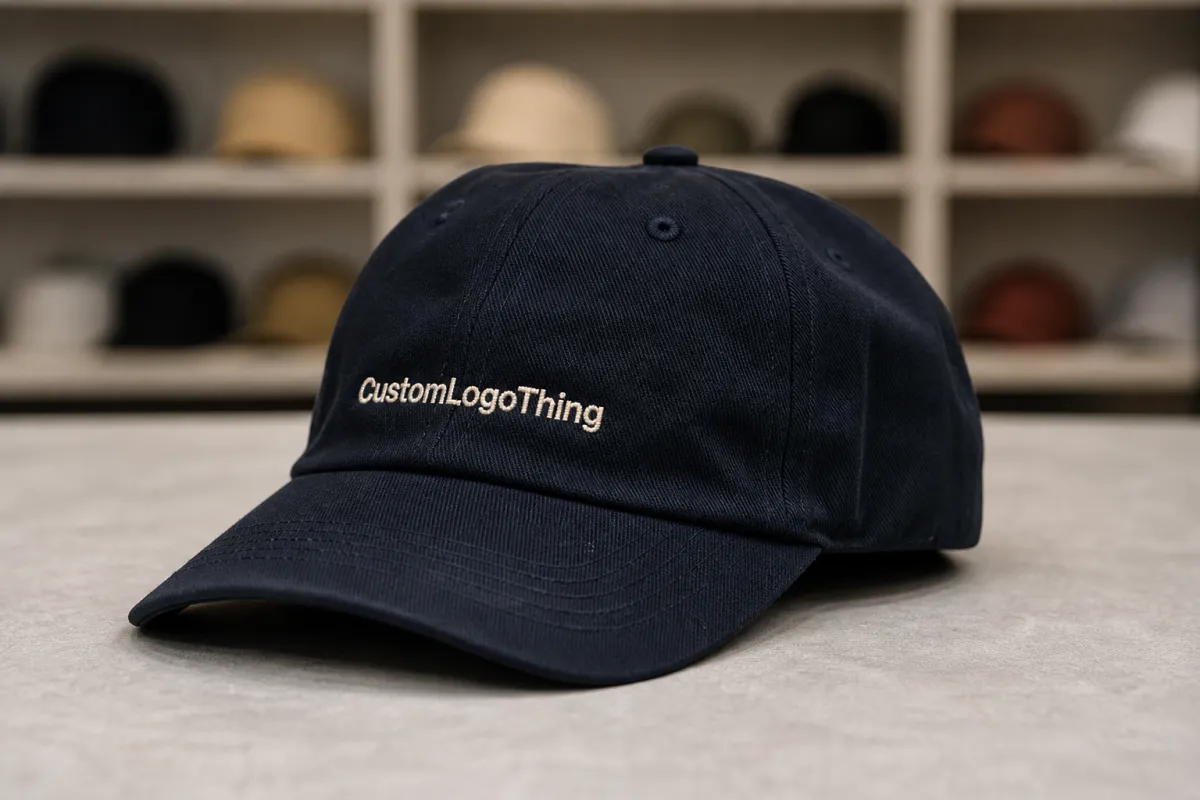
Dad hats work well in retail because the shape is approachable. The low-profile crown, relaxed feel, and adjustable fit make the style easy to wear for a wide customer base. That familiarity lowers hesitation, which matters when the shopper is deciding quickly in front of a fixture.
The downside is that the category can look generic if the execution is too loose. On shelf, a plain cap gets lost fast. Buyers need a clear point of difference: a cleaner logo application, better color discipline, more consistent finishing, or packaging that makes the item feel planned instead of leftover.
Store lighting is less forgiving than product photography. Fabric texture flattens, dark colors swallow detail, and small artwork can disappear once the hat is stacked or folded. For that reason, a retail buyer should ask one simple question: does the product still read from a few feet away after it has been handled?
That question is mostly about visual clarity. If the logo is legible, the brim keeps its shape, and the crown holds enough body to look tidy, the hat is easier to touch and easier to buy. If it looks tired before anyone picks it up, the fixture has to work harder than it should.
Retail shelf space is expensive, so the best styles are usually the ones that explain themselves quickly. Dad hats can be grouped by color, logo, or collection without crowding the display. The simpler the fixture, the more important it is that the product feels disciplined rather than plain.
How Shelf Merchandising Changes the Way Dad Hats Work
Once a cap is meant for a shelf instead of a hook, the criteria change. Stackability matters. So does crown recovery after compression. A style that hangs well can still slump in a pile, and a hat that looks clean in a carton can become misshapen the first time store staff restock it.
That means buyers should look beyond the front panel. Ask how the cap folds, whether the brim springs back, and how much structure the crown keeps after packing. These details affect the first impression a customer gets when the shipment is opened or the fixture is refilled.
Labeling matters too. A readable woven label, a clean hangtag, and a barcode in the right location make the item easier to manage in store. If those details are buried or overdone, the display starts to look messy. Retail fixtures do not need more decoration; they need more readability.
Packaging has a practical role. A simple insert can help the cap hold its shape in transit and on shelf. A polybag may protect the product, but glossy or wrinkled packaging can make the fixture look cheap if it reflects too much light. The right packaging protects the hat, supports the display, and keeps stocking simple.
“Most shelf problems are readability problems first, and design problems second.”
That is why presentation should be treated as part of the product spec. A hat can be well made and still underperform if the shelf view is confusing. Clean color blocking, consistent trim, and a logo size that reads at retail distance usually outperform more complicated graphics that require close inspection.
Cost, Pricing, and MOQ for Shelf-Ready Orders
Pricing usually starts with fabric, construction, and decoration, then rises as retail requirements become more specific. A basic cap body is only part of the quote. Once a buyer adds woven labels, swing tags, barcode placement, folded presentation, or custom packaging, labor and setup start to matter as much as the hat itself.
MOQ changes the economics quickly. Smaller runs cost more per unit because setup is spread across fewer pieces. Larger orders can reduce unit cost, but only if the assortment is tight enough to sell through. A cheap order is not a good order if the wrong colors sit unsold in back stock.
For quote comparison, ask suppliers to separate the cost of the hat body, decoration, labeling, packaging, and freight. That makes it easier to compare factories and spot where margin is being added. The lowest all-in number is not always the best landed cost once shipping, inserts, and sample revisions are included.
| Option | Typical MOQ | Unit Cost Shape | Best Use |
|---|---|---|---|
| Basic embroidered dad hat | 300-500 pieces | Lower setup, simpler decoration | Trial runs and core basics |
| Custom-label shelf-ready hat | 500-1,000 pieces | Moderate uplift for labels and tags | Retail assortment programs |
| Premium retail presentation pack | 1,000+ pieces | Higher unit cost, stronger merchandising impact | Seasonal launches and branded displays |
- Ask about digitizing fees if the embroidery art has not been converted yet.
- Confirm sample charges because revisions can change the actual unit cost.
- Clarify freight terms so shipping does not erase margin.
- Check packaging labor if barcodes or inserts must be added by hand.
Small line items add up quickly. A few cents per unit for labels or inserts can become a meaningful budget item across thousands of hats. The same is true for extra sample rounds, carton changes, or late packaging revisions. Honest cost planning separates those pieces instead of hiding them in one attractive number.
For transit and packaging discipline, the ISTA testing framework is a useful reference if the hats need to survive shipping without crushed crowns or damaged presentation. If your retail partner wants documentation for paper sourcing or inserts, the FSC standard is worth checking early.
Production Steps, Lead Time, and Turnaround Expectations
The production path usually looks straightforward: artwork approval, fabric selection, sampling, bulk production, inspection, and packing. In practice, delays usually come from predictable issues such as missing artwork details, sample revisions, or a change request after approval.
Sampling and bulk production should be treated as separate stages. A sample can move quickly, especially if the style uses a standard block. Bulk production takes longer because materials must be secured, decoration must be repeated accurately, and each unit still needs finishing and packing. Retail packaging adds more time because hats may need to be folded, tagged, bagged, and boxed in a specific order.
For shelf-ready orders, the timeline is usually tighter than for simple promo caps. That is because there are more points where error can creep in: barcode placement, tag location, packaging condition, and carton quality. If the product must arrive ready to be stocked, the schedule needs to include enough time for those checks.
Plan backward from the store ship date, not forward from the order date. If the hats must be on shelf for a seasonal reset, build in sample approval, bulk production, freight, receiving, and floor setup. It is easy to lose more time than expected once inventory moves through a warehouse and into stores.
Inspection should cover embroidery placement, panel symmetry, stitching consistency, color match, and carton condition. A damaged outer box often means the presentation inside has taken a hit as well. Good packing is not only about protection in transit; it is also about what the retail team sees when the shipment is opened.
Material, Fit, and Decoration Choices That Improve Sell-Through
Material choice changes how the hat is perceived within seconds. Cotton twill usually feels familiar and dependable. Washed cotton gives a softer, broken-in look that suits casual or lifestyle assortments. Blends can improve consistency and reduce wrinkling, though some buyers prefer the hand-feel of natural fiber content.
Fit matters just as much. Dad hats are chosen for their relaxed silhouette, but soft should not mean shapeless. A good unstructured crown still needs enough body to present cleanly. If the panels collapse too easily, the product can look tired before it is even picked up.
Decoration should be visible at normal browsing distance. Flat embroidery remains one of the strongest options because it is durable and easy to read. Woven patches can add texture and a more premium feel. 3D puff embroidery can work if the logo is simple and the fixture has enough space for the raised effect to read clearly. Printed graphics are more variable and depend heavily on artwork and ink coverage.
| Decoration | Shelf Readability | Durability | Cost Impact |
|---|---|---|---|
| Flat embroidery | Strong | High | Moderate |
| Woven patch | Very strong | High | Moderate to higher |
| 3D puff embroidery | Good for simple logos | Good | Higher |
| Printed graphics | Depends on artwork | Varies | Lower to moderate |
Color strategy also matters. Neutrals such as black, navy, olive, tan, and washed gray usually have the widest reach and are easier to merchandise in a clean assortment. Seasonal colors can work, but they need a reason to exist in the line. Without that reason, they often create inventory noise rather than lift.
The details customers rarely see still affect sales. Clean size stickers, readable SKU codes, and a barcode that scans on the first pass reduce friction for store staff. If the team can stock quickly and the fixture stays tidy, the hats get more exposure. A well-organized display often outsells a better product in a messy one.
For brands that need sourcing documentation, get the material paperwork early. Paper inserts, recycled packaging claims, and fiber content should all be verified against what the factory can actually supply. Retail partners usually prefer a plain answer backed by documents over a polished claim that cannot be supported later.
Common Mistakes Buyers Make With Retail Shelf Orders
The first mistake is approving a hat that only looks good in a mockup. Digital images can hide a crown that collapses too easily, a brim that sits too flat, or a logo that becomes unreadable once the hat is folded into packaging. A shelf is less forgiving than a render, so the physical sample should be checked under ordinary lighting and from real browsing distance.
Another common issue is over-customizing too early. Specialty stitching, unusual trims, multiple label placements, and layered packaging can all add value, but they also add cost, lead time, and risk. If demand has not been proven, it is usually smarter to keep the first run focused and expand later if the product earns it.
Retail operations need to be considered from the start. A hat that is hard to fold, barcode, or restock can create friction for store staff. That friction often shows up as a messy fixture, and a messy fixture sells less. Products are judged by how easy they are to manage, not only by how they look in a photo.
Sample approval is another place where small details become expensive. A brim curve that seems minor in the sample room may read too sharp on shelf. A logo that sits a few millimeters low can throw off balance. Color mismatches, stitching density, and label placement all become more visible once the product is stacked with other SKUs.
“A quote is only useful if it matches the way the product will actually be sold.”
That is the simplest way to avoid buying the wrong version. If the display plan, production plan, and budget do not match, the order will feel cheaper than it is.
Expert Next Steps for a Shelf-Ready Buying Plan
Start with a one-page spec sheet and keep it strict. Lock in fabric, fit, decoration, color range, packaging, barcode needs, and MOQ before asking for quotes. A clear spec reduces guesswork and makes supplier responses easier to compare.
Then request a physical sample or pre-production proof that reflects the shelf use case, not just a clean flat lay. Check how the hat reads from a few feet away, how it sits after folding, and whether the presentation still looks intentional beside other SKUs. If the product is meant to be stacked, test it stacked. If it is meant to be tagged, test the tag placement in the actual format.
Work backward from the store launch date and leave room for approvals, production, freight, receiving, and shelf set. If the assortment is tied to a seasonal reset, add more cushion. Retail timelines punish optimism and reward planning.
- Unit cost should include labels, packaging, and freight assumptions.
- Turnaround should cover sampling, bulk production, and transit separately.
- Presentation quality should include fold, tag, barcode, and carton condition.
- Consistency should be checked across color, logo placement, and fit.
If the cheapest quote cannot explain how the hats will land on shelf, that is a warning sign. The strongest order is not always the one with the lowest factory price. It is the one where the product, the packaging, and the retail schedule line up cleanly enough that the shelf does part of the selling.
Dad Hats for Retail Shelves work best when they are designed with restraint and produced with enough discipline to hold up in a real store environment. Comfort matters, but clarity matters just as much. If the hat keeps its shape, reads quickly, and arrives ready to be stocked, it has a much better chance of moving through the fixture instead of sitting in it.
What should I ask before ordering dad hats for retail shelves?
Ask about MOQ, pricing breaks, decoration options, and whether shelf-ready packaging is included or priced separately. Request sample photos or a proof that shows how the hat will look stacked or displayed in store, since that is often where problems show up first.
How do dad hats for retail shelves usually affect pricing?
Pricing usually rises with better fabrics, custom labels, detailed embroidery, and packaging requirements. Larger quantities often lower the unit cost, while small runs and extra sample revisions push it up.
What is a realistic lead time for shelf-ready dad hats?
Lead time depends on sampling, approval speed, decoration complexity, and packaging needs. A cleaner spec and faster approval cycle usually shorten the schedule more than changing the factory plan does.
Which decoration reads best on retail shelf displays?
Flat embroidery and woven patches usually read well from a distance and hold up better than overly busy graphics. The best choice depends on shelf distance, brand style, and how much visual competition the fixture has.
How can I avoid mistakes when buying dad hats for retail shelves?
Approve samples with the shelf in mind, not just the product photo. Check fit, packaging, MOQ, freight, and restock practicality before placing the bulk order, and make sure the landed cost still works after those details are included.


