Branded Dad Hats for Retail Shelves That Actually Move
Branded Dad Hats for Retail shelves have a short window to prove themselves. The logo has to read fast, the shape has to sit neatly, and the package has to look finished without adding clutter. In-store, buyers care less about clever concepting and more about whether the cap earns space, supports the ticket price, and stays presentable after shoppers touch it.
That makes the real decision set pretty clear: silhouette, decoration, packaging, cost, MOQ, Lead Time, and inspection. The best programs are usually the least fussy ones. They look simple because the details underneath were chosen with the shelf in mind, not the render.
One bad assumption can get expensive. A decoration that disappears on display, a closure that feels cheap, or a pack-out that turns messy after a few resets can all drag sell-through down. Retail punishes vague choices.
What branded dad hats for retail shelves need to do
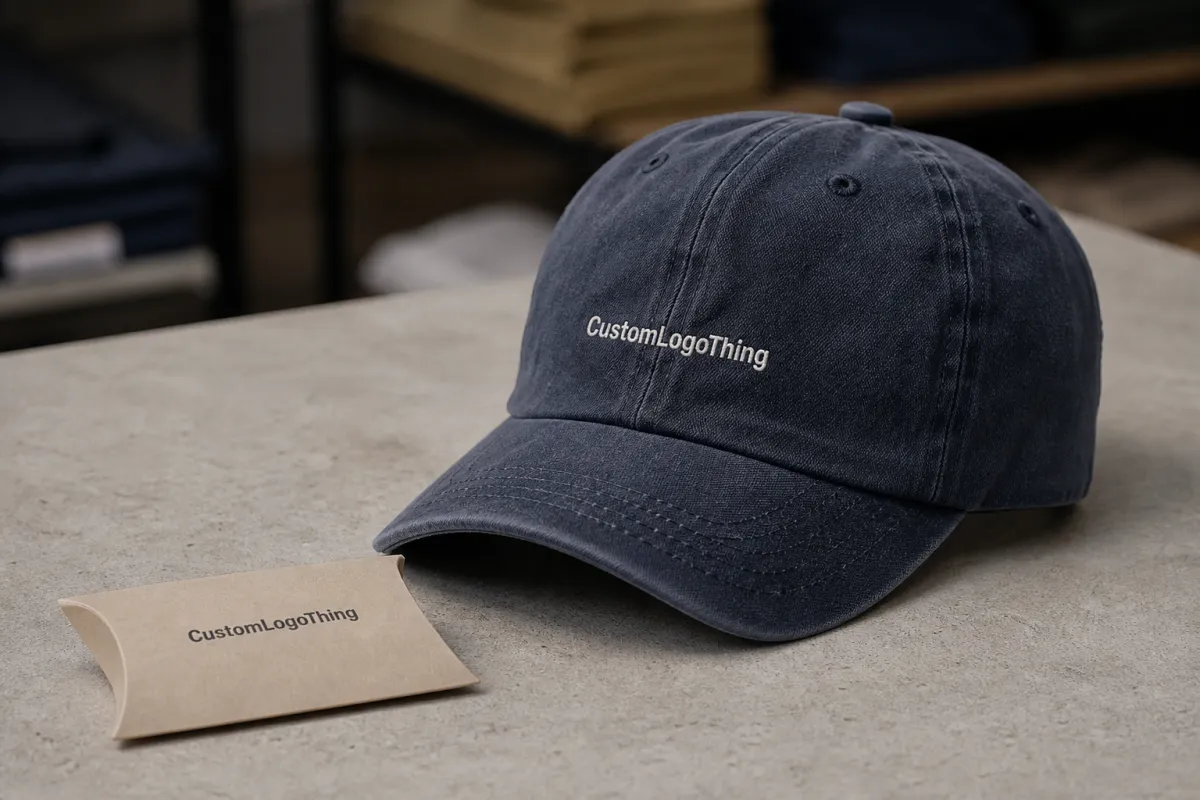
A shelf-ready cap has to pass a quick visual test. If the logo is too small, the front panel is too soft, or the color blends into the fixture, the shopper keeps moving. For that reason, contrast, logo scale, and front-panel structure matter more than decorative extras. Buyers are not judging the hat like a collector; they are deciding whether it works as a retail unit.
The most reliable shapes are still the familiar ones: unstructured six-panel builds, low-to-mid crowns, and pre-curved brims. Those profiles feel easy to wear and easy to merchandise. They also sit well beside tees, socks, and other impulse items without trying to dominate the wall.
Fabric choice affects both cost and shelf impression. Cotton chino twill usually gives the cleanest retail look and handles embroidery well. Brushed cotton feels softer and more casual. Garment-washed fabrics can read premium, but they also bring more shade variation, so they are better for relaxed assortments than tightly matched color walls.
Packaging is part of the product, not an afterthought. A clean hangtag, paper belly band, or insert can carry the brand name, price, fit cue, and care note. When those details are handled well, the hat looks intentional instead of loose. For shelf programs, product and package should behave like one system.
If a hat needs explanation, it is already losing shelf momentum.
How shelf-ready dad hat merchandising works
Merchandising starts with how the hat behaves on the fixture. Crown height changes how it sits on hooks or in stacks. Brim curve affects whether caps nest cleanly or create a bulky pile. Closure style matters too: a self-fabric strap with a brass slide often looks cleaner than a chunky plastic closure, while a low-profile metal buckle can feel more premium if the rest of the build supports it.
Most stores use one of four display methods: peg hooks with hang tags, folded shelf stacks, clipped packs, or countertop bins. Hooks work well when the front logo reads clearly from a distance. Shelf stacks are better for color-driven assortments. Clipped packs protect shape but add labor. Countertop displays are fast and impulse-friendly, but they expose packaging flaws because customers touch everything.
The hat and the pack-out need to sell together. A label, sticker, or belly band is doing real work if it improves readability, price clarity, or brand recognition. A $18 item should not look like a clearance leftover, and a $28 item needs enough material and finish to justify the expectation. That is where merchandising and packaging merge.
Buyers usually focus on four practical points: assortment density, restock speed, color readability, and fixture durability. A good program survives repeated handling without collapsing into a messy pile. It also has to be easy for store staff to reset. If a display takes too long to tidy, it stops getting tidied.
For a closer look at how display and pack-out decisions affect sell-through, our Case Studies page shows how different retail presentations change the way shoppers read a product wall.
Cost, pricing, and MOQ trade-offs that shape margin
Price starts with the build. Stitch count, patch type, fabric weight, closure hardware, woven labels, and custom hangtags all add cost. A basic embroidered logo on cotton twill is one profile. A woven patch, interior label set, printed insert, and retail banding is another. The difference shows up before freight is even added.
MOQ changes the math quickly. Smaller runs usually cost more per unit because setup time, digitizing, and packaging are spread across fewer hats. Larger runs lower unit cost, but they increase inventory exposure. That is the real trade-off: better pricing can mean more cash sitting in boxes, and more boxes can mean more markdown risk if the design misses.
For retail shelf programs, it helps to think in margin bands rather than quote numbers alone. If the target retail price is $24, the spec should fit that tier. Overbuilding a cap for a price point the store cannot support is one of the fastest ways to compress margin and create slow movers.
| Program tier | Typical MOQ | Common build | Approx. unit cost | Retail use |
|---|---|---|---|---|
| Entry | 100-300 pcs | Basic cotton twill, flat embroidery, simple hangtag | $5.50-$8.50 | Test runs, small boutiques, limited colors |
| Mid-tier | 500-1,000 pcs | 6-panel unstructured cap, woven label, better closure | $4.25-$6.25 | Main retail assortment, repeatable replenishment |
| Premium | 3,000+ pcs | Heavier fabric, patch work, custom packaging, retail banding | $3.10-$4.90 | Chain programs, broader distribution, seasonal color drops |
Those ranges move with decoration coverage, freight, and seasonality, so they are not promises. Still, they help buyers compare programs with the same yardstick. If the hat is going beside tees and socks, the build should feel honest at that level.
Production steps, timeline, and turnaround for buyers
A clean production flow usually follows a familiar path: artwork, spec sheet, sample, revision, purchase order, bulk production, pack-out, and ship date. Sampling and bulk turnaround are different clocks, so buyers should not treat the first approved sample as the full lead time.
For straightforward retail dad hats, sampling often takes 7-14 business days, depending on decoration method and blank availability. Bulk production usually runs 15-30 business days after approval. Custom materials, special colors, or detailed packaging can extend that. Freight and receiving add more time if the hats need to land on a store reset date instead of a warehouse dock.
The bottlenecks are usually predictable. Late logo approvals slow digitizing. Fabric sourcing slows color matching. Packaging changes made after sampling can trigger another proof cycle. None of that is dramatic by itself, but it can turn a workable launch into a rushed one. Working backward from the reset date usually keeps the schedule cleaner.
Quality control deserves its own check. Review stitch balance, logo placement, crown symmetry, sweatband comfort, and how the closure sits after the cap has been folded and reopened a few times. A hat can look perfect on a table and still arrive in-store with a bent brim or twisted strap. For retail, the question is not whether the sample looks good. It is whether it survives handling.
If cartons are part of the retail-ready plan, ask about transit testing and handling expectations. The ISTA standards are useful reference points for shipping stress, especially when product moves through distribution centers before reaching the shelf. For labels and inserts, FSC-certified paper from FSC can support a cleaner materials story without complicating the program.
Step-by-step plan to launch a retail hat program
Start with the store, not the cap. Who is buying it? Where will it sit? What price does the fixture allow? How many facings can the retailer support before the display feels crowded? Once those answers are clear, the spec becomes much easier to define.
A practical launch plan looks like this:
- Define the selling environment - boutique, gift shop, campus store, tourist shop, or general merchandise aisle.
- Choose the hat structure - unstructured, lightly structured, or a more premium build.
- Match decoration to price - embroidery for a cleaner premium signal, patch work for stronger shelf visibility.
- Set the presentation system - hangtag, belly band, sticker, insert, or clipped pack.
- Lock the carton logic - inner pack counts, master carton counts, and reorder-friendly case quantities.
Do not choose silhouette and decoration separately. A flat logo on a low-value cap can look underpriced, while a heavy patch on a lightweight blank can look overbuilt. The design needs to support the shelf story, not fight it.
Request samples early and test them on actual shelving if possible. One retailer may hang them under lighting that makes navy and black blur together. Another may stack them beneath folded apparel where contrast matters more than logo size. Those details feel small until the order is live.
For a more operational view, our custom packaging results show how small changes in presentation can change the way a retail buyer responds to the same product.
Common mistakes that make hats sit unsold
The biggest mistake is over-designing the front panel. Too many colors, tiny copy, and trend-heavy graphics often disappear from arm’s length. The hat may photograph well, but retail shelves usually reward calmer, clearer art.
Fit assumptions create another problem. A dad hat that feels good on one head shape can still return badly if the closure is awkward, the crown is too tall, or the sweatband feels stiff. Retail customers pick up the cap, adjust it, and decide within seconds whether it feels worth the price.
Presentation mistakes are just as costly. A strong cap in a sloppy pack-out can look cheap. A crooked hangtag can make the whole unit feel compromised. If the fixture gets messy after a few customer touches, the program starts losing value before replenishment arrives.
Skipping fixture tests is another common trap. Online, the hat may look great in a clean hero image. On a brick-and-mortar shelf, it might vanish next to a brighter competitor or a denser assortment. The store environment is a different medium, and the product has to earn its place there.
Many buyers underestimate how fast a tidy display becomes a cluttered one once real shoppers start touching product.
Expert tips for stronger sell-through and fewer returns
Use packaging as a selling tool. A clean label with a readable fit cue, a direct price callout, and a simple brand mark does more work than a decorative insert that never gets read. The best retail caps make the buying decision easy from a distance and reassuring up close.
Keep the opening assortment tight. Three to five colorways is often enough for a first run, especially on smaller fixtures. Too many options make the display feel busy and slow. Curated usually sells better than crowded.
Ask for pre-production proofs that show the logo, hangtag, and packaging together. A decoration that looks balanced on a flat art file can feel too small once it is placed on a real crown. A hangtag can block the front read. A belly band can wrinkle the fabric. Reviewing the full presentation catches those problems sooner.
Material quality should be visible, not loud. Dense twill, even topstitching, and a comfortable sweatband usually matter more than flashy extras. If the cap feels cheap in hand, customers notice. If it feels solid and the price makes sense, they move on to color preference instead of second-guessing the product.
Build the replenishment plan before launch. Decide what triggers reorder, which colorways stay core, and which are seasonal only. That is the difference between a one-off drop and a program. The examples in our Case Studies show how that logic changes buyer response.
Next steps before you place the order
Before requesting quotes, put together a one-page spec sheet. Include silhouette, fabric, closure, logo placement, target wholesale price, MOQ, packaging requirements, and preferred ship date. That keeps suppliers from quoting different assumptions and makes comparison easier.
Then gather the pieces that affect the build: artwork files, color references, fixture dimensions, carton expectations, and any retailer rules for labeling or pack-out. If the retailer wants shelf-ready presentation, say so early. If the cap needs to hang, stack, or clip, say that too. Small details create large differences in cost and lead time.
Request samples and pricing in the same window, then judge them against the shelf goal, not just against one another. A sample can look nice and still be wrong for the store. A less flashy cap can outperform if it reads faster, packs cleaner, and holds margin better. That is the real test for retail hats: whether they earn repeat attention on the shelf.
How many branded dad hats for retail shelves should I order for a first test run?
Start with enough inventory to cover one full display cycle plus a small backstock buffer, not just the minimum MOQ. That gives you time to measure sell-through, check how the display holds up, and decide whether the next order should expand colorways or tighten the assortment.
What decoration method works best for branded retail dad hats?
Embroidery usually gives the strongest premium signal, while patches can create a bolder shelf read from farther away. The better choice depends on the store environment and target price, because detail level affects both perception and cost.
How do MOQ and pricing change with custom hat packaging?
Higher MOQs usually lower unit cost, but they also increase inventory exposure if the design underperforms. Custom hangtags, inserts, and banding add cost, yet they can improve shelf presence enough to justify the spend.
How long does production usually take for retail-ready dad hats?
Expect the schedule to include artwork approval, sampling, revisions, bulk production, and final pack-out before shipping. Complex decoration, special materials, or late packaging changes can extend turnaround, so a buffer is smart.
What should be included in a spec sheet for retail dad hats?
Include the silhouette, fabric, closure, logo placement, target price, MOQ, and packaging instructions. Add fixture details and carton requirements so the supplier can quote a program that is actually shelf-ready.

