Dad Hats Sample Approval Checklist for Faster Sign-Off
A strong dad hats Sample Approval Checklist catches the issues that look small on a screen but become expensive in bulk. A low-profile crown can sit higher than expected, a brim can curve too sharply, and embroidery that feels centered in a mockup can drift once it is sewn.
Dad hats seem simple, but the decision points are not: crown depth, panel structure, brim curve, closure type, fabric finish, stitch density, and logo placement all affect how the final cap wears and how much it costs. The sample is the buyer's best chance to lock those details before production starts.
What a dad hats sample approval checklist catches
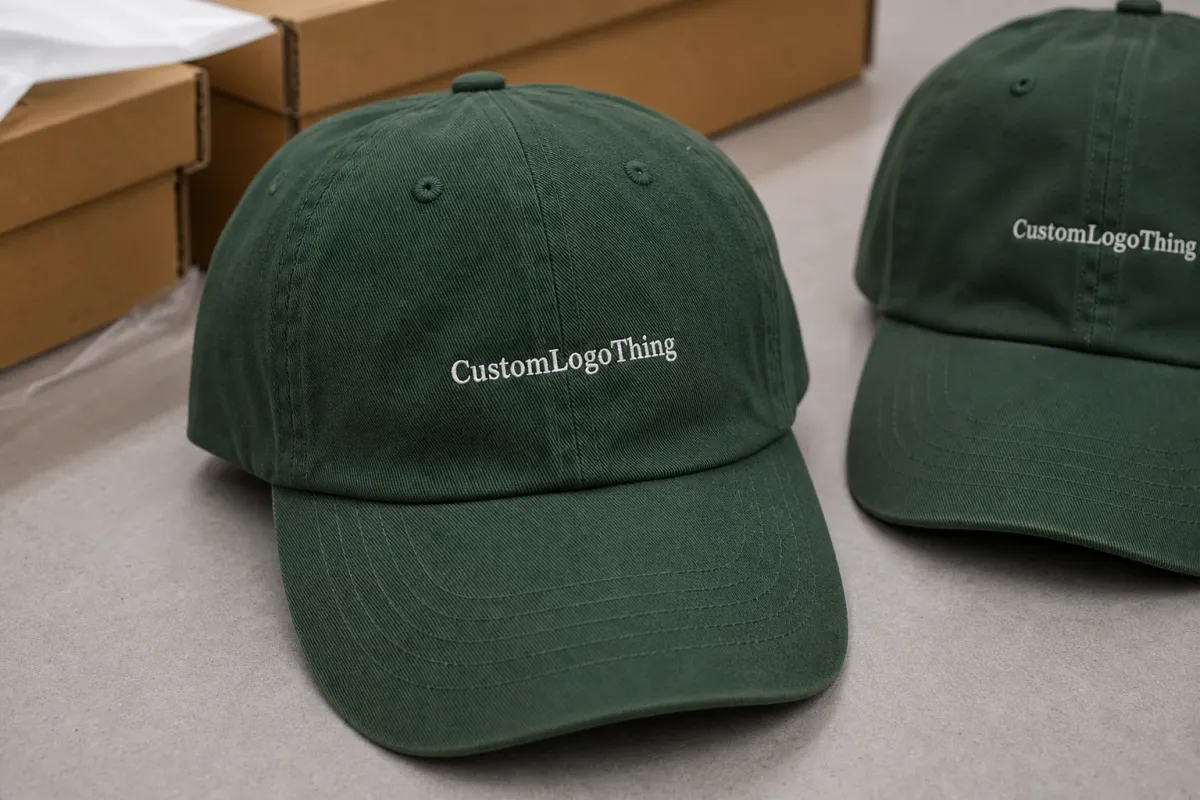
The checklist acts as a buyer-side quality gate. It catches errors before the order moves into cutting, sewing, and decoration, where even small changes are harder to fix.
Do not assume "close enough" is acceptable. A cap can look right from a distance and still fail on fit, proportion, or decoration once it is worn. The goal is to verify what the camera cannot prove.
Use the checklist to confirm the details most likely to shift:
- crown height, front panel structure, and panel symmetry
- brim width, curve, and underbill color
- logo size, centering, and stitch density
- thread color against the approved artwork or swatch
- closure type, hardware finish, and strap length
- sweatband feel, seam cleanliness, and label placement
For retail programs, promo drops, and ecommerce brands, the sample is the production baseline. If it is weak, the run usually follows that weakness. A disciplined review makes those problems visible early enough to correct.
How sample approval works from mockup to sign-off
Sample approval usually moves through four stages: mockup review, blank sample review, decorated sample review, and final sign-off. Each stage answers a different question. The mockup checks artwork direction. The blank sample checks shape, hand-feel, and closure choice. The decorated sample shows how the logo behaves on the actual cap. Final sign-off locks the standard for bulk production.
It helps to keep technical approval separate from visual approval. A design can look acceptable while still missing the spec by a few millimeters, and those misses become costly once production is underway.
A clean review usually involves these roles:
- Buyer: confirms commercial acceptability, color direction, and fit
- Merchandiser: checks quantity, timeline, and revision timing
- Brand manager: verifies artwork use, placement, and presentation
- Production or quality lead: checks tolerances, decoration method, and construction details
Feedback should be specific and measurable. "Raise logo 4 mm" helps. "Feels off" does not. Dated comments tied to marked-up photos or measurements prevent version confusion and keep the factory from guessing.
"We lost a week because three people approved three different photos of the same sample. The cap was fine. The workflow was not."
Fit, crown shape, and decoration details to verify
This is the section that usually decides whether the sample passes. Start with fit. Dad hats are low profile and often unstructured or lightly structured, but suppliers do not always use the same definitions. Check crown height, front panel collapse, and whether the side panels hold shape too aggressively. Then check the visor. A flatter brim creates a softer look; a tighter curve changes the silhouette.
Fabric choice matters too. Cotton twill is common because it is predictable and easy to decorate. Washed cotton and pigment-dyed finishes give a worn-in look, but they can introduce shade variation from lot to lot. That is not always a defect, but it should be accepted before the order is released.
Decoration deserves close inspection. Embroidery should be checked for size, legibility, and stitch density. Too dense and the fabric puckers; too light and the logo disappears at normal viewing distance. For patches, verify edge finish, border thickness, and whether the patch sits flat across seams. Applique can work well, but only if the artwork still reads clearly after trimming.
Do not leave the secondary details for later. Sweatband comfort, underbill color, metal hardware, and closure type affect both perception and price. A brass buckle may feel more premium than a plastic adjuster, but it also changes cost and weight. If the brief calls for a black or self-fabric underbill, check the physical sample, not the render.
For color, physical references beat digital references every time. Pantone is a good starting point, but fabric, thread, and trim do not all translate the same way. In many cases, a lab dip or physical swatch is the only reliable way to judge the final result. For packaging or paper components with traceable sourcing, FSC-certified materials can be part of the approval record; see FSC. If transit testing matters, the guidance at ISTA is useful.
Cost, pricing, and MOQ tradeoffs that affect approval
Sample approval is also a pricing decision. Setup charges, embroidery digitizing, trim changes, special washes, courier fees, and extra revision rounds can add cost before bulk production even begins. A sample may look inexpensive, yet still become costly if the process is not controlled.
MOQ changes how much risk to absorb. Small orders reduce exposure if the design changes late. Larger orders make every detail more important because one mistake repeats across a bigger volume. A trim change at 300 units is annoying; the same change at 8,000 units is a budget issue.
| Approval path | Typical use | Typical sample cost | Risk level | Best for |
|---|---|---|---|---|
| Blank sample only | Shape, fit, and material review | $20-$45 plus freight | Lower | Simple cap programs and early concept checks |
| Decorated sample | Logo placement and finish review | $35-$90 plus setup | Medium | Most branded orders |
| Revised sample | Post-feedback correction | $45-$120 plus rework | Higher | Complex embroidery or trim changes |
The most expensive changes are usually the ones that look minor on paper: a different closure, a second thread color, a new underbill, or a revised patch border. Those shifts can change labor time, materials, or both. A clear approval checklist helps lock those decisions before production starts.
Process and turnaround: what happens after the sample lands
Once the sample arrives, the review window closes quickly. Most teams need 24 to 72 hours to inspect the cap, circulate comments, and agree on a response. If marketing, sales, operations, and brand all need sign-off, the timeline stretches fast. The bottleneck is usually not the inspection itself; it is the number of people who need to agree.
A clean review process keeps the order moving. Measure the cap, compare it with the approved spec sheet, photograph the front, side, back, and interior, and record every correction in writing. Then send one consolidated response instead of a trail of scattered comments.
Lead time after sign-off depends on what remains unresolved. Fabric sourcing may already be done, while embroidery capacity or packaging materials may still be pending. If the approved sample includes custom tissue, hangtags, woven labels, or carton markings, those items should be confirmed at the same time as the cap itself.
A realistic timing benchmark looks like this:
- Sample delivered to reviewer: day 1
- Internal review and comments: day 1 to day 3
- Revised sample, if needed: usually 5 to 10 business days
- Production slot confirmation after approval: often 1 to 3 business days
- Bulk ship date update: once materials and sewing capacity are locked
Those timelines slip when the sample arrives without a matching spec sheet, when artwork is outdated, or when the factory is waiting for packaging approval. The fastest route is not always the quickest yes. It is the first yes backed by the right reference.
Step-by-step approval workflow for clean reorders
Reorders move faster when the first approval record is complete. The best workflow ends with an archive that production can actually use: spec sheet, annotated photos, artwork files, measurement notes, and the exact sample that was approved. Without that record, every repeat order becomes a new debate.
A simple process helps keep the file clean:
- Confirm the current spec sheet before opening the sample.
- Inspect the cap against the last approved version side by side.
- Mark each issue with a number, location, and requested fix.
- Send one correction file instead of multiple scattered messages.
- Archive the approved standard in a shared folder.
Side-by-side comparison is underrated. Small changes hide easily when a hat is viewed alone. A brim curve that seems fine by itself can look different next to the prior run, and the same is true for thread tone or crown structure after a material swap. Records are better than memory.
If the approved order includes a tolerance range, write it down clearly. "Acceptable within 2 mm" is useful. "Close enough" is not. The same applies to packaging. If the cartons, size stickers, or insert cards must follow a specific layout, those details belong in the approval file before bulk production begins.
Common mistakes that derail dad hat approvals
The biggest mistake is approving from digital images alone. A render can confirm artwork direction, but it cannot verify crown feel, seam tension, or how the cap sits after wear. Another common error is skipping measurement checks because the sample "looks close enough."
Packaging details also create problems. Carton labels, polybag presentation, tissue color, and size stickers can force relabeling or repacking after the cap itself has passed inspection. That adds handling time and introduces another chance for damage.
Vague feedback slows everything down. "Needs adjustment" does not tell production what to move, trim, or remake. Clear direction does. The most useful comments include location, amount, and desired result. That may feel tedious, but it shortens the revision loop.
One more trap is approving before the internal team agrees on a spec change. A rushed yes can trigger expensive corrections later. The checklist should help the team align first, then sign off once.
Expert tips and next steps before production starts
If the review needs to move faster, score it. A simple sheet with five categories usually works well: fit, decoration, color, closure, and packaging. Give each one a score from 1 to 5 and write the reason beside it. That makes decisions easier to compare when the buyer and merchandiser are not the same person.
Freeze the final documents immediately after approval. That means the spec sheet, the approved artwork, the photos of the signed-off sample, and any tolerance notes. Put everything in one folder and make sure the production team can find it without asking twice.
Before bulk cutting begins, set one final review deadline and confirm any open tolerance ranges. If the order requires a specific carton layout or insert card, release the purchase order only after those details are locked. The fewer assumptions left for production, the fewer surprises later.
Three habits usually separate smooth approvals from messy ones:
- send comments in one consolidated file
- request a revised sample only when the issue affects fit, logo integrity, color, or packaging
- archive the approved standard for future reorders
- confirm the production schedule before the first cut is made
Used well, the dad Hats Sample Approval Checklist is not administrative clutter. It is the difference between a clean launch and a chain of corrections that eat time, labor, and margin.
What should be on a dad hats sample approval checklist?
Include fit, crown shape, brim curve, closure type, embroidery or patch placement, color match, and packaging details. Add measurement checkpoints and photo documentation so the approved sample can be compared against bulk production later.
How long does dad hat sample approval usually take?
Most approvals move through a few review cycles, but timing depends on shipping speed, internal response time, and whether revisions are needed. A clean first sample can be approved quickly; unclear feedback or spec changes usually add several days or more.
What affects dad hat sample approval cost and MOQ?
Sample fees, decoration setup, extra revisions, and special trims are the main cost drivers. MOQ changes the unit price and how much risk you want to absorb before releasing bulk production.
Can I approve a digital mockup instead of a physical sample?
A mockup can confirm artwork placement and color direction, but it cannot fully verify fit, structure, or hand-feel. For most buyers, a physical sample is the safer approval standard before bulk production starts.
What happens after I approve the dad hat sample?
The approved sample becomes the production reference, and the spec sheet, artwork, and order details should be locked immediately. After sign-off, the supplier can finalize the schedule, confirm lead time, and release the bulk order into production.