Dirt bike Stickers Custom Made for a specific bike are usually the first thing people notice in the pits. The better kits are doing quieter work too: shielding plastics from boot rub, knee wear, mud, UV exposure, fuel splash, and the weekly pressure-washer punishment riders insist is “just a quick rinse.”
These are not laptop stickers with a motocross font dropped on top. A proper kit uses thick outdoor vinyl, aggressive adhesive, protective laminate, and cut shapes built for actual bike panels: shrouds, number plates, swingarms, fork guards, fenders, airbox panels, and the small trim pieces that somehow get forgotten until proofing.
Why Dirt Bike Stickers Custom Orders Are More Than Decoration
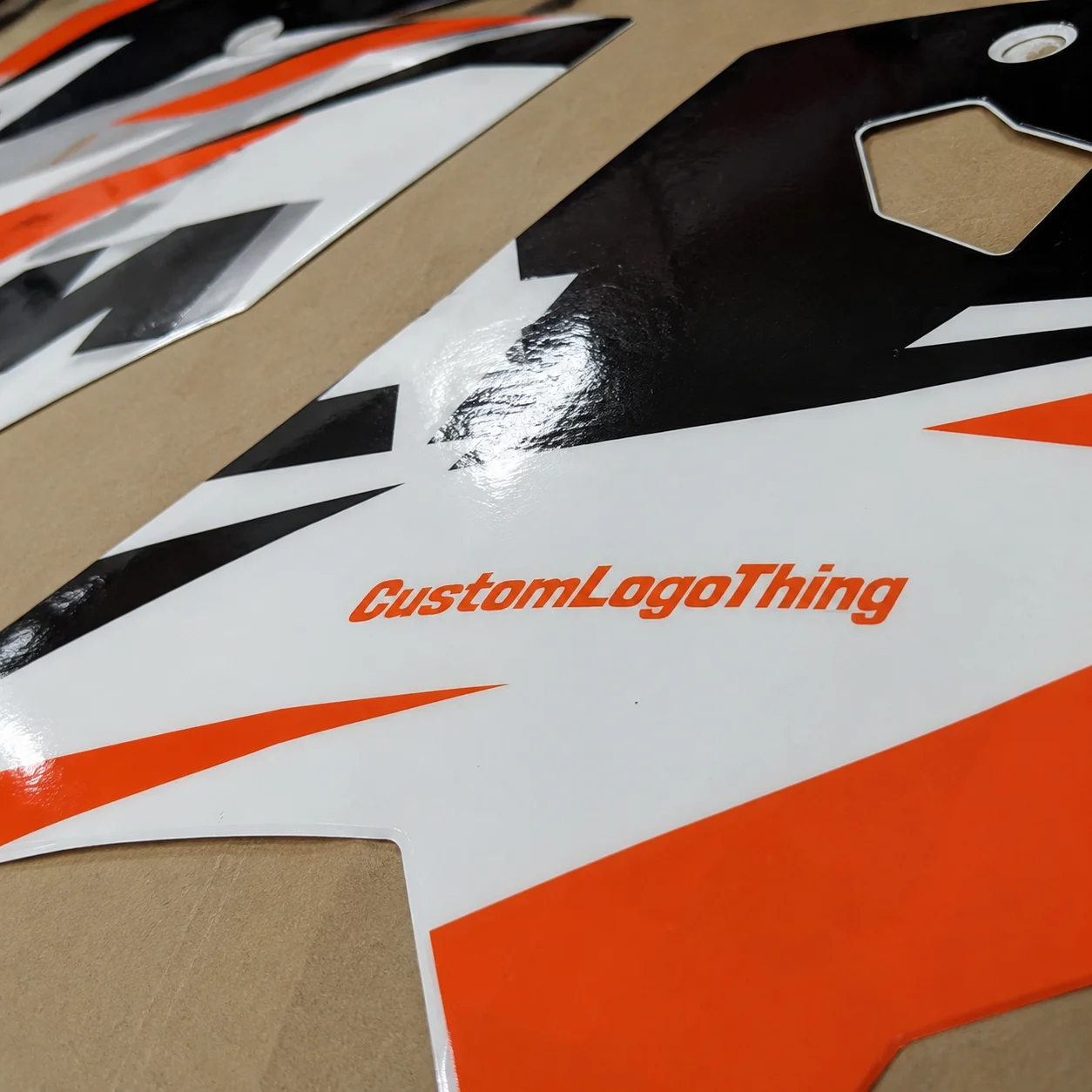
A good graphics kit has three jobs. It makes the bike look intentional instead of assembled from leftover sponsor decals. It keeps rider numbers, shop logos, and team branding readable at speed. It also protects expensive plastics from the routine damage of riding, loading, unloading, and race-day contact.
That protection matters because a dirt bike lives a harder life than most printed products. Retail packaging may sit under store lights for weeks. A shroud decal gets bent around a compound curve, rubbed by knees, blasted with mud, and hit with cleaners. The material has to match the environment, not just the product photo.
Typical buyers range from weekend riders and youth teams to motocross shops, parts brands, event promoters, dealerships, and race programs. A dealership may need five matching kits for demo bikes. A youth team might need twenty sets with different names and numbers. A private rider may only need one clean kit that does not peel after two rides. Same category. Different production math.
The common mistake is shopping only by the lowest quote. Thin vinyl with weak adhesive and no laminate can look fine on day one, then start lifting around sharp corners after heat, flex, and washing. Once dirt gets under the edge, failure speeds up.
For a smarter order, think like a packaging buyer. Specs matter. Artwork matters. Lead time matters. Anyone who has compared Custom Labels & Tags for outdoor use against indoor retail labels already understands the principle: same broad product family, very different performance requirements.
How Custom Dirt Bike Sticker Kits Actually Work
The basic workflow is straightforward if the buyer sends useful details. Confirm the bike make, model, year range, and plastics setup. Decide which panels need decals. Provide logos, numbers, colors, rider names, and sponsor priorities. Then review a digital proof before production starts.
Individual decals and full graphics kits are not the same order. Individual pieces may include a front number plate, a fork guard logo, a swingarm sponsor mark, or a shop badge. A full custom dirt bike graphics kit may include radiator shrouds, front and side number plates, airbox panels, fork guards, swingarm strips, front and rear fenders, tank accents, and smaller sponsor labels.
Most kits are built in layers. The printed vinyl carries the design. The adhesive bonds the decal to curved plastic. The laminate protects the ink from abrasion, sun, fuel drips, mud, water, and repeated washing. On race graphics, laminate is not decoration. It is the working surface.
Cut accuracy separates clean kits from frustrating ones. Good suppliers use templates matched to specific plastics, but riders still need to confirm aftermarket parts, restyle kits, oversized tanks, and swapped panels. OEM-style fit is not magic. It comes from correct templates, practical measurements, and proofing that respects bolt holes, vents, curves, and exposed edges.
Full-color digital printing is standard for race graphics, gradients, photos, number effects, and multi-sponsor layouts. Spot-color matching can help when exact team colors or brand colors matter, though a laminated vinyl print will not always match paint, apparel, Custom Printed Boxes, or other package branding materials. Different substrates reflect light differently. Annoying, but true.
Material Specs That Decide Whether Decals Survive a Season
Motocross-grade vinyl is usually thicker and tougher than standard promotional sticker stock. Many serious dirt bike decal kits land around 12 to 21 mil total thickness after vinyl, adhesive, and laminate are combined. Some suppliers quote only the vinyl layer, which makes comparisons messy. Ask for the finished construction, not just a marketing phrase.
Thicker material feels more substantial and resists tearing on high-contact panels such as shrouds and side plates. Too thick, though, and it becomes harder to bend around tight curves without heat, patience, and steady pressure. That is the tradeoff: toughness versus installability.
Laminate finish changes both appearance and wear behavior. Gloss laminate gives the sharp race look, deepens color, and wipes clean well. Matte laminate reduces glare and hides light scuffs better, especially on dark designs and trail bikes that see constant brush, mud, and cleaning. Either finish should be rated for outdoor exposure and normal washing.
Adhesive deserves more attention than it usually gets. Dirt bike plastics are curved, sometimes slightly textured, and exposed to vibration, heat, fuel, and cleaning products. Weak adhesive fails first at edges, tight bends, and narrow strips. If the design has skinny points or sharp corners, adhesive quality and rounded cut paths become even more important.
Print quality is not only about rich color. Rider numbers need strong contrast from a useful distance. Sponsor logos should stay crisp. Small marks need enough resolution to justify their space. If a logo looks fuzzy in the proof, it will not become premium after printing. The printer is not a rescue service for bad files.
Fuel and cleaner resistance depends on laminate, ink system, adhesive, and care. No decal is bulletproof. Gas left sitting on an edge can cause swelling or lifting. Harsh degreasers can shorten decal life. Pressure-washing directly into seams is asking for trouble. ASTM test methods are widely used across print and adhesive industries to evaluate properties such as adhesion, abrasion, and weathering; buyers do not need to memorize them, but asking about outdoor durability testing is reasonable. For broader materials context, organizations such as PMMI and ASTM International are useful references.
Fit can ruin great material. Premium vinyl still looks amateur if the template misses a contour, blocks a bolt hole, or ignores a vent cut. Good graphics are designed around panel geometry, not stretched across the bike like a poster.
Pricing, MOQ, and Unit Cost for Dirt Bike Decals
Pricing depends on decal area, material grade, laminate, artwork cleanup, color matching, template complexity, quantity, and packing. A small sponsor decal may cost only a few dollars. A full custom graphics kit costs more because it involves design setup, large-format printing, lamination, precision cutting, sheet organization, quality checks, and protective packing.
For planning, one-off full kits often fall around $120 to $350 per kit, depending on coverage and design complexity. Basic number plate sets may run around $35 to $90. Small logo decal batches might range from $0.75 to $4.00 per piece depending on size, finish, and quantity. These are planning ranges, not a universal price list.
MOQ is another misunderstood piece. Many suppliers can produce low quantities, even one kit, but unit cost rises because setup time does not disappear on a tiny order. Preparing artwork, loading material, printing, laminating, cutting, checking, and packing all take labor whether the order is one kit or fifty.
| Order Type | Typical Use | Planning Price Range | Best Buyer Fit |
|---|---|---|---|
| Small individual decals | Fork logos, sponsor marks, shop badges | $0.75-$4.00 each in batches | Parts brands, shops, event giveaways |
| Number plate set | Front and side plates with rider number/name | $35-$90 per set | Racers needing readable numbers fast |
| Partial graphics kit | Shrouds, plates, fork guards, swingarm strips | $80-$180 per kit | Riders refreshing key visible areas |
| Full custom graphics kit | Complete bike coverage with logos and race design | $120-$350 per kit | Teams, serious riders, dealerships |
| Bulk team or shop kits | 10, 25, or 50 coordinated kits | Lower unit cost after setup | Race teams, camps, branded programs |
One kit gives maximum flexibility. Ten, twenty-five, or fifty kits usually improve unit economics because design and production setup are spread across more pieces. That matters for teams, dealerships, camps, and merchandise programs where consistent branding is part of the value.
Quote accuracy improves when buyers send real details: bike model, plastics type, decal coverage, quantity, finish preference, artwork status, and deadline. “How much for dirt bike stickers custom?” is too vague by itself. A front plate decal and a full laminated kit are not the same product. Compare quotes by spec, not just by the bottom number.
Process and Timeline From Artwork to Finished Stickers
A clean order follows a predictable path: quote request, artwork submission, bike detail confirmation, design proof, revisions, final approval, printing, lamination, cutting, quality check, packing, and shipping. If one step stalls, the whole timeline moves.
Artwork readiness is the biggest speed factor. Vector logos in AI, EPS, SVG, or clean PDF files move fastest. High-resolution transparent PNG files can work for some logos. Screenshots from social media are emergency rations: useful only when nothing better exists, and nobody should be proud of them.
The proof is where buyers should slow down. Check spelling, rider number, class, sponsor placement, logo hierarchy, color contrast, panel fit, and any rule requirements for racing numbers. Approval means approval. If the wrong number gets printed because the proof was reviewed while half-watching practice footage, that is not a production defect.
Typical timing varies. A repeat order with approved artwork might move in 3 to 7 business days before shipping, depending on queue and quantity. A first-time full kit with many logos, revisions, and color requests often needs 7 to 15 business days after proof approval. Larger team orders or event batches can take longer, especially if every rider has different numbers, names, and sponsor placements.
Practical callout: Race-week panic orders are sometimes possible, but they are not a production plan. Build in time for proofing, manufacturing, and shipping. Carriers do not care that your first moto is Saturday.
Teams should order before plastics are installed when possible. Flat, clean plastics are easier to work with, and extra time helps if templates need confirmation. For dealerships and branded packaging programs, the same discipline applies: lock the design before the launch date, not while someone is loading bikes into a trailer.
Step-by-Step Guide to Ordering the Right Sticker Kit
- Identify the exact bike and plastics. Send the make, model, engine size, year range, and plastics setup. Mention aftermarket plastics, oversized tanks, restyle kits, or swapped panels because templates depend on real shapes.
- Decide the coverage. Choose number plates only, sponsor decals, fork and swingarm stickers, partial graphics, or a full shroud-to-fender kit. More coverage means more design time and larger print area.
- Gather artwork. Provide vector logos when possible, official brand colors, rider name, race number, class, team name, and sponsor order. If one sponsor must appear larger than another, say that early.
- Choose finish and durability level. Pick gloss or matte laminate. Ask whether the vinyl is suitable for motocross use, outdoor exposure, fuel splash, and washing rather than general indoor sticker use.
- Review the proof carefully. Check numbers, spelling, logo quality, alignment, edge spacing, cut lines, and contrast before approving production.
- Prepare for installation. Clean plastics thoroughly, remove waxy residue, dry all edges, work in a warm area, use steady pressure, and give adhesive time to bond before riding or washing.
- Store extras flat and clean. Spare number decals and sponsor marks are useful after a crash, panel replacement, or mid-season sponsor change.
Buyers already ordering Custom Packaging Products will recognize the structure. You are still managing artwork, substrate, finish, quantity, proofing, and deadlines. The difference is that dirt bike graphics take more physical abuse than most product packaging, so the material spec deserves more scrutiny.
Good design needs restraint. A dirt bike has limited visual real estate. Large numbers, clean logo hierarchy, and strong contrast usually beat ten effects fighting for attention. Packaging design follows the same rule: if everything screams, nothing reads.
Common Mistakes That Make Custom Bike Stickers Fail
Mistake 1: using the wrong material. Standard paper stickers or thin promotional vinyl are not built for mud, flexing plastics, boot rub, fuel, and pressure washing. They might survive on a toolbox. A radiator shroud is a different animal.
Mistake 2: sending low-resolution artwork. A logo pulled from social media may look acceptable on a phone, then turn into pixel soup when printed across a shroud. For clean output, send vector art or high-resolution files at final print size.
Mistake 3: ignoring bike fit. Riders forget to mention aftermarket plastics, restyled bodywork, or panel swaps. Then the decal does not line up, and everyone acts surprised. Templates are only accurate if the bike information is accurate.
Mistake 4: overloading the design. Too many logos, colors, outlines, shadows, textures, and number effects create a sticker landfill. Race graphics need hierarchy. Put the rider number first, major sponsors second, supporting marks third.
Mistake 5: approving proofs too quickly. Misspelled names, wrong numbers, inverted colors, and missing sponsors usually come from rushed review. Print production rewards boring attention to detail. Not glamorous. Very useful.
Mistake 6: installing on dirty or cold plastics. Adhesive needs a clean, dry surface and a reasonable temperature. Around 65°F to 80°F is a practical installation range for many pressure-sensitive films, although supplier instructions should always win.
Mistake 7: washing too soon. Give decals time to bond before pressure washing, heavy mud, or aggressive chemicals. Many adhesives benefit from 24 to 48 hours before serious abuse. That patience can add weeks or months of better edge life.
What to Prepare Before Requesting a Quote
Before asking for pricing, collect the details that make a quote useful. Send the bike make, model, plastics type, decal coverage, quantity, rider number, rider name, sponsor logos, finish preference, and deadline. If you need five kits for a team or twenty-five sponsor decal sheets for an event, say that up front.
Separate must-have details from nice-to-have design ideas. Must-haves include correct fit, readable numbers, approved logos, durable laminate, and a realistic delivery date. Nice-to-haves include wild background textures, chrome-style effects, extra sponsor placements, and complicated gradients. Fun, yes. Essential, not always.
Put artwork in one folder before contacting a supplier. Vector files are best. High-resolution transparent PNG files may work for some logos. Screenshots should be treated as a last resort because a designer can only rescue so much before the job turns into paid archaeology.
- What finished vinyl thickness is used for motocross graphics?
- Is the print protected with gloss or matte laminate?
- Are templates matched to my exact plastics?
- Can I review a proof before production?
- What is the estimated lead time after approval?
- How should the decals be installed and cured before riding?
Order ahead for race events, team launches, dealership promotions, and branded merchandise programs. Shipping delays do not care about moto schedules. Once the specs, artwork, quantity, and deadline are clear, a custom dirt bike sticker order becomes manageable instead of a guessing game.
FAQ
What are dirt bike stickers custom made from?
Most quality custom dirt bike stickers use durable printed vinyl with strong adhesive and a protective gloss or matte laminate. Motocross-grade materials are thicker and tougher than standard promotional stickers because they need to handle mud, washing, fuel splash, sunlight, and boot rub. For race bikes, ask specifically for laminated outdoor vinyl made for powersports use.
How much do custom dirt bike sticker kits cost?
Cost depends on decal coverage, quantity, vinyl grade, laminate, artwork complexity, and whether design help is needed. Small individual decals cost less, while full bike graphics kits cost more because they involve larger print area, templates, lamination, and precision cutting. Bulk orders usually lower the unit cost, but one-off custom kits carry more setup cost per piece.
How long is the turnaround for custom motocross decals?
Turnaround depends on artwork readiness, proof approval speed, production queue, quantity, and shipping method. A repeat order with approved artwork is usually faster than a first-time design with many sponsor logos and revisions. If stickers are needed for a race or launch date, build in extra time instead of treating rush production like a personality trait.
Can custom dirt bike graphics fit aftermarket plastics?
Yes, but the supplier needs the exact plastics brand, model compatibility, and restyle information. Aftermarket plastics can differ from OEM shapes, so standard templates may not fit perfectly. Photos, measurements, or template confirmation can prevent expensive fit problems.
How do I install custom dirt bike stickers without peeling?
Clean the plastics thoroughly, remove grease or wax, dry all edges, and install in a warm environment. Align panels carefully before applying pressure, then work from the center outward to push out air. Let the adhesive bond before riding hard, washing, or exposing the decals to heavy mud and chemicals.