Buyer Fit Snapshot
| Best fit | Eco Friendly Box Inserts with Logo projects where brand print, material claims, artwork control, MOQ, and repeat-order consistency need to be specified before quoting. |
|---|---|
| Quote inputs | Share finished size, material target, print colors, finish, packing count, annual reorder estimate, ship-to region, and any compliance wording. |
| Proofing check | Approve dieline scale, logo placement, barcode or warning zones, color tolerance, closure strength, and carton packing before bulk production. |
| Main risk | Vague material claims, crowded artwork, missing packing details, or unclear freight terms can make a low unit price expensive after revisions. |
Fast answer: Eco Friendly Box Inserts with Logo: Board, Finish, Dieline, and Unit Cost should be specified like a repeatable production item. The safest quote records material, print method, finish, artwork proof, packing count, and reorder notes in one written spec.
Production checks before approval
Compare the actual filled-product size with the drawing, then confirm tolerance on folds, seals, hang holes, label areas, and retail display edges. Reserve space for logos, QR codes, warning copy, and material claims before decorative graphics fill the panel.
Quote comparison points
Review material grade, print process, finish, sampling route, tooling charges, carton quantity, and freight assumptions side by side. A quote is only useful when the supplier can repeat the same color, closure quality, and packing count on the next order.
Eco Friendly Box Inserts With Logo: What Buyers Should Know
Eco friendly box Inserts With Logo do more than sit inside a carton and signal good intentions. They steady the product, protect edges and finishes, and make the unboxing feel designed rather than improvised. The outer box gets the first glance. The insert does the practical work.
That balance matters because a strong insert has to do three jobs at once. It keeps the item in place, it supports the unboxing experience, and it backs up the sustainability message that appears on the pack before the customer ever handles the product. Miss one of those and the result is familiar: wasted material, damaged goods, or packaging that photographs well but fails in fulfillment. That trade is rarely worth it.
For brands trying to balance presentation, protection, and material responsibility, the insert is often the most efficient place to make a measurable improvement. A product does not need a dramatic foam sculpture to survive shipping. It needs the right structure, the right material, and a logo placement that does not interfere with the insert’s real purpose.
What Eco Friendly Box Inserts With Logo Actually Do
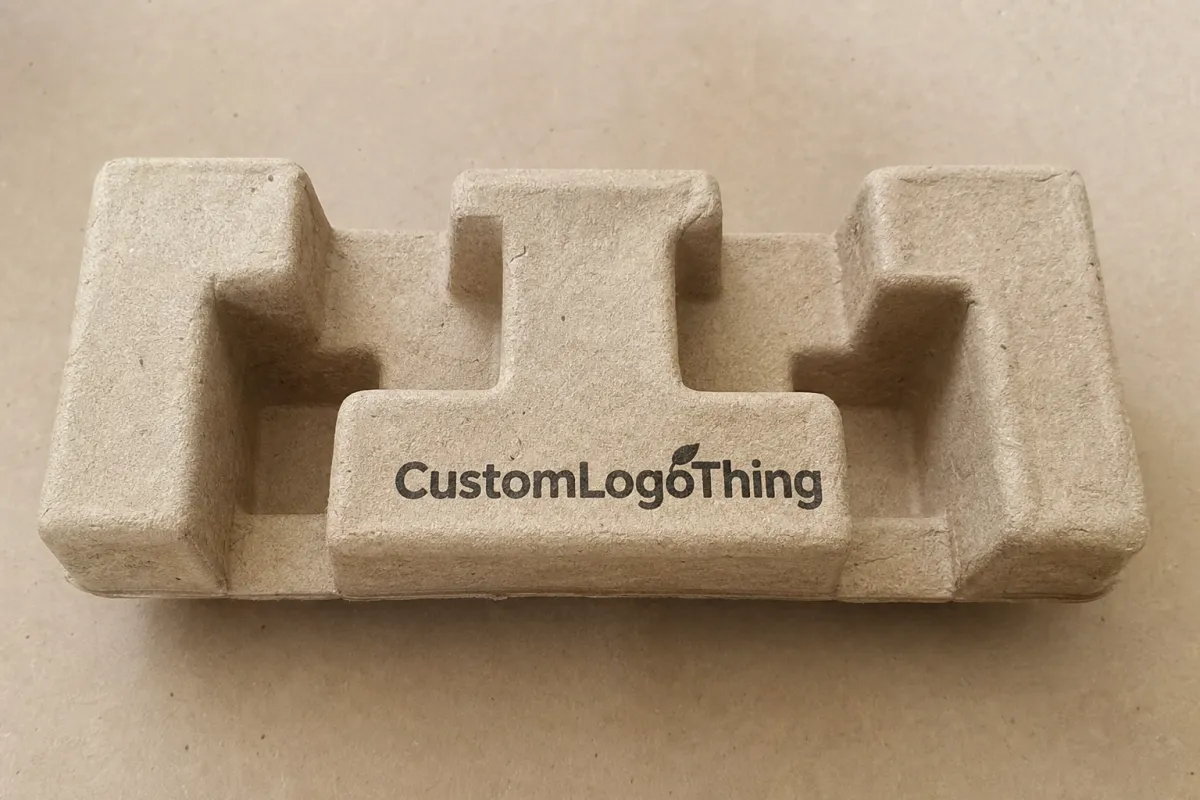
Picture a common failure. The outer box arrives intact, but the item inside has shifted just enough to chip a corner, scuff a coated surface, or separate a kit into loose pieces. The customer opens the parcel and sees damage before they see the brand. That is the gap an insert closes. It is not decoration. It is containment with a job to do.
Eco friendly box inserts with logo are inner packaging components made from materials such as recyclable paperboard, corrugated board, molded fiber, or paper pulp. They can be printed, embossed, stamped, or marked with a restrained logo panel. The sustainability side comes from the material choice, the sourcing, and the decision to avoid unnecessary plastic or mixed-material waste. The logo is the brand layer, and it can be quiet or more expressive depending on the product and the experience you want to create.
A practical benefit gets overlooked constantly: a well-built insert creates repeatable pack-out. Fulfillment teams value that because it reduces guesswork. A fixed cavity or a clear fold sequence speeds packing and cuts errors. The product lands where it should, every time. Not glamorous. Very useful. That is the point.
One more distinction matters. An insert is not the same as loose void fill. Paper crinkle, kraft paper, air pillows, and similar fillers can occupy empty space, but they do not lock a product in place with the precision of a formed insert or custom tray. A tray supports. A divider separates. A molded holder cradles. A single insert can do more than one of those jobs if the structure is designed properly.
- Insert: a shaped inner component that holds one or more products in place.
- Tray: a flat or shallow formed piece that supports the product from below.
- Divider: a partition used to separate items inside the box.
- Molded holder: a shaped fiber or pulp part that forms around the product for grip and shock control.
Sustainable does not have to mean fragile. The better eco friendly inserts usually look simpler for a reason: less material, fewer coatings, tighter fit. That is the trick. If the insert wastes space or adds layers that do nothing, it is not a better design. It is just a greener story wrapped around a weak structure.
"If the insert rattles, the product feels cheaper even when the box looks expensive."
For sourcing and compliance research, two useful starting points are the Forest Stewardship Council for responsibly sourced paper materials and ISTA for transit testing methods. They will not choose a material for you, but they will keep the discussion tied to real standards instead of brochure language.
How Eco Friendly Box Inserts With Logo Work in Packaging
The process starts with the product, not the box. That sounds obvious until someone orders packaging based on carton dimensions alone and then wonders why the item still slides around like loose hardware in a drawer. A good insert design begins with item size, weight, finish sensitivity, and the order in which the product is packed. Heavy product first? Fragile accessories nested separately? One cavity for the main item and another for the cable, charger, or instruction card? Every answer changes the geometry.
From there, the designer builds the cavity or fold structure to keep the item stable in transit. The goal is not only a snug fit. The goal is controlled movement. A product should not slam into a wall during handling, and it should not be pinched so tightly that assembly becomes a struggle. The best fit leaves a little tolerance without leaving room for failure. Too loose and the package fails. Too tight and the line slows down or the product gets pressure marks. Packaging math is rarely elegant, but it is always unforgiving.
The logo can be added in several ways. A simple one-color print on the top face is the least complicated option. A blind emboss or deboss can make the branding feel considered without adding ink coverage. Some brands print inside a flap so the logo appears during unboxing rather than on the most structurally stressed area. That usually works better than covering every visible surface with ink and then pretending recycling will not notice.
Typical production formats include:
- Die-cut paperboard inserts for lightweight to medium-weight products, cosmetics, accessories, and gift sets.
- Corrugated inserts for heavier items or products that need more vertical support and edge resistance.
- Molded fiber trays for items that benefit from a formed cradle and a natural material look.
- Paper pulp trays for electronics, home goods, and kits that need a repeatable cavity shape.
Each format carries a different branding language. Paperboard is usually the easiest path to crisp printing and clean dielines. Corrugated is practical and strong, though the surface can look more utilitarian unless the layout is handled carefully. Molded fiber and pulp signal sustainability quickly, while the print options tend to be more limited and the finish is less polished than coated board. That is not a defect. It is the material speaking plainly.
Fit with the outer box matters just as much as fit with the product. If the insert is too large, the box bulges or closes badly. If it is too small, the insert shifts and the product gets room to move. Bad sizing is expensive twice: first in wasted material, then in damaged goods or rework. Buyers know this pattern well. The polished mockup is one thing. The pallet of finished units is where the truth shows up.
For direct-to-consumer brands, the insert also controls the opening sequence. It can reveal the product in layers, hide accessories below, or frame the item so it looks deliberate the moment the lid comes off. That is not fluff. Presentation changes perceived value, and perceived value changes how much room you have in pricing. Pretty packaging does not excuse a broken product, but it absolutely affects how that product is judged.
Cost, Pricing, and MOQ for Eco Friendly Inserts
Pricing for eco friendly inserts is not mysterious. It is built from several pieces that people usually prefer not to see until the quote lands in their inbox. The main drivers are material, thickness, print coverage, shape complexity, finishing, tooling, and quantity. A simple one-color die-cut paperboard insert can be efficient. A molded fiber insert with a custom cavity and a specific surface texture sits in a different cost bracket.
Volume changes the math quickly. Unit cost usually falls as quantity rises because setup, cutting, and tooling are spread across more pieces. Small runs can feel expensive because the factory still needs to make the die, prepare the press, and set up the line. That is not a pricing trick. It is production math in plain clothes. If a tiny custom run looks pricey, that is often exactly what a small custom run costs.
MOQ, or minimum order quantity, varies by material and process. Standard paperboard inserts may be available in lower quantities if the shape is simple and the supplier already has a common board setup or existing tooling. Molded fiber and custom-formed pulp often prefer larger runs because tooling and mold preparation are not cheap. If your order is a launch test or a limited product drop, ask about short-run options and expect the unit price to reflect the extra setup.
| Insert Type | Typical Use | Cost Behavior | Branding Feel | Best For |
|---|---|---|---|---|
| Die-cut paperboard | Light to medium products | Lower tooling, better for smaller runs; price improves with volume | Clean, sharp, flexible | Cosmetics, accessories, subscription kits |
| Corrugated insert | Heavier items, protective shipping packs | Moderate cost; strong value for structural protection | Practical, natural | Bottles, electronics, home goods |
| Molded fiber tray | Formed cavities, cradle-style protection | Tooling can be higher; better economics at scale | Eco-forward, tactile | Premium consumer goods, electronics, gift packs |
| Paper pulp tray | Repeatable cavity shapes and product separation | Often efficient at larger quantities; setup matters | Natural, simple | Kits, hardware, small appliances |
For a rough buying frame, simple branded paperboard inserts may land in a lower unit-cost range at moderate volume, while custom molded or highly shaped options tend to cost more up front but can make sense once the order size grows. If you want actual numbers, ask for a quote that separates tooling, sample cost, production, and freight. One lump sum is convenient for the seller and nearly useless for comparison.
That split matters because shipping and sampling can distort the total. A low-looking unit price can hide a large die charge. A premium-looking quote may actually be fine if tooling is already amortized or if the insert replaces another component. The only honest way to compare options is to break the quote into pieces:
- Tooling or die charge
- Prototype or sample cost
- Unit production cost
- Print and finish cost
- Packing and freight
That level of detail protects you from a common mistake: comparing a standard unprinted insert against a custom printed one and pretending they are the same product. They are not. Different materials, different setup, different labor, different results.
Production Process, Timeline, and Lead Time
Most insert projects move through the same production stages, whether the order is small or large. First comes the brief: product specs, box dimensions, branding needs, sustainability target, and any shipping or regulatory concerns. Then comes the dieline or structural layout. After that, artwork is checked against the layout, and a sample or prototype is produced for fit review. Once the sample is approved, tooling and full production begin, followed by finishing, packing, and freight.
Lead time depends on the complexity of the insert and the speed of approvals. A straightforward die-cut paperboard insert with simple logo printing will usually move faster than a custom molded fiber tray that needs tooling and trial runs. The factory can only move as fast as the slowest approval in the chain, and the buyer is often that slowest approval. Unflattering, maybe. Accurate, absolutely.
Typical scheduling ranges vary, but a practical planning window looks like this:
- Simple inserts: often around 10-15 business days after proof approval, depending on volume and workload.
- Custom printed or more detailed inserts: often 15-25 business days, especially if the dieline needs revision.
- Molded or tooling-heavy formats: often 20-35 business days or more, because sample approval and mold prep take time.
Those ranges are planning ranges, not promises. If your launch date is fixed, build in slack. Freight delays happen. Proof revisions happen. Material shortages happen. The fastest way to create a mess is to treat packaging like an afterthought and approve artwork after the product is already on a boat or sitting in a warehouse.
Most delays come from a few predictable places:
- Artwork revisions after the dieline is already prepared.
- Fit problems discovered only after a sample arrives.
- Material changes requested too late in the process.
- Custom tooling that needs a second round of adjustment.
- Seasonal pressure on production and freight capacity.
If your order supports a retail launch, holiday drop, or subscription rollout, give yourself a buffer. A week of extra planning can save a month of unpleasant emails. Packaging schedule should sit inside the launch schedule, not off to the side like a minor errand.
Step-by-Step Guide to Ordering the Right Insert
The cleanest way to order eco friendly inserts is to work from the product outward. Start by measuring the item, not the box. Get length, width, height, and weight. Note whether the product has corners, lenses, lids, pumps, screens, coatings, or anything else that can be damaged by pressure or rubbing. Then decide whether the product will ship alone, with accessories, or as part of a kit.
1. Define the protection target
Ask a blunt question: what problem is the insert solving? If the answer is movement, the design needs restraint and lock-in. If the answer is scuffing, the insert needs surface separation and smooth contact points. If the answer is breakage, you may need a stronger cavity, better wall support, or a more rigid material.
That sounds basic because it is basic, and basic decisions are where many packaging errors begin. Buyers often start with aesthetics and try to force protection later. Better to choose the protection target first. It narrows the options quickly and keeps the spec honest.
2. Choose the sustainability goal
Do you need recyclable, compostable, recycled content, plastic-free, or responsibly sourced board? Those are not the same goal. A recyclable paperboard insert is not the same as a compostable molded fiber tray. Local disposal rules also matter. A material can be technically recyclable and still be awkward in a specific market if the recovery stream is weak.
For a cleaner sustainability story, ask for material details in plain language: fiber content, coating type, ink coverage, and whether adhesives or laminations affect recycling. If a supplier cannot explain that clearly, keep asking until the answer becomes specific enough to judge.
3. Match the structure to the product
Single items usually work well with a single cavity. Kits and bundles often need a multi-slot layout. Fragile or premium products may need a layered design, where one insert holds the main product and another secures accessories below. The structure should reduce movement without forcing the packer to wrestle the insert on every unit.
Assembly time belongs in the decision too. An insert that looks elegant on screen but takes 40 seconds to fold and load can damage fulfillment economics fast. Beautiful is pleasant. Efficient is better.
4. Place the logo where it helps, not where it hurts
The logo should be visible during unboxing, but not on a fold line that gets crushed or warped. Put the brand mark on a top panel, flap, or inner face the customer sees naturally. A large logo across a deep crease can look distorted and cheap. A smaller logo in the right place feels intentional and clean.
Keep ink coverage limited if sustainability and recyclability matter. Heavy print, varnish, foil, and laminated finishes can change how the insert behaves in recycling systems and how it reads visually. The goal is not to hide the brand. The goal is to place it where it adds value without creating new problems.
5. Test the real pack-out
Never approve a design based only on an empty sample. Put the actual product in the actual insert inside the actual shipper. Shake it. Close it. Open it. Drop-test it if the product is fragile. If you can, compare the result against a basic transit test or a packaging protocol such as ISTA-style handling checks. You do not need a lab for every purchase, but you do need reality.
Here is a simple buyer checklist that keeps the order on track:
- Product measurements confirmed
- Weight and fragility documented
- Material target chosen
- Logo placement approved
- Sample tested with real product
- Lead time confirmed in writing
Do those six things before signing off. It sounds basic because it is basic, and basic is where most packaging mistakes live.
Common Mistakes With Sustainable Box Inserts
The most common mistake is choosing the greenest-sounding material without checking whether it actually fits the product. A molded fiber tray can be a smart choice, but not if the product has delicate finishes that rub, or if the cavity shape is too shallow to prevent movement. The sustainability claim does not rescue a bad fit.
Oversizing is another classic error. People sometimes assume more material means more protection. Not always. A bulky insert can waste fiber, increase shipping weight, and still fail to hold the product properly. On the other side, an insert that is too tight can crush corners, dent labels, and make pack-out painfully slow. The right answer sits between those extremes.
Too much branding can also backfire. Extra ink coverage, metallic foils, glossy coatings, and decorative layers may make the insert look premium, but they can complicate recyclability and raise cost. If your goal is a clear sustainability message, restraint usually works better than dressing the insert up like a luxury gift box.
Another miss: skipping testing. Buyers will approve a polished render, then act surprised when the product arrives damaged after a normal parcel trip. That happens when no one checks compression, vibration, or drop performance. Basic testing does not need to be fancy. It just needs to happen before mass production starts.
Assembly time is the last big trap. Some inserts are easy to admire and miserable to pack. If the folding sequence has too many steps or the fit is too fiddly, labor costs climb quickly. In a fulfillment center, 10 extra seconds per unit turns into real money fast. A design that saves material but slows packing can still lose money overall.
Keep an eye on these failure points:
- Material chosen for image instead of performance
- Insert dimensions copied from the outer box rather than the product
- Print treatment that hurts recyclability
- No sample testing with a full product load
- Assembly that looks easy but eats labor time
If a supplier pushes a single answer for every product, that is a clue. Good insert design is conditional. Weight matters. Shipping method matters. Shelf appeal matters. The same structure will not suit a candle, a wireless accessory, and a ceramic item. If someone says it will, they are selling confidence, not packaging.
Expert Tips and Next Steps for Buyers
Start simple. Fewer components usually mean fewer problems. A single well-designed insert often beats a three-piece arrangement that needs careful alignment and a bit of luck. Simpler designs also tend to recycle better and cost less to produce. Fancy only matters when it earns its place.
Ask for two quotes if you can: one optimized for cost, one optimized for presentation. That comparison reveals where the money goes. Sometimes the premium version adds only a small amount per unit and gives you a much better unboxing. Other times the premium version is mostly cosmetic and not worth the jump. You will not know until you see the split.
Compare samples with the real product inside the real shipper. Not on a desk. Not under flattering lighting. In the actual package stack the customer will receive. Packaging behaves differently once the box is closed and the insert is carrying load. A flat sample can lie to you. The packed sample usually does not.
Confirm the print area, ink limit, and any recycling notes before artwork is finalized. The last thing you want is to learn that the logo needs a smaller safe zone after the dieline has already been approved. Ask the supplier what can be printed cleanly, what needs to stay blank, and which finishes are compatible with your sustainability target.
For buyers trying to make a decision quickly, this order of operations works well:
- Gather product dimensions and weight.
- Pick two material candidates.
- Request a quote with tooling, sample, and shipping broken out.
- Review the dieline and logo placement.
- Approve a sample only after it is tested with the real product.
- Confirm lead time before launch dates are fixed.
Practical truth: eco friendly packaging usually improves when you remove unnecessary complexity. That is good news for budget, better news for assembly, and best news for customers who want packaging that feels considered instead of performative.
If you are buying for a new launch, a retail program, or a subscription box line, gather your measurements, choose two material options, and request a prototype before you commit to full production. That is the clean path. It protects the product, keeps the schedule honest, and gives your brand a better shot at packaging that works in the real world. The smartest eco friendly box inserts with logo are the ones that fit the product, respect the budget, and still look like they belong to the brand the moment the lid comes off.
Frequently Asked Questions
What are eco friendly box inserts with logo usually made from?
Common materials include recyclable paperboard, corrugated board, molded fiber, and paper pulp. The best choice depends on product weight, fragility, moisture exposure, and the look you want during unboxing. If you want a cleaner sustainability story, ask whether the material is recyclable in your target market and whether the print finish affects that.
How much do eco friendly box inserts with logo cost per unit?
Pricing depends on material, thickness, print coverage, die-cut complexity, and order quantity. Low-volume runs usually carry a higher unit cost because tooling and setup are spread across fewer pieces. A proper quote should separate sample cost, tooling, production, and shipping so you can compare apples to apples.
What is the usual lead time for custom logo box inserts?
Simple inserts can move faster than molded or highly customized designs, but approvals can slow everything down. Expect the schedule to include design review, sample approval, production, finishing, and freight. If your launch date matters, build in buffer time and avoid waiting until the last minute to approve artwork.
Can eco friendly inserts protect fragile products as well as plastic?
Yes, if the insert is designed correctly for the product and shipping conditions. Rigid paperboard, corrugated structures, and molded fiber can perform very well when the fit is tight and the cavity is right. The real mistake is assuming any sustainable material will work without testing.
Do I need a minimum order quantity for logo-printed inserts?
Usually yes, especially if the insert needs custom tooling or a unique shape. Some suppliers can handle smaller runs, but the per-unit price is often higher. If you are testing a new product, ask for a prototype or short-run option before committing to a large order.


