jewelry twisted handle paper bags Unit Cost Review is less about packaging trivia than about retail math. The bag affects perceived value, storage efficiency, reordering speed, and the final margin on a sale. For jewelry counters, gift desks, repair services, and small branded boutiques, the carrier is often the first physical proof that the purchase was handled with care.
That is why buyers should treat the bag as a working part of the sales system. A well-made Twisted Handle Paper bag can support a ring box, a small pouch, a pendant case, or a gift-card set without collapsing at the bottom or fraying at the handle. It stores flat, prints cleanly, and usually travels better than decorative alternatives that look good in a mockup but fail in daily use. The useful question is not whether the bag feels premium in a sample photo. It is whether the landed cost still works after setup, freight, and expected waste are included.
Why jewelry buyers notice these bags on the shelf first
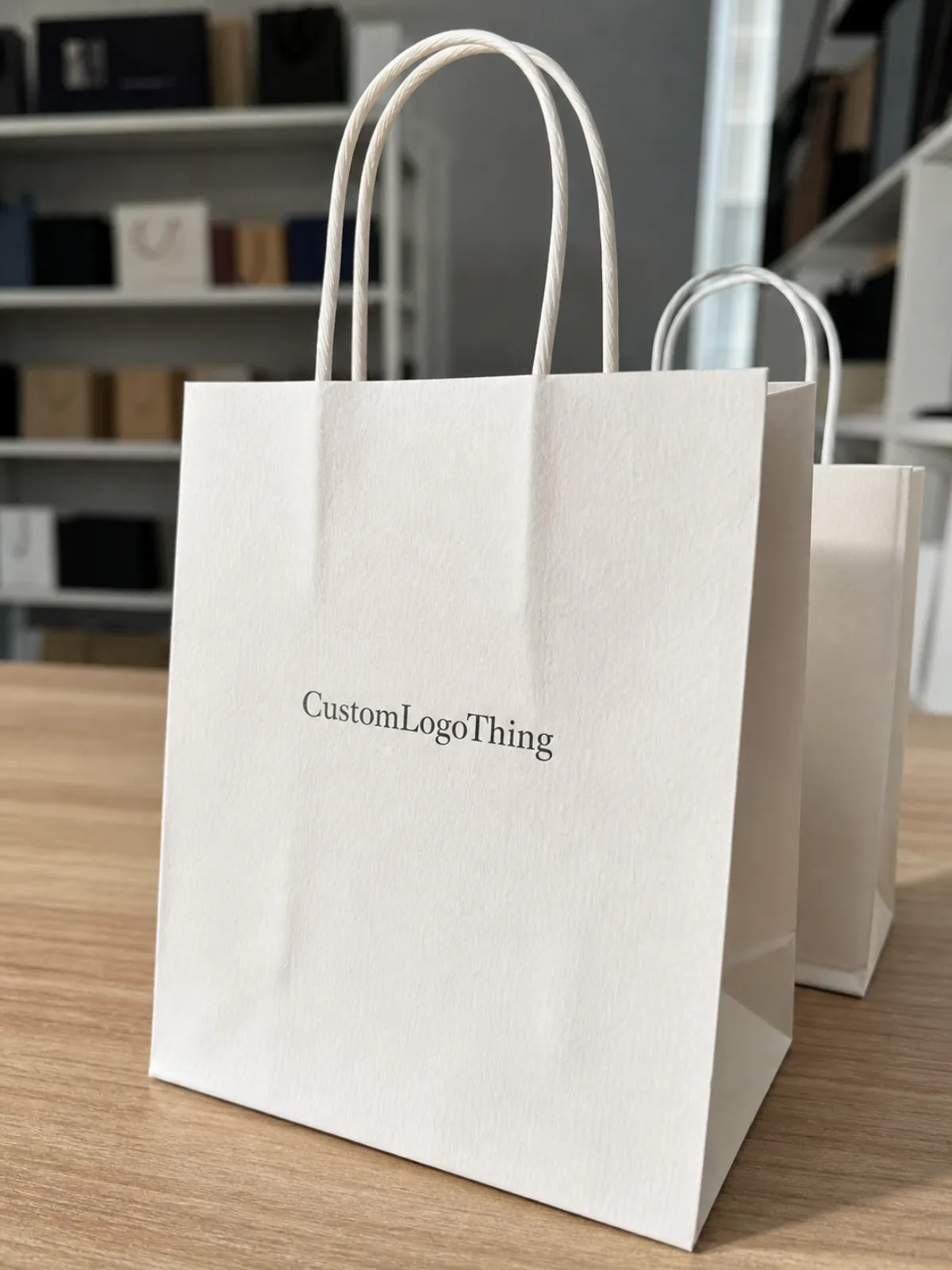
Small jewelry purchases create a packaging problem that larger categories do not have. The bag sits close to the customer’s face, often beside the receipt, the box, and the sales associate’s hand. That makes the carrier part of the presentation, not an accessory to it. In boutiques, pop-ups, repair desks, and gift-with-purchase programs, the bag has to look intentional while still surviving repeated handling.
Twisted handles are popular because they split the difference between appearance and function. They are easier to source than many decorative handle styles, and they tend to hold up better than thinner ribbon or cord options in day-to-day retail use. They also pack flat, which matters more than buyers admit when storage space is tight or inventory rotates quickly. In a jewelry setting, practical usually beats elaborate.
A bag that looks polished on the first handoff but tears on the second is not a premium choice. It is a hidden replacement cost.
There is a financial layer to this that packaging buyers see immediately. The cheapest bag can become expensive if it creates damage claims, needs to be replaced during the season, or arrives with inconsistent quality that slows receiving. For branded packaging, the aim is not the lowest factory quote. It is the lowest-risk version that still supports the store’s price point and visual standard.
That explains why Twisted Handle Paper Bags remain common in jewelry retail. They are not flashy, but they are dependable. They photograph well enough for social posts, move easily from checkout to gifting, and can be produced in volume without overcomplicating the order. In practice, they serve as both carrier and brand signal.
Construction details that change durability and presentation
Bag construction matters more than many buyers expect. Stock weight, gusset depth, handle attachment, mouth fold, and base reinforcement all affect how the bag behaves after it leaves the supplier. Two bags can look nearly identical in a product image and perform very differently once they carry a small box and a folded insert.
For jewelry, the bag usually needs to fit a box rather than loose merchandise. That changes the ideal dimensions. If the bag is too large, the contents shift and the package feels careless. If it is too tight, the box catches on the gusset or bends the paper at the top. The best spec leaves enough room for easy packing without making the item wander inside the bag.
Paper finish changes the visual tone as well as the wear pattern. Matte stock tends to hide fingerprints and minor scuffs. Gloss can make color pop, but it also shows abrasion faster and can feel less restrained in a luxury setting. Textured stock can read as more refined in the hand, though it may require more careful ink coverage, especially on thin logos or small typography. There is no universal winner here; the finish should match the brand tone and the print method.
- Matte stock hides handling marks better and usually feels calmer.
- Gloss stock can intensify color but may show scuffs sooner.
- Reinforced tops help the handle area survive repeated lifting.
- Neat fold alignment is one of the fastest signs of manufacturing quality.
For a quick inspection standard, look for even folds, straight seams, centered print, and clean handle insertion. Those checks tell you more about consistency than a polished sample image does. If the sample is sloppy in those areas, the production run will usually show the same weakness at scale.
Material sourcing deserves a direct question too. If a supplier claims certified paper, ask for the certificate trail and scope, not just the logo on a quote sheet. FSC chain-of-custody documentation is one of the clearest reference points for responsible paper sourcing, and the system details are available at fsc.org. If the paperwork is vague, treat the claim as unverified.
There is also a durability detail that often gets missed: the bottom seal. A heavier ring box can stress a weak base, especially if cartons are stacked tightly in transit or if the bags are packed flat and repeatedly handled before use. A strong bottom fold and consistent adhesive application matter more than decorative elements that only affect first glance.
Size, stock, and print specifications buyers should lock in
The cleanest quotes come from complete specs. Internal dimensions, gusset depth, paper weight, handle color, print method, finish, and carton count should be confirmed before pricing starts. If any one of those is left open, the supplier will either pad the estimate or issue a revision later. Both slow the process and make comparison harder.
Jewelry bags work best when they are sized to the outer package, not the item itself. That distinction matters because a ring box, necklace case, or watch-sized presentation box needs room for the lid, corners, and any insert card. A bag that just barely fits may look efficient on paper, but it often feels cramped in use. A bag that is too loose makes the presentation feel unfinished. The right fit keeps the package steady and the handoff clean.
Paper weight is one of the most practical cost levers. Lighter stock can lower unit price, but it may lose stiffness and show corner crush during packing or transit. Heavier stock improves structure and makes the bag stand better at the counter, although it can raise both material cost and shipping weight. For small jewelry bags, many programs land in a middle range that offers enough body without adding unnecessary bulk.
Print scope changes the economics quickly. One-color logos are usually the easiest to control, easiest to repeat, and least likely to create shade variation between batches. Foil, full-coverage art, and specialty inks can improve the brand impression, but they also add setup time and raise the chance of registration problems if the factory is not disciplined. Buyers should treat these as production choices, not cosmetic add-ons.
Ask one more question before approving the quote: is this a plain stock order, a branded order, or a mixed run? The answer affects packing, carton labeling, and how quickly the order can be repeated later. Mixed runs can work, but they need clear instructions or they become a source of mistakes at the warehouse stage.
Common spec set for a small jewelry bag
- Internal size: often in the 4 x 2 x 5 inch to 6 x 3 x 8 inch range, depending on the box.
- Paper stock: commonly a mid-weight kraft or coated paper that holds its shape.
- Handle: twisted paper handle in white, black, or a matched brand color.
- Print: one-color logo, spot color, or foil accent if the budget supports it.
- Finish: matte or light gloss, chosen for scuff resistance and brand tone.
It also helps to set tolerance expectations early. A few millimeters of variation may be acceptable in many paper bag programs, but a jewelry bag with a tight box fit leaves less room for drift. If the supplier cannot state the normal manufacturing tolerance, the buyer should assume the fit will need closer inspection on sample approval.
Unit cost, pricing tiers, and MOQ tradeoffs
A serious jewelry twisted handle paper bags Unit Cost Review starts with a basic rule: the factory number is only one part of the total. Paper stock, handle style, print method, finishing steps, setup fees, tooling, packing format, freight, and sometimes duties all feed the final landed cost. If a quote does not break those items out, compare it carefully. Missing detail is where surprises appear later.
MOQ changes the price structure fast. Small runs are less efficient because the fixed work is spread over fewer units. Larger runs reduce unit price, but they also increase storage needs and can tie up cash in inventory. Neither option is automatically better. The right choice depends on sales pace, expected reorders, and how often the packaging design changes.
| Order Tier | Typical Cost per Piece | What Drives the Price | Best Fit |
|---|---|---|---|
| 1,000 pieces | $0.32-$0.58 | Setup charges, smaller spread of fixed costs, lower production efficiency | Test launches, short promotions, small boutiques |
| 3,000 pieces | $0.22-$0.40 | Better manufacturing efficiency, more balanced freight impact | Core retail programs, seasonal replenishment |
| 5,000 pieces | $0.18-$0.32 | Bulk pricing, fewer per-unit setup costs, more stable scheduling | Established SKUs and repeat order programs |
Those figures are ranges, not guarantees. Stock choice, handle color, print coverage, and carton configuration can move the price quickly. A foil stamp or heavier board can add cost. An unusual color match can add even more. Freight matters too. A low factory quote that ships in bulky cartons or incurs extra handling may end up worse than a cleaner mid-range offer with better packing density.
Landed cost should be the comparison point. Ask for sample cost, production cost, packaging cost, and freight separately, then add them together before making a decision. For a high-margin jewelry line, a slightly higher bag cost may still be the sensible choice if it improves presentation and reduces replacement risk. For a promotional pack, every cent matters more.
Shipping quality should also be part of the price review. If the bags are likely to travel a long distance, ask how they are packed and whether the supplier tests cartons against transit damage using a profile comparable to ISTA 3A. The logic behind transit testing is explained by the International Safe Transit Association. It does not eliminate risk, but it gives a buyer a way to judge whether the factory thinks beyond appearance.
One practical point often missed in pricing conversations: the carton size affects freight more than the bag itself in some programs. Flat bags can be efficient, but if the supplier overpacks or uses oversized shipping cartons, the rate can climb without any obvious improvement in product quality. That is why packaging specs should include the ship carton as well as the retail bag.
Production process, timeline, and lead time checkpoints
The production path is straightforward, but each step can add delay if the buyer is not ready. A typical order moves from quotation to artwork confirmation, proofing, sample approval, production, inspection, packing, and shipment booking. Missing approval at any stage pushes the schedule. That is why written timelines are more useful than vague promises.
Before production begins, confirm the final dimensions, color references, logo placement, paper weight, handle style, and carton count. A small change in the die line can affect cutting. A minor adjustment in logo placement can require a new proof. A handle substitution can change both appearance and assembly time. None of those seems large on its own, but together they can slow the order enough to matter for a store opening or seasonal promotion.
Lead time has three separate clocks: sample lead time, production lead time, and transit time. Buyers who ask only, “How long does it take?” usually get a broad answer that is not very useful. Buyers who ask for each stage in writing can plan inventory more accurately and spot delays before they become a launch problem.
- Sampling: often 3-7 business days if the spec is standard.
- Production: often 10-15 business days after proof approval, depending on volume.
- Transit: can range from a few days to several weeks based on route and mode.
Seasonal timing matters as much as the factory calendar. Jewelry packaging demand rises around gifting periods, promotions, and event-driven retail spikes. Waiting too long often forces a rush order, and rush orders usually cost more while leaving less room for correction. A buffer in the schedule is cheaper than emergency shipping.
The fastest way to reduce delay is to approve one complete package at once: artwork, dieline, stock, handle, and ship carton. Partial approvals create rework. Rework creates uncertainty. In packaging procurement, uncertainty is the hidden tax that turns a simple order into a moving target.
Inspection should also be scheduled, not assumed. A pre-shipment check for print alignment, handle attachment, fold accuracy, and carton count is a small cost compared with the expense of receiving a flawed run. Buyers who inspect only the first sample often miss batch variation that appears later in the order.
What a reliable supplier should prove before quoting
The better suppliers do more than send a number. They show material options, tolerances, sample photos, packing details, and a clear route from spec to shipment. If a supplier cannot explain how the bag will be built, packed, and checked, the process will likely be fragile once the order moves into production.
Responsiveness helps, but consistency matters more. A supplier that repeats the same handle placement, fold accuracy, and print position across multiple runs is worth more than one that replies quickly but ships a different-looking product on the second order. In branded packaging, repeatability is the real value.
Ask for pre-production samples, production photos, and carton packing information. Those three items reduce receiving disputes and make internal sign-off easier if the order passes through procurement, merchandising, and marketing before release. They also help separate cosmetic approval from functional approval. A bag can look fine in a photo and still be awkward to pack or poor at stacking.
Communication quality is measurable. Clear line-item pricing, direct answers about constraints, and honest timing estimates usually signal lower friction later. Vague replies tend to multiply after the order starts. That is especially true with printed paper goods, where small defects can affect an entire batch.
Buyers should also expect the supplier to say no when needed. If a foil effect, stock choice, or handle color will stretch the schedule or weaken the bag, that limitation should come up before production begins. A candid answer is more useful than a flattering one that creates rework later.
The most reliable quote is the one that explains its limits. If the supplier can state the acceptable tolerance, the expected proofing process, the carton configuration, and the realistic delivery window, the buyer has enough information to judge risk. If those details are missing, the quote should be treated as incomplete.
Next steps for quoting jewelry twisted handle paper bags
For a usable first quote, send the internal dimensions, paper preference, handle style, print count, target quantity, and delivery location. That is enough for the supplier to build a real estimate instead of a rough guess. Without those details, the first number is usually too loose to compare.
Ask for one sample or a pre-production proof before approving volume, especially if the bags will sit in a display-heavy retail area or be used for gift packaging. A single physical check can reveal fit issues, print drift, handle mismatch, or paper stiffness problems before they turn into inventory waste. It is a small step that prevents larger errors.
Then compare two or three quotes on the same basis. Unit cost only means something if the bag size, print method, carton count, and freight terms are aligned. Otherwise, the numbers are describing different products. That is a common source of bad comparisons in packaging buying.
Quote checklist
- Internal bag size and gusset depth
- Paper weight, stock type, and finish
- Handle color and attachment style
- Print colors, coverage, and special effects
- MOQ, sample charge, and tooling fees
- Carton pack count and shipment method
Ask for carton dimensions too. Storage teams and receiving teams care about that more than sales teams usually expect. A bag order that seems inexpensive can become awkward if the cartons are oversized, difficult to stack, or inefficient to move through the warehouse. Those details do not show up in the mockup, but they show up immediately in handling.
The best decision usually comes from balancing three factors together: fit, finish, and landed cost. If the bag suits the jewelry box, holds up under retail use, and stays within the budget set for packaging, the order is doing its job. If one of those three slips, the savings can disappear fast.
What drives jewelry twisted handle paper bags unit cost the most?
Paper weight, print complexity, and bag size usually have the biggest impact on unit price. MOQ changes the math because fixed setup work is spread across fewer or more bags. Freight, carton size, and destination duties can move the landed cost even more than the factory quote.
What MOQ should I expect for custom jewelry twisted handle paper bags?
MOQ depends on stock, print method, and whether the bag is plain or fully branded. Smaller runs are possible, but the per-bag price is usually higher because setup work is fixed. Ask for tiered pricing so you can compare 1,000, 3,000, and 5,000-unit options side by side.
How do I check if the bag fits my jewelry box or pouch?
Share the outer dimensions of the box or pouch, not just the item inside. Ask for an internal bag size and, ideally, a physical sample for fit testing. Check clearance for the handle fold, side gussets, and any insert card or tissue.
How long is the typical turnaround after artwork approval?
Turnaround depends on sampling, print method, and order size, so ask for a production schedule in writing. Separate sample time from production time and production from shipping time. Rush orders are possible in some cases, but they usually raise unit cost and reduce flexibility.
Can I order plain bags now and add branding later?
Yes, if the supplier can hold the same paper stock, size, and handle style for a later reprint. This approach helps if you need inventory quickly but want branded bags for a later launch. Confirm that color matching and print placement stay consistent between the plain run and the branded run.

