Buyer Fit Snapshot
| Best fit | Custom Tissue Inserts with Logo projects where brand print, material claims, artwork control, MOQ, and repeat-order consistency need to be specified before quoting. |
|---|---|
| Quote inputs | Share finished size, material target, print colors, finish, packing count, annual reorder estimate, ship-to region, and any compliance wording. |
| Proofing check | Approve dieline scale, logo placement, barcode or warning zones, color tolerance, closure strength, and carton packing before bulk production. |
| Main risk | Vague material claims, crowded artwork, missing packing details, or unclear freight terms can make a low unit price expensive after revisions. |
Fast answer: Custom Tissue Inserts with Logo: Material, Print, Proofing, and Reorder Risk should be specified like a repeatable production item. The safest quote records material, print method, finish, artwork proof, packing count, and reorder notes in one written spec.
Production checks before approval
Compare the actual filled-product size with the drawing, then confirm tolerance on folds, seals, hang holes, label areas, and retail display edges. Reserve space for logos, QR codes, warning copy, and material claims before decorative graphics fill the panel.
Quote comparison points
Review material grade, print process, finish, sampling route, tooling charges, carton quantity, and freight assumptions side by side. A quote is only useful when the supplier can repeat the same color, closure quality, and packing count on the next order.
Custom Tissue Inserts With Logo: Cost, Process & Tips
A thin sheet of tissue can change how a package feels more than a box upgrade that costs three times as much. In sourcing reviews, that detail comes up again and again: the product stays the same, but the perceived value shifts the moment branded tissue is added. That is why Custom Tissue Inserts with logo are such a practical packaging tool. They add brand signal, reduce scuffing, and make a simple pack feel considered. For a packaging buyer, the appeal is easy to understand. You are not paying for dramatic structure. You are paying for a presentation layer that works across apparel, cosmetics, candles, jewelry, and subscription kits.
Branded tissue keeps turning up in strong product packaging programs for a reason. It sits in the middle of the pack stack: lighter than corrugated, softer than chipboard, and easier to scale than many rigid presentation formats. For a lot of brands, custom tissue inserts with logo are the lowest-cost way to raise perceived value without redesigning the box. That matters in both retail packaging and ecommerce, where margins and first impressions live in the same spreadsheet.
What Are Custom Tissue Inserts With Logo?
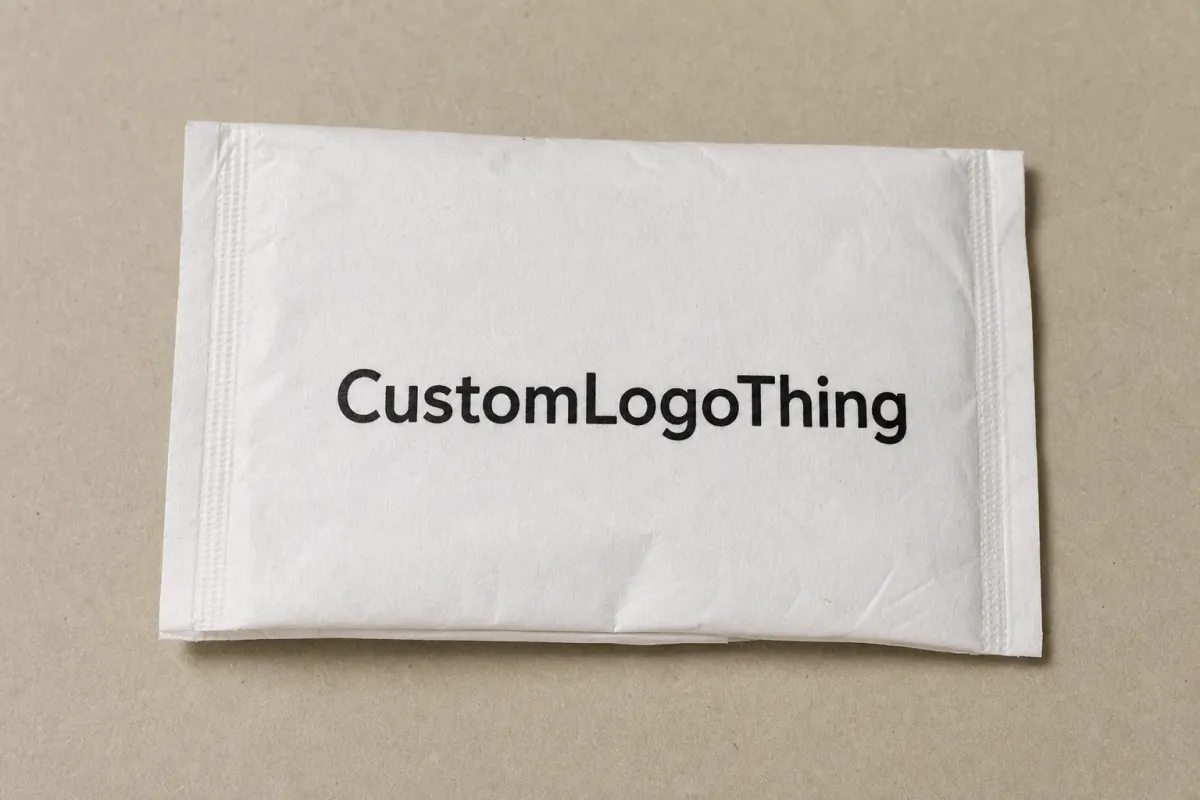
Custom tissue inserts with logo are printed or branded tissue sheets used to wrap, cushion, separate, or present products inside a box, mailer, or retail bag. The simplest version is a single-color logo on standard tissue. The more elaborate version is a repeating pattern, a spot-color brand field, or a tailored insert cut to fit a specific product line.
A thin layer of tissue often does more for customer perception than a much more expensive box upgrade. That is because custom tissue inserts with logo are handled directly. Customers feel them first and see them before the product. In packaging design, that moment matters. It is tiny, fast, and surprisingly memorable. I have watched buyers dismiss a carton revision and then get very excited by a better tissue spec, which tells you how much of packaging is psychological rather than structural.
They are not a shipping protector in the same way corrugated is. A tissue insert will not replace edge strength, crush resistance, or proper void fill. It can still reduce light abrasion, keep parts separated, and make the unpacking sequence feel deliberate. For many branded packaging programs, that is enough.
Common use cases include:
- Apparel and footwear, where the sheet prevents rubbing and keeps garments looking tidy.
- Cosmetics and skincare, where a clean reveal supports premium package branding.
- Candles and home fragrance, where the wrap helps protect labels and finishes from scuffing.
- Jewelry and gifts, where presentation matters as much as protection.
- Subscription kits, where repeatable pack-out speed matters every day.
Custom tissue inserts with logo also give buyers control over tone. A tiny logo in one corner feels restrained. A full repeat pattern feels louder. A soft tint with a modest mark can read elegant, while a dense print can feel promotional. Paper weight, often in the 17-28 gsm range, the fold style, sheet dimensions, and print coverage all shape the final result.
A practical rule of thumb: if the tissue adds more than a few seconds per pack, the spec is probably too ambitious for that SKU.
Good sourcing starts with the job the tissue has to do. Is it mainly visual? Does it need to keep a product centered? Will the same insert sit in a mailer, a rigid box, or a folded retail carton? Once those answers are clear, custom tissue inserts with logo become easier to spec and easier to price.
How Custom Tissue Inserts With Logo Work in Packaging
The basic workflow for custom tissue inserts with logo starts with artwork, then moves to print, finishing, folding, and packing. A brand usually supplies a vector logo, the intended sheet size, the print area, and the fold style. The supplier then builds a proof showing color placement, repeat spacing, and final dimensions. After approval, production begins and the sheets are packed flat or folded for the packing line.
Printing methods change the result
Flexographic printing is common for larger runs because it is efficient and consistent once the setup is approved. Digital print can make sense for shorter orders or designs that need frequent change, though unit cost may rise. Some suppliers use screen-style approaches for certain effects, but the buyer’s real question is simpler: how sharp does the logo need to be, how much color coverage is required, and what volume justifies the method? For custom tissue inserts with logo, those decisions shape both price and visual quality.
Single-color branding is usually the easiest route. It keeps registration cleaner, reduces setup complexity, and often speeds production. A repeating pattern can create a stronger brand field, but it also raises the stakes on alignment and ink density. Full-coverage printing looks impressive, yet it can increase cost and sometimes make the sheet feel stiffer than expected. Many buyers start with a restrained layout, then test a louder version later if the packaging still feels too quiet.
How the tissue behaves inside the pack
Inside the carton, custom tissue inserts with logo can wrap a product, line the base of a box, separate items, or create a reveal moment when the customer opens the lid. That reveal matters in ecommerce because unboxing is a small performance. The tissue does not have to be complex to work. A clean fold, a centered mark, and a consistent opening sequence can make even simple Custom Printed Boxes feel more premium.
Structural choices matter more than many sourcing teams expect. A 20 x 30 inch sheet may be perfect for a folded shirt but awkward for a candle set. A gusset-style fold may speed pack-out, while loose sheets might look better in a gift presentation line. If the order has to move quickly through a fulfillment team, custom tissue inserts with logo should be tested on the actual bench, not just reviewed on a screen.
In some packs, tissue interacts with stickers, belly bands, dust covers, or closure labels. That is not a problem, but it should be planned. If a sticker seals the wrap, ink coverage near the fold can affect how neatly the sheet closes. If the tissue sits under a label, opacity matters more because show-through becomes visible immediately. A good proof checks all of that before the order is placed.
For buyers comparing presentation options, it helps to see tissue as one layer in the broader product packaging system. The box carries structure. The insert adds brand tone. The tissue protects the finish and sets the mood. Together, they support a more coherent pack than any single element can do alone. That is why custom tissue inserts with logo are often chosen alongside label systems, inserts, and Custom Packaging Products rather than as a standalone fix.
Custom Tissue Inserts With Logo: Cost and Pricing Factors
The cost of custom tissue inserts with logo comes down to a handful of variables that are easy to miss if you only compare headline quotes. Paper weight, sheet size, print coverage, number of colors, folding style, and quantity all matter. Setup method matters too, along with whether the order uses stock sizes or custom cuts. A quote that looks cheap at first glance can climb once the full spec is confirmed.
MOQ, or minimum order quantity, is one of the biggest cost levers. Setup costs are spread across the run, so smaller orders usually carry higher unit pricing. That is normal. A run of 1,000 sheets will almost always cost more per unit than 10,000 sheets of the same design. For custom tissue inserts with logo, buyers often find the sweet spot at the point where unit cost makes sense without turning inventory into dead weight.
Here is a practical comparison of common options. These ranges are directional, not universal, because freight, artwork complexity, and paper market conditions can move the numbers.
| Option | Typical MOQ | Indicative Unit Cost | Best Use |
|---|---|---|---|
| White tissue with one-color logo | 5,000-10,000 sheets | $0.08-$0.14 | Apparel, jewelry, gift boxes |
| Repeating brand pattern | 10,000+ sheets | $0.12-$0.22 | Retail packaging, subscription kits |
| Full-coverage branded tissue | 10,000+ sheets | $0.18-$0.35 | Premium ecommerce, cosmetics |
| Custom size with fold-ready finish | 5,000-20,000 sheets | $0.10-$0.30 | Boxes with strict pack-out rules |
The quote also depends on print coverage. A logo in one corner may only need a small plate or simple digital setup. Edge-to-edge coverage uses more ink and more control, which raises cost. Specialty paper, dyed stock, metallic ink, or unusual sheet sizes can push pricing higher again. In practical terms, custom tissue inserts with logo are often cheapest when the design is calm and the dimensions stay close to standard.
Hidden costs can matter as much as print cost. Artwork cleanup, proofing, sampling, freight, warehousing, split shipments, and rush fees all change the landed number. If a supplier quotes an attractive sheet price but adds expensive repacking or urgent air freight, the final number may no longer look attractive. That is why landed cost is the better lens.
- Setup: plates, press calibration, and first proof handling.
- Sampling: color checks and sheet tests before full approval.
- Freight: carton weight can be light, but volume still adds up.
- Storage: bulk tissue takes space, especially if the run is large.
For sustainability-led buyers, ask whether the tissue is FSC-certified and whether the supplier can document the fiber source. That does not automatically make the order premium, but it does make the purchase easier to defend in a procurement review. If the tissue must support a transit-sensitive pack, ask how it fits alongside the rest of the shipper and whether the pack still passes the applicable ISTA test method. Tissue does not replace transit engineering, and no supplier should pretend otherwise.
Custom tissue inserts with logo are rarely the cheapest line item in a packaging budget, but they are often one of the highest-return ones. If the insert improves the perceived value of a $40 or $80 product by even a small amount, the spending can make sense quickly. Compare that with a much more expensive box upgrade that changes structure but not the opening experience. The economics usually look better than they first appear.
Production Process and Lead Time for Custom Tissue Inserts With Logo
The production path for custom tissue inserts with logo is straightforward on paper and a little messier in real life. A buyer sends the brief, the supplier reviews artwork, a proof is created, corrections are made, the material is printed, then the sheets are finished and packed. The fastest projects are the ones that arrive with complete specs. Missing dimensions or vague color instructions are what slow things down.
Lead time depends on the print method, the quantity, and the factory schedule. A simple run may be ready in 10-15 business days after proof approval. More custom orders can stretch to 15-25 business days, especially if the design has multiple colors, nonstandard sheet sizes, or special folding. Freight time sits on top of that. For custom tissue inserts with logo, the production clock is only part of the story; delivery timing matters just as much.
Seasonality is another hidden variable. The same spec can move quickly in one month and slowly in another if the plant is busy with holiday retail work or large export orders. That is why experienced buyers build buffer time into launches, trade shows, retailer onboarding, and seasonal sets. A one-week slip can be harmless in theory and expensive in practice.
What usually causes delays
Artwork problems are the most common delay. Raster files can blur, low-resolution logos can print softly, and color references without a print standard create avoidable back-and-forth. Proofs also slow projects when the approval chain is too long. If one team wants a warmer cream, another wants a cooler cream, and nobody owns the final sign-off, the project stalls. Custom tissue inserts with logo move faster when approvals are simple and the decision maker is clear.
Material changes can add time too. If the first sample feels too transparent, the buyer may switch to a heavier sheet or ask for different print coverage. That is the right decision if show-through is a concern, but it does change the production path. Tissue is light, yet small changes in gsm or fold style can alter how the insert packs and how it reads inside the box.
How to protect the schedule
Plan backward from the launch date, not from the quote date. Build in time for artwork review, proof correction, production, and inbound freight. If the tissue has to coordinate with custom printed boxes, labels, or other packaging components, confirm whether those parts will arrive together or in sequence. A pack-out team cannot use custom tissue inserts with logo that arrive after the goods are already in stock.
Keep a simple production calendar and a written spec sheet. Include sheet size, color count, fold type, paper gsm, carton count, and delivery address. It sounds basic because it is. Basic paperwork saves more projects than polished presentations ever will.
If the order will be tested in a shipping program, ask whether the full pack configuration should be checked against ISTA-based drop and vibration expectations before final approval. The tissue itself is not the transit protector, but it can influence how the rest of the packaging behaves in the box. That is a subtle difference, and it matters.
Suppliers who are transparent about proofing, turnaround, and reprint tolerance make life easier. So do teams that know exactly what they want. In practice, the fastest orders for custom tissue inserts with logo are the ones where the buyer defines the box size, the product weight, the packing sequence, and the acceptable print tolerance before anyone touches the press.
Step-by-Step Guide to Ordering Custom Tissue Inserts With Logo
If the goal is to buy custom tissue inserts with logo once and buy them well, start with the package, not the artwork. The product dimensions, target presentation, and packing method should define the tissue spec. A sheet chosen for a folded shirt will not necessarily work for a candle set or a cosmetic kit. The best orders are built from the product outward.
- Write the packaging brief. Include product size, box size, target quantity, whether the tissue wraps, lines, or separates, and how many seconds the pack can afford per unit.
- Choose the format first. Decide on sheet size, fold style, opacity, and whether the logo should repeat or sit as a centered mark. This is where custom tissue inserts with logo become a packaging tool rather than just printed paper.
- Prepare artwork properly. Send vector logo files, approved color references, and any brand rules around ink coverage or background tint. The fewer corrections needed, the faster the project moves.
- Request a proof or sample. Check color, show-through, fold behavior, and how the sheet looks inside the actual box. A flat mockup is useful, but a real sample tells the truth.
- Compare suppliers beyond price. Ask about MOQ, turnaround, consistency on repeat orders, storage options, and whether they support reorders with the same setup notes. Custom tissue inserts with logo should be repeatable, not just attractive on the first run.
- Lock in logistics. Confirm carton count, palletization, delivery window, and the receiving contact. Small print items still create big headaches if the freight details are loose.
Buyers often get better results by testing tissue alongside other packaging elements from a broader line such as Custom Packaging Products. That makes comparison easier. You can see whether the tissue genuinely improves the unboxing experience or whether the same budget would do more work in another part of the pack.
Ask yourself a blunt question before approving the order: is the tissue there to look good, work hard, or both? If the answer is both, the spec should reflect both. A sheet that photographs well but tears in packing is a bad purchase. A sheet that holds up but looks cheap is not much better. Custom tissue inserts with logo earn their place when form and function stay balanced.
It also helps to keep the reorder file simple. Save the exact sheet size, fold type, ink description, proof notes, and the approval date in one place. That sounds boring, and it is. It also prevents brand drift on the next purchase, which matters more than most people think in package branding.
Common Mistakes When Buying Custom Tissue Inserts With Logo
Most buying mistakes are not dramatic. They are small decisions that compound. The first is overdesigning the print. Dense patterns, too many colors, or tiny logos can raise cost without improving the customer experience. For custom tissue inserts with logo, restraint often reads more premium than noise.
The second mistake is ignoring opacity. Thin tissue can show the shape, color, or label of the product underneath. That may be fine for some packs, but it can also reduce the premium feel. If the product is dark, glossy, or irregular, ask for a sample and check show-through under actual lighting. What looks acceptable on a desktop screen can look very different in a fulfillment bay.
The third mistake is skipping pack-line testing. A design may look beautiful in a proof and still slow the assembly team. If the fold is awkward, the tissue tears too easily, or the sheet slips out of position, the line pays the price. A spec that saves two cents but adds three seconds is not a bargain. That is true for custom tissue inserts with logo, and it is true for most of branded packaging.
- Too-small runs: unit cost rises sharply and the budget gets distorted.
- Too much inventory: tissue is light, but it still occupies storage space.
- Unclear specs: sheet size, print coverage, and fold rules all need to be written down.
- Weak brand control: color drift can make one batch look different from the next.
Another mistake is comparing quotes that are not actually comparable. One supplier may quote a different gsm, another may assume a different sheet size, and a third may build in a different print method. If you do not normalize the spec, the price comparison is misleading. That is especially true with custom tissue inserts with logo, because small changes in paper and print can move the number more than buyers expect.
Then there is the mistake of treating tissue as a substitute for real protection. It is not. If the product needs crush resistance, edge retention, or moisture control, the box, mailer, or inner structure still has to do that work. Tissue adds value inside the system; it does not replace the system. That is why packaging teams should think in layers rather than isolated components.
If the tissue fixes the look but the pack still fails in transit, the packaging strategy is incomplete.
Buyers also get into trouble when they choose a design that suits one channel but not another. A full-coverage pattern might look great in retail packaging, yet feel too busy in a subscription box. A minimal logo may be perfect for ecommerce but too quiet on a shelf. The right spec for custom tissue inserts with logo depends on channel, product, and how the package is opened.
Expert Tips and Next Steps for Custom Tissue Inserts With Logo
After enough packaging reviews, a pattern shows up: the strongest tissue programs are usually the simplest ones. A restrained logo, a paper weight that matches the product, and a fold that the packing team can repeat without thinking tend to outperform elaborate concepts. That does not mean boring. It means deliberate. Custom tissue inserts with logo work best when the brand message lands in one or two touches, not seven.
Match the tissue to the item. Apparel and accessories can tolerate a lighter sheet, usually around 17-20 gsm. Glassware, cosmetics, or heavier objects may need something closer to 22-28 gsm for better body and less show-through. If the insert has to separate delicate components, ask for a sample tested with the actual item. One generic tissue spec is rarely right for every line.
Look at landed cost, not unit cost alone. Freight, warehousing, and reorders change the real economics. A lower-sheet-price quote that arrives late or requires repacking may be more expensive in the end. Custom tissue inserts with logo should be measured the same way serious packaging decisions are measured: by the total effect on the operation, the product, and the customer reaction.
Use a quick test plan before scaling the order. Compare a branded sample against the current package, measure packing time, track damage or scuffing, and ask a few customers or staff members for honest feedback. The result may surprise you. Sometimes the right answer is a small logo. Sometimes it is a larger repeat pattern. Sometimes the design should stay almost invisible because the box and product already carry enough visual weight.
For teams that reorder frequently, build a spec sheet that stores every decision in one place: sheet size, paper gsm, fold type, print method, approved proof, and carton count. That file becomes the reference point for future orders and helps protect consistency across seasons. In package branding, consistency is often what separates a polished program from a patchwork one.
One final buying lens: decide whether the priority is cost, speed, or presentation. You can push on all three, but usually one wins. If cost matters most, keep coverage simple and choose a standard sheet size. If speed matters most, avoid design revisions and custom folding. If presentation matters most, test the sheet in the actual box and consider a slightly heavier stock. The right answer for custom tissue inserts with logo depends on which result the business needs most.
The most practical takeaway is simple: start with the product, not the print. Measure the box, decide how the tissue will be handled, and then choose the lightest spec that still delivers the look and protection you need. If that sequence is followed, custom tissue inserts with logo tend to pay for themselves in fewer packing problems, better presentation, and a more consistent brand experience.
How do custom tissue inserts with logo differ from printed tissue paper?
Custom tissue inserts with logo are usually specified for a particular box size, fold style, and packing workflow. Printed Tissue Paper may be sold more generally, while inserts are tailored to fit the product and the operation. The main difference is function: inserts are chosen to support presentation, protection, and assembly efficiency together.
What affects the price of custom tissue inserts with logo the most?
Paper weight, sheet size, number of print colors, and total quantity usually have the biggest impact. MOQ matters because setup costs are spread across the run, which changes unit cost sharply on smaller orders. Special finishes, rush production, and custom folding can also raise pricing for custom tissue inserts with logo.
How long does it take to produce custom tissue inserts with logo?
Lead time depends on artwork approval, proofing speed, and the supplier's production schedule. Simple orders can move quickly, but custom sizes, color matching, or complex print coverage add time. Build in buffer time if the tissue must arrive before a launch, trade show, or seasonal sales peak.
What file should I send for custom tissue inserts with logo artwork?
Vector files are preferred for logos because they scale cleanly and help maintain sharp print edges. Provide brand color references, size specs, and any placement notes so the printer can set accurate proofs. If the design repeats across the sheet, include repeat measurements and a clear visual mockup for custom tissue inserts with logo.
Can custom tissue inserts with logo be used for ecommerce and retail packaging?
Yes, they work well in both channels because they add brand presence without heavy material use. For ecommerce, they help create a stronger unboxing moment; for retail, they support shelf presentation and product protection. The key is matching the tissue format to the packing speed, product weight, and customer expectation, which is why custom tissue inserts with logo are so widely used.

