Buyer Fit Snapshot
| Best fit | Eco Friendly Corner Boards Wholesale projects where brand print, material claims, artwork control, MOQ, and repeat-order consistency need to be specified before quoting. |
|---|---|
| Quote inputs | Share finished size, material target, print colors, finish, packing count, annual reorder estimate, ship-to region, and any compliance wording. |
| Proofing check | Approve dieline scale, logo placement, barcode or warning zones, color tolerance, closure strength, and carton packing before bulk production. |
| Main risk | Vague material claims, crowded artwork, missing packing details, or unclear freight terms can make a low unit price expensive after revisions. |
Fast answer: Eco Friendly Corner Boards Wholesale: Specs & Pricing should be specified like a repeatable production item. The safest quote records material, print method, finish, artwork proof, packing count, and reorder notes in one written spec.
Production checks before approval
Compare the actual filled-product size with the drawing, then confirm tolerance on folds, seals, hang holes, label areas, and retail display edges. Reserve space for logos, QR codes, warning copy, and material claims before decorative graphics fill the panel.
Quote comparison points
Review material grade, print process, finish, sampling route, tooling charges, carton quantity, and freight assumptions side by side. A quote is only useful when the supplier can repeat the same color, closure quality, and packing count on the next order.
eco friendly Corner Boards Wholesale solves a problem that gets expensive fast: pallet edges fail first. One crushed corner can loosen strapping, distort cartons, let a load drift, and turn a clean shipment into a claim nobody wanted to explain. Paper-based corner boards give freight a stronger edge, spread pressure across the load, and reduce damage without stuffing the box with plastic-heavy protection. That is the whole point. Keep the load square. Keep the shipment moving.
The wholesale part matters just as much as the eco-friendly part. Procurement teams need consistent sizes, predictable lead times, and pricing that does not fall apart once the order gets real. Emergency buys are rarely smart buys. Planned wholesale orders let you standardize pack-out, avoid rush freight, and stop receiving from dealing with odd sizes and random quality swings. That is where the numbers start to make sense.
There is also the sustainability piece, and it is not hard to defend. Recycled-fiber construction, paper recyclability, and less dependence on plastic edge protectors all support waste goals without a lot of spin. The spec still matters more than the slogan. The board has to fit the load, survive strap tension, and stay consistent across multiple SKUs. If it does not, the nice green language is just expensive wallpaper. The rest of this article covers Specs, Pricing, Timing, and the buying checks worth doing before you place an order.
"A corner board is cheap insurance only if the spec matches the load."
Why eco friendly corner boards wholesale matters for freight protection
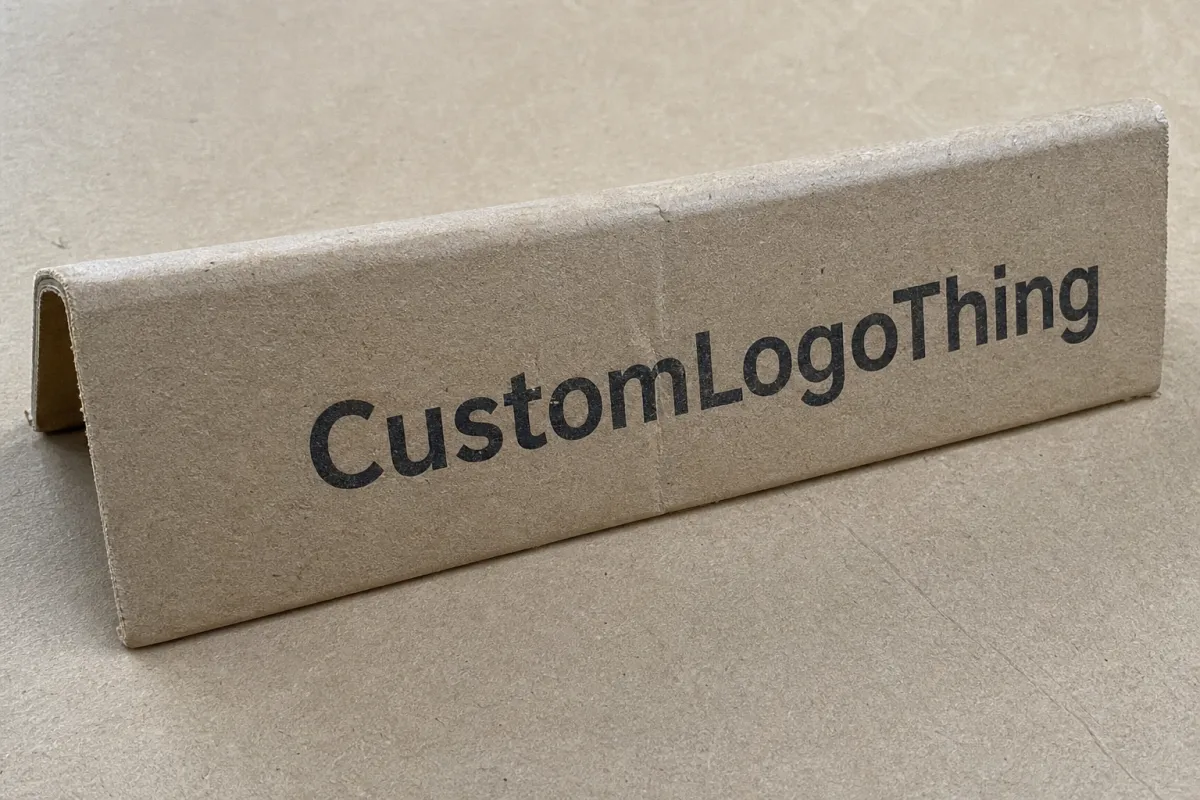
Pallet freight fails at the edge. Carton corners take the hit from stretch film, strapping, stacking pressure, forklift handling, and the random abuse transit likes to throw in for free. Once the corner gives way, the rest of the load starts moving around. Corner boards are not packaging decoration. They are load-stabilization parts. They create a rigid edge that spreads force over a wider area, which helps prevent strap cut-through and keeps stacked layers from shifting under compression.
Paper-based corner boards do that job well because the shape does a lot of the work. A right-angle profile resists bending better than flat paperboard, and layered kraft construction can be tuned for light-duty or heavy-duty freight. In real terms, that lets a shipping team apply the right strap tension without crushing carton edges. Export pallets, cross-dock freight, and shipments that get touched more than once all benefit from that extra control. A warehouse team does not need more heroics. It needs packaging that behaves the same way every time.
Wholesale matters because freight protection is not a one-time purchase. A buyer ordering 500 units or 5,000 units still needs the same profile every time. If the size changes, the pack-out team starts improvising with tape, extra wrap, or extra labor. Standardizing on one or two lengths also makes training easier. If the team knows a 48-inch board covers one product family and a 60-inch board fits the tall stack, pack-out gets faster and mistakes drop. That is boring, and boring is good in shipping.
Sustainability is easier to defend here than in a lot of packaging categories. Recycled-fiber construction, curbside recyclability in many areas, and lower material mass all help reduce waste. That said, recyclability depends on local rules and what the board has picked up during use. Grease, water, and too much tape can change the outcome. Buyers should treat sustainability like a specification, not a slogan. If the goal is to cut plastic use while protecting freight, eco friendly corner boards wholesale gives you a direct route.
The hidden cost is bigger than the board itself. Damage claims bring rework, customer service time, labor rebooking, and delayed inventory availability. A protector that costs a few cents more than a flimsy substitute can still reduce total landed cost if it prevents even a small number of failures. That math is boring. It is also the math procurement teams get to keep.
There is another angle buyers see in the field: fewer edge failures usually mean fewer last-minute fixes at the dock. Once a load starts leaning, workers reach for extra stretch film, another strap, or a scrap of corrugate to patch the problem. That is not a plan. That is a symptom. Good corner boards reduce the need for those patch jobs and make the rest of the load handling system easier to trust.
Product details: what these corner boards are made to do
Corner boards are structural protectors built to reinforce the vertical edges of palletized goods. They sit along the corners of cartons, wrapped bundles, or unitized loads before stretch film or strapping goes on. The job is simple: keep the load square, absorb pressure from strap tension, and help the shipment stay put from warehouse to dock to final delivery.
Most paper-based corner boards use laminated kraft layers or recycled paperboard wound into a rigid angle profile. The exact build varies. Some use dense multi-ply layers for better compression resistance. Others use a lighter liner with a recycled fiber core to balance cost and performance. Surface finish matters too. A smoother outer layer can reduce friction against stretch wrap and improve appearance. A rougher finish can grip better in certain pack-outs. Neither choice is magic. Each one solves a different handling problem.
Most boards use a 90-degree angle, though some buyers ask for wider or narrower angles based on carton geometry and strap placement. Standard leg lengths often range from 1.5 inches to 3 inches per side, while total length can run from short inserts to full pallet-height pieces. Thickness and width depend on the freight. A light consumer-goods load does not need the same board as a tall export pallet carrying dense parts or beverage cases.
Common use cases go wider than many buyers expect:
- Boxed consumer goods that need cleaner edges and a better pallet appearance
- Beverage and canned goods that create heavy vertical compression
- Appliances and furniture parts with exposed corners and mixed surfaces
- Industrial components packed on pallets with steel banding or strap tension
- Export shipments where load stability and presentation both matter
- Mixed-SKU pallets that need a consistent edge guard across uneven carton sizes
Optional features can help if the pack-out repeats often and the numbers matter. Custom lengths cut trimming on the line. Printed branding helps with identification in multi-client warehouses or shared distribution centers. Moisture-resistant treatment can help in humid storage or marine transit, though it should be specified carefully because it may affect recyclability in some regions. Pre-cut sizes work well in high-throughput operations where every second counts and manual cutting burns labor.
Corner boards work best as part of a system, not as a lone item. Stretch film keeps the load together. Strapping creates vertical compression. Corrugated pads spread top-load pressure. Pallets provide the base. The corner board links those pieces by stopping strap bite and giving the film a rigid edge to hold against. Buyers who treat load stabilization as one system usually get better results than buyers who shop each piece separately and hope for the best.
That system view matters on real jobs. A beverage distributor handling mixed pallet heights needs different support than a contract packer shipping appliance parts across one state line. A direct-to-retail load might need cleaner presentation and lighter board. An export load might need stronger compression resistance, tighter wrap control, and better moisture handling. Same category. Very different requirements.
Specifications buyers should compare before ordering
Buying protection without comparing specs is how teams end up with a cheap board that folds the second real freight shows up. Start with geometry. Leg length tells you how much of the carton edge gets protected. Total length tells you whether the board covers the full height of the load or only the strap zone. Thickness and angle strength tell you how much crushing it can take when strapping and stacked product push back.
Light cartons can usually handle a standard recycled board. Dense freight, tall stacks, and export loads that get handled several times often need a heavier board with stronger compression resistance. Top-heavy pallets narrow the margin fast. In that case, ask for crush data, edgewise compression details, or comparable performance information instead of relying on appearance. A board can look rigid and still fail under strap pressure if the core density is too low. Packaging is rude that way.
Dimensional tolerance is one of the easiest checks. If your pack-out line expects a 48-inch protector and the delivered boards vary enough to mess with fit, operators will notice immediately. Straightness matters too. Curved or twisted boards are harder to place, especially on automated or semi-automated lines. A consistent angle helps the board sit flush against the carton face and spread load more evenly. If the angle drifts, the protector bridges instead of supports, which weakens the whole setup.
Material and sourcing details deserve attention. Ask whether the board contains recycled fiber, whether that content is documented, and whether the supplier can support FSC or PEFC sourcing if your internal policies require it. Recyclability claims should line up with the actual structure of the board and the presence or absence of coatings, adhesives, or moisture barriers. If your team needs formal sustainability documentation, ask for chain-of-custody support up front. Same story for any customer-facing claim that has to survive an audit.
Where testing standards matter, use them. Compression questions often connect to ASTM methods, while transit performance can be checked against package testing programs such as those described by ISTA. For buyers focused on fiber sourcing and environmental reporting, the FSC system is one common reference point. If your team is evaluating paper recoverability or waste reduction targets, the EPA paper and paperboard materials guidance is useful background. Standards do not replace field testing, but they keep supplier comparisons honest.
Always request a sample and test it against a real pallet. Basic advice, sure. Still the place where a lot of orders get saved or sunk. Measure the pallet height, carton overhang, strap path, and the heaviest load you plan to ship. Put the sample on the real load and inspect the fit under wrap and strap tension. If the board slides, bows, or leaves a gap at the corner, the spec needs another pass.
One more practical check: look at how the board behaves after a few minutes under load, not just at first placement. Some protectors seem fine during setup and then relax, curve, or shift once the wrap tightens. That is the kind of detail a lab sheet will not always tell you. A dock worker will. A damaged pallet will. Field testing beats optimistic guesses every time.
| Option | Typical Spec | Best For | Approx. Wholesale Unit Range | Typical MOQ | Lead Time |
|---|---|---|---|---|---|
| Light-duty stock board | 1.5" x 1.5" legs, standard recycled kraft, 24"-48" lengths | Retail cartons, light consumer goods, short runs | $0.10-$0.22 | 1,000-3,000 pcs | 5-10 business days |
| General-purpose wholesale board | 1.5" x 2" or 2" x 2" legs, multi-ply recycled construction | Mixed pallets, strapping, distribution center use | $0.18-$0.38 | 3,000-10,000 pcs | 10-15 business days |
| Heavy-duty custom board | 2" x 2" or larger, reinforced core, custom length, optional print | Dense freight, tall stacks, export loads, repeated handling | $0.30-$0.75 | 5,000-20,000 pcs | 15-25 business days |
| Moisture-resistant board | Reinforced face stock or coated surface, specified barrier treatment | Humid storage, ocean freight, variable dock conditions | $0.22-$0.60 | 5,000 pcs+ | 15-30 business days |
The table is a starting point, not a promise. Final pricing depends on dimensions, recycled content, print coverage, freight distance, and order volume. Still, the pattern is easy to spot: stronger boards cost more, and unit price drops as volume rises. That curve is why sample testing matters. It keeps buyers from paying for over-specification or under-protection.
It also helps procurement avoid a classic mistake: using appearance as the proxy for quality. A thick-looking board is not automatically the right one. Sometimes the correct spec is lighter, cheaper, and easier to recycle. Sometimes the opposite is true. The right answer depends on the freight, the handling, and how many times the load gets touched after it leaves the dock.
Cost, pricing, MOQ, and quote factors to review
Pricing for eco friendly corner boards wholesale comes down to a few variables, and most of them are easy to estimate once the load is known. Board thickness matters because more fiber usually means more compression resistance. Length matters because longer pieces use more material and more handling time. Angle profile matters because a wider or reinforced profile tends to use more paper and more production input. Add printing, special treatment, or custom packaging, and the price moves again.
Volume is the other major lever. Larger runs usually lower the per-piece price because setup costs get spread across more units and production can be scheduled more efficiently. The cheapest unit price is not always the smartest buy, though. If you order far more than you can use in a reasonable cycle, you trade unit savings for storage cost and inventory risk. Match MOQ to actual consumption, then compare that with the savings from a larger run. Procurement should care about total landed cost, not just list price.
Quotes should be clean and specific. A useful quote includes the exact spec, material description, unit count, carton or pallet count, freight method, ship-to location, sample charges if any, and a production estimate. If the quote is vague on any of those points, surprises usually show up later. Freight can swing a lot depending on whether the shipment moves parcel, LTL, or full truckload. For a bulky product like corner boards, freight assumptions can change the real cost more than a few cents of material difference.
Stock sizes and custom sizes need separate treatment. Stock inventory is often the cheapest and fastest option because it is already in production or sitting in warehouse stock. It works well when pallet heights are consistent and the use case is broad. Custom sizing can be the better choice when labor is being wasted on trimming, when a fixed board length fits the most common pallet better, or when the product line has enough volume to justify a dedicated spec. Custom is not always the expensive path. Sometimes it removes a hidden labor cost.
Return on investment is not complicated. If a modest increase in board cost reduces damage claims, rework, and replacement shipments, the spend pays back quickly. A pallet damage issue can cost far more than the protectors that would have prevented it. The bill is rarely just the damaged product. It is the carrier call, the warehouse labor, the restock, the customer follow-up, and the lost time. Even a small drop in claims can justify a better board.
Buyers should also ask about MOQ flexibility. Some suppliers can support scheduled releases against one larger order, which helps a team secure better pricing without stuffing the warehouse with excess inventory. Others offer mixed-SKU planning, where several lengths or grades are produced under one umbrella order. That works well for companies shipping multiple carton heights or rotating product families. If demand is uneven, ask for a plan that balances unit price with replenishment discipline. A low unit price is only useful if the material gets used efficiently.
For companies that buy often, the best route is usually a repeatable specification with a quote tied to that standard. That is the real upside of wholesale buying. It turns a line item that too many teams treat as an ad hoc expense into something that can actually be managed. If your organization already has a purchasing lane for recurring packaging, the Wholesale Programs page is the place to start the conversation and line up volume, spec, and delivery expectations.
One detail buyers sometimes miss: the quote should make freight assumptions visible. If the supplier only prices the board and hides the shipping math, you do not have a complete number yet. A palletized packaging order can look cheap until freight gets added. Then the real landed cost appears. It is usually not charming.
Process, timeline, and lead time from quote to delivery
A clean order starts with complete information. The fastest buyers send pallet dimensions, carton height, load weight, strap tension or banding method, delivery ZIP or port, annual usage estimate, and any documentation requirement for recycled content or sourcing. That level of detail saves time in ways people usually underestimate. It cuts back-and-forth, speeds up quoting, and makes the sample stage more useful because the supplier is working against the right conditions.
The process is pretty direct. Inquiry first. Then spec confirmation. Then the supplier sends a quote based on size, construction, and quantity. If the buyer wants a sample, that sample gets checked against the actual pallet or a close simulation. After approval, production starts. Quality checks should confirm dimensions, angle consistency, straightness, and finish before shipment. Then the freight moves. Each step can be fast if the inputs are clear. Each step can drag if the spec keeps changing.
Stock orders usually move faster than custom runs because there is no tooling change or special production slot to schedule. Custom dimensions, custom printing, moisture barriers, or heavy-duty reinforcement add approval time and manufacturing time. Normal. The trick is to account for it before the packaging line starts running low. Teams that wait until inventory is nearly gone usually pay more for expedited freight and give up negotiation room on price.
Timing depends on the configuration. A stock board may ship in under a week if inventory is available. A custom wholesale order often lands in the 10-20 business day range after approval. More complex builds can stretch beyond that, especially if artwork, testing, or supply chain documentation is required. Those ranges are planning tools, not promises. Transit time can also match or exceed production time if the freight lane is long or the shipment is consolidated.
A few habits help avoid delay:
- Approve samples quickly once the load conditions are clear.
- Confirm freight details early so there is no last-minute rebooking.
- Assign one decision-maker to prevent spec drift between departments.
- Share actual pallet photos if the load has unusual overhang or stack behavior.
- Reorder before inventory runs too low, especially if your consumption is seasonal.
The best orders do not feel rushed. That sounds obvious because it is. In packaging, it usually separates a controlled replenishment from a last-minute scramble. A buyer who knows the load profile, knows the volume, and knows the receiving window usually gets a better result than one trying to patch a protection problem after the shipment already failed.
That is also why lead time should be treated as part of the spec. If a supplier can build a great protector but cannot ship it when the line needs it, the value drops fast. Packaging that arrives late is just cardboard with a good attitude.
Why choose us for eco friendly corner boards wholesale
Buyers need a supplier that does more than write polished copy. Real value shows up in consistent builds, clear specs, and direct communication. A reliable wholesale partner should explain the construction, confirm recycled material options, and support documentation without turning every question into a special project. That matters because packaging purchasing is often judged by what does not happen: no damage, no delays, no receiving confusion, no production stoppage.
Quality control is the first point of trust. If board angle, length, and compression strength change from one order to the next, the pack-out team loses confidence and starts working around the product. That adds hidden labor cost and quality risk. A better supplier works to keep the product consistent, especially on repeat orders. In wholesale buying, consistency is not a bonus. It is the baseline.
The documentation side matters too. Customers keep asking for recycled content, recyclability, and sourcing support, and those questions are easier to answer when the supplier keeps clean records. FSC-supported sourcing, recycled-fiber options, and predictable spec sheets make internal approvals faster. For companies with sustainability reporting obligations, that paperwork is not decoration. It can be the difference between a clean procurement file and a scramble to rebuild materials data later.
Wholesale service should also lower friction for buyers managing multiple SKUs. One product family may need a 36-inch protector. Another may need 48 inches. A third might ship on export pallets and need heavier board. A supplier that can quote multiple lengths, maintain replenishment cadence, and help align those sizes with one order cycle saves the procurement team time. That is exactly where a structured program like Wholesale Programs earns its keep: it turns recurring packaging into something that can be planned instead of improvised.
The savings that matter are not always the obvious ones. Lower damage rates reduce replacement shipments. Better fit cuts line labor. Clear lead times reduce last-minute buys. Steady supply keeps operations from pausing while someone hunts for a substitute protector. Strong supplier relationships are built on predictable performance, realistic lead times, and the ability to scale with demand. Fancy language never shipped a pallet.
From a packaging buyer’s point of view, that is the test. Can the supplier prove the board will hold up to the load? Can they explain the tradeoff between price and strength? Can they support a reorder without rebuilding the whole quote from scratch? If the answer is yes, the purchase is easier to defend and easier to repeat.
There is trust in admitting limits too. No paper edge protector is perfect for every load. Wet freight, extreme humidity, repeated ocean transit, and very aggressive banding can push even a good board past its comfort zone. A credible supplier should say that out loud instead of pretending one stock item solves every packaging problem on the floor. Honest boundaries save money.
Next steps to order the right corner boards
Start with measurement. Record pallet height, carton overhang, strap path, and the heaviest load in the group. If you ship multiple pallet profiles, write down the three most common ones and focus there first. That usually tells you which board size covers most of the use case without paying for specialty lengths you do not need. A good order starts with knowing which pallet actually drives volume.
Then ask for two or three stock options and one custom quote side by side. That comparison helps separate real cost drivers from assumptions. Maybe the stock size is the better fit. Maybe custom dimensions save enough labor to justify the spend. Maybe a heavier board is only needed for one product line. Seeing the options together gives a buyer the information needed to choose based on load conditions, not habit.
Samples should be tested on a real pallet before bulk approval. That matters more if the shipment is dense, high-stacked, export-bound, or handled multiple times. Test the board under actual stretch film and strap tension. Check whether the corners stay square, whether the load shifts, and whether the board remains seated during handling. If the sample passes that test, the buying risk drops fast.
Before placing the order, confirm these approval points:
- MOQ and any tiered pricing thresholds
- Freight terms and delivery window
- Recycled content or sourcing documentation requirements
- Custom print needs, if any
- Storage space and reorder timing
If your team wants to protect pallets, cut waste, and stop chasing last-minute packaging purchases, eco friendly corner boards wholesale is one of the simplest upgrades to standardize. The best results come from pairing the right spec with a clear reorder plan and a supplier that can keep up with volume. That is how you get better freight protection, fewer claims, and a buying process that stays under control.
One practical takeaway: pick one load pattern to standardize first, not the entire warehouse. Lock the spec, test it, and repeat the order before inventory gets thin. That single decision usually does more for freight protection than a pile of untested packaging changes.
Frequently Asked Questions
What size eco friendly corner boards wholesale order do I need for standard pallets?
Measure pallet height, carton overhang, and strap position before you choose a size. Most buyers do best by matching one board length to the most common load, because that keeps pack-out simple and reduces operator mistakes. If you ship multiple SKU sizes, ask for a mix of stock and custom lengths so you cover the largest volume without making receiving or storage a headache.
Are eco friendly corner boards strong enough for heavy shipments?
Yes, if the thickness, angle, and leg length match the load and the strap tension. Heavy shipments need more than a board that looks stiff in the sample room. They need compression performance that holds up under real handling conditions. Ask for crush or compression data on dense, tall, or export-bound freight, and pair the boards with stretch wrap and correct strapping for the best outcome. A weak wrap system can wreck even a good protector.
What is the usual MOQ for eco friendly corner boards wholesale?
MOQ depends on whether you are ordering stock sizes or custom dimensions. Stock inventory often allows lower minimums, while custom runs usually start higher because setup and production planning are involved. Larger runs generally lower unit cost and improve supply consistency. If your demand is uneven, ask whether the supplier can support scheduled releases or mixed-SKU planning so you do not end up buried in inventory.
Can eco friendly corner boards be recycled after use?
Most paper-based boards can be recycled if they are clean and dry. Remove heavy contamination such as grease, shrink film, or excessive tape where possible. Local recycling rules still vary, and some programs are stricter than others about coatings or moisture treatments. Check the local waste stream before assuming the board will be accepted everywhere. Recycling systems love asterisks.
How fast can I get a quote or sample for eco friendly corner boards wholesale?
A complete request should include dimensions, quantity, delivery ZIP, and the load type. Stock options can move faster than custom builds, especially if artwork is not required. Samples are easier to arrange when you share pallet specs and the performance target, such as strap protection, export handling, or stack stability. The more complete the request, the faster the response.


