An Event Merch Bucket Hats quote is rarely just a price check. Buyers usually want to know whether the hat will actually get worn, whether the logo will survive close viewing, and whether the order can be packed, labeled, and delivered without turning into a logistics problem. That is a different brief from ordering a throwaway giveaway. The useful quote is the one that tells the truth about fabric, decoration, setup, freight, and timing.
Bucket hats keep showing up at outdoor activations for a simple reason: they do several jobs at once. They provide shade, create a visible branded surface, and feel less forced than many promotional items. A pen disappears into a bag. A hat is visible from across a crowd. It can also live beyond the event itself, which matters if the goal is repeated impressions rather than a one-hour handout.
A good event hat has three jobs: protect the wearer, carry the brand, and survive the trip home.
The best orders usually start with that reality. Event merch is not judged only on the mockup. It is judged at a festival gate, in a staff kit, on a volunteer walking route, or in a retail photo where the stitching is close enough to inspect. Buyers who understand that tend to ask better questions and get better results.
Why Bucket Hats Beat Standard Swag at Events
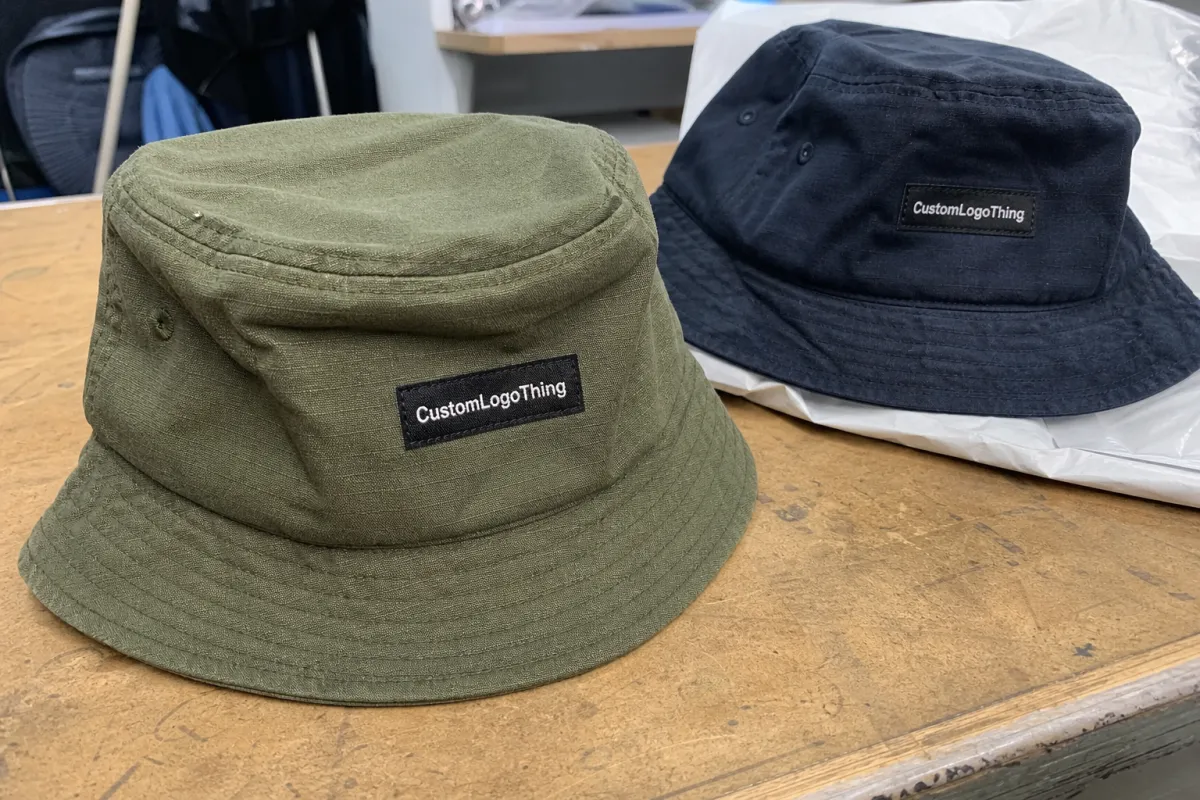
Bucket hats sit in a useful middle ground. They are practical enough to feel justified, but visible enough to act like moving media. For field marketing, that is a strong combination. A branded hat keeps working after the giveaway table is closed. It travels through the venue, appears in photos, and keeps showing the logo long after the staff has packed up.
Standard swag often misses that kind of staying power. A sticker may be cheap; a pen may be useful. Neither creates the same on-body visibility. Headwear does. That is why a hat program can out-perform smaller items even when the per-unit cost is higher. Visibility, comfort, and utility combine into something people are willing to keep.
There is also a practical sizing advantage. Bucket hats are easier to buy for mixed audiences than fitted caps, and they usually require less size planning. That reduces exchange risk and lowers the odds of ending up with boxes of product that cannot be distributed cleanly. For event teams working with fixed dates and limited staff, that simplicity is not trivial. It saves hours.
They also fit naturally into a wide set of programs:
- Festival and concert merch with heavy photo exposure
- Charity walks, runs, and outdoor fundraising events
- Campus orientation kits and student recruitment programs
- Retail launches and street teams
- Volunteer uniforms and warm-weather staff wear
One reason these programs work so well is that bucket hats feel legitimate in sun exposure, not merely branded. That changes how the item is perceived. A useful product can carry more branding than a novelty item because the wearer accepts the trade-off. The hat earns its place.
Style Options That Match the Event, Audience, and Budget
The wrong hat style can make a good idea look generic fast. A cotton twill bucket hat reads as classic and approachable. A structured panel version usually feels more retail-ready and holds decoration more cleanly. Washed finishes make the product feel softer and less promotional. Lightweight performance fabrics work better in hot, active settings where breathability beats texture.
Brim width changes the look more than many buyers expect. A wider brim feels more protective and often more premium. A tighter brim can appear cleaner and less casual. Crown depth matters too. Shallower crowns lean fashion-forward; deeper crowns usually fit a broader range of wearers and feel safer for staff programs. Panel layout matters because it controls where the decoration can sit without fighting seams.
Decoration should be selected with the audience in mind, not just the art file. Embroidery is durable and familiar, but it rewards simple logos and controlled stitch counts. Woven patches handle detail better than direct stitching and tend to look sharper at close range. Printed patches are useful for full-color artwork or faster turnarounds. Each option has a different visual temperature. A retail-minded event often benefits from patch work, while a straight staffing program may only need clean embroidery.
Small changes can raise perceived value without pushing the budget too hard:
- Reversible construction for two looks in one product
- Packable fabric for kits that travel through mail or event boxes
- Contrast stitching for a more deliberate finish
- Minimal branding for everyday wear beyond the event
- Color matching for sponsor consistency or strict brand systems
Neutral shades are the safest choice for mixed audiences. Black, navy, khaki, and washed olive usually fit more wardrobes and hide handling marks better than bright custom colors. Bold colors have their place, especially for sponsor-heavy activations or youth-focused campaigns. They do, however, increase proofing pressure. Color accuracy becomes part of the job, not an afterthought.
Materials, Fit, and Decoration Specs That Matter Most
Fabric choice should follow use case. Cotton gives the softest familiar hand feel and usually looks the most natural in lifestyle programs. Poly-cotton can hold shape better and often wears a little harder, which helps during transport and repeated use. Nylon and other lightweight synthetics are better for heat, moisture, and packability. If the event is active or outdoors for long stretches, breathable construction matters more than a luxury feel.
The small technical details affect comfort and durability in ways that buyers notice only after the order lands. Sweatbands make a difference during all-day wear. Eyelets improve airflow. Stitch density changes how the brim behaves after being folded, packed, and opened again. Chin cords may be worth adding at coastal or windy venues. A stiff brim can look tidy in a product image and still fail in a kitting box if it creases too easily.
Decoration specs need to be confirmed early. Ask for the exact imprint area, patch size, stitch count if embroidery is involved, and whether artwork crosses seams. That last part matters more than people expect. A logo that looks centered in a mockup can look awkward once it is pulled across a seam line. For printed graphics, the file quality has to be strong. Vector artwork usually reduces back-and-forth. Low-resolution files create delays that show up later in the schedule.
Quality control should cover more than color. Good checks include seam alignment, patch adhesion, thread clean-up, crown shape consistency, and whether the brim sits flat after packing. If a hat is going into a retail-style kit, the packaging matters too. Individually polybagged hats protect the finish but add waste and time. Bulk-packed hats are faster and leaner, though they need cleaner handling during fulfillment.
For brands that want paper components, ask whether inserts, hang tags, or sleeves can be sourced with FSC-certified paper. That is not mandatory for every program, but it is a reasonable requirement for teams that need procurement documentation or environmental claims backed by recognizable standards.
One more practical habit helps a lot: request the spec sheet, not only a product photo. Images show mood. Spec sheets show whether the brim is reinforced, how many panels are in the crown, how much room the logo really has, and how the product is packaged for shipment. Those details decide whether the order runs smoothly.
Event Merch Bucket Hats Quote: Pricing, MOQ, and Unit Cost
A useful Event Merch Bucket Hats quote should separate the real cost drivers. Quantity is the first one. Fabric choice is the second. Decoration method often moves the number more than buyers expect, especially if the artwork needs a custom patch or a complex stitch pattern. After that come packaging, freight, and rush timing. On smaller runs, those extras can shift the final total by enough to change the decision.
MOQ is straightforward but unforgiving. Smaller orders carry more setup cost per unit, so the per-hat price climbs quickly. Larger orders spread the setup cost across more pieces. That is why a 100-piece run and a 1,000-piece run can look like different products even if the hat style stays the same. Comparing suppliers only on the headline price misses the point. The real comparison is what is included in the quote.
Indicative decorated unit pricing for common event styles tends to land in these ranges. These are planning numbers, not fixed rates, because decoration complexity, shipping, and packing requirements all move the final figure.
| Style | Best For | Typical MOQ | Indicative Unit Cost | Typical Lead Time |
|---|---|---|---|---|
| Cotton twill with embroidery | Clean branded giveaways and staff wear | 100-300 | $4.25-$7.50 | 12-18 business days |
| Washed cotton with woven patch | Retail-style event merch | 150-500 | $5.10-$8.75 | 15-20 business days |
| Poly-cotton with print patch | Faster programs and broad audience kits | 100-250 | $3.90-$6.20 | 10-14 business days |
| Performance nylon | Heat, sports, and outdoor field teams | 250-1,000 | $5.75-$9.25 | 12-18 business days |
The lowest quote is not always the smartest buy. A cheaper number can hide thin fabric, weak stitching, or decoration that looks fine on screen and flat in person. If the hats are going into a visible activation, the finish matters. One crisp patch can outperform a flimsy print every time. Buyers who have handled enough event merch tend to notice the difference within seconds.
Compare quotes on the same basis: product, decoration, proofing, packing, freight, and setup. If one vendor includes carton labeling and another does not, the gap in price may be an illusion. A clean quote should show whether the supplier is pricing the hat as apparel or as a full event program. That distinction matters more than the headline number.
Production Steps and Lead Time: From Artwork to Delivery
The production path should be clear before the order is approved. First comes artwork review. Then the digital proof. A sample or mockup may follow if the art is complex or the color has to be checked. Once approved, bulk production starts. After that come quality control, packing, and shipping. If a supplier cannot explain those steps plainly, the order will probably require more chasing than it should.
Fast programs usually share a few traits: vector artwork, stock colors, one decoration method, and one shipping destination. That combination reduces friction. There is less to revise, fewer decisions to revisit, and fewer chances for a last-minute packaging change to slow the schedule. In practice, the best speed comes from making the order boring.
Delays show up in predictable places. Revision loops are the most common. Color matching can slow things down if the brand expects an exact shade on both the hat and the patch. Custom patch approval adds time because the logo has to be translated into a stitched or printed format that works on fabric. Shipping instructions also matter. Appointment delivery, split cartons, or distribution-center labeling can all push the calendar.
For simple orders, the production window often sits in the low teens after proof approval. More detailed jobs, especially those with custom patches or extra packaging, can move into the mid-teens or longer. That range is normal. What matters is whether the supplier states it clearly and keeps the quote aligned with the schedule. A tight event date leaves little room for ambiguity.
Shipping deserves its own check. Hats are not fragile in the same way glassware is fragile, but they can still arrive with crushed brims, bent crowns, or distorted inserts if the cartons are overfilled. Good vendors test packing density, box strength, and carton labeling before shipment. Standards from ISTA are a useful reminder that transit is part of product quality, not a separate issue.
If the hats are part of a larger kit, the cleanest arrangement is usually one coordinated production run. The hats, inserts, labels, and cartons move together. That reduces handoff risk and keeps the event timeline under control. A mixed-vendor setup can work, but it takes more oversight than most buyers expect.
Why Event Teams Reorder from a Supplier That Handles Packaging Too
Reorders get easier when the supplier keeps the specs, packing instructions, and print history together. That sounds basic, but many event programs lose time because the product, the insert, and the label are handled by different vendors. A supplier that manages packaging with the hat order can keep carton counts aligned, preserve color references, and reduce the round of clarifications that usually eats up a day or two.
That advantage becomes more visible on repeat campaigns. Event teams often need the same look across multiple dates or multiple locations. If the supplier has the original files, carton configuration, and packaging notes, the reorder behaves more like a controlled production run and less like a fresh puzzle. The result is steadier quality and fewer surprises.
There is also a paperwork benefit. Fewer handoffs mean fewer missing details. The buyer sees cleaner proofs. The production team has one source of truth. If a carton count changes or a label needs correction, the update can happen inside one workflow instead of crossing between separate vendors. For a fixed event date, that reduces risk in a measurable way.
In practice, suppliers that handle packaging well tend to be disciplined about the unglamorous parts: line-item quotes, carton labeling, spec retention, and repeatability. That discipline matters because a quote is only useful if the final cartons match it. For a branded program, consistency across reorders is often worth more than saving a few cents on the first round.
Teams asking for an event merch bucket hats quote on repeat campaigns usually care about the same signals: accurate paperwork, predictable lead times, and a re-run that actually matches the approved sample. The fancy pitch matters less than whether the hats arrive looking like the proof.
What to Send for the Fastest Accurate Estimate
The quickest way to Get a Quote That is actually useful is to send the details that change the math. Quantity. Deadline. Ship-to location. Logo file. Hat style. Decoration method. If any of those are missing, the estimate will be slower and less precise. A vague brief usually produces a vague number.
- Quantity: exact unit count, not a rough range
- Deadline: event date plus the latest acceptable arrival date
- Ship-to location: ZIP code, country, or full destination details
- Artwork: vector logo file if available
- Decoration preference: embroidery, woven patch, printed patch, or open to options
- Packaging needs: individual polybag, inserts, carton labels, or kitting
If you are comparing options, ask for two views of the same job. One should optimize for price. The other should prioritize presentation. That comparison exposes the trade-off in a way a single number cannot. Sometimes the lower-cost version is the right answer. Sometimes the slightly higher quote is the one that will still look good on-site, in photos, and after transport.
If the brief is still unfinished, the best move is not to wait for perfection. Start with the basics and let the supplier react to the actual constraints. A strong estimate usually comes from a short list of specific inputs rather than a long paragraph of loosely defined preferences. The clearer the brief, the cleaner the quote, and the fewer surprises later.
For event teams, that is the whole point of an event merch bucket hats quote: it should tell you whether the product, the decoration, and the timeline can all hold together at once. A number by itself is not enough. The useful quote explains the order.
How fast can I get an event merch bucket hats quote?
Turnaround is usually quick once the supplier has the quantity, artwork, decoration method, and shipping destination. Custom patches, color matching, or special packaging can add review time before pricing is final. A complete brief on the first message is the fastest route to an accurate answer.
What affects the price of custom event bucket hats the most?
Quantity, fabric choice, and decoration method usually drive the biggest swings in unit cost. Rush timing, custom patch work, and packaging extras can raise the total order price. A line-item quote is the clearest way to see where the money goes and to compare suppliers on equal terms.
What is the minimum order for bucket hats for events?
MOQ depends on the style and the decoration method, so the smallest order is not the same for every program. Smaller runs are possible, but unit cost is usually higher because setup is spread across fewer hats. If the order is near the threshold, a stock color or simpler decoration can sometimes lower the minimum.
Can I approve a sample before placing a bulk order?
Yes. Sample or mockup approval is often available before production begins. A sample helps confirm fit, color, logo placement, and decoration quality before the full run is committed. If the timeline is tight, a digital proof is usually the faster approval route.
What should I include when requesting a bucket hat quote for an event?
Send the quantity, deadline, shipping destination, logo file, and preferred decoration method. Include any color targets, packaging needs, or distribution requirements so the estimate is accurate. If you want options, ask for a budget version and a presentation-focused version in the same request.


