Buyer Fit Snapshot
| Best fit | Eco Friendly Packaging Bulk Order projects where brand print, material claims, artwork control, MOQ, and repeat-order consistency need to be specified before quoting. |
|---|---|
| Quote inputs | Share finished size, material target, print colors, finish, packing count, annual reorder estimate, ship-to region, and any compliance wording. |
| Proofing check | Approve dieline scale, logo placement, barcode or warning zones, color tolerance, closure strength, and carton packing before bulk production. |
| Main risk | Vague material claims, crowded artwork, missing packing details, or unclear freight terms can make a low unit price expensive after revisions. |
Fast answer: Eco Friendly Packaging Bulk Order: Cost, Specs, Timeline should be specified like a repeatable production item. The safest quote records material, print method, finish, artwork proof, packing count, and reorder notes in one written spec.
Production checks before approval
Compare the actual filled-product size with the drawing, then confirm tolerance on folds, seals, hang holes, label areas, and retail display edges. Reserve space for logos, QR codes, warning copy, and material claims before decorative graphics fill the panel.
Quote comparison points
Review material grade, print process, finish, sampling route, tooling charges, carton quantity, and freight assumptions side by side. A quote is only useful when the supplier can repeat the same color, closure quality, and packing count on the next order.
Eco Friendly Packaging Bulk Order: Cost, Specs, Timeline
I still remember a buyer in Chicago who sat down convinced an Eco Friendly Packaging bulk order would tack on 20% and chew through margin like it was nothing. Three meetings later, once we counted freight damage, warehouse waste, and the labor spent fixing bad packs by hand, the math looked very different. A carton priced at $0.15 per unit for 5,000 pieces can look ordinary on a quote sheet, but the real story lives in returns, pallet density, and the time spent rescuing poor packaging at 6:30 a.m. An eco friendly packaging bulk order can lower spend, cut storage pressure, and make reorders far less chaotic when product dimensions, case counts, and print rules stay consistent from run to run. For teams comparing sustainable packaging options, the spec usually matters more than the first unit price.
On a personal care project shipping from New Jersey to Texas, I pushed a buyer away from a glossy, overbuilt carton and toward recycled corrugate with a one-color kraft sleeve. The first quote was a touch higher, about 8%, which is exactly the kind of number that makes procurement raise an eyebrow. Then transit testing entered the picture. Damaged returns dropped from 4.6% to 2.9%, and landed cost improved because the outer pack nested more efficiently on a 48 x 40 inch pallet. That is the sort of comparison that makes an eco friendly packaging bulk order worth a hard look. For format ideas, our Custom Packaging Products page shows the structures we can quote, and our Wholesale Programs page helps if you are building repeat volume into the plan.
I keep coming back to one buying rule: product weight, shipping method, and reorder rhythm should shape the spec. A retailer moving 2,000 units a month out of Atlanta does not need the same construction as a subscription brand shipping 40,000 units through fulfillment centers in Dallas, Columbus, and Sacramento. The best Eco Friendly Packaging bulk order is not the one with the lowest line item on the spreadsheet. It is the one that protects margin over a 90-day or 180-day cycle while keeping the warehouse from becoming a penalty box for weak packaging choices. I have seen a 14% freight swing come from a 4 mm change in carton depth. That is not theory; that is a line item with a pulse.
Why an Eco Friendly Packaging Bulk Order Can Lower Total Cost
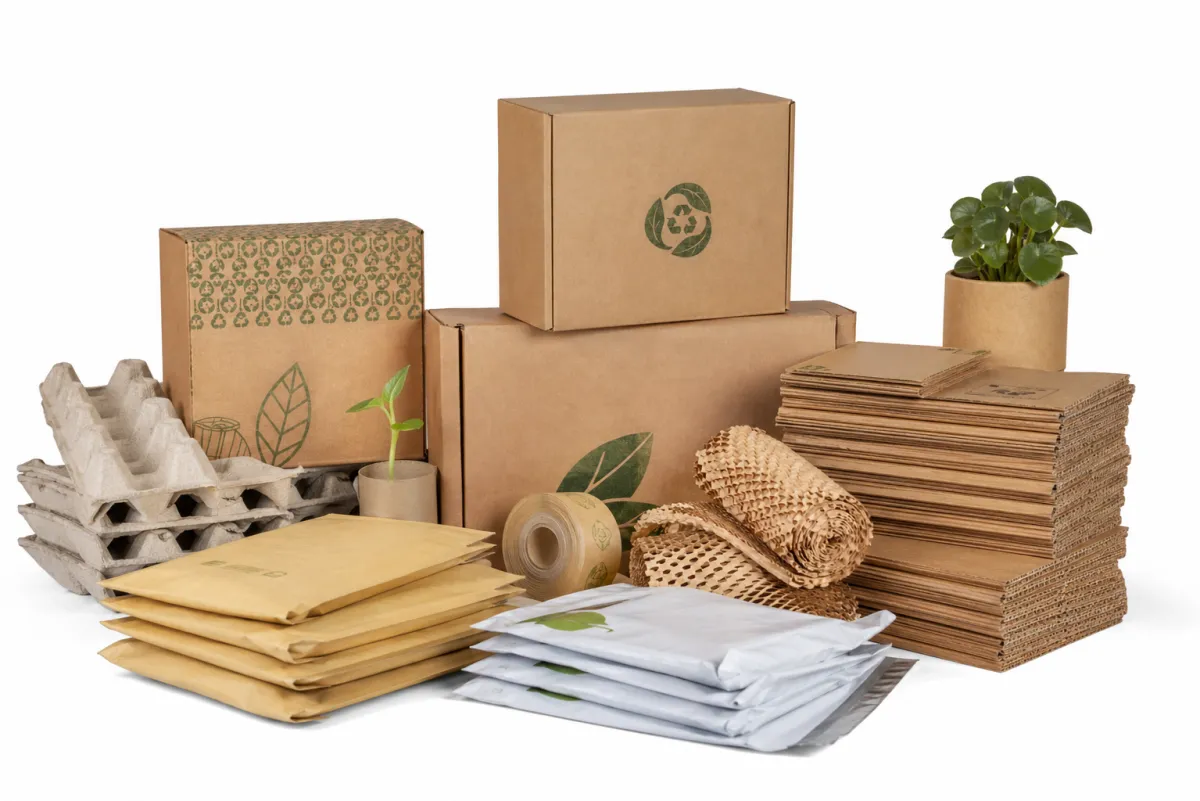
The first mistake I see is treating sustainability as a premium add-on. That framing misses how packaging behaves in the real supply chain. An eco friendly packaging bulk order often lowers cost because the structure is built to prevent damage, reduce void fill, and avoid emergency reprints. At one corrugated plant outside Shenzhen, a line manager was losing nearly 11 minutes on every shift because cartons arrived 2 mm short and had to be hand-adjusted. Once the spec was corrected, the bottleneck disappeared. The board cost barely changed. The labor waste had been the real expense all along.
Setup costs tell a similar story. A die-cut charge, plate fee, or print setup can look brutal on a 1,000-piece run and almost invisible on a 10,000-piece run. Scale does strange things to perception. Buyers who judge an eco friendly packaging bulk order by unit price alone miss the wider math: setup spread, freight, warehouse cube, spoilage allowance, and replacement rate. I have seen a carton that saved 5% in freight cube outperform a cheaper carton simply because it fit better in a 3PL with strict pallet rules in Rotterdam. A box that behaves well in storage is worth more than a box that merely looks economical on paper.
The brand side is quieter, but it matters. Packaging does not just protect the product. It carries consistency from channel to channel, which is harder to maintain than most teams admit. A retailer once told me they spent more on rescans and relabeling than on the cartons themselves because each batch looked slightly different between a plant in Dongguan and a backup line in Ho Chi Minh City. Once the spec was standardized, the refill order dropped 12% in internal labor. That is the hidden logic behind an eco friendly packaging bulk order: fewer surprises, fewer touchpoints, fewer repairs after the fact. Less drama, too, which I always appreciate.
"The cheapest box is rarely the least expensive box," a packaging director in Los Angeles told me after a 9% damage reduction saved more than the carton premium. I hear that line more often after a first reorder than on day one.
There is a tradeoff buyers should name out loud. Stronger materials and cleaner sustainability claims usually add a bit to the upfront cost, while the lowest quote can hide weak board, vague sourcing, or poor fit. If the carton fails in transit, you pay twice: once for the box and once for the replacement. The best eco friendly packaging bulk order keeps structure, recycled content, and distribution reality in the same frame. Pretending every use case is identical only produces expensive surprises, and I have yet to meet a finance team that enjoys surprise expenses.
For a useful benchmark, I often compare a recycled corrugate mailer, a kraft folding carton, and a molded fiber insert against the same shipping profile. On a 15 lb carton moving 600 miles, a more efficient spec can trim 1.5 cubic feet per case at pallet level. That sounds minor until you multiply it across 20 pallets and a month of replenishment. Procurement teams understand that math quickly because it affects both freight and storage. The savings are rarely dramatic in isolation. They become convincing in aggregate, which is usually how packaging decisions finally get approved.
Transit testing should be part of the conversation before the order is placed. The ISTA transit test framework gives buyers a practical way to compare claims, and it turns vague promises into measurable results. Once a supplier knows a carton must survive a drop, vibration, or compression target, the conversation gets more honest. An eco friendly packaging bulk order should earn its place in the supply chain, not just in a brand presentation with glossy mockups and a heroic soundtrack.
Product Details: What Counts as Eco Friendly in Bulk Packaging
Not every green claim deserves equal trust. For an eco friendly packaging bulk order, I start with recycled corrugate, kraft mailers, molded fiber inserts, paper cushioning, and responsibly sourced fiber. Those are the workhorse options because warehouses already know how to handle them, spec sheets are easier to compare, and end-of-life recovery is usually clearer than with mixed-material builds. The structure matters as much as the headline claim. A pretty badge on a weak box solves nothing. It just gives everyone a nicer-looking problem.
Recycled corrugate is my default for Shipping Boxes That need compression strength, especially when the carton will move through multiple touches in a parcel network. Kraft mailers suit low-bulk product packaging like apparel, small accessories, and flat cosmetic kits. Molded fiber inserts make sense for fragile items such as glass bottles, ceramic goods, or electronics accessories where edge protection matters. Paper cushioning works as void fill, though only if the product weight does not crush the support system. Each of those can belong in an eco friendly packaging bulk order, but each solves a different problem. Mixing them up is how teams end up paying for the wrong strength in the wrong place.
Customization still has a role, but it needs discipline. A one-color print, water-based inks, and minimal coating can keep the packaging design clean without making recovery harder. I have seen buyers spend money on full-bleed graphics that added nothing to brand recognition and made the cartons harder to sort in the back room. In one factory review in Wenzhou, the best-performing sample was also the plainest: 100% recycled kraft board, one-color black print, no lamination, and a tab-lock closure. It looked restrained. It also passed the drop test on the first round, which is a better outcome than a shiny finish that fails under pressure and forces a second round of apologies.
For claim checking, the useful terms are recycled content, curbside recyclability, responsibly sourced fiber, and reduced material use. Those phrases can be verified with documents and test results. A vague "eco" badge tells me very little unless the paper grade, ink system, and end-of-life path are clear. If a supplier says the structure is recyclable, I ask whether that still holds with the actual print coverage, adhesive choice, and local recovery rules. The FSC certification system is one reference point for fiber sourcing, though I still want the paperwork behind it. Certifications are useful, but I trust them more after I have seen the underlying spec.
Performance testing belongs in the brief too. An eco friendly packaging bulk order means little if the carton collapses after 12 hours in a hot trailer or splits at the corners during pallet wrap. I prefer samples with the real product inside, not an empty mock-up sitting neatly on a conference table. The table sample may flatter the design. The filled sample tells the truth. That is the difference between packaging that photographs well and packaging that survives the route. And yes, I have watched a beautiful sample buckle the moment we put actual weight in it. It was irritating. Also educational.
Specifications to Lock In Before You Place a Bulk Order
The fastest way to burn cash on an eco friendly packaging bulk order is to approve a vague spec. I want internal dimensions, outer dimensions, closure style, allowable tolerance, and exact insert geometry before production starts. If the carton is designed for a 92 mm bottle, nobody should be guessing at "close enough" while the line is already running. A 1.5 mm mismatch can turn into a 3% fit issue by the time the product is packed at scale, and scale has a way of punishing assumptions with a kind of smug efficiency.
Compression and load specs matter just as much. For corrugated structures, ask for board grade, edge crush test values, burst strength, and any moisture resistance needed for humid lanes or cold-chain transfers. A carton that moves 40 miles in a dry regional route is not the same thing as a carton crossing three climate zones. I have seen a buyer cut damage claims simply by switching from a generic board callout to a named test spec. The improvement showed up in the first 8,000-unit replenishment, which is the kind of result that keeps finance from asking uncomfortable questions later. It is also one of the quickest ways to make an eco friendly packaging bulk order feel like a controlled procurement decision instead of a guessing exercise.
Print requirements can quietly affect recyclability, so I insist on artwork rules in writing. List the PMS colors, registration tolerance, artwork coverage percentage, and any finish that could change the material stream. A heavy UV coat may look strong on a sample board, but the finish can be a poor trade if your brand promise depends on curbside recovery. If the order is truly an eco friendly packaging bulk order, the printing system should support the sustainability message rather than fight it. Plenty of packaging fails that test while still looking polished in a sales deck that gets everyone clapping in the room.
I also ask for a dieline, a prototype sample, and a spec sheet with the order number on it. That sounds basic, and it is. Basic is where many projects fall apart. On one supplier negotiation, we caught a closure flap that would have added 6 seconds per pack because the locking tab sat 4 mm too deep. The revised dieline fixed the issue before a single production board was cut. That saved the sample fee, yes, but it saved a week of line disruption too. The real win was not the paperwork. It was avoiding a schedule collapse and a few very tired emails at 6:45 p.m.
Standardization is where the long-term value lives. Once your packaging design is locked, repeats become easier to quote, easier to store, and easier to compare across suppliers. An eco friendly packaging bulk order with standardized dimensions also reduces the chance of mismatch in replenishment. You are not just buying a box. You are buying a specification that should survive three or four reorder cycles without drifting into trouble. That is the part buyers forget when they focus only on the first order.
To keep comparisons fair, I recommend writing down these items before you request pricing:
- Internal fit: product dimensions, insert thickness, and the exact clearance allowance in millimeters.
- Strength target: board grade, compression limit, or load capacity for the route profile.
- Branding rules: print count, ink color, logo placement, and finish restrictions.
- Testing requirement: ISTA sequence, drop height, vibration schedule, or carton compression target.
- Reorder standard: same dieline, same artwork version, and same supplier code for repeat runs.
If a supplier cannot answer those five items clearly, the quote is not ready for purchase. That applies to Custom Printed Boxes, retail packaging, and most branded packaging programs that need to scale without constant rework. The point is not to make the brief longer. The point is to make the job repeatable. Repeatable is where margin hides.
Eco Friendly Packaging Bulk Order Pricing, MOQ, and Volume Breaks
Pricing is where buyers either save real money or get trapped by a low headline number. For an eco friendly packaging bulk order, the main cost drivers are material grade, print complexity, dimensions, structural strength, freight distance, storage needs, and setup charges. Change any one of those and the price can move more than a casual estimate suggests. I have seen a recycled mailer jump 17% simply because the print area moved from one side panel to full wrap. Same carton category, different economics.
MOQ follows the same logic. Flat-stock items often start lower because they use less tooling and store more efficiently. Highly customized builds, especially multi-part sets with inserts, trays, or premium finishes, usually need higher minimums. A simple kraft mailer might be quoted at 3,000 pieces, while a molded fiber set with a printed carton and insert could start at 5,000 or 10,000 pieces. The exact number depends on the plant, not the marketing copy, so ask for multiple tier options on every eco friendly packaging bulk order. I would rather see three real tiers than one optimistic number and a shrug.
The better way to read a quote is landed cost, not unit price. Freight, sampling, packaging design support, warehousing, spoilage risk, and any tooling or plate fees should all sit in the same comparison. A carton that is $0.02 cheaper but costs $180 more to ship and store is not cheaper. It is just disguised. Procurement teams usually see this clearly after the first fill rate drops or the warehouse starts complaining about cube efficiency, which tends to happen right on schedule.
| Option | Typical MOQ | Example Unit Price | Useful Specs | Best Fit |
|---|---|---|---|---|
| Recycled corrugate mailer | 1,000 units | $0.42/unit | 32 ECT, FSC paper, 1-color print | Heavier ecommerce shipping cartons |
| Kraft folding carton | 3,000 units | $0.19/unit | 350 gsm recycled paperboard, water-based ink | Retail packaging and shelf-ready kits |
| Molded fiber insert set | 5,000 units | $0.27/unit | Custom cradle, low-plastic structure | Fragile product packaging |
| Paper cushioning system | 10,000 units | $0.09/unit | Void fill, curbside recyclable | Lightweight filler and dunnage |
| Barrier paper mailer | 5,000 units | $0.22/unit | Moisture resistance, limited coating | Orders that need a stronger outer wrap |
Those numbers are reference points, not promises. A small change in board caliper, closure type, or logo coverage can shift the quote in a meaningful way. On a recent comparison for an apparel client in Toronto, the difference between 5,000 and 10,000 units was not just 6 cents per piece. It changed freight efficiency enough to reduce the pallet count by two, which changed the storage plan at the 3PL. That is why an eco friendly packaging bulk order should be priced by quantity tier rather than a single line item. A one-number quote is polite, but it is not especially useful.
Ask for at least three pricing bands: a conservative order, a target order, and the next volume break. A jump from 5,000 to 7,500 pieces can unlock a better tier even if it feels like overbuying. The distance between those breaks often decides whether the program works for the quarter. Seasonal demand makes that comparison even more important, because a one-off bargain does not help if the next replenishment turns ugly and eats up the savings. I would rather see a buyer plan around a $0.15 per unit for 5,000 pieces benchmark than chase a fantasy price that only exists if the factory is bored and the ocean freight gods are generous.
I also recommend checking whether sampling, artwork support, and tooling fees are included. A quote that leaves those items out can look 12% better until the missing charges arrive in a second email. For buyers who need repeatable sourcing, our FAQ page is a fast way to review common order questions before you request the formal quote packet.
Eco Friendly Packaging Bulk Order Process and Timeline
The process is straightforward if the inputs are clean. A typical eco friendly packaging bulk order moves through inquiry, needs review, material selection, quote, sample or proof, approval, production, and shipping. That sequence reads simply. In practice it gets messy when teams wait too long to approve artwork or keep changing the dimensions after the quote has already been issued. The fastest projects are the ones where product size, quantity, and finish are locked before the first sample is cut. I wish every team behaved that way, but then I would have less to write about.
Ready artwork speeds everything up. So does an approved dimension sheet and a clear quantity target. On one supplier negotiation, a buyer saved four days because they sent a final dieline, a single PMS color, and a firm 8,000-piece target before the call ended. We did not have to chase three versions of the same file, and the plant in Guangzhou could reserve board immediately. That is a concrete example of how an eco friendly packaging bulk order can move faster than a standard custom request. Clean inputs save time in a way that feels almost suspiciously simple.
The delay points are predictable. Custom tooling adds time. Revision cycles add time. Inks that need special approval add time. Internal sign-off from brand, procurement, and operations adds time. If the project involves a new structural format, I would build in extra space for a physical prototype and a second review. A two-week promise can become a five-week project fast when legal, procurement, and warehouse teams all ask for a different tweak at the end. I have watched that happen more than once, and it never looks graceful.
For simple repeat orders, 12-15 business days from proof approval is often realistic once the tooling is in place and the material is standard. First-time custom work usually takes longer, especially if the project includes inserts or printed cartons with registration-sensitive artwork. Add transit, receiving, and relabeling work, and the calendar gets tight quickly. An eco friendly packaging bulk order should always include a buffer, because the production line does not care about launch dates or campaign calendars. The line also does not care that someone booked a photoshoot for Friday.
Here is the rhythm I use for planning:
- Week 1: collect product dimensions, shipping method, and annual or quarterly demand.
- Week 2: review samples, confirm paper grade, and lock artwork.
- Week 3: approve proof, receive purchase order, and start production.
- Week 4 or 5: ship, receive, inspect, and stage inventory for the next run.
That timeline shifts if the order needs a custom finish or a special test cycle. I prefer to say that early rather than promise a perfect calendar that collapses under the first revision. An eco friendly packaging bulk order is easier to execute when everyone knows which steps are fixed and which ones can slip by 2-3 days without putting the launch at risk. A little honesty in the schedule saves a lot of irritation later.
For companies with recurring demand, the fastest route is to keep the same spec file and reorder code. The second run is usually smoother than the first, and the third is easier still. That is where wholesale discipline pays off. Reorder reliability matters more than one dramatic quote, because supply chains fail quietly before they fail loudly. I would rather have a boring, dependable reorder than a flashy one that keeps me awake. A well-run eco friendly packaging bulk order often earns its value by making the second and third purchase easier than the first.
Why Choose Us for an Eco Friendly Packaging Bulk Order
We work as a manufacturing partner, not a middleman, and that matters when a project needs control over specs, print quality, and turnaround. For an eco friendly packaging bulk order, that usually means fewer handoffs, clearer communication, and faster resolution if a sample or carton spec needs revision. A direct factory relationship saves time in ways buyers often underestimate, especially when the same box has to repeat exactly across multiple drops. Fewer handoffs also mean fewer chances for someone to "interpret" the spec, which is rarely an improvement.
Consistency is the main value. If your branded packaging changes by 2 mm between runs, the warehouse notices. If the print shifts, the retail team notices. If the material thickness changes without warning, the customer notices. That is why I like structured supply relationships for custom printed boxes and other product packaging that must look the same on every shelf, pallet, or parcel. An eco friendly packaging bulk order is strongest when the supplier is disciplined enough to hold the spec steady. Consistency is not glamorous, but it is profitable.
The difference between a specialist manufacturer and a price-only marketplace search is simple. One gives you a quote. The other gives you a system. A real packaging partner can review board grade, suggest an ink adjustment, revise an insert, and flag a production risk before the run starts. That is not hype. It is the difference between a smooth purchase order and a week of cleanup by email. Buyers who want a broader supplier view can also check our Wholesale Programs page for repeat-order support and account structure.
I also care about documentation. For sustainability claims, I want sourcing records, QA checks, and a real sample path. I have stood on a line in Ningbo where the operator paused the run because one pallet of board looked different under shop lighting. That sort of detail protects a brand. If a supplier can show fiber sourcing, production QA, and reorder logs, the buyer has something stronger than a promise. The same standard should apply to any eco friendly packaging bulk order that carries an environmental claim. I trust paper trails more than adjectives.
We also help with packaging design decisions that keep the structure practical. One client wanted a fully wrapped matte carton with heavy ink coverage. After the numbers were run, we cut the print area by 28% and kept the same visual impact through better panel placement. The result was cleaner, cheaper, and easier to recycle. That is the kind of tradeoff I like: less waste, fewer surprises, stronger shelf behavior. Also, fewer people in the room insisting that the shiny version is "more premium" without explaining what that means.
If you are comparing vendors, ask for three things before you place the order: a spec sheet, a sample, and a landed-cost estimate. If those three documents do not line up, the run is not ready. An eco friendly packaging bulk order should feel organized before the purchase order is signed. If it feels fuzzy, that feeling is probably trying to help you.
Next Steps: Prepare Your Eco Friendly Packaging Bulk Order Brief
The easiest way to move fast is to arrive with the right facts. Before you request pricing for an eco friendly packaging bulk order, gather the product dimensions, shipping method, annual or quarterly demand, and the sustainability requirements you actually need to meet. I say "actually" because buyers often list five green goals, then only one of them matters to the retailer or compliance team. Be precise. It saves time on both sides and keeps the quote from becoming a guessing game.
Then ask for three quote scenarios: a conservative order, a target order, and a volume-break option. That comparison shows where the economics change. In one recent case, a buyer discovered that 7,500 units beat 5,000 units by enough margin to cover freight and still lower landed cost. Without the tiered quote, they would have ordered too little and paid more per unit all year. An eco friendly packaging bulk order should not be guessed at; it should be modeled. Guessing is for weather and bad trivia nights.
Collect artwork files, preferred materials, and sample references before you contact the supplier. A clean brief can remove two or three email cycles immediately. It also helps the manufacturer confirm whether the job belongs in recycled corrugate, kraft mailers, molded fiber, or another format. If you need a deeper inventory of reusable structures and account support, our Custom Packaging Products and FAQ pages are good starting points.
My final checklist is simple:
- Product dimensions in millimeters.
- Target quantity and reorder rhythm.
- Preferred paper grade or fiber source.
- Print count, finish, and logo placement.
- Sample approval deadline and shipping date.
Ask for samples, a spec sheet, and a landed-cost estimate before you approve production. If the sample does not match the spec sheet, stop and correct it. That discipline is how buyers protect margin and avoid the kind of rework that eats 2-4 weeks. A well-run eco friendly packaging bulk order is not luck. It comes from clean inputs, realistic timelines, and a supplier who can hold the line on quality.
If you are ready to move, send the dimensions, quantities, timeline, and any compliance notes now. The better the brief, the tighter the quote. For the right buyer, an eco friendly packaging bulk order is still the fastest path to lower waste, more consistent branding, and a better landed cost. If you only do one thing after reading this, make the spec tighter before you ask for a price. That one step usually saves more than a polished presentation ever will.
FAQs
What is the best eco friendly packaging bulk order for shipping fragile products?
Choose a structure with enough compression strength and internal protection for the product weight, then verify it with the actual item inside the pack. I usually start with recycled corrugate plus a molded fiber insert or a paper-based cradle, because the insert controls damage rates more than the outer carton does. If the line sees repeated impacts, request samples and a transit test before you commit to the full eco friendly packaging bulk order. I have seen a well-designed outer box fail because the insert was basically decorative, which is not a sentence any buyer wants to hear. For fragile product packaging, a simpler spec often performs better than a flashy one.
How do I compare pricing on an eco friendly packaging bulk order?
Use landed cost, not unit price alone, so freight, setup, sampling, and storage are included. Then ask for pricing at several quantities to see where the real volume break occurs. On many projects, the difference between 5,000 and 10,000 units changes the economics more than a single cent on the quote sheet. That is why a fair comparison starts with the full eco friendly packaging bulk order picture. A quote can look attractive and still be the wrong financial decision by Friday.
What MOQ should I expect for custom sustainable packaging in bulk?
MOQ varies by format, print complexity, and material availability. Simple flat-stock packaging usually has a lower MOQ than highly customized builds with inserts, coatings, or multiple components. The best move is to request multiple tier options so you can balance inventory risk against demand. That is especially helpful if your eco friendly packaging bulk order will repeat only once a quarter. I would rather know the volume break early than discover it after the budget meeting has already ended.
Can I keep recyclable packaging and still use branded printing?
Yes, if the inks, coatings, and structure are chosen to stay compatible with the recycling stream. Limit heavy coverage or specialty finishes if recyclability is a priority, and ask for written confirmation on the material and print system before production. A clean one-color system often performs better than a heavily coated carton in a real eco friendly packaging bulk order. Brand personality does not need a plastic sheen to do its job.
How long does an eco friendly packaging bulk order usually take?
Timeline depends on sample approval, artwork readiness, production capacity, and shipping distance. Standard repeat orders move faster than first-time custom projects, and 12-15 business days from proof approval is often realistic for simpler runs. Build in buffer time for freight and receiving so the calendar does not slip. That buffer is part of any responsible eco friendly packaging bulk order plan. I have yet to meet a project manager who regrets the buffer once the boxes are actually in transit.


