Buyer Fit Snapshot
| Best fit | Eco-Friendly Printed Shipping Tubes projects where brand print, material claims, artwork control, MOQ, and repeat-order consistency need to be specified before quoting. |
|---|---|
| Quote inputs | Share finished size, material target, print colors, finish, packing count, annual reorder estimate, ship-to region, and any compliance wording. |
| Proofing check | Approve dieline scale, logo placement, barcode or warning zones, color tolerance, closure strength, and carton packing before bulk production. |
| Main risk | Vague material claims, crowded artwork, missing packing details, or unclear freight terms can make a low unit price expensive after revisions. |
Fast answer: Eco-Friendly Printed Shipping Tubes: Materials & Cost should be specified like a repeatable production item. The safest quote records material, print method, finish, artwork proof, packing count, and reorder notes in one written spec.
Production checks before approval
Compare the actual filled-product size with the drawing, then confirm tolerance on folds, seals, hang holes, label areas, and retail display edges. Reserve space for logos, QR codes, warning copy, and material claims before decorative graphics fill the panel.
Quote comparison points
Review material grade, print process, finish, sampling route, tooling charges, carton quantity, and freight assumptions side by side. A quote is only useful when the supplier can repeat the same color, closure quality, and packing count on the next order.
Printed Shipping Tubes eco friendly packaging has one job that matters more than the rest: keep the product safe without piling on waste. That sounds simple until you start comparing real tubes instead of glossy mockups. Then the questions show up fast. Is the size right? Does the closure add unnecessary plastic? Is the print system compatible with paper recovery? Does the tube survive the trip without using more material than it needs?
For buyers, the best tube is usually the one that fits the product tightly, uses paper-based parts where the application allows, and prints cleanly without turning the build into a mess of exceptions. That matters in ecommerce shipping, retail fulfillment, and promotional mailers. The package still has to survive carriers, still has to look decent on arrival, and still has to hold up when someone opens the box and judges it in two seconds.
If you are comparing tubes with other shipping materials, treat them as one piece of a larger transit packaging system. A minimal kraft tube with a small logo may be the right answer for a print portfolio or certificate run. A more branded build with recycled board and paper end plugs may be better for a retail campaign. The right choice depends on product length, handling risk, moisture exposure, and how much punishment the shipment is likely to take before it reaches the customer.
What Eco-Friendly Printed Shipping Tubes Actually Mean
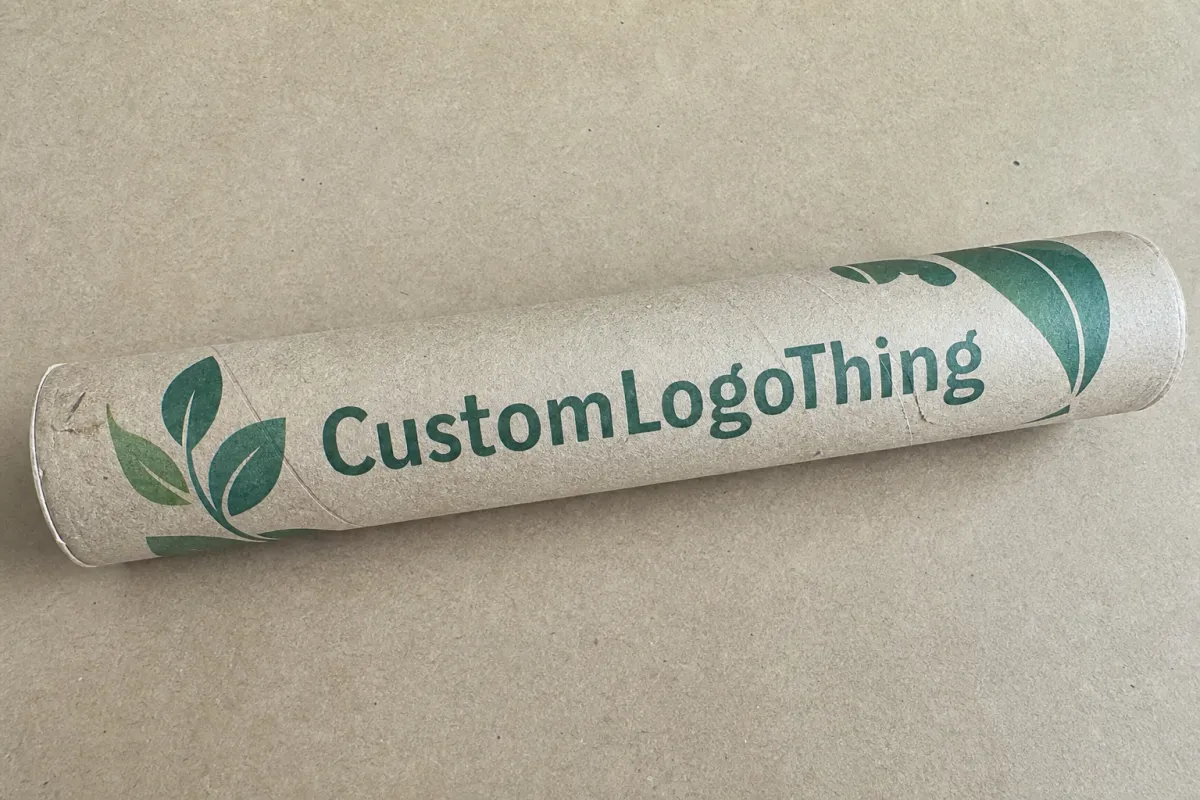
Eco-friendly tubes are not just brown tubes with a recycled claim slapped on the outside. The real question is whether the whole structure was designed for lower impact across the package life cycle: the fiber content, the adhesive system, the print method, the closure style, the total amount of material used, and the chance that the tube can move through paper recovery after use. That is the difference between looking sustainable and being less wasteful for real.
A simple shipping example makes it obvious. A light poster may only need a tube strong enough to stop bending. If the diameter is larger than necessary, the shipper pays for extra board, extra dimensional weight, and sometimes extra void fill because someone sized the package with optimism instead of math. Smaller, better-fit tubes often lower cost and reduce waste at the same time. Fancy that.
Printed Shipping Tubes can be eco friendly when the board contains recycled fiber, the inks work with paper recovery, and the adhesives do not create a messy mix of materials. Paper end plugs or fiber caps can improve recyclability compared with fully plastic closures, although the right closure still depends on the product and the shipping lane. A simple art print may do fine in a paper tube with paper plugs. A heavier textile roll may need more reinforcement, because physics does not care about marketing.
Common uses include art prints, architectural drawings, certificates, sample packs, rolled textiles, promotional graphics, and retail giveaways. Branding matters in all of them because the package is part of the customer experience. Protection matters first. A tube that looks polished and arrives crushed has already failed.
A tube does not become sustainable just because it is brown or carries a recycled logo. The real test is whether the material mix, size, print system, and closure choice make sense for the shipment from factory to customer.
For broader material and recovery guidance, the EPA recycling guidance is a useful public reference, and many buyers also review FSC-certified fiber options when they want better documentation around responsibly sourced paperboard. Just keep the scope honest. FSC certification speaks to fiber sourcing, not a blanket guarantee that every package component will be accepted everywhere in curbside recycling.
Printed Shipping Tubes Eco Friendly: How the Tube Is Made
Most printed shipping tubes start with paperboard that is spiral-wound or convolutely wound around a mandrel. Spiral-wound construction is common because it gives a strong weight-to-strength ratio and comes in many diameters and wall thicknesses. Convolute winding usually shows up when a smoother surface, tighter wall structure, or a specific strength profile is needed. Either way, the body is built from paper layers bonded with adhesive, then cut to length and finished with end closures.
The printed outer surface may be applied before the tube is fully formed, or the material may be printed as a wrap and converted into the cylinder afterward. That sequence affects registration, seam visibility, and waste during setup. A one-color logo is easy. A full-wrap design with deep solids or fine type needs tighter control over ink laydown and seam alignment so the tube still looks sharp after forming and trimming.
Print method has a direct effect on sustainability. Water-based inks are often preferred when the application allows, because they generally work well with paper-based packaging and avoid some of the headaches that come with harsher solvent systems. Flexographic printing is common on tube wraps and can be efficient for longer runs. Digital printing can make sense for shorter runs or variable art, but the real answer depends on the spec, the run size, and the supplier's equipment. Low-migration coatings can help in specific retail or brand applications, especially if odor, handling, or storage conditions matter. Cleaner specs usually mean fewer compromises later.
Designers also control ink coverage. A restrained graphic with one or two colors usually uses less ink, simplifies proofing, and lowers the odds of a visual mismatch between runs. That does not ban full-wrap graphics. It just means the buyer should ask whether the extra coverage is earning its keep. In many order fulfillment programs, a strong logo, a clear URL, and a clean color block do the job better than a loud all-over print.
Closures are another place where function and sustainability collide. Paper plugs, fiber end caps, and paper-based inserts work well for many products. Some applications still need plastic ends for durability or moisture resistance. If moisture is a real issue, the choice gets more nuanced. Aqueous varnish, a stronger board grade, or a paper-sleeved barrier may be the better compromise than adding a plastic liner that makes recovery harder later. There is no magic answer. Just tradeoffs.
For transit packaging testing and common shipping stresses, many teams refer to ISTA test methods because crush, vibration, drop, and compression performance are easier to compare when everyone uses the same language. That helps a lot if your tube moves through multiple handoffs in ecommerce shipping instead of one controlled delivery lane. Testing also exposes the ugly stuff quickly: an end plug that loosens, a seam that splits, or a diameter that looks fine on paper and fails once product and packing pressure are added.
Key Factors That Shape Performance, Branding, and Sustainability
A few variables decide whether a tube performs well and still feels responsible from a sourcing standpoint. The big ones are board caliper, wall thickness, diameter, length, print coverage, closure type, and any moisture or scuff resistance you need. Those details shape how the package looks, how much shipping volume it takes up, how it survives handling, and how easily it fits into existing fulfillment lines. They also decide whether the buyer ends up with a tidy spec or a trail of avoidable revisions.
Board caliper is the obvious starting point. Thicker walls improve crush resistance, but they also add weight and material cost. A small art print may only need a lighter wall if the tube is not being tossed into another heavy parcel. A textile roll or multi-item kit may need more structure. The tube should be sized for the actual load, not padded because somebody wanted to feel safe. Overbuilding burns money fast.
Diameter affects dimensional weight immediately. Even when the product is light, carriers may price the shipment based on the space it takes up rather than the mass alone. A tube that is a little too wide can raise parcel cost across every shipment, especially in bulk programs. A tighter fit often improves sustainability and reduces freight spend at the same time, which makes careful measurement one of the best early decisions a buyer can make.
Branding choices matter too. A simple one-color logo can feel deliberate, professional, and easy to recycle. A full-wrap design with heavy flood coverage may create more shelf impact or a stronger unboxing moment, but it will also need more ink, tighter color control, and more proofing. If the tube is mostly there for package protection in a shipping stream, restrained design usually wins. If it is part of a premium launch or retail giveaway, the extra visual work may be justified.
The end-of-life story should be based on how recycling actually works, not on hopeful language from a pitch deck. A paper tube with paper closures is generally easier for fiber recovery than a tube built from multiple material layers and mixed plastic hardware. Local rules still vary, and curbside programs do not all accept the same components. Buyers should avoid blanket claims unless they have checked how the package will be handled in the markets where it ships.
Here is a simple way to compare common build choices at a purchasing level:
| Tube Build | Typical Use | Relative Cost at 5,000 Units | Strength and Sustainability Notes |
|---|---|---|---|
| Kraft spiral-wound tube, 1-color logo | Prints, documents, light promotional mailers | $0.55-$1.10 each | Good baseline option; simple print keeps setup efficient and recovery straightforward. |
| Recycled-content tube, 2-color wrap, paper plugs | Branded ecommerce shipping and retail giveaways | $0.75-$1.45 each | Balanced choice for brand and material efficiency; useful when the package must look polished without getting overbuilt. |
| Custom-size tube, full-wrap graphics, reinforced closure | Premium launches, heavier rolls, complex kits | $1.10-$2.40 each | Higher visual impact, but more material and a greater need to confirm recyclability, fit, and line compatibility. |
| Moisture-resistant coated tube with mixed closures | Humidity-prone lanes or long transit routes | $1.25-$2.75 each | May improve durability, but mixed materials can reduce recovery simplicity and should be justified by the shipping environment. |
Those numbers are directional, not universal, because board grade, tube length, print method, tooling, and market conditions all change the equation. Still, they show why the right design is often the balanced one, not the loudest one. If your program also includes other custom packaging, it can help to compare tube economics against Custom Shipping Boxes or lighter-format options such as Custom Poly Mailers. A broader review of Custom Packaging Products can also help when the tube is only one part of a larger fulfillment mix.
Dimensional weight, board weight, and closure style usually matter more than the number of ink colors. That one point saves a lot of surprise costs. A buyer can approve a beautiful tube and still blow the budget later if the diameter is too generous or the closure system adds avoidable bulk. The shipping bill does not care how nice the mockup looked.
Printed Shipping Tubes Eco Friendly: Process, Timeline, and Lead Time
The production flow usually starts with requirements gathering. A buyer supplies product dimensions, target quantity, shipping method, print goals, and any sustainability requirements such as recycled content or paper-based closures. From there, the supplier develops a spec, confirms the tube structure, and prepares artwork or a dieline. Once the proof is approved, the job moves into material scheduling, print setup, tube forming, finishing, packing, and final inspection.
Artwork readiness is one of the biggest timeline variables. If the logo files are clean, the colors are already defined, and the layout has been planned around the tube seam and printable area, the job can move quickly. If the brand team is still deciding on panel coverage, barcode placement, or regulatory text, every revision adds time. Even for simple tubes, proofing can be the difference between a normal launch and a rushed one.
Standard lead times vary, but a simple printed tube often takes about 12-15 business days after proof approval once materials are in house. Custom sizes, specialty coatings, or more elaborate closures can extend that timeline. Short runs sometimes move faster if the format is already proven and the supplier has similar components on hand, while fully custom builds may need extra time for tooling or sampling. That is normal. Forcing a launch into an impossible schedule is how people end up angry and behind.
For seasonal campaigns, trade shows, and subscription kits, the safest planning habit is to work backward from the ship date instead of from the design sign-off date. That leaves room for sample review, color correction, and a second proof if needed. In order fulfillment, the packaging does not live alone. It has to meet the product, the carton schedule, the freight schedule, and sometimes the retail receiving window all at once.
Lead time also changes with print complexity. A tube with one logo color and a repeating panel is easier to produce than a full-wrap gradient with several spot colors and variable copy. If the project needs a premium look, it is worth deciding early whether the added detail is essential or whether a cleaner design would still hit the brand goal. That choice usually shortens development time and lowers the odds of rework.
A practical timeline checklist helps keep the project moving:
- Confirm product dimensions and tube length before artwork begins.
- Choose the closure type early, because it affects structure and fit.
- Approve recycled content or FSC requirements up front if they matter to the brand.
- Check whether any coatings or liners affect recyclability goals.
- Build time for a sample review if the tube will be seen by customers or retail buyers.
That sequence protects both schedule and budget. It also keeps the packaging team from discovering, too late, that the chosen tube is harder to assemble on the line than expected. A neat specification sheet is not busywork. It is one of the best tools for reducing avoidable friction in production.
Eco-Friendly Printed Shipping Tubes: Cost, MOQ, and Quote Basics
Cost is shaped by a few major levers: material grade, tube dimensions, print coverage, number of print colors, closure style, and quantity. The larger the tube, the more paperboard is needed. The more colors or full-wrap coverage you add, the more setup and press time the job usually requires. If you choose a premium closure or a custom insert, the price climbs again. None of that is mysterious, but it is easy to forget how quickly those choices stack up when a project is designed for presentation instead of manufacturing.
MOQ, or minimum order quantity, has a direct effect on unit price. Small runs carry proportionally more setup cost, while larger runs spread that cost across more units. In some cases, increasing the quantity by a modest amount can lower the per-piece price enough to justify holding a bit of inventory. That makes sense when the tube is tied to a stable product line or recurring campaign. It makes less sense if the design changes constantly or if the SKU is still being tested.
Quotes should be compared on the same basis. A lower number on the page may hide a difference in board weight, a cheaper closure, a lighter print method, or a packing format that does not match the other options. Before accepting any quote, check the exact tube diameter, wall construction, print method, finish, included proofs, and whether tooling or setup charges are part of the price. Buyers who compare only the unit total often miss the real cost of the program.
Hidden costs show up often enough to deserve a checklist. Artwork revisions, rush fees, specialty finishes, extra color matches, packaging inserts, and nonstandard shipping instructions can all change the total. If the order needs custom labeling or split shipments across multiple warehouses, that should be clarified early too. A quote that looks slightly higher but includes setup, proofing, and packing may be more accurate than a lower headline price with a stack of later add-ons.
One useful way to think about pricing is to separate shipping materials from branded presentation. If the tube is mostly functional, a restrained print and standard closure may give the best value. If the tube is a customer-facing brand touchpoint, extra visual work can be justified, but it should be intentional rather than automatic. A clean expensive tube is still expensive. The goal is to spend where the package actually earns a return.
For buyers building a quick budget range, these are common directional expectations:
- Simple branded paper tube runs often start in the low tens of cents per unit at higher quantities, then rise with size and print detail.
- Custom diameters and premium closures can add meaningful cost even when the print itself is modest.
- Short runs usually carry a higher unit price because setup is spread over fewer pieces.
- Material substitutions, such as heavier board or more sustainable closures, can increase unit cost while improving package performance or recovery value.
That is why a quote should be read as a package of decisions, not a single number. If your team is comparing a tube to other formats in a broader rollout, model the total ship cost alongside brand value and disposal profile. A tube that costs a little more up front can still be the better choice if it lowers damage, cuts dimensional weight, or reduces reprints caused by weak protection.
Common Mistakes When Ordering Printed Shipping Tubes
The first mistake is picking a tube because it looks premium in a mockup without checking whether it actually fits the product. A tube that is too large wastes board, increases shipping volume, and gives the contents room to shift in transit. That movement can cause edge wear, scuffing, or crushing at the ends, especially if the product is delicate. The package may look good in a presentation deck, but it will behave badly in a parcel network.
The second mistake is assuming that a thicker wall automatically means better protection. Stronger is not always better if the added material pushes the package into a higher freight class or creates avoidable dimensional weight charges. For many products, a carefully chosen tube structure protects just as well with less material. The right answer is usually product-specific, not the thickest wall on the menu.
Overcomplicated artwork causes trouble too. Dense print coverage, tiny copy near the seam, or a design that depends on exact color matching across every batch can slow approvals and create disappointment when the proof and the live run do not line up perfectly. A restrained graphic system usually prints more predictably and gives the tube a cleaner, more honest look. That matters even more when the order supports ecommerce shipping and needs to stay consistent across multiple production runs.
Buyers also get stuck with unclear proof approval. If the team has not agreed on the exact shade, panel layout, or closure position, the project can stall or come back for a reprint. That is a costly delay when launch timing matters. A good proof review should cover appearance, assembly, label placement, and how the package will be handled in fulfillment.
The final mistake is making eco claims too early. A tube is not automatically eco friendly because it is paper-based, and it is not automatically non-eco-friendly because it uses a coating or a closure insert. What matters is the material mix, the source fiber, the print system, and the recycling reality in the target market. Smart buyers ask for specifics instead of slogans. That habit protects both the brand and the budget.
Expert Tips and Next Steps for a Smarter Order
Start with the product, not the package. Measure the rolled or folded item, then work backward to the smallest tube that still protects it through the full shipping journey. Allow for loading clearance, end caps, tissue, or any protective wrap the product needs. That approach usually lowers material use, cuts shipping impact, and simplifies the spec. It also keeps the design process honest, because the size is being driven by function instead of habit.
Requesting samples is worth the time. A prototype or short sample run lets you check print clarity, seam strength, closure fit, and how the tube looks on a packing line and in customer hands. That is where hidden issues show up: a cap that is slightly too tight, a seam that shows more than expected, or a logo that sits too close to the end wrap. Those small details matter in a real fulfillment environment because they decide whether the packaging feels orderly or rushed.
Build a specification sheet before quoting. Include size, board grade, print colors, closure type, order quantity, sustainability requirements, and any special handling notes. If the tube must pass through a specific warehouse process or fit into an existing mailer system, say so. The more complete the brief, the easier it is for suppliers to quote accurately and the less likely the project is to drift into revisions later.
If the program is new, place a pilot order first. A smaller initial run shows whether the tube holds up under real transit conditions, whether the packing team can assemble it efficiently, and whether customers respond well to the look and feel. That one step can prevent a much larger mistake on the second order. It is a practical way to respect both sustainability and cost control, because it reduces the chance of overcommitting to a spec that has not been tested.
Keep the design language disciplined. The best tube does not need to shout. It needs to fit the product, carry the brand cleanly, and support recovery after use. For teams evaluating printed shipping tubes eco friendly packaging, the clearest path is usually the least complicated one: choose the smallest workable size, use the simplest closure that still protects the product, and keep the print system aligned with the recycling path you can honestly support. That is how printed shipping tubes eco friendly packaging earns its place in a shipping program without creating new problems.
Are printed shipping tubes eco friendly if they use ink?
Yes, if the tube body is paper-based and the inks are chosen for low impact, such as water-based or similarly compatible systems. Eco-friendliness depends on the full construction, including board content, adhesive type, coating choices, and whether the closures stay within recyclable material choices. Heavy ink coverage is not automatically disqualifying, but simpler artwork often lowers material use and can make recycling easier. If the tube uses specialty coatings or laminated finishes, check the recovery rules in the target market before making a claim.
What size should I choose for eco-friendly printed shipping tubes?
Choose the smallest tube that safely fits the product with enough clearance for loading and transit protection. Measure the rolled or folded product, then allow for end caps, insertion space, and any protective wrap or tissue. A closer fit usually means less board use, lower shipping volume, and a cleaner sustainability profile. Oversizing is one of the easiest ways to waste money and material at the same time.
How do I compare quotes for printed shipping tubes eco friendly orders?
Compare the same tube dimensions, board weight, print coverage, closure style, and quantity on every quote. Check whether setup, proofs, tooling, and packing are included, because those items can change the real unit cost. Ask what material and closure choices are being used so you can judge both price and recyclability. If one supplier is quoting a different board grade or a different closure, treat it as a different product, not a lower price.
What is a typical lead time for custom printed shipping tubes?
Lead time depends on artwork approval, material availability, order size, and whether the tube is a standard or custom format. Simple runs move faster when the spec is already proven; custom sizes or special finishes usually add time. A straightforward job can often land in the 12-15 business day range after proof approval once materials are in house, but complex projects take longer. Build in extra time for proofing and sample review so you can avoid rush fees and prevent avoidable rework.
Can eco-friendly printed shipping tubes still feel premium?
Yes, premium feel often comes from strong construction, crisp print, and thoughtful design rather than excess material. A well-finished paperboard tube can look refined while still supporting recyclability and efficient shipping. Using restrained graphics, accurate color, and clean closures can make the package feel more premium, not less. The point is polish, not visual noise.


