Buyer Fit Snapshot
| Best fit | Printed Shipping Tubes for Posters projects where brand print, material claims, artwork control, MOQ, and repeat-order consistency need to be specified before quoting. |
|---|---|
| Quote inputs | Share finished size, material target, print colors, finish, packing count, annual reorder estimate, ship-to region, and any compliance wording. |
| Proofing check | Approve dieline scale, logo placement, barcode or warning zones, color tolerance, closure strength, and carton packing before bulk production. |
| Main risk | Vague material claims, crowded artwork, missing packing details, or unclear freight terms can make a low unit price expensive after revisions. |
Fast answer: Printed Shipping Tubes for Posters: Materials, Costs, Uses should be specified like a repeatable production item. The safest quote records material, print method, finish, artwork proof, packing count, and reorder notes in one written spec.
Production checks before approval
Compare the actual filled-product size with the drawing, then confirm tolerance on folds, seals, hang holes, label areas, and retail display edges. Reserve space for logos, QR codes, warning copy, and material claims before decorative graphics fill the panel.
Quote comparison points
Review material grade, print process, finish, sampling route, tooling charges, carton quantity, and freight assumptions side by side. A quote is only useful when the supplier can repeat the same color, closure quality, and packing count on the next order.
Printed Shipping Tubes for Posters: Materials, Costs, Uses
Printed Shipping Tubes for posters do something plain mailers rarely manage: they shape the customer’s first impression before the artwork is even unrolled. That matters more than many teams admit. A tube can signal whether the purchase feels like a generic shipment or a piece of the product experience itself.
For packaging buyers, printed shipping tubes for posters sit at the intersection of package protection, brand presentation, and ecommerce shipping. They need to survive carrier handling, keep rolled artwork from scuffing or crushing, and still look deliberate enough to support the product story. That combination makes the specification worth a close look, especially when the same format may be used for art prints, campaign posters, or premium retail drops.
The use cases are broad: limited-edition art print programs, movie poster releases, gallery editions, event graphics, trade show giveaways, and direct-to-consumer poster sales. The construction can stay familiar while the result changes dramatically. A natural kraft tube with restrained branding sends a very different message from a whiteboard tube covered in full-color artwork, and those choices affect both cost and perception.
Why Printed Shipping Tubes for Posters Change the Unboxing Experience
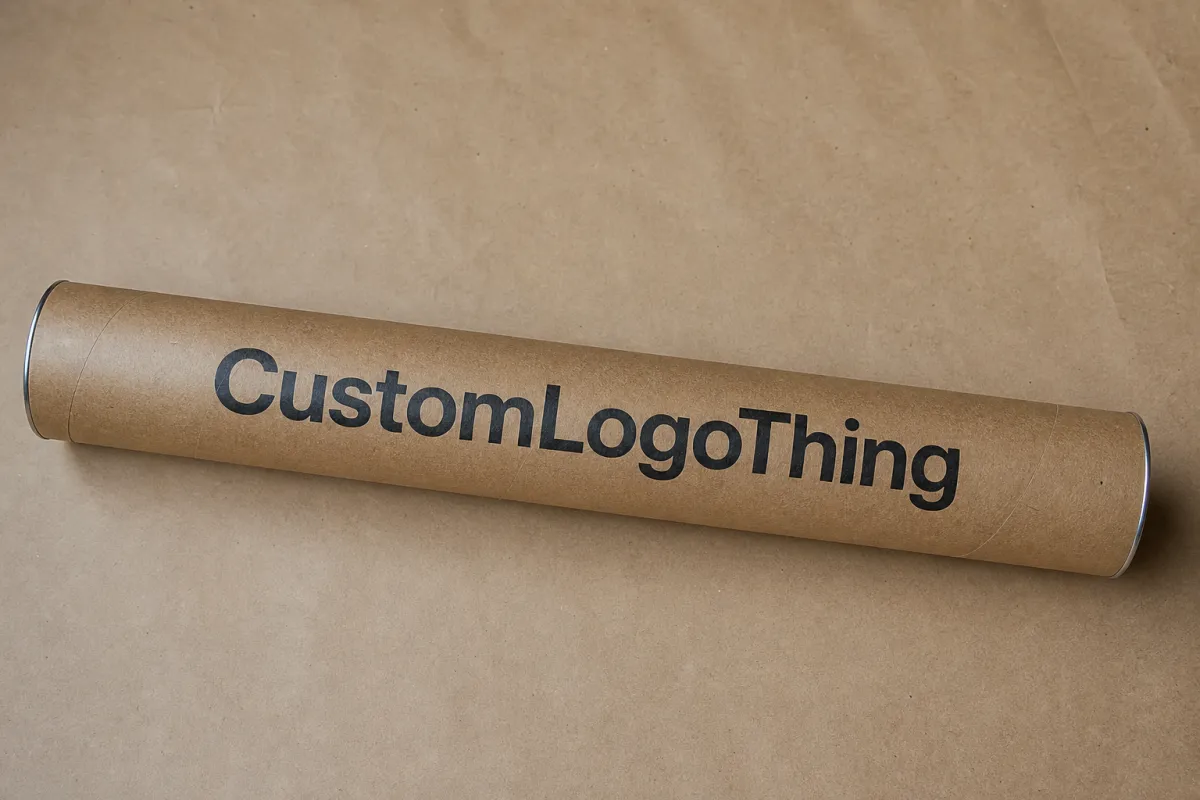
Printed shipping tubes for posters get attention for a simple reason: the customer sees the container before the print. The tube is not only transit packaging. It is the opening scene. If the outside feels considered, the buyer starts with a stronger sense that what is inside deserves care.
Structurally, these tubes are protective mailing containers made from paperboard or fiber construction, often spiral-wound for strength. They usually pair with end closures that keep rolled prints secure through parcel networks and warehouse handling. Visually, they can carry logos, handling instructions, product names, QR codes, or seasonal messages that turn a basic mailer into a branded object.
That distinction matters because packaging buyers often choose between a tube that only ships and a tube that communicates. For art prints, a branded tube can reinforce the value of a limited edition. For movie posters or event graphics, it can extend the campaign into the unboxing moment. For gallery editions, it can feel closer to a presentation piece than a disposable carton.
The shipping side matters just as much. A properly sized tube can reduce damage claims, limit edge crush, and avoid the bulky overboxing that adds weight and increases dimensional weight charges. That makes the decision relevant to design teams, but also to fulfillment operations and shipping materials planning.
The strongest printed shipping tubes for posters do two jobs at once: they protect the rolled artwork and they tell the customer, immediately, that the contents matter. A cylinder sounds ordinary. In practice, it can carry more branding weight than many larger packages.
A tube can be the first retail touchpoint a customer sees, so it should feel like part of the product, not an afterthought from the shipping lane.
How Printed Shipping Tubes for Posters Work in Production
The production path begins with the structure itself. Most poster tubes use paperboard or fiber construction, usually spiral-wound or wrapped for strength, with wall thickness chosen to hold up in parcel distribution without buckling. Heavier walls cost more, but they earn their keep when posters travel long carrier routes, stack on pallets, or move through busy fulfillment centers.
Printing can happen in several ways. Some programs use direct print on the tube body, which creates a cleaner integrated look and removes label edges. Others use printed wrap labels, which are useful when the base tube is stock and the branding layer needs more flexibility. Full-surface decoration sits at the premium end because it gives the design team the most freedom, though it also adds setup complexity and can increase unit cost.
Artwork setup deserves close attention. Seam location, bleed, safe areas, and barcode placement all matter. A seam that cuts through a logo or sits under a headline can make the tube feel improvised even when the print quality is excellent. A good template should show exactly where the seam lands, where the end closures interrupt the artwork, and what portion of the cylinder remains visible once the tube is packed and labeled.
The typical production sequence looks like this:
- Quote and spec review
- Artwork submission and template alignment
- Digital proof or press proof
- Sample approval if needed
- Printing and finishing
- Cutting, forming, and closure assembly
- Packing, cartonization, and shipment
That sequence sounds simple, but the details shift by print method and order size. Some runs need curing or drying time. Others need secondary finishing to help the printed surface resist scuffing during transit packaging. If the tube will be handled repeatedly in a warehouse, the outer layer should resist abrasion, not just look sharp in a render.
The practical goal is straightforward: make the tube easy to pack, hard to crush, and consistent across the run. Packaging engineers usually balance branding with performance by checking diameter tolerance, closure friction, and surface durability before the order leaves the plant. For a broader look at packaging options, Custom Packaging Products can help when poster tubes are part of a larger brand system rather than a single SKU.
It also helps to test the tube against the poster stock itself. A coated paper can hold a tighter roll, while a heavy cotton sheet may need a larger diameter to avoid memory curl. The tube should fit the print, not force the print to fit the tube.
Cost, Pricing, MOQ, and Quote Factors to Expect
Pricing for printed shipping tubes for posters depends on more than length. Diameter, wall thickness, print coverage, color count, finishing, closure style, and whether the tube is stock or fully custom all affect the final number. Even the same artwork can land in a different price band depending on whether the order is a short run or a larger production batch.
Short runs usually carry a higher per-unit cost because prepress, setup, and press time are spread across fewer pieces. That pattern shows up across custom packaging, but it becomes especially visible in printed tubes because the structure itself is simple while the decoration still needs care. A buyer ordering 500 units may see a much higher unit price than one ordering 5,000, even if the design looks identical.
As a working estimate, simple printed tubes at moderate quantities can land around $0.55-$1.50 per unit for basic structures and restrained print coverage, while more customized tubes with full decoration, heavier board, or specialty finishing can move into the $1.50-$3.50+ range. Exact pricing depends on dimensions, quantity, and print method, so these numbers are a budgeting range rather than a promise.
Minimum order quantities also shift by format. A stock tube with a printed label may allow a lower MOQ because the base component is already in inventory. A fully custom tube with specialty closures or unusual dimensions usually needs a larger minimum to keep production efficient. If the launch depends on a tight timeline, MOQ and lead time should be discussed together, not treated as separate concerns.
| Tube Option | Typical Use | Approx. Unit Cost | Strengths | Tradeoffs |
|---|---|---|---|---|
| Stock tube with printed label | Promotions, short runs, pilot launches | $0.55-$1.25 | Lower setup cost, faster approval cycle | Less integrated look, label edges can show wear |
| Direct-printed tube | Retail programs, branded ecommerce shipping | $0.85-$2.25 | Cleaner appearance, better brand consistency | More setup planning, artwork must fit the seam |
| Fully custom decorated tube | Premium art prints, gallery editions, special drops | $1.50-$3.50+ | Highest visual impact, strong shelf and mailer appeal | Higher MOQ, longer lead time, more proofing |
When requesting a quote, send as much usable information as possible: poster dimensions, target tube diameter, print coverage, quantity, color count, any barcode or handling copy, destination, and required in-hand date. If the launch date is fixed, say so early. That gives the supplier room to account for production slots, shipping time, and any revisions that could slow the job.
Do not overlook hidden costs. Freight can be meaningful if the tubes are bulky, especially under dimensional weight rules. Sample runs, rush charges, special inserts, and temporary storage can also affect the real landed cost. If the tubes are part of a broader packaging program, compare them against Custom Shipping Boxes and Custom Poly Mailers so the brand chooses the right format for each SKU instead of forcing one structure to do everything.
For buyers who want to validate transit performance before launch, organizations such as ISTA transit test methods provide useful context for parcel testing, while FSC-certified paper sourcing often enters the conversation when board content and responsible forestry matter to the brand. FSC does not make a tube automatically better in use, but it can matter when sustainability claims need documentation.
Key Factors That Affect Performance, Branding, and Protection
Board grade comes first. A lighter tube may work well for short postal routes or smaller posters, but heavier boards are worth the extra cost when the shipment is valuable, the route is long, or the tube will move through dense warehouse systems. Better wall strength can reduce crushing and keep the poster roll from deforming under stacking pressure.
Size comes next. Inner diameter affects how tightly the poster rolls, and length affects how much protection the ends receive. Roll too tightly, and the print can hold curl longer than the customer expects. Leave too much space, and the poster can shift during transit, increasing the chance of edge wear or end impact. Fit is one of the simplest forms of package protection, and one of the easiest to get wrong.
Print quality needs equal care. Natural kraft board has a warmer, more organic look, but thin type or pale color can lose contrast against it. Whiteboard gives stronger brightness and usually supports cleaner full-color graphics, especially for artwork with fine detail. Soft-touch or matte finishes can improve the premium feel, while gloss or varnish can sharpen contrast and help the tube resist scuffing.
Closure style matters more than many teams expect. Friction-fit plugs are common and economical, but they create a different user experience than end caps or tamper-evident closures. A secure closure can support direct-to-consumer shipping, while a faster-open design may fit retail handoff or fulfillment lines better. In some order fulfillment environments, speed matters almost as much as graphic finish.
Branding hierarchy is the last piece. The outside of the tube should answer a few questions fast: what is inside, who sent it, and how should it be handled? That may mean logo placement near the top third of the tube, a clear product name, and a reserved area for routing labels or barcodes. It may also mean turning the cylinder into a miniature billboard for campaign messaging, seasonal artwork, or limited-edition numbering.
One packaging team rule of thumb still holds: if the customer is likely to keep the tube for reuse, the design should still look good after repeated handling. People reuse strong poster tubes for storage, returns, and portable artwork transport. That makes durability part of the brand experience, not just the shipping spec.
Step-by-Step Guide to Choosing the Right Tube
Start with the poster itself. Measure the flat size, confirm the paper weight, and think about how the print behaves when rolled. A coated stock may tolerate a tighter roll, while a delicate art paper or heavy poster stock may need a wider diameter to avoid curl memory. If the poster ships with a protective sleeve, tissue, or belly band, include those materials in the fit calculation from the beginning.
Next, look at the logistics path. Where is the tube going, and how will it travel? Parcel networks, retail handoff, and direct-to-consumer shipping all create different stresses. A tube that performs well in local delivery may need a thicker wall or stronger closure security for cross-country transit. If the carrier bills by dimensional weight, oversized packaging can add more cost than a stronger tube would save.
Then define the branding needs. Decide whether the tube should act like a premium presentation piece or a clean utility shipper with a few clear graphics. Choose the brand palette, logo rules, compliance copy, and any barcode or SKU requirements. If routing marks are part of the warehouse process, reserve a quiet area for them so they do not compete with the main design.
At this stage, request a prototype or digital proof. That is where many avoidable problems surface: seam placement over a logo, weak contrast on kraft, or copy that looks cramped once the tube is wrapped. A good proof should show the full layout in realistic proportions, including end areas that might otherwise disappear in the final assembly.
From there, run a test pack. Put the poster into the tube, close it, label it, and move it through a short transit check. If possible, have fulfillment staff handle it the way they would during a real launch. That often reveals whether the tube is too stiff for high-volume packing, whether the closure is awkward, or whether the printed surface scuffs more than expected.
Finally, lock the spec and set the reorder plan. Store the approved dieline, proof, quantity assumptions, and carton count in one place so the next buy moves faster. That kind of discipline helps with seasonal drops, event programs, and recurring ecommerce shipping campaigns where consistency matters as much as cost. Good shipping materials planning pays back later.
Quick spec checklist
- Poster size: confirm the finished flat dimensions and the intended roll diameter.
- Board grade: choose a wall thickness that matches the route and handling risk.
- Print method: direct print, wrap label, or full decoration.
- Closure: friction-fit, cap, plug, or tamper-evident style.
- Artwork: seam, bleed, safe area, barcode position, and routing marks.
- Timeline: proof approval, production window, transit time, and launch date.
Common Mistakes to Avoid with Poster Tubes
The most common mistake is choosing a tube that is too small. That makes loading awkward and forces the poster into a tighter roll than it should have. Over time, the result can be stubborn curl, especially on high-value artwork or thick coated stock. The few cents saved on diameter can disappear quickly if the customer receives a poster that will not lie flat.
Another frequent issue is underestimating contrast on kraft board. Rich dark tones and bold logos usually hold up well, but fine lines, pale backgrounds, and small type can lose clarity. If the design depends on delicate typography or subtle gradients, a white substrate may be the better choice, even if the raw material looks less organic.
Seam placement can also create problems. A logo split across the seam, a headline interrupted by the closure area, or a barcode placed where it bends can make the tube feel less polished. That is frustrating because it is avoidable. The proof should show the seam clearly, and the layout should be built around it rather than adjusted after the fact.
Closures deserve the same discipline. A plug that is too loose can open during transit. A cap that is too tight can slow down pack-out and frustrate the customer. If the poster is especially valuable, tamper evidence may be worth the extra cost. If the tube is used in a fast-moving fulfillment environment, ease of opening may matter more than a more elaborate closure.
Rushing the order without a proof is another expensive shortcut. Misaligned logos, incorrect copy, and forgotten handling instructions all show up on the finished tube, not in theory. In a branded packaging program, that kind of mistake can do more damage than a slightly higher unit price ever would.
And finally, do not judge the program on unit price alone. Freight, storage, sample shipments, and repeat orders all affect the true budget. A tube that looks inexpensive on paper can become costly if it arrives in awkward case counts or triggers high dimensional weight charges. The right comparison is landed cost plus customer experience, not just factory price.
Expert Tips and Next Steps for Better Results
Design the outside like a miniature billboard. That does not mean it needs to be loud. It means the information hierarchy should be clear enough that a customer understands the product at a glance. Start with the brand, then the poster identity, then any secondary message such as edition number, campaign name, or care note. A simple, clean layout often outperforms a busy one because it reads quickly and feels more expensive.
Match the finish to the brand mood. Natural kraft tends to feel earthy, handmade, and practical. Whiteboard reads more gallery-like, sharp, and clean. A matte finish can suit art-focused products, while a slightly glossier surface can help retail promotions stand out. None of those choices is universally better, and that is the point: the tube should support the story the poster is already telling.
Think about what happens after delivery, not only during transit. If customers are likely to keep the tube, give them a reason to keep it. Care instructions, limited-edition numbering, or a short reveal message on the inside can make the package feel collectible. That can turn a piece of transit packaging into something the buyer associates with the brand long after the poster is unrolled.
Build the reorder cycle early. Many packaging delays happen because the team starts from scratch every time: new artwork, new proofing, new quantity assumptions, new freight estimate. A better approach is to lock the spec, save the approved files, and keep the supply plan ready for the next restock or launch window. That is especially useful for brands with seasonal drops or recurring art releases.
If your poster tube is part of a broader packaging system, align it with the rest of the line. A poster campaign may need tubes for premium versions, Custom Shipping Boxes for bundled kits, and Custom Poly Mailers for lighter inserts or accessory items. The more coordinated the system, the smoother the order fulfillment workflow becomes.
For teams evaluating the next run, the practical path is straightforward: measure the poster, choose the print style, request a quote, review a proof, and confirm the final spec before production starts. Those steps sound ordinary, yet they prevent most of the cost surprises and quality misses that turn a simple mailer into a problem.
Printed shipping tubes for posters work best when they are treated as both protection and presentation. If the structure, artwork, and logistics line up cleanly, the tube does more than ship a poster. It helps the poster arrive with its value already established.
The clearest takeaway is this: start with the poster dimensions and the shipping route, then choose the tube diameter, board grade, print method, and closure as one system rather than four separate decisions. That sequence is what keeps the final package attractive, shippable, and costed realistically.
Frequently Asked Questions
Are printed shipping tubes for posters better than plain tubes?
Printed tubes add branding, product information, and a more polished first impression while still protecting rolled posters. Plain tubes can be cheaper for very simple shipping needs, but they miss the marketing value and customer experience benefits. If the poster is part of a premium or giftable product, printed packaging usually feels more intentional and memorable.
What size should I choose for printed poster shipping tubes?
Choose the inner diameter based on the poster stock and how tightly it can be rolled without causing stress or memory curl. Length should allow the poster to fit with some clearance for end closures and any inserts or protective sleeves. If you are unsure, share the poster dimensions and paper weight with the packaging supplier before finalizing the tube spec.
How much do printed shipping tubes for posters cost per unit?
Pricing depends on quantity, board thickness, print coverage, finishing, and whether the tube uses stock or fully custom components. Short runs usually cost more per piece because setup and prepress are spread across fewer units. Freight and packaging extras can affect the real landed cost, so ask for a full quote rather than only a unit price.
How long does production usually take for custom printed poster tubes?
Timeline depends on artwork approval, print method, order size, and whether the structure is stock-based or fully custom. Proofing and sample approval often add time, but they reduce the risk of color or layout problems on the final run. If you have a launch date, build in extra time for transit and any revisions before production starts.
Can printed poster tubes include barcodes or handling instructions?
Yes, most designs can include barcodes, SKU numbers, care icons, or shipping instructions if the layout is planned correctly. Those elements should be placed where scanners and fulfillment teams can read them without interfering with the main branding. A good spec balances visual appeal with practical logistics so the tube works in both warehouse and customer settings.


