The ecommerce Cuffed Knit Beanies physical sample checklist exists for one reason: a flat mockup cannot tell you how a real knit hat behaves once the cuff is folded, the yarn loosens, and the logo sits under actual tension. A screen proof may look tidy. The sample is where the product starts telling the truth.
That matters more with cuffed beanies than with a lot of other apparel. The fold changes the visible field. Stitch density changes the hand feel. Yarn recovery changes the shape after wear. Even a clean embroidery file can land too low, too high, or slightly off-center once the cuff is turned the way shoppers actually wear it.
A proper pre-production sample uses the intended yarn, stitch construction, decoration method, and finishing details. You are checking the product, not the artwork. That sounds obvious until the first bulk shipment shows up with a beautiful mockup and a beanie that fits like a negotiation.
A good beanie sample answers three questions fast: does it fit, does it hold shape, and does it still look like the approved brand after the cuff is folded?
What a Physical Sample Reveals Before Bulk Production
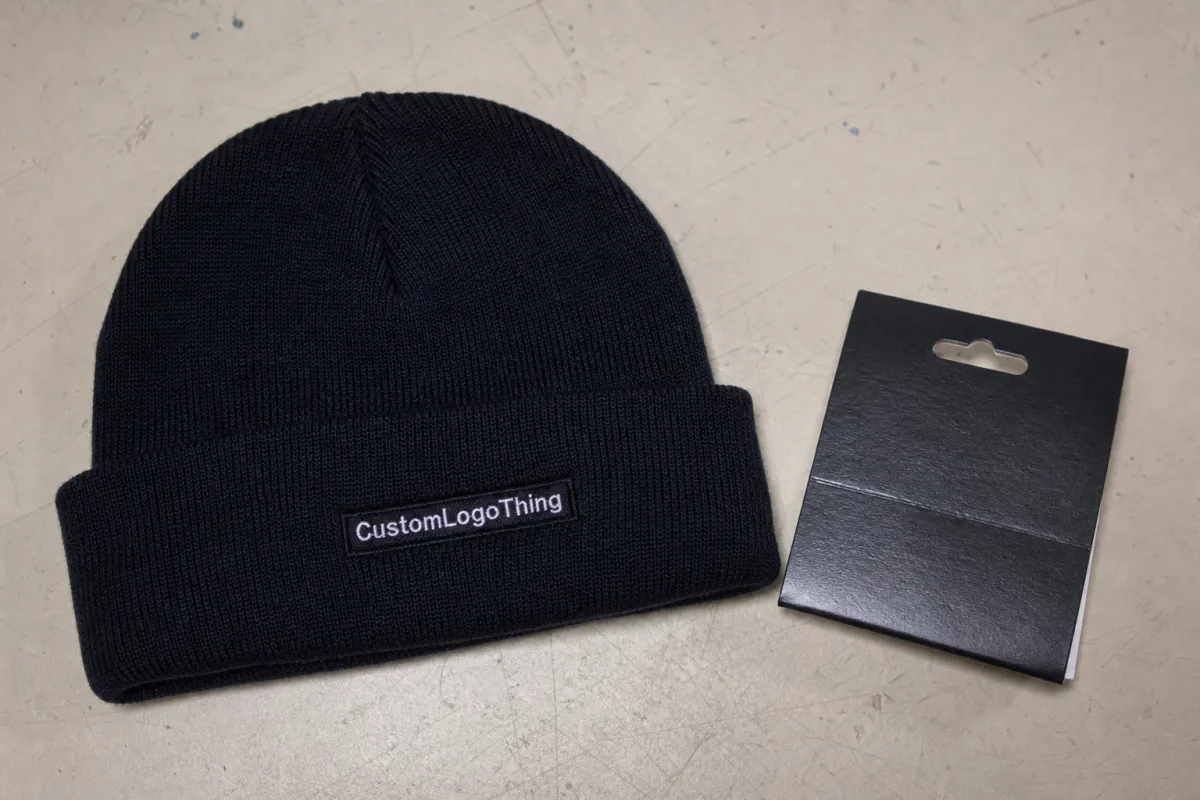
The first thing a sample reveals is behavior. Knit goods move. They relax after knitting, they stretch in wear, and they recover differently depending on yarn blend and gauge. A cuffed beanie with tight ribbing can feel structured and snug; the same design in a looser knit can read softer, taller, or more slouchy. That shift is hard to judge from a photo, which is why the physical sample is the real decision point.
It also shows whether the decoration works with the knit surface. Embroidery that looks centered on a flat panel may drift visually once the cuff is folded. A patch can look sharp in art approval and still feel bulky if it crosses a seam or lands on an uneven knit line. The sample is where those small problems stop being theoretical.
Finish quality shows up here too. Yarn sheen changes under warehouse LEDs, office light, and daylight. Stitch tension can create a subtle wave across the front panel. Inside seams can be neat in a close-up photo and still scratch after ten minutes of wear. Ecommerce buyers usually discover those issues the same way customers do: by touching the hat first, then noticing the flaw second.
The sample is not supposed to be perfect in a fantasy sense. It is supposed to prove that the fit, construction, decoration, and packaging intent all line up before bulk production starts. That is the difference between an approved sample and a future credit memo.
For knit headwear, the most useful checks are practical ones: Does the cuff sit where the brand wants it? Does the crown stay balanced after handling? Does the fabric recover after a stretch test? If those answers are shaky, the sample needs revision, even if the photo looks good.
Sample Approval Process and Timeline
A clean approval process starts with a clear brief. The supplier needs the yarn type, color target, knit structure, cuff height, logo method, label placement, and packaging requirements. If those pieces are vague, the sample becomes a guessing exercise. That usually ends with a second sample and a longer timeline anyway.
For a stock-yarn beanie with simple embroidery, the first sample often takes about 5 to 10 business days before shipping. Custom-dyed yarn, woven patches, special labels, or unusual fold requirements push the schedule longer because each step adds coordination. Overseas freight adds another week or more depending on the lane. A revision cycle can easily add another 1 to 3 weeks, so it is safer to plan for one correction than to pretend the first round will be final.
The fastest approvals usually happen when one person consolidates feedback before sending it back. Fragmented comments from marketing, merchandising, and operations do not help the supplier. They create three versions of the truth and one very confused sample maker. A single decision sheet with measurement notes, photo callouts, and pass-fail comments works far better.
Packaging should be reviewed during sampling, not after. Polybag size, barcode placement, carton count, and hang tag stock all affect the final unit cost and the way the product ships. A beanie that looks great but collapses in transit is still a problem. If the brand needs transit protection as well as shelf appeal, testing against ISTA methods is a sensible reference point. If hang tags or inserts carry sustainability claims, ask for FSC-certified paper where appropriate.
The approval path also needs a deadline on your side. If the sample sits on a desk for a week while everyone debates the cuff height, the timeline gets messy fast. Knit production is not a place where indecision becomes invisible. It becomes freight, fees, and excuses.
Cuffed Beanie Specs That Change Fit and Finish
Fit starts with measurable dimensions. Check cuff height, crown depth, relaxed circumference, and stretch recovery after the sample has been worn and handled a few times. A hat that measures correctly on a table can still sit too low on the ears or lose shape after a little use. For many Cuffed Knit Beanies, a relaxed circumference around 18 to 20 inches is common, but that number is less useful than the way the piece returns to spec after stretch.
Yarn choice changes almost everything. Acrylic usually gives softer hand feel, easier color matching, and a more forgiving price point. Wool blends bring warmth and a more natural touch, but they can raise cost and make care more demanding. Recycled yarn can work well for sustainability-driven programs, although the hand feel, pilling behavior, and color depth are not always as predictable as buyers want them to be.
Gauge matters as much as yarn. A tighter knit usually gives a cleaner face for embroidery and a more compact look on camera. A looser knit can feel more relaxed, but the underlying structure may show more clearly and the decoration may distort more easily. If the artwork is small, a dense knit field tends to hold it better. If the goal is a softer, more casual beanie, a looser structure may be acceptable, but the tradeoff should be intentional.
Decoration is where a lot of first samples go sideways. Dense embroidery can pull the knit inward, especially on thinner yarns. A patch may avoid that pull, but it can introduce stiffness or bulk at the front panel. Sewn labels need attention because the back of a seam matters just as much as the front of the logo. If the inside feels scratchy or the stitch tails poke through, the customer will notice before the brand does.
Color needs a real-world check, not just a swatch approval. Knit texture changes how shade reads. A charcoal yarn can look nearly black in one light and soft gray in another. Heather yarn is even trickier because the flecking shifts under office lights, daylight, and phone cameras. Compare against the approved Pantone target or swatch, but also review the sample in the kind of light your customers will actually use. If the beanie is sold online, the listing photos need to match the in-hand color closely enough that the buyer does not feel surprised.
One small detail can change the whole front view: logo alignment after the cuff is folded. A half-inch shift may sound minor on paper. On the actual hat, it can make the logo look lazy or crooked. That is why front placement should always be checked with the cuff folded the way the customer will wear it.
Cost, MOQ, and Pricing Triggers to Watch
Beanie cost usually comes down to five things: yarn type, stitch complexity, decoration method, labeling, and packaging. A simple stock-yarn cuffed beanie with one small embroidery hit is usually far cheaper than a custom-dyed knit with a woven patch, inside label, hang tag, and retail-ready bag. The sample stage is the place to see which upgrades are actually worth the money.
MOQ exists because setup does not scale down gracefully. Machine programming, yarn sourcing, color matching, and decoration setup all take time whether the run is 100 pieces or 1,000. Many suppliers can make a smaller order, but the unit price rises because the fixed work is spread across fewer hats. For knit programs, that is normal, not a sign that the quote is broken.
| Sample / build option | What changes | Typical sample fee | Typical timing |
|---|---|---|---|
| Stock yarn + simple embroidery | Fastest path, good for fit and logo checks | $35-$75 | 5-10 business days |
| Custom-dyed yarn + embroidery | Color matching and material setup add steps | $75-$150 | 10-18 business days |
| Patch or applique decoration | Decoration thickness, edge finish, and placement need attention | $80-$180 | 7-14 business days |
| Sample with packaging set | Polybag, barcode, hang tag, and carton marks are included | $25-$80 extra | Varies by packaging spec |
Ask for pricing that separates sample fee, tooling or decoration setup, shipping, and revision charges. That gives a real landed-cost view instead of a base quote that looks friendly and turns mean later. It also helps compare suppliers honestly. Two quotes with the same sample price can land very differently once packaging and freight are added.
MOQ deserves the same blunt treatment. Many knit programs sit somewhere around 100 to 300 pieces for a basic build, while custom yarn, jacquard detail, or more complicated decoration can push the minimum higher. Those numbers are not laws, just common pressure points. The supplier needs enough volume to cover setup, and the buyer needs enough flexibility to avoid overbuying a style that might not repeat.
A cheap sample is not always a good sign. If the sample price feels unrealistically low, the supplier may be trying to win the order first and sort out the economics later. A clear quote with separate line items is easier to trust.
Ecommerce Cuffed Knit Beanies Physical Sample Checklist
- Confirm the brief first. Match yarn type, color target, knit gauge, cuff construction, logo placement, and packaging against the original spec before judging the sample on feel alone.
- Measure the fit points. Check crown depth, cuff height, relaxed circumference, and stretch recovery after the sample has been worn, folded, and handled a few times.
- Inspect the knit surface. Look for loose threads, uneven tension, puckering around embroidery, visible distortion at the cuff fold, and seam bulk that would bother a wearer.
- Check the logo in real position. Fold the cuff the way the customer will wear it, then confirm the mark is centered, level, and large enough to read clearly in product photos.
- Evaluate touch points. Turn the hat inside out and feel the internal seams, labels, and stitch backs. If the inside feels rough in one spot, a shopper will notice it too.
- Review color in two lights. Compare the sample in daylight and indoor lighting. Knit texture, yarn sheen, and heather effects can shift the appearance more than a buyer expects.
- Test the packaging fit. Confirm polybag size, barcode placement, carton count, and whether the beanie can be folded without crushing the cuff or distorting the logo.
- Photograph the approved piece. Capture front, side, inside, and folded views, plus one close-up of the logo and one measurement shot for the record.
- Send one feedback sheet. Keep notes, photos, pass-fail decisions, and revision requests in a single document so the supplier works from one clean reference.
The strongest approvals come from teams that treat the sample like production data, not a casual review object. If a measurement can move, say how much. If a detail must not move, say that too. A tolerance sheet keeps the conversation from drifting into “close enough” territory, which is where problems hide.
For ecommerce, the sample should also prove the product photographs well. Some beanies look fine straight on but collapse awkwardly in a lifestyle shot. Others look strong in a close crop and weak at full frame because the crown loses shape. If the listing needs a front view, a folded view, and an interior shot, test those angles before the order is locked.
A practical checklist is boring in the best way. It catches the small things that usually become expensive later: a label that rubs, a logo that sits too low, a cuff that rolls, or a polybag that crushes the knit. None of those problems are dramatic on their own. Together, they are a return rate.
Common Sample Approval Mistakes to Avoid
Approving from photos alone is the obvious mistake, and it still happens all the time. Knit texture, true color, and cuff structure are much harder to judge on a screen than in hand. Image compression can also hide puckering or seam bulk. If the product is worth ordering, it is worth holding.
Lighting can wreck a rushed review. Warehouse fluorescents, office LEDs, and late-day sunlight all change yarn appearance. A gray beanie with a blue cast can look right under one light and wrong under another. That does not mean the sample is bad. It means the review was incomplete.
Another easy mistake is ignoring wear behavior. Knit goods relax. Some hats loosen slightly after being stretched over a head form; others recover cleanly and hold their shape. If the cuff rolls, the crown slumps, or the logo tilts after a few minutes of handling, that is useful information, not a minor annoyance to be dismissed because the first photo looked polished.
Fragmented feedback causes avoidable rework. Design may like the logo placement, operations may dislike the carton size, and marketing may want a different label, all in separate emails. The supplier then gets three half-decisions and one confused production path. One consolidated approval sheet is better than a trail of comments nobody can reconcile.
Packaging gets postponed far too often. That is how an otherwise good beanie ships with a barcode in the wrong place, a polybag that compresses the cuff, or a hang tag that looks fine until the carton is stacked. Ecommerce brands feel those mistakes fast because the customer sees them immediately. The sample stage is the cheapest place to fix them.
Do not approve a version that feels “close enough” just because the calendar is tight. Close enough on a knit hat usually means one of three things: the fit is off, the branding is off, or the packaging is off. None of those are ideal, and all of them get more expensive in bulk.
Expert Tips and Next Steps Before Production
Ask for production-intent materials on the sample. A prettier one-off version can be misleading if the bulk run will use a different yarn, a simpler patch, or a different finish. The approved sample should resemble the actual production build as closely as possible. Otherwise you are approving a product that never ships.
Keep a tolerance sheet with the order. Spell out which measurements can move slightly and which details are locked, especially around logo placement, cuff height, and packaging size. That removes a lot of unnecessary debate later. It also gives the supplier a clean yes-or-no reference instead of forcing them to interpret vague comments.
Test the sample against the channel that will sell it. A direct-to-consumer beanie may need a cleaner interior finish and stronger photo appeal. A retail or promo program may care more about hang tags, carton marks, and shelf consistency. The same hat can succeed in one channel and feel underbuilt in another, so the approval has to match the sales environment.
One more thing: bulk production usually follows the sample with a wider lead time than people expect. Once the sample is approved, knitting, finishing, decoration, and packing still need time. A common window is 20 to 35 days for straightforward knit beanies, longer if the yarn is custom-dyed or if the decoration is complicated. Shipping can add more. That is normal. It just needs to be planned like real work instead of hoped away.
Here is the practical sequence I would use before bulk production:
- Collect the brief and artwork in one file.
- Review the physical sample under daylight and indoor light.
- Check fit, color, logo placement, and inside finish.
- Confirm packaging, barcode, and carton details.
- Log one set of revision notes and wait for the corrected sample if needed.
- Approve only when the ecommerce cuffed knit beanies physical sample checklist is fully satisfied.
That process looks basic because it is. Basic is good here. The sample stage is where small choices become expensive or harmless. A careful review keeps the order grounded in measurements, materials, and actual wear behavior instead of guesswork. For a product as simple-looking as a cuffed knit beanie, that is usually the difference between a clean launch and a pile of avoidable complaints.
How do I check a cuffed knit beanie sample first?
Start with the dimensions that affect wear most: cuff height, crown depth, and stretch recovery. Then inspect the interior for seam bulk, loose fibers, and scratchy trim. Finish by confirming the logo still looks centered when the cuff is folded the way the customer will wear it.
How long does the sample approval process usually take?
Simple stock-yarn samples can move quickly, while custom yarn, color matching, or dense embroidery add more time. Plan for at least one review round and build in time for shipping plus internal sign-off. If timing is tight, ask the supplier which parts of the spec drive lead time before requesting changes.
What affects the cost of an ecommerce cuffed knit beanie sample?
The main cost drivers are yarn choice, stitch complexity, decoration method, and label or packaging requirements. Smaller runs usually carry a higher per-piece cost because setup time is spread across fewer units. Revisions, special shipping, and extra packaging can add cost even when the beanie itself seems simple.
Should I approve color from the physical sample alone?
Use the sample to judge tone and contrast, but compare it to a Pantone target or approved swatch when color matters. Check the sample in daylight and indoor light, since knit texture and sheen can shift the appearance. If exact color is critical, request a yarn swatch or lab dip before final approval.
What should be included in the final approval package?
Include signed-off photos, a measurement sheet, and clear notes on acceptable tolerances. Add final artwork, label placement details, packaging instructions, and carton markings so production has one clean reference. Record the exact approved version so no one accidentally builds from an older revision.