A solid apparel Cuffed Knit Beanies Material Sample guide should answer a blunt question: will this hat still look good after shipping, handling, wear, and a few bad decisions in a warehouse? A pretty swatch is nice. A sample that keeps its shape is the part that matters.
Cuffed Knit Beanies are simple on paper and annoyingly specific in practice. Fiber choice changes warmth. Stitch density changes drape. Cuff construction changes how the hat sits on the head. Even the way a sample is folded can hint at how much care the supplier will put into bulk production. If the sample is sloppy, bulk usually is too. Not always. Often enough.
The point of sampling is not to admire a tiny version of the final product. It is to catch the things that are expensive to fix later: a cuff that rolls, a yarn that pills, a logo placement that fights the seam, or a fit that feels fine in the hand and awkward on the head. That is where real buying decisions get made.
What the sample reveals before bulk order
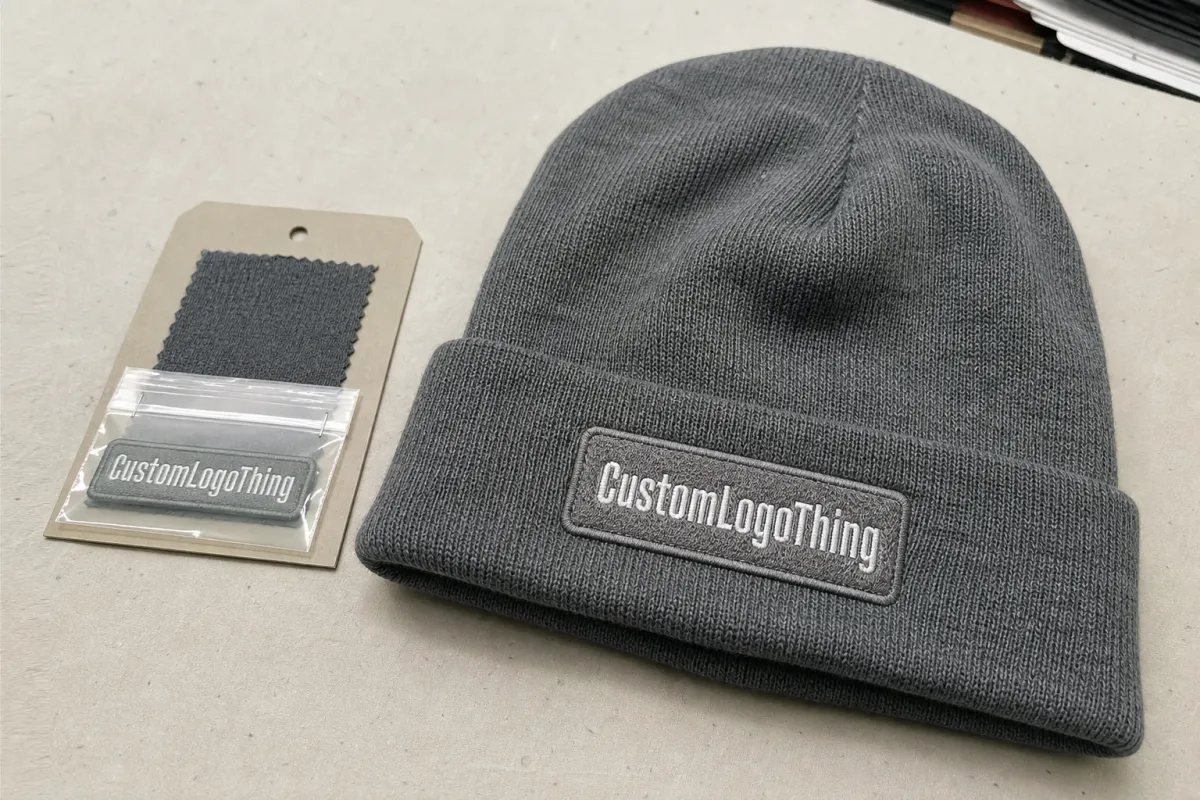
A beanie sample is a risk check. Not a trophy. It tells you whether the yarn behaves the way the spec sheet promised, whether the cuff has enough memory to spring back, and whether the knit density is tight enough to hold the shape without feeling stiff. Those details do not show up in a product photo. They show up in wear.
Sample review should focus on three things first: structure, recovery, and finish. Structure is the overall shape. Recovery is how well the hat returns after being stretched. Finish is everything the customer touches or sees up close: seam bulk, edge neatness, label placement, and any visible lint or yarn fuzz. If one of those is off, the buyer usually notices before the consumer does.
There are usually four sample stages worth separating:
- Yarn swatch - confirms yarn texture, color, and basic stitch behavior.
- Color lab dip - checks shade accuracy before a larger dye commitment.
- Proto beanie - the first full hat, used to test silhouette, cuff depth, and decoration placement.
- Preproduction sample - the near-final version that should match bulk output closely.
Buyers sometimes skip straight to the proto and regret it later. That is usually how you end up discovering that the yarn hand feels softer than expected but collapses under its own weight, or that the cuff looks sharp in the sample room and limp after a day in transit. A material sample is where those problems stop being theoretical.
Packaging is part of the sample review too. A cuffed knit beanie shipped flat in a clean kraft sleeve or folded neatly in a corrugated mailer suggests the supplier is thinking beyond the knitting machine. If the sample arrives stuffed in a random bag with loose fibers and no protection, assume the same energy will show up somewhere else. Maybe in quality control. Maybe in inventory handling. Either way, you do not want to be the one finding out later.
"If the sample looks careless, do not assume the bulk order will magically be disciplined."
How the approval flow works from spec to handfeel
The easiest way to slow a project down is to send a vague brief and hope the supplier reads your mind. They will not. They will guess. Then you will spend two weeks untangling a sample that missed the mark for predictable reasons.
A workable brief for Cuffed Knit Beanies needs the basics written down: fiber content, yarn count if known, knit gauge, finished dimensions, cuff depth, decoration method, and any tolerances that matter. If the crown must stay snug, say so. If the cuff has to sit at a specific height for logo visibility, say that too. Precision saves revisions. It also saves arguments.
The approval flow usually runs like this:
- Reference images or tech pack review.
- Yarn swatch or shade sample.
- Full beanie prototype.
- Revision round, if the first sample misses spec.
- Preproduction sign-off before bulk knitting starts.
Different teams should look at different parts of the sample. Sourcing can verify cost and lead time. Design can check silhouette, cuff proportion, and decoration placement. QA should inspect stitch consistency, seam quality, and tolerance against spec. If the beanie is for retail or promotional programs with a specific fit expectation, someone should actually wear it for a few minutes. Heads are inconveniently real.
What gets locked at approval? Usually the blend, knit structure, size, cuff method, and decoration placement. What may still move? Small packaging details or label finish, depending on how early the sample was made. The danger is treating a material sample like a final sample. It is not always final. If the supplier says it is still a development stage piece, believe them the first time.
Material factors that change warmth, stretch, and drape
Fiber choice changes more than price. It changes the personality of the beanie. Acrylic is common because it is affordable, easy to color-match, and stable in production. Cotton feels familiar and breathable, but it often needs tighter knitting if you want the beanie to hold its shape. Wool and wool blends usually bring better warmth and recovery, though they can raise cost and require more careful finishing. Recycled yarns help with sustainability goals, but the lot-to-lot consistency needs checking. Recycled feedstock can drift more than buyers expect.
The knit itself matters just as much. A tighter gauge tends to give a cleaner surface, better wind resistance, and sharper cuff definition. A looser construction can feel softer and more relaxed, but it also stretches faster and may lose the crisp line that makes a cuffed beanie look intentional. That tradeoff is the whole game. Soft is not the same thing as good.
The cuff deserves its own review because it is doing two jobs at once. It has to look neat, and it has to recover. A 1x1 rib usually feels more elastic and snug. A 2x2 rib can look chunkier and more textured, but it does not always behave the same way after repeated wear. Fold height matters too. A deeper cuff gives more decoration space and a stronger branded look. A shallow cuff can look cleaner, but it leaves less room for error. If the cuff loses memory, it rolls or slumps and the whole hat starts looking tired.
Finishing can swing the result in either direction. Anti-pill treatment helps the face of the knit stay cleaner. Brushing can make the handfeel softer, but too much brushing blurs stitch definition and can make the beanie look cheaper, not better. Dye method affects shade consistency and shrink behavior. Washing and steam finishing can change the final dimensions slightly. That is why a sample should be judged as both a visual object and a wear test.
There is also the packaging side, which brands often forget until a shipment arrives looking tired. If the business is making recycled or lower-impact claims, the pack-out needs to match the promise. A beanie folded into FSC-certified kraft paper and shipped in a corrugated carton is easier to defend than a glossy, hard-to-recycle box with extra plastic for no reason. Materials standards are public for a reason; the FSC system is documented at fsc.org.
One more production caveat: color and structure do not always age the same way. A yarn can look perfect in a lab dip and still shade slightly differently after knitting, steaming, and packing. That is normal. The mistake is assuming normal variation equals acceptable variation. It does not. Ask for the tolerance band, not a hand-wave.
Sample process and timeline
Fast samples are possible. Fast, accurate samples are harder. A straightforward cuffed beanie sample often takes about 5 to 10 business days. Custom yarn sourcing, color matching, embroidery, or a second revision can push that longer. Shipping adds its own delay, and a supplier queue can add another layer even when the actual knitting is quick.
The process should feel orderly. If it does not, that is already a signal.
- Spec review - confirm dimensions, yarn, cuff style, gauge, and decoration.
- Yarn prep - source or match the fiber and confirm shade.
- Knitting - produce the body and cuff to the target construction.
- Finishing - trim, press, clean, and apply labels or patches.
- Inspection - check measurements, stitch quality, and visible defects.
- Packaging - fold, insert, bag, and ship.
Three things usually stretch the timeline: yarn sourcing, shade approval, and revision loops. If the first sample misses handfeel, the supplier may need to alter yarn count or stitch density. That is not a one-step fix. It can send the project back through the line. Clear specs reduce that churn. So does one person owning the approval notes instead of five people leaving contradictory comments in a thread.
For transit-sensitive programs, ask whether the supplier has any handling or transport-test discipline around the pack-out. The ISTA framework is a practical reference point for shipping and distribution testing, and it is useful even if the final product is small. A beanie can be beautifully made and still arrive crushed, creased, or marked if the pack-out is lazy. Packaging is not decoration. It is part of the product experience. See ista.org for transport testing references.
One practical habit: keep the first approved fold style in your notes. The way a beanie is packed affects how it looks on arrival more than many buyers want to admit. If the sample opens cleanly and stays flat without hard creases, that is useful information. If it comes out of the pack looking like it fought a dryer cycle, document that too.
Cost, MOQ, and unit cost tradeoffs
Sample pricing is inconsistent because suppliers price risk differently. A yarn swatch may be free or nearly free. A proto beanie usually carries a charge because it uses real machine time, finishing labor, and manual handling. Some suppliers credit the sample fee against the bulk order. Some do not. Some only credit it after the purchase order lands. If you are comparing vendors, compare the fee policy, revision policy, and MOQ together. Looking at just the sample price is how people get fooled by the cheapest quote.
Bulk pricing follows the same logic, just with more zeros. A 300-piece order spreads setup cost across fewer units than a 3,000-piece order. That is why unit price drops as volume rises. It is not magic. It is math. Yarn quality, knit complexity, decoration method, label work, and packaging all move the number around. A simple acrylic cuffed beanie with a woven label will price very differently from a wool blend with embroidery and custom hangtag packaging.
Typical sample and production ranges can help buyers sanity-check quotes:
| Sample type | Typical cost | Typical turnaround | What it proves |
|---|---|---|---|
| Yarn swatch | $5-$15 | 3-5 business days | Color, texture, and basic stitch behavior |
| Color lab dip | $10-$25 | 4-7 business days | Shade accuracy under real dye conditions |
| Proto beanie | $25-$65 | 5-10 business days | Fit, cuff memory, and construction quality |
| Preproduction sample | $35-$90 | 7-12 business days | Near-final look before bulk sign-off |
For bulk orders, basic custom cuffed knit beanies often land around $1.80 to $4.50 per unit at moderate volumes. Premium yarns, more complex stitch patterns, heavier weights, embroidery, or custom packaging push the number up. That range is not a promise. It is a reality check. If a quote sits far outside it, there is usually a reason. Sometimes the reason is a better spec. Sometimes it is a padded margin.
Before approving, ask four direct questions: Is the sample free, charged, or credited? How many revisions are included? What MOQ applies to the final order? What overrun tolerance is allowed if production runs slightly above quantity? Those answers tell you more about the supplier’s operating discipline than any polished sales deck. The apparel Cuffed Knit Beanies Material sample guide works best as a comparison tool, not a branding exercise.
Common review mistakes
The first mistake is judging only color. Color matters, yes. But a beanie that nails the shade and fails the fit is still a failed sample. A customer notices comfort and shape every bit as much as tone. Sometimes more.
The second mistake is skipping a wash or wear test. Shrink, relaxation, and surface fuzz usually show up after the first real use, not during the first glance. If the final product will be worn outdoors, packed tightly, or washed, the sample should be tested that way. Even one wash can reveal a cuff that loses recovery, a crown that puckers, or yarn that pills too quickly.
The third mistake is giving feedback that is too vague to act on. “Make it better” is not useful. “Reduce stretch at the cuff by about 10%,” “soften the seam against the forehead,” or “raise the logo 0.5 inch above the cuff edge” gives the supplier something to work with. Good samples usually come from annoying specificity. That is the job.
The fourth mistake is checking the beanie from one angle only. Turn it inside out. Stretch it. Fold the cuff twice. Look at it under daylight and under indoor lighting. Check the logo from the side and from a low angle. Wearers do not stand still in perfect lighting. Neither should sample review.
"A sample that looks clean on the table can still fail the minute it is worn."
The fifth mistake is ignoring small defects because the sample is only one piece. Loose threads, uneven rib rows, slight seam bulges, and inconsistent fold height are usually the warning signs of bigger variability later. A vendor who waves those off is telling you how they think defects should be handled. You should listen.
Expert tips and next steps
The cleanest approval process uses a simple scorecard. Rate fit, handfeel, color accuracy, recovery, decoration quality, and perceived value on a 1-to-5 scale. Then write one sentence under each score. That keeps the conversation from drifting into vague language nobody can use. It also makes the revision request shorter, which is helpful because nobody wants a six-paragraph email about “vibes.”
If the color or structure is critical, ask for a second sample after a wash or stress test. That small extra step can prevent a far more expensive bulk problem. The same logic applies to packaging. If the beanie ships in an FSC-certified carton with a kraft insert or other lower-impact material, check that the insert does not crush the hat or leave marks during transit. Sustainability claims collapse fast if the product arrives looking beaten up.
Before bulk production begins, lock these items in writing:
- Final measurements and tolerance bands.
- Yarn blend and knit gauge.
- Cuff depth and fold method.
- Decoration placement and label position.
- Pack-out details, including bag, sleeve, or carton style.
Then compare at least two samples side by side if you can. Differences are easier to see with a direct comparison than with memory. If the supplier changes anything after revision, ask for a costed summary of what changed and why. A good supplier can explain the tradeoff. A vague one will hide behind progress words and hope nobody notices.
That is the real value of an apparel cuffed knit Beanies Material Sample guide: it gives buyers a structured way to evaluate a small object that can create a big mess if rushed. The sample should not just look right. It should survive scrutiny.
Frequently Asked Questions
How many apparel cuffed knit beanies material samples should I request?
Request at least two or three variations if you are comparing fiber blends, cuff depth, or decoration methods. Include one sample that has been washed or stress-tested so you can spot shrink, recovery, and shape-retention issues early.
What should be included in a cuffed knit beanie sample request?
State the target fiber content, knit gauge, cuff depth, finished size, decoration method, and preferred handfeel. Attach reference photos or a tech pack so the supplier can match shape, color, and finish more accurately.
How long does a custom beanie material sample usually take?
A standard sample often takes about 5 to 10 business days, but custom yarns, color matching, or revisions can extend that timeline. Shipping time and queue position can add extra days, so confirm the schedule before you commit to a launch date.
Why does sample pricing differ from bulk pricing for knit beanies?
Samples usually carry setup, handling, and manual finishing costs that bulk production spreads across a larger quantity. If the supplier offers sample credit, check whether it applies only after full order placement or only to certain SKUs.
What should I check after the beanie sample arrives?
Test fit on more than one head size, then check seam comfort, cuff recovery, and whether the beanie holds its shape. Review color in daylight and indoor light, and confirm the decoration placement matches the approved spec. If those checks pass, you are much closer to a clean bulk order.


