The wrong beanie usually fails in a boring way. It looks solid in the sample photo, then goes limp after a wash, or the cuff starts drifting out of shape after a few wears. That is the problem this subscription Cuffed Knit Beanies Material thickness guide is built to solve: not just warmth, but repeatable structure that survives reorder after reorder.
Subscription programs are ruthless about consistency. A one-off merch drop can hide a few flaws. A replenishment program cannot. If the second batch comes in a touch lighter, the fit changes. If the yarn lot shifts, the color reads differently. If the cuff loses recovery, the whole product starts looking cheap, even if the price did not move.
Buyers often ask for “heavier” because that feels like a safe answer. It is not always the right one. In practice, what matters most is how the knit holds its shape, how the cuff supports the front edge, and how the fabric behaves after wear, packing, and washing. That is where real quality shows up.
Subscription Cuffed Knit Beanies Material Thickness Guide
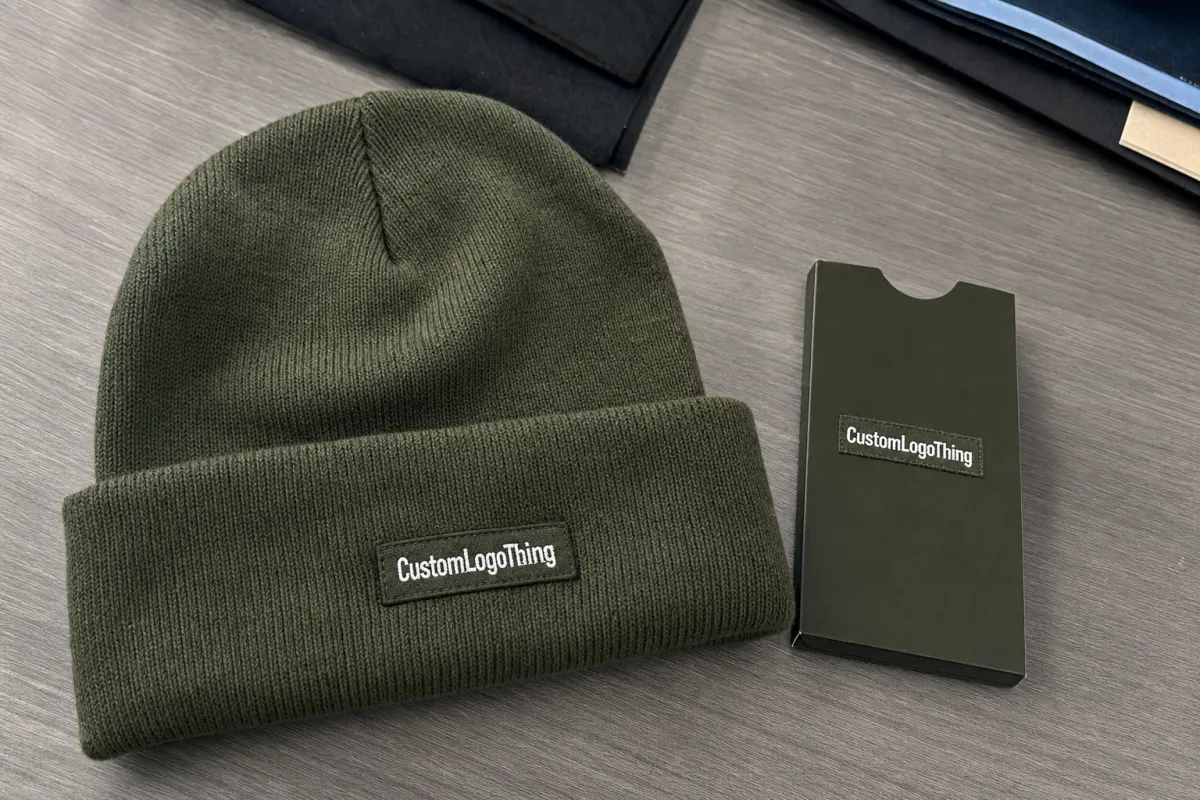
Thickness is not one number. It is a combination of yarn weight, stitch density, gauge, cuff depth, body length, and recovery. A 90-gram beanie can feel thinner than a 75-gram beanie if the knit is looser. Weight helps, but structure decides the hand feel.
That is why the best subscription Cuffed Knit Beanies Material thickness guide does not stop at grams. It has to account for how the hat sits on a head, how much the cuff holds the front edge, and whether the body collapses after stretch. If a beanie looks bulky but sags by lunchtime, it is not premium. It is just heavy.
For most programs, the safest goal is balanced structure rather than maximum bulk. A midweight cuffed knit beanie usually gives the best mix of warmth, comfort, packability, and logo placement. Light builds pack smaller and cost less, but they lose shape faster. Heavy builds feel more substantial, but they add cost, bulk, and often more production time.
A beanie rarely disappoints because it is one gram lighter. It disappoints because the cuff relaxes, the crown sags, and the wearer stops reaching for it.
That is the part people miss. Thickness is a product decision, not a bragging right. For subscription work, the real job is to keep the beanie looking like the approved sample months later, after shipping, storage, and actual use.
How Thickness, Gauge, and Cuff Shape Work Together
Thicker yarn does not automatically mean warmer. If the stitch is open, air moves through it. A tighter gauge can trap more heat while also giving a cleaner face for embroidery or patches. That is why a well-made medium-weight beanie often performs better than a chunky one that only looks impressive on a table.
Gauge matters because it controls spacing and density. Lower-gauge machines generally produce a more textured, heavier look. Higher-gauge knits are smoother and more refined. For decoration, smoother usually wins. Small text holds better, stitch distortion drops, and the surface behaves more predictably under embroidery.
The cuff does more work than most buyers give it credit for. It adds structure right where the hat meets the forehead and ears, which is exactly where comfort is judged. A strong cuff makes a midweight beanie feel more substantial. A weak cuff makes even a decent knit look tired.
There is also a practical production reason to care about the cuff. Cuff height affects fold stability, visible logo space, and how the finished beanie packs in cartons. Too short, and the logo area gets cramped. Too tall, and the hat starts to feel bulky or top-heavy. Most programs land somewhere around a 2.5- to 3.5-inch cuff, but the right number depends on the fit target and decoration size.
- Light builds feel softer and travel well, but can lose recovery faster.
- Medium builds balance warmth, structure, and decoration quality.
- Heavy builds feel premium and winter-ready, but add bulk and cost.
Material blend changes the result as much as thickness does. Basic acrylic is still common because it is affordable, stable, and easy to source in volume. Wool adds warmth and a better natural hand feel, but it increases cost and usually demands tighter quality control around shrinkage and pilling. Recycled yarns can support brand positioning, but they need careful lot control if you want the color and texture to stay consistent across repeat runs.
What to Check on a Sample Sheet
A sample sheet is where the guesswork gets stripped out. Without one, suppliers can quote three different products that sound similar enough to be dangerous. The result is predictable: you compare prices that do not mean the same thing, then wonder why the approved sample and the bulk order feel unrelated.
Start with the measurement basis. Some suppliers quote grams per beanie. Others use yarn count, gauge, finished dimensions, or all three. If the quote does not clearly say what it is measuring, it is not a real comparison. Ask for the same basis from every vendor before you sort by price. Otherwise the spreadsheet is just decoration.
Then look at the material blend. Acrylic, wool, polyester, and recycled blends all behave differently. Acrylic is typically the lowest cost and easiest to scale. Wool brings warmth and a nicer hand feel, but the price climbs quickly. Polyester can improve durability or help with texture stability. Recycled content can be a plus, but only if the supplier can keep it consistent from one lot to the next.
Next is knit structure. Needle count and stitch density need to be read together. A fine-gauge knit usually gives a cleaner base for small embroidery or woven patches. A chunkier knit can look richer, but logos may sink into the texture or appear uneven. If the artwork is small, the fabric needs to be stable. If it is not stable, the decoration will show it immediately.
Dimensions matter more than marketing language. A cuffed beanie that measures 8.5 inches flat by 11.5 inches tall uncuffed will wear differently from one that is half an inch shorter in both directions. Cuff height changes forehead coverage. Body length changes whether the crown sits close to the head or drops into a slouchy shape. Those differences are visible on real people, not just spec sheets.
Also check what the sample does under pressure. Stretch it, release it, and see how quickly it recovers. Rub the yarn to see whether it pills too early. If there is embroidery, check whether the knit puckers around the design. If there is a patch, make sure the surface stays flat and the backing does not telegraph through. These are not edge cases. They are the issues that decide whether a beanie feels polished or disposable.
Process and Timeline From Spec Sheet to Bulk Production
If the spec is vague, the sample will be vague too. The cleanest process starts with a written target: yarn blend, stitch style, cuff height, body length, finished dimensions, decoration method, and an acceptable weight range. “Midweight” is too soft a word. It can mean almost anything, which is useful for sales teams and terrible for production.
The usual workflow is simple, but it is not quick. First comes yarn selection and machine setup. Then a sample. Then fit and hand-feel review. Then decoration testing. Then revisions. Then final approval. After that, bulk knitting, finishing, packing, and freight each add their own delay. Anyone promising instant production is selling hope, not a schedule.
Typical timing usually looks like this:
- Sampling: 7-12 business days is common.
- Bulk knitting: 12-20 business days after approval is a normal range.
- Decoration and packing: 3-7 business days, depending on complexity.
- Freight: air often takes 5-10 business days; ocean can run 20-35 days or longer.
Delays usually come from custom colors, yarn availability, decoration approvals, and unclear thickness targets. Seasonal demand matters too. A heavier knit uses more machine time, and that can push a schedule back when the factory is already full. That is not a surprise. That is just capacity.
Quality control should not stop at the sample. Bulk should be checked for size consistency, color variation between lots, stitch defects, loose threads, and recovery after stretch. If the program includes packaging, inspect that too. Bent inserts, crushed cuffs, and bad carton fit are boring problems, but they are still problems. A beanie that arrives misshaped is not a premium product, no matter how good the yarn looked on paper.
Packaging materials should match the order profile. Corrugated cartons are usually the safest shipping choice. Kraft sleeves or paper wraps can work well for retail presentation. If the program is supposed to support a sustainability story, use FSC-certified paper goods where they actually fit the use case, and keep the packaging simple enough to survive storage and transit. Pretty packaging that fails in humidity is just expensive trash.
Cost, MOQ, and Unit Price Tradeoffs
The pricing logic is straightforward. More yarn, more machine time, more labor, higher cost. A thicker cuffed beanie generally costs more before decoration is added. That does not mean the thickest option is the best one. It means the right thickness should match the use case instead of the ego of the buyer.
At volume, a standard acrylic cuffed knit beanie often lands around $1.60-$2.40 per unit before decoration at 5,000 pieces. A wool blend or recycled yarn build may move into the $2.40-$4.20 range. Smaller runs push those numbers up fast. Custom colors, specialty yarns, and heavier gauges usually increase the minimum order quantity as well.
| Build | Typical Finished Feel | Indicative Unit Cost at 5,000 | Best Use Case |
|---|---|---|---|
| Light | Soft, flexible, lower bulk, 55-70g | $1.60-$2.20 | Indoor promos, shoulder-season drops, lower freight weight |
| Medium | Balanced warmth and structure, 70-95g | $1.90-$2.80 | Most subscription programs, retail-ready merch, embroidery-friendly builds |
| Heavy | Dense, warm, high structure, 95-125g | $2.60-$4.20 | Cold-weather retail, premium bundles, winter-focused programs |
Those numbers are practical ranges, not promises. Decoration changes the math. So does label type, packaging, color matching, and whether the design needs a special yarn or a custom knit-in pattern. Embroidery often adds about $0.25-$0.60 per unit. Woven patches can add $0.35-$0.90 depending on size and placement. Woven labels are usually cheaper, often around $0.08-$0.20. Individual polybagging can add another $0.05-$0.18. Each line looks small until it lands on a large run.
Watch setup fees too. Pantone matching, sample revisions, and oversized cartons can quietly eat margin. A quote that looks low on page one is not always the best quote. A slightly higher, cleaner quote is usually easier to manage than a cheap one padded with surprise charges later. Buyers do not need drama from a beanie order.
Step-by-Step Thickness Selection Checklist
The easiest way to choose thickness is to work from use case. That is the part buyers sometimes skip because “midweight” sounds safer. It is not safer unless it fits the job. The subscription cuffed knit Beanies Material Thickness guide only becomes useful once it turns into a buying decision.
- Define the wearer. Giveaway, retail, team uniform, and subscription add-on all point to different thickness targets.
- Pick a comfort band. Decide on light, medium, or heavy before asking for pricing.
- Match decoration to fabric. Embroidery, woven patches, labels, and knit-in graphics do not behave the same way.
- Set cuff dimensions. A 2.5- to 3.5-inch cuff is common, but the right number depends on logo size and fit.
- Confirm stretch recovery. Pull the sample, release it, and see whether it snaps back or stays tired.
- Check color in daylight. Studio lights hide problems. Natural light does not.
- Test packaging fit. A beanie that shifts too much in the carton will arrive creased and flattened.
One useful rule: keep the hat midweight and improve the decoration, or go heavier and simplify the logo. Trying to force large, complex artwork onto a loose knit usually ends the same way. Puckering, distortion, and a long email thread about “why it looked better in the mockup” are not a good brand experience.
Comfort testing should happen on an actual head, not just in the hand. Some beanies feel fine for thirty seconds and then become annoying because the cuff is too tight or the crown sits too shallow. That is common in subscription products, because subscribers wear them repeatedly. A product that is slightly less dramatic but more comfortable usually wins the repeat order.
Common Mistakes That Make Beanies Feel Cheap
The biggest mistake is choosing bulk over recovery. You get a hat that feels cozy for a minute and then turns into a sagging tube. Heavy does not automatically mean premium. A sloppy knit just looks expensive in the sample room and tired on an actual head.
Another common miss is ignoring cuff construction. A weak cuff creates a floppy edge that never sits right. An overly stiff cuff can pinch the forehead and make the beanie feel overbuilt. The best cuff is the one that holds shape without fighting the wearer.
Here are a few others that show up constantly:
- Comparing quotes without matching the measurement method. One vendor may be quoting a heavier knit while another is using a smaller finished size.
- Mixing thin fabric with heavy decoration. Dense embroidery on a loose knit usually looks rough.
- Skipping wash and wear checks. If the first customer becomes the durability test, the spec was not ready.
- Ignoring packaging fit. Oversized cartons let beanies move around, crease, and arrive looking tired.
Another mistake is pretending every material is interchangeable. It is not. Acrylic and wool do not age the same way. Recycled blends may vary more from lot to lot. Polyester can improve resilience, but it also changes the hand feel. If the buyer wants warmth, structure, and a clean logo area, the blend has to support all three. Otherwise the hat ends up good at one thing and mediocre at the rest.
If the order is supposed to support a brand story, keep the claims honest. Use recycled content where it makes sense. Choose FSC-certified paper goods if paper is part of the package. Avoid unnecessary plastic. And if a supplier offers a “green” packaging option that will not hold up in storage or transit, ask for proof. Pretty claims are cheap. Testing is not.
Expert Tips and Next Steps
The strongest orders usually start with a one-page spec. Lock in the yarn blend, weight range, stitch style, cuff height, decoration method, label type, and packaging before you ask for pricing. That single page saves more time than a stack of follow-up emails. It also cuts down on the little misunderstandings that become expensive once bulk production starts.
Ask for one pre-production sample and one photo set under natural light. Studio lighting flatters knit texture. Natural light shows the truth: stitch density, cuff shape, color shifts, and any weird distortion around decoration. If a sample only looks good under perfect lighting, it is not ready.
Keep two backup options alive. One slightly lighter. One slightly warmer. That gives you room if yarn availability changes, if the timeline tightens, or if pricing moves. Buyers usually hate delays more than small spec adjustments, and small spec changes are usually cheaper than waiting another month.
Before final approval, compare two samples side by side, confirm pack count and size labeling, and check how the beanie folds inside the carton. A hat that looks great flat can still ship badly if the cuff relaxes in transit. Packaging is part of the product. Treating it like an afterthought is how avoidable problems sneak through QC.
That is the practical version of this guide: choose thickness for warmth, structure, recovery, and repeatability, not for volume alone. For subscription programs, the beanie that stays consistent across reorders is the one customers keep wearing.
FAQ
What thickness works best for subscription cuffed knit beanies?
A midweight build is the safest default for most subscription programs because it balances warmth, comfort, cost, and decoration quality. Go lighter for indoor promos or shoulder-season drops, and heavier only when the beanie needs real cold-weather performance. Structure and recovery matter more than raw bulk.
Is thicker always warmer in cuffed knit beanies?
No. A loose chunky knit can leak heat faster than a tighter medium-weight beanie. Fiber choice matters too: wool and wool blends usually insulate better than basic acrylic at the same visual thickness. A dense stitch pattern often beats simple thickness when warmth is the goal.
How does thickness affect embroidery on cuffed knit beanies?
Very thin knits can pucker and show stitch marks too clearly. Very thick knits can swallow small text and make logos look muddy. A stable midweight cuff usually gives the cleanest embroidery and patch application, which is why it shows up so often in repeat programs.
What MOQ should I expect for custom cuffed knit beanies?
MOQs vary by yarn, color, and decoration method, so there is no single standard number. Stock acrylic colors often support lower minimums than custom blends or wool-heavy builds. If a quote looks unusually low, check whether setup fees or a larger run size are hiding in the details.
How do I compare thickness quotes from different suppliers?
Make sure every supplier is quoting the same measurement basis, such as grams per beanie, gauge, or finished dimensions. Compare the full spec, not just the unit price: yarn blend, cuff height, stitch density, decoration, and packaging all change value. Ask for sample photos and lead time side by side so you can judge the real tradeoff instead of the prettiest spreadsheet.


