The slow part of a bag order is usually not the bag itself. Delays start earlier, in proofing, freight booking, carton counts, or one artwork file that looked fine until prepress opened it. For buyers planning a launch, ecommerce drawstring plastic Bags Lead Time is the number that decides whether kits ship on schedule or sit in receiving waiting for a late carton.
These bags are common in apparel bundles, subscription inserts, returns packaging, promo packs, and influencer mailers. They are lightweight and easy to brand, which makes them look simple. In practice, the calendar is driven by the spec sheet, proof approvals, and whether freight is booked with a realistic buffer.
Why a Simple Bag Order Can Take Longer Than Expected
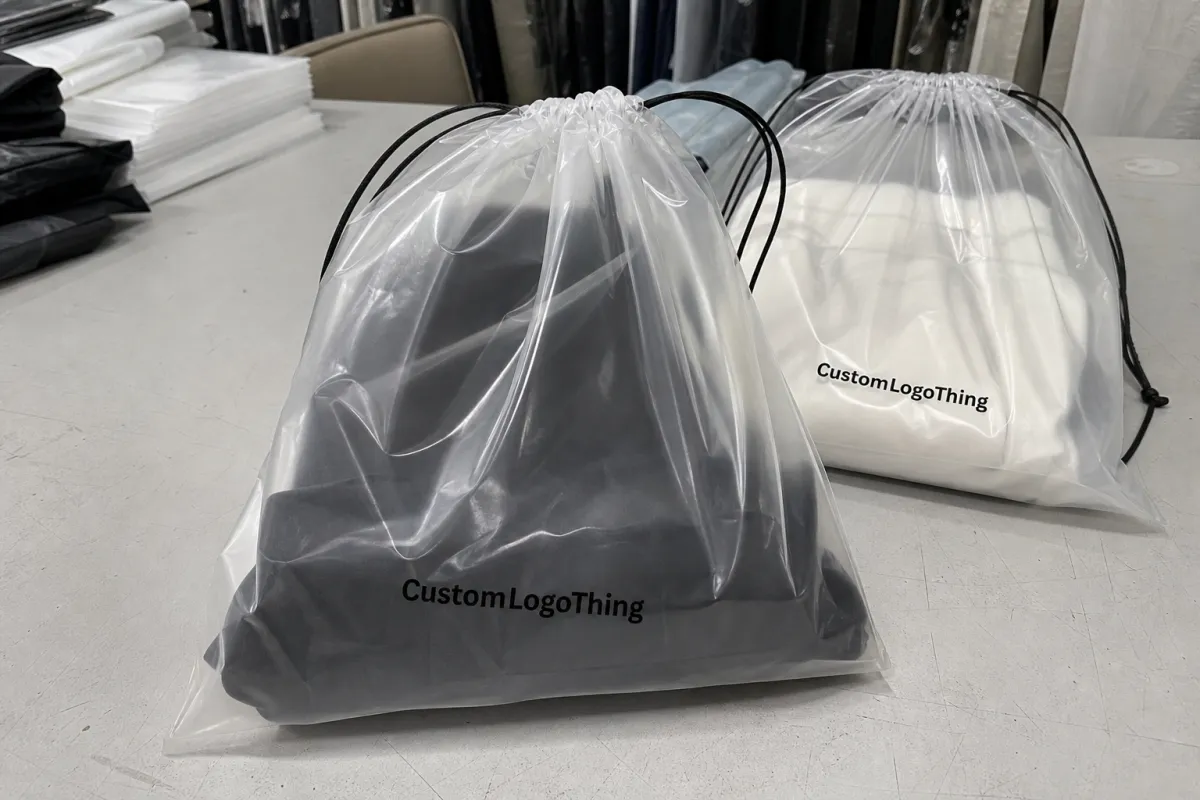
A plain-looking drawstring bag can still miss a launch date. The delay often begins before production starts: a missing delivery detail, a bad artwork file, or an assumption about transit can add days that never appear on the first quote.
From a packaging buyer's point of view, lead time affects four parts of the operation:
- Inventory planning - enough bags for the launch without overcrowding the warehouse.
- Campaign timing - the pack has to land before the promotion starts.
- Warehouse labor - receiving and kitting depend on a predictable arrival date.
- Customer experience - late packaging can delay the order and create avoidable tickets.
The fastest order is usually the one with the fewest surprises. A supplier can quote quickly without the bags arriving quickly. If artwork is still being corrected or the destination lacks a dock appointment, the schedule is already slipping.
Speed in packaging is less about urgency and more about how many decisions are already settled.
Ecommerce Drawstring Plastic Bags Lead Time: What Actually Delays Orders
It helps to break the schedule into stages instead of treating it like one block of time. A good supplier will separate quote, spec confirmation, proofing, sampling if needed, production, quality check, packing, and transit. Some stages overlap; others cannot. Proof approval, for example, usually has to happen before production begins.
For a stock-size order with existing tooling and simple print, the front end can move fast. Quote and proof review may take one to three business days if the buyer responds the same day. Production might take five to ten business days. Add domestic freight, and a clean order can sometimes move from purchase order to delivery in about two to three weeks.
Custom work changes the equation. If the size is unusual, the film thickness is nonstandard, or the print needs special placement, the schedule may stretch to two to four weeks before freight. Overseas sourcing adds another layer. Even efficient factory work can be followed by ocean transit, customs clearance, and delivery appointments that push the end-to-end timeline much further out.
Some delays are controllable. Late artwork revisions, changing quantities after the quote, and slow approvals are controllable. Weather, port congestion, and carrier capacity are not. That is why a realistic schedule needs a factory timeline and a transit timeline, not just one promised date.
| Order path | Typical unit price | Typical factory time | Best for | Main trade-off |
|---|---|---|---|---|
| Stock size with simple print | $0.15-$0.28 | 5-10 business days | Fast replenishment and basic kitting | Fewer options for size and branding |
| Semi-custom bag | $0.22-$0.40 | 10-15 business days | Most ecommerce reorders | Some setup and proofing still required |
| Fully custom bag | $0.32-$0.65 | 15-25 business days | Unique launches or premium presentation | More setup, more approvals, more risk of delay |
| Rush order | Base price plus 15%-35% | 2-7 business days if materials are ready | Launches with fixed in-hands dates | Higher freight cost and tighter approval windows |
That table is only a starting point. The useful quote shows both factory time and transit time. Without both, the number is decorative.
The Specs That Shift Scheduling Most
If a buyer wants to shorten the schedule, the biggest gains usually come from simplifying the spec sheet. Bag size, film thickness, drawstring style, print method, color count, and finish all affect scheduling. The logo itself is rarely the problem; the surrounding details are what push a job into a longer queue.
For plastic drawstring bags, LDPE and LLDPE are common because they balance flexibility and seal performance. A standard 2.5 mil or 3 mil bag often moves faster than a special thickness that requires extra sourcing. Likewise, a one-color print on a stock bag is easier to schedule than a full-bleed design with multiple spot colors or registration-sensitive artwork.
Material availability can be the silent delay. If the exact resin, clear film, frosted finish, or custom color is not in stock, the order may wait before production starts. Standardizing specs across recurring SKUs helps ecommerce teams protect the calendar. A brand that reorders the same bag every month usually has fewer surprises than one that changes size and print layout with every campaign.
There is also a practical trade-off between presentation and speed. A heavier film can feel more premium, but it may require different run settings. A matte finish can photograph well, but it may add sourcing complexity. A custom drawstring color looks sharp in a mockup, then becomes a lead-time issue if that shade is not already in the line.
For packaging teams that want a benchmark on transit durability or shipment handling, the International Safe Transit Association publishes useful guidance at ista.org. For broader packaging material context, packaging.org is another helpful reference point.
Quality Control and Packing: Where Small Defects Become Big Delays
Quality control is one of the easiest places to underestimate time. A bag may be printed on schedule and still fail a check if the seal line is weak, the drawstring pulls unevenly, or the print registration drifts beyond tolerance. One rejected lot can mean rework, and rework eats calendar space fast.
Good buyers ask for more than a generic "QC passed" note. They want to know what was checked: seal strength, film thickness, color match, print position, drawstring operation, carton count, and outer packaging condition. A carton shortage on a kitting line is just as disruptive as a print defect because the operation still stops while someone counts and reconciles the shipment.
Packing details also affect transit risk. Bags folded too tightly can crease, especially on thicker films. Loose cartons can shift during transport and create edge wear. Master carton labels that do not match the shipping documents can trigger receiving delays even when the product itself is fine.
That is why some suppliers build a small buffer into the schedule after production and before freight handoff. It is not wasted time. It is the period where mistakes get caught while they are still cheap to fix.
Pricing, MOQ, and Where Rush Fees Sneak In
Price conversations often hide the schedule conversation. The first quote may show a unit price, but the final landed cost also includes tooling or plate charges, sampling, packing, freight, duties, and sometimes a premium for faster production. If you only compare the bag price, you may miss the real cost of getting the order in hand on time.
MOQ changes the picture too. A lower Minimum Order Quantity can reduce inventory exposure, which is useful for test launches or seasonal products. But a smaller run often carries a higher unit price. Larger orders can improve unit economics, yet they take longer to produce and require more storage space once they arrive.
Rush fees tend to show up in a few predictable places:
- Condensed proofing - faster review windows, sometimes with limited revision rounds.
- Overtime production - the plant runs the job outside normal scheduling.
- Premium freight - air freight or expedited parcel replaces slower transit.
- Split shipments - part of the order ships first, while the rest follows later.
Cheap and fast do not always travel together. A lower quote can still be the slowest path if the supplier has to source materials after the purchase order is placed or if the team needs three rounds of artwork corrections before production can start. By contrast, a slightly higher quote with ready stock, cleaner files, and a clear freight plan can save more time than the price difference suggests.
For brands that treat packaging as part of the customer experience, the better question is not "What is the lowest unit cost?" It is "What is the lowest landed cost that still gets the bags on the dock by the required date?"
A Step-by-Step Ordering Process That Prevents Rework
A clean ordering process can shave real time off the schedule. The goal is not to move faster by guessing. The goal is to remove the back-and-forth that usually drags a job out.
- Define the use case first. State the quantity, target in-hands date, destination, and whether the bags are for kitting, apparel, returns, or a promotion. A supplier cannot give a realistic schedule without those basics.
- Lock the technical spec early. Confirm bag size, film thickness, drawstring type, print colors, bag finish, and whether the order uses stock or custom material. A few minutes here can save days later.
- Send print-ready artwork. If possible, provide vector files with fonts outlined and colors clearly called out. Ask for a proof checklist so everyone knows what will be reviewed before production begins.
- Confirm milestones in writing. Get the planned start date, estimated completion date, shipping method, and the date the bags leave the facility. Written milestones make it easier to spot drift before it becomes a missed launch.
That fourth step is where many buyers save themselves. They stop asking only for an estimated lead time and start asking for the dates that matter: proof due date, production start, finish date, and ship date. Those are the checkpoints that actually control the calendar.
If the bags will travel through parcel networks or mixed freight, ask how the cartons are packed and whether the packaging was considered against a transit test profile. A shipment can fail at receiving because the outer cartons collapsed, not because the bags were made poorly.
The best schedule is the one with no mystery in it.
Common Mistakes That Add Days or Weeks
Most lead-time mistakes are ordinary. That is what makes them expensive. They are the kind of choices that feel harmless in the moment and look obvious after the launch slips.
- Changing the spec after the quote. A small change to size, print area, or color count can force the supplier to rework the proof and move the job back in line.
- Sending weak artwork. Low-resolution files, missing fonts, unconverted spot colors, and unclear bleed lines create avoidable proof cycles.
- Ignoring receiving limits. A bag order can finish on time and still arrive late if the warehouse cannot accept the freight when it lands.
- Planning to the launch date instead of the ship date. Many teams back-plan from the marketing date, not the date the bags must actually be in the building.
- Skipping the buffer. If the calendar has no room for transit or a single correction, there is no room for reality either.
The buffer mistake is the one that shows up most often. Teams build a schedule that assumes every step lands on the earliest possible day. That is not planning. That is wishful thinking with a spreadsheet attached.
Another common error is treating all suppliers the same. A domestic stock program, a custom overseas run, and a split-shipment reorder do not behave alike. They may all be bag orders, but the logistics are completely different.
What to Confirm Before You Place the Order
Before you approve the PO, build a one-page lead-time worksheet. It keeps the conversation focused and makes the schedule easier to defend internally. Include the quantity, exact size, print details, ship-to address, receiving hours, and the date the bags must be on hand.
Then ask the supplier to separate factory days from transit days. That one request clarifies where the schedule is tight and where there is room to move. A buyer who sees a ten-day factory window plus a seven-day transit window can make better decisions than a buyer who only sees "17 days."
A second useful move is to request two fallback options:
- Standard-spec option - stock material, fewer print colors, simpler packaging.
- Faster option - simplified artwork, split shipping, or a smaller run that can be produced sooner.
That gives you a decision tree instead of a single quote. If the launch date changes, you already know which path to take. If inventory runs tighter than expected, you have a backup plan that does not require starting the whole process over.
Before you sign off, confirm the schedule in writing. Not verbally. Not implied. In writing. A confirmed timeline protects both sides, and it helps the buyer compare suppliers on the same basis: factory time, freight time, and in-hands date.
For ecommerce teams, that is the real finish line. Not the quote. Not the proof. Not even the production run. The finish line is a shipment that arrives on time, in the right quantity, with the right print, ready for the warehouse to use.
How long is lead time for ecommerce drawstring plastic bags usually?
It depends on whether the bags are stock or custom, plus how fast proofs are approved. A clean stock order may move through proofing and production in roughly one to two weeks, while custom specs and overseas freight can extend the calendar much further. Ask the supplier to separate factory days from transit days so you can plan around both.
What slows down drawstring bag production the most?
Late artwork changes and unclear files are common causes because they create extra proof rounds. Unavailable materials, special colors, and unusual sizes can slow sourcing before production even starts. International shipping is often the final bottleneck if the launch date is fixed.
Can I shorten lead time without paying a huge rush fee?
Yes. Choose stock sizes, limit print colors, and approve proofs the same day if possible. Sending complete specs up front also reduces back-and-forth and keeps the quote from restarting. If timing is tight, ask for split shipping or a simplified fallback version before you pay for rush production.
Does MOQ affect turnaround for custom drawstring bags?
Yes. Lower MOQs can be faster if the supplier has stock materials ready to run. Higher MOQs may need longer production and more storage planning, even if unit cost improves. Compare MOQ with your in-hands date, not just the per-unit price.
What should I send first to avoid delays on a bag order?
Send the quantity, exact size, print-ready artwork, ship-to address, and required in-hands date first. Include warehouse receiving rules too, so the shipment is booked correctly and does not miss an appointment. The clearer the first message, the faster the supplier can quote a realistic schedule.


