The phrase gift set Custom Bakery Paper Bags lead time sounds like a factory question, but the schedule usually starts getting tight much earlier. The delay is often not the print run. It is the back-and-forth before anyone approves artwork, confirms the dieline, or signs off on the proof. A polished mockup can still miss a launch date if those pieces arrive late.
Gift sets raise the stakes because the bag is part of the product story, not just a carrier. The order may involve multiple SKUs, inserts, tissue, window panels, handle choices, surface coatings, and sometimes matching custom printed boxes. Once presentation matters, the calendar changes. A standard takeaway bag can absorb a small slip. A retail-ready bakery gift set often cannot.
For a packaging buyer, the goal is simple enough: make the bags look premium without turning the timeline into a guess. That means knowing where time gets spent, what speeds up a quote, and which decisions need to be made before production is even on the table.
Why a bakery gift set bag order can stall before production starts
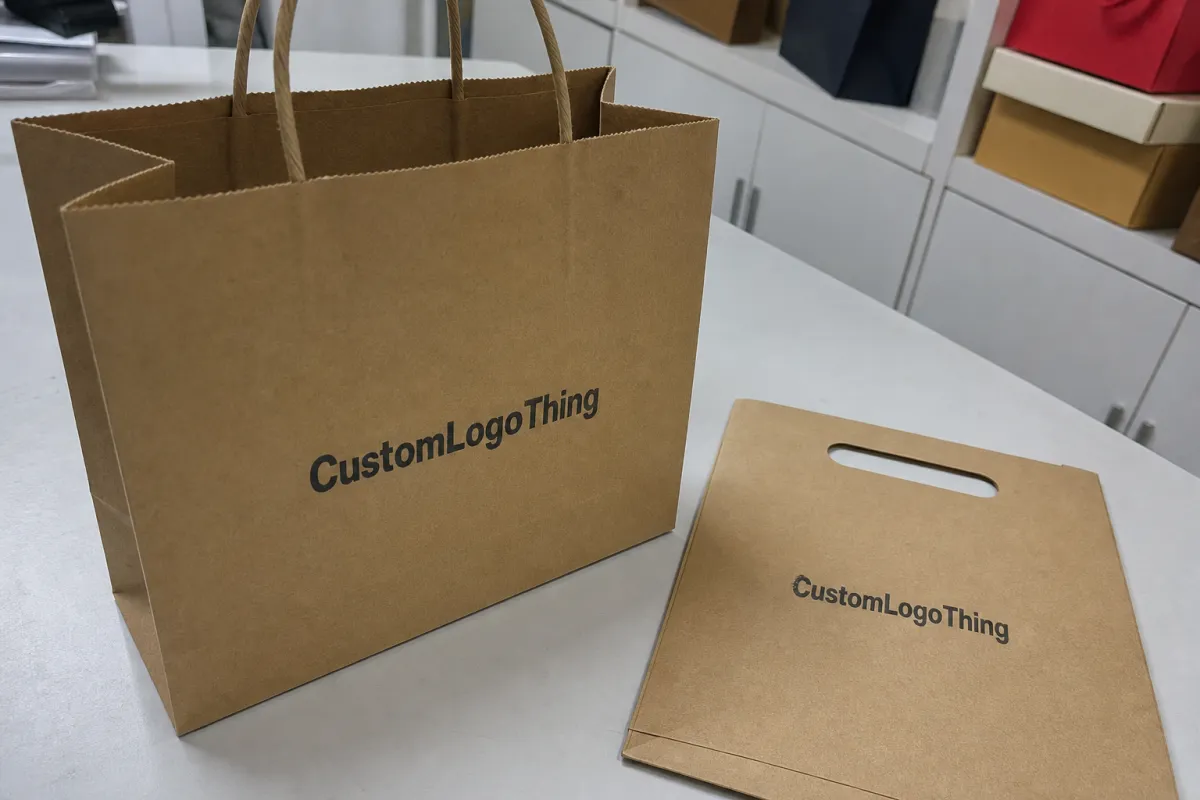
The first surprise for many teams is that the pressroom is rarely the slowest part. Artwork is. Dielines are. Final approval is. A gift set order usually needs more coordination than a standard retail packaging job because the bags have to align with the product inside, the outer carton, and the shelf or pickup experience. Even a small logo shift can trigger a new proof cycle.
There is also a real difference between stock, semi-custom, and fully custom bags. Stock bags use existing structures and move fastest. Semi-custom orders often keep a standard bag size while changing the print and a few finish details. Fully custom bags take the longest because they may need a new dieline, different handle construction, heavier board, or special inserts. Each step adds coordination, and coordination is where gift set custom bakery paper Bags Lead Time tends to stretch.
Gift set orders also ask more of the bag itself. A bakery gift set may need a stronger paper grade to hold boxed cookies or layered pastries, a handle style that is comfortable to carry, or a finish that protects print quality without making the surface feel overly glossy. Those details matter in production because they affect not only appearance, but how the bag survives packing, transport, and store handling.
Many buyers underestimate how many files need to be correct before production can begin. The logo may be approved, but the barcode, copy line, color build, and artwork placement still need checking. If the supplier is preparing sample packs or coordinating shipping cartons too, the timeline grows again. A missing detail at the proof stage can cost more time than a small change in quantity.
"The order is rarely late because the machine failed. It is late because someone found a layout issue after the proof round had already started."
If speed matters, treat the quote request like a production brief, not just a price inquiry. The clearer the brief, the fewer surprises later. If you are comparing formats with other product packaging options, the broader range of Custom Packaging Products can help you decide whether a standard bag, a sleeve, or a different structure fits the launch better.
How the lead time is built from proof to shipping
A realistic timeline is built in layers. First comes quoting, then artwork review, then proof approval, then sampling if needed, then production, packing, and freight booking. That order matters because some steps can overlap, while others cannot. A supplier can often review dimensions and give a rough estimate before the design is final. Once the proof is approved, though, the job usually moves into a fixed production slot.
In a typical project, quote turnaround may take one to three business days if the specifications are complete. Artwork review can take another one to two days. Proof approval depends on the buyer, not the factory. Sampling, if required, can add several days to a couple of weeks, especially if the order uses specialty paper, metallic ink, or unusual finishing. Production itself may run seven to fifteen business days for standard custom printed bags, and longer for larger runs or more complex structures.
Shipping is its own variable. Domestic freight may add two to seven days depending on distance. Ocean freight can add weeks. Air freight is faster, but the price can erase margin on a lower-value bag order. This is why a quoted lead time should always be read carefully. Is it production only? Is it all-in to the delivery dock? Those are very different numbers.
Supplier capacity matters more than many buyers expect. Two vendors can quote the same design and the same bag size, yet one can start next week while the other is already booked. Print method matters too. Flexographic printing, offset printing, and digital printing each have different setup demands, minimums, and revision tolerances. If the order uses multi-color artwork or tight registration, the prepress team may need extra checks before the job can move forward.
Material sourcing can influence timing as well. FSC-certified stock may require a specific paper grade or a different supply lane. If your brand wants responsible sourcing documentation, ask about it early, not after the proof has been approved. The same applies to transit validation. Many teams use packaging and drop-test logic similar to ISTA practices when gift sets contain fragile bakery items or premium finishes that can scuff during shipping. For paper sourcing expectations, FSC remains a familiar reference point.
One useful habit is to ask for a timeline that separates each stage. A single number like "15 days" is easy to read and easy to misunderstand. A better quote shows proofing, production, packing, and freight separately. That way the real risk stands out before anyone commits to a launch date.
Pricing, MOQ, and quote inputs that change your total cost
Cost is never just about the bag. It is about the paper, the structure, the print coverage, the finishes, and the quantity commitment. A small change in finish can move the bag from a simple retail packaging item to a more premium package branding piece. That can improve shelf appeal, but it usually changes the unit price too.
Here are the core cost drivers that matter most:
- Paper grade - kraft, white kraft, art paper, coated board, and higher-GSM options all price differently.
- Bag size - larger bags use more material and may require stronger handles or reinforced bottoms.
- Print colors - one-color logos are usually cheaper than four-color artwork or full-coverage designs.
- Finish - matte lamination, soft-touch coating, foil stamping, embossing, and spot UV add time and cost.
- Handle style - twisted paper, flat paper, rope, ribbon, or die-cut options can change both labor and pricing.
- Insert or accessory needs - tissue, dividers, trays, or custom fits increase complexity.
The MOQ sets the unit economics. A 500-piece test order almost always costs more per bag than a 5,000-piece run, even if the design is simple. That is not a trick. It is how setup, material purchasing, and labor spread across the order. For example, a plain one-color bakery gift bag might land around $0.18-$0.28 per unit at 5,000 pieces, while a smaller custom run with foil or special handles can climb well above that. Exact pricing depends on the supplier, but the direction is predictable.
| Order Type | Typical MOQ | Production Time | Cost Impact | Best Fit |
|---|---|---|---|---|
| Stock bag with logo print | 500-1,000 pcs | Fastest | Lowest setup cost | Short launches, simple branding |
| Semi-custom bakery bag | 1,000-3,000 pcs | Moderate | Mid-range | Retail packaging with a cleaner look |
| Fully custom gift set bag | 3,000-5,000 pcs or more | Longest | Higher, especially with finishes | Premium launches and package branding |
Quote speed depends on input quality almost as much as order size. If the supplier has exact dimensions, quantity by SKU, print-ready files, finish preferences, and a clear delivery location, the estimate comes faster and with fewer revisions. Leave out one of those items and the process can slow more than a larger MOQ would.
Two nearly identical bakery gift set orders can still price very differently. One may use a standard twisted handle and a single logo pass. The other may need custom inserts, heavier board, and presentation packing for multiple items. The paper bag may look similar at first glance, but the production path is not similar at all.
If your team is comparing Custom Packaging Products, compare total pack-out cost, not just the bag price. A cheaper bag can become expensive if it needs extra handling, more freight cube, or a second packing step.
Step-by-step planning checklist before you request a quote
The fastest way to protect lead time is to build the brief before asking for the price. That sounds basic, yet it is the step most teams rush. A better brief reduces back-and-forth, and back-and-forth is where launch dates slip.
Start with the bag dimensions. Length, width, and gusset should reflect the actual product load, not a guess based on a previous job. Add the product weight too, because a delicate cookie assortment and a boxed tart set create very different stress on the handle and the bottom panel. Then define the branding needs. Is this a plain logo bag, a seasonal retail packaging update, or a full presentation piece with custom printed boxes inside the set?
Build backward from launch day. If the bags must arrive in store two weeks before the campaign, the real deadline is earlier than the public launch. You still need time for unpacking, QC, and distribution. That buffer is often the difference between a calm rollout and a scramble.
A fast quote request should include:
- Bag dimensions and style.
- Quantity by SKU.
- Artwork files in usable format.
- Finish preferences, including lamination or foil if needed.
- Handle type and paper grade.
- Delivery location and target date.
Decide on sampling early. If the design is high-risk, a sample is usually worth the extra time because it verifies color, size, and structure before a full run begins. If the design is straightforward and the timeline is tight, you may be able to go straight to proof approval. That depends on risk tolerance, not on a fixed rule.
One practical habit: appoint a single final approver inside the brand team. Multiple approvers sound careful, but they often create delay because nobody wants to sign off first. A single owner can gather feedback, make the call, and move the job forward.
Common mistakes that add days to bakery packaging orders
The most expensive mistake is late-stage change. A logo color tweak, a text correction, or a line break adjustment can send the proof back through the queue. In packaging design, small edits are not always small operationally. They can restart file checks, plate preparation, and scheduling.
Another trap is assuming the digital mockup means production has already started. It usually does not. A mockup is a visual confirmation, not a manufacturing green light. The factory still needs prepress review, material confirmation, and machine scheduling. If someone in the chain is waiting on approval, the order sits.
Freight is another blind spot. A bag order can finish on time and still miss launch if the shipping method is wrong. Air freight can save the date, but not the budget. Ocean freight can protect margin, but not urgency. The right choice depends on how fixed the launch is and how much value sits in each unit.
Seasonal congestion matters too. Peak bakery demand, holiday runs, and retail resets fill production calendars quickly. Even simple orders can move slower when the line is already packed. That is not a supplier excuse. It is a capacity reality. If your launch lands near a busy retail window, book earlier than you think you need to.
Here are the errors I see most often:
- Sending artwork that is not print-ready.
- Leaving out the delivery zip or country.
- Changing the quantity after proofing begins.
- Assuming all paper grades are interchangeable.
- Ignoring packing and freight time in the schedule.
The fix is usually boring, and that is good news. Better files. Fewer revisions. Clearer sign-off. In product packaging, boring often saves the calendar.
Expert tips to shorten production without cutting corners
If speed matters, use a standard structure whenever possible. Existing dielines save time because the supplier does not need to engineer a new bag from scratch. That is one reason semi-custom orders often move faster than fully custom ones. The structure is already proven; the branding is what changes.
Approve one master design before branching into variants. If you need several sizes or seasonal versions, treat the master artwork as the source file and roll the variations from there. That reduces the chance of contradictory notes and keeps production aligned. It also helps if you are coordinating custom printed boxes, inserts, and bags under one brand family.
Keep the print setup simple. Fewer finish changes, fewer spot effects, and cleaner art files usually mean fewer revision cycles. A design with one or two strong brand elements often performs better than a crowded layout anyway. That is true for package branding and for shelf impact.
Use pre-checked artwork. Fonts outlined. Images embedded. Bleed correct. Colors specified. If your designer can deliver that on the first pass, the supplier has less to fix, and the queue moves faster. It sounds minor, but it saves days more often than people admit.
There is also value in having a fallback. If the gift set launch date cannot move, ask whether a stock bag version can hold the line while the fully custom version follows later. That split strategy is not glamorous, but it protects revenue and buys time for the premium version.
"If the deadline is fixed, the smartest move is usually not to push every detail harder. It is to simplify the design path so the calendar has fewer points of failure."
From an operations angle, this is where experienced buyers separate themselves. They do not only ask for a lower unit price. They ask which choice shortens the work. That is a different question, and it usually produces a better answer.
Next steps to lock in your timeline before launch
If the launch matters, send the supplier a complete spec sheet even if the design is still being polished. A good vendor can flag structural risks early and tell you whether the gift set Custom Bakery Paper Bags lead time is likely to stay inside your window or drift past it. Early visibility is worth more than a polished brief sent too late.
Ask for a written schedule that breaks out proofing, production, packing, and freight. Then identify the longest pole in the tent. That is the step most likely to break the deadline. If proofing is the slow point, tighten approvals. If freight is the slow point, change the shipping mode. If production is the slow point, consider a simpler spec or a standard dieline.
Confirm three things before the order is placed: backup quantity, revision deadline, and final approval owner. Those three items prevent a surprising amount of chaos. They also make it easier to compare quotes from different suppliers because you are not comparing vague promises. You are comparing actual process control.
The shortest path from research to order is direct:
- Lock dimensions and quantity by SKU.
- Prepare print-ready artwork and a backup file.
- Choose the bag structure and finish level.
- Request a timeline that separates proofing, production, and freight.
- Approve once, then hold changes unless they are truly necessary.
That is the real job of planning around gift set custom bakery paper Bags Lead Time: less guessing, fewer revisions, and a better shot at landing the launch on time. The schedule gets easier to manage once the brief is specific, the approver is clear, and freight is treated as part of the production plan instead of an afterthought.
What is the typical gift set custom bakery paper bags lead time?
Simple stock-based orders can move faster, while fully custom printed bags usually take longer because proofing and scheduling add steps. The most accurate estimate comes from a quote that includes quantity, artwork readiness, material choice, and shipping destination. If the launch date is fixed, ask for both production time and freight time so the total window is clear.
Which artwork changes add the most time to a bakery gift bag order?
Late logo edits, color changes, and layout revisions can restart proofing and delay production approval. Unfinished dielines or missing bleed settings slow prepress checks because the supplier has to correct the files first. The fastest route is to send print-ready files and limit revisions to one controlled review round.
Does a higher MOQ always increase the lead time?
Not always, but larger quantities often require more machine time, more packing labor, and more freight planning. Some suppliers can hold the schedule steady if the order is a repeat design or fits a standard production run. Ask whether the MOQ affects only price, only production time, or both before you compare quotes.
Can I rush custom bakery paper bags for a gift set launch?
Rush service is possible in some cases, but it usually depends on stock availability, artwork readiness, and the supplier's current queue. A rush order works best when the design is simple and the buyer can approve proofs quickly. If the deadline is tight, ask about alternate materials or a stock bag fallback to protect the launch.
What should I send first to get a faster quote and timeline?
Send dimensions, quantity by SKU, bag style, artwork files, finish preferences, and the delivery zip or country. Include the target launch date and note whether that date is fixed or flexible, because it changes the recommended production path. The more complete the first message, the less back-and-forth is needed before the supplier can quote accurately.

