Buyer Fit Snapshot
| Best fit | ecommerce mailing bags with logo for packaging buyers comparing material specs, print proof, MOQ, unit cost, freight, and repeat-order risk where brand print, material, artwork control, and repeat-order consistency matter. |
|---|---|
| Quote inputs | Share finished size, material target, print colors, finish, packing count, annual reorder estimate, and delivery region. |
| Proofing check | Approve dieline scale, logo placement, barcode or warning zones, color tolerance, and any recyclable or compostable wording before bulk production. |
| Main risk | Vague material claims, crowded artwork, or missing packing details can create delays even when the unit price looks attractive. |
Fast answer: Ecommerce Mailing Bags With Logo: Materials, Cost, Fit should be specified like a repeatable production item. The safest quote includes material, print method, finish, artwork proof, carton packing, and reorder notes in one written spec.
What to confirm before approving the packaging proof
Check the product dimensions against the actual filled item, not only the sales mockup. Ask for tolerance on folds, seals, hang holes, label areas, and retail display edges. If the package carries a logo, QR code, warning copy, or legal claim, reserve that space before decorative graphics fill the panel.
How to compare quotes without losing quality
Compare board or film grade, print process, finish, sampling route, tooling charges, carton quantity, and freight assumptions side by side. A lower quote is only useful if the supplier can repeat the same color, closure quality, and packing count on the next order.
Ecommerce Mailing Bags with Logo: Materials, Cost, Fit
Ecommerce mailing Bags with Logo do a lot more heavy lifting than they usually get credit for. They are the first branded surface many customers see on the doorstep, in a shared mailroom, or tucked under a front desk, and they are often the last thing touched before the product is in hand. That matters because ecommerce mailing bags with logo are not just decoration; they carry the brand signal, protect the contents, and shape packing speed in the same motion.
From a packaging buyer’s point of view, the real question is not whether a logo looks attractive on a mailer. The better question is whether ecommerce mailing bags with logo fit the product cleanly, survive the trip, and make sense at the order quantities you actually ship. I’ve seen perfectly designed mailers fail because the fit was off by half an inch, and I’ve also seen plain-looking bags outperform fancier ones because they made the packing bench quicker and cut damage claims. Packaging has a habit of exposing the difference between a nice idea and a good operating choice.
That is why this topic deserves a practical look. Ecommerce mailing bags with logo can be made in poly, paper, or compostable structures, and each one behaves differently in production, shipping, and customer perception. Some are built for moisture resistance and tear strength. Others are selected for a more natural look, a specific disposal route, or a brand story that needs the package to match the product. None of those choices is automatically right or wrong. The right choice depends on the product, the carrier environment, the pack-out style, and the image you want to project before the parcel is even opened.
In many operations, ecommerce mailing bags with logo show up most often in apparel, accessories, subscription kits, beauty items, and other soft goods that do not need a rigid carton. They also make sense for returns-friendly workflows where a second seal or dual-use closure helps reduce friction for the customer. The bag is part branding, part shipping component, and part cost control. If you treat it as only one of those things, you usually end up paying for the mistake somewhere else. And yeah, that part is usually not fun to explain after the fact.
Ecommerce Mailing Bags With Logo: What They Are
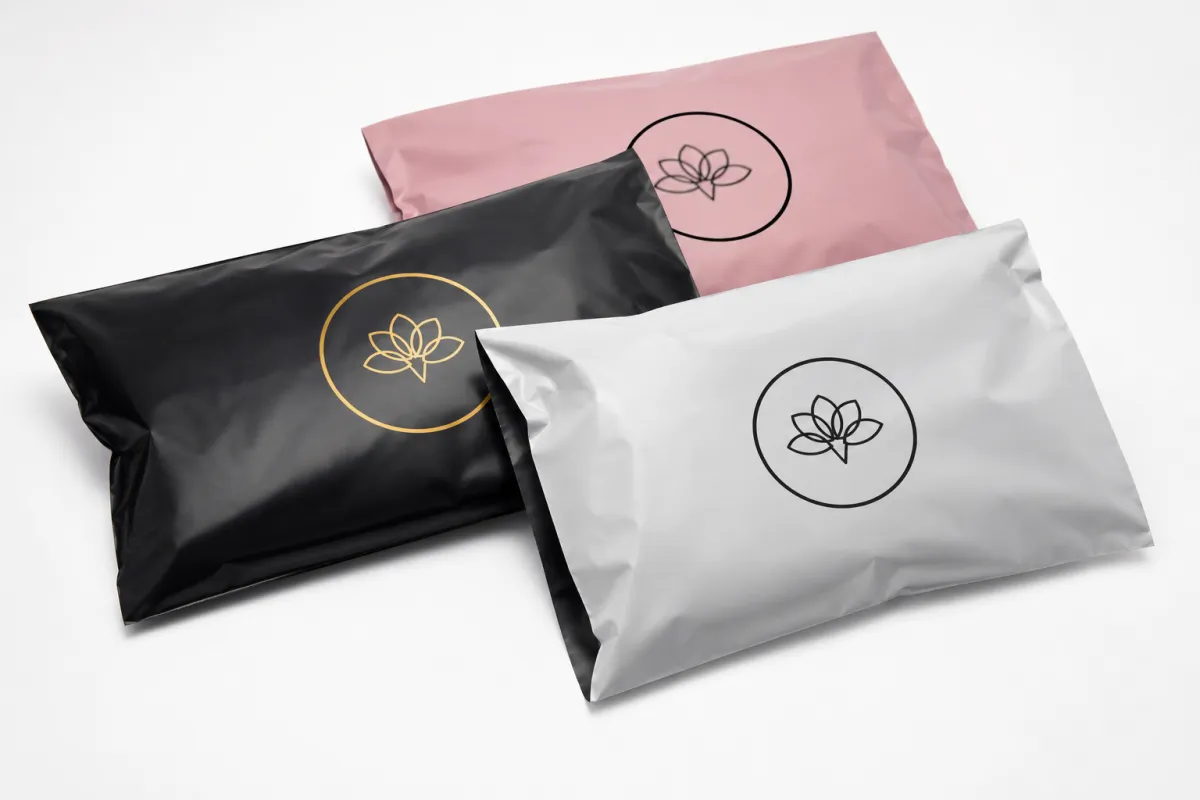
Ecommerce mailing bags with logo are lightweight shipping mailers made from flexible materials such as polyethylene film, kraft or coated paper, or compostable substrates, then printed or finished with a brand mark, pattern, message, or all three. In plain terms, they are the outer skin of the shipment. They are meant to be easy to fill, easy to seal, and easy to identify, while still giving the parcel enough structure to travel through a carrier network without falling apart.
The main reason merchants choose ecommerce mailing bags with logo is that the bag does three jobs at once. It encloses the product, it carries the branding, and it helps standardize fulfillment. That may sound simple, but operationally it is useful. A packing team can pull one SKU, drop in the product, peel the strip, and move on. No separate branded sticker, no extra wrap, no outer carton unless the item really needs one. On a busy packing bench, that difference adds up fast.
These bags fit especially well with items that bend, fold, or compress without losing presentation: T-shirts, leggings, small soft goods, scarves, textile accessories, lightweight gifts, and subscription inserts. They also work well where dimensional weight matters, because a flexible mailer often takes up less carrier volume than a box. Still, ecommerce mailing bags with logo are not universal. If the product has hard edges, sharp hardware, breakable components, or a shape that creates puncture points, the bag choice needs a more careful material review.
There is also a psychological piece that buyers sometimes underestimate. The customer handles the bag before anything else. A clean logo, good print registration, and a bag size that fits without looking stuffed or sagging all send a message that the seller pays attention. In contrast, an oversized or flimsy mailer can make the purchase feel cheap even if the item inside is excellent. That is why ecommerce mailing bags with logo are part of brand perception, not only packaging spec.
One practical way to think about them is this: the bag should match the product and the process. If you need a flexible shipping format and you want your brand to appear immediately on delivery, ecommerce mailing bags with logo are often the most direct option. If you need crush protection, hard-edge support, or a premium unboxing structure, a carton may still be the better fit. Good packaging work usually starts with that honest split.
How Ecommerce Mailing Bags With Logo Work in Shipping
The shipping journey for ecommerce mailing bags with logo starts at the packing bench, not the doorstep. The product is placed inside, the bag is sealed, and the parcel label is applied to a flat area that can stay legible through sorting, stacking, and handling. After that, the bag moves into the carrier network, where it may be scanned, sorted, dropped, compressed, and transferred several times before delivery. The better the bag structure, the more likely it is to arrive looking intentional instead of battered.
Functionally, a mailer has a few critical elements. The closure strip needs to seal firmly without fighting the packer. The body of the bag needs enough film strength or paper integrity to resist tearing. If it has a gusset, that extra volume needs to match the packed product so the seams are not stretched at the corners. The print zone needs enough room for the logo while staying clear of fold lines, adhesive zones, and heat seals. In ecommerce mailing bags with logo, the printed surface should support the bag, not weaken it.
That point matters more than people expect. Dense artwork, heavy ink coverage, or poor placement can affect how the bag behaves at the seam or fold. A smart supplier will keep the printed area within the stable part of the structure and provide a dieline so the design team knows where safe print boundaries sit. If you are comparing formats, ask for sample images or production proofs that show the logo location on the actual bag shape, not just on a flat mockup.
Ecommerce mailing bags with logo also support handling efficiency in a direct, measurable way. A branded mailer can remove the need for extra outer labels, belly bands, or decorative wraps, which shortens pack time. For teams shipping hundreds or thousands of orders per day, saving even a few seconds per pack can free up labor without sacrificing presentation. That is not a small detail. On a live line, small time savings are often the difference between keeping up and falling behind.
There is another benefit that matters in transit: visibility. A branded bag stands out as it moves through the shipping chain, which can help with internal handling and customer recognition. It is easier to spot, easier to photograph for social sharing, and easier for the customer to identify if it lands in a shared mailbox area. That visibility is part of why ecommerce mailing bags with logo are so popular in consumer-facing brands. They advertise the sender before the package is even opened.
Practical callout: A mailer that looks good in a design file can still fail in transit if the closure, seam strength, or print placement is wrong. Ask for real samples and test them with the product inside, not just on paper.
If you want a more formal way to evaluate transport durability, many packaging teams look at transit methods and laboratory practices such as ISTA testing protocols. That does not mean every mailer needs full certification, but it does mean you can think about the package in terms of drops, vibration, compression, and handling abuse instead of only shelf appeal. Ecommerce mailing bags with logo should be judged as shipping components first and branding pieces second.
Cost and Pricing Factors for Ecommerce Mailing Bags With Logo
The cost of ecommerce mailing bags with logo depends on several variables that work together, and the biggest mistake buyers make is focusing only on the unit price. Material type, bag size, print coverage, color count, seal style, and order quantity all move the number. A simple one-color logo on a standard poly mailer can be dramatically different from a full-coverage custom bag with multiple inks or a specialty paper structure.
For small to medium runs, setup charges matter a lot. Plate charges, print preparation, artwork checks, and minimum order quantities can make a short run look expensive per piece. As the quantity rises, those fixed costs spread out, and the unit cost drops. That is why a 1,000-piece order and a 10,000-piece order can feel like they live in different pricing worlds. Ecommerce mailing bags with logo usually reward planned replenishment, not emergency buying.
To give buyers a practical frame of reference, here is a common market-style comparison. Real quotes will vary by construction, print coverage, freight, and supplier region, but the pattern is useful:
| Material / Format | Typical Use | Indicative Unit Range at 5,000 pcs | Notes |
|---|---|---|---|
| Poly mailer | Apparel, soft goods, general ecommerce | $0.12-$0.28 | Low weight, moisture resistant, strong value for most fulfillment lines |
| Printed paper mailer | Natural-look branding, lighter items | $0.22-$0.48 | Better tactile feel, but needs careful sizing and strength review |
| Compostable mailer | Brands with disposal-focused positioning | $0.28-$0.65 | Material performance and certifications matter; not all claims are equal |
| Premium custom-printed mailer | High-visibility branding, larger print area | $0.30-$0.75 | More print coverage, more setup, more visual impact |
Those numbers are only part of the story. Freight can move the landed cost more than buyers expect, especially on bulky or heavier paper-based formats. Warehouse space is another hidden line item. If the bags are oversized or shipped in large cartons, they occupy real room in the stock area, and that can matter on a tight packing floor. Ecommerce mailing bags with logo should be priced as landed inventory, not as a factory quote sitting on a spreadsheet.
There is also the cost of mistakes. If a bag is too small, the product may need to be repacked or switched into another format. If the print proof is wrong, reprints can wipe out any savings from a lower quote. If the bag is oversized, the parcel may feel wasteful and cost more in material than necessary. The cheapest option on paper is not always the best value once labor, damage risk, and presentation are counted.
For a merchant comparing flexible mailers to cartons, it is also worth looking at your current bag strategy beside other packaging options. If your operation already uses Custom Poly Mailers, a logo change may be a quicker upgrade than a full packaging overhaul. In a lot of fulfillment environments, ecommerce mailing bags with logo are the easiest place to improve the brand experience without changing the entire packing system.
Material choice changes cost and performance together. Poly usually gives the strongest price-to-protection ratio for lightweight goods and offers good moisture resistance. Paper can look more natural and may align better with some brand stories, but it is not automatically stronger or cheaper. Compostable options can be attractive from a messaging standpoint, yet they often need closer review on storage life, seal behavior, and actual disposal route. If a supplier cannot explain the material cleanly, that is a warning sign.
When buyers ask what a “good” price looks like, the honest answer is that it depends on the print, the size, and the order plan. A steady reorder at 10,000 units can create a better cost structure than a series of rushed 1,000-unit buys, even if the larger run feels bigger on the PO. With ecommerce mailing bags with logo, disciplined forecasting tends to beat bargain hunting.
Step-by-Step Process and Timeline for Ordering
Ordering ecommerce mailing bags with logo works best when the process starts with product data, not artwork. First gather the final packed dimensions, the product weight, any insert or tissue requirements, and the carrier environment you expect the bag to survive. A soft cotton tee is not the same as a hoodie with hardware, and a flat cosmetic pouch is not the same as a boxed accessory set. The bag should fit the complete pack-out, not the item sitting alone on a desk.
Next comes the artwork and dieline review. This is where many projects slow down. The logo needs to sit inside the printable area, away from seams, seals, and edge tolerances. If there is a repeated pattern, the repeat must align cleanly. If there are brand colors that matter, the supplier needs clear references and, ideally, print standards. This is not a place to guess. Good ecommerce mailing bags with logo depend on a proper proof, especially when brand accuracy matters.
Proofing should cover both appearance and function. A sample should show the logo placement, closure feel, and real-life size with a product inside. If the bag is too roomy, it may flap around and look underfilled. If it is too tight, the seal can be stressed or the packer can slow down trying to make it work. A clean sample run often reveals issues that look minor on screen but become obvious in the hand.
Once the proof is approved, production moves into setup and manufacturing. Depending on the supplier and the structure, that can mean print plates, film extrusion or paper preparation, color matching, cutting, sealing, and packing into export cartons. Then comes freight. For many custom runs, a realistic planning window is often 12 to 15 business days from proof approval to production completion, then additional transit time depending on distance and mode. That is a common range, not a promise, but it is useful for stock planning. Ecommerce mailing bags with logo reward lead-time discipline.
Inventory planning is where the operation either stays calm or starts firefighting. The best buyers do not wait until the last carton is open. They set a reorder point that reflects monthly usage, lead time, and a buffer for campaign spikes. Seasonal launches, influencer drops, and retail events can burn through packaging faster than forecast. If the mailers are a branded customer touchpoint, running out is more than a logistics issue; it interrupts the brand experience too.
A practical ordering rhythm often looks like this:
- Confirm packed product dimensions and target ship weight.
- Choose material and closure style based on handling needs.
- Approve dieline and artwork placement.
- Request a sample or digital proof, then test it in real packing conditions.
- Place the production order with a buffer for freight and possible rework.
- Set the reorder trigger before inventory gets tight.
That process is not glamorous, but it keeps the packaging system steady. When ecommerce mailing bags with logo arrive on time and fit the pack-out properly, the fulfillment team notices the difference immediately. Orders move faster, waste drops, and the customer gets a package that feels deliberate instead of improvised.
Key Factors to Compare Before You Buy
If you are comparing ecommerce mailing bags with logo from different suppliers, start with size and fit. That sounds obvious, but it is where many packages go wrong. Buyers sometimes pick a bag based on product category instead of actual packed dimensions. Add a fold, a tissue sheet, a return card, or a small protective insert, and the footprint changes quickly. The right bag leaves enough room for a clean seal without carrying a lot of dead air.
Thickness and tear resistance come next. For poly, that means film gauge and how the film behaves around corners or sharp edges. For paper, that means fiber strength, coating, and whether the bag can handle abrasion without scuffing badly. If the item has zippers, hardware, or rigid inserts, test for puncture risk. Ecommerce mailing bags with logo should be sized for the worst part of the product, not the softest part.
Closure style is another practical decision. Peel-and-seal closures are fast and common. Tamper-evident seals add a layer of assurance for certain products. Dual-seal or returns-ready closures can simplify reverse logistics for apparel brands or subscription programs. If a bag will be opened and reused, the second closure must still hold after the first one is stripped. In a real operation, closure choice affects both customer convenience and pack speed.
Print method deserves equal attention. Some print methods are better for bold logo blocks, while others are more suitable for detailed graphics or lighter coverage. Ask how the ink behaves on the chosen substrate, whether the colors will stay clear after folding, and whether the finish resists scuffing. A logo that fades in transit or shifts on the seam defeats part of the purpose of ecommerce mailing bags with logo.
Sustainability claims need a careful read, not a quick one. If a mailer is called recyclable, compostable, or paper-based, ask what that actually means in the end-use market, not just in theory. Paper packaging may align well with responsible sourcing if it carries an FSC claim, which you can verify through FSC. Compostable materials should come with real instructions and realistic disposal assumptions. If the product needs to survive the parcel network, a greener label alone is not enough.
It also helps to compare suppliers on the details that do not show up in a quote sheet at first glance:
- Pack speed: Does the seal close quickly and cleanly on the line?
- Print quality: Is the logo crisp at the actual production size?
- Lead time: Can the supplier hit your reorder window?
- Freight efficiency: How much space and weight does the finished pack occupy?
- Consistency: Will the second run match the first run closely enough?
Buyers who compare those points usually make better decisions than buyers who fixate on the headline quote. That is especially true with ecommerce mailing bags with logo, because the bag is both a shipping consumable and a brand surface. If either side is weak, the whole package feels off.
One more practical filter: ask whether the supplier can show material data or testing references that line up with industry expectations. For example, film performance may be discussed in terms of impact or tensile behavior, and transit readiness may be related to parcel testing practices. That kind of detail is not marketing fluff; it helps you understand whether the bag will hold up in the hands of carriers and customers.
Common Mistakes to Avoid With Ecommerce Mailing Bags With Logo
The most common mistake with ecommerce mailing bags with logo is choosing the wrong size. A bag that is too small strains the seams, slows the packer, and can damage the product or create an awkward bulge. A bag that is too large wastes material, looks sloppy, and may increase shipping cost if the shipment becomes bulkier than it needs to be. The correct size is the one that matches the full packed item with just enough room for closure and handling.
Another common error is overdesigning the print. Large ink coverage, too many colors, or ultra-dense graphics can increase cost and complicate production. They can also reduce visual clarity if the logo gets lost in the layout. In many cases, a strong logo mark on a clean field does more for brand memory than a crowded bag full of extra artwork. With ecommerce mailing bags with logo, the logo should be the point, not one more thing competing for attention.
Timeline mistakes cause plenty of pain too. Teams often approve artwork late, wait too long on samples, or forget to account for freight and customs time if the production is overseas. Then a launch date gets closer and the packaging is still in motion. That creates rushed decisions, higher freight costs, and less room for corrections. The fix is simple but not always easy: treat packaging as a lead-time item, not a last-minute accessory.
Carrier handling gets overlooked more often than it should. A mailer may look fine on the packing table and still fail after conveyor sortation, stacking pressure, or a few awkward drops. That is why testing matters. If you are shipping sharp-edged items or parcels that will travel through mixed carrier environments, ask whether the structure has enough tear and puncture resistance. Ecommerce mailing bags with logo should survive abuse, not just look good in a product photo.
Claims and compliance can also trip people up. If a mailer is described as recyclable, recycled content, compostable, or sustainably sourced, the statement should be accurate and supportable. Marketing copy can get ahead of the spec sheet very quickly, and that is a trust problem. From a buyer’s perspective, it is better to use a modest claim that is correct than a bold claim that cannot be defended.
Here is a short list of mistakes worth avoiding:
- Measuring the product before inserts and protective materials are added.
- Ignoring the seal area when placing the logo.
- Ordering too little and paying for a rushed reprint later.
- Choosing a sustainable-looking material without checking actual performance.
- Skipping sample testing on the real packing line.
None of those issues is hard to avoid, but they are easy to miss if the packaging conversation starts too late. The best ecommerce mailing bags with logo projects are the ones where people ask the practical questions early and keep asking them until the sample behaves the way the production run should.
Expert Tips and Next Steps for Ecommerce Mailing Bags With Logo
If you want a cleaner outcome, start with a small sample set. Test the seal, look at the logo under real lighting, and pack actual products into the bag instead of substitutes. The goal is not to admire the artwork. The goal is to see whether ecommerce mailing bags with logo actually support the packer, the carrier, and the customer experience all at once.
A simple spec sheet can save a lot of repeat confusion. Record the bag size, material, thickness, print colors, closure style, and reorder point. Add the packed product dimensions and a note about whether the item needs tissue, a return insert, or a secondary protective sleeve. Once that sheet exists, future orders get easier. Teams change, but the spec stays in place.
It also helps to match the bag to the product mix instead of the loudest single product. A beautifully branded bag for one hero SKU is not as useful as a good working bag that handles most of the catalog. In many operations, the smartest choice is the one that covers the widest range of packs with the fewest SKUs. Fewer sizes mean less inventory clutter, less picking error, and less time spent explaining exceptions.
A pilot run can teach you more than a polished presentation. Choose one shipping lane or one product group and review three things: customer feedback, damage rates, and packing time. If the bag performs well, scale it. If not, adjust the size or material before the larger buy. That kind of controlled test is especially useful for ecommerce mailing bags with logo because appearance and function need to stay in balance.
For sustainability-focused buyers, document the material story carefully. If the bag is paper-based, ask about fiber source and whether there is a valid FSC claim. If the bag is poly, be clear about recyclability only where local collection systems support it. If the bag is compostable, confirm what conditions are actually required for it to break down. A clean, accurate claim is more useful than a broad one that sounds good but creates confusion later.
From an operations standpoint, I would also recommend checking the supplier’s print consistency and their ability to keep repeat orders aligned. A reorder should look like a reorder. If the second batch shifts color or size too much, the whole line starts to feel inconsistent. That is a small detail on paper and a real headache in a brand system.
If you are narrowing down options, compare three quotes, ask for one physical sample, and set a reorder calendar before the current stock gets low. That keeps ecommerce mailing bags with logo under control as both a branding decision and a logistics decision. And in practice, that is where the best packaging choices usually live: simple, well-fitted, easy to repeat, and honest about what the mailer is meant to do.
For a lot of merchants, the next step is not a dramatic redesign. It is a careful selection of the right size, the right material, and the right print coverage, followed by a predictable reorder system that keeps the packing bench moving. If you want the shortest path to a better result, start with one sample in the actual product, one proof checked against the dieline, and one reorder point written down before the stock gets thin. That is usually how ecommerce mailing bags with logo stop being a scramble and start doing steady work.
FAQ
How do ecommerce mailing bags with logo affect shipping costs?
They can lower costs when the right size and material reduce dimensional weight, packing time, and the need for extra outer packaging. They can raise costs if the print is complex, the material is premium, or the bag is oversized for the product. The best value usually comes from balancing unit price with labor savings, product protection, and fewer reworks.
What is the best material for ecommerce mailing bags with logo?
Poly is often the most durable and cost-efficient choice for lightweight goods that need moisture resistance. Paper or paper-based options work well when the brand wants a more natural presentation and the product is not sharply edged. The right choice depends on product weight, handling conditions, sustainability goals, and whether the bag must survive rough transit.
How long does it take to produce ecommerce mailing bags with logo?
Timeline depends on artwork approval, proofing, production capacity, and shipping distance. Simple repeats usually move faster than full-coverage custom prints or specialty materials. Plan early for seasonal demand so the bag arrives before stock runs low, not after.
Do ecommerce mailing bags with logo need a special print process?
Most custom mailers use print methods suited to the material, color count, and run size. The process should preserve seal areas and avoid distortion on folds or gussets. A good supplier will provide a dieline and proof so the logo lands cleanly and consistently.
How should I choose the right size for ecommerce mailing bags with logo?
Measure the final packed product, not just the item by itself, because inserts and protective materials change the footprint. Leave enough room for a clean seal without excessive empty space that adds cost and looks sloppy. Test a few sample sizes against real pack-out conditions before placing a large order, because ecommerce mailing bags with logo only work well when the fit is right in practice.


