Buyer Fit Snapshot
| Best fit | Ecommerce Mailing Bags with Logo projects where brand print, material claims, artwork control, MOQ, and repeat-order consistency need to be specified before quoting. |
|---|---|
| Quote inputs | Share finished size, material target, print colors, finish, packing count, annual reorder estimate, ship-to region, and any compliance wording. |
| Proofing check | Approve dieline scale, logo placement, barcode or warning zones, color tolerance, closure strength, and carton packing before bulk production. |
| Main risk | Vague material claims, crowded artwork, missing packing details, or unclear freight terms can make a low unit price expensive after revisions. |
Fast answer: Ecommerce Mailing Bags with Logo: Film, Print, MOQ, and Carton Packing should be specified like a repeatable production item. The safest quote records material, print method, finish, artwork proof, packing count, and reorder notes in one written spec.
Production checks before approval
Compare the actual filled-product size with the drawing, then confirm tolerance on folds, seals, hang holes, label areas, and retail display edges. Reserve space for logos, QR codes, warning copy, and material claims before decorative graphics fill the panel.
Quote comparison points
Review material grade, print process, finish, sampling route, tooling charges, carton quantity, and freight assumptions side by side. A quote is only useful when the supplier can repeat the same color, closure quality, and packing count on the next order.
Ecommerce mailing Bags with Logo look simple until they hit a live packing line and the warehouse starts doing what warehouses do. The bag has to protect the product, hold its shape, accept a label, survive courier handling, and still make the brand look like it has its act together. Easy on paper. Less cute on a Friday afternoon when orders are piling up and someone has run out of the right size by two boxes.
At Custom Logo Things, the best packaging decisions usually come from treating ecommerce mailing Bags with Logo as part of the shipping system, not as decorative add-ons. That changes the brief pretty fast. You stop asking only where the logo sits and start asking about seal strength, film weight, label space, print placement, and how the parcel looks when it lands on a doorstep. The bag is not a billboard. It is a working part of the order.
There is a commercial side too. Branded mailers can speed up picking and packing, reduce mix-ups, and give customers a cleaner first impression before the parcel is even opened. For a lot of brands, Ecommerce Mailing Bags with logo end up doing three jobs at once: they protect the order, carry the brand, and keep dispatch looking tidy. That is a decent return for one item that spends its life being stuffed, sealed, and stacked.
What Ecommerce Mailing Bags with Logo Actually Are
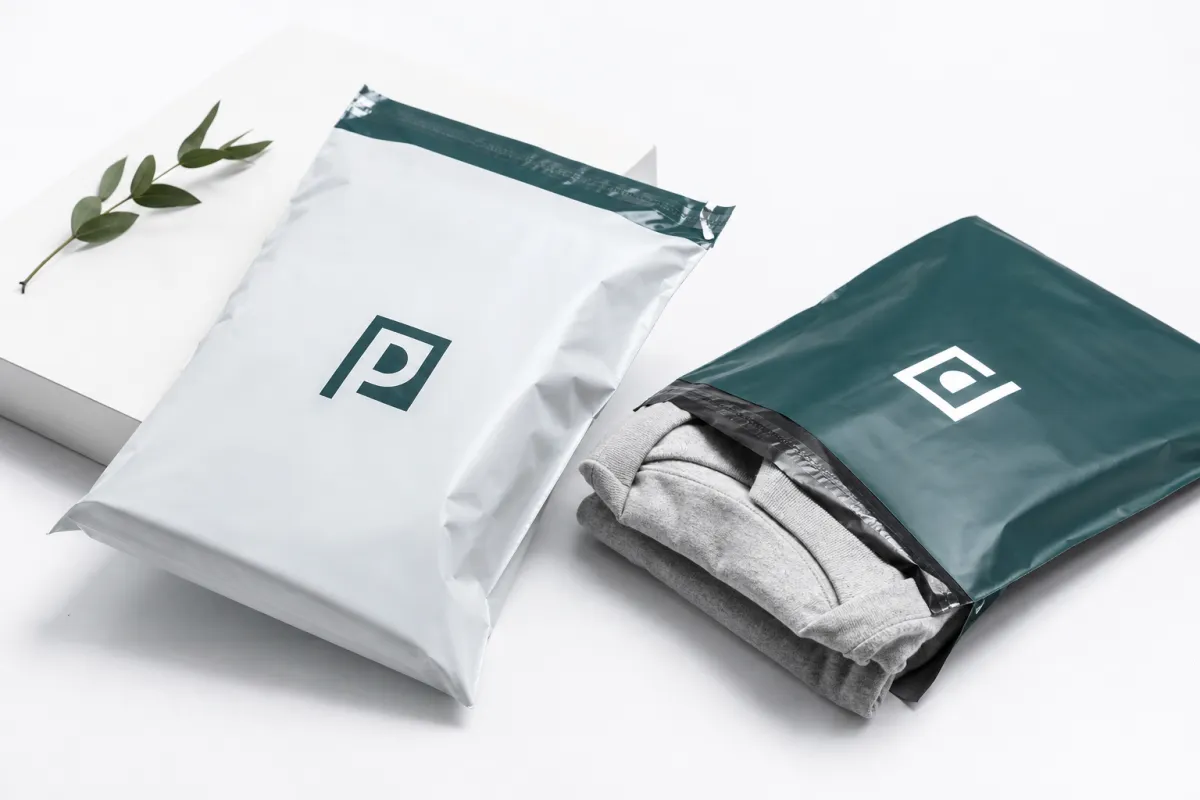
Strip away the gloss and ecommerce mailing bags with logo are shipping bags built for online orders. They can be poly mailers, paper mailers, or compostable options. They may include peel-and-seal strips, tamper-evident closures, tear notches, gussets, or reinforced seams. The logo is only one part of the spec. The rest has to hold up when the parcel gets crushed, stacked, dropped, and sorted like it owes the courier money.
Poly mailers are the most common option because they are light, moisture resistant, and easy to handle. Paper mailers bring a different look and suit brands that want a more natural finish. Compostable options appeal to brands that have a real sustainability story and want packaging to match that message. None of those choices should be made on vibes alone. Ecommerce mailing bags with logo need to match the product, the route, and the customer expectation.
Printed branding and plain stock bags with labels are not the same thing. A plain bag with a sticker can work for a very small run or a short-term need, but printed bags usually look more deliberate and stay consistent across the whole order. That consistency matters. When the same ecommerce mailing bags with logo leave the warehouse every day, the brand feels organised instead of improvised.
There is operational value in the logo too. A branded mailer helps staff identify the right packing format, gives customer service a clearer picture of what was shipped, and lands on the doorstep looking like it belongs to the brand. That is a small bit of marketing work happening inside the shipping lane, which is a nicer place for marketing than most people admit.
"A logo on the bag is not decoration. It is a print job, a shipping surface, and a brand promise all at once."
Spec still matters. If ecommerce mailing bags with logo are too thin, too small, or printed in the wrong spot, the bag stops looking premium and starts looking rushed. Get the construction right and the parcel feels sharper before anyone even opens it. I have seen perfectly good brands make themselves look a bit chaotic with the wrong mailer, which is a silly way to lose credibility.
How Ecommerce Mailing Bags with Logo Work in the Shipping Flow
The shipping journey is where ecommerce mailing bags with logo earn their keep. An order gets picked, packed, sealed, labelled, stacked, sorted, and handed to a carrier. Along the way, the bag has to handle scuffs, compression, and moisture while still accepting a label that scans properly. None of that sounds dramatic until the order volume climbs and the pack bench sees the same bag a hundred times before lunch.
Performance gets easier when the bag matches the actual pack-out. Lightweight apparel can usually go into a thinner mailer, while accessories or documents may need a different size or a stronger closure. The more consistent the product size, the easier it is to specify ecommerce mailing bags with logo that fit snugly without leaving the parcel loose and lazy-looking.
Print placement matters more than buyers expect. Put the logo too close to the seal, the edge, or a fold line and it can distort during sealing or stacking. Make the branding area too small and the design disappears from a few feet away. The best ecommerce mailing bags with logo are the ones that still look good in a product photo and still behave properly when the pack line is moving fast.
Seal strength deserves just as much attention. A mailer that splits at a corner or pops open under rough handling can wreck the whole impression in seconds. Abrasion resistance matters too. A sharp print can still look weak if the film scuffs easily or the ink gives up when it brushes against cartons, conveyors, or other parcels. That is why sample runs are worth the time. Testing the exact product mix beats guessing every time.
There is a customer-side effect as well. Once the parcel lands, branded packaging makes the order easier to identify and reinforces the memory of the purchase. Nobody says, "What a magnificent shipping bag." They do notice whether the parcel looked clean, deliberate, and consistent. That is where ecommerce mailing bags with logo quietly punch above their weight.
For brands that want a formal way to check performance, transit testing based on ISTA-style procedures is a sensible move. The ISTA site is a useful reference for drop, vibration, and compression testing that mirrors real shipping conditions. It is not overkill. It is usually cheaper than discovering a weakness after the first bad batch goes out.
Cost, Pricing, and What Changes the Price
Pricing for ecommerce mailing bags with logo usually comes down to a few predictable variables: material, size, print colours, print coverage, film thickness, closure style, order quantity, and any special claim such as recycled content or compostability. Leave those loose in a quote request and the number may look good for about five minutes, right up until the actual spec gets defined.
The cleanest way to think about price is cost per shipment, not just cost per bag. A mailer that saves time at the bench, reduces rework, and arrives with a better finish can be worth more than a cheaper one that slows packing or looks forgettable on arrival. Ecommerce mailing bags with logo are a packaging purchase, but they also behave like an operating expense and a branding tool. That is the bit people forget when they chase the lowest line item.
Small runs usually carry a higher unit cost because setup work gets spread across fewer pieces. Artwork prep, plate or tooling charges, and proofing time all sit in that setup bucket. Once quantities rise, the economics usually improve, but only if the spec stays stable. Keep changing the size, colour count, or print area and the cost curve keeps resetting itself.
There are hidden costs that are easy to miss. Freight matters, especially for bags that are bulky but light, because carton count can matter more than pallet weight. Sample packs can cost money. Storage matters if the order is bigger than the warehouse footprint. Mis-spec the order and reprints or overruns can wipe out the savings from a lower unit price. Careful quoting is not optional for ecommerce mailing bags with logo. It is the difference between a tidy purchase and an expensive mess.
| Option | Typical Use | Approx. Unit Price at 5,000 Units | Strengths | Watch-Outs |
|---|---|---|---|---|
| Plain stock poly mailer | High-volume basics, lowest visual finish | $0.03-$0.08 | Very light, moisture resistant, fast to source | No brand presence, limited differentiation |
| Printed poly mailer | Most common branded ecommerce option | $0.10-$0.28 | Good branding, durable, efficient for packing | Setup and proofing matter, print file must be clean |
| Paper mailer with logo | Natural look, fiber-based positioning | $0.16-$0.35 | Different tactile feel, good for some premium brands | Needs the right paper grade to avoid tearing |
| Compostable mailer with logo | Brands with a specific sustainability story | $0.18-$0.45 | Clear sustainability message when certified correctly | Claims must be backed up, end-of-life depends on local systems |
If you are comparing suppliers, ask for unit pricing at several order breaks, such as 1,000, 5,000, and 10,000 pieces. That shows where scale starts to help. With ecommerce mailing bags with logo, the real savings often show up after setup costs get spread across enough units, not from the first number on the quote.
It also helps to check whether freight, setup, sample packs, and artwork cleanup are included. That sounds basic because it is basic, and yet it gets skipped all the time. A clean quote for ecommerce mailing bags with logo should show the unit price, setup charges, lead time, and the assumptions behind the artwork. Anything else makes comparison more fiction than fact.
Choosing the Right Spec for Ecommerce Mailing Bags with Logo
The right specification starts with the product, not the print. Lightweight apparel, folded documents, soft goods, and small accessories all behave differently inside ecommerce mailing bags with logo. A bag that looks fine with one item can look slack or strained with another, which is why sample testing with actual packed orders is so useful.
Size is one of the first calls to make. Buyers often underestimate how much room is needed for the product plus inserts, tissue, return material, or a bit of extra fold. Choose a bag that fits the packed item with enough tolerance to seal cleanly, but not so much extra space that the parcel looks bloated or wastes material. The most polished ecommerce mailing bags with logo usually match the packed profile closely enough that the parcel looks intentional from the first glance.
Material choice shapes performance and perception at the same time. Poly mailers are usually chosen for durability and moisture resistance. Paper mailers give a different visual language and suit brands that want a fiber-based look. Compostable options can work well if the sustainability story is real and backed by certification. If the claim matters to the customer, it should be backed by documentation, not just a green tint and a hopeful caption. For paper-based choices, the FSC framework is a strong reference point for sourcing conversations.
Artwork style should fit the bag instead of fighting it. A bold logo that reads from a few feet away can be better for transit visibility, while a more restrained design can feel premium if the finish and typography are doing their part. Matte and gloss each change the visual tone. Full-colour graphics can look lively, but a one-colour logo can be cleaner and easier to control. The best ecommerce mailing bags with logo make the design feel native to the material.
Compatibility with labels and barcodes matters too. If the surface is too shiny, some labels can lift at the edges unless the adhesive is chosen correctly. If the print lands in the wrong place, the shipping label may crowd the artwork or sit over the barcode zone. Good suppliers will ask about label size, carrier requirements, and whether the bag will be used on manual or automated packing lines. That is the kind of question that saves pain later.
Here is a simple comparison that helps narrow the choice:
| Spec Question | Best Answer for Faster Packing | Best Answer for Premium Look | Best Answer for Sustainability Story |
|---|---|---|---|
| Material | Poly | Paper or matte-finish poly | FSC paper or certified compostable film |
| Print style | Simple one- or two-colour logo | Balanced logo with strong contrast | Clean, minimal branding with certification marks |
| Size approach | Snug, consistent fit | Snug with elegant proportion | Snug to avoid excess material use |
| Closure | Peel-and-seal with strong adhesive | Peel-and-seal with a tidy seal line | Peel-and-seal plus clear end-of-life guidance |
If you already know you want a durable, straightforward option, it is worth reviewing Custom Poly Mailers early, because that is often the fastest route to a practical spec that still carries your logo clearly. For brands comparing packaging formats more broadly, browsing the main range on Custom Logo Things can also help narrow the finish and size before requesting quotes.
Step-by-Step Process and Timeline for Ordering
A tidy ordering process saves money in boring, unglamorous ways. For ecommerce mailing bags with logo, the usual path starts with a short brief: what the product is, what size it packs into, how many units you need, what look you want, and whether the bag needs to survive moisture, rough handling, or long transit. The clearer that brief is, the fewer proof cycles you will burn later.
Next comes artwork preparation. This is where the logo gets checked for vector quality, colour separations, safe zones, and bleed. A bag is not a flat poster, so the artwork has to respect seams, folds, and the places where adhesive or labels will sit. Good suppliers will sometimes adjust the file to suit the print reality, and that is normal. For ecommerce mailing bags with logo, the goal is not to bully a screen design into submission. The goal is to make the bag and the print work together.
After the artwork comes the proof. That may be a digital proof, a sample bag, or a pre-production proof depending on the supplier and order size. This is the moment to check size, logo placement, spelling, barcode space, and colour expectations. If there is a problem here, it is a small problem. If it reaches production, the bill gets a lot less friendly.
- Define the use case: product type, shipping method, and target impression.
- Confirm the bag spec: size, material, thickness, closure, and print area.
- Send artwork: vector logo, brand colours, and any regulatory marks.
- Review proof: check layout, safe zones, and operational fit.
- Approve sample or pre-production proof: test with the actual product if possible.
- Run production: allow for setup, printing, curing, and packing.
- Book freight: confirm delivery timing and receiving requirements.
In many cases, a first custom order takes longer than a reorder because the file setup and proofing stages are doing more work. A straightforward repeat order may move in roughly 12-15 business days after approval, while a first run can stretch longer if artwork cleanup, sampling, or revision cycles are needed. That is normal for ecommerce mailing bags with logo, especially when the print has to handle both brand and warehouse work.
Buffer time matters. Seasonal peaks, launches, and rebrands all compress the timeline. Freight does too. A bag can be manufactured on schedule and still arrive late if the transport leg is not planned properly. The best buyers build in a cushion so ecommerce mailing bags with logo are already in house before the product release, not showing up while the first orders are still waiting in the queue.
A simple approval checklist helps a lot:
- Confirm the exact dimensions and seal style.
- Check that the logo is centred and legible at arm's length.
- Verify the print does not collide with seams or barcode areas.
- Make sure the material description matches the sustainability claim.
- Record the final proof so reorders stay consistent.
That last step is easy to skip, which is exactly why it matters. Once you have a signed-off spec for ecommerce mailing bags with logo, future orders move faster because everyone is working from the same reference instead of relying on memory and optimism.
Common Mistakes That Hurt Branding or Performance
The most common mistake is choosing size by eye instead of by real packed samples. A bag that seems fine on a desk can look awkward once it is sealed around an actual product. Too small, and the seams get stressed. Too large, and the parcel looks loose and cheap. The right ecommerce mailing bags with logo should fit the product with just enough tolerance to protect the contents without wasting film or creating a floppy silhouette.
Artwork errors show up constantly. Low-resolution files can blur the logo, colours can shift more than expected on certain films, and a design placed too close to the edge can get clipped by the seal line. A lot of these issues go away if the buyer sends vector artwork and gives the supplier room to build proper safe zones. Strong ecommerce mailing bags with logo depend on disciplined prepress work, not just a nice brand file.
Material performance can also disappoint if the closure or print method is wrong for the use case. Thin film can tear under rough handling. Weak adhesive can pop open in heat, cold, or pressure. Cheap print adhesion can smear or scuff early, which is frustrating because the parcel may still deliver the product safely while looking tired the whole way there.
Operational mistakes are less visible, but they hurt just as much. If pallet counts are wrong, receiving gets messy. If lead times are underestimated, the team scrambles. If labels have not been tested on the finished bag surface, barcode issues can show up after the order is already packed. A lot of bad experiences with ecommerce mailing bags with logo are not really print problems. They are planning problems dressed up as print problems.
For brands using paper-based options, it is smart to keep recycling claims honest and simple. The EPA's recycling guidance at epa.gov/recycle is a good reminder that disposal depends on local systems, not wishful wording. That caution applies to ecommerce mailing bags with logo just as much as it does to any other packaging format.
The business cost of a bad spec is usually larger than the packaging cost itself. Returns, customer complaints, replacement shipments, and wasted inventory can turn a small packaging decision into a real margin leak. Proofing and testing are not extra steps. They are the cheapest insurance a buyer can buy for ecommerce mailing bags with logo.
Expert Tips and Next Steps for Ecommerce Mailing Bags with Logo
My first practical recommendation is straightforward: request physical samples and test them with the actual product mix. Do not pinch the film, nod once, and call it done. Put the real item inside, seal it, add the label, stack it with other parcels, and see how it behaves. That one test tells you more about ecommerce mailing bags with logo than a polished spec sheet ever will.
Keep a master spec sheet for every approved bag. Record the dimensions, film weight or thickness, closure style, artwork file name, print placement, and any notes from the proof. That file becomes the memory of the package. Without it, reorders drift over time and the brand starts to look inconsistent. With it, ecommerce mailing bags with logo stay stable across seasons, staffing changes, and new product launches.
Scale needs thinking about early. A design that works across two or three bag sizes is easier to manage than one that has to be rebuilt every time the product line changes. If your catalog includes both compact and larger items, ask whether the logo system can be adapted without changing the whole visual language. Buyers who plan ahead with ecommerce mailing bags with logo usually end up with fewer art files, cleaner reorders, and less confusion at the warehouse bench.
Compare suppliers on more than price. Look at proofing support, consistency from reorder to reorder, print control, communication speed, and whether the vendor asks the right questions about labels, packing flow, and shipping conditions. A supplier who understands the difference between a nice mockup and a working mailer is usually worth more than the cheapest quote. That is especially true with ecommerce mailing bags with logo, because the bag has to earn its keep every day, not just on approval day.
For brands that want a narrower path into production, reviewing Custom Poly Mailers is often a sensible starting point because poly is the most straightforward material for durability, print clarity, and shipping weight. From there, the decision gets easier: stay with the simple format that ships well, or move into paper or compostable options if the brand story actually justifies the switch.
Here is a short action list that usually leads to better results:
- Audit your current packaging and note where bags fail or feel inconsistent.
- Identify the top three shipment sizes so the spec reflects real order patterns.
- Gather vector artwork and brand colour references before requesting pricing.
- Ask for sample quotes at several quantities to see where scale helps.
- Test the final sample in live packing conditions before approval.
Once those steps are done, ecommerce mailing bags with logo stop being a generic supply item and start acting like a controlled brand asset. That is the real target: a mailer that looks deliberate, ships reliably, and supports the customer experience without making the operations team do extra laps.
For Custom Logo Things, that usually means choosing a spec that balances print quality, durability, and packing speed, then locking it down with a clear proof and a repeatable reorder record. The best ecommerce mailing bags with logo are not the flashiest ones; they are the ones that keep looking right after hundreds or thousands of parcels have moved through the system.
FAQ
Are ecommerce mailing bags with logo better than plain mailers for small brands?
Usually, yes, if brand perception matters at all. Ecommerce mailing bags with logo create a more intentional first impression, and that matters even for smaller sellers because the parcel is often the first physical touchpoint a customer sees. Plain mailers can be cheaper, but branded mailers often improve recognition and make the shipping experience feel more settled. The right answer depends on order volume, margin, and how much presentation matters to the business.
What material works best for ecommerce mailing bags with logo?
Poly mailers are the common choice when durability, moisture resistance, and low shipping weight matter most. Paper and compostable options can work well for brands that want a different feel or a stronger sustainability story. The best material for ecommerce mailing bags with logo depends on the product, the route the parcel takes, and the brand image you want the customer to remember.
How do I keep ecommerce mailing bags with logo from looking cheap?
Start with the right size so the packed order looks intentional, not overstuffed or saggy. Use clean artwork, enough contrast, and a logo scale that fits the bag naturally. Then test samples in real packing conditions. A sturdy-feeling bag with good print placement will almost always look better than a fancy concept that does not hold up in use. That is where ecommerce mailing bags with logo either earn trust or lose it.
What should I ask for when pricing ecommerce mailing bags with logo?
Ask for unit pricing at several quantities so you can see how scale changes the cost. Confirm whether setup, tooling, sample packs, freight, and artwork cleanup are included or billed separately. You should also ask for a clear lead time. A clean quote for ecommerce mailing bags with logo should be easy to compare and easy to reorder from later.
How long does it take to produce ecommerce mailing bags with logo?
Timing depends on proof approval, artwork readiness, order quantity, and print method. A first custom run often takes longer because file setup and proofing add time before production starts, while a repeat order can move faster once the spec is locked. It is smart to build in extra buffer for launches, seasonal peaks, and freight delays so stock does not run short. That planning matters just as much for ecommerce mailing bags with logo as the manufacturing itself.


