The ecommerce Matte Zipper Bags unit cost is rarely a clean, standalone number. It sits inside a larger packing equation that includes material usage, print complexity, closure choice, carton packing, and how many times the product is handled before it reaches the customer. A bag that looks inexpensive on paper can become costly if it slows repacking, needs extra protection in transit, or forces the warehouse to add another step.
That is why buyers who compare only the sticker price usually misread the quote. Two matte zipper bags can look nearly identical from a distance and still produce very different landed costs once size, film gauge, zipper style, and minimum order quantity enter the picture. Even the way finished bags are counted and packed for shipment can tilt the total.
A low per-piece quote can still produce a higher finished cost if the bags require extra handling, tighter inspection, or another layer of packaging to arrive in usable condition.
Why Matte Zipper Bags Can Lower Repackaging Cost
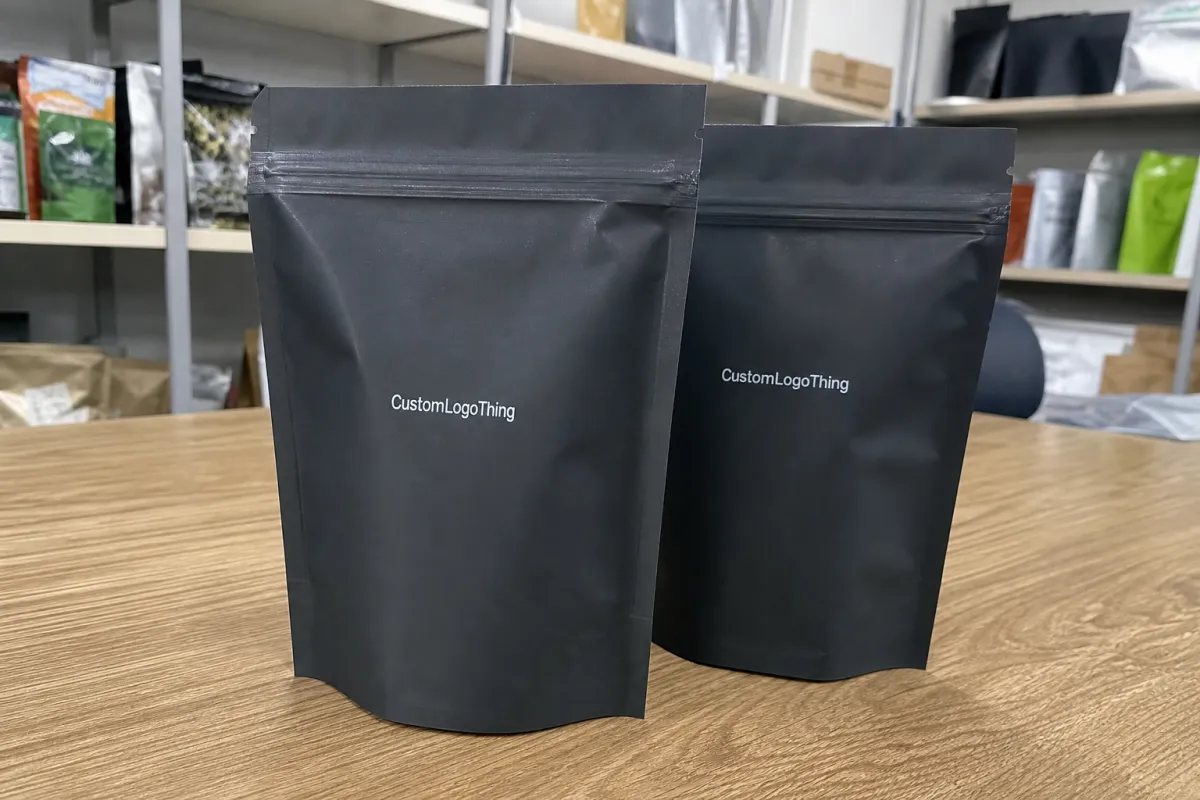
A well-specified bag can replace several parts of a packaging stack. That shows up most clearly with samples, accessories, refill pouches, cosmetics, small apparel items, and hardware kits, where a matte zipper bag can serve as the pouch, the dust cover, and the presentation layer at once. In those cases, the bag itself may cost more than a plain poly sleeve, but the total pack-out cost often drops because the warehouse handles fewer components.
The matte finish has a practical side that is easy to miss until the product is actually moving through fulfillment. It hides light scuffs, fingerprints, and micro-scratches better than a glossy surface, which matters after the bags are touched by operators, packed into cartons, and opened by customers. That muted appearance also tends to photograph well, which is useful for ecommerce listings and unboxing content without adding a separate sleeve or rigid carton.
The zipper adds another layer of value. A resealable closure makes sense for products customers open repeatedly, such as travel items, refill goods, bundled accessories, or consumables that are not used all at once. Instead of transferring the contents into a different container, the customer can keep using the original package, which reduces complaints about torn tops and awkward resealing.
From a purchasing perspective, the useful question is not whether the bag is the cheapest unit on the market. It is whether the bag removes enough labor, improves presentation, or reduces damage risk to justify its cost. That is the right frame for evaluating ecommerce matte zipper bag pricing because the packaging line is usually where small savings multiply or disappear.
- Less labor: one bag can replace multiple secondary packaging steps.
- Cleaner presentation: matte film usually shows less handling wear.
- Better reuse: zipper closure supports repeated opening and storage.
- More consistent pack-out: fewer loose components reduce variation.
Material Build and Closure Options Buyers Should Compare
Material structure drives feel, durability, and unit cost more than many first-time buyers expect. Common builds include LDPE for a softer and more flexible hand, HDPE for a thinner and crisper feel, and co-extruded or laminated structures when a specific balance of stiffness, barrier, and appearance is needed. Each option behaves differently during sealing, printing, filling, and repeated opening.
Matte appearance can come from the film itself, a surface treatment, or a printed layer that changes how light moves across the bag. That distinction matters because two bags can both be called matte and still feel different in the hand. One may have a dry, satin finish that feels slightly softer; another may look more muted and hold its shape better. Those differences affect not only customer perception but also the actual cost of production.
Closure style is another decision that affects both performance and price. A standard press-to-close zipper is usually the most economical option and works well for everyday ecommerce use. Slider zippers are easier to open and close, which helps for products opened often or by customers with limited dexterity, but they usually add cost and may lengthen production if the component is not already available in stock.
Extra features should be chosen with the same discipline. Tear notches make opening easier. Hang holes support retail display. Gussets improve fill volume and shelf stability. Writable panels help warehouse teams and end users label contents without stickers. None of those features is necessary on every project, but each one can solve a real problem when the product format demands it.
For buyers who want a neutral reference point, industry resources such as The Association for Packaging and Processing Technologies are useful for general packaging terminology, while ISTA guidance helps when shipment durability matters. Those sources do not replace a spec sheet, but they help keep the conversation precise.
Practical rule: choose the build around product weight, how often the bag will be reopened, and how polished the package must look at delivery. More film is not always better. If the product is light, overspecifying the structure often raises cost without adding meaningful protection.
Specification Choices That Affect Fit, Barrier, and Print
Nominal size matters less than usable size. Once the zipper track, side seals, and any gusset are counted, the actual opening and fill profile can change noticeably. A bag that sounds correct on a spec sheet may look loose around a small accessory or too tight around a bulkier product, so fit should be checked against the real item, not just against the carton plan.
Film thickness influences puncture resistance, rigidity, and perceived quality. A 2 mil bag can work for lightweight accessories and soft goods, while 3 mil or 4 mil may be a better fit for heavier contents or items with sharper edges. That said, thicker is not automatically smarter. If the product is light and flexible, too much gauge can make the package feel stiff, bulky, and more expensive than necessary.
Barrier requirements should follow the contents. A basic matte zipper bag may be fine for dust protection and general presentation, but moisture-sensitive, odor-sensitive, or oxygen-sensitive products often need a more deliberate structure. That can mean a different film stack, a stronger seal profile, or a higher-performing closure. The right answer depends on storage time, transit conditions, and how the customer will use the bag.
Print setup deserves close attention as well. Full-coverage graphics, fine type, deep backgrounds, and tight registration all add production sensitivity. Artwork should respect the safe area around the zipper and the seals so the final print does not drift into a zone where distortion is likely. A careful file check will verify bleed, trim tolerance, and spacing near the closure before anything goes to press.
- Size: confirm usable space after zipper and seals are counted.
- Thickness: match film gauge to weight and puncture risk.
- Barrier: align structure with moisture, dust, or odor goals.
- Print: review coverage, registration, and safe zones before approval.
Standards can also guide the decision. If the bags are part of a direct-to-customer shipper, the pack-out may need internal drop or transit validation, and ASTM methods or ISTA procedures often enter the discussion. Not every project needs formal certification, but the buyer should know whether the bag only needs to store neatly or whether it has to survive parcel handling.
Ecommerce Matte Zipper Bags Unit Cost: What Moves It
The short answer is straightforward: ecommerce matte zipper bags unit cost is shaped by finished size, film structure, matte finish method, zipper type, print colors, and add-on features such as gussets or tear notches. Then the order quantity decides how much of the setup cost gets spread across each piece. Small runs almost always cost more per unit than larger runs, even when the total order value is lower.
MOQ changes pricing because prepress, tooling, machine setup, and inspection time do not disappear on a smaller order. The factory still has to check artwork, align the film, set the zipper line, and verify the seals. When those fixed costs are divided by more bags, the unit cost falls. That is why bulk pricing usually improves in steps rather than drifting downward a little at a time.
Artwork complexity can move the number just as much as the material choice. A one-color logo on a light matte bag is usually easier to produce than a full-coverage print with multiple colors, small type, and tight registration. If the graphics need to clear a zipper line or wrap around a gusset, the factory may need more setup time and more inspection, and that usually shows up in the quote.
Shipping and packing can be hidden cost centers. A quote that looks low ex-factory may become expensive if the bags are packed in awkward counts, require extra inner wrapping, or ship in a way that inflates freight. Ask for carton counts, pallet assumptions, and whether the price includes delivery to your warehouse. Those details affect landed cost more than many buyers expect.
| Order Level | Typical Build | Indicative Unit Cost | What Usually Drives It |
|---|---|---|---|
| 1,000-2,000 pcs | Simple matte press-close bag, limited print | $0.24-$0.45 | Setup spread across fewer bags, higher prepress share |
| 5,000 pcs | Standard matte zipper bag with one- or two-color print | $0.14-$0.28 | Better absorption of setup charges and material buying efficiency |
| 10,000+ pcs | Custom print, consistent size, repeatable spec | $0.10-$0.22 | Lower cost per piece from longer run efficiency and steadier output |
Important: those numbers are illustrative, not a promise. A slider zipper, heavier film, lamination, special matte treatment, or complex branding can move the quote quickly. The better buying habit is to ask for tiered pricing at several quantities so the break points are visible instead of guessed.
If the supplier shows the assumptions behind each tier, that is usually a good sign. You want to know whether the quote includes samples, tooling, custom color matching, and packing format, because those items often explain more about the final price than the headline number alone.
Production Process and Lead Time From Proof to Shipment
The production path is simple on paper, but delays usually happen at the handoff points. It starts with inquiry and spec review, then artwork checking, digital proofing, approval, and only then the actual run. If the specification is incomplete, the first delay is often not on the factory floor. It is in the back-and-forth needed to confirm size, thickness, zipper style, finish, and print placement.
Sampling can save expensive mistakes later. A digital proof is enough when the artwork is basic and the buyer already knows the bag style. A physical pre-production sample is worth the time when the product has a tight fit, special print placement, or a finish that needs to be judged in hand. For matte films, seeing a sample before a large order is usually smart if the bag will face end customers, because finish perception is hard to judge from a screen.
The manufacturing sequence usually includes film preparation, printing, finishing or lamination where needed, bag forming, zipper insertion, inspection, and packing. Some projects move quickly because the materials are standard and the artwork is simple. Others slow down because the closure is custom, the print is dense, or the material must be sourced in a very specific gauge or shade.
Lead time depends on order size, available film stock, print complexity, and whether new tooling is required. A typical run might take 12-18 business days from proof approval, with sampling adding a few more days if a physical sample is requested. That is only the production window. Transit time comes after that and should be discussed separately so the ship date is not confused with the delivery date.
Buyer habit that prevents surprises: confirm production finish date, freight method, and destination before approving the schedule. A fast factory does not help if the bags arrive after launch or before the warehouse has room to receive them.
What a Reliable Supplier Should Show Before You Approve
A reliable supplier should make the quote easier to read, not harder. That means a clear spec summary, a direct explanation of what is included, and an equally direct list of what is not. If the quote says “price only” but leaves out tooling fees, sample costs, or freight assumptions, the buyer is not comparing real options yet. The better vendors make those boundaries obvious before the order is placed.
Good suppliers also talk honestly about tradeoffs. Sometimes a slightly different film structure lowers cost without hurting function. Sometimes a different zipper style improves the customer experience enough to justify a small premium. The point is not to push the most expensive build; it is to match the bag to the product, the budget, and the presentation level.
Quality checkpoints should be spelled out too. It helps to see dimensional tolerances, seal integrity checks, print consistency targets, and packing counts in the discussion. For flexible packaging, seal strength and leak resistance are not abstract details. They are the difference between a bag that looks fine in a carton and a bag that actually holds up in shipping and storage.
Artwork support matters more than many buyers expect. Delays often come from missing bleed, unclear copy placement, or a logo sitting too close to the zipper line. A supplier that reviews the file carefully and tells you exactly what needs correction is usually worth more than a cheaper quote that leaves the buyer to sort out the art later.
Reliability is usually a mix of technical clarity, predictable communication, and willingness to quote multiple options. If a supplier only pushes one high-spec version, they are not really helping you compare bulk pricing. A better partner will show a standard option, a mid-tier option, and a higher-spec version so the tradeoff is visible.
- Ask for inclusions: sample, tooling, print, packing, and freight assumptions.
- Ask for tolerance: size, seal, and print quality expectations.
- Ask for options: standard, mid-tier, and premium quotes side by side.
- Ask for proof support: file review before production starts.
Next Steps for a Fast, Accurate Quote and Sample Review
If the goal is a fast quote, the supplier needs the details that actually drive cost. Start with exact bag size, target thickness, closure style, finish preference, artwork count, and the volume you expect to order now or over the year. If you know the product weight and whether the bag will be reopened often, include that too. Those details help the supplier Choose the Right build instead of guessing at a generic pouch.
Reference photos or a current sample are especially useful. A picture shows how glossy or muted the current package looks, how much room the product needs, and whether the customer is likely to handle the bag repeatedly. A physical sample is even better when the brief depends on feel, zipper action, or the true matte appearance of the film.
Ask for a tiered quote that includes sample cost, unit price at several MOQ levels, production lead time, and freight assumptions. That gives a real comparison, not a guess. It also makes it easier to decide whether a larger run is worth the lower unit cost or whether the storage burden cancels out the savings.
From there, the process should be direct: confirm the final spec sheet, approve the proof, and compare ecommerce matte zipper bags unit cost against the MOQ and shipping plan before placing the order. That is the cleanest way to avoid surprises and keep the package looking right from the first carton to the last.
Frequently Asked Questions
How is ecommerce matte zipper bag unit cost calculated?
It is usually based on size, film structure, matte finish method, zipper type, print coverage, and order quantity. Freight, packing format, and any sample or tooling charges can also change the final landed cost.
What MOQ gives the best price per matte zipper bag?
The best unit price usually appears at the quantity where setup and printing costs are spread across enough bags to matter. Ask for pricing at several break points so you can compare savings against inventory risk and cash flow.
Does the matte finish raise the price much?
It can, depending on whether the matte look comes from the base film, a coating, or an added printed layer. The price impact is often smaller than a change in size, zipper style, or print complexity.
Can I get samples before approving a bulk order?
Yes, and it is the best way to check feel, zipper action, print placement, and true matte appearance. A sample also helps confirm that the bag fits the product before you commit to the final MOQ.
What details help you quote matte zipper bags faster?
Send the bag size, quantity target, artwork file, closure preference, finish preference, and shipping destination. A reference sample or photo can speed up the quote and reduce back-and-forth on specifications.

