Cosmetics Matte Zipper Bags Bulk Order: when shelf appeal has to do real work
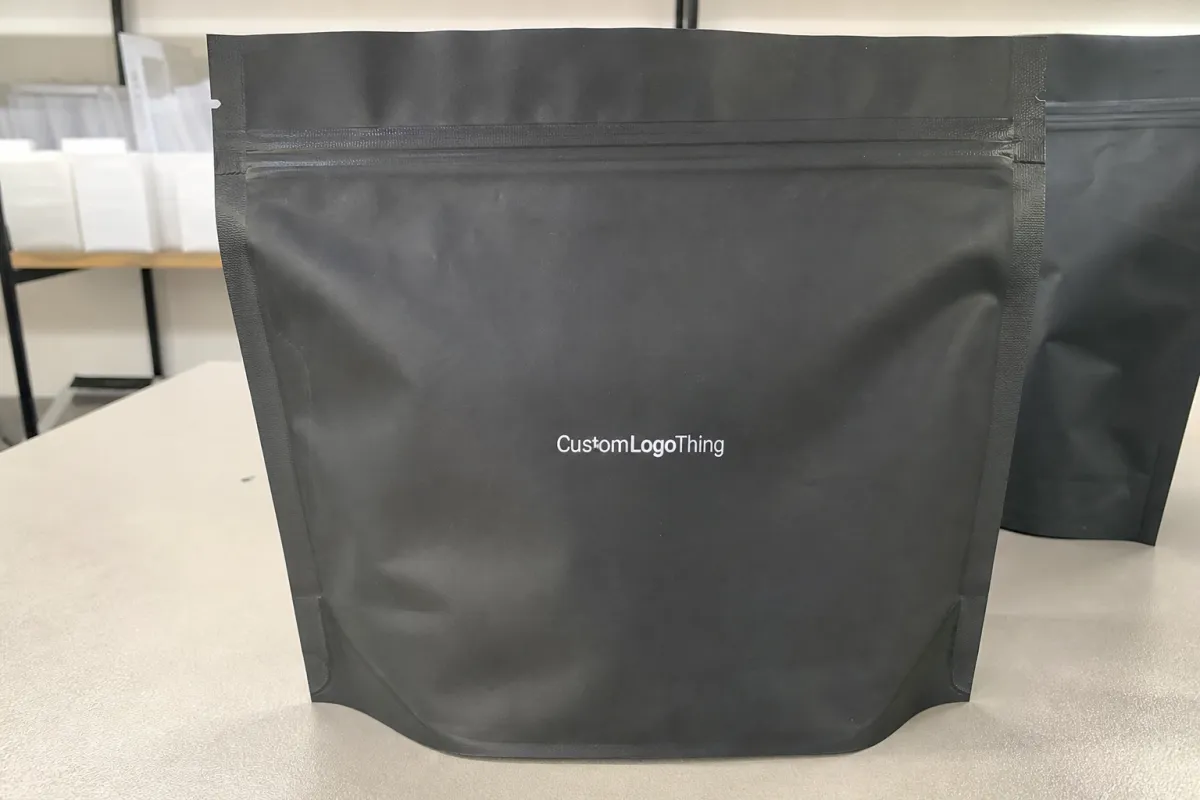
A matte zipper bag earns attention in a different way than a glossy one. It does not shout. It suppresses reflections, hides minor fingerprints, and makes scuffs less obvious, which is exactly why a cosmetics Matte Zipper Bags Bulk order can look more expensive than it is when the structure and print are chosen well.
That matters because beauty packaging is rarely judged in ideal conditions. Bags get packed quickly, rubbed against cartons, stacked under product weight, and opened repeatedly at receiving, on a shelf, or in a kit assembly line. A finish that still looks clean after that abuse is doing useful work, not cosmetic work in the decorative sense.
These bags show up across the category: sample sachets, travel kits, compact accessories, sheet masks, single-use treatments, and secondary packaging for creams or palettes that need to sit neatly inside a carton. The matte surface gives all of them a calmer visual field, which can make typography easier to read and keep the pack from looking cheap under harsh store lighting.
Bulk buyers usually discover the same thing after the first round of samples: the bag only feels premium if the basics are disciplined. Seal lines must stay straight. Zippers need to close with the same resistance from bag to bag. Print should land where the proof says it will. If one row is slightly off, the whole run starts to look uneven the moment cartons are opened.
The buying decision should start with the use case, not the aesthetic. A bag built for a sample kit does not need the same barrier or puncture resistance as a retail pouch carrying heavier components. For a cosmetics matte zipper Bags Bulk Order, the quote should reflect how the bag will be used, how many times it will be reopened, and whether the package needs retail display features such as a hang hole, tear notch, or label panel.
Material choices, barrier levels, and zipper performance for cosmetic formulas
Most Matte Zipper Bags are built from flexible films such as PE, PET/PE laminates, or multi-layer combinations that balance appearance, sealing, and stiffness. A simple PE structure is usually the easiest option for lightweight samples and accessory packs. It converts cleanly and is forgiving on fill lines, which can help when the bag is used for short promotional runs or low-complexity packaging.
PET/PE tends to feel more finished. It brings a little more body to the bag, improves print clarity, and holds its shape better on shelf. That can matter more than buyers expect. A thin, soft bag may technically function, but if the face panel ripples or slumps after filling, the design loses impact fast.
Matte is not a barrier rating by itself. It is a surface behavior, sometimes built into the outer film and sometimes added through coating or lamination. The finish changes how the bag catches light and how visible fingerprints are, but it does not automatically solve moisture, odor, or oxidation concerns. If the formula is scent-sensitive, oil-rich, or prone to moisture pickup, the buyer should ask for the full structure, not just the finish description.
Zipper choice deserves the same level of scrutiny. A standard press-to-close zipper works for many cosmetic items, but not all. Smaller sachets can use lighter gauges, while accessories with hard edges or sets with glass or metal components usually need stronger side seals and more puncture resistance. If the zipper feels elegant but starts separating at the corners after repeated openings, the package is failing its basic job.
Thickness is usually selected around the product load and shipping path. Light sample formats often sit around 70 to 90 microns total structure, while retail kits and heavier cosmetic sets may need 100 to 140 microns depending on the laminate and closure style. For products that travel through parcel networks, ask whether the supplier can reference drop or transit testing aligned with common ISTA methods. If paper inserts or cartons are part of the system, FSC documentation can support the paper side of the pack, though it does not replace material testing for the bag itself.
There is one more point that gets missed often: compatibility. Some cosmetic oils and fragrance ingredients can soften inks or migrate through weaker structures over time. That does not mean every formula needs a high-barrier laminate, but it does mean the product should be named clearly during quoting. A bag that works perfectly for a dry powder sample may be the wrong choice for a rich balm or a solvent-heavy treatment.
| Structure | Typical cosmetic use | Practical strengths | Planning cost band at 5,000 pcs |
|---|---|---|---|
| Matte PE flat zipper bag | Samples, sachets, light accessories | Simple conversion, flexible handling, easier filling | $0.16-$0.28 per unit |
| PET/PE matte laminate | Retail kits, secondary packaging, clean shelf presentation | Better stiffness, sharper print appearance, more premium feel | $0.21-$0.38 per unit |
| Thicker PET/PE with full-panel print | Gift sets and higher-value cosmetic bundles | Stronger visual impact, better resistance to scuffing | $0.28-$0.45 per unit |
| Add-ons: hang hole, tear notch, rounded corners | Retail display, subscription inserts, store-ready packs | Improves merchandising and usability, but adds conversion steps | +$0.02-$0.06 per feature |
Sizes, gussets, and print coverage for retail, kits, and sampling runs
Size should be selected from the product volume and pack format, not from category labels. A powder sample, a sheet mask, and a small accessory set all sit inside the beauty aisle, but they ask for very different internal dimensions. Many sample carriers land somewhere around 3 x 4 inches to 5 x 7 inches, while retail kits often move closer to 6 x 8 inches or larger if multiple pieces need to fit without bulging.
Gusset choice changes the bag’s behavior as much as size does. A flat profile packs tightly and is easier to carton in high volumes. A side or bottom gusset gives more depth and more tolerance for imperfect fills, which can be useful when products vary slightly in shape or when the contents need to be visible through an orderly front panel.
For a display-facing bag, stand-up geometry can help, but only if the fill height and zipper placement are balanced. Too much empty space above the contents makes the bag look underfilled. Too much product pressure near the zipper can warp the opening and make resealing harder than it should be. That tradeoff matters more in cosmetic packaging than in many other consumer categories because the bag is often judged both in hand and from across a shelf.
Print coverage should be planned with the bag structure, not layered on afterward like a separate idea. A restrained logo and ingredient panel can look elegant on a matte background. Full-panel artwork can work just as well if the safe zones around the seal, corners, and zipper are respected. The mistake is treating the design file like a flat rectangle when the converted bag has folds, trim allowances, and an actual closure that steals space from the art.
Small features often decide whether the pack feels complete or improvised. Hang holes help with hooks and peg displays. Tear notches improve first-open behavior. Rounded corners reduce sharp edges and improve handling. A clear label area gives warehouse teams somewhere predictable to apply lot codes, shipping labels, or SKU stickers. Those details should be decided before artwork is approved, not after the first proof has already gone out.
- Minimal logo layouts keep the matte surface front and center and usually simplify setup.
- Full-panel print works better when the bag has to sell from a distance or support a premium set.
- Window or opaque zones should follow product needs, since some formulas benefit from visibility while others need light control.
- Label space matters in fulfillment, especially when the same bag moves through retail, e-commerce, and replenishment channels.
One practical rule: leave enough quiet space around the zipper and side seals. Designs that look balanced on a screen can turn crowded after conversion, especially on small formats. A few millimeters of restraint on the proof can save a lot of frustration on the production floor.
Cost, pricing, MOQ, and quote inputs that change the unit cost
The price of a cosmetics matte zipper Bags Bulk Order is shaped by more than size. Film thickness, structure, matte treatment, zipper style, print count, and finishing features all affect material use or production time. A one-color flat bag with a standard zipper will price very differently from a thick laminate with full-panel art, a hang hole, and rounded corners. That gap is normal, not suspicious.
MOQ follows the same logic. Smaller runs carry more setup burden because proofing, press adjustment, and conversion time are spread across fewer bags. At 1,000 units, the fixed work is obvious. By 5,000, it starts to flatten. At 10,000 or more, the unit cost often improves again if the specification stays stable and no new material is introduced.
What matters most is matching the quote to the real build. Buyers should send exact dimensions, target quantity, zipper preference, print method or color count, artwork files, shipping destination, carton requirements, and any performance needs such as moisture resistance or puncture resistance. If the product is heavy, sharp, oily, or scent-sensitive, say so plainly. Those details change the material recommendation and the risk profile.
It is also smart to ask what is included in the number. Does the price assume a matte film or a matte coating? Is color matching based on the proof, a Pantone target, or a previous approved sample? Are plate or setup costs separate? Are freight, customs, and palletization included? A lower quote can be useful, but only if it describes the same package.
For planning, many custom cosmetic zipper bags land in the rough range of $0.16 to $0.45 per unit, with add-ons increasing the number a little. That is not a promise and not a ceiling. It is just a useful bracket for early budgeting. A small, simple matte bag and a thicker, printed retail pouch can both be called “custom,” but they are not priced by the same physics.
- Clarify the use case: retail shelf, sample pack, travel kit, or secondary packaging.
- Lock the dimensions: internal size, gusset depth, and allowance for fill expansion.
- Define the finish: matte film, soft-touch effect, opaque panel, or partial window.
- Set the print scope: logo only, one-side print, or full-panel artwork.
- State the quantity band: 1,000, 5,000, 10,000, or another level that drives the MOQ.
A useful habit is to compare quotes line by line instead of by headline price. If one supplier looks much cheaper, check the zipper grade, bag thickness, and print coverage first. Those are usually where the difference hides.
Process, timeline, and production steps from artwork to shipment
The production path should be orderly. It typically starts with spec review and dieline confirmation, then moves into artwork placement, proof approval, and sample sign-off if a physical sample is needed. Once the layout is locked, the job goes into production release, where the supplier confirms material availability, print files, and the conversion sequence. If any of those handoffs are vague, the schedule starts slipping almost immediately.
Lead time depends on complexity and response speed. Straightforward custom jobs can often move in about 12 to 18 business days after final proof approval. Projects with multiple colors, specialty matte treatments, or a pre-production sample often run 20 to 30 business days or longer. Freight is separate and should be planned from day one, not treated as a last-minute detail.
The physical sequence is straightforward once the order is approved: material prep, printing, lamination or surface finishing, bag conversion, zipper installation, sealing, inspection, and packing. Each stage can introduce variation if the controls are weak. That is why buyers should ask how the supplier checks registration, zipper engagement, seal alignment, and carton count during the run.
If the bags are part of a launch with a fixed in-store date, the production calendar needs buffer. There should be enough time to receive the first cartons, inspect them, and correct a problem before inventory becomes urgent. A schedule that only works if every step goes perfectly is not a schedule; it is a wish.
Shipping labels and packout details deserve attention too. A clean pallet label, a clear inner-carton count, and a consistent pack sheet save time at receiving and reduce miscounts. Those are small controls, but in actual fulfillment they prevent large downstream headaches. A buyer who asks for them is usually the one who finds fewer surprises later.
Color approval deserves special care. Screens compress color. Paper printouts can drift. For shade-sensitive beauty packaging, a hard reference sample is more useful than a casual digital approval. Once a bag has to match a brand palette, the target should be fixed in writing and tied to the approved sample, not left open to interpretation.
Quality control, color matching, and reorder consistency across repeat lots
Repeatability is one of the most underrated parts of packaging procurement. The first lot may be clean, then the second run shows a slight shift because the artwork file changed, the matte surface came from another material batch, or the supplier loosened the color target. A cosmetics matte zipper Bags Bulk Order should be tied to an approved master sample, a measured spec sheet, and the final production artwork set so the next run has something real to follow.
Quality control should cover zipper smoothness, seal integrity, print registration, edge trimming, surface scuff resistance, and carton packing. If a zipper takes too much force to close or the seal line wanders by a few millimeters, the issue may not show up in a mockup photo, but it will show up in use. Cosmetic packaging gets handled by warehouse teams, store staff, and consumers with very different expectations, so the bag has to work in all three contexts.
For color, ask for a practical tolerance against the approved sample rather than a vague promise. If the bag is part of a multi-piece system, the carton, insert, and label should be checked alongside the pouch so the set feels intentional. A matte bag with a warm gray tone can look correct by itself and still feel wrong if the outer box leans cool or the logo black shifts toward charcoal.
A solid QA checklist is usually simple: bag width, bag height, zipper position, print location, shade match, surface finish, seal strength, and carton count. For repeat orders, keep the dieline version locked, archive the approved sample, record the material thickness, and retain the exact print file. That sounds basic because it is basic. It also saves time, reduces waste, and makes it easier to explain what changed if a later run drifts.
Some buyers also ask for random sample checks using an AQL-style routine. That can be useful when the lot is large or the package is launch-critical, because it gives both sides a common standard for acceptable defects. The point is not perfection. The point is controlled variation, which is what real production can reliably deliver.
For matte finishes, scuff resistance deserves closer attention than many teams expect. A finish can look beautiful in photos and still pick up shine lines after repeated carton contact. That is why it helps to inspect bags under strong light and from an angle, not only face-on. The defect may be subtle, but shelf lighting is rarely kind.
Documentation matters as much as physical inspection. Keep records of the approved color target, the zipper type, the laminate structure, and the carton configuration. If the bag needs to be reordered months later, those notes become the only reliable memory the supply chain has.
Next steps to request samples, confirm specs, and lock in the first run
Start with the essentials: exact dimensions, target quantity, fill type, finish preference, print goals, and any storage or display limits. If the bag will sit on a shelf, ride in a mailer, or move through a subscription box, say so. Those details influence material choice, zipper strength, and how much structure the bag needs to stay presentable.
Request a sample or proof before the bulk run begins. A screen mockup cannot show how a matte surface catches light, how a zipper feels in hand, or whether a logo sits too close to the seal line. For multi-color work, the proof should be checked by the person who can actually approve the launch package, not by someone reviewing a screenshot with no production context.
Then work backward from the launch date. Build in proofing, production, freight, and receiving time. If the bags support retail and reorders, keep a small buffer in the first run so the second order does not become an emergency. There is no prize for discovering that a 5,000-piece order looked fine on paper but arrived two weeks too late to matter.
The cleanest briefs usually produce the cleanest results. A focused specification sheet does more than reduce email traffic. It improves quote quality, shortens sample approval, and makes the first cartons far less likely to surprise anyone on arrival.
For buyers comparing suppliers, a useful test is simple: ask whether the same spec sheet can produce the same bag twice. If the answer is uncertain, the build is not documented well enough yet. That matters more than a flashy render or a low opening number.
Frequently Asked Questions
What is the MOQ for cosmetics matte zipper bags bulk order?
MOQ depends on size, structure, and print complexity because setup and conversion costs have to be spread across the run. Smaller bags with simple print usually support lower minimums, while thicker laminates, specialty finishes, or extra features tend to raise the practical floor. Share the quantity band early so the quote reflects the actual production method.
Can matte zipper cosmetic bags be customized for different product types?
Yes. The bag can be tuned for powders, sachets, accessories, sample kits, or secondary-packaged creams by adjusting size, thickness, zipper style, and print coverage. Sharp, heavy, or moisture-sensitive products should be called out clearly because those details affect both material choice and seal strength.
How does pricing change for a bulk order of matte zipper bags?
Unit price is driven mostly by dimensions, film thickness, finish, zipper style, print colors, and add-ons such as hang holes or tear notches. Pricing usually improves as quantity rises because fixed setup work is divided across more pieces. The most accurate quote comes from matching the exact spec, not from comparing loosely similar bags.
What lead time should I expect for cosmetic zipper bags in bulk?
Lead time depends on proof approval speed, material availability, print complexity, and whether a sample is required first. Straightforward runs often move faster than jobs with multiple colors or specialty finishing steps, and shipping time should always be planned separately so inventory arrives when it is actually needed.
Are matte zipper bags suitable for retail display and shipping?
Yes, provided the structure is chosen for both presentation and durability. Matte finish can look clean on shelf and hide handling marks, but shipping performance still depends on seal strength, puncture resistance, and carton packout. If the bag will be used in both retail and fulfillment, the build should support both jobs.

