Ecommerce Pallet Boxes Cost: Get a Fast Custom Quote
If you are comparing ecommerce pallet boxes cost, start with the carton and then keep going. The sticker price rarely tells the whole story. A box that trims a few cents off the unit price can still create a bigger bill once corners crush, pallets drift out of square, or the distribution team spends extra minutes reworking loads. In practice, the real answer to ecommerce pallet boxes cost lives in the way the pack stacks, protects product, and moves through the warehouse without slowing the line.
Buyers know the trap. The cheapest box is often the most expensive decision by the time freight, labor, and damage are counted. A strong packaging decision measures the landed cost of the structure, not just the purchase price. That means board grade, pallet footprint, compression strength, closure style, and even how the box behaves under stretch wrap all matter. I have seen a modest upgrade from single-wall to double-wall cut damage claims enough to pay for itself in one quarter. The math is not glamorous, but it is hard to argue with.
There is also a behavioral side to this. Finance teams want the lowest unit cost, warehouse teams want something that does not fight the palletizer, and operations want fewer surprises. Those goals sound aligned until you price out a box that looks fine on paper but needs extra tape, more void fill, or a second handling step. That kind of setup is kinda sneaky because the extra cost shows up in labor instead of the invoice.
Ecommerce Pallet Boxes Cost: Why Small Design Choices Change the Bill
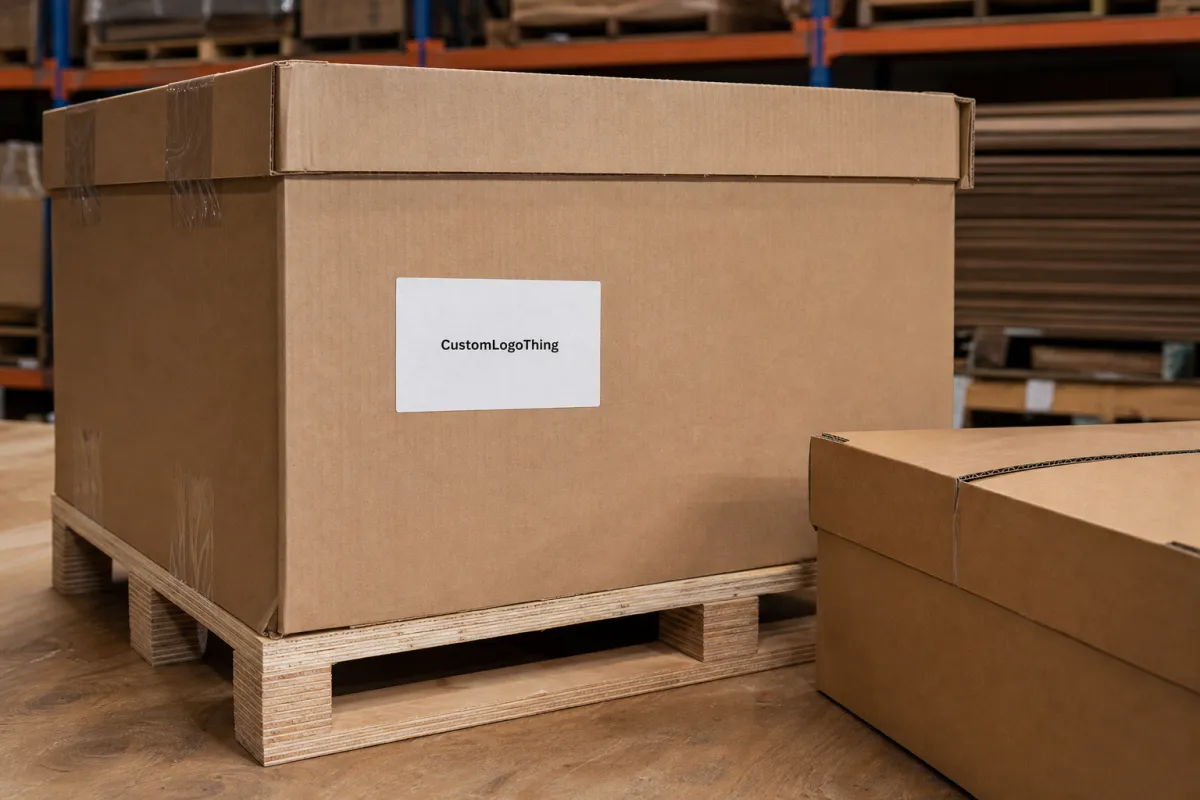
The biggest shifts in ecommerce pallet boxes cost usually come from a handful of design choices that seem minor at first glance. A few millimeters of extra height can change board consumption. A heavier product mix can push you from a standard corrugated spec into a stronger construction. Add a printed exterior, a die-cut access panel, or a moisture-resistant coating, and the unit price moves again.
In warehouse terms, these differences are not theoretical. A pallet box that holds shape through a 1.8-meter stack height does one job; a box that bows under load does another, and the second one tends to cost more after the damage report lands. It is a little like buying tires. Two options may look similar in the catalog, but once you start measuring wear, load rating, and road conditions, the true cost separates fast.
One more thing: pallet compatibility can quietly change the price curve. If your box is built around a standard euro pallet or a 48 x 40-inch footprint, the converter can often optimize board usage and die lines. If you need an odd footprint because of a product mix or shipping lane constraint, material waste usually rises. That waste is not dramatic on its own, but across a run of 10,000 units, it adds up in a way procurement teams notice very quickly.
Ecommerce Pallet Boxes Cost Drivers: Materials, Size, and Performance
The material spec is usually the first cost driver to examine. Corrugated pallet boxes can be built from single-wall, double-wall, or heavier triple-wall constructions. For many ecommerce shipments, double-wall board hits the practical middle ground: stronger than a basic shipping carton, less expensive than overbuilding the box for light products. But if the contents are dense, irregular, or moisture-sensitive, a stronger grade can be cheaper in the long run because it cuts failure rates.
Board grade matters too. Not all flute profiles perform the same way. Bigger flutes can improve cushioning and stacking strength, while finer flutes can improve print quality and surface finish. If your operation ships mostly through parcel networks, print and appearance may matter more. If the boxes spend their life on pallets in a cross-dock environment, compression and edge crush take priority. The wrong assumption here costs money twice: once in the box, once in the failure.
Size is another obvious variable, but it hides a lot of less obvious math. Larger dimensions use more board, yes, but they also affect freight density, pallet pattern efficiency, and how much product you can fit per cube. A box that wastes 8 percent more cube may look inexpensive in the buying system and still push up transportation spend enough to erase the savings. That is why packaging people get obsessive about dimensions. They are not being dramatic; they are trying to keep the total system from bleeding money in half a dozen small places.
Performance features can change price more than buyers expect. Reinforced corners, hand holes, locking tabs, printed handling marks, moisture barriers, and anti-slip surfaces all increase manufacturing complexity. None of these features is free, but not every feature earns its keep. The job is to match the spec to the lane. A dry domestic shipment of apparel has different needs than a mixed SKU load traveling through cold docks in January. Treating those as the same problem usually ends badly.
I also want to be honest about testing. Compression data, burst strength, and ECT ratings are useful, but they are not magic. A box with a strong spec on paper can still fail if the pallet pattern is poor or if the distribution center stacks it three-high under a roof leak. Real-world conditions matter more than a clean laboratory chart, so any serious quote should be tied to the actual shipping environment.
Box Specifications for Ecommerce Pallet Shipping
For ecommerce pallet shipping, the most useful box specification is the one that fits the product, the pallet, and the route. A common starting point is a pallet-sized corrugated box with dimensions built to minimize overhang and improve load stability. Standard footprints often align with 1200 x 1000 mm or 48 x 40 in pallets, though custom sizes are common when product geometry is awkward or very cube-sensitive.
From a technical standpoint, ask for the full spec, not just the outer dimensions. You want board type, flute profile, finished wall thickness, closure method, and the target compression strength. If the product is heavy, request the estimated stacking load and whether the box needs a top cap, insert, or pallet lid. Those details sound small, but they often determine whether the load survives transit without extra tape, wrap, or rework.
For ecommerce operations, access is worth thinking about too. Some teams need easy pick access from the front or top once the pallet reaches the fulfillment floor. Others need the box to stay sealed until break-bulk. If the access pattern does not match the warehouse workflow, staff start modifying the pack with knives and tape. That is where costs get weird. A box built for the wrong handling model can create labor waste that never appears on the packaging quote.
Here is the practical rule I use: specify the smallest box that safely fits the load, then validate it under the real distribution environment. If the pallet rides in a climate-controlled network, you can make one set of assumptions. If it goes through humid terminals or long dwell times, a stronger construction may be the smarter spend. It is not always about buying the heaviest box; sometimes the cheaper path is the one that keeps the product intact with the least ceremony.
Pricing, MOQ, and Unit Cost for Ecommerce Pallet Boxes
MOQ affects ecommerce pallet boxes cost more than many buyers expect. Smaller runs usually carry a higher unit price because setup, tooling, and production waste get spread across fewer cartons. Once order volumes rise, the cost per unit usually falls, but that curve is not linear. A jump from 500 to 2,000 units may reduce the unit cost meaningfully; a jump from 20,000 to 25,000 often produces a smaller gain.
Printed boxes, custom dies, and special coatings can push MOQ upward. Plain corrugated pallet boxes are easier to quote because the converter can use standard tooling and more efficient sheet layouts. The moment you add custom dimensions or branded graphics, the cost structure changes. Sometimes that change is worth it. Sometimes it is not. A sharp buyer tests both versions before committing, because branding and box performance do not always need to travel together.
Unit cost should also be read alongside shipping cost. A heavier box can lower damage but raise freight. A lighter box can save on shipping but increase claims. The best choice often sits in the middle, where the structure is just strong enough for the route without overengineering the pack. That balance is where most of the savings live.
As a rough commercial pattern, many businesses see the biggest swing in price come from three variables: size, board grade, and order quantity. Printing tends to be a secondary factor unless the artwork covers a large portion of the panel or requires multiple passes. I have seen teams save more by changing the footprint by an inch or two than by negotiating a tiny reduction on artwork charges. That is the sort of result procurement likes, even if it is less flashy than a supplier discount headline.
One caution: a low quote without clear spec language is not really a low quote. If the supplier has not confirmed board grade, load rating, pallet fit, and print method, you are comparing shadows. Honest pricing depends on honest inputs. Otherwise, the follow-up revisions can erase the original savings fast.
Process, Timeline, and Lead Time for Ecommerce Pallet Boxes
The process usually starts with a technical brief. That brief should include product dimensions, weight, pallet footprint, stacking height, shipping mode, and any environmental risks such as humidity or temperature swings. If the brief is vague, the quotation will be vague too. It sounds obvious, but plenty of bad packaging decisions begin with a one-line email and a lot of assumptions.
After that comes spec development and sampling. For custom ecommerce pallet boxes, a sample or prototype is usually the point where hidden issues show up: a hand hole lands in the wrong place, the lid interferes with wrap, or the box compresses too easily under load. Finding those problems before mass production is not just helpful; it is usually the difference between a smooth launch and a string of warehouse complaints.
Lead time depends on the design complexity and the supply chain behind the board itself. Standard corrugated runs can move quickly once the spec is approved. Custom print, special coatings, or new tooling add time. If the shipment is tied to a promotion, peak season, or a new SKU launch, build in slack. The packaging schedule has a nasty habit of colliding with the marketing calendar, and neither one cares much about the other.
In practice, the cleanest projects are the ones where the customer shares real-world data early: pallet photos, failure cases, product density, and a sample of the actual item. That lets the packaging spec reflect the shipment, not a spreadsheet fantasy. It also avoids the awkward moment where a box is technically correct and operationally useless. Nobody wants that, and nobody needs the headache.
Why Choose Us for Ecommerce Pallet Boxes
What separates a useful pallet box supplier from a merely pleasant one is the willingness to question the brief. Anyone can quote a carton. Not everyone will ask whether the box needs to survive a hot dock, whether the pallet will be re-stacked, or whether the product is prone to shifting after the first hundred miles. Those questions matter because they shape the final ecommerce pallet boxes cost far more than a polished invoice does.
Our approach is practical. We look at the load, the route, and the handling pattern before we talk about finish options or branding. That means we are sometimes conservative where it matters and flexible where it does not. If a simple unprinted structure will do the job, we will say so. If a stronger board or a revised footprint will lower your total cost, we will say that too. It is not fancy, but it tends to save money.
We also care about accuracy in the quote stage. Clear specs reduce rework, and rework is the quiet killer in packaging programs. A box that is only 2 percent off in dimensions can create pallet inefficiency, extra material usage, or a line stoppage if it does not run cleanly through your packing process. That kind of mismatch is avoidable with the right questions up front.
And yes, quality control matters. Consistency between batches is not a luxury feature. If one shipment compresses differently from the next, the warehouse notices immediately. Buyers notice later, usually in the form of claims or frantic calls from operations. A dependable supplier should be able to explain the board spec, the tolerance range, and the reason the box was built that way.
Next Steps to Lock In Ecommerce Pallet Boxes Cost
If you want a reliable price, give the supplier the real variables: product weight, outer dimensions, pallet size, stacking height, shipping lane, and any handling risks. Then ask for the box spec, not just the unit price. That one move keeps the conversation grounded and makes comparison far easier.
From there, evaluate the quote on total cost, not the cheapest headline number. A better box can cut damage, reduce labor, and keep loads square enough to move through the warehouse without drama. A cheaper box that needs constant babysitting is not actually cheap. It is just underpriced in one place and overpriced everywhere else.
The practical takeaway is simple: define the shipment first, then price the carton against the shipment. If the spec matches the route, the numbers usually make sense. If not, the quote will still look tidy, but the operation will pay for the mismatch later.
FAQ
What affects ecommerce pallet boxes cost the most?
Size, board grade, order quantity, and any custom print or structural features usually drive the biggest changes. Freight and damage risk can matter just as much once the boxes are in circulation.
Are heavier boxes always better?
No. Heavier construction can improve compression strength, but it also raises material and freight costs. The right spec is the lightest box that still protects the product through the actual route.
What information should I send for an accurate quote?
Send product dimensions, weight, pallet footprint, stacking height, shipping method, moisture exposure, and whether the box needs printing or special closures. Photos of the packed pallet help a lot, honestly.
How do I reduce cost without increasing damage?
Start with footprint optimization, then check whether the board grade can be adjusted without losing compression performance. In many cases, a small redesign saves more than aggressive price negotiation ever will.
How far in advance should I plan?
For custom ecommerce pallet boxes, plan early enough to allow for sampling, testing, and any revisions. If the launch is tied to peak season, give yourself extra room. Packaging delays have a habit of showing up right when the warehouse is already busy.
Final takeaway: the smartest way to control ecommerce pallet boxes cost is to price the box as part of the whole shipping system, not as an isolated item. Get the spec right, test it against the real load, and compare quotes on total performance rather than the lowest line item. That is where the actual savings live.

