Apparel slider lock bags Bulk Order Planning is not about buying plastic by the pallet and hoping for the best. It is about removing friction from a packing line that probably already has enough of it. If a closure saves only a few seconds per unit, the labor math gets ugly in the best possible way: less touch time, less rework, fewer opened-and-closed bags, fewer small errors that turn into bigger ones later.
That matters across tees, socks, intimates, sets, and folded outerwear. The bag has to protect the product, fit the fold, and still look presentable in a warehouse, retail fixture, or mailer. If it misses any one of those jobs, the cost usually shows up somewhere else. More labor. More customer complaints. More relabeling. More wasted stock. Buyers planning volume tiers should start with the packing process, not the quote sheet.
The cheapest bag is not always the lowest-cost bag. If it slows packing or creates rework, you pay twice.
Why Slider Lock Bags Cut Apparel Packing Waste
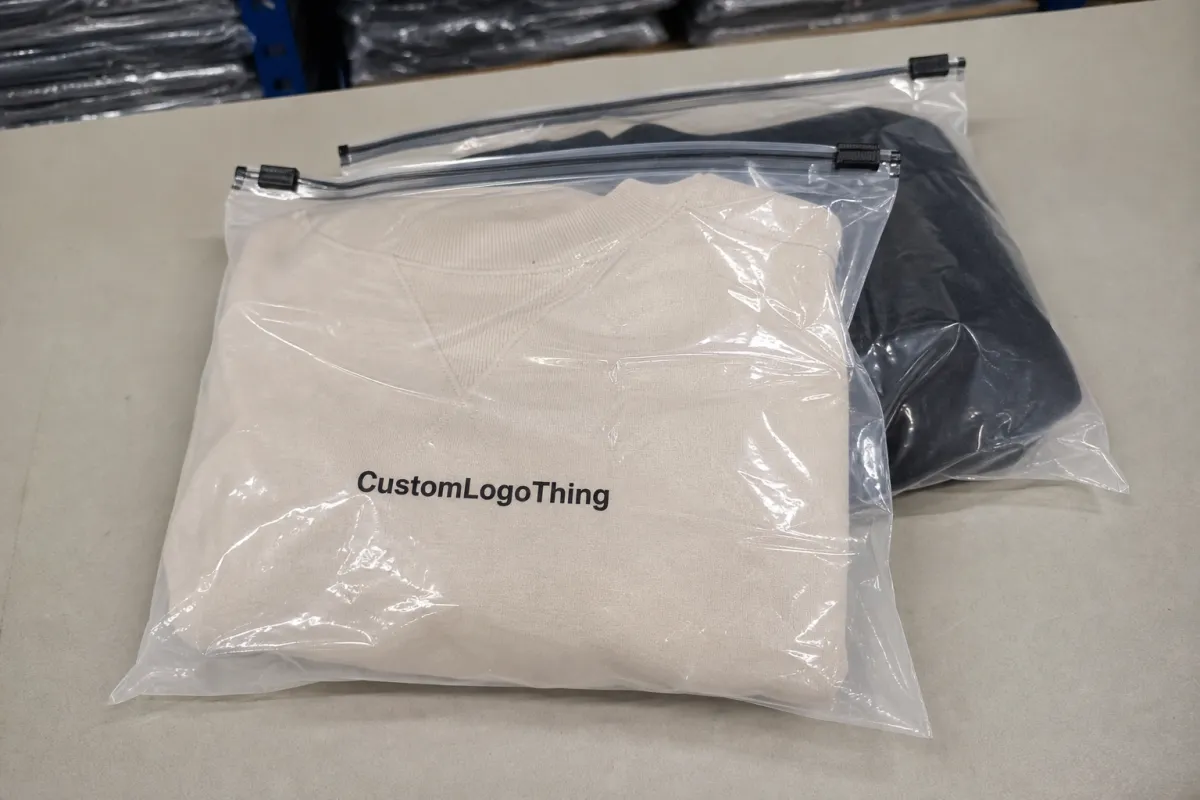
Waste in apparel packaging usually hides in small motions. Open the bag. Refold the garment. Check the size. Reclose the bag. Open it again because the fold drifted by half an inch. Repeat that across thousands of units and the “small stuff” becomes the schedule problem nobody wanted.
Slider closures remove part of that friction. The opening is easier to access, the closure is easier to verify by feel, and the bag can usually be resealed faster than a standard press-to-close format. That does not sound dramatic. Good. Packaging rarely is. It just quietly decides how much labor you burn to ship the same shirt.
In practice, Slider Lock Bags are a strong fit for:
- folded basics that need fast insertion and resealing
- multi-piece apparel sets that get checked more than once
- returns-heavy programs where easy reopen and close matters
- retail-ready packing that needs a cleaner shelf presentation
They also help on quality control. Better visibility reduces wrong-size picks, upside-down folds, and bags reopened just to confirm contents. That matters because every extra touch creates another chance for wrinkles, scuffs, corner tears, or a closure that feels off. New staff usually learn slider bags faster than press-to-close styles, especially when the product mix changes through the shift.
For e-commerce and replenishment programs, presentation matters too. A clean reseal gives the package a more deliberate look. Not fancy. Just controlled. That is usually what buyers are trying to buy, even if the spec sheet never says it out loud. For apparel slider lock bags Bulk Order Planning, the business case is labor, consistency, and fewer avoidable problems.
Product Details Buyers Need to Compare Before Ordering
Start with the film. LDPE is common because it is flexible, clear, and easy to run in production. LLDPE blends can improve puncture resistance and give the bag a tougher feel, which helps when the product is handled often or packed tightly. Clear film gives the best product visibility. Frosted film looks softer and can read as more premium, but it can also make labels and size marks harder to see unless the layout is planned around that.
Then look at the slider itself. Not all sliders behave the same. Some are easier to grip with gloves. Some travel more audibly, which helps operators confirm closure without stopping to inspect every unit. Some are better for repeated open-close cycles. That matters for samples, returns, and club-store style programs where the bag is not touched just once.
Bag format is another point buyers underestimate. Flat bags work well for tees and socks. Gusseted styles help with bulkier items or multi-piece kits. Hanger holes are useful if the package will sit on a hook. Printed zones can speed warehouse sorting, while a barcode window can save relabeling work in a 3PL flow. If branding is included, the print layout should match how the team actually packs the garment, not how the art file looked on a monitor.
Fit is where a lot of first-time orders go sideways. A slim tee rattling in an oversized pouch looks sloppy. A thick hoodie shoved into a tight bag can stress the closure and distort the fold. For planning purposes, the bag should match the folded garment, the final thickness of the package, and the amount of headspace the team can tolerate. Too much space looks loose. Too little space makes pack-out annoying. Neither option is clever.
If you need a quick reference point for basic packaging terms or document requests, the site’s FAQ can help frame the first round of questions before quotes start piling up.
Specifications That Prevent Rework at Scale
Most rework starts with vague specs. “Standard size” is not a spec. It is a guess with a billing address. Buyers should send exact width, length, closure area, and the folded dimensions of the apparel item after it is packed flat. If the order covers sets, include combined thickness. If the bag will be reused for returns, include the maximum thickness after reinserted product is restacked. A sample photo helps, but a photo without dimensions still leaves room for bad assumptions.
Film thickness deserves real attention. A heavier gauge usually improves puncture resistance, clarity retention, and how the bag feels in hand. It also changes weight, carton density, and freight cost. A bag specified too thin may wrinkle, tear at a corner, or feel flimsy enough to make the whole package look cheap. Too thick, and the unit cost goes up while the bag starts to feel stiff and overbuilt for apparel. For most clothing programs, the right answer is enough strength to hold shape without turning the package into a plastic brick.
Closure performance should be defined too. Ask how the slider moves, how much force it needs to close, and how many open-close cycles it is expected to survive. That is not trivia. If the bags are used for sample circulation or returns, cycle performance matters. If they are going straight from packing line to shelf or mailer, the priority is closure reliability and a consistent look.
A production-ready spec should also cover carton count, inner pack count, pallet pattern, and label placement. Those details sound dull until a 3PL rejects a load because the carton labels are on the wrong side or the pallet count does not match the receiving system. Then they sound very exciting, and not in a good way.
Document requests should be settled early. If a retailer or buying team needs a material declaration, recycled-content language, or test data, ask before proof approval. For transit-related packaging expectations, ISTA is a practical reference point. For material handling and waste language, the EPA recycling guidance is useful. Neither replaces a proper spec sheet, but both help keep the conversation grounded.
Pricing, MOQ, and Unit Cost Drivers
Pricing on slider bags changes with a few variables, and each one affects landed unit cost. Resin choice changes base material cost. Gauge changes film weight. Size changes both material usage and machine speed. Print coverage adds setup and finishing work. The slider hardware adds another cost layer. Two quotes can look close on paper and still diverge sharply once the real spec is loaded.
MOQ usually follows customization. Stock sizes with light or no print can support smaller runs. A custom-sized, fully printed bag with brand artwork, size callouts, and a specific slider color usually needs a larger commitment. That is not a supplier trick. It is just the math of setup time and production efficiency. Buyers who only ask for a single unit price miss the bigger question: where the cost breaks actually sit.
| Option | Typical Use | Indicative Unit Cost | Ordering Notes |
|---|---|---|---|
| Plain poly bag | Basic folding and light protection | $0.03-$0.06 | Lowest cost, but slower reseal and less premium feel |
| Press-to-close bag | Simple apparel packing and short-term storage | $0.05-$0.10 | Useful for many basics, though opening can be slower |
| Slider lock bag | Fast pack-out, returns, and repeat access | $0.08-$0.16 | Often better for labor savings and presentation |
| Custom printed slider bag | Branded retail, kits, and higher-touch programs | $0.14-$0.28 | Higher setup cost, better control over brand and labeling |
Those ranges move with volume, print coverage, and whether the order is stock or made to order. Freight and duties can change the real cost more than buyers expect, especially on smaller runs. Storage is another line item if the full annual quantity lands at once. Sample charges belong in the budget too. A good sample run is cheap insurance if it catches the wrong gauge, poor fit, or awkward closure before production starts.
For buyers building a program around forecasted demand, compare pricing by volume tier rather than chasing one headline number. The best price is usually tied to a realistic replenishment cadence, not just the first shipment.
Process, Timeline, and Lead Time for Bulk Orders
Lead time looks simple until a proof comes back with three unresolved details. A clean ordering sequence usually runs through spec review, sample or prototype confirmation, artwork proofing, production, inspection, packing, and shipment booking. The sample should be treated like a production test, not a formality. Put real folded garments in it. Check the closure with gloves on. Confirm the printed size block reads clearly from a fast-pick position. If a sample only works under ideal conditions, it is not a useful sample.
apparel slider lock bags Bulk Order Planning tends to slow down at proofing, not production. Common delays include unclear measurements, logo changes after the proof is issued, late color adjustments, and slow signoff from multiple stakeholders. A supplier can only move as fast as the slowest approval. Internal discipline matters here. If the team takes four days to approve a proof that needed one correction, the schedule slips before the order even enters the factory.
Stock inventory can ship quickly. Custom print, special sizing, or nonstandard features take longer. If the bags support a seasonal apparel launch, do not let the order depend on a single delivery window. Build a buffer into the calendar. A few extra business days are cheap compared with an empty packing line or a delayed retail set.
Before production starts, confirm final carton count, packing method, and label placement. If the bags will be tested in transit, match the shipping plan to the receiving channel. For parcel-heavy programs, ISTA-based language is useful. For simpler bulk shipments, a lighter inspection plan may be enough. Either way, the schedule should include time for review, not just fabrication. Rushing the order because someone forgot the reorder point is a terrible hobby.
A practical rule helps: trigger the next reorder while inventory still has room for one more production cycle. Waiting until the bin is almost empty turns a predictable replenishment item into a rush order, and rush orders are where budget discipline goes to die.
What a Reliable Bulk Supplier Should Prove
A reliable supplier should prove consistency first. Film gauge should stay stable from lot to lot. The slider should feel the same across runs. Print registration should stay aligned. Clarity should not drift enough to make a repeat order look different from the first shipment. Buyers notice those shifts immediately. So do customers, even if they cannot name the problem.
Capacity matters too. A supplier who can run one large order is useful. A supplier who can support recurring shipments, staggered releases, and inventory holding is more valuable. That matters when a buyer needs part of the annual volume now and the rest in scheduled release windows. If the supply plan cannot flex, the buyer ends up carrying the disruption.
Ask for documentation: spec sheets, lot traceability, inspection records, and reorder history. If changes are not tracked cleanly, the buyer carries the risk. Communication standards matter just as much. Realistic dates. Quick sample turnaround. Clear handling of change orders. Delays are manageable when they are honest. Surprises are not.
Packaging quality affects the rest of the operation more than people admit. Fewer shortages. Fewer returns. Less labor spent fixing folds, relabeling cartons, or rebagging damaged units. That is why I would rather trust a supplier with disciplined process control than one with glossy claims and vague promises. The packaging market has plenty of sellers. The useful ones can stay consistent under load.
That is the practical filter for apparel Slider Lock Bags Bulk Order planning: not who talks best, but who can keep the same result when the order is large, the timeline is tight, and nobody has time for surprises.
Next Steps to Build a Reorder-Ready Plan
The fastest way to get useful quotes is to send a one-page spec sheet. Include bag size, film gauge, closure style, print needs, carton count, forecast volume, and any pallet or receiving requirements. Add a sample image or a photo of the folded garment if the fit is sensitive. Better input means less time lost in email threads that should have been one round of questions, not six.
Test samples on the real apparel mix. A bag that fits a generic tee may fail on a two-piece set or a heavier knit. Compare quotes by landed cost, not just unit price. If one option costs two cents more but cuts labor, avoids damage, and ships in the right carton pattern, it may still be the better purchase. Cheap is not the same thing as efficient. People say otherwise because math is annoying.
Set a reorder trigger based on weekly usage plus the longest realistic lead time. Then assign one owner to watch it. That sounds basic because it is. It is also the difference between a controlled replenishment cycle and a last-minute scramble. If the order supports launch timing or retail drops, build a buffer and keep the next cycle moving before inventory gets tight.
Apparel packaging works best when the plan is repeatable. Clean spec. Real sample test. Honest lead time. Volume that matches demand. That is how the bag stops being a line item and starts doing useful work.
What details should I send for apparel slider lock bags bulk order planning?
Send exact dimensions, film thickness, closure style, print needs, and whether the bags will hold folded apparel, sets, or returns. Add annual volume, monthly forecast, ship-to location, and carton or pallet preferences so the quote reflects real logistics. If the bag must fit a specific fold or retail presentation, include a sample or product photo.
How does MOQ affect apparel slider lock bags pricing?
Higher customization usually raises MOQ because tooling, print setup, and production efficiency have to be spread across more units. Stock sizes and simpler specs often support lower minimums, but the unit price is usually higher than larger custom runs. Ask for multiple volume tiers so you can compare the cost breakpoints before committing.
What lead time should I expect for custom slider lock apparel bags?
Stock inventory can move quickly, while custom print or nonstandard sizing adds proofing and production time. Artwork approval, sample testing, and freight transit all affect the final delivery date. Build a buffer into the reorder schedule so the next shipment is not dependent on a rush.
Can apparel slider lock bags be printed with size and brand info?
Yes, many orders can include size callouts, logos, barcode areas, or handling instructions. The print method and number of colors affect cost, lead time, and visual clarity. Request a proof that shows placement, legibility, and how the design looks on a filled bag.
How do slider lock bags compare with standard zip bags for apparel?
Slider bags are usually faster to open and close, which helps when staff handle high-volume apparel lines. They often feel more premium and can make repeated access easier for returns, kits, or retail presentation. The tradeoff is usually a higher unit cost, so the right choice depends on labor savings and presentation needs.

